

High-Fidelity Speakers
The final link in the audio chain, the speaker converts the electrical signal into sound and largely determines what you hear. A hi-fi speaker aims to reproduce the recording as faithfully as possible, without added coloration. Floorstanding or bookshelf, passive or active, the right choice depends on your room, your source, and the way you listen. Learn more

Must-haves
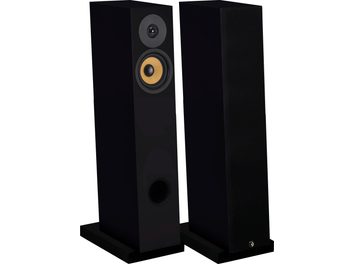
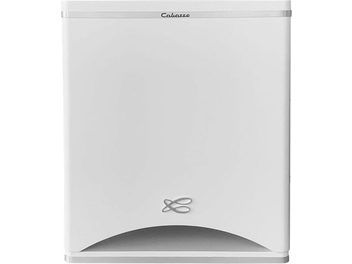
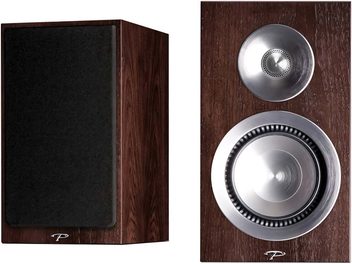
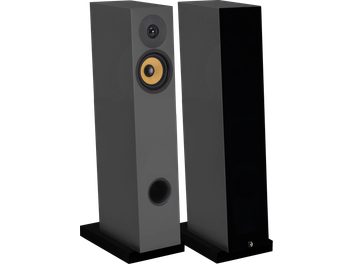
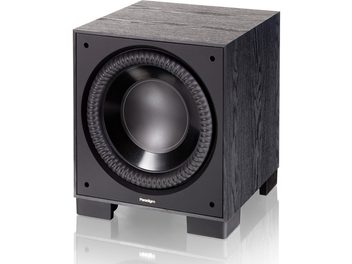
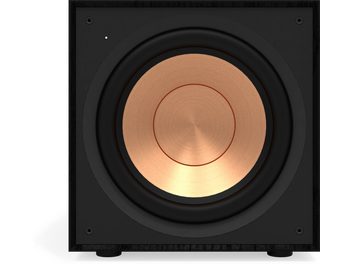
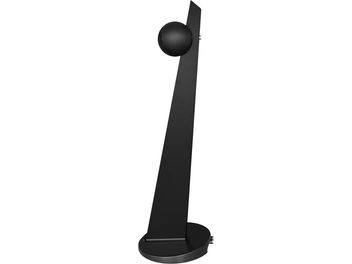
Best sellers
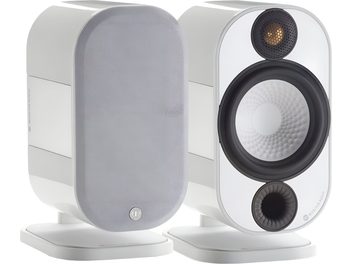
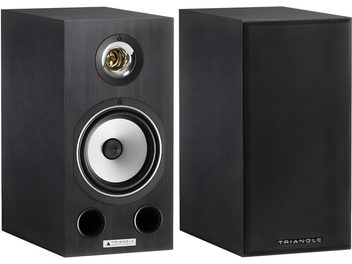
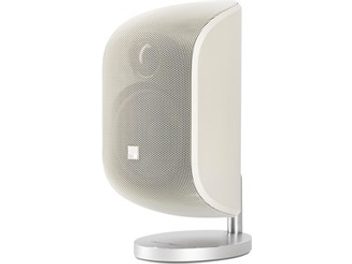
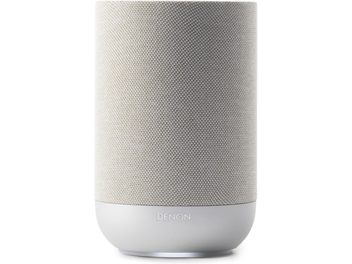

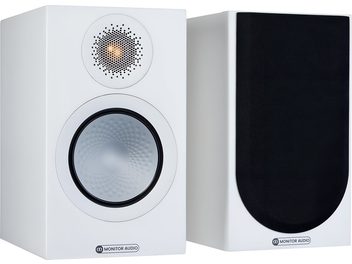
The role of the speaker in the hi-fi chain
High fidelity is based on an idea that is simple to express, but harder to achieve: reproduce a recording exactly as it was made, without adding or subtracting anything. A complete system combines a source (turntable, network player, CD player), an amplifier, and a pair of speakers. Every stage matters, but the speaker remains the element that physically sets the air in motion. It is the one that transforms a clean signal into audible sound in the room, and its flaws are heard immediately.
Compared with a soundbar or a home theater system, a pair of hi-fi speakers meets a stricter set of requirements in stereo. The goal is not to flood the room with effects, but to place each instrument in its proper position, with accurate timbre and dynamics that do not become harsh as the volume rises.
Floorstanding or bookshelf speakers
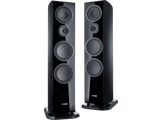
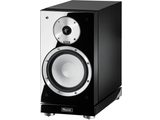
Two major categories shape the passive speaker market. The floorstanding speaker stands on the floor, includes more drivers in a cabinet with generous internal volume, and reaches lower in the bass. The bookshelf speaker, more compact, sits on a stand or a shelf and requires less space.
The decisive criterion is not price, but room size. In a living room of less than 20 m², a large floorstanding speaker quickly overwhelms the space: the bass becomes invasive and excites the room’s resonances. A well-placed bookshelf speaker will sound more accurate there. In a room larger than 25 m², the trend reverses: a compact speaker reaches its limits in bass and output, whereas a floorstanding speaker fills the space without strain.
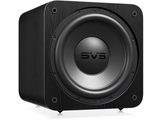
Then there is the question of the subwoofer. A pair of bookshelf speakers combined with a subwoofer regains some of the foundation offered by floorstanding speakers, with more flexible placement. Floorstanding speakers, for their part, are often fully sufficient on their own for music listening.
Passive, active, and connected speakers
The term “passive” refers to a speaker without built-in amplification electronics. It needs an external amplifier, connected by cable, and it is this speaker-amplifier pairing that determines the result. This modularity appeals to those who like to upgrade their system piece by piece.
An active speaker includes its own amplifier, calibrated by the manufacturer for each driver. The crossover is often handled digitally, upstream of amplification, which avoids the losses of a traditional passive crossover. You gain in consistency and ease of installation: you simply connect a source and power. In return, the amplification is no longer interchangeable.
Connected speakers take this logic further with wireless, Wi-Fi, Bluetooth, and sometimes a built-in network player. A pair is then enough to play a music streaming service or a turntable, without a separate amplifier. It is the most direct solution for those who want serious sound without stacking devices.
Technical specifications to know
A few figures deserve a look before buying, especially for a passive speaker that will need to be matched with an amplifier.
Impedance, expressed in ohms, indicates the load the speaker presents to the amplifier. Most models are 4, 6, or 8 ohms. Low impedance, dropping below 4 ohms, requires an amplifier capable of delivering current without complaint. Sensitivity, measured in decibels for 1 watt at 1 meter, indicates the sound level obtained for a given power: a speaker rated at 88 dB requires significantly more watts than one rated at 92 dB for the same volume.
Power handling, in RMS watts, defines what the speaker can withstand without distortion. The best approach is to choose an amplifier whose power falls between half and one and a half times this value. Frequency response gives the range covered, from bass to treble, even if this figure alone says nothing about quality. The number of ways, most often two or three, indicates how many drivers share the spectrum: a tweeter for the treble, a woofer for the bass, and sometimes a dedicated midrange in between.
Successfully matching speakers with your amplifier
A pair of speakers never sounds good on its own: it depends on what is driving it and where you place it. On the amplifier side, the match comes down to impedance compatibility and power reserve. A speaker with low sensitivity and high current demands will bring a small entry-level amplifier to its knees, with loose bass and treble that turns harsh as soon as the volume is raised.
Placement matters just as much as the equipment. A bookshelf speaker benefits from being placed on a stable stand, with your ears level with the tweeter, and at a good distance from the walls so the bass does not linger. Floorstanding speakers benefit from isolation spikes that decouple them from the floor. Just a few dozen centimeters of space from the rear wall is often enough to clean up the lower end of the spectrum. None of these adjustments is expensive, and all of them are audible.
Frequently asked questions about hi-fi speakers
Should I choose floorstanding or bookshelf speakers?
The format should first be decided according to room size. Below 20 m², a well-placed bookshelf speaker sounds more accurate than a large floorstanding speaker, which risks overwhelming the space with bass. For a room of 25 m² or more, the floorstanding speaker handles the space better and reaches lower without strain. Budget and listening style also come into play, but the size of the living room remains the deciding factor.
What is the difference between an active speaker and a passive speaker?
A passive speaker does not include amplification: it needs an external amplifier connected by cable. An active speaker includes its own amplifier, calibrated by the manufacturer for each driver, and only requires a source and a power outlet. The passive speaker offers more freedom to upgrade your system, while the active speaker simplifies installation and ensures consistent matching between the amplifier and the driver. The choice depends on whether you want to fine-tune your system yourself or prioritize simplicity.
What amplifier power do I need for my speakers?
Aim for an amplifier whose power falls between half and one and a half times the speaker’s power handling, expressed in RMS watts. Also look at impedance: a model that drops below 4 ohms requires an amplifier capable of supplying current. Take sensitivity into account, in decibels: a speaker with low sensitivity needs more watts to reach the same level. An underpowered amplifier tires drivers more quickly than a generously powered amplifier used with restraint.
Is a connected speaker as good as a traditional hi-fi speaker?
The best connected speakers include carefully designed amplification and digital crossover processing, capable of hi-fi-level sound reproduction without a separate amplifier. They are suitable for those who want to limit the number of devices and enjoy wireless convenience every day. A traditional system, with source, amplifier, and passive speakers chosen separately, retains the advantage of modularity and future upgrade possibilities. Quality depends less on the principle than on the care taken with each component and how well it is adapted to the room.