

Vinyl Brushes
Record brushes are an essential accessory for maintaining your vinyl collection. Whether made of carbon fiber or velvet, they remove dust and static charges that build up on record surfaces. A simple sweep before each listen preserves sound quality, extends stylus life, and protects your grooves from premature wear. Antistatic models neutralize the static electricity naturally produced by friction. Learn more
Why use a record brush
A vinyl record is highly electrostatic and attracts dust like a magnet. This dust embeds itself in the microgrooves and acts like an abrasive, gradually wearing down the groove profile while also wearing out your phono cartridge stylus. The accumulation of these particles generates audible noise and degrades sound reproduction. Regular cleaning with a suitable brush therefore becomes a routine habit for anyone who wants to preserve their collection and equipment.
The different types of brushes
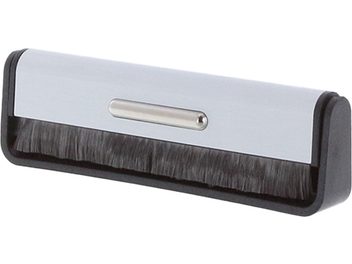
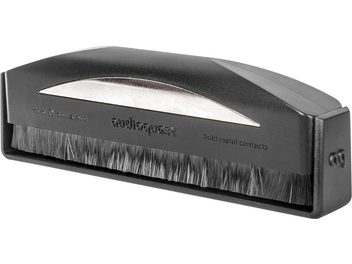
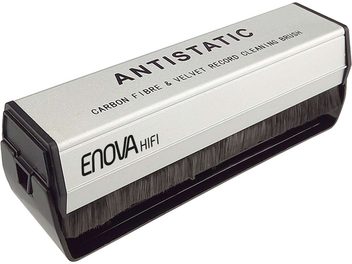
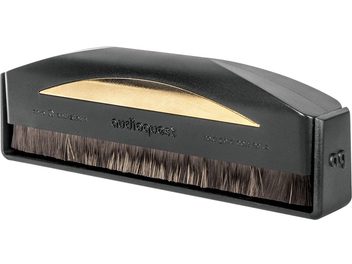
Carbon fiber brushes are the most common solution for daily dust removal. Their ultra-fine fibers penetrate the grooves to dislodge particles while discharging static electricity thanks to the conductive properties of carbon. Some models include a conductive connection between the fibers and the handle to optimize the dissipation of charges into the user’s hand.
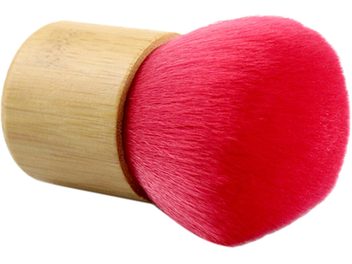
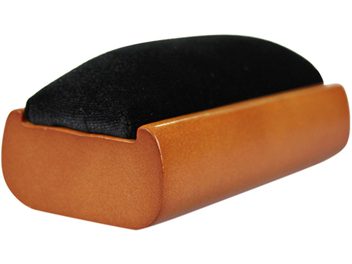
Velvet brushes are primarily used for applying liquid cleaning solutions. Their soft surface distributes the solution evenly across the record and cleans deep into the grooves without risking scratches. They can also be used dry for quick dusting.
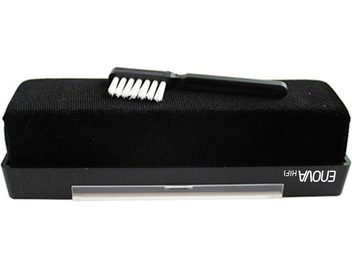
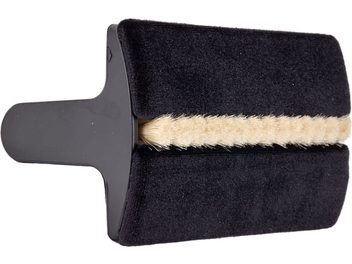
Combination brushes pair carbon fiber with a central velvet pad in a single tool. The peripheral fibers remove surface particles and neutralize static charges, while the central velvet cleans the grooves in depth. This two-in-one design offers a comprehensive solution for routine care.
How to use
Using an antistatic brush follows a few simple but important rules. Place the record on the turntable and apply the brush without excessive pressure, drawing a straight line from the center to the edge of the record. Avoid following the circular direction of the grooves, which could push dust deeper instead of extracting it. Some users prefer brushing while the record is spinning, others when it’s stationary: both methods work if applied gently.
After each use, remove excess dust from your brush and always store it in its protective case. Carbon fibers are delicate, and their effectiveness decreases if they are damaged. A well-maintained brush will retain its properties for several years.
When to use a brush
Use an antistatic brush before each playback for routine dusting. However, it does not replace a deep clean for dirty or second-hand records. If your vinyl comes from a flea market or shows fingerprints, first opt for a thorough cleaning with a suitable solution before using the brush, which could otherwise be damaged by embedded grime.