Cédric
Excellent subwoofer, it does the job well
Comment from June 13, 2026
Automatically translated — Show original (French)
Excellent caisson de basse il fait bien le job
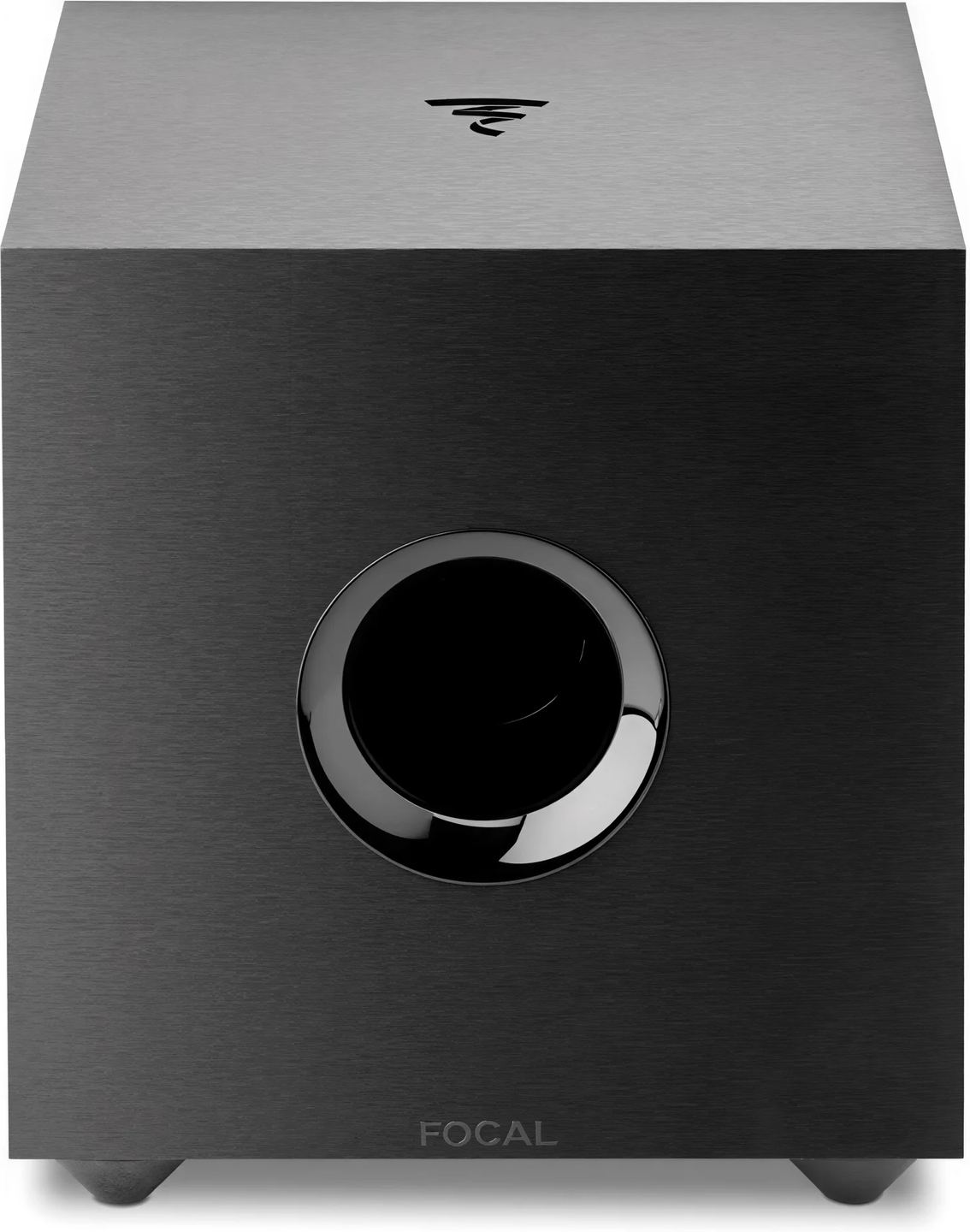
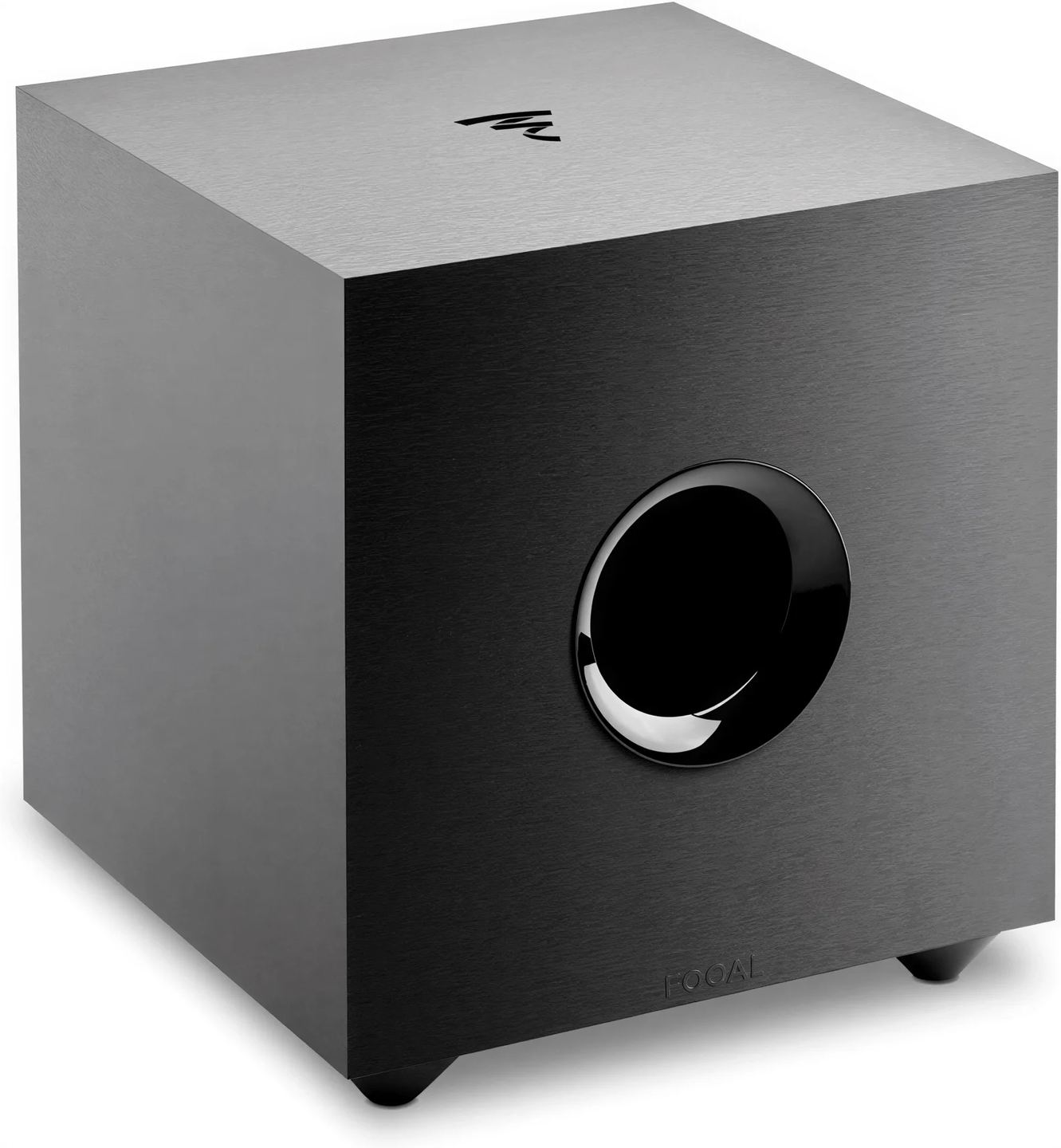
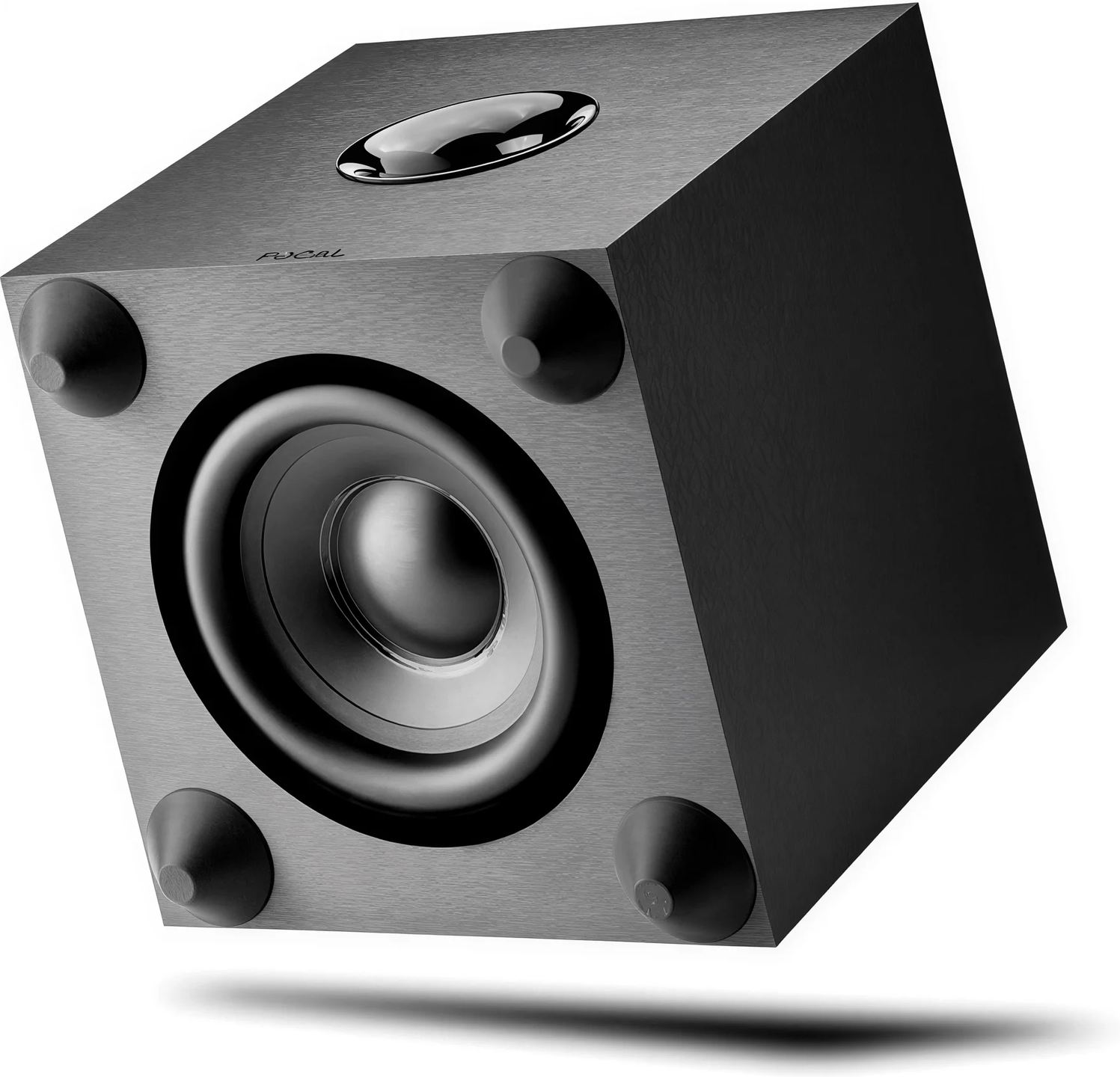

This active subwoofer embodies the French art of acoustics, combining performance and discretion in a compact format. Inheriting the technology of Focal high-fidelity subwoofers, the black CUB Evo transforms any audio system into a true home theater experience, without cluttering your space.
Equipped with a 21 cm Polyflex driver and a 200-watt class D amplifier, it delivers deep, precise bass down to 35 Hz. With a volume of less than 26 liters, this subwoofer stands as a benchmark, offering an exceptional performance-to-size ratio on the market.
The heart of the CUB Evo lies in its Polyflex cone, a proprietary Focal technology that combines cellulose and fiberglass. This hybrid composition offers an optimal balance of lightness, rigidity, and damping—three essential criteria for faithful reproduction of low frequencies. The cellulose brings the natural warmth of paper, while the fiberglass provides the rigidity needed to maintain precision even at high volumes.
The rear bass-reflex port features a specific aerodynamic profile, the result of Focal’s research into airflow. This optimization eliminates the turbulence that usually generates unwanted noise, allowing the subwoofer to breathe freely without compromising signal purity. The result is a natural frequency extension that enriches the low end without artificiality.
The 200-watt class D amplifier stands out for its high energy efficiency and its ability to deliver consistent power without excessive heat. This now-mature technology achieves performance worthy of much larger amplifiers while keeping power consumption low during operation.
The CUB Evo covers a frequency range from 35 to 150 Hz with a tolerance of ±3 dB, and even extends down to 30 Hz at -6 dB. This remarkable low-end extension for a compact subwoofer allows it to reproduce the fundamentals of most instruments and cinematic effects. The adjustable crossover frequency up to 150 Hz offers flexibility to adapt to different types of main speakers.
The connectivity includes three RCA inputs (left, right, and LFE), allowing integration in both stereo and multichannel systems. The LFE (Low Frequency Effects) input ensures native compatibility with modern home theater processors and AV receivers. The 0°/180° phase switch allows you to optimize acoustic integration depending on the subwoofer’s position in the room.
The autopower function automatically detects the presence of an audio signal and switches the subwoofer to standby after a few minutes of inactivity, with a residual consumption of only 0.5 watts. This intelligent power management avoids daily handling while meeting current environmental standards.
In a home theater setup, the CUB Evo excels at reproducing low-frequency effects that give impact to action scenes. Explosions gain depth without masking midrange details, a testament to careful filtering and harmonious integration with the main speakers.
For music listening, this subwoofer reveals nuances often lost with compact speakers alone. The bass line becomes more present and better defined, without overpowering the overall tonal balance. This music-cinema versatility stems from Focal’s design philosophy, which favors neutrality and fidelity over spectacular effects.
The CUB Evo’s dynamics are particularly impressive given its size. It can follow rapid signal changes without lag or compression—essential characteristics for maintaining musical emotion and cinematic impact. This responsiveness comes from the optimized design of the driver-amplifier-port assembly.
Although initially designed to accompany Focal’s Sib Evo speakers, the CUB Evo demonstrates remarkable compatibility with most compact speakers on the market. Its volume, phase, and crossover controls allow fine-tuning to the acoustic characteristics of different brands and models.
This flexibility makes it a long-term investment, capable of supporting the evolution of an audio system without needing replacement. Users can start with a simple stereo setup and gradually upgrade to multichannel, with the CUB Evo adapting at every stage of this evolution.
French manufacturing guarantees lasting technical support and easy access to spare parts if needed. This local dimension is increasingly important in a globalized market where continuity of customer service can sometimes be lacking.
Absolutely. While optimized for the Sib Evo, this subwoofer adapts perfectly to all compact speakers thanks to its phase, volume, and crossover controls. Simply adjust these settings according to your main speakers’ characteristics for seamless integration.
The CUB Evo is perfectly suited for rooms up to 30 m², which covers most living rooms. Beyond that, it will reach its limits in terms of maximum sound level, although sound quality remains preserved at moderate volume.
Start by placing the subwoofer near a wall or in a corner to naturally reinforce the bass. Then use the phase switch to adjust coherence with your main speakers. A slightly asymmetrical placement often helps avoid excessive room resonances.
Like any speaker, the Polyflex cone becomes more supple after a few hours of use. Allow about 20 to 30 hours of operation for the subwoofer to fully reveal its qualities, especially in low-end extension and detail finesse.
It’s technically possible using a signal splitter, but rarely necessary. A single CUB Evo is generally sufficient for home needs. If you feel you need more power, it would be wiser to consider a higher-end model from the Focal range.
The CUB Evo features a more powerful amplifier (200W vs. 150W), a redesigned port to reduce airflow noise, and an updated finish. The frequency response has also been optimized for better integration with modern speakers.
Based on reviews from customers who purchased this product, summarised by AI
Cédric
Excellent subwoofer, it does the job well
Comment from June 13, 2026
Markus
Flawless! Does what it's supposed to and that for my needs
looks very good. I have 2 pieces in use.
Comment from June 07, 2026 — Experience from April 12, 2026
Giovanni
Excellent product, the store staff very helpful and precise, thank you very much
Comment from May 07, 2026 — Experience from March 12, 2026