Nicolas
Great picture!!! Very satisfied with my purchase.
Comment from January 20, 2026 — Experience from October 31, 2025
Automatically translated — Show original (French)
Image nickel !!! Très satisfait de mon achat.

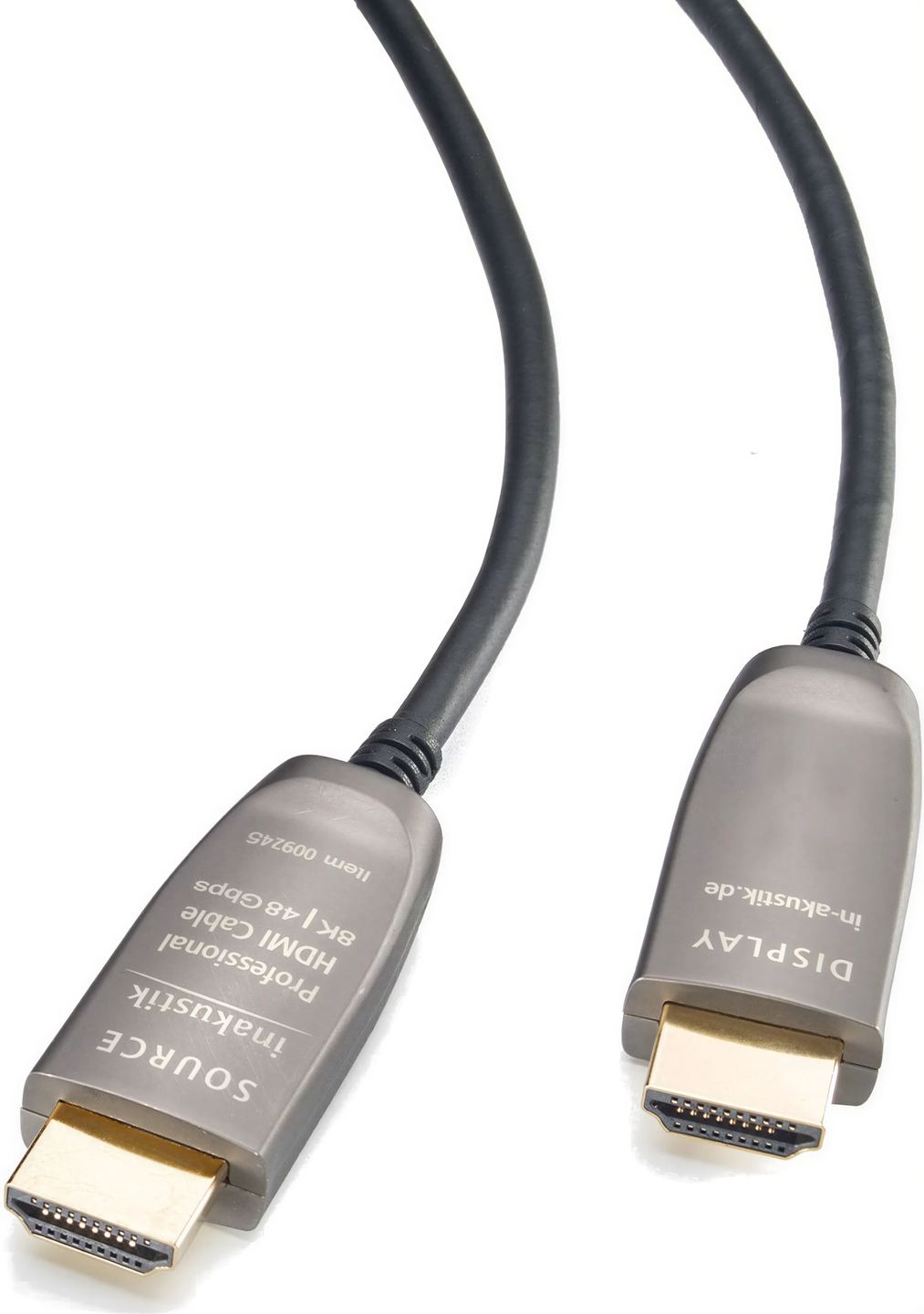


Transmitting a 4K 120 Hz or 8K signal over around ten meters with a simple copper HDMI cable is often a gamble. Signal attenuation, electromagnetic interference, and quality loss can seriously compromise extended installations. Inakustik’s Optical HDMI 2.1 PRO cable takes a different approach: optical fiber completely replaces copper conductors for video transmission, which preserves signal integrity over distances of up to 100 meters.
The operating principle is radically different from traditional HDMI cables. Electrical signals are converted into light pulses that travel through ultra-thin glass fibers. This technology eliminates two recurring issues over long distances: gradual signal attenuation and sensitivity to electromagnetic interference. A 15-meter copper cable can hardly guarantee stable 4K/120 Hz transmission; with optical fiber, this length is no longer a problem.
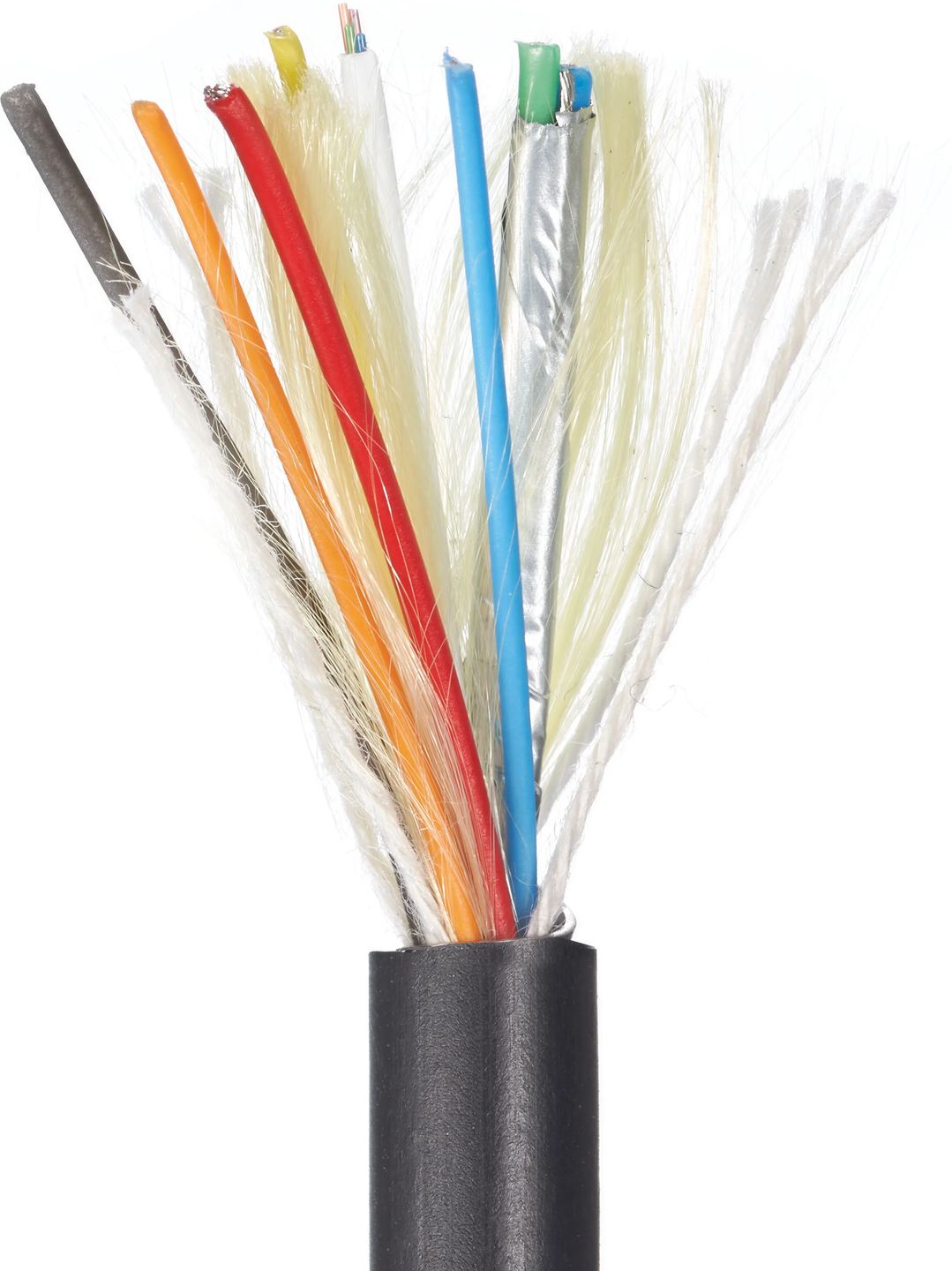
In reality, the cable combines two technologies. The optical fiber conductors handle high-speed video data transmission, while a copper section manages power delivery and certain control signals. This hybrid architecture achieves data rates of 48 Gbps, in line with the HDMI 2.1b specification, while maintaining direct power via the source HDMI port.
The 48 Gbps bandwidth opens access to the most demanding video formats. The cable supports 10K resolution at 120 Hz with DSC (Display Stream Compression), native 8K at 60 Hz, and 4K up to 240 Hz. For HDR content, HDR10 and HDR10+ formats are supported, with a color depth of 36 bits (12 bits per channel).
Chroma subsampling adapts to different use cases: 4:4:4 mode preserves full color information for graphic work or gaming content, while 4:2:2 and 4:2:0 modes offer broad compatibility with mainstream sources and displays. DSC technology deserves special attention: this visually lossless compression, developed by VESA, optimizes available bandwidth with a ratio of up to 3:1, without any perceptible degradation in image quality.
The ARC (Audio Return Channel) function remains operational up to a length of 50 meters, allowing you to send TV audio back to an amplifier or soundbar via the same cable. For systems equipped with compatible hardware, the eARC (enhanced Audio Return Channel) function extends this capability to uncompressed audio formats such as Dolby TrueHD or DTS-HD Master Audio, but with a range limited to 30 meters.
HDCP 2.3 compliance ensures compatibility with protected content, including 4K streaming services and Ultra HD Blu-ray discs. The EDID (Extended Display Identification Data) protocol, for its part, ensures proper detection of the screen’s capabilities by the source.
The cable’s diameter of just 4 mm makes it easy to run through existing conduits, even the narrowest ones. This slim profile is only possible thanks to the optical fiber architecture: a copper HDMI cable capable of equivalent performance would require a significantly larger diameter. The cable’s flexibility simplifies complex routing, with tight bend radii that do not compromise transmission.
The fully metal connectors provide a solid and durable connection. The connection direction is clearly indicated on the cable: because the optical-electrical conversion imposes a transmission direction, you must respect the source/display orientation during installation. A reversed direction will simply prevent transmission, without any risk to your equipment.
Power for the integrated electronics is supplied directly via the HDMI port, with no external power adapter. This feature simplifies wiring in setups where access to electrical outlets is limited or where a discreet installation is a priority.
Home cinema rooms with a projector are a typical use case: the distance between the player or home automation box and the projector often exceeds 10 meters, a threshold beyond which copper HDMI cables show their limits. Large-screen or projector gaming setups also benefit from guaranteed 4K/120 Hz transmission, with support for VRR (Variable Refresh Rate) and ALLM (Auto Low Latency Mode) for tear-free visuals and minimal latency.
For multi-room audiovisual installations, where the source equipment is located in a technical room away from the screens, the cable makes it possible to centralize components while maintaining optimal image quality. Available lengths range from 1 to 100 meters, with Ultra High Speed HDMI certification issued by HDMI.org for the 5, 10, 15, and 20 meter versions.
Backward compatibility with earlier HDMI standards is ensured. An HDMI 2.0 device will operate normally but will naturally be limited to the capabilities of that standard (maximum 4K/60 Hz, no VRR or ALLM). The cable automatically adjusts its performance to the capabilities of the connected equipment.
Yes, as long as you respect the distance limit for the function in use. ARC works up to 50 meters and eARC up to 30 meters. For a typical TV/soundbar setup with a few meters of cable, both functions are fully operational.
No signal will be transmitted, but your equipment is not at risk. You simply need to reverse the cable to restore the connection. Markings on the connectors clearly indicate the source side and the display side.
No. Regardless of length, the conversion electronics are powered by the source device’s HDMI port. This feature simplifies installations where access to mains power is difficult, especially in suspended ceilings or conduits.
Consoles such as the PlayStation 5 and Xbox Series X fully exploit the cable’s capabilities: 4K/120 Hz, VRR for smooth visuals, and ALLM for automatically switching to low-latency game mode. The 48 Gbps bandwidth covers the current and future needs of these platforms.
Beyond 5 to 10 meters, copper cables struggle to maintain stable 4K/120 Hz or 8K transmission. Optical fiber does not suffer from distance-related attenuation and remains immune to electromagnetic interference. Over short distances (less than 3 meters), a copper cable certified Ultra High Speed offers equivalent performance.
These certifications relate to European regulatory compliance, not performance. CE confirms compliance with safety directives, REACH guarantees the absence of hazardous chemical substances, and RoHS certifies the exclusion of materials such as lead or mercury. They demonstrate manufacturing that complies with European environmental and health requirements.
Nicolas
Great picture!!! Very satisfied with my purchase.
Comment from January 20, 2026 — Experience from October 31, 2025