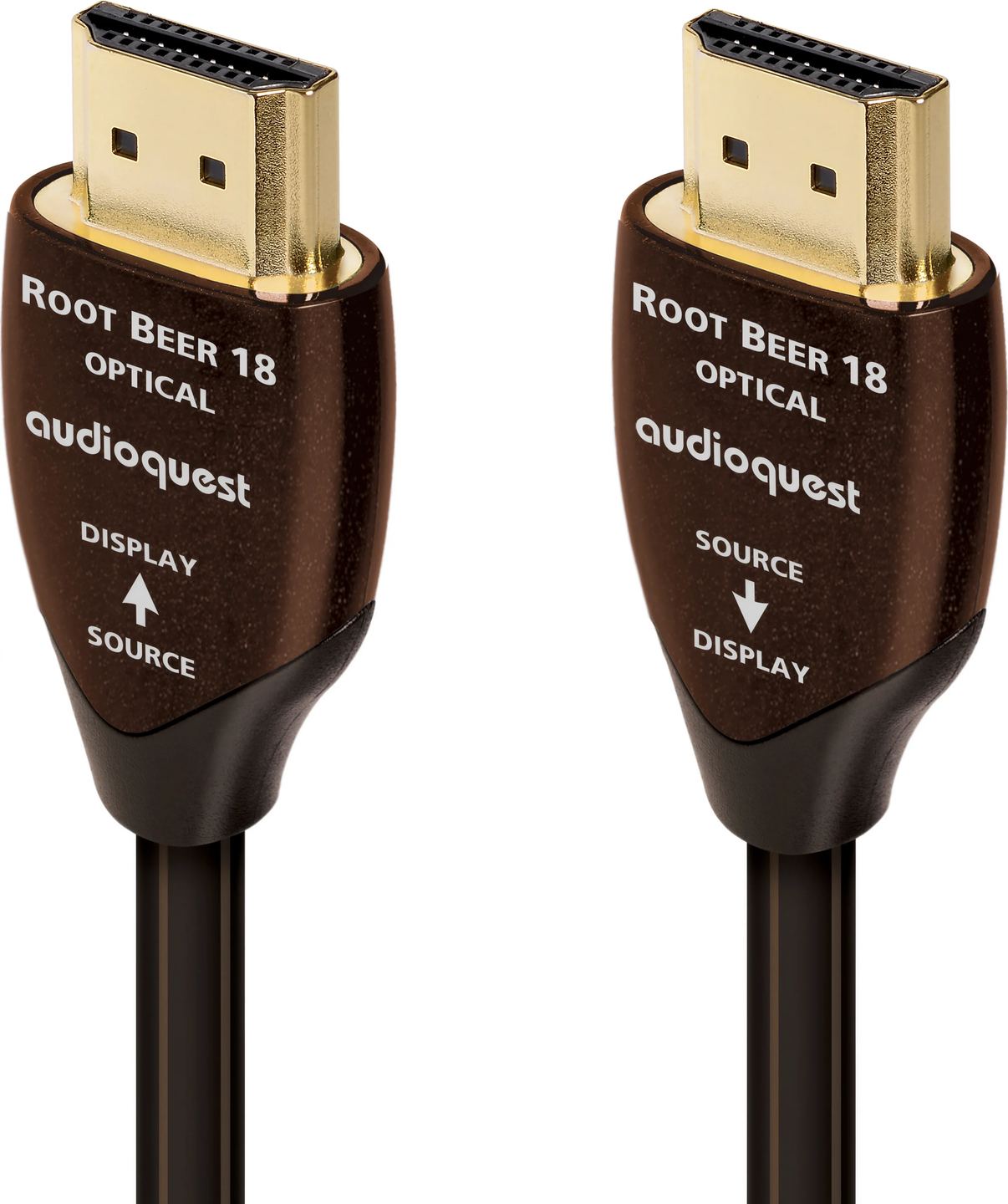
The AudioQuest Root Beer 18Gbps cable is an active optical HDMI cable designed for home theater installations. It enables the transmission of 4K and 8K signals over distances of up to 30 meters thanks to its quartz glass fiber optic technology, reducing the signal loss typically associated with long HDMI runs.
Active Optical Design to Surpass Copper Limitations
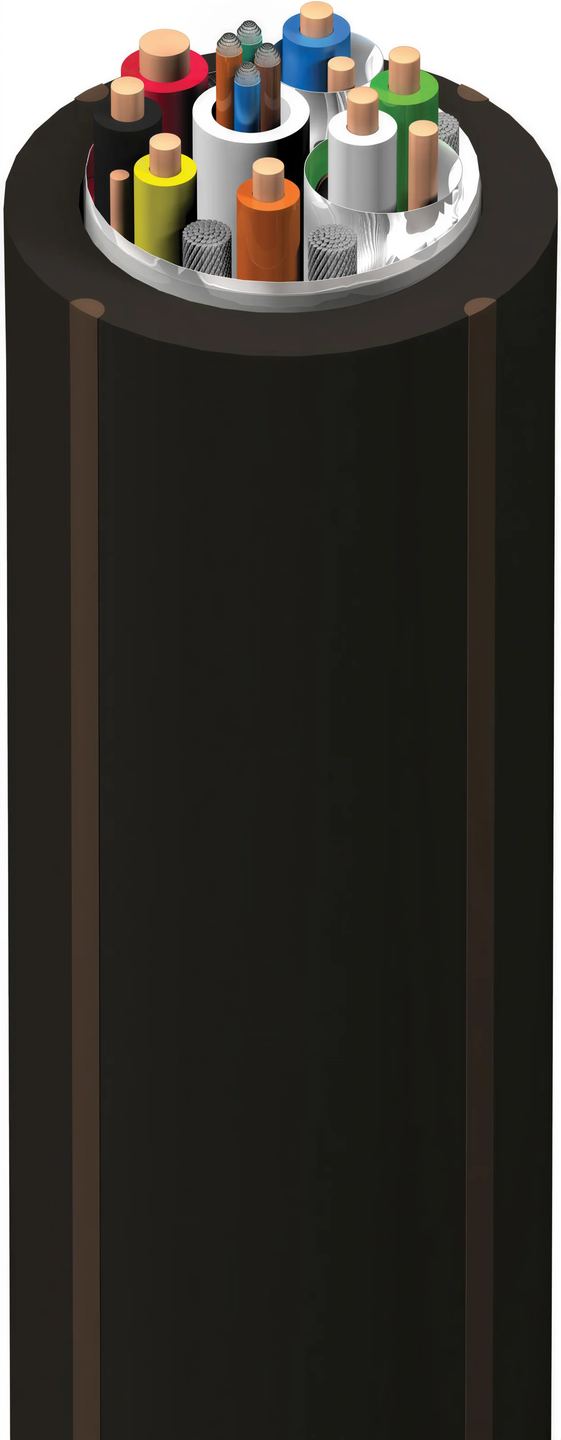
The unique feature of the Root Beer 18 lies in its hybrid architecture combining fiber optics and metal conductors. The main audio/video channels use a fused silica (quartz) optical fiber that transmits data as light. This approach radically eliminates signal loss and electromagnetic interference that affect traditional copper cables over long distances.
The power required for the opto-electronic conversion modules comes directly from the HDMI port, making any external power adapter unnecessary. This feature greatly simplifies installation in complex setups where access to a power outlet would be problematic.
The conductors dedicated to eARC (Enhanced Audio Return Channel) and communication signals use Long-Grain Copper. These conductors benefit from directional control, a proprietary AudioQuest technology that directs the flow of RF interference away from sensitive circuits. Tinned copper grounding drains complete this architecture by removing residual noise.
Level 4 Noise Dissipation System with Galvanic Isolation
The Root Beer 18 features AudioQuest’s level 4 noise dissipation system, the most advanced in the 18Gbps range. This technology relies on several complementary principles to ensure interference-free transmission.
Galvanic isolation is the first line of defense against interference. Since the optical fiber is non-conductive, it forms an impenetrable barrier to RF noise that pollutes the modern electromagnetic environment. This total immunity to radio frequencies is a decisive advantage in installations exposed to Wi-Fi, cellular, and satellite radiation.
Directional control of the cable’s 19 conductors forms the second pillar of this protection. Rather than simply blocking interference, this technology channels and actively diverts it away from audio and video circuits. This dynamic approach surpasses traditional shielding, which merely contains disturbances without eliminating them.
The PVC jacket provides robust mechanical protection while maintaining the flexibility needed for complex installations. This sheath protects the delicate optical fibers and maintains the cable’s structural integrity along its entire length.
Technical Performance and Broad Compatibility
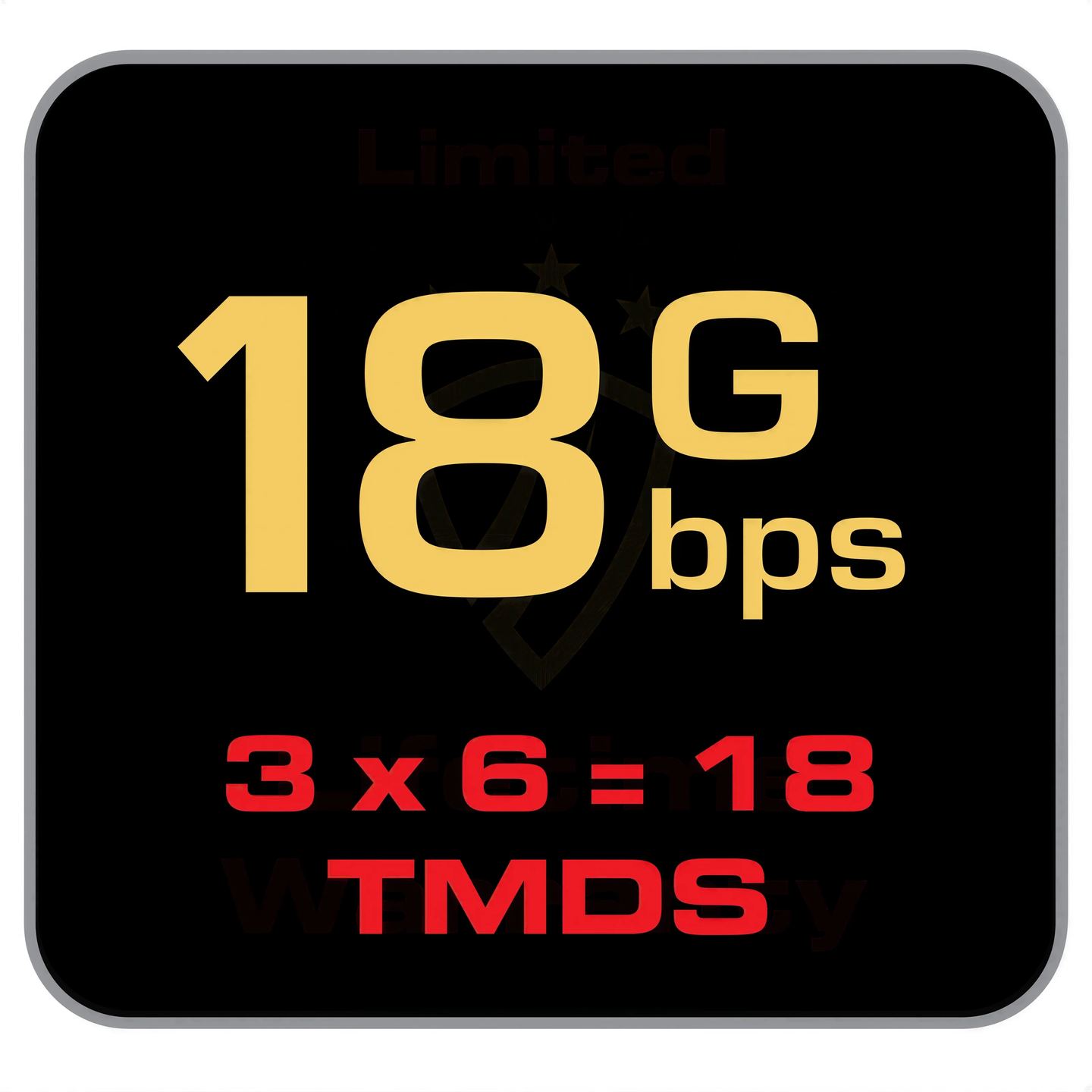
With its 18 Gbps bandwidth, the Root Beer 18 supports resolutions up to 8K at 30 frames per second in 8-bit with 4:2:0 subsampling. This corresponds to a definition of 7680 x 4320 pixels, or more than 33 million displayed pixels. For 4K content, the cable supports refresh rates up to 60 Hz with full colorimetry.
HDR (High Dynamic Range) compatibility includes both static and dynamic formats. The cable faithfully transmits HDR10, HDR10+, and Dolby Vision metadata, enabling frame-by-frame optimization of contrast and color. This ensures deep blacks, brilliant whites, and an extended color palette on compatible screens.
eARC represents a major evolution over traditional ARC, which is limited to compressed 5.1 surround sound. This new standard significantly increases the bandwidth of the audio return channel, allowing the transmission of uncompressed high-resolution audio formats such as Dolby TrueHD, Dolby Atmos, DTS-HD Master Audio, and DTS:X. Recent soundbars and home theater amplifiers fully exploit these capabilities.
A Technical Alternative to the Cherry Cola 18
The Root Beer 18 shares many features with the Cherry Cola 18, the brand’s higher-end model. Both cables use active optical technology and offer similar on-paper performance. However, several differences justify the difference in positioning.
The Cherry Cola’s optical conversion modules come from different suppliers and offer superior specifications. The Cherry Cola also adds silver-plated drain wires and a carbon fiber dissipation network, giving it a level 4+ noise dissipation rating. The Cherry Cola’s eARC conductors also feature silver plating, which is absent on the Root Beer.
These technical refinements in the Cherry Cola result in subtle nuances in sound reproduction, particularly noticeable on very high-end systems. Nevertheless, the Root Beer remains a coherent choice for most installations, offering the essential benefits of optical technology at a more accessible price.