A global reference, What Hifi? is one of the most comprehensive magazines covering Home Cinema and Hifi.
The "5 stars" award distinguishes the highest quality products, according to this British magazine.
Overview
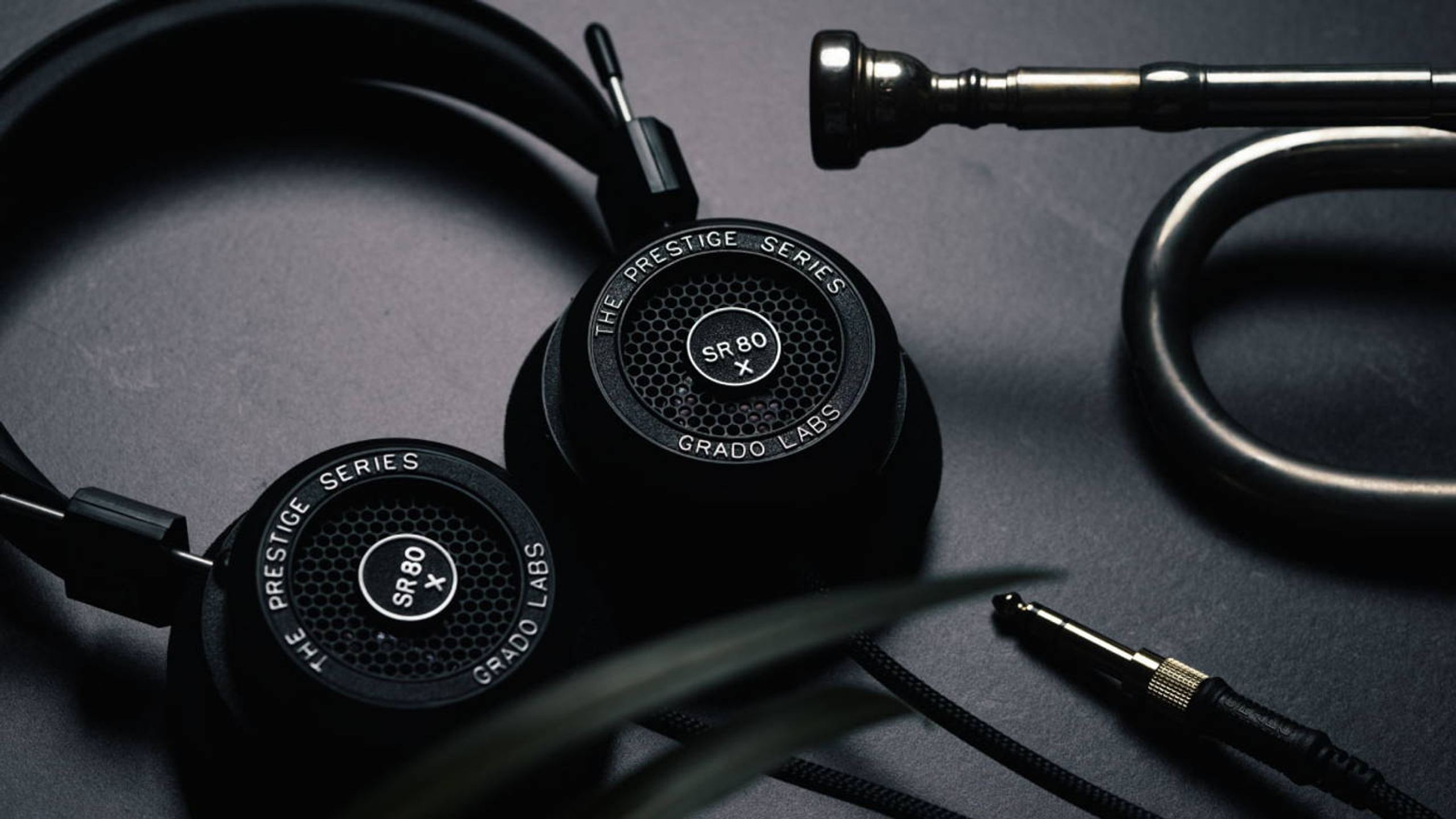
The Grado SR80x embodies the philosophy of this Brooklyn family-run manufacturer where, since 1953, every headphone has been assembled by hand in the same building that once housed the family grocery store. This fourth generation of the brand’s historic model, first launched in 1991, is far more than a simple update: it crystallizes seventy years of expertise in sound reproduction while preserving the artisanal approach that makes Grado Labs so distinctive.
An open-back design that stands by its technical choices
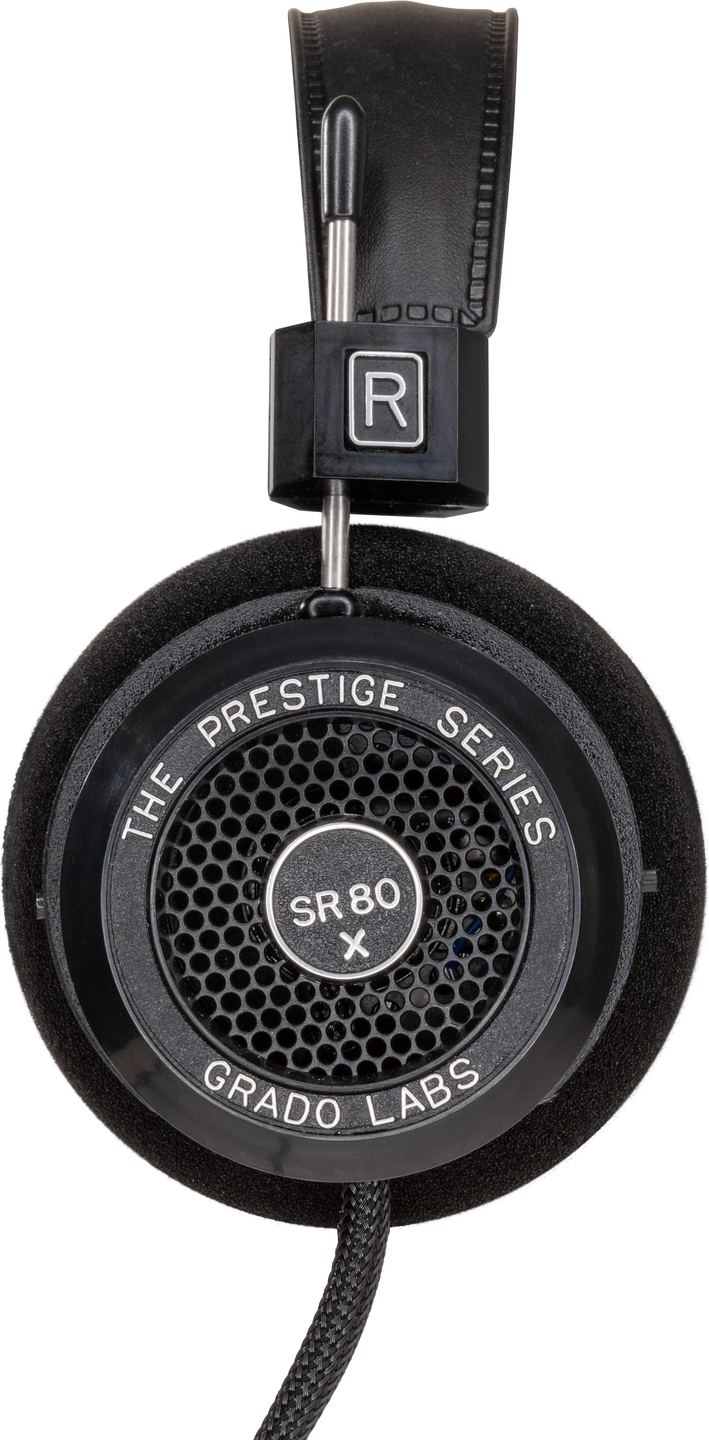
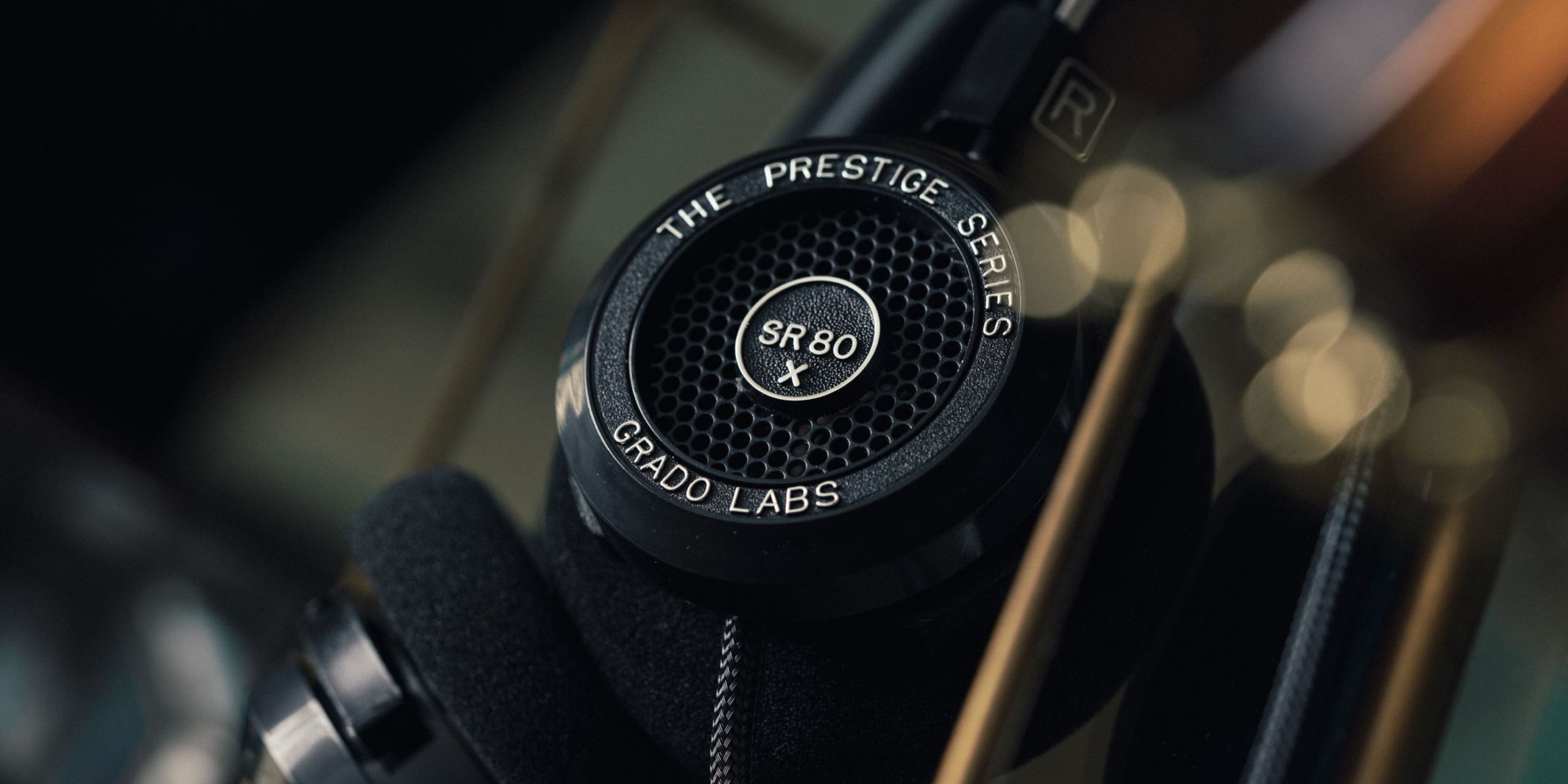
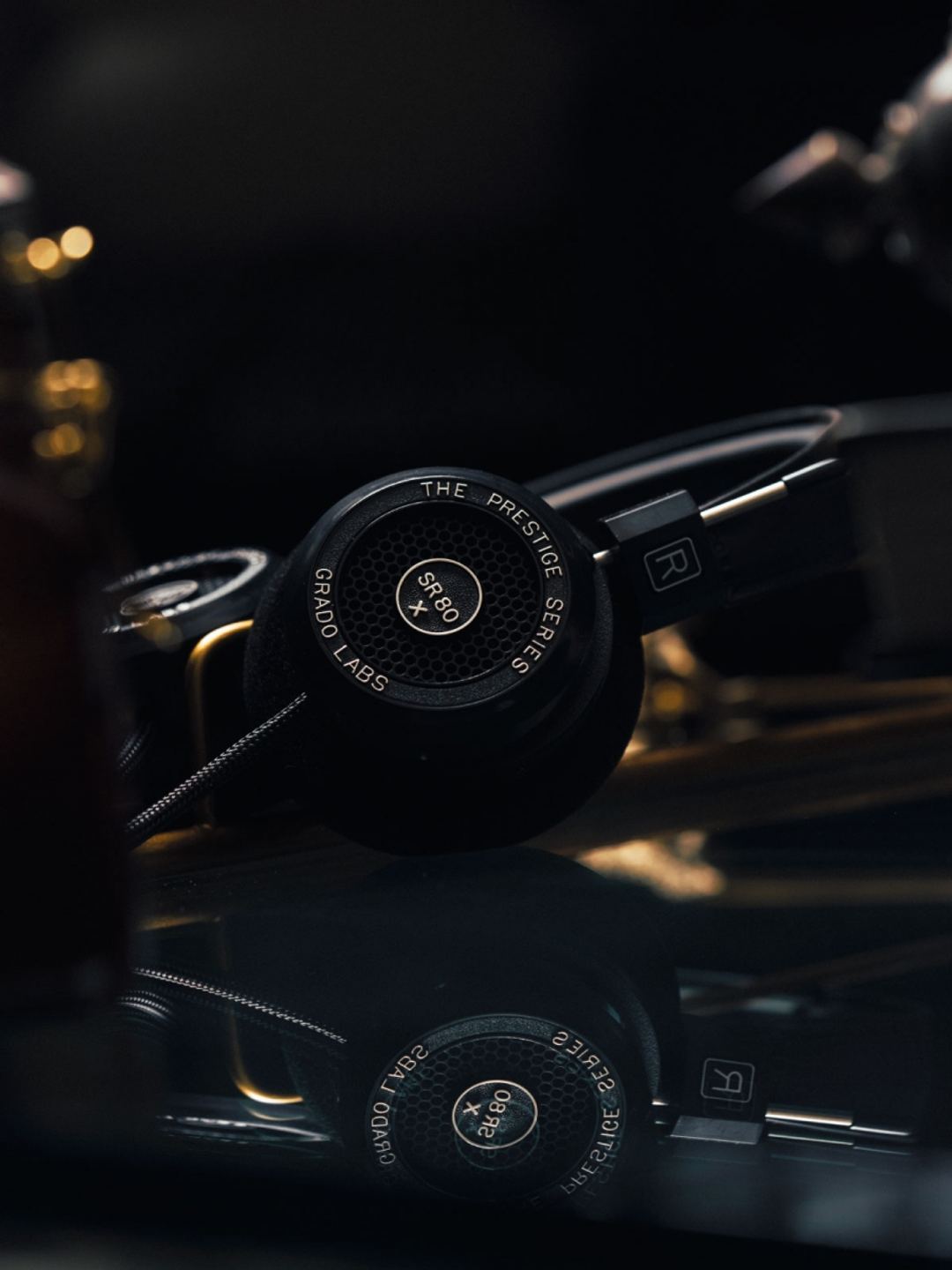
The SR80x faithfully maintains Grado’s signature open configuration, with honeycomb metal grilles that let air flow freely on both sides of the 44 mm drivers. This acoustic architecture, far from being a mere stylistic legacy, allows the diaphragms to breathe naturally, virtually eliminating transient distortion. The plastic cups may raise eyebrows in a market where metal and wood often dominate marketing narratives, but this carefully selected polymer offers remarkable acoustic neutrality, avoiding the parasitic resonances that ostensibly nobler materials can generate.
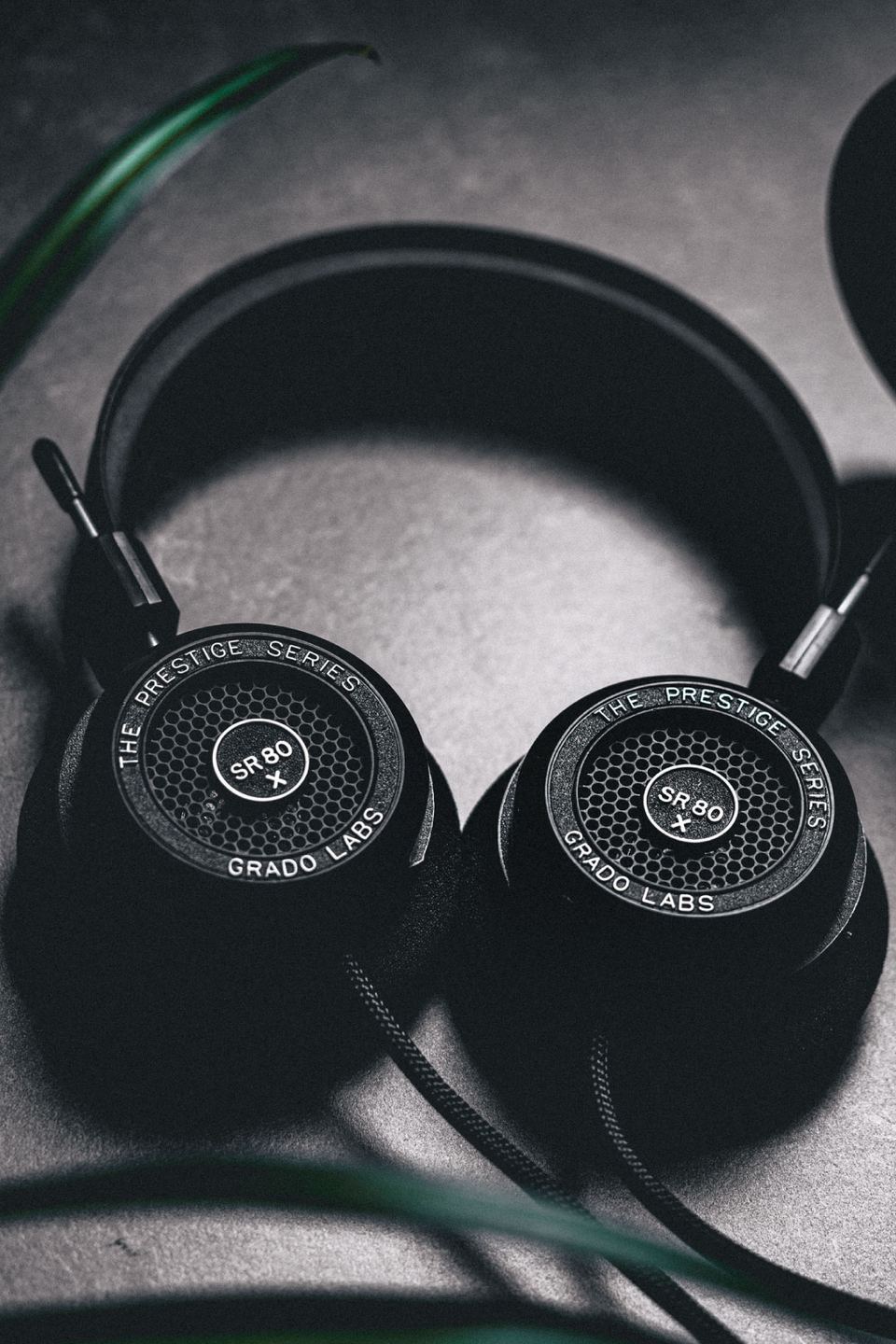
The headphone adopts a supra-aural format that rests on the ears rather than surrounding them. This approach, combined with a featherweight 245 grams, enables long listening sessions without excessive fatigue. The S-type foam earpads, though modest in appearance, have been reworked for this X generation to optimize their reaction to transient distortions. Their design ensures stable positioning on the ears while maintaining measured contact pressure.
The technological core: fourth-generation drivers
At the heart of the SR80x project is an all-new 44 mm driver specifically tuned for this model. This fourth generation of Grado speakers incorporates a significantly reinforced magnetic circuit, a reduced-mass voice coil, and a fully reconfigured diaphragm. These technical changes converge on three goals: increasing efficiency (99.8 dB for 1 mW), lowering harmonic distortion, and preserving the coherence of the musical message across the entire audible spectrum.
The new design notably enables better management of magnetic energy, resulting in a faster transient response and an increased ability to reveal micro-details buried in recordings. The reduction in the moving mass of the acoustic voice coil directly contributes to this agility, allowing the diaphragm to precisely follow the subtlest variations of the audio signal.
Significant ergonomic and material evolutions
The transition from the SR80e to the SR80x comes with substantial changes that go beyond a cosmetic refresh. The headband, historically spartan at Grado, now benefits from generous padding covered in leatherette, a transformation that dramatically improves comfort during long sessions. This enhancement, long requested by users, demonstrates the brand’s ability to evolve its products while preserving their sonic identity.
The cable is the other major evolution in this generation. Abandoning the SR80e’s single rigid sheath, the new four-conductor cable adopts a fabric-braided structure that combines robustness and flexibility. The super annealed copper conductors promise purer signal transmission, while the new four-strand architecture improves channel separation and reduces interference. Unfortunately, this 1.8-meter cable is not detachable—a technical choice that may frustrate some but ensures an optimal connection with no potential break points in the transmission chain.
A refined yet still recognizable sound signature
The SR80x’s acoustic footprint retains the Grado DNA while benefiting from welcome refinements. The midrange—historically the brand’s sweet spot—gains texture and naturalness without sacrificing the signature presence that puts the listener in the front row of the performance. Vocals emerge with striking clarity, supported by a harmonic density that gives them body and substance.
The low end, traditionally restrained in earlier generations, enjoys noticeably improved extension and impact. Without veering into artificial emphasis, the bass frequencies now offer more convincing foundation, with tighter punch that enriches the experience without altering the overall tonal balance. This evolution considerably broadens the repertoire the SR80x handles well, making it more versatile with contemporary productions.
The treble retains the lively character that is Grado’s hallmark, with a notable emphasis between 2 and 10 kHz that highlights detail, cymbals, and upper harmonics. This coloration, fully embraced by the manufacturer, can be divisive: some hear it as an open window onto recording subtleties, others as a source of fatigue on already bright productions.
A soundstage characteristic of open architecture
The SR80x soundstage takes full advantage of its open-back design. The stereo image extends generously in width, creating an airy sense of space where each instrument naturally finds its place. While depth is less pronounced than on larger circumaural headphones, it compensates with remarkable coherence and positional accuracy.
Instrument separation reaches a level of definition that lets you follow each melodic line individually without losing the cohesion of the whole. Live recordings benefit particularly from this presentation, recreating the venue’s ambience with disarming naturalness. The lack of passive isolation inherent to open-back design paradoxically becomes an asset, delivering a less claustrophobic experience than closed-back headphones.
Easy to drive and universally compatible
With an impedance of 38 ohms and sensitivity just shy of 100 dB/mW, the SR80x is remarkably accommodating in terms of amplification needs. A smartphone can drive it adequately, though a portable DAC or dedicated amplifier will reveal more nuance and dynamics. This ease of drive is a strong selling point for newcomers who want to explore high-fidelity without immediately investing in a full setup.
The 3.5 mm mini-jack ensures compatibility with most modern sources, sometimes with the help of a USB-C or Lightning adapter for recent mobile devices. The included 6.35 mm adapter allows connection to traditional hi-fi gear, integrated amplifiers, and professional audio interfaces.
Technical Specifications
Audio Specifications
44 mm drivers
Frequency response: 20 - 20,000 Hz
SPL 1 mW: 99.8 dB
Nominal impedance: 38 ohms
Driver matching: 1 dB
Design and Comfort
Headphone type: supra-aural, open-back
Leatherette headband
S cushion
4-conductor cable
General Information
Weight: 300 g
Accessories: 6.35 mm adapter
Frequently Asked Questions
Is the SR80x suitable for use on the go or on public transport?
+
The SR80x’s open-back design is intended exclusively for home use in a quiet environment. The total absence of passive isolation means you will hear all ambient noise, and conversely, people around you will distinctly hear your music. While this characteristic—inseparable from open design—does ensure airy, natural sound reproduction, it drastically limits usage scenarios.
What is the concrete difference between the SR80x and the older SR80e?
+
Beyond the new padded headband that transforms comfort, the SR80x features fourth-generation drivers delivering greater low-end extension and a more textured midrange. The four-conductor braided cable replaces the old rigid sheath, adding flexibility and durability. Sonically, the SR80x is less aggressive in the treble while preserving the brand’s signature liveliness, making long sessions less fatiguing.
Is a headphone amplifier necessary to get the most from the SR80x?
+
Thanks to its moderate 38-ohm impedance and high sensitivity, the SR80x runs well from most sources, smartphones included. Nevertheless, a quality portable DAC/amp or a dedicated amplifier will yield superior dynamics, tighter bass control, and a wider soundstage. The investment isn’t mandatory to start, but it’s a natural upgrade to unlock the headphone’s full potential.
How does the SR80x compare to the less expensive SR60x?
+
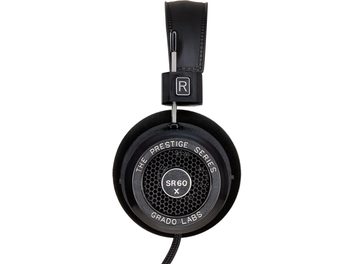
Paradoxically, many comparative tests suggest that the SR60x offers a more neutral tonal balance, with less pronounced treble than the SR80x. The SR80x justifies its higher price with slightly better build, a higher-quality cable, and more assertive dynamics, but the SR60x remains a compelling alternative to discover the Grado signature at a lower cost.
User reviews
Pascal
Excellent sound, I think it will improve even more after a few hours of break-in.
Comment from December 26, 2022 — Experience from December 15, 2022
Automatically translated — Show original (French)
Excellent son, je pense qu’il va encore s’améliorer après quelques heures de rodage.
Jacques
Excellent value for money. Lightweight headphones. A worthy headphone amp is not negligible.
Comment from November 24, 2022 — Experience from November 04, 2022
Automatically translated — Show original (French)
Excellent rapport qualité prix.
Légèreté du casque. Un ampli casque à la hauteur n'est pas négligeable.
To better understand our visitors, measure marketing effectiveness and personalise ads, we and our partners use cookies and mobile advertising identifiers on your device. This data makes it possible to display personalised and non-personalised ads and measure their performance. Some cookies, which are technically necessary, are exempt from consent. You can accept those that require your consent, refuse them by clicking "Refuse", or customise your choices via the settings screen.
To find out how Google uses the data collected once you have given your consent, see Google’s Business Data Responsibility site.
You can change or withdraw your consent at any time via the "Consent and cookies" link. Your choices will apply on our site for 12 months.