Audio Technica ATH-AWAS


Buy as a bundle and save

Overview
The ATH-AWAS headphones from Audio-Technica are a closed-back model, hand-assembled in Tokyo. They use Asada Zakura wood (Ostrya japonica), a rare species, for their earcups. Equipped with 53 mm drivers featuring a DLC coating and a dual acoustic chamber system, they follow in the footsteps of the ATH-W10VTG model from 1996. These headphones also feature A2DC connectivity and are compatible with balanced amplifiers.
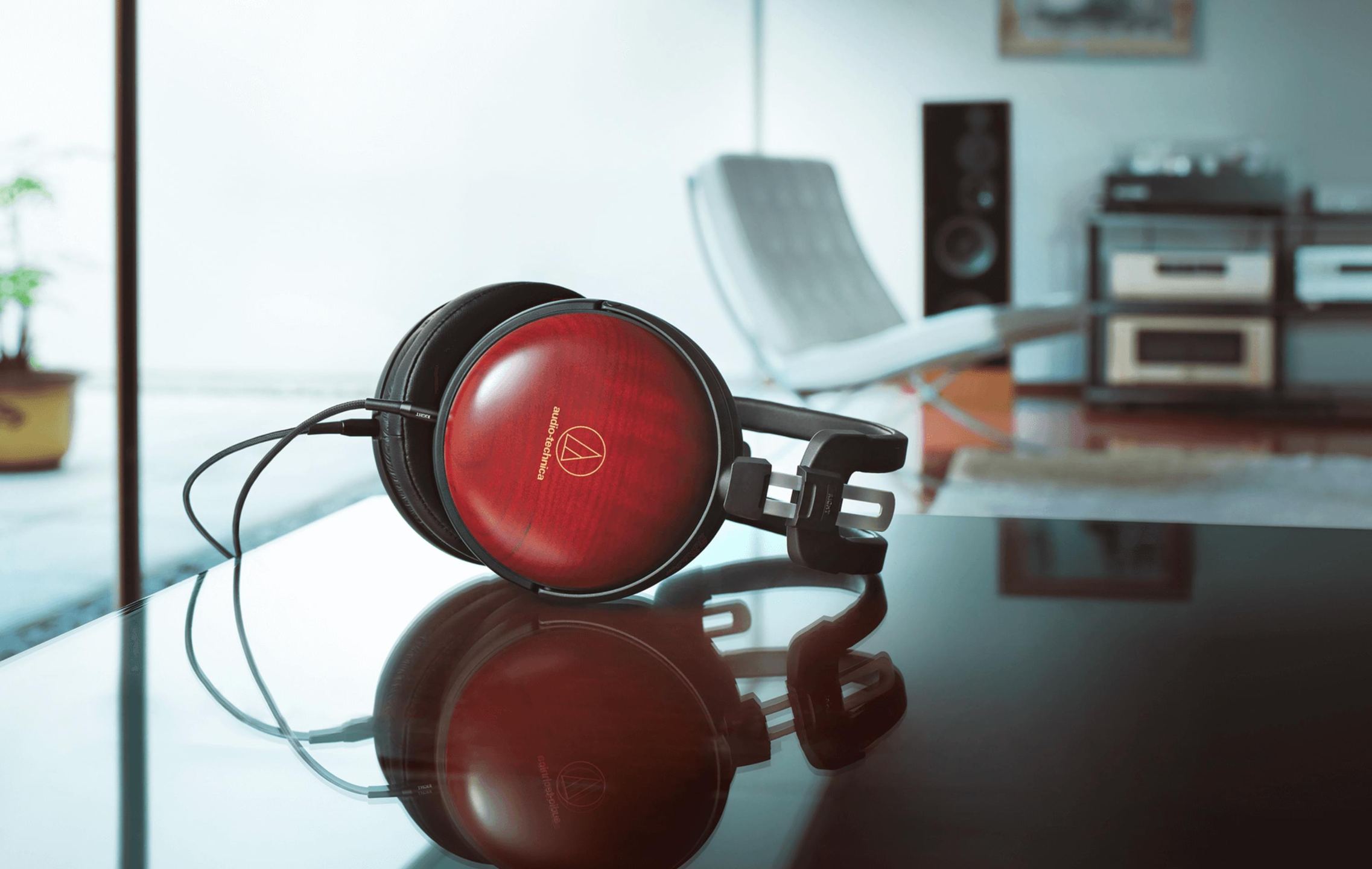
Asada Zakura Wood: An Exceptional Acoustic Species
Asada Zakura, or Japanese hop-hornbeam, belongs to a category of hardwoods highly prized in the manufacture of high-end acoustic instruments. This species stands out for its high density and homogeneous cellular structure, which gives the earcups a natural ability to absorb unwanted resonances. Unlike synthetic materials that can introduce undesirable coloration, Asada Zakura wood offers natural damping characteristics that contribute to a sound reproduction free of artifice.
Each pair of ATH-AWAS headphones has a unique visual character thanks to the natural variations in the wood grain. The warm red hue characteristic of Asada Zakura evolves over time, developing a patina that reflects use and the natural aging of the material. The semi-gloss finish, applied by hand by Audio-Technica’s craftsmen, highlights the subtlety of the grain while protecting the wood from external damage.
The use of this specific wood is not merely aesthetic. Audio-Technica’s engineers selected Asada Zakura for its measurable acoustic properties: an optimal damping coefficient in the mid-high frequencies and structural rigidity that minimizes unwanted vibrations in the earcups. This combination allows the drivers to operate in an acoustically stable environment.
Acoustic Architecture and Proprietary Technologies
The technical core of the ATH-AWAS is based on 53 mm dynamic drivers, specifically developed for this model. These speakers incorporate several major innovations that set them apart from conventional drivers.
The DLC (Diamond-Like Carbon) coating applied to the diaphragms is one of the technical hallmarks of these headphones. This layer of amorphous carbon, whose properties are similar to those of diamond, increases the rigidity of the diaphragm while maintaining its lightness. This combination extends the frequency response up to 42 kHz, far exceeding the requirements of the Hi-Res Audio certification, which demands reproduction up to at least 40 kHz.
The voice coils use 6N-OFC copper (six nines purity, i.e., 99.9999% oxygen-free copper). This extremely pure conductor minimizes signal loss and preserves the integrity of the musical message, especially in fast transients and complex passages.
The D.A.D.S. (Double Air Damping System) is an original approach to internal acoustic management. This technology, patented by Audio-Technica and present in all their high-end closed-back headphones, divides the rear space of the driver into two distinct acoustic chambers. This configuration allows precise control of the air movement behind the diaphragm, resulting in notable bass extension without sacrificing definition or introducing muddiness.
The pure iron yoke pieces are a rarely mentioned but crucial technical detail. Pure iron has specific magnetic and vibrational properties that improve transient transmission. This attention to detail, typical of the Japanese approach to high fidelity, reflects a constant pursuit of optimization in every component.
Mechanical Design and Ergonomics
The supporting structure of the ATH-AWAS uses a magnesium alloy for the support arms. This material, commonly used in aeronautics for its lightness and rigidity, keeps the total weight at 395 grams despite the use of solid wood for the earcups. The arms are angled to optimize the fit of the earcups on the head, ensuring even pressure distribution and optimal acoustic sealing.
The earpads and headband are covered in synthetic leather chosen for its tactile properties and durability. While some users might have preferred genuine leather at this price point, the synthetic option guarantees consistent performance over time and avoids the variations associated with the natural aging of animal leather.
The adjustment system allows precise height adjustment of the earcups with a notched mechanism that firmly holds the chosen position. The clamping force has been calibrated to ensure a stable fit without causing fatigue during long listening sessions.
Evolving Connectivity and Broad Compatibility
The ATH-AWAS adopts the A2DC (Audio Designed Detachable Coaxial) connection system developed by Audio-Technica in 2015. This proprietary interface uses a coaxial geometry that ensures optimal signal transmission while providing a robust mechanical connection capable of withstanding repeated handling.
Two cables of three meters each are included with the headphones, catering to different usage philosophies. The first, featuring a gold-plated 6.3 mm jack and an elastomer sheath, is intended for traditional setups with headphone amplifiers or dedicated outputs on hi-fi devices. The second cable, recognizable by its braided textile sheath, ends with a 4-pin male XLR connector for amplifiers offering a balanced output.
The balanced connection deserves special attention as it represents a significant evolution in headphone amplification. By completely separating the grounds of the left and right channels, this configuration virtually eliminates crosstalk and reduces background noise. High-end headphone amplifiers increasingly offer this option, and the ATH-AWAS allows you to take full advantage of it without additional investment in cabling.
Both cables use OFC (Oxygen-Free Copper) conductors that minimize internal oxidation and preserve transmission characteristics over the long term. The generous three-meter length is ideal for home use, providing ample freedom of movement when using hi-fi systems located away from the listening position.
Technical Specifications
Transducers and Technology
- Type: Closed-back dynamic circumaural headphones
- Transducers: 53 mm with DLC (diamond-like carbon) coating
- Integrated magnetic circuit
- D.A.D.S. system: double acoustic chamber for extended bass reproduction
Audio Performance
- Frequency response: 5 Hz – 42,000 Hz
- Sensitivity: 99 dB / mW
- Impedance: 40 Ω
- Maximum input power: 2,000 mW
- Hi-Res Audio certified
Materials and Construction
- Ear cups: Japanese asada zakura wood, hand-applied semi-gloss finish
- Arms: Angled magnesium alloy for a natural fit
- Junction brackets: Pure iron for improved transient response
- Hand-assembled in Tokyo
Comfort and Ergonomics
- Weight: 395 g (without cable)
- Headband and earpads: Soft synthetic leather for long-lasting comfort without fatigue
- Angled arms: Optimal pressure distribution on the ears
Connectivity and Cabling
- Headphone connectors: A2DC (Audio Designed Detachable Coaxial)
- Detachable 3 m asymmetric cable
- A2DC connector to 6.3 mm gold-plated stereo jack
- Elastomer sheath
- Oxygen-free copper (OFC) conductor
- Detachable 3 m balanced cable
- A2DC connector to 4-pin male XLR
- Textile sheath
- Oxygen-free copper (OFC) conductor
Accessories
- Carrying case
Highlights
- Japanese asada zakura wood: natural acoustics and controlled resonance
- 53 mm transducers with DLC coating for precise high-frequency reproduction
- Hi-Res Audio certification (up to 42 kHz)
- Two interchangeable cables: asymmetric (6.3 mm) and balanced (4-pin XLR)
- Hand-assembled in Tokyo with proven artisanal craftsmanship
Frequently Asked Questions
What is the main difference between the ATH-AWAS and the more expensive ATH-AWKT?
Beyond the choice of wood (Asada Zakura vs. Kokutan ebony), the ATH-AWAS uses 53 mm drivers with an impedance of 40 ohms and a sensitivity of 99 dB/mW, while the AWKT employs slightly different drivers at 48 ohms and 102 dB/mW. The AWKT’s earpads are made of genuine sheepskin, while the AWAS uses synthetic leather. Both models, however, share the D.A.D.S. architecture and A2DC connectivity.
Is the XLR balanced cable really useful if my amplifier only has a standard jack output?
The XLR cable only offers advantages if your amplifier has a dedicated balanced output. Otherwise, the supplied unbalanced 6.3 mm jack cable will fully exploit the headphones’ capabilities. The presence of the XLR cable is a future-proofing feature should you decide to invest in a compatible amplifier.
How should I care for the Asada Zakura wood earcups?
The wood benefits from a protective factory-applied finish that requires no special maintenance. Simply avoid prolonged exposure to direct sunlight and extreme humidity changes. Regular dusting with a dry microfiber cloth is sufficient. The wood will naturally develop a patina over time, a normal phenomenon that adds to the unique character of each unit.
Does the ATH-AWAS require a dedicated headphone amplifier?
With an impedance of 40 ohms and a sensitivity of 99 dB/mW, the ATH-AWAS can technically be used with portable sources. However, a quality headphone amplifier will fully reveal the headphones’ potential, especially in terms of dynamics and bass control. Tube amplifiers add an interesting warmth to these headphones.
Is the frequency response up to 42 kHz really useful?
Although human hearing theoretically tops out at 20 kHz, the headphones’ ability to reproduce ultra-high frequencies influences phase response in the audible band and contributes to a sense of air and naturalness. This extension also allows for optimal use of high-resolution 24-bit/96 kHz or higher files.
- Eco-contribution of €1.67 included in the sale price.
- GTIN / EAN: 4961310153229