
Nicolas
Very good subwoofer. Edge finish has turned white
Comment from February 15, 2026 — Experience from December 27, 2025
Automatically translated — Show original (French)
Très bon caisson de basse. Finition des arrêtes se blanchies
This product is no longer available for sale!
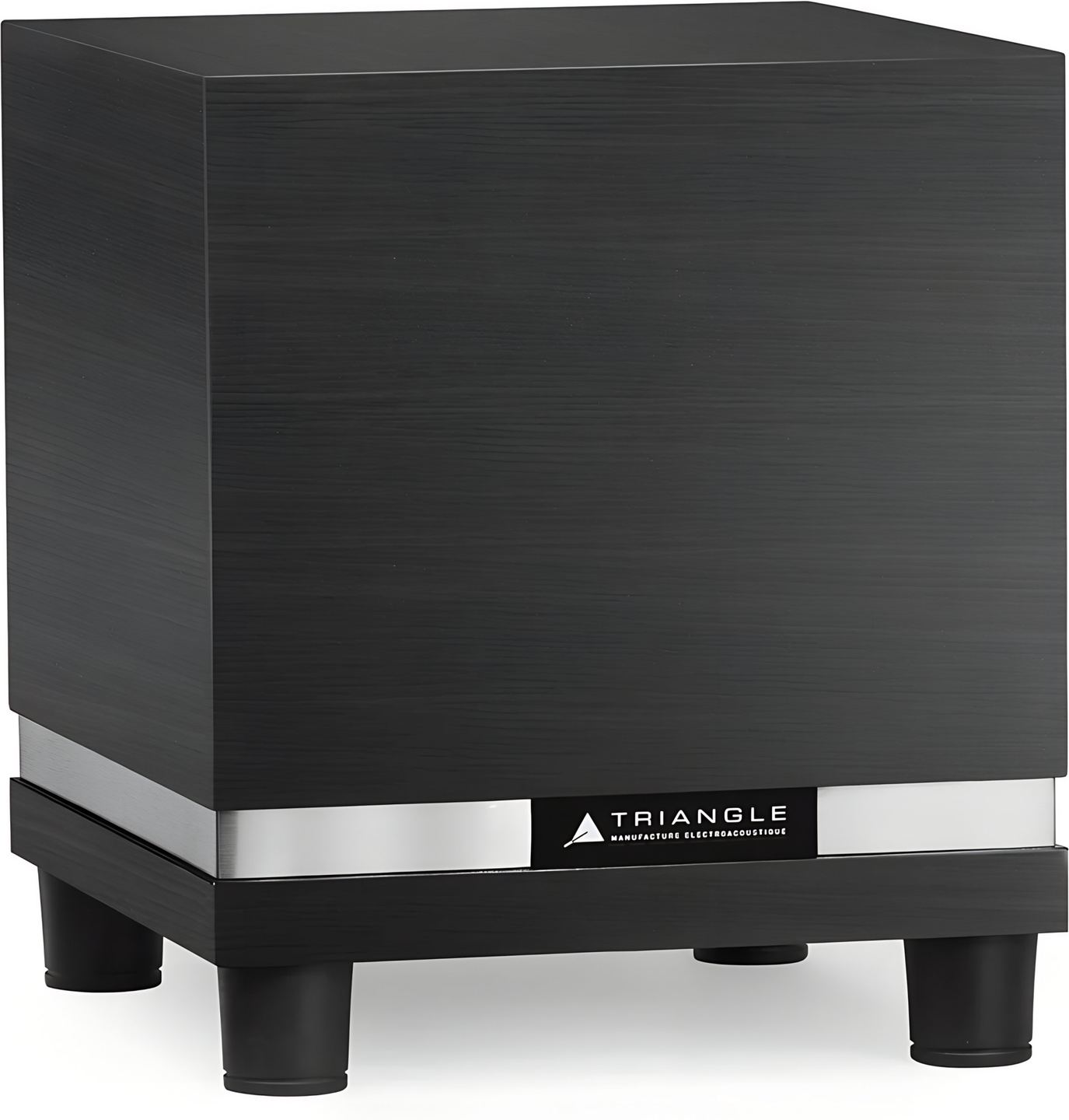
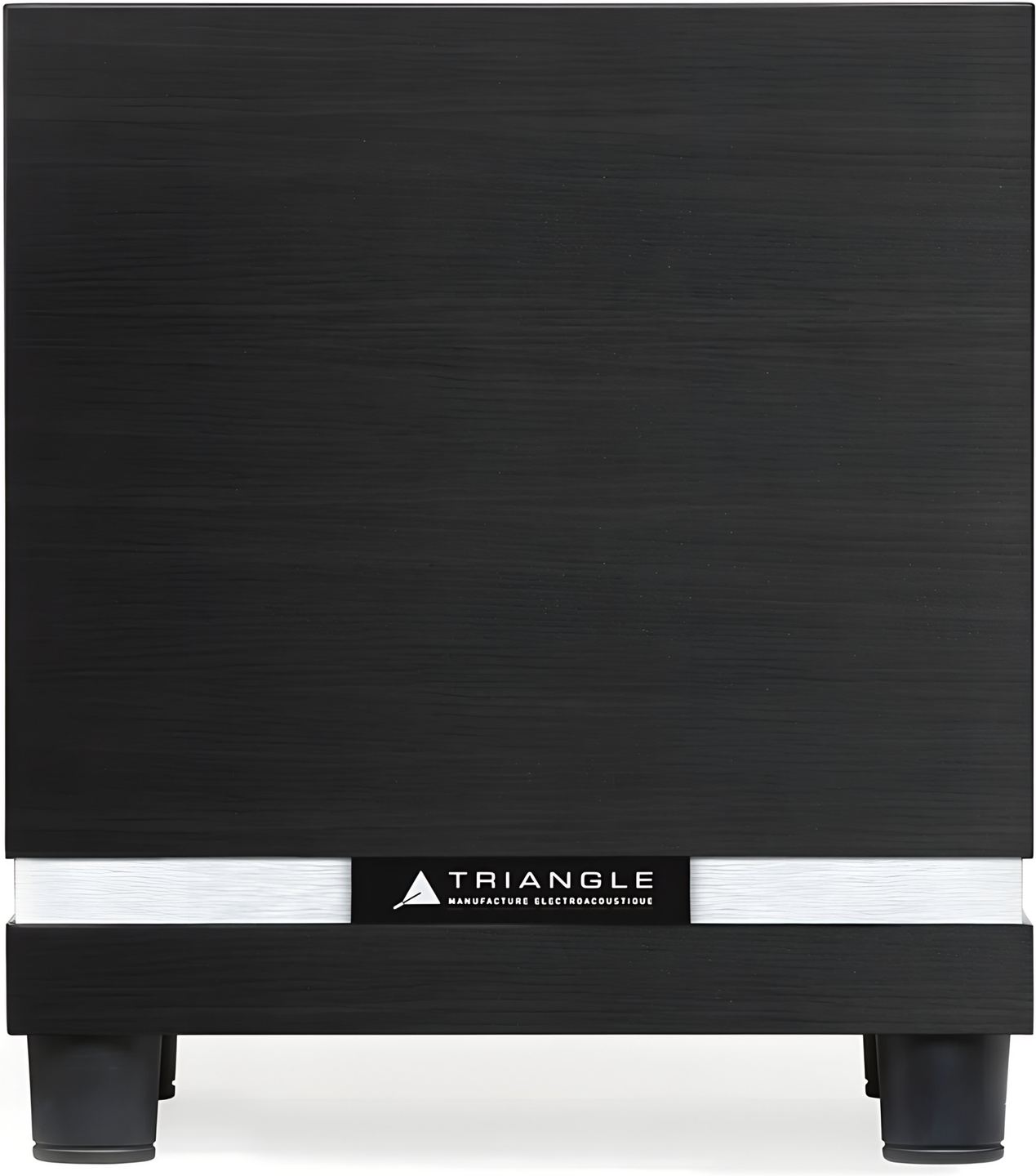
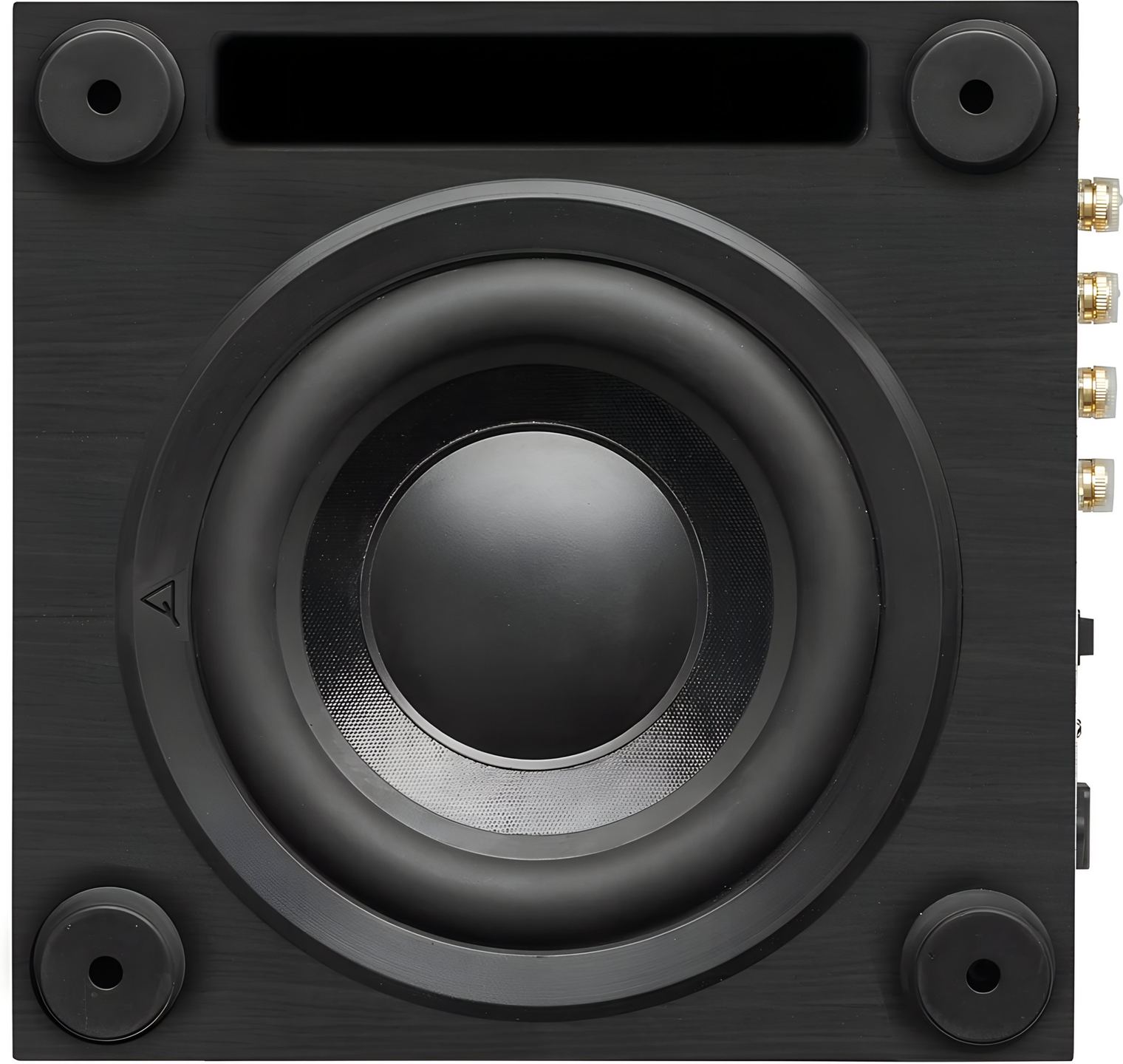
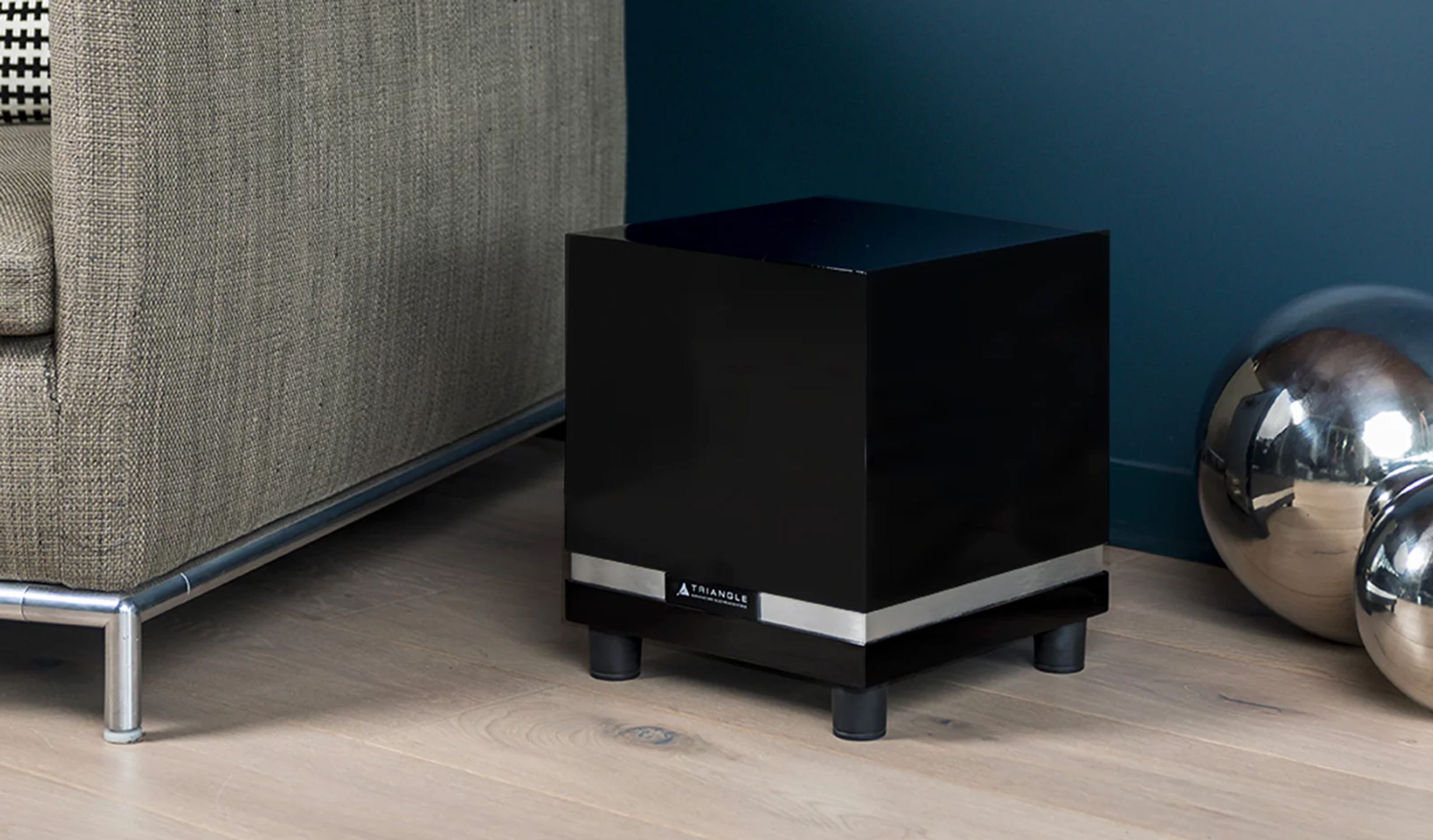
The Triangle Thetis 300 is an active subwoofer in a compact format, equipped with a 20 cm composite membrane driver and 150-watt class D amplification. Its bass-reflex enclosure, featuring a laminar port, is designed to limit air turbulence while blending visually into a living space.
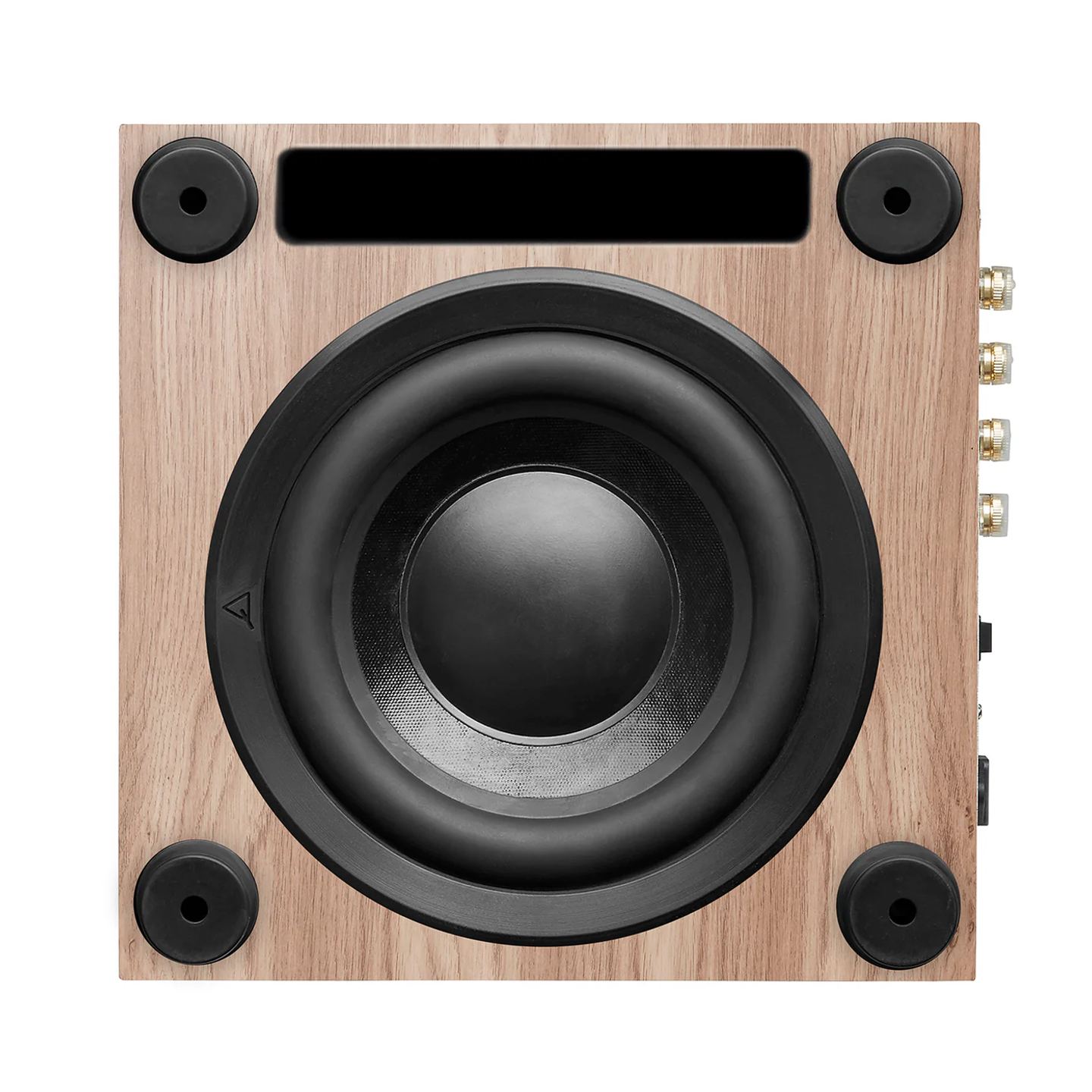
At the heart of the Thetis 300 is a 20-centimeter downward-firing transducer, a configuration that optimizes bass frequency dispersion in all directions. This composite membrane, combining cellulose and carbon fibers, offers exceptional rigidity while maintaining the crucial lightness needed for responsiveness. The engineers paired this driver with an oversized motor and controlled suspensions, allowing for remarkable power handling without audible distortion.
The 150-watt RMS (250-watt peak) class D amplification powers this transducer with optimal energy efficiency. This modern amplification technology ensures minimal heat generation while delivering instant power capable of reproducing the most demanding dynamics, from cinematic explosions to jazz double bass attacks.
The Thetis 300’s bass-reflex design deserves special attention. The laminar port, unlike traditional tubular ports, drastically reduces unwanted noise caused by air turbulence. This design allows the subwoofer to fully exploit the Helmholtz resonator principle: at the tuning frequency, the port accumulates and releases energy with a calculated time delay, significantly extending the bass response down to 32 Hz while maintaining a compact enclosure volume.
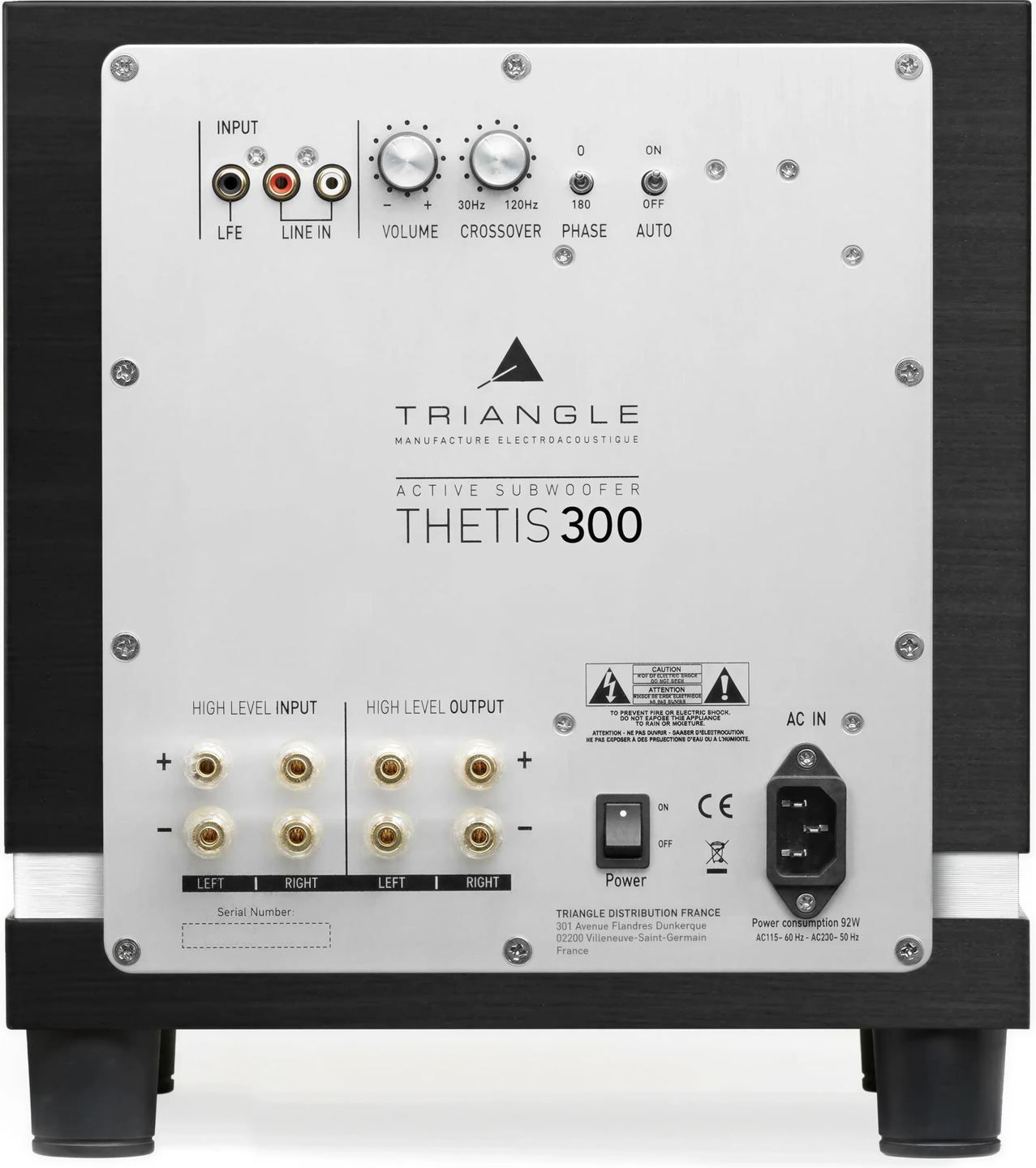
The Thetis 300’s connectivity reflects a rare commitment to universality. The unfiltered LFE input allows direct integration into home theater setups, leaving crossover management to the audio/video processor. Standard stereo RCA inputs accommodate line signals from traditional hi-fi systems.
More uniquely, the high-level inputs allow the subwoofer to connect directly to the speaker outputs of amplifiers without a dedicated subwoofer output. This feature opens the Thetis 300 to vintage systems or entry-level integrated amplifiers, making deep bass accessible to a wider audience.
Rear-panel controls for volume, crossover frequency, and phase allow precise matching with main speakers. The ability to adjust phase is especially useful for optimizing acoustic coupling, whether the subwoofer is placed in front of or behind the listening position.
The front LED display instantly shows the volume level, making adjustments easy during initial setup or when changing sources. The included infrared remote control allows you to adjust the volume and put the unit into standby from a distance, making daily use seamless.
The automatic power-on function detects the presence of a signal and activates the subwoofer without manual intervention. After 20 minutes of silence, standby mode engages automatically, reducing power consumption to a minimum. This built-in intelligence allows you to place the Thetis 300 in a discreet or even inaccessible location without sacrificing convenience.
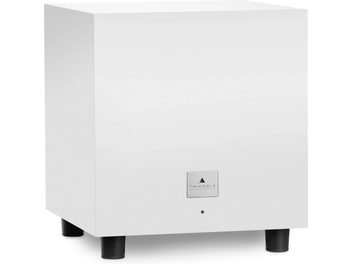
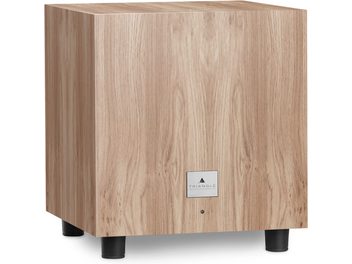
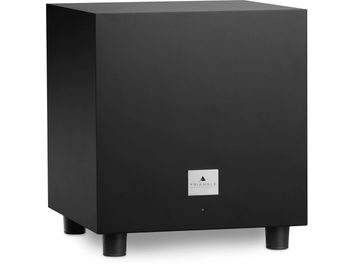
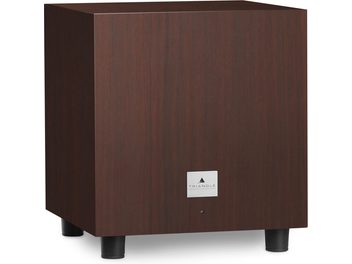
Its compact dimensions (30 x 34 x 30 cm) and moderate weight (10.6 kg) make it easy to integrate into tight spaces. The light oak finish adds a touch of natural warmth that complements contemporary interiors, while the signature silver band of the Thetis subwoofers visually lightens the overall look.
Contrary to popular belief, a subwoofer with a rear port can be placed relatively close to a wall. As long as the distance between the back of the subwoofer and the wall exceeds the diameter of the port, performance remains optimal. In practice, 15 to 20 centimeters is usually enough to preserve the effectiveness of the bass-reflex system.
The Thetis 340 features a 25 cm transducer and 250-watt RMS amplification, offering greater extension and power. The 300 is perfectly suited for small to medium-sized rooms (up to 30 m²), while the 340 is aimed at larger spaces or users seeking higher sound levels.
The setting depends on your main speakers. For compact bookshelf speakers, a crossover between 80 and 100 Hz generally works well. With floorstanders, go down to 50–60 Hz. Ideally, experiment by listening to different tracks to find the point where the transition becomes seamless.
Absolutely. The high-level inputs allow you to connect the Thetis 300 to the speaker terminals of any amplifier. The signal is then filtered internally to keep only the low frequencies. This solution preserves the signal sent to your main speakers while adding bass extension.
The detection circuit is sensitive enough to activate as soon as the first audio signals are present. The wake-up delay is imperceptible in normal use. If you prefer to disable this function, simply switch the AUTO selector to the OFF position.
Nicolas
Very good subwoofer. Edge finish has turned white
Comment from February 15, 2026 — Experience from December 27, 2025





