Inakustik Connect 212 Sub-Y 2m

Overview
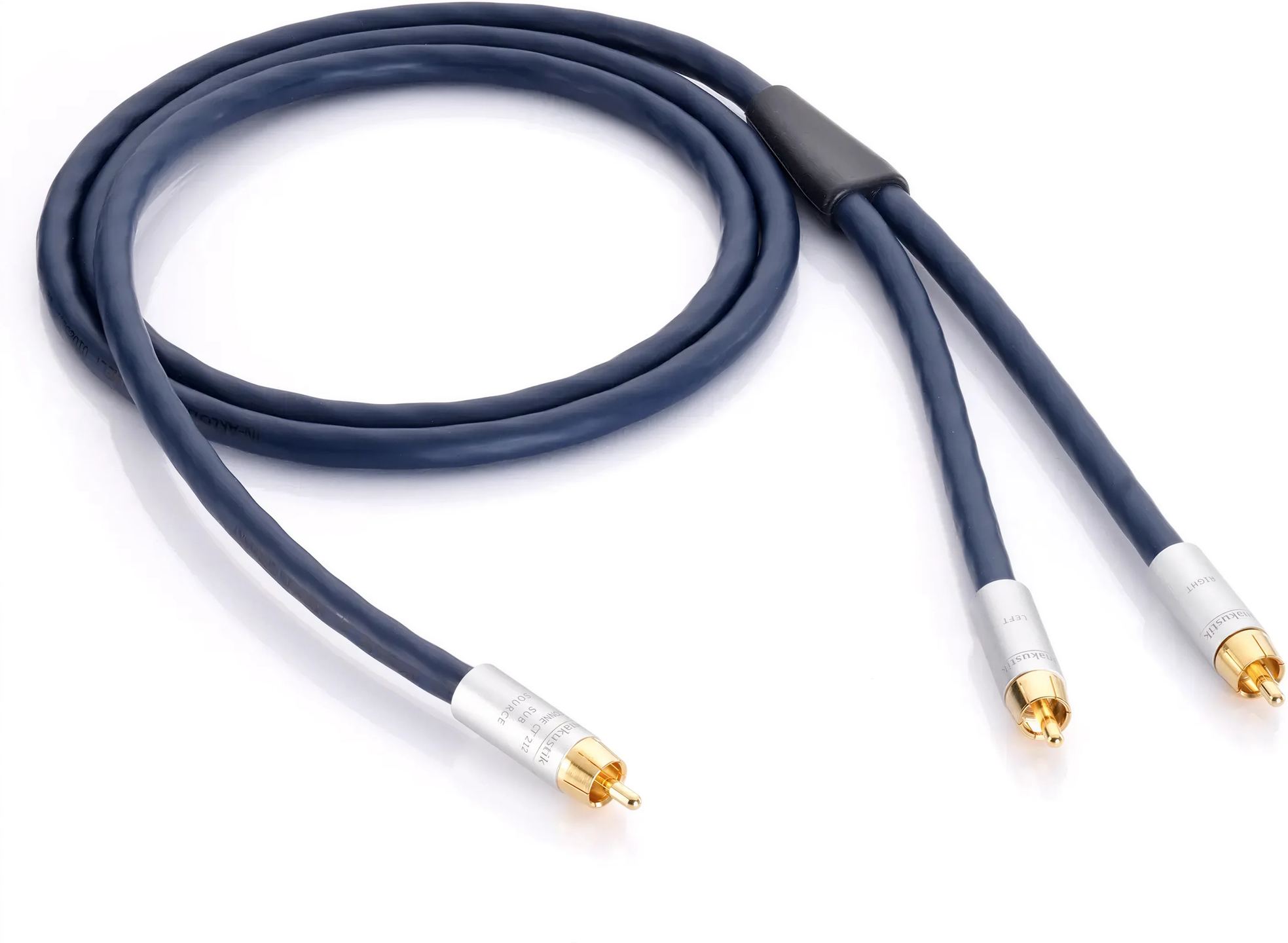
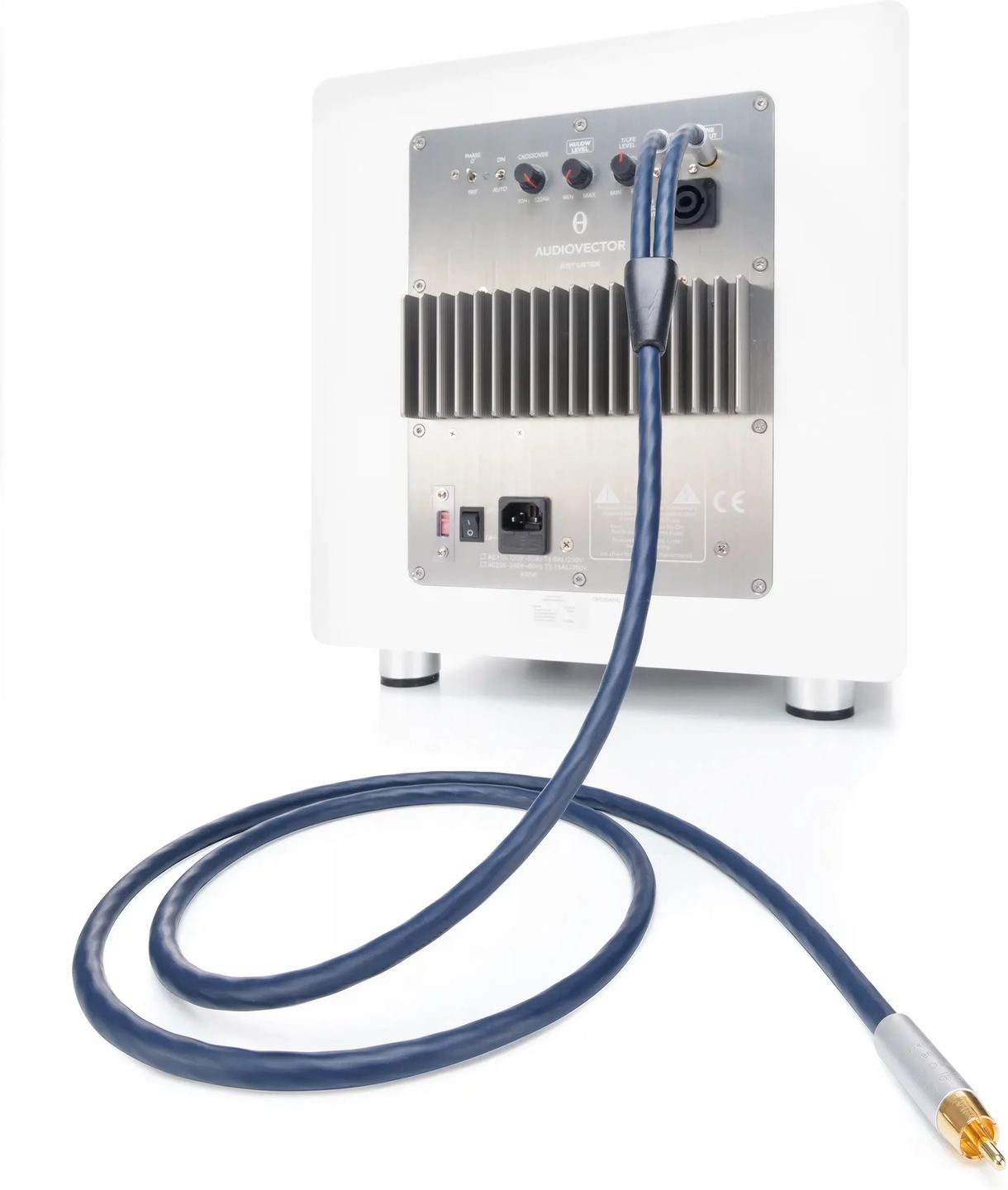
The Connect 212 Sub-Y from Inakustik is a cable designed for transmitting low-frequency signals between a home theater amplifier and a subwoofer. Its Y-configuration allows for a connection suited to systems requiring two inputs. Made in Germany, it combines a symmetrical construction with floating shielding and OFC copper conductors. This design aims to limit electromagnetic interference and maintain signal integrity in low frequencies.
Technical Architecture and Material Choices
The Connect 212 Sub-Y stands out thanks to its Y-splitter configuration: a single male RCA input splits into two male RCA outputs. This geometry addresses a specific need: many subwoofers have two inputs (left and right) even though the LFE (Low Frequency Effects) signal is inherently mono. Using both inputs typically results in a gain of about 3 dB in the subwoofer’s output level.
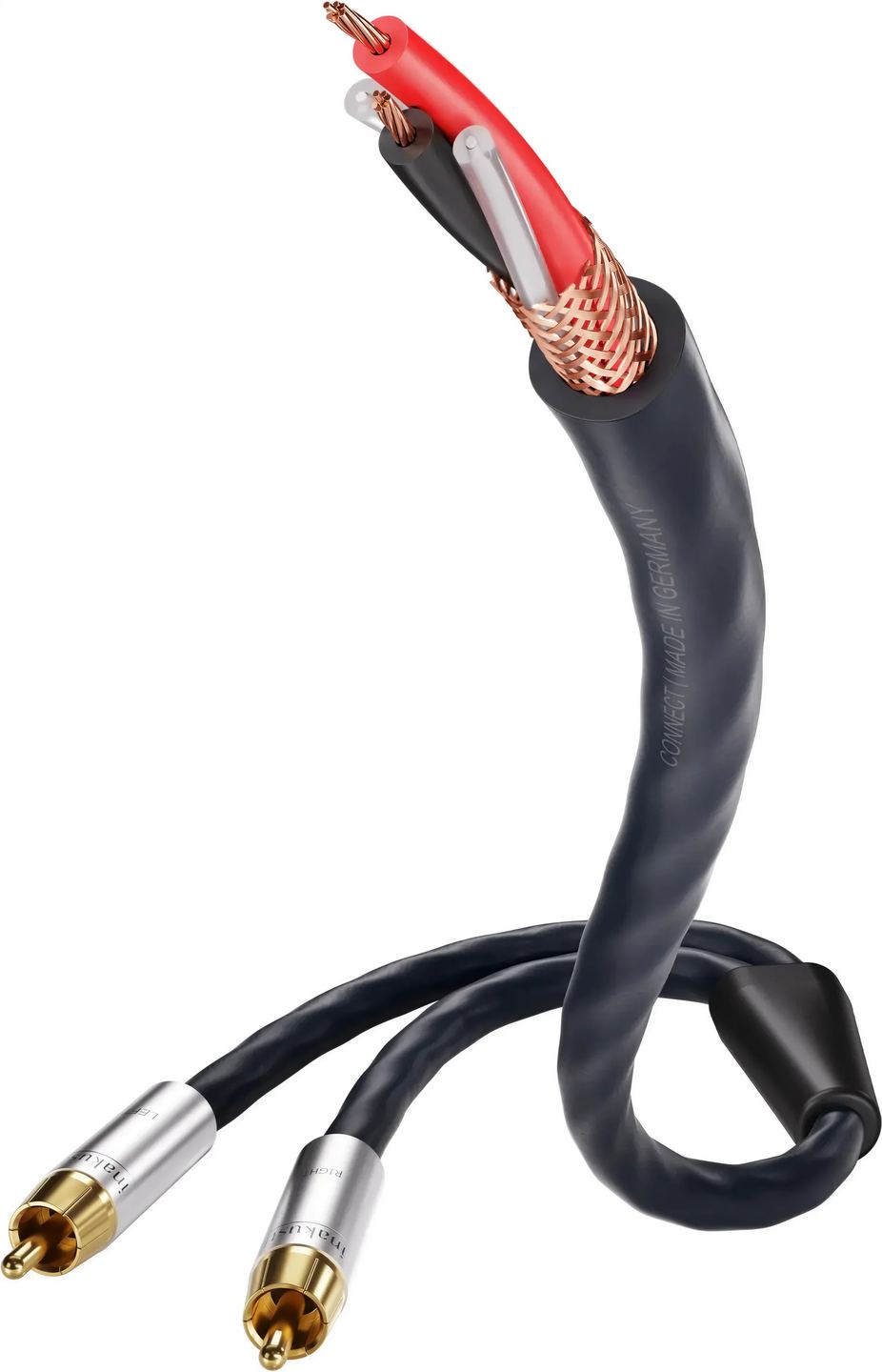
The central conductors use 99.95% pure OFC (Oxygen-Free Copper), arranged in 7 strands of 0.20 mm each. This choice of deoxygenated copper minimizes crystalline impurities that could impede electron flow, which is especially critical for the high-amplitude signals typical of low frequencies.
The conductors are insulated with expanded polyethylene, a dielectric whose cellular structure incorporates air. This technique reduces the material’s dielectric constant, thus limiting capacitive losses and preserving the signal’s temporal integrity. The cable’s outer diameter reaches 8.5 mm, offering a balance between robustness and flexibility to facilitate installation behind equipment.
Floating Shielding: Sophisticated Protection Against Interference
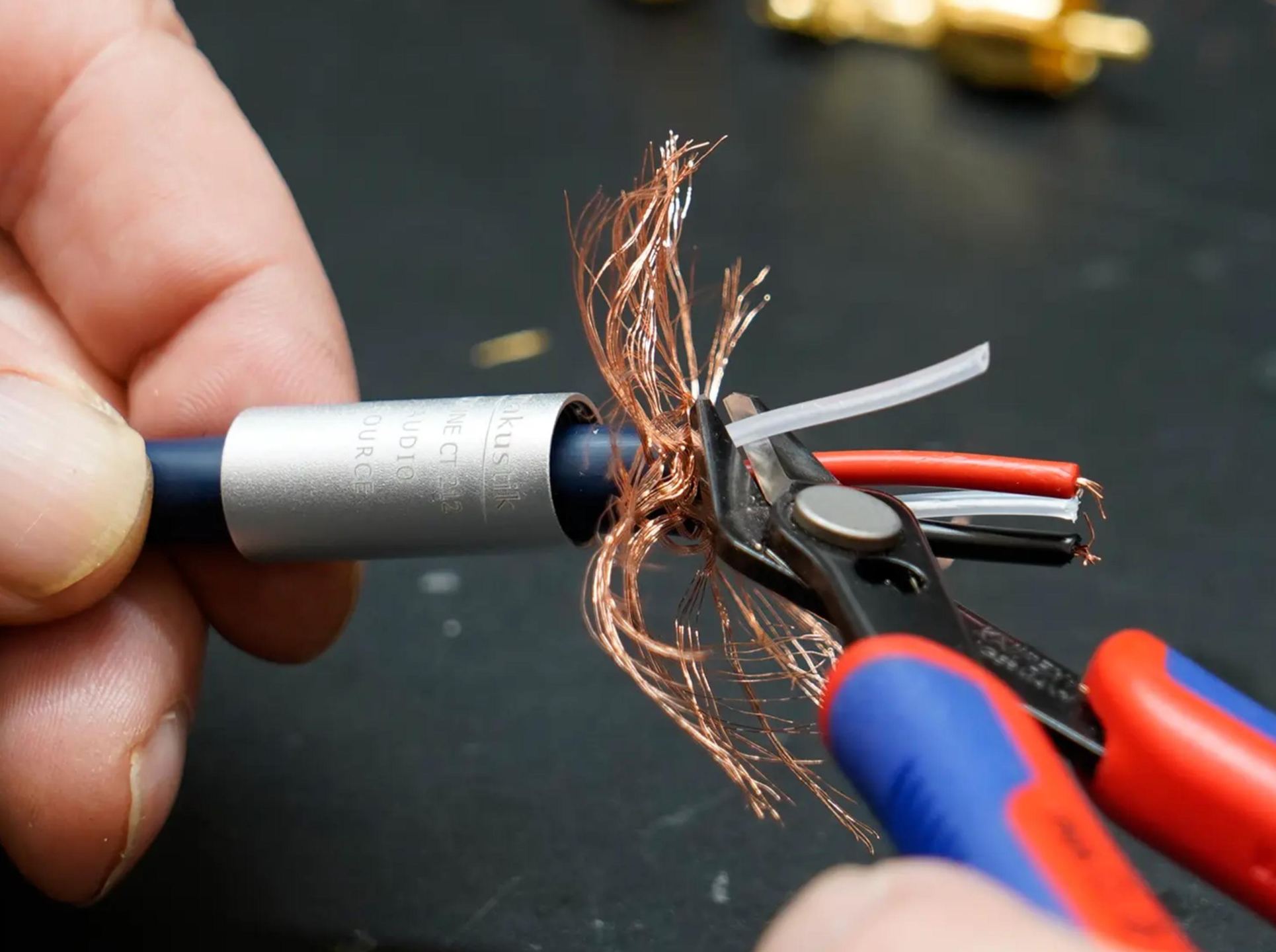
The shielding design is one of the most sophisticated aspects of the Connect 212 Sub-Y. A high-density copper braid made up of 186 strands surrounds the conductors in what’s known as a “floating” architecture. This means the shielding is electrically connected at only one end of the cable, thus avoiding the formation of ground loops.
In a modern home theater environment saturated with wireless signals (Wi-Fi, Bluetooth, mobile phones), this type of shielding acts as a partial Faraday cage. Parasitic electromagnetic fields induce currents in the copper braid, but these currents are drained to ground without affecting the useful signal. The high density of the braid (186 strands) ensures optimal coverage, particularly effective against high-frequency interference.
The “floating” nature of the shielding deserves special attention. Unlike shielding connected at both ends, which can create a ground loop carrying stray currents, the single connection allows induced charges to be drained while maintaining galvanic isolation. This technique is especially relevant for subwoofer connections, where long cable runs (up to 5 meters) increase susceptibility to interference.
Connectors and Assembly: Attention to Detail
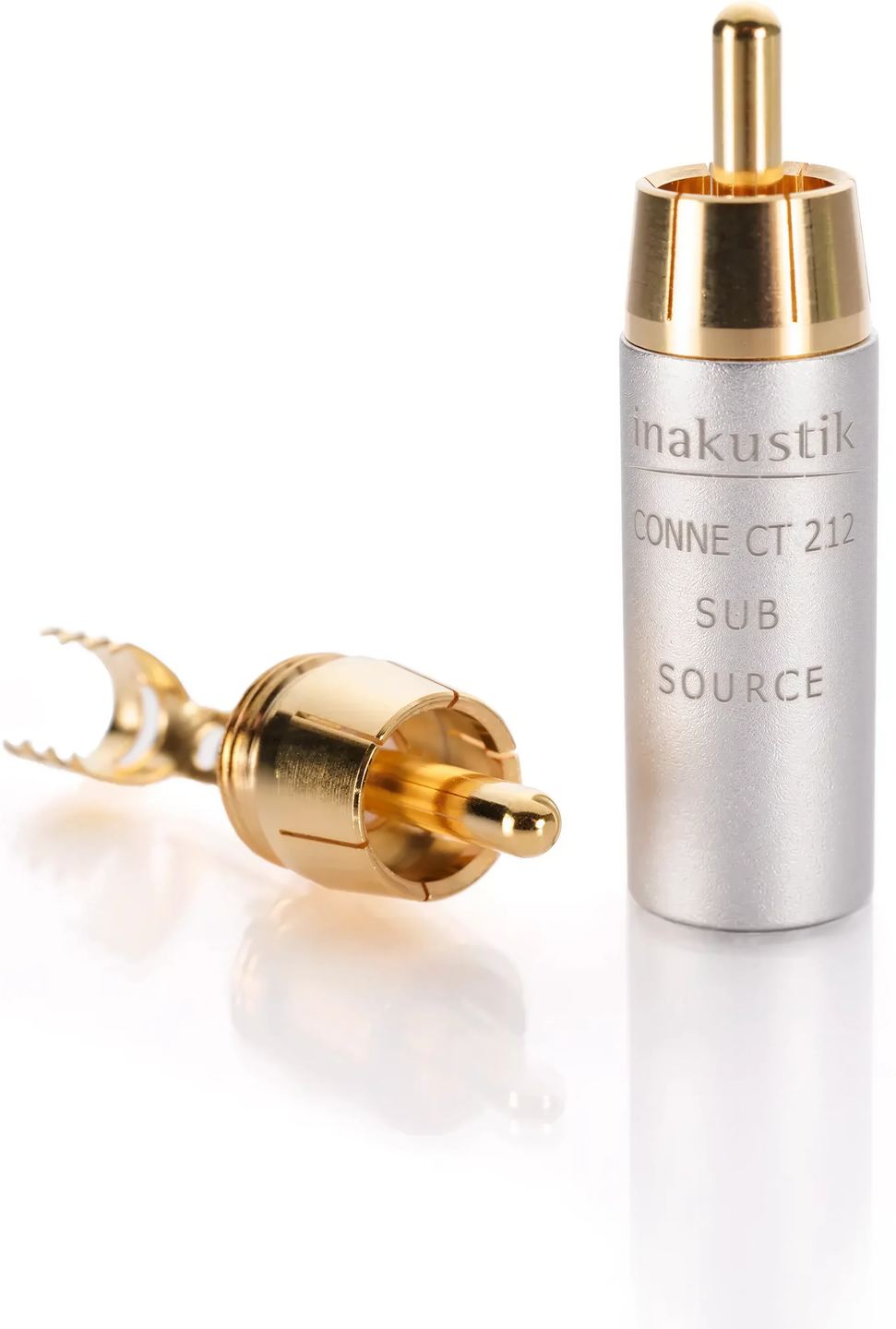
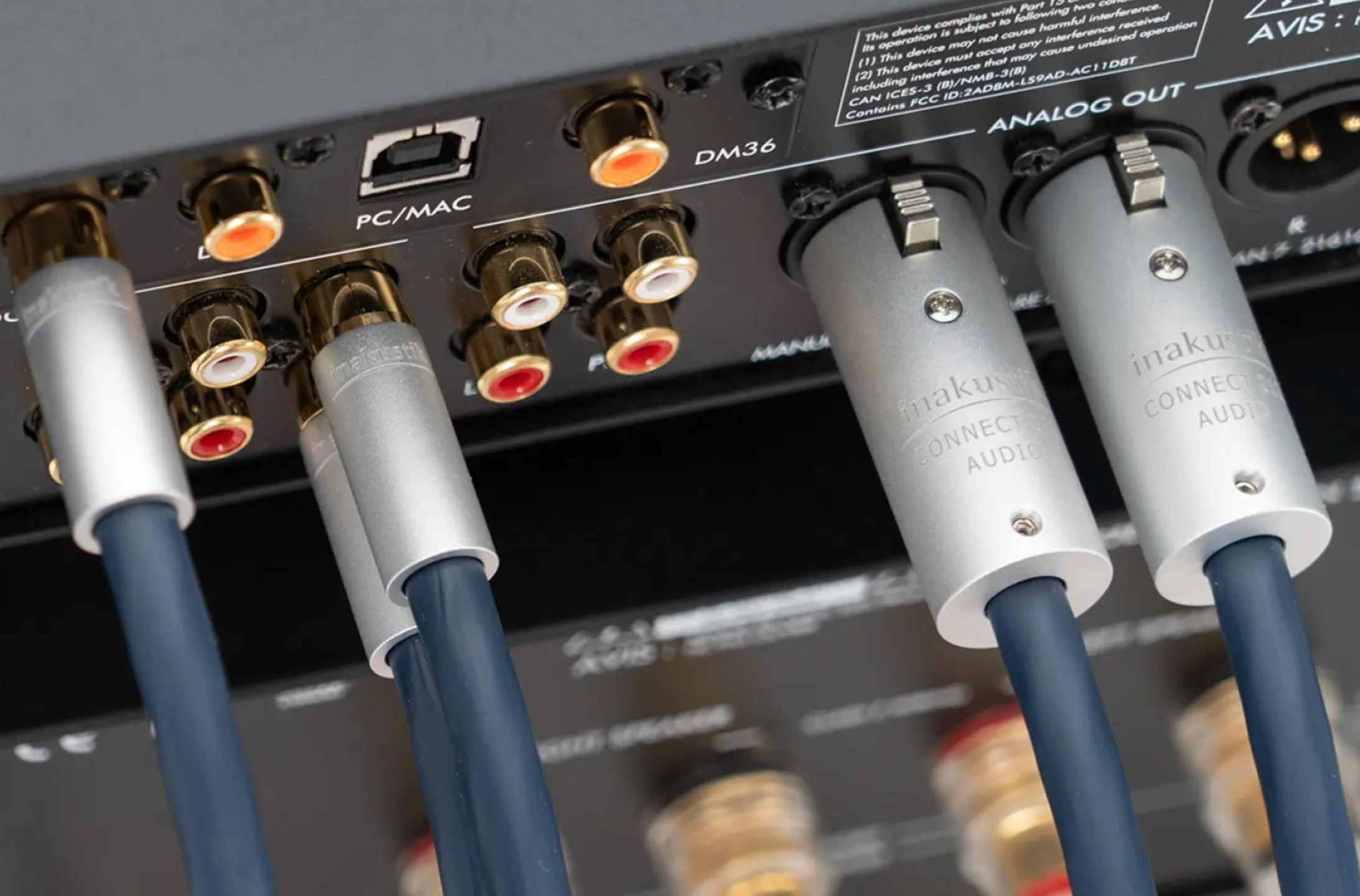
The RCA connectors use a solid brass body with gold-plated contacts. Brass offers excellent electrical conductivity while providing the mechanical rigidity needed for repeated connections. The gold plating, though thin, protects the contact surfaces from oxidation, which could increase contact resistance over time.
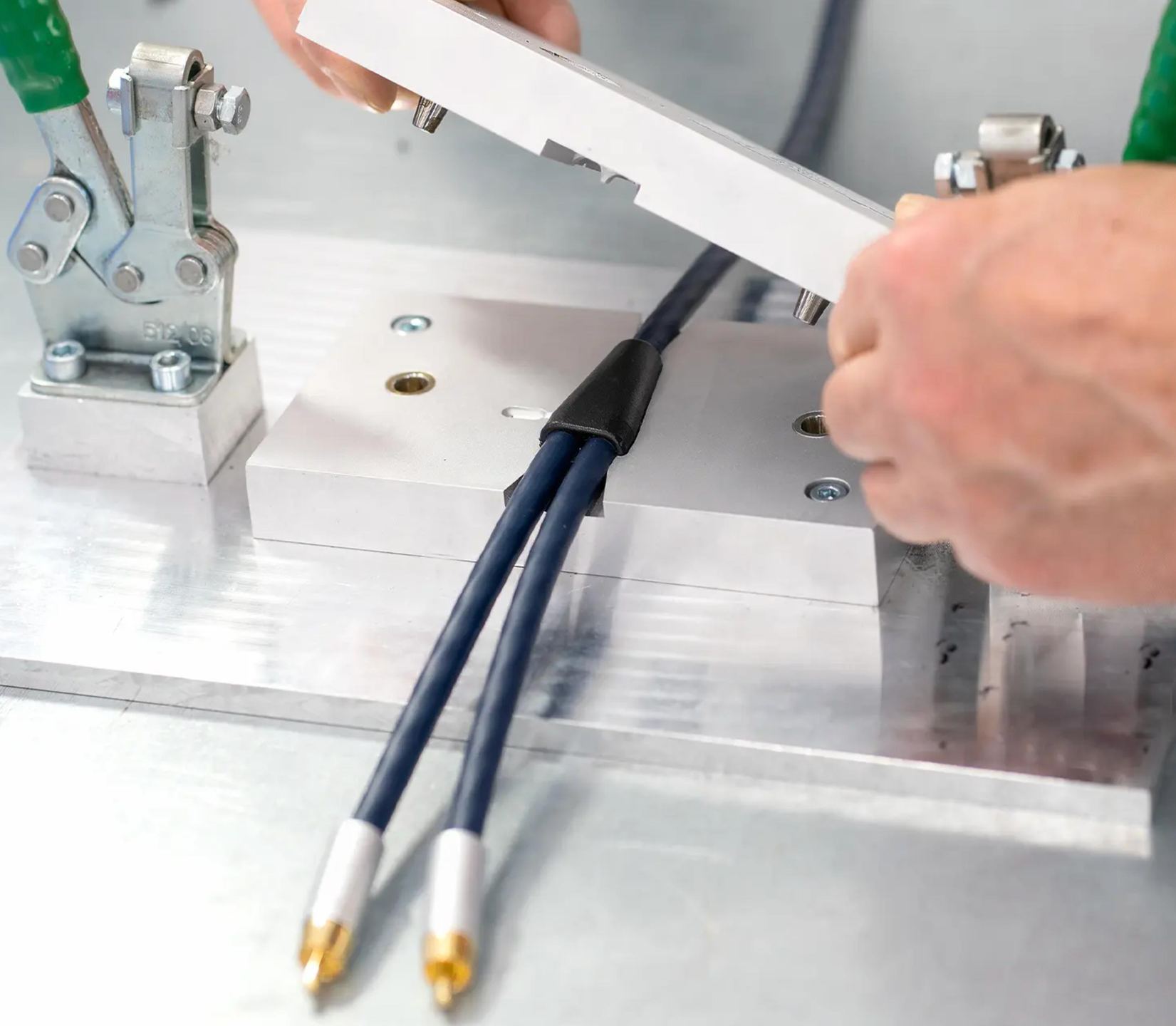
Each cable undergoes manual assembly, including soldering the conductors to the connectors. This critical step is subject to individual inspection: continuity testing to verify connection integrity and short-circuit testing to ensure there is no contact between conductor and shielding. The signal direction is marked on the cable, allowing for consistent installation, although the practical impact of this directionality remains a topic of debate in the audio field.
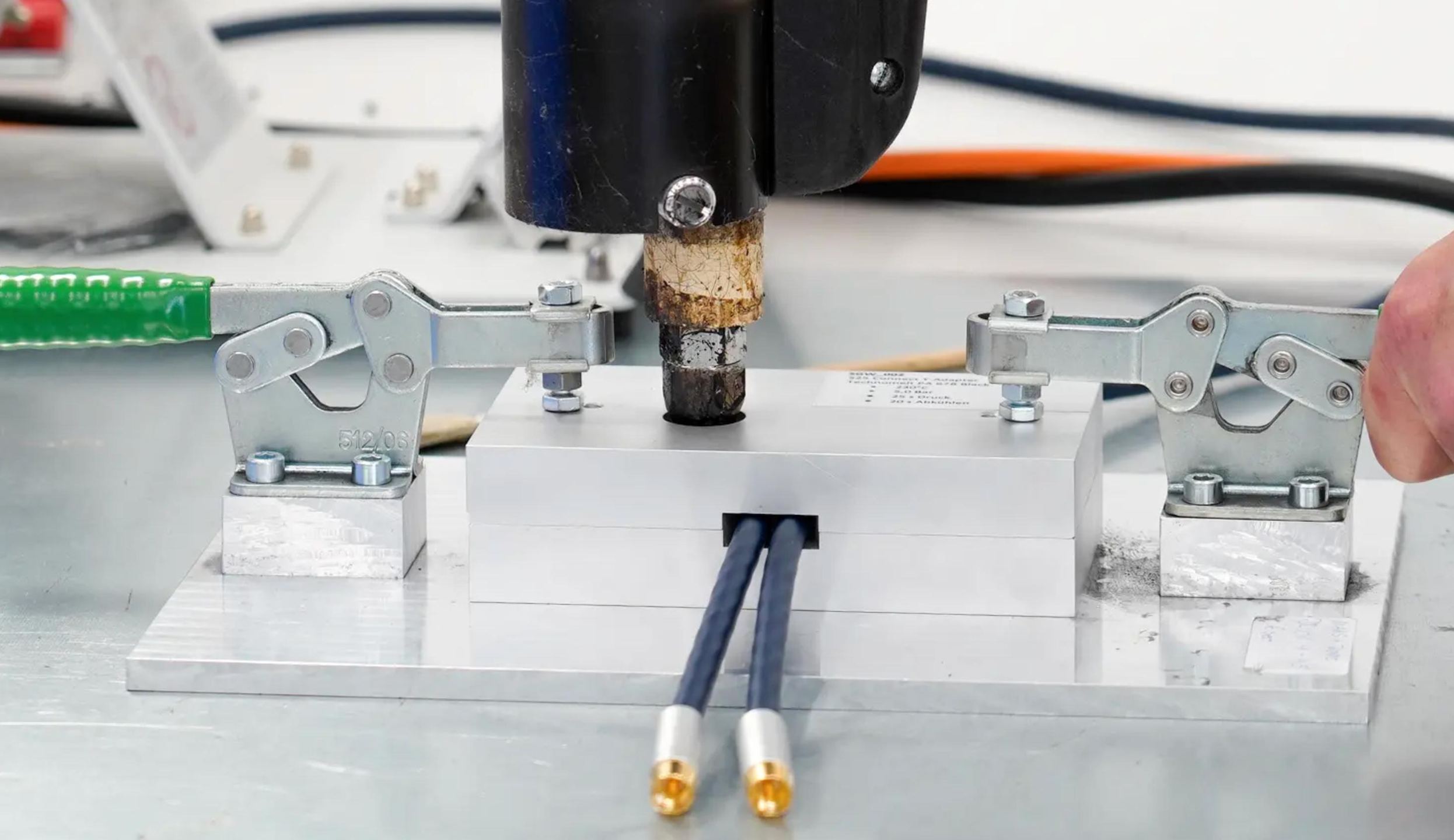
The Y-junction, where the single cable splits into two branches, benefits from specific mechanical reinforcement. This area is subject to significant stress during installation and unplugging. The high-flexibility dark blue PVC sheath makes visual identification easy while providing durable mechanical protection.
Documentation
Technical Specifications
Connectivity Specifications
- Cable type: analog audio for subwoofer (low frequency)
- Connector: 1 x male RCA to 2 x male RCA (Y-splitter)
- Impedance: suitable for low-frequency effects (LFE) transmission
- Available lengths: 2 m, 3 m, 5 m
- Signal direction: indicated for optimal installation
Construction and Materials
- Conductors: OFC copper (99.95% purity) 7 x 0.20 mm
- Dielectric: low-capacitance, low-loss expanded polyethylene
- Shielding: high-density copper braid (186 strands) with floating shield
- Connectors: solid metal with gold-plated contacts (material: brass)
- Outer jacket: highly flexible PVC, dark blue color
- Cable outer diameter: 8.5 mm
Performance and Features
- Symmetrical design with floating shield
- Dynamic, powerful bass thanks to ultra-pure OFC copper conductors
- Expanded polyethylene dielectric for minimal loss and faithful reproduction
- Double active and floating shielding: maximum protection against interference
- Premium connectors: gold-plated contacts, low resistance, enhanced durability
- Highly flexible and discreet design for easy integration into any audio/video setup
Manufacturing and Quality
- Assembly: hand soldering, continuity and short-circuit testing
- Manufacturing: 100% made in Germany, hand-assembled in the in-akustik workshop
- Each cable is individually tested
- Custom assembly available on request (specific lengths or connectors)
General Information
- Certifications: CE, RoHS, REACH
- Specifically designed to optimize subwoofer signal transmission
Frequently asked questions
What’s the difference between a standard mono subwoofer cable and a Y cable?
The Y cable allows you to feed both inputs of a stereo subwoofer with a mono signal. This configuration effectively doubles the input impedance seen by the subwoofer’s amplifier, which generally results in an output level increase of about 3 dB. For subwoofers with only a single mono input, a standard cable is sufficient.
Is floating shielding really more effective than standard shielding?
In home environments with multiple sources of interference and equipment with potentially different grounds, floating shielding prevents the creation of ground loops. These loops can carry circulating currents that generate a 50 Hz hum. However, effectiveness depends on the quality of the grounds in your setup.
Why use OFC copper instead of standard copper?
OFC copper contains less than 0.001% oxygen compared to about 0.02% for standard electrolytic copper. Copper oxides form microscopic barriers to electron flow. For the high-amplitude, low-frequency signals typical of subwoofers, these micro-resistances can generate non-linear distortion.
Does the directionality marking really matter?
Technically, a perfectly symmetrical cable should not exhibit directionality. However, the manufacturing process (copper drawing, shielding assembly) can introduce slight asymmetries. The marking mainly allows for consistent installation and may have a non-negligible psychoacoustic impact.
Is this cable suitable for all types of subwoofers?
The Connect 212 Sub-Y is designed for active subwoofers with RCA line-level input. Passive subwoofers require speaker cables capable of carrying amplified signals. Some professional subwoofers use balanced XLR connections, which require different cables.
Does the “Made in Germany” certification justify a higher price?
Manual assembly in Germany involves high labor costs but guarantees individual quality control. Each cable is tested, unlike mass production. Complete traceability from copper ore to finished product remains exceptional in the audio cable industry.
- Eco-contribution included in the sale price.
- Manufacturer reference: 0063212220
- GTIN / EAN: 4001985529841