PSB Imagine T65 white (pack of 2)


Overview
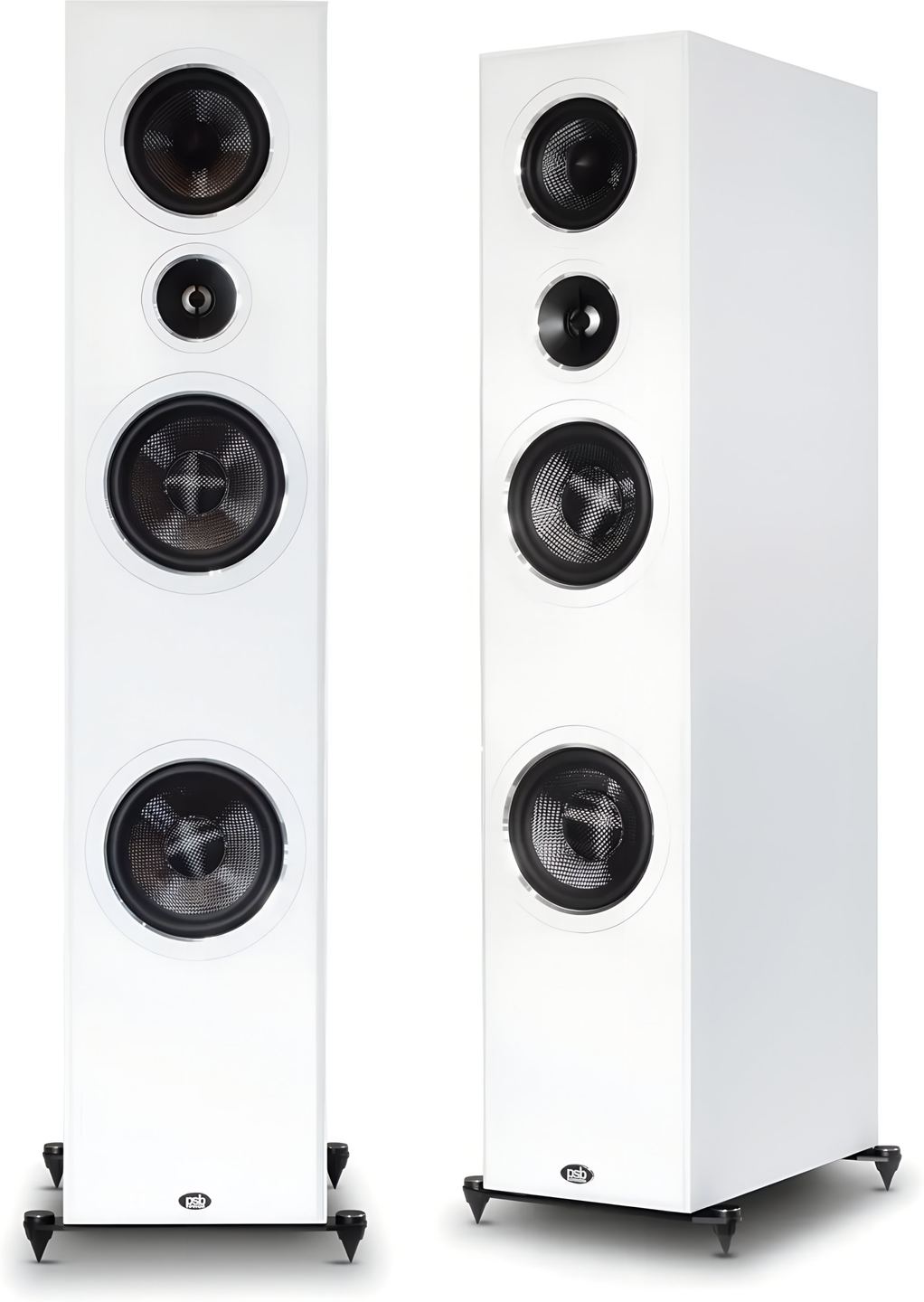
The PSB Imagine T65 represent an evolution in the Canadian manufacturer’s lineup. These three-way floorstanders combine technologies derived from the Synchrony series with pricing aimed at a broader audience. Developed in collaboration with the National Research Council of Canada, they apply founder Paul Barton’s “True to Nature” philosophy in a format designed to blend seamlessly into contemporary interiors.
Sophisticated acoustic design in the service of musicality
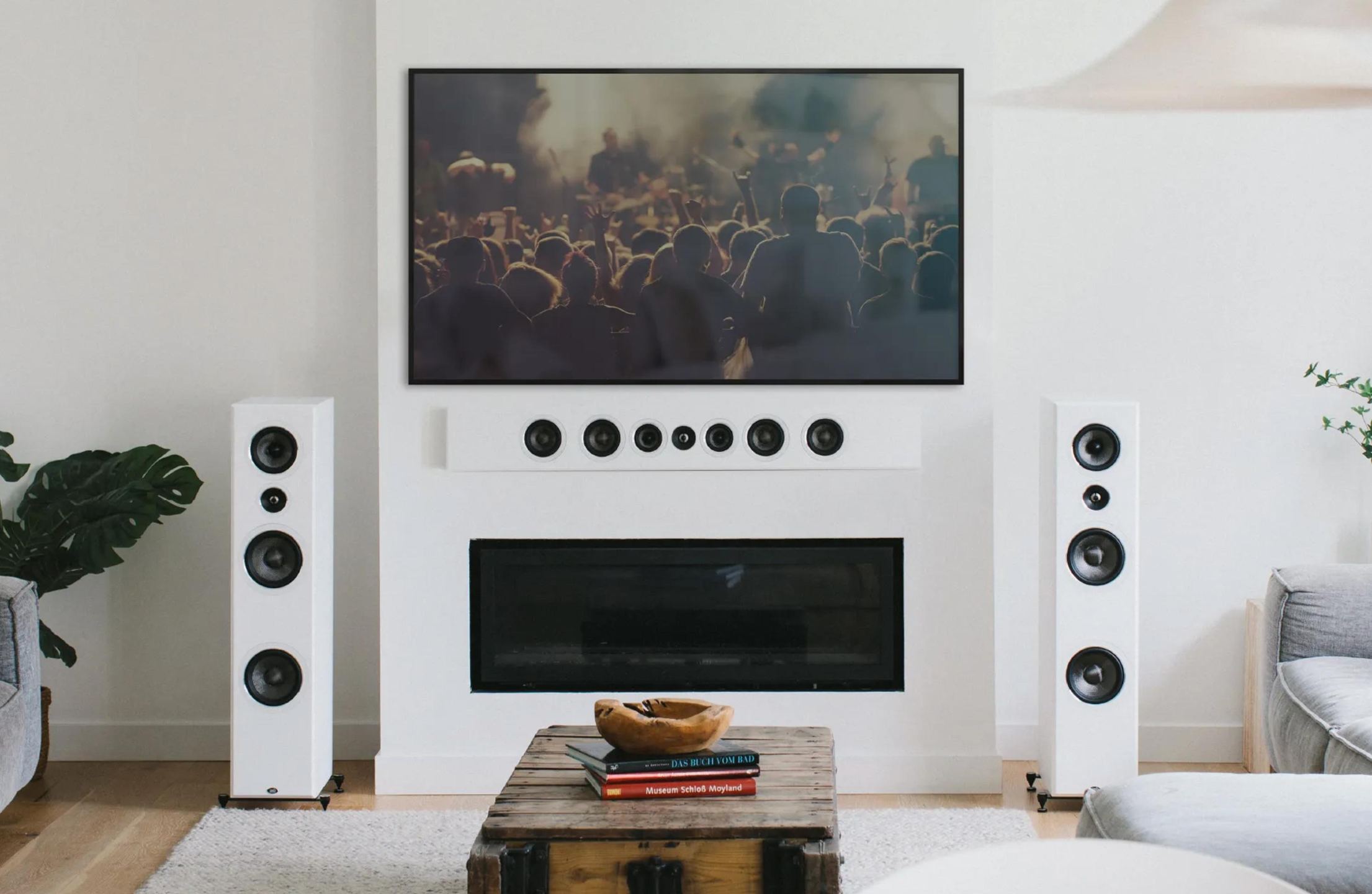
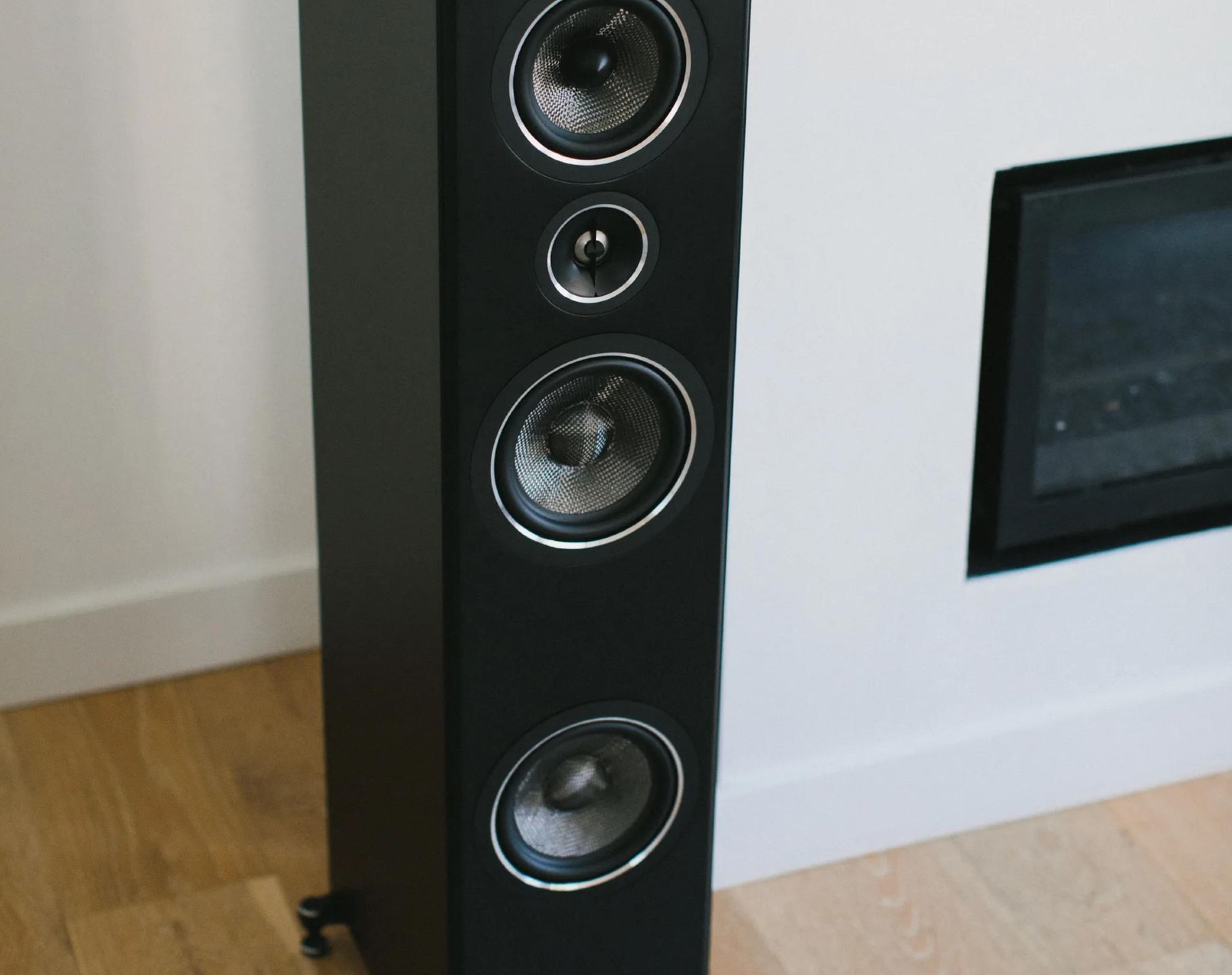
The PSB Imagine T65 employ a three-way configuration with four drivers, each optimized for its specific frequency range. The 25 mm titanium-dome tweeter features an especially powerful neodymium magnet, a technology taken directly from the Synchrony series. Ferrofluid cooling provides optimal heat dissipation, ensuring treble reproduction that is both detailed and free of harshness, even during extended listening sessions. This technical approach extends the response up to 23 kHz while maintaining remarkable linearity in the critical crossover region.
The 133 mm midrange driver is positioned strategically at the top of the tower, following a well-established PSB tradition. Its woven carbon-fiber cone—material that Paul Barton successfully explored with the Platinum series two decades ago—offers an optimal stiffness-to-mass ratio. Housed in its own hermetically sealed chamber, this driver reproduces the crucial 200 Hz to 2000 Hz range with surgical precision. This band contains most of the information related to instrumental and vocal timbre and pitch, explaining why PSB pays it such special attention.
The two 165 mm woofers share the same woven carbon-fiber cone technology but each benefits from its own meticulously tuned acoustic chamber. This approach, unusual at this price point, allows optimal control of each driver’s behavior while minimizing parasitic interactions. Natural rubber surrounds ensure generous, linear excursion, enabling bass extension down to 28 Hz at -3 dB—remarkable performance for drivers of this diameter.
Laminar ports innovation: a distinctive technical signature
The PSB Imagine T65 stand out with their rear dual laminar bass-reflex port system, a feature borrowed from the PWM (Performance Wall Mount) series. Unlike traditional circular ports, these rectangular slot-shaped openings offer several acoustic advantages. Strategically positioned—one at the bottom, the other roughly 40 cm higher—they provide better distribution of the acoustic load while reducing air turbulence at high levels.
Each port is individually tuned for its respective woofer chamber, effectively creating two independent bass-reflex systems within the same cabinet. This design allows separate optimization of each woofer’s behavior, resulting in bass response that is both deep and articulate. The absence of port noise, even at high power, attests to the efficiency of this technical solution.
Fourth-order Linkwitz-Riley crossover: PSB’s hallmark
The crossover network is one of the T65’s most sophisticated elements. True to Paul Barton’s philosophy, it employs a fourth-order Linkwitz-Riley topology, with crossover points at 600 Hz and 2000 Hz. This approach, consistent across nearly all PSB designs, blends the discrete drivers into a coherent acoustic entity with minimal impact in both the amplitude domain (frequency response) and the time domain (phase response).
The crossover leverages the natural roll-off points of each driver, minimizing the corrections required and preserving signal dynamics. Carefully selected components and a meticulous circuit layout maximize signal transfer while keeping static and dynamic distortions well below perceptible thresholds. This technical approach translates into exemplary tonal coherence across the entire audible spectrum.
Construction and finish: balancing performance and accessibility
The T65’s MDF cabinet, measuring 213 × 986 × 343 mm and weighing 20 kg per speaker, benefits from extensive internal bracing. This structure ensures high inertia and minimizes unwanted resonances—a sine qua non for faithful reproduction. The separate chambers for each bass driver reflect particular attention to internal acoustic isolation.
The satin black or satin white finishes, though understated, blend harmoniously into any listening environment. Aluminum trim rings around each driver add a touch of modernity while visually reinforcing the build quality. The cabinet’s chamfered edges are not merely ornamental: they help reduce edge diffraction on the front baffle.
The aluminum foot system with decoupling spikes, supplied with protective spike shoes to safeguard delicate floors, ensures optimal mechanical stability. The gold-plated dual binding posts support bi-wiring or bi-amping, giving users the flexibility to optimize their system to taste. The included gold-plated jumpers maintain optimal connection quality in single-wiring setups.
Acoustic performance: the synthesis of precision and musicality
With a sensitivity of 88 dB in anechoic conditions (90 dB in-room) and a nominal impedance of 8 ohms dipping to a minimum of 4 ohms, the T65 are relatively easy to drive. PSB recommends amplifier power between 20 and 200 watts, with the key criterion being the amplifier’s ability to comfortably handle the 4-ohm impedance dip.
The frequency response curve showcases remarkable technical control: 37–20,000 Hz at ±1.5 dB on-axis, maintaining linearity of 37–10,000 Hz at ±1.5 dB off-axis at 30°. This consistent off-axis response ensures a stable stereo image and a wide listening area—particularly advantageous in home theater setups as well as in pure stereo listening.
Technical Specifications
Frequency Response and Sensitivity
- On-axis frequency response @ 0° ±3 dB: 28–23,000 Hz
- On-axis frequency response @ 0° ±1.5 dB: 37–20,000 Hz
- Off-axis frequency response @ 30° ±1.5 dB: 37–10,000 Hz
- Low-frequency cutoff (-10 dB): 19 Hz
- Sensitivity
- Anechoic chamber: 88 dB
- Listening room: 90 dB
Impedance and Power
- Nominal impedance: 8 Ω
- Minimum impedance: 4 Ω
- Recommended input power: 20–200 W
- Program power: 200 W
Acoustic Design
- Tweeter: 25 mm (1”) titanium dome with ferrofluid, neodymium magnet
- Midrange driver: 133 mm (5 1/4”) woven carbon-fiber cone, rubber surround
- Woofers: 2 × 165 mm (6 1/2”) woven carbon-fiber cones, rubber surrounds
Crossover and Design
- Crossover: 2000 Hz LR4, 600 Hz LR4
- Design type: 3-way, dual bass-reflex
- Separate chambers for each woofer
- 2 rear slot ports
Dimensions and Weight
- Dimensions (W × H × D): 213 × 986 × 343 mm
- Net weight: 20 kg per speaker
- Weight with packaging: 25.4 kg per speaker
Finishes and Features
- Available finishes: satin black, satin white
- 5-way gold-plated dual binding posts, bi-wireable and bi-ampable
- Rear slot ports
- Aluminum outriggers and spikes
- Gold-plated jumpers
Frequently Asked Questions
What amplifier power is really necessary for the T65?
Although PSB specifies a range of 20 to 200 watts, a quality amplifier delivering 50 to 100 watts into 8 ohms is more than sufficient for most listening situations. The crucial element remains the amplifier’s ability to remain stable into the 4-ohm minimum. Modern solid-state amplifiers or robust tube amplifiers are perfectly suitable.
Do the rear ports require significant clearance from the wall?
The T65’s laminar ports are less sensitive to wall proximity than traditional circular ports. A distance of 30 to 50 cm from the rear wall generally prevents bass overload. The individual tuning of each chamber allows some placement flexibility, although optimal positioning is still recommended to fully realize the speakers’ potential.
Does bi-wiring provide an audible improvement?
The dual binding posts indeed allow bi-wiring or bi-amping. While the benefits of bi-wiring remain debated, active bi-amping can deliver measurable improvements in control and dynamics. The supplied gold-plated jumpers nevertheless maintain excellent connection quality in standard configuration.
Do the carbon-fiber cones require a specific break-in?
The T65’s woven carbon-fiber cones benefit from a break-in period of about 50 to 100 hours of use. During this time, the surrounds gradually loosen up and the bass gains in depth and definition. PSB recommends normal use during this phase, with no need for specific break-in procedures.
- Eco-contribution included in the sale price.