Since 1991, PMC has been building monitors used in the world’s most renowned recording and mastering studios. The Prophecy1, the entry-level model in the new Prophecy range, brings this expertise into a compact, hand-assembled format made in Great Britain. It succeeds the Twenty5.21i with a thorough overhaul of the transmission line technology that made the British manufacturer’s reputation.
A transmission line of nearly two meters in a compact format
The principle of the transmission line is to guide the energy emitted from the rear of the bass driver through a long, damped duct. Mid and high frequencies are progressively absorbed, while the lowest ones emerge from the port in phase with the front radiation, thus reinforcing the bass register without the drawbacks of a conventional bass reflex. In the Prophecy1, this line reaches 1.79 meters despite its compact dimensions of 40 cm high by 16.5 cm wide.
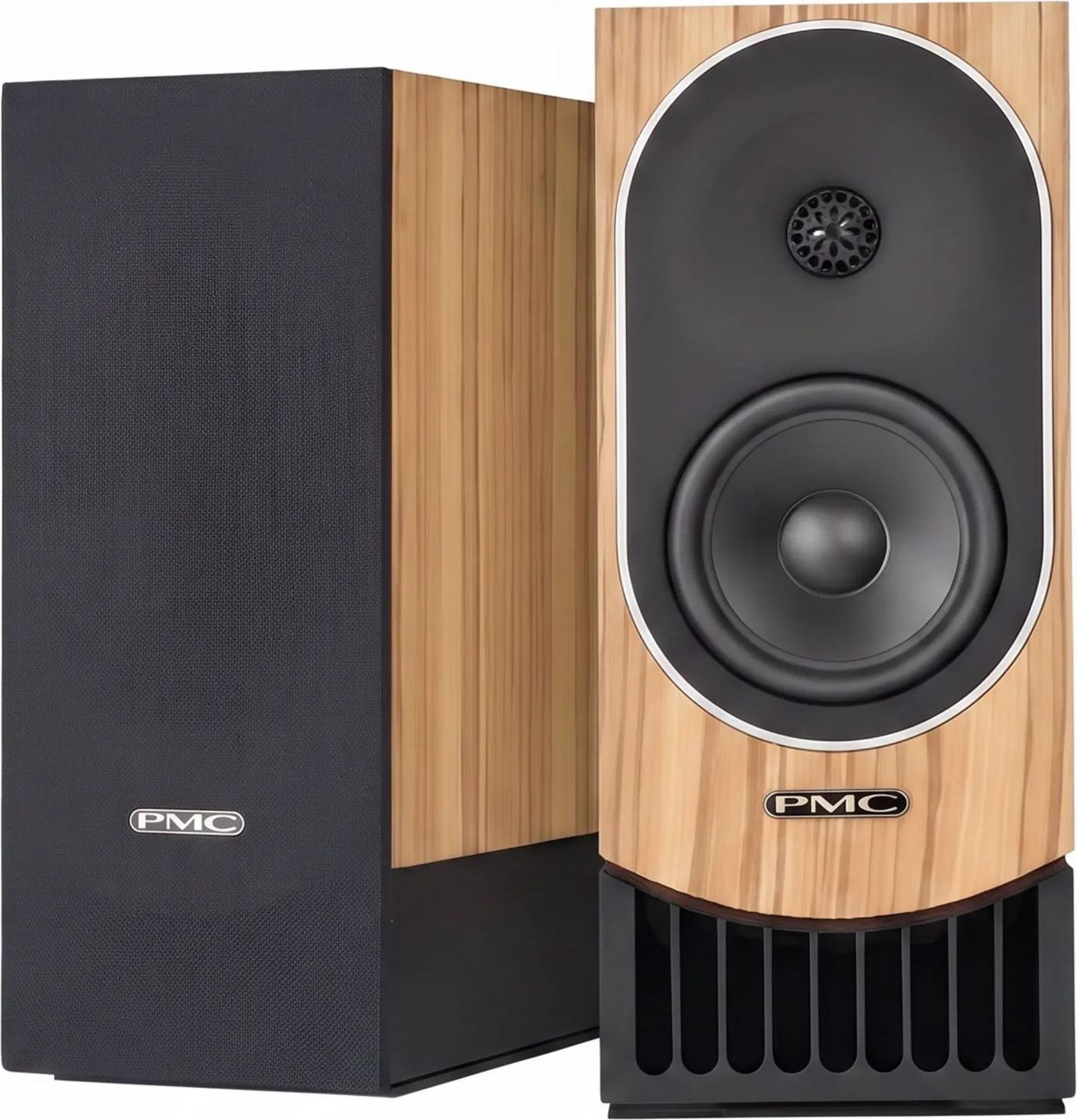
The Prophecy generation inaugurates LaminairX technology, an evolution of the Laminair system inspired by Formula 1 aerodynamics. This precisely machined device controls the high-speed airflow at the line’s exit, reducing turbulence, noise, and harmonic distortion by up to 3 dB according to PMC. The LaminairX port, integrated into a cast aluminum base, gives the speaker a substantial footing and an impression of robustness that is unusual for this size. A layer of pure cork isolates this base from the rest of the cabinet, limiting vibrational transfer.
Carefully engineered drivers and crossover
The 125 mm woofer uses a cone loaded with mineral particles (mica), mounted on a cast alloy chassis. This light and rigid material offers a good compromise between responsiveness and damping, allowing the driver to follow fast transients without excessive coloration of the midrange. The long-throw cone works with the ATL to reach down to 50 Hz at -3 dB in anechoic measurement conditions.
The 27 mm soft dome tweeter comes from the brand’s professional studio monitors. Its shallow waveguide widens horizontal and vertical dispersion while maintaining an even off-axis response. The perforated protective grille covering it forms a secondary loading chamber, slightly boosting sensitivity in the upper part of the spectrum.
The 4th-order crossover (24 dB per octave) provides a transition at 1.5 kHz, a relatively low frequency that leaves the tweeter a wide working range. PMC justifies this choice by the desire to have each transducer operate in its optimal linearity zone. Passive components are individually tested and laid out to minimize electromagnetic interactions.
A sonic signature faithful to the recordings
PMC’s approach does not vary between its professional monitors and its home speakers: the Prophecy1 aims for neutrality and accuracy rather than a flattering sound. The midrange stands out for its openness and cleanliness, qualities that allow voices to naturally take their place at the center of the soundstage. Timing and speed of reproduction are consistently highlighted strengths, particularly on rhythmic music where note attacks remain crisp and well defined.
Stereo imaging is appropriately scaled: neither artificially widened nor compressed. Intimate recordings retain their intimate character, while more ambitious productions unfold a soundstage sized to what the medium actually contains. This faithfulness to the recording engineer’s intentions does, however, have a consequence: poorly mastered albums or those with aggressive treble will not be sweetened by the speaker.
Bass extension, although remarkable for the form factor, reaches its physical limits below 60 Hz. Adding a compatible subwoofer (PMC offers the twenty5 sub in its range) can complete the system in medium to large rooms, or for musical genres that demand more low-end foundation.
Easy integration and compatibility
With a sensitivity of 85 dB and a nominal impedance of 6 ohms that remains stable across the spectrum, the Prophecy1 does not require huge power but benefits from an amplifier capable of delivering current without strain. The recommended range extends from 20 to 200 watts, leaving plenty of freedom in the choice of partnering electronics. A quality integrated amplifier or a pre/power amplifier combination will be suitable depending on budget and preferences.
Room placement remains relatively flexible. Moving the speakers closer to the rear wall reinforces the low-end presence, at the cost of a less deep soundstage. A compromise of around 30 to 50 cm from the wall generally offers a good balance between bass weight and imaging. The baffle’s built-in tilt provides partial time alignment between the drivers, eliminating the need for complex adjustments.
British manufacturing and eco-conscious approach
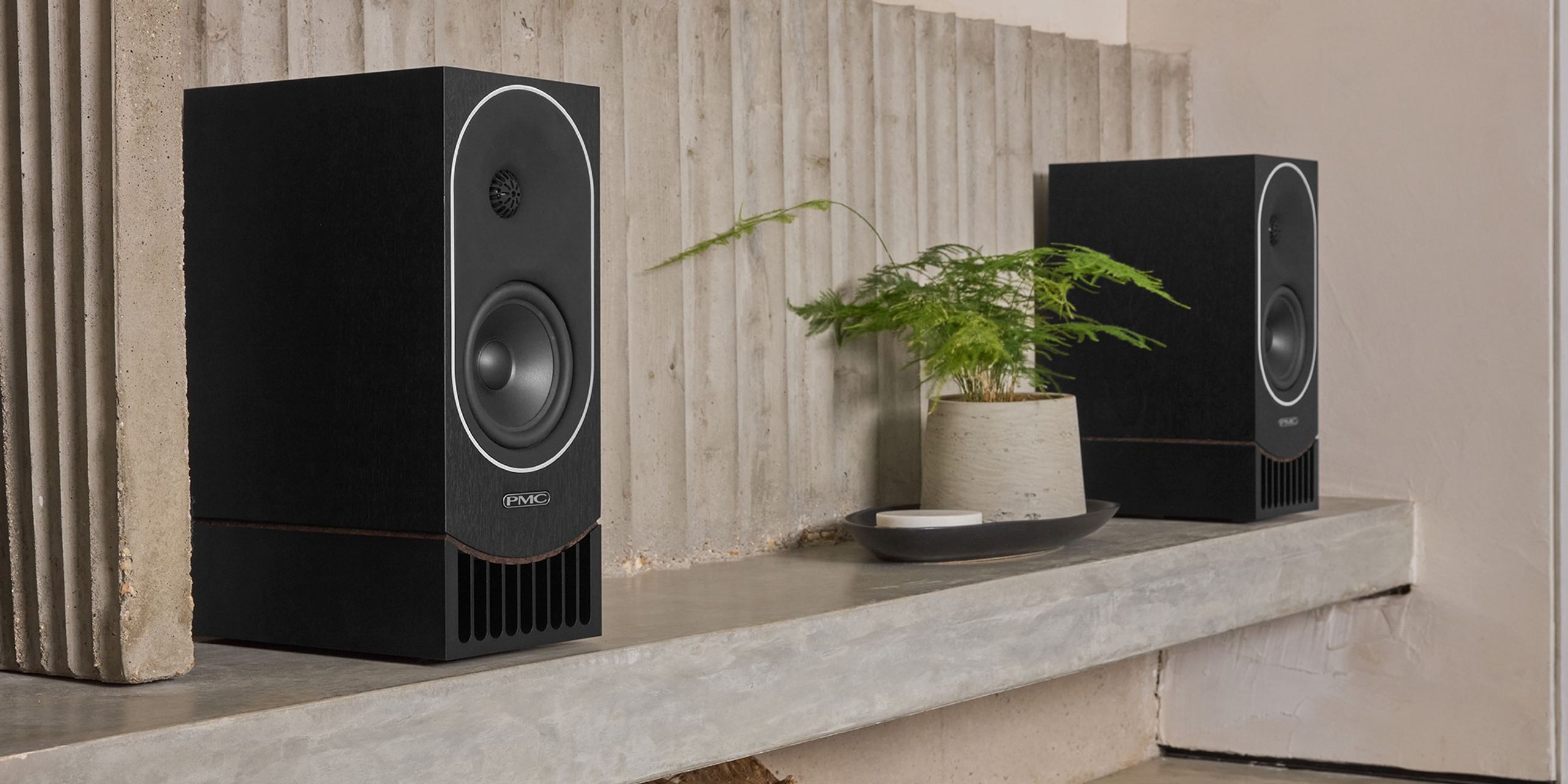
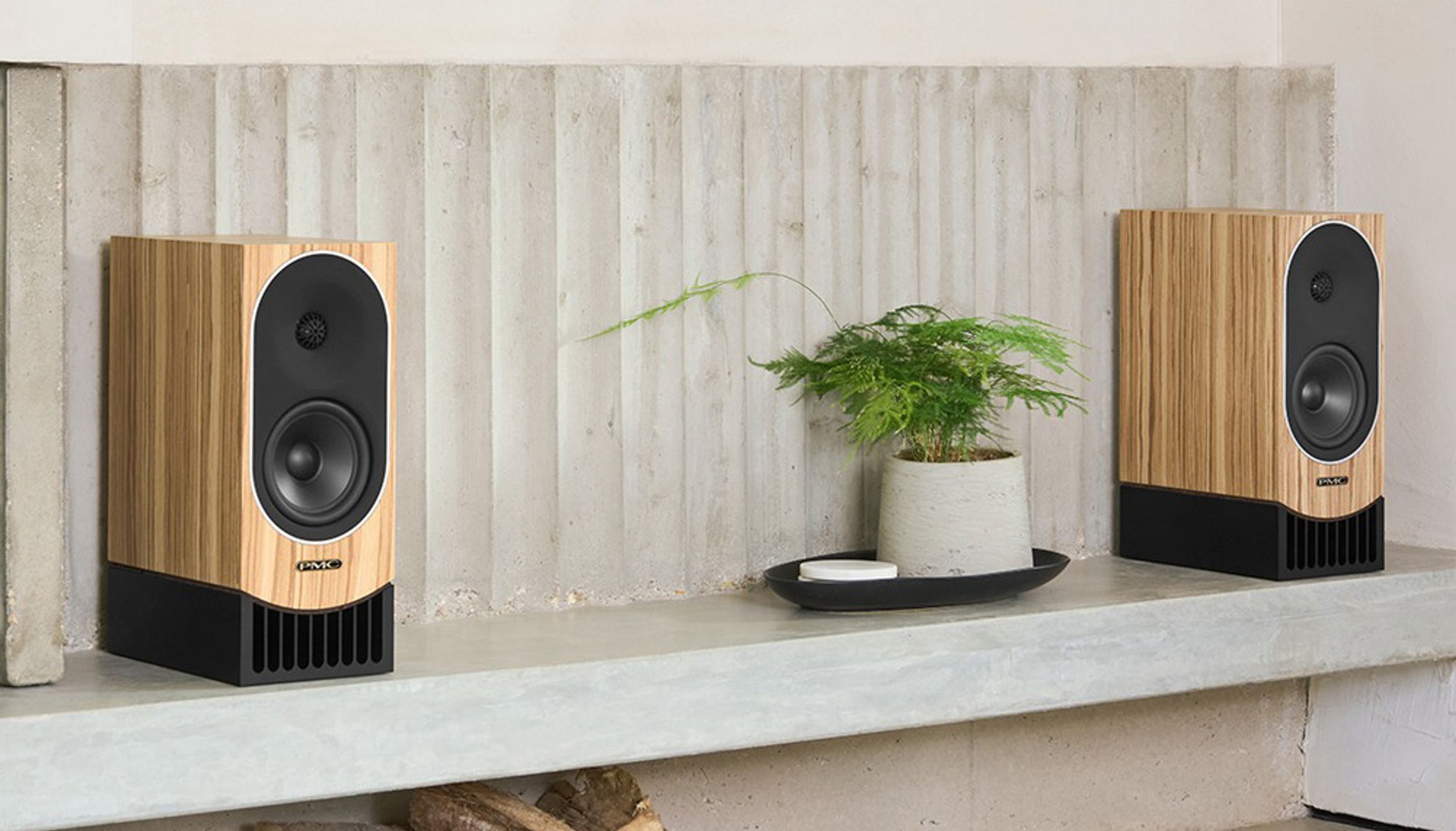
Each speaker is assembled in PMC’s factory in the UK. The cabinet is available in three real-wood veneer finishes (Mediterranean Oak, Natural Walnut, and Black Walnut), all treated using techniques that minimize environmental impact. The grilles, held in place by magnets, dress the front with a discreet textured fabric. The fixings remain invisible, reinforcing the clean, minimalist look.
Bass driver: PMC 125 mm (5 inches) LT XL mineral-cone with cast-alloy chassis
Tweeter: PMC 27 mm (1 inch) soft dome
Crossover frequency: 1.5 kHz
Effective ATL length: 1.79 m (5.8 feet)
Connectivity
Terminals: one pair of 4 mm binding posts with satin nickel finish
Dimensions and weight
Height: 400 mm (15.7 inches)
Width: 165 mm (6.5 inches)
Depth: 260 mm (10.2 inches) + 23 mm for the terminals + 10 mm for the grille
Weight: 10.3 kg (22.7 lbs) per speaker
Frequently asked questions
Does the Prophecy1 need dedicated stands?
+
PMC has not yet released specific stands for the Prophecy range. High-quality universal stands that are rigid and stable enough to support the 10.3 kg of each speaker are perfectly suitable. A height that places the tweeter approximately at ear level in the listening position is a good starting point.
What is the difference compared to the Twenty5.21i it replaces?
+
The Prophecy1 adopts a new aluminum base incorporating LaminairX technology, which the Twenty5.21i did not have. The weight increases from 6 kg to more than 10 kg per speaker. The visual style shifts towards more contemporary lines. Sonically, feedback points to gains in dynamics, presence, and energy, with a slightly more assertive character than the Twenty5.21i.
What type of music best showcases this speaker?
+
Its transparency and speed particularly benefit acoustic recordings, jazz, chamber classical music, and well-produced material. Electronic genres or rock also take advantage of its rhythmic articulation, provided the mastering is of good quality.
User reviews
Christian
High-quality speakers that will deliver their full potential after the break-in period.
Comment from 21 February 2026 — Experience from 30 January 2026
Automatically translated — Show original (French)
Enceintes de grande qualité, qui vont donner leur maximum après la période de rodage.
Eco-contribution of €0.75 included in the sale price.
To better understand our visitors, measure marketing effectiveness and personalise ads, we and our partners use cookies and mobile advertising identifiers on your device. This data makes it possible to display personalised and non-personalised ads and measure their performance. Some cookies, which are technically necessary, are exempt from consent. You can accept those that require your consent, refuse them by clicking “Reject”, or customise your choices via “More options”.
To find out how Google uses the data collected once you have given your consent, see Google’s Business Data Responsibility site (opens in a new window).
You can change or withdraw your consent at any time via the “Cookies” link. Your choices will apply on our site for 12 months.