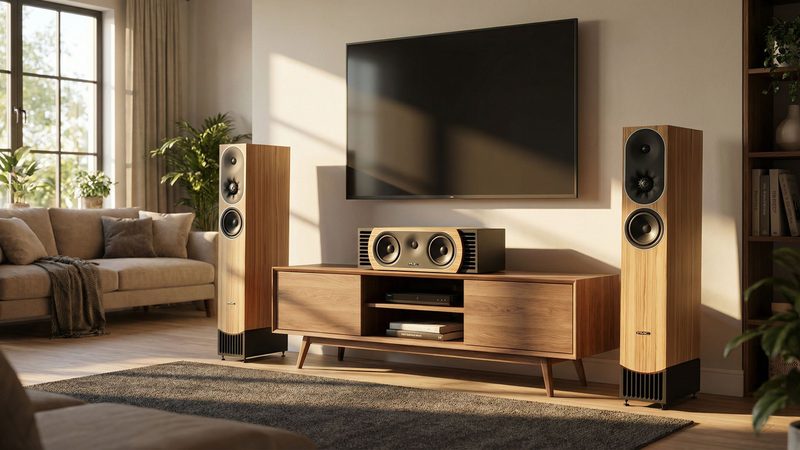
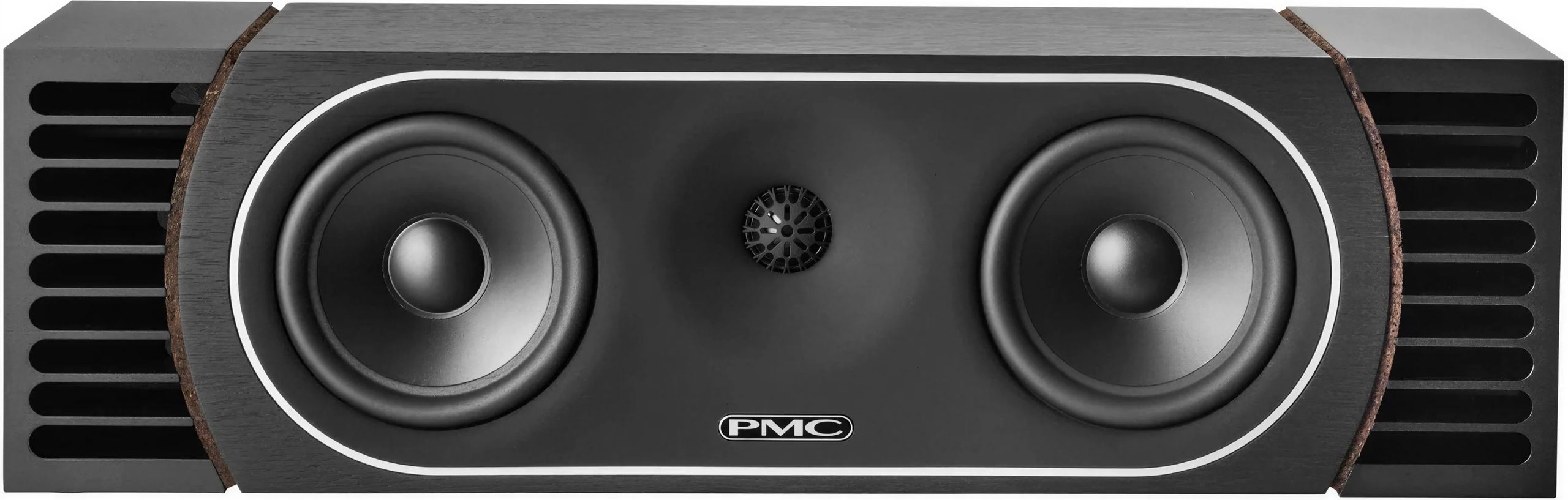
PMC ProphecyC black


Overview
At the heart of the Prophecy range, launched in early 2025, the ProphecyC embodies PMC’s expertise in vocal reproduction. This center speaker inherits technologies developed for the professional world — PMC monitors have equipped mastering studios, film post-production facilities, and broadcast auditoriums for over three decades. British manufacturing, a redesigned transmission line, and a tweeter derived from studio monitors all come together to deliver outstanding dialogue intelligibility and seamless sonic consistency with the other speakers in the series.
A transmission line dedicated to the human voice
ATL (Advanced Transmission Line) technology has been PMC’s acoustic signature since the brand was founded in 1991. Unlike conventional bass-reflex speakers, this architecture places the drivers at the end of a folded, damped duct, which in this case is 1.79 meters long. Unwanted mid and high frequencies emitted from the rear of the cones are absorbed by the acoustic foam, while the low frequencies emerge in phase with the front output. This approach eliminates parasitic resonances and maintains stable low-frequency response at any listening level.
The ProphecyC pushes this concept further with an original layout: the two 125 mm mid-bass drivers are positioned at different points along the line, rather than being mounted side by side on the baffle. This choice significantly reduces coloration in the vocal range — where most dialogue resides — and improves integration with the tweeter. The result is more clearly articulated voices, free from the nasality or muddiness sometimes heard from compact center speakers.
LaminairX: controlling airflow
Introduced around ten years ago under the name Laminair, PMC’s aerodynamic vent technology here reaches its most advanced iteration. LaminairX applies fluid dynamics principles derived from motorsport to transform turbulent flow into laminar flow at the transmission line’s outlet. In practical terms, resistance and harmonic distortion drop by up to 3 dB, eliminating chuffing noises during dynamic passages.
The ProphecyC’s LaminairX vent is front-firing, which provides welcome flexibility in placement. The speaker can be positioned very close to a wall or piece of furniture without the bass becoming boomy or losing definition. This practical aspect is crucial in home cinema setups, where the center speaker often ends up in a tight space under the screen or inside a cabinet.
Drivers and crossover
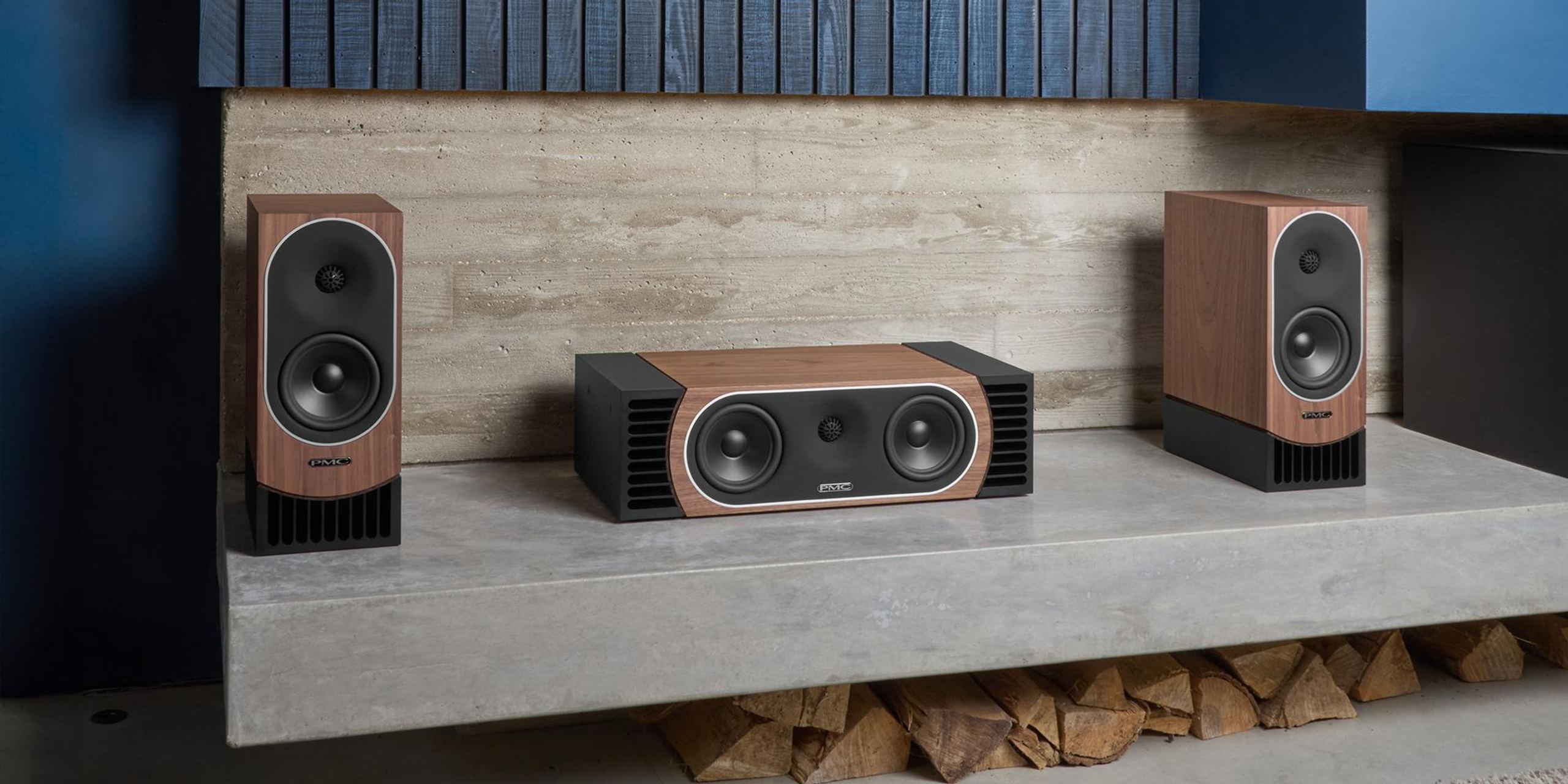
The two 125 mm mid-bass transducers use a mineral cone mounted on a cast-alloy chassis. This combination provides rigidity and lightness, two essential qualities for reproducing fast transients without smearing. The long-throw voice coil, dubbed LTXL, allows for significant excursion while keeping the cone within its linear operating range, even at high volume.
The 27 mm soft-dome tweeter comes directly from PMC’s professional nearfield and midfield monitors. Cooled by ferrofluid, it handles high power levels without dynamic compression. A dedicated dispersion grille broadens its radiation up to 180 degrees, ensuring even coverage for listeners seated off the central axis. This is particularly valuable in a living room where several people watch a film from different positions.
The crossover point is set at 1.6 kHz, an unusually low value for a two-way speaker. This choice avoids the “beaming” (excessive directivity) that affects cones above 2 kHz and gives the tweeter a wider operating range, where it performs comfortably. The steep crossover slope, a hallmark of PMC filters, ensures that each driver operates in its optimal zone.
Integration into a multichannel system
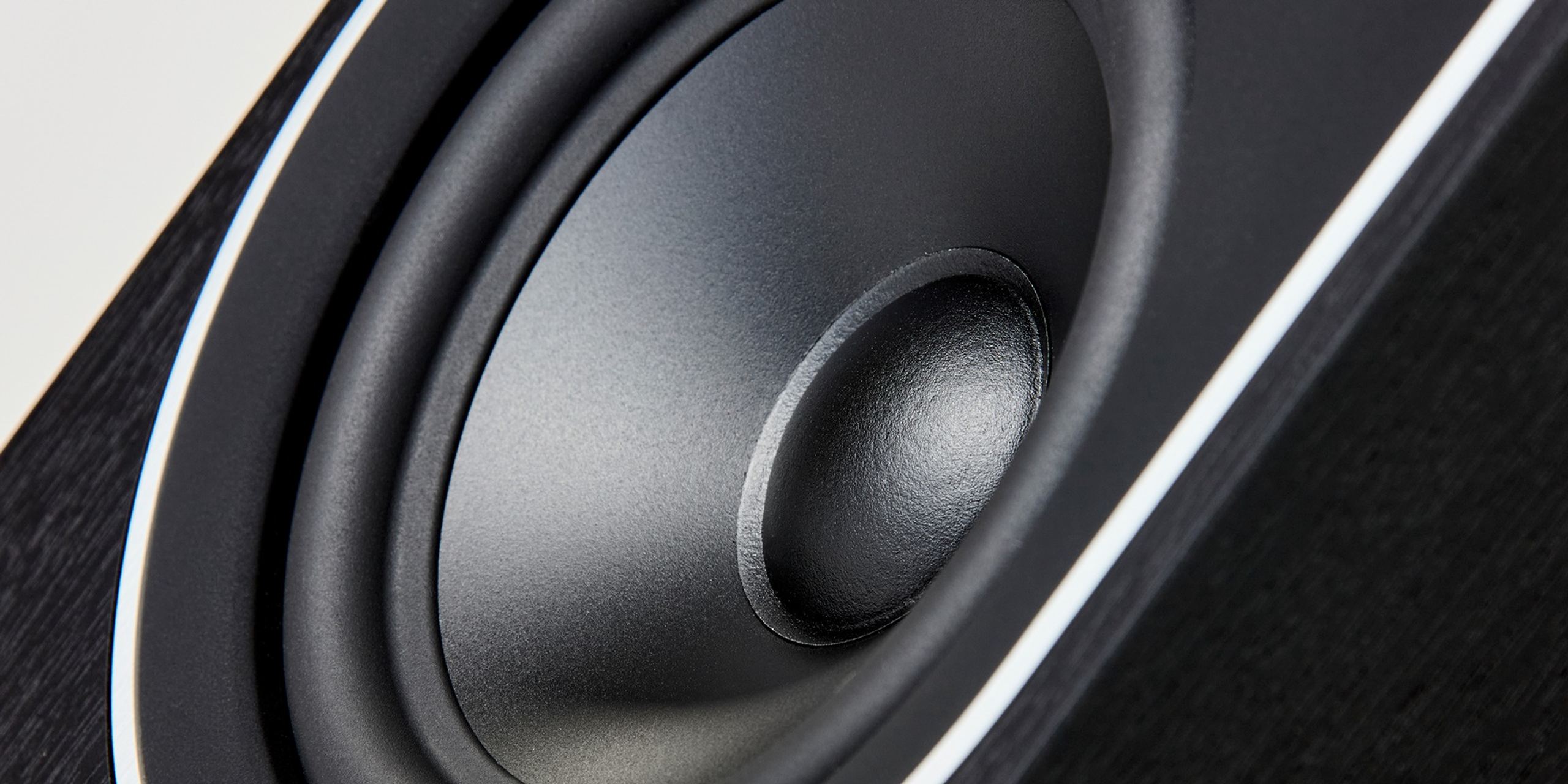
The ProphecyC has been designed to blend seamlessly with the other models in the range: prophecy1, prophecy5, prophecy7, and prophecy9. The tonal consistency between these speakers makes it easy to build a 5.1, 7.1, or more advanced system. Sound transitions from one channel to another remain smooth and free of tonal shifts, which enhances the sense of immersion when watching films or listening to multichannel music.
For Dolby Atmos or DTS:X installations, the ProphecyC can be complemented by effect and height speakers from PMC’s catalog, such as the in-wall Ci range, used as a global reference for Dolby Atmos Music mixing. This close link with the professional world ensures that what leaves the post-production studios is faithfully reproduced at home.
Practical considerations
The speaker weighs over 16 kg, so it needs a solid support, whether it’s a wall-mounted shelf, a sturdy piece of furniture, or a dedicated stand. Its depth of 260 mm (295 mm including the terminals and grille) should be taken into account if you plan to place it in an enclosed space. The transmission line vents to the front, which reduces constraints related to proximity to a rear wall, but leaving some space around the speaker is still advisable to ensure correct heat dissipation during long, high-volume listening sessions.
The 4-ohm impedance may challenge some entry-level home cinema amplifiers when they’re driving several speakers of the same impedance at once. Checking that your amplifier is compatible with a 4-ohm load on all channels is a wise precaution.
Documentation
Technical specifications
Acoustic characteristics
- Frequency response: 50 Hz – 20 kHz (-3 dB)
- Sensitivity: 91.5 dB SPL at 1 W / 1 m
- Impedance: 4 ohms
Amplification
- Recommended amplifier power: 20 – 200 W
Drivers and technologies
- Drivers
- Bass: 2 x PMC 125 mm mineral-cone LTXL with cast-alloy chassis
- Treble: PMC 27 mm soft dome
- Crossover frequency: 1.6 kHz
- Effective ATL™ length: 1.79 m
Connectivity
- Input connectors: one pair of 4 mm binding posts with satin nickel finish
Dimensions and weight
- Dimensions
- Height: 165 mm
- Width: 575 mm
- Depth: 260 mm (+ 25 mm for the terminals and + 10 mm for the grille)
- Weight: 16.3 kg
Frequently Asked Questions
Can the ProphecyC be used on its own, without the rest of the Prophecy range?
Yes, it will work with any main and surround speakers. However, tonal consistency will be optimal when paired with other Prophecy models. If you already own speakers from another brand, a comparative listening test remains the best way to assess overall sonic coherence.
What type of speaker cable is recommended?
The binding posts accept 4 mm banana plugs and bare wire. Cable with a cross-section of 2.5 mm² to 4 mm² is suitable for lengths up to five meters. Beyond that, increasing the cross-section helps limit losses. The quality of the copper and connectors matters more than the marketing surrounding cables.
Is a subwoofer necessary?
The ProphecyC extends down to 50 Hz (–3 dB), covering most of the dialogue and effects spectrum. For a full-fledged home cinema experience, adding a subwoofer is still recommended to reproduce the infrabass content of modern soundtracks. Setting the amplifier’s high-pass filter to around 60–80 Hz will relieve the center speaker and optimize overall dynamics.
- Eco-contribution included in the sale price.