Piega Premium 301 Gen2 black (pack of 2)


Overview
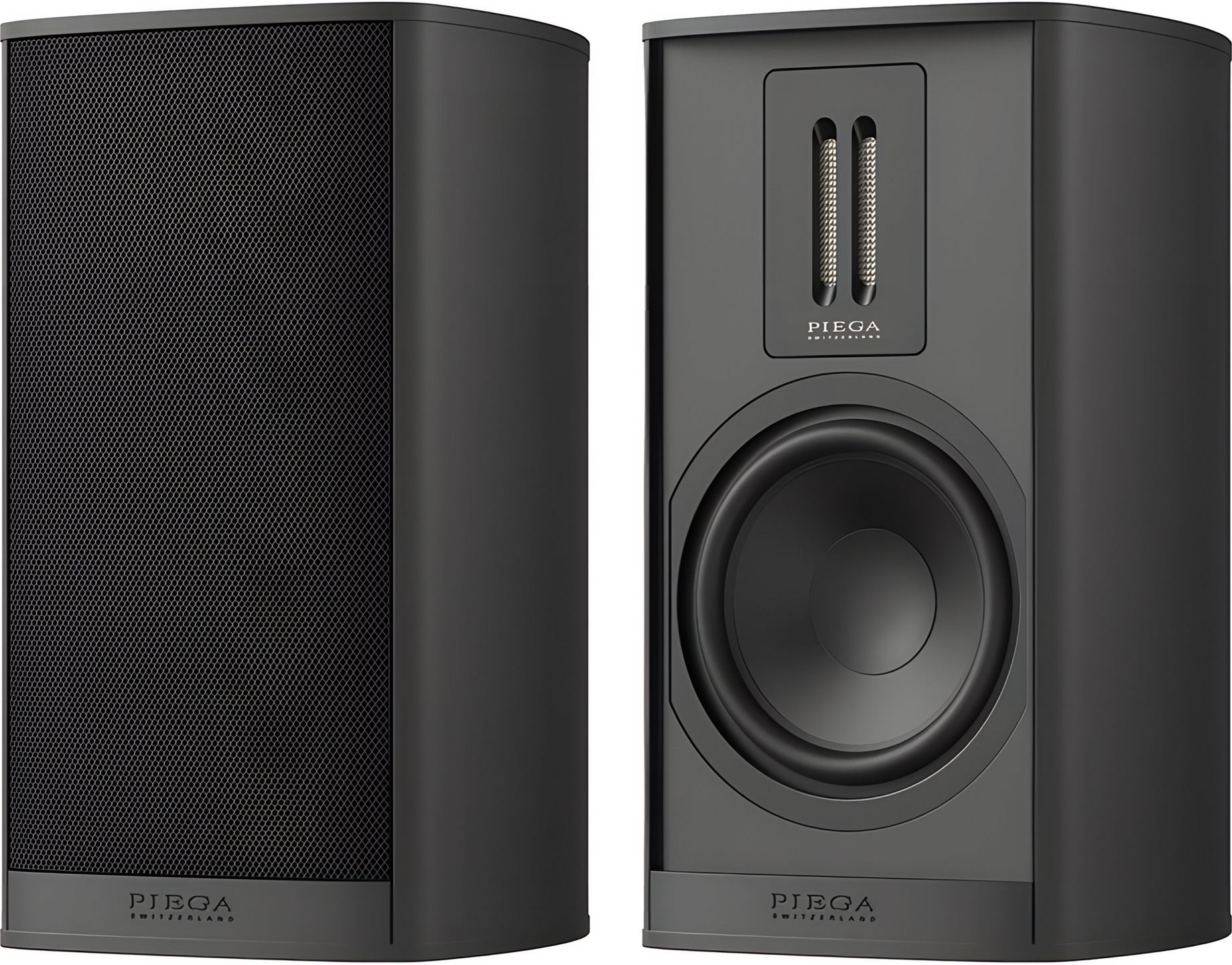
Thirty prototypes and several years of development were needed to bring this second generation to life. Piega’s engineers, based in Horgen on the shores of Lake Zurich since 1986, have completely redesigned their compact speaker: new ribbon tweeter, new mid-bass driver, redesigned cabinet. The result comes in a more compact format than the 2019 model, while promising a more accomplished sound reproduction. The Premium 301 Gen2 embodies a rigorous approach to high fidelity, typically Swiss in its attention to detail.
A ribbon tweeter developed in-house
The RM 01-24 bears the initials of its two creators: Roger Kessler, head of development at Piega, and Mario Ballabio, a ribbon tweeter specialist whose father Aldo was already working with co-founder Kurt Scheuch in the 1980s. This is not an AMT (Air Motion Transformer) with a pleated diaphragm like those found at many manufacturers, but a true magnetostatic ribbon: a thin aluminum membrane through which the signal flows directly.
The membrane weighs about 50 times less than a conventional dome. This lightness allows fast transients and a response up to 50 kHz. The innovation in this generation lies in the arrangement of the magnets, placed in front of and behind the ribbon to create strictly orthogonal magnetic field lines. This configuration reduces distortion and improves linearity. Each tweeter is hand-assembled at the Horgen factory.
Bass handled by a new FSD-M driver
The 140 mm driver uses Full Symmetric Drive (FSD-M) technology. Its treated paper cone is combined with an iron-magnet motor, a pairing designed to achieve linear and symmetrical cone excursion. The crossover to the tweeter occurs around 3.5 kHz via a second-order filter.
Integration between the two transducers is a critical point when combining a ribbon with a conventional dynamic driver. Piega has focused on this handover to achieve tonal coherence across the entire spectrum. The bass extends down to 39 Hz (±2 dB) thanks to a bass-reflex design with a rear port. For a speaker of this size, this is a notable extension that allows it to reproduce the bass range of most recordings without the need for a subwoofer.
Extruded aluminum as a signature
Since 1997, Piega has used extruded aluminum for its speakers. The body of the Premium 301 Gen2 is formed from a single profile, with no visible joints on the sides. This technique makes it possible to achieve thin walls and therefore a generous internal volume despite the compact footprint, while maintaining high rigidity. Inside the cabinet there is a wooden matrix and a proprietary damping material borrowed from the high-end Coax series.
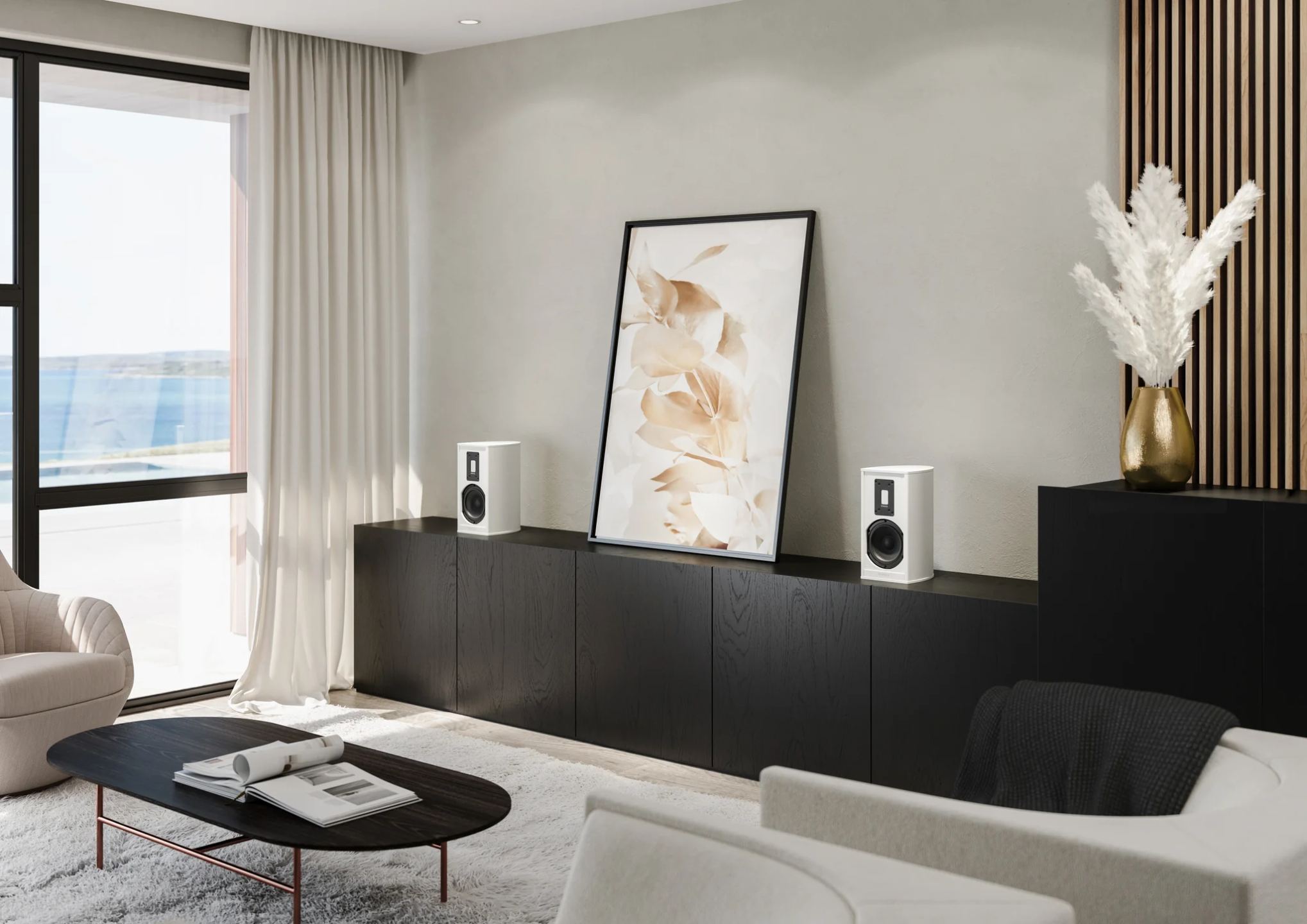
The black finish (sandblasted anodized aluminum) gives the cabinet a matte surface that resists fingerprints. The black fabric grille, magnetically attached, can remain in place during listening, as recommended by Piega. The design by Stephan Hürlemann adopts a clean oval shape with pure lines that blends easily into a contemporary interior. The dimensions are compact: 31 cm high, 17 cm wide, 22.8 cm deep, for a weight of 6.1 kg.
Placement and amplification
With a sensitivity of 89 dB and an impedance of 4 ohms, the Premium 301 Gen2 works with amplifiers of varying power levels, from small tube amplifiers of around ten watts to powerful integrated amps delivering more than 100 watts. Piega recommends power between 20 and 200 W.
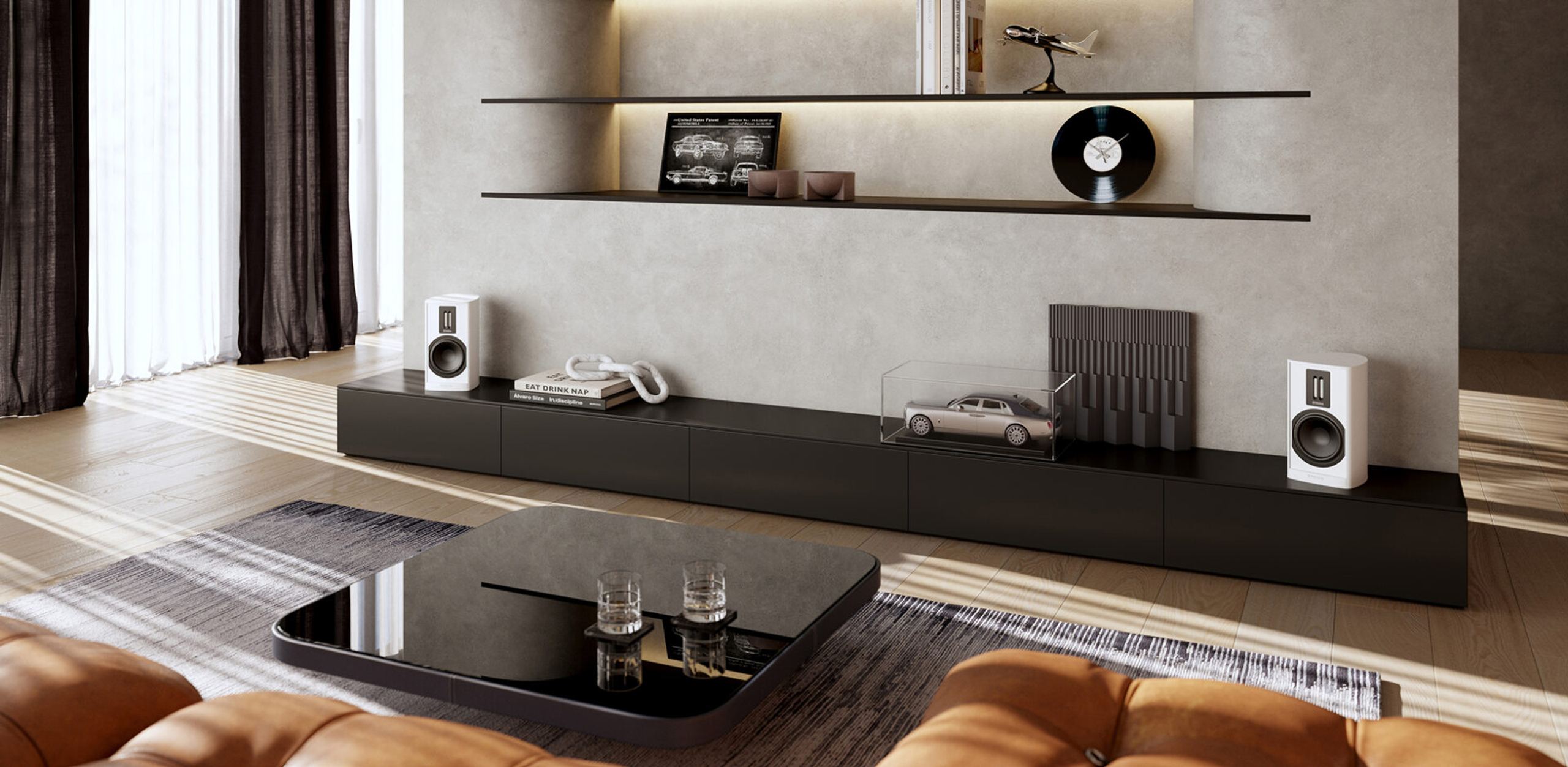
The speaker rests on four semi-soft feet that provide slight isolation from the surface and prevent any slipping. Placement on dedicated stands (Piega offers its own Premium model) with the tweeter at ear height is preferable to fully enjoy the soundstage. The rear bass-reflex port requires leaving sufficient space from the back wall: placing the speaker too close will emphasize the bass and can upset the overall balance. Piega also markets an articulated wall mount (Ball Joint) that takes advantage of the speaker’s low weight for installations where a stand is not an option.
A substantial break-in period is to be expected. Brand-new speakers can sound somewhat restrained during the first two weeks of use, particularly in the treble. Once broken in, they gain in coherence and presence.
Technical specifications
Acoustic performance
- Type: 2-way compact loudspeaker
- Recommended amplifier power: 20 – 200 W
- Sensitivity: 89 dB / W / m
- Impedance: 4 ohms
- Frequency response: 39 Hz – 50 kHz (+/- 2 dB)
Transducers
- RM 01-24 ribbon tweeter
- New-generation magnetostatic ribbon
- Innovative arrangement of magnets at the front and rear of the ribbon
- Minimal distortion
- Fast and detailed response
- Remarkable clarity and naturalness
- Exceptional reproduction of voices and instruments with optimal transparency
- FSD-M 140 mm mid/bass driver
- Full Symmetric Drive (FSD) technology
- Precise linear movement
- Clear, detailed midrange
- Perfect integration with the tweeter
- Balanced, lively reproduction for an immersive and dynamic listening experience
Construction and design
- Exclusive aluminum cabinet
- Seamless extruded aluminum profile, PIEGA’s iconic signature
- Rigid, low-resonance structure
- Optimal acoustic precision
- Premium finish
- Exceptional longevity
- Timeless design
- Elegant oval shape
- Minimalist, industrial aesthetic
- Refined, durable sandblasted surface
- Perfect integration in modern interiors
Physical specifications
- Dimensions (H × W × D): 31 × 17 × 22.8 cm
- Weight: 6.1 kg
Connectivity
- Connections: PIEGA Multi Connectors II
Available finishes
- Silver sandblasted aluminum with silver fabric grille
- Black sandblasted aluminum with black fabric grille
- White lacquered aluminum with white fabric grille
- Sandblasted aluminum limited editions: misty green, glossy ash with black fabric grille
Frequently asked questions
What is the difference between the Premium 301 Gen2 and the Wireless version?
The passive version tested here features the new RM 01-24 tweeter and a bass-reflex cabinet. The Wireless Gen2 version, equipped with built-in amplification and streaming functions, uses a different LDR tweeter and adopts a sealed cabinet. Both models share the same design language but differ in their acoustic design.
Is a subwoofer necessary?
The response goes down to 39 Hz, which covers most of the musical spectrum. For fans of electronic music or home cinema who want more visceral bass, Piega offers the PS 101 subwoofer as a natural complement. In a medium-sized room (up to 20 m²), the speaker alone delivers sufficiently present bass for most uses.
Is the Premium 301 Gen2 suitable for a low-power tube amplifier?
Yes. Its 89 dB sensitivity allows satisfactory operation with amplifiers of 10 to 20 watts, provided you listen at reasonable levels and in a moderately sized room. However, the 4-ohm impedance requires an amplifier capable of delivering current into this load.
How does the Gen2 differ from the previous model?
The cabinet is more compact, the RM 01-24 tweeter replaces the previous LDR model, and the FSD-M mid-bass driver is entirely new. The internal damping now benefits from the material developed for the Coax series. It is a complete overhaul rather than a simple evolution.
Is there a floorstanding version in the same range?
The Premium 701 Gen2 is a three-way floorstanding speaker that shares the same RM 01-24 tweeter and the same design philosophy. It adds a dedicated midrange driver and two bass drivers for greater extension and dynamics.
- Eco-contribution included in the sale price.
- Manufacturer reference: 693506