

Hifiman HE1000 WIFI




Specifications and features


Overview
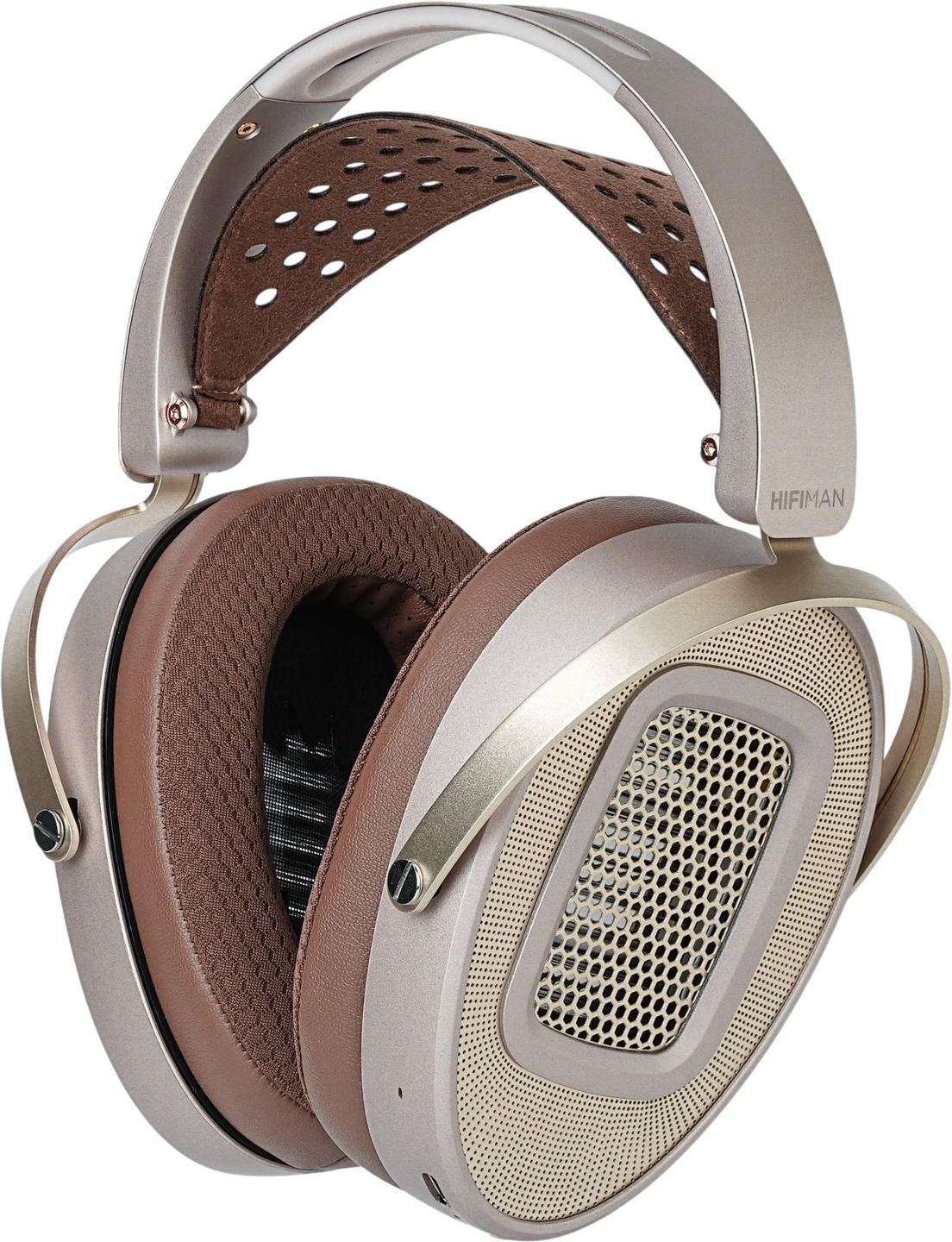
Placing an R2R converter and a class AB amplifier inside the earcups of a high-end planar magnetic headphone is a true technical balancing act. The Hifiman HE1000 WIFI takes on this challenge by integrating the entire playback chain: wireless reception, digital-to-analog conversion, and amplification. A self-contained system that can receive audio streams directly from streaming platforms such as Qobuz, Tidal, Spotify, Apple Music, or Roon.
WiFi instead of Bluetooth: a question of bandwidth
The choice of WiFi as the main transmission mode addresses a well-identified technical constraint. Bluetooth tops out at around 1.1 Mbps, which requires compression when transmitting high-resolution audio. WiFi, with speeds reaching up to 5,064 Mbps, allows the transmission of any currently available lossless format.
The operation is relatively simple: the headphones create their own WiFi network, which the user connects to with their smartphone or tablet. The mobile device then sends the audio stream directly to the headphones via this dedicated local network. Standard streaming applications work without any intermediary. No proprietary Hifiman app is needed.
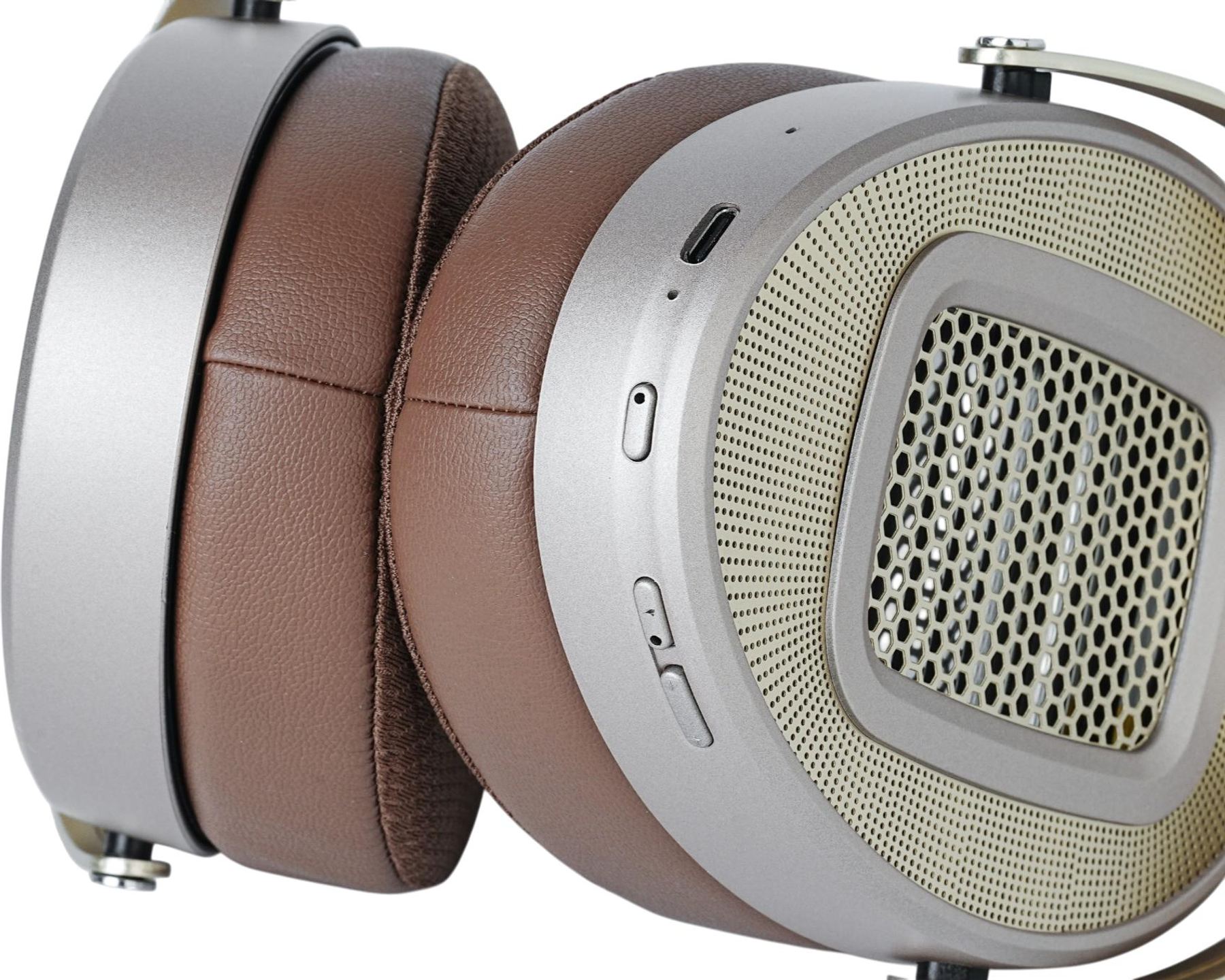
Bluetooth 5.1 remains available for situations where WiFi is not practical, with SBC, AAC, aptX, aptX HD, and LDAC codecs. A USB-C port also allows a traditional wired connection or battery charging.

The Hymalaya DAC: a miniaturized R2R architecture
At the heart of the headphones is the Hymalaya converter, developed in-house by Hifiman. This DAC is based on an R2R (resistor ladder) architecture controlled by an FPGA algorithm. Unlike the delta-sigma converters found in most consumer devices, R2R DACs use a network of precision resistors to reconstruct the analog signal.
Total harmonic distortion plus noise (THD+N) is specified at 0.009% when the DAC and amplifier operate together. The built-in amplifier is a class AB type in a balanced configuration.
This approach has one advantage and one drawback. The advantage: the signal path remains extremely short, as the headphones no longer need an external DAC or amplifier. The drawback: all the electronics must fit inside the earcups, with the battery power constraints that implies.
Audio formats: from CD to ultra-high resolution
The HE1000 WIFI supports PCM files from 44.1 kHz to 768 kHz in 16, 24, or 32 bits. Native DSD is supported from DSD64 to DSD512. The specified frequency response extends from 8 Hz to 65 kHz (±0.5 dB), and channel separation reaches 105 dB at 1 kHz.
These figures far exceed the capabilities of human hearing, but they reflect a desire not to limit the transducer’s performance with the onboard electronics.
Nanometer diaphragm and Stealth magnets
The planar magnetic transducer uses a nanometer-thick diaphragm, a technology developed by Hifiman and presented as a first in headphone applications. Working with such a thin material poses manufacturing challenges, but allows for a fast transient response.
The Stealth magnets use a specific shape that allows sound waves to pass through the magnetic structure without generating interference. This design reduces diffraction-related turbulence, a phenomenon that usually degrades signal integrity in traditional planar headphones.
The magnetic circuit is asymmetrical, with smaller magnets on the ear side to further reduce disturbances. The open-back structure eliminates internal reflections, at the cost of almost non-existent sound isolation.

Battery life and everyday use
Battery life varies depending on the connection mode: 6.5 to 7.5 hours on WiFi, around 23 hours on Bluetooth. Standby mode allows up to 30 days without recharging. A full charge takes 3 to 4 hours via USB-C.
The weight of 452 grams includes the battery and all the electronics. It is heavier than a passive planar headphone in the same range, a direct consequence of component integration. Physical controls on the earcups allow playback and volume to be controlled without taking out the phone.
The open-back design promotes a wide soundstage, but makes these headphones unsuitable for noisy environments or situations where sound leakage could disturb people nearby.
A simplified ecosystem, but trade-offs
The HE1000 WIFI eliminates the need for an external DAC, a dedicated amplifier, and the cables that go with them. For those who listen mainly from a smartphone or tablet via streaming services, this is a radical simplification of the audio chain.
The trade-off lies elsewhere: the built-in electronics are fixed. There is no possibility of changing the DAC or amplifier according to personal preferences or technological developments. And WiFi battery life, sufficient for a long listening session, still requires keeping an eye on the battery level.
Technical Specifications
Architecture and Connectivity
- Transducer type: high-fidelity planar magnetic
- Operating modes: Wi-Fi, Bluetooth, USB Audio
- High-resolution wireless audio streaming via Wi-Fi
Audio Performance
- Frequency response: 8 Hz – 65 kHz (± 0.5 dB)
- Channel separation: 105 dB at 1 kHz
- Supported formats
- PCM: 44.1 kHz to 768 kHz (16 / 24 / 32-bit)
- Native DSD: DSD64 to DSD512
Bluetooth
- Supported codecs: SBC, AAC, aptX, aptX HD, LDAC
- High-quality wireless transmission, compatible with most mobile sources
Battery Life and Power
- Wi-Fi mode: 6.5 to 7.5 hours
- Bluetooth mode: up to 23 hours
- Standby mode: up to 30 days
- Charging time: 3 to 4 hours
Design and Ergonomics
- Net weight: 452 g
- Open-back structure promoting a wide and natural soundstage
- Design optimized for extended listening
Frequently Asked Questions
How does the WiFi connection work with my phone?
The headphones generate their own WiFi access point. In the network settings of the smartphone or tablet, simply select the network created by the HE1000 WIFI. Once connected, streaming applications (Qobuz, Tidal, Spotify, Apple Music, Roon) send the audio stream directly to the headphones.
Can I use the headphones in wired mode?
Yes, the USB-C port allows a wired connection with a computer or a device compatible with USB Audio. This mode bypasses wireless transmission and uses the built-in DAC and amplifier.
Which streaming services are compatible?
All major services work: Spotify, Qobuz, Tidal, Apple Music, Roon. The headphones appear as an audio destination on the local network, without depending on a proprietary application.
- Eco-contribution included in the sale price.
- GTIN / EAN: 6925624203252