Projeo PullUP ALR LT 80

Overview
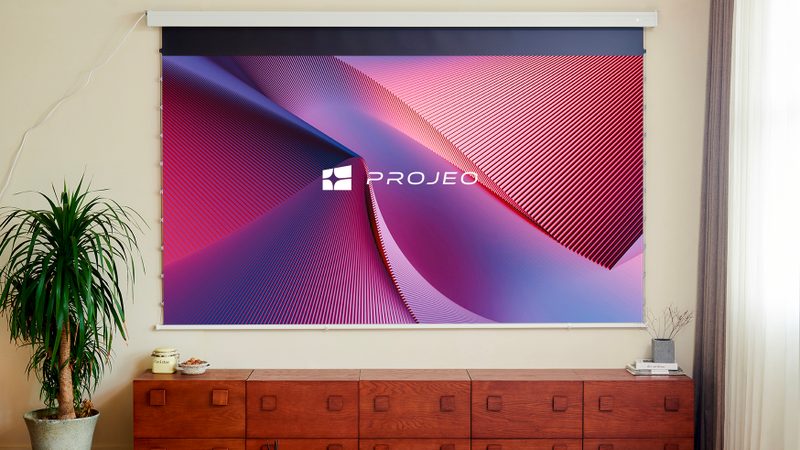
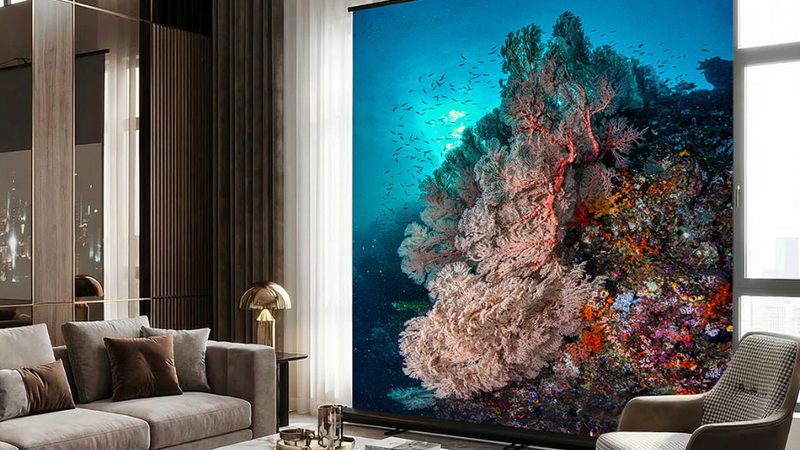
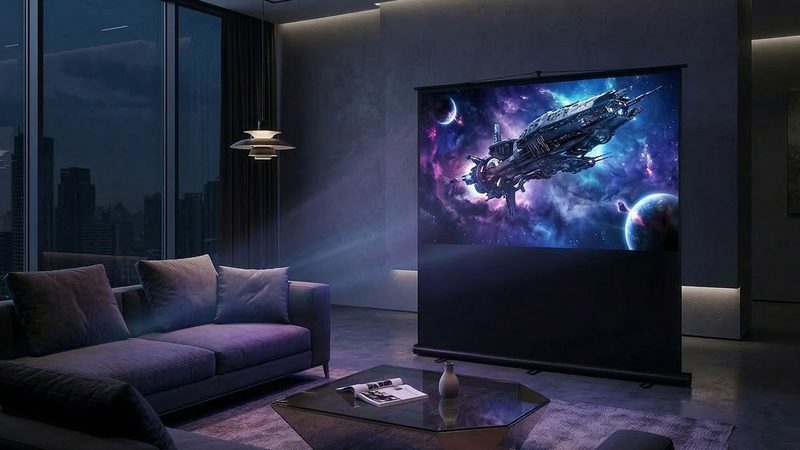
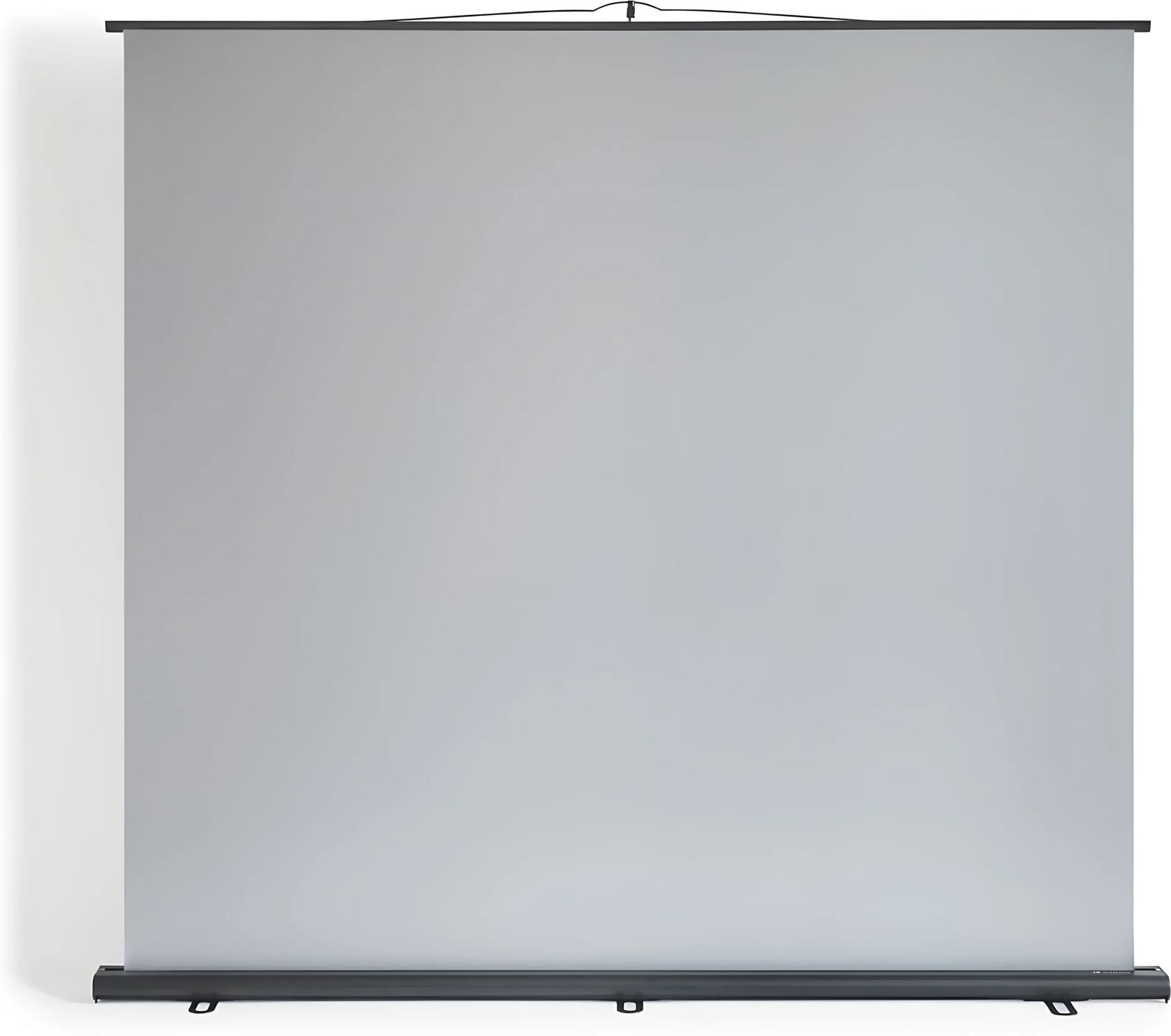
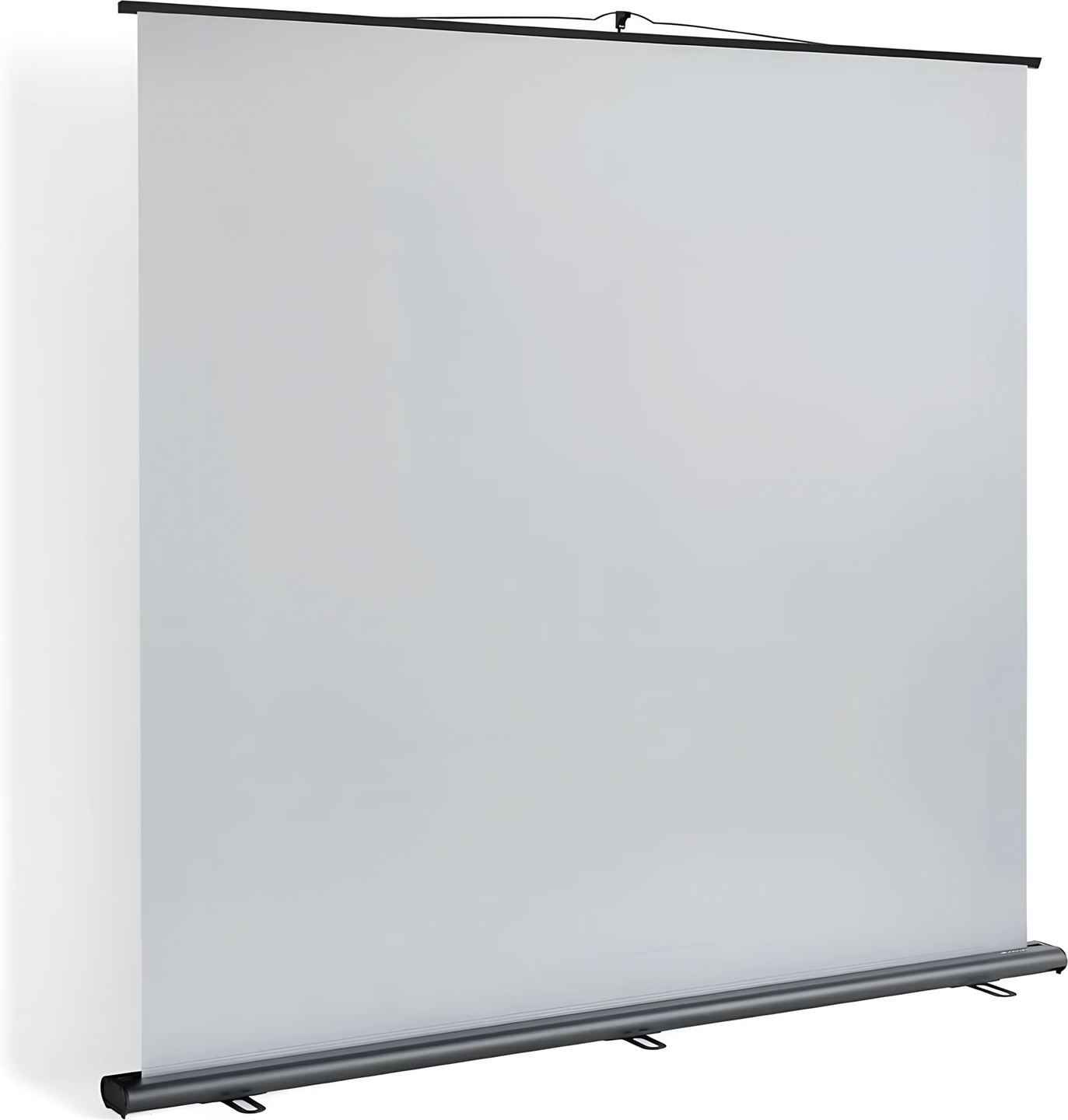
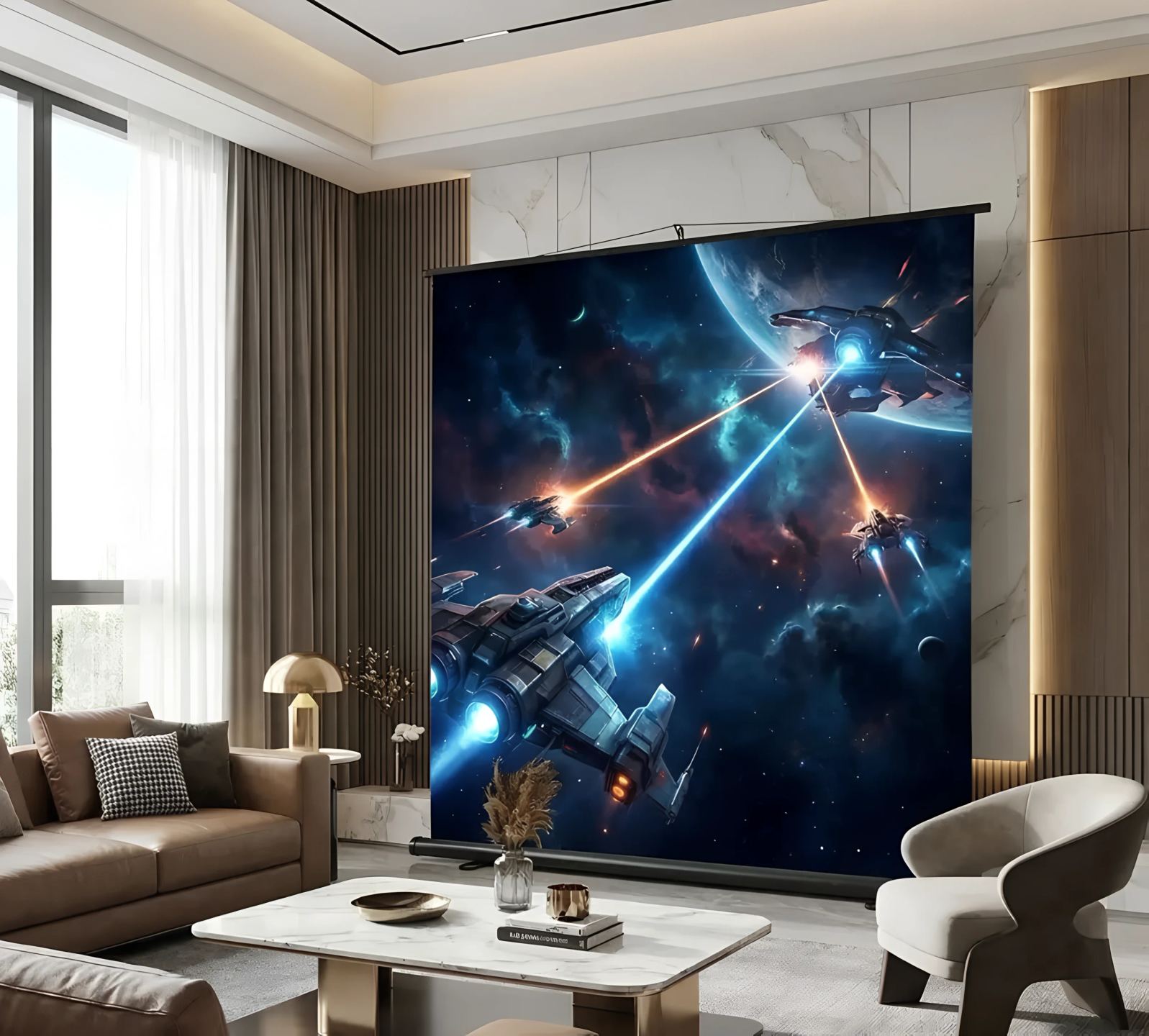
Projecting a readable image in a living space where daylight is still coming through the windows often comes down to a compromise: close the shutters or settle for a washed-out image. Projeo’s pull-up format tackles the problem differently by mounting an ambient light rejecting screen on a floor-standing housing that rises in a few seconds. The 80-inch version fits into living rooms and meeting rooms without permanent installation.
An ALR screen calibrated for long throw
ALR stands for Ambient Light Rejection. A screen of this type does not reflect light uniformly in all directions. Its surface, made of treated PVC, is structured to reflect toward viewers the light coming from the projector, while rejecting some of the light coming from the sides, the ceiling, or the windows. In a partially lit room, the result is a better level of contrast and blacks that are less grayish than with a conventional white screen.
The LT designation, for Long Throw, indicates the type of projector targeted. ALR screens come in two families depending on the projector’s position. Screens for ultra-short-throw projectors reject light coming from below, where the device is placed. The PullUP ALR LT is designed for projectors placed at a distance, facing the screen, sitting on a piece of furniture behind the viewers or mounted on the ceiling. Pairing this screen with an ultra-short-throw projector would produce an uneven and dark image.
The 1.4 gain measures the amount of light reflected back toward the main viewing axis compared with a reference surface. A value above 1 increases perceived brightness at the center, at the cost of a slightly narrower viewing angle and a risk of hotspotting if the projector is poorly aligned. The 160-degree viewing angle indicates the span within which the image remains usable: wide for a gain screen, it leaves enough room to install several seats side by side.
One reservation concerns RGB triple-laser projectors. The ALR LT screen is not compatible with these light sources. Their light, made up of three very narrow laser wavelengths, interacts poorly with the optical treatment of the surface and causes color shifts or irregularities to appear. Lamp, LED, or single-laser phosphor projectors do not present this problem.
An aluminum housing that deploys upright
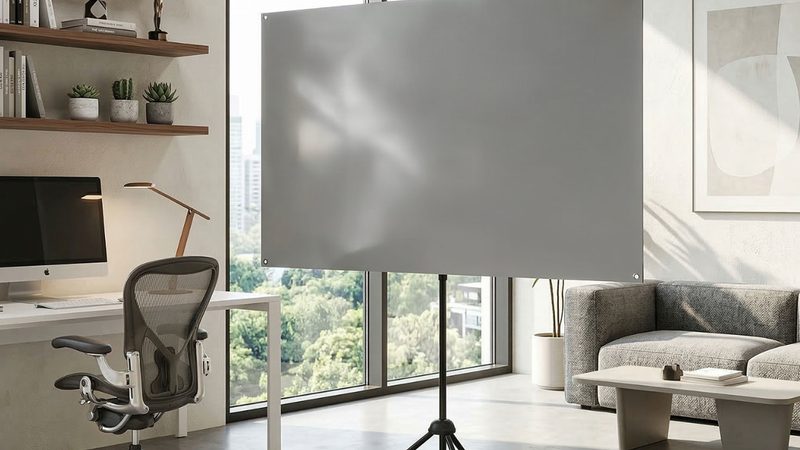
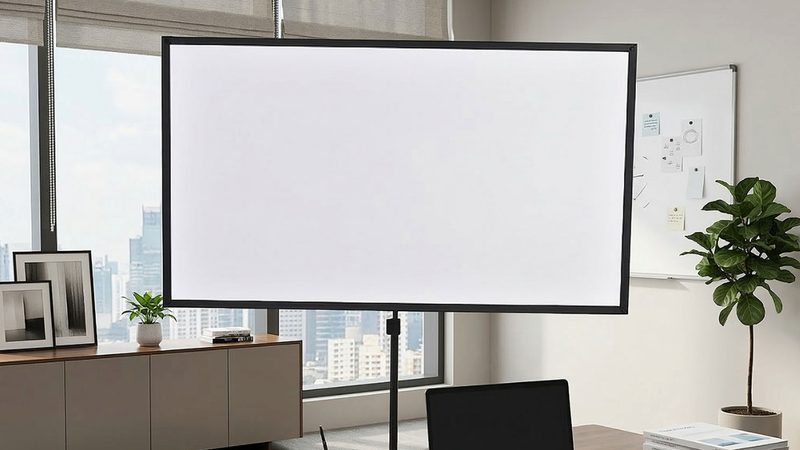
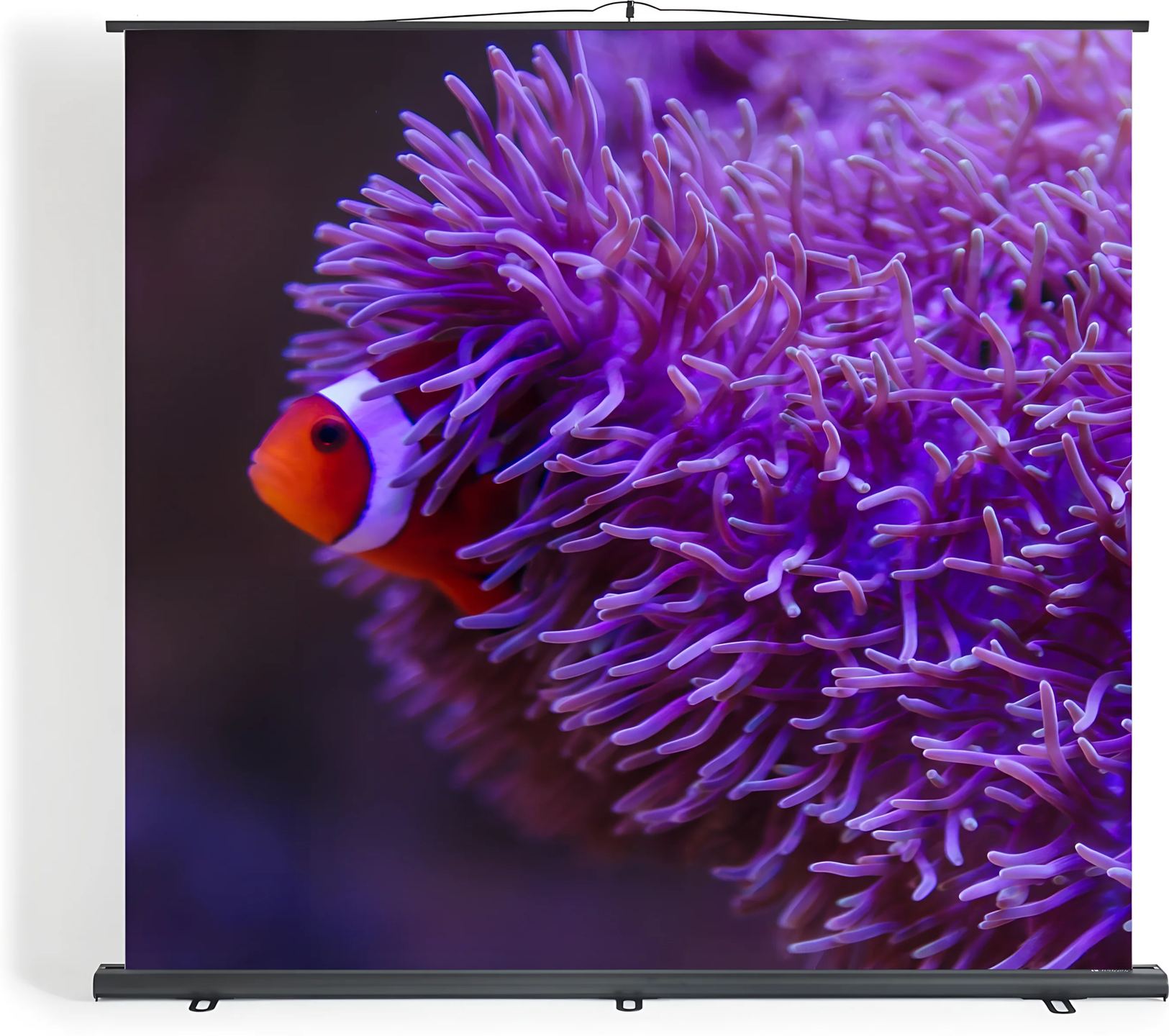
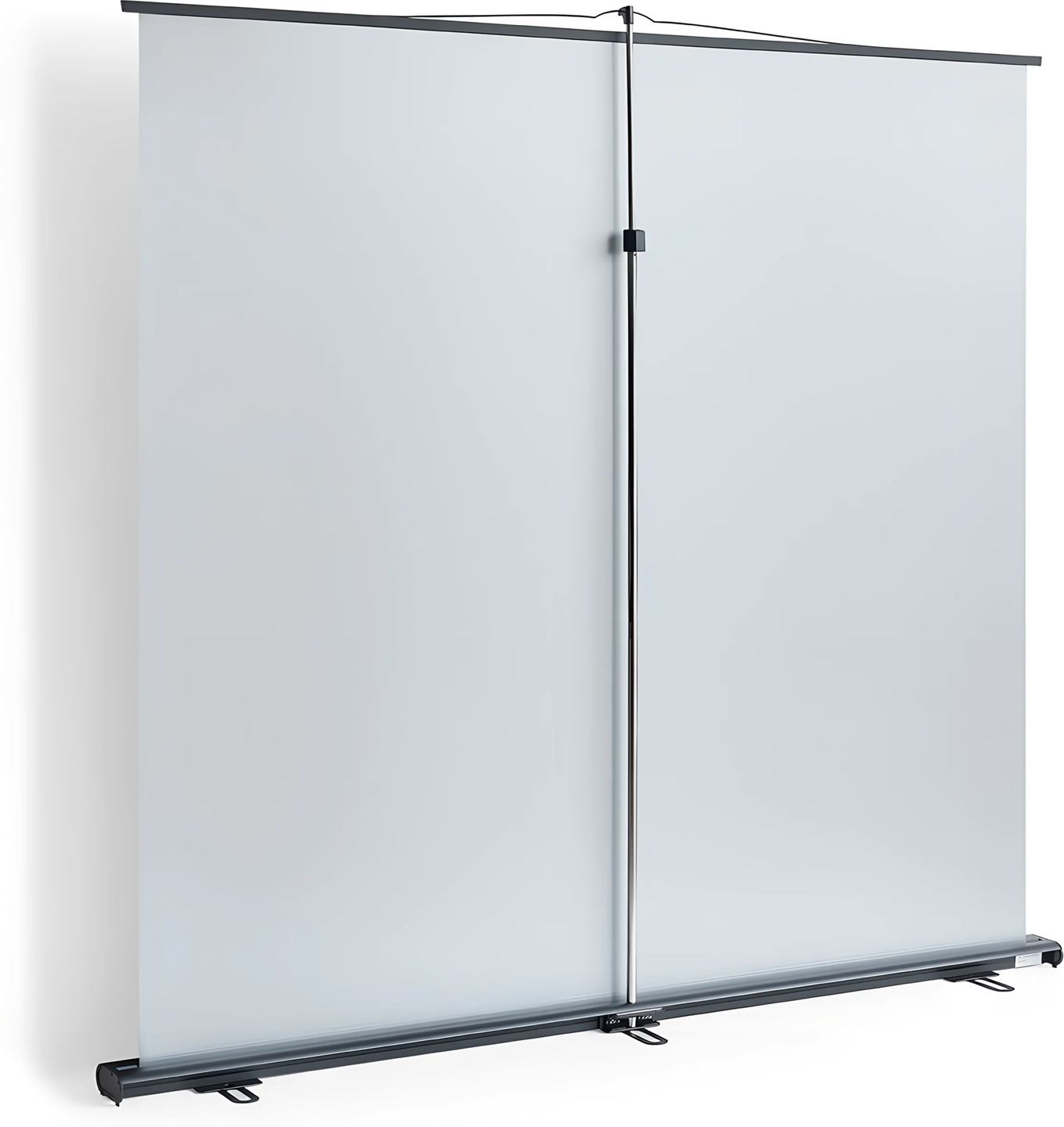
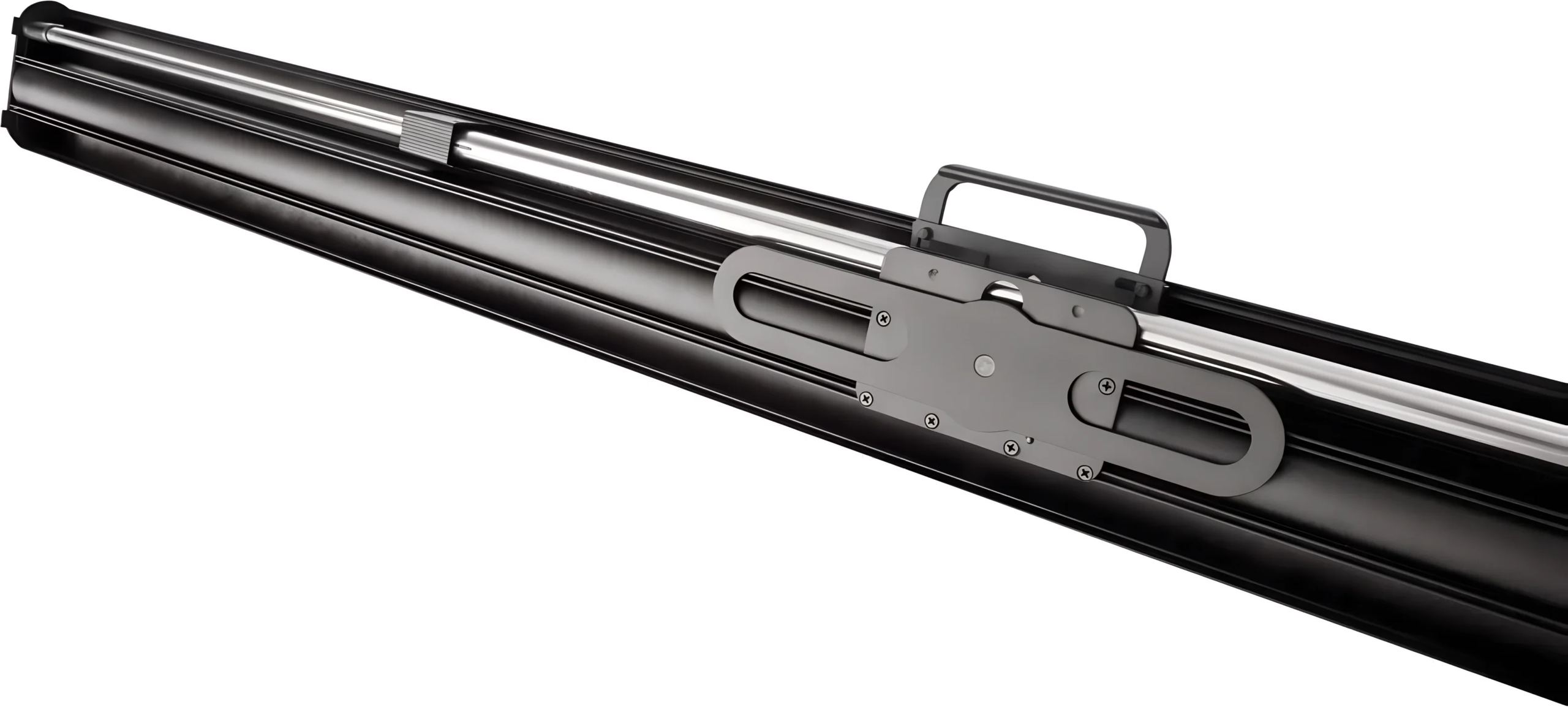
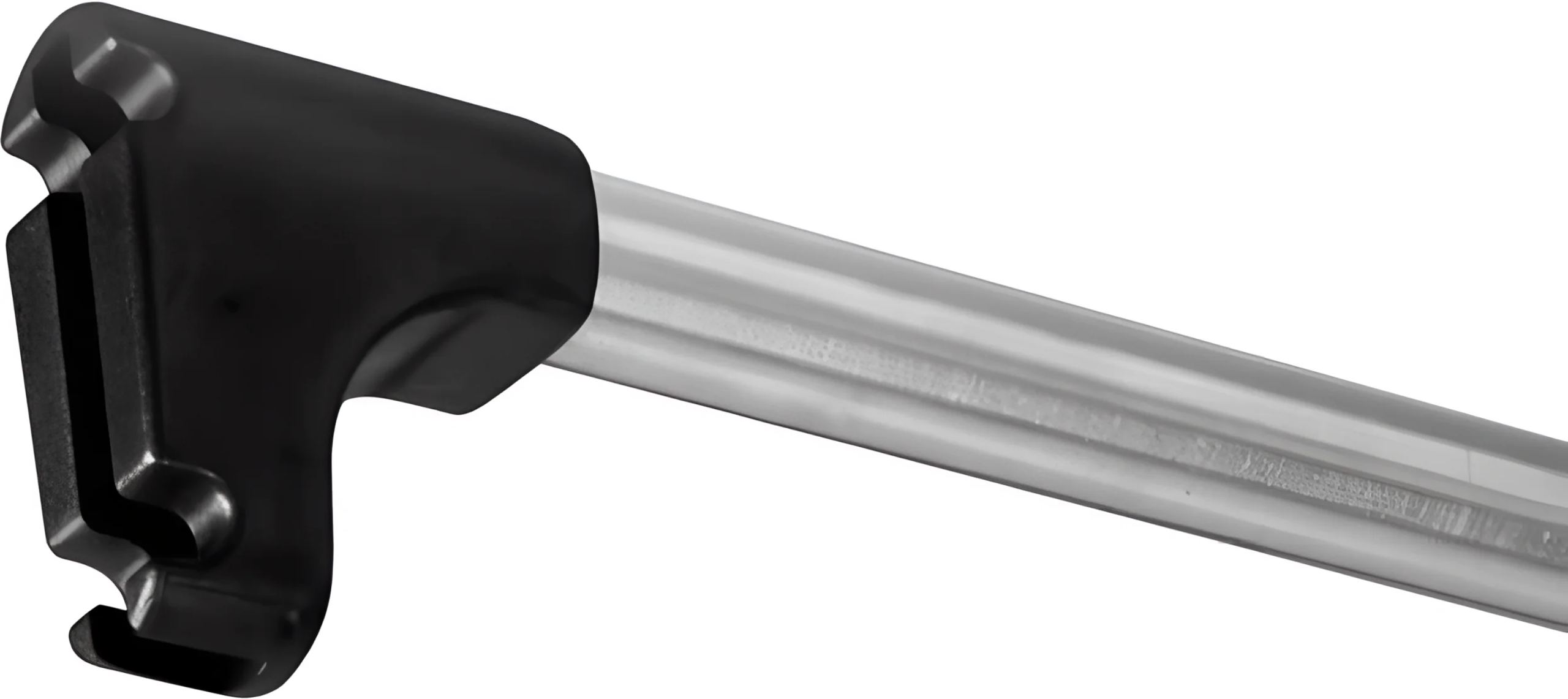
The mechanism is simple. The housing, a black lacquered aluminum alloy profile about 1.90 m long, sits on the floor. Two small retractable feet fold out at its ends to stabilize it. The screen is pulled upward from the housing and attached to an upper bar; a central telescopic pole keeps the whole assembly in position. No wall mounting, no wiring: operation is entirely manual.
Once deployed, the screen reaches a total height of 190 cm. The usable surface measures 176 cm wide by 99 cm high, for an 80-inch diagonal in 16:9 format. The bottom of the image sits a good distance above the floor, at a height that matches the eye level of a seated audience, without any riser or additional adjustment.
The housing is no more than 12.6 cm deep and 5.1 cm high. This slimness explains the moderate weight and ease of handling, but it imposes one constraint: the screen must be stored flat, horizontally. Keeping it upright on its edge could deform the profile and the rolling mechanism.
A screen that follows rooms and uses
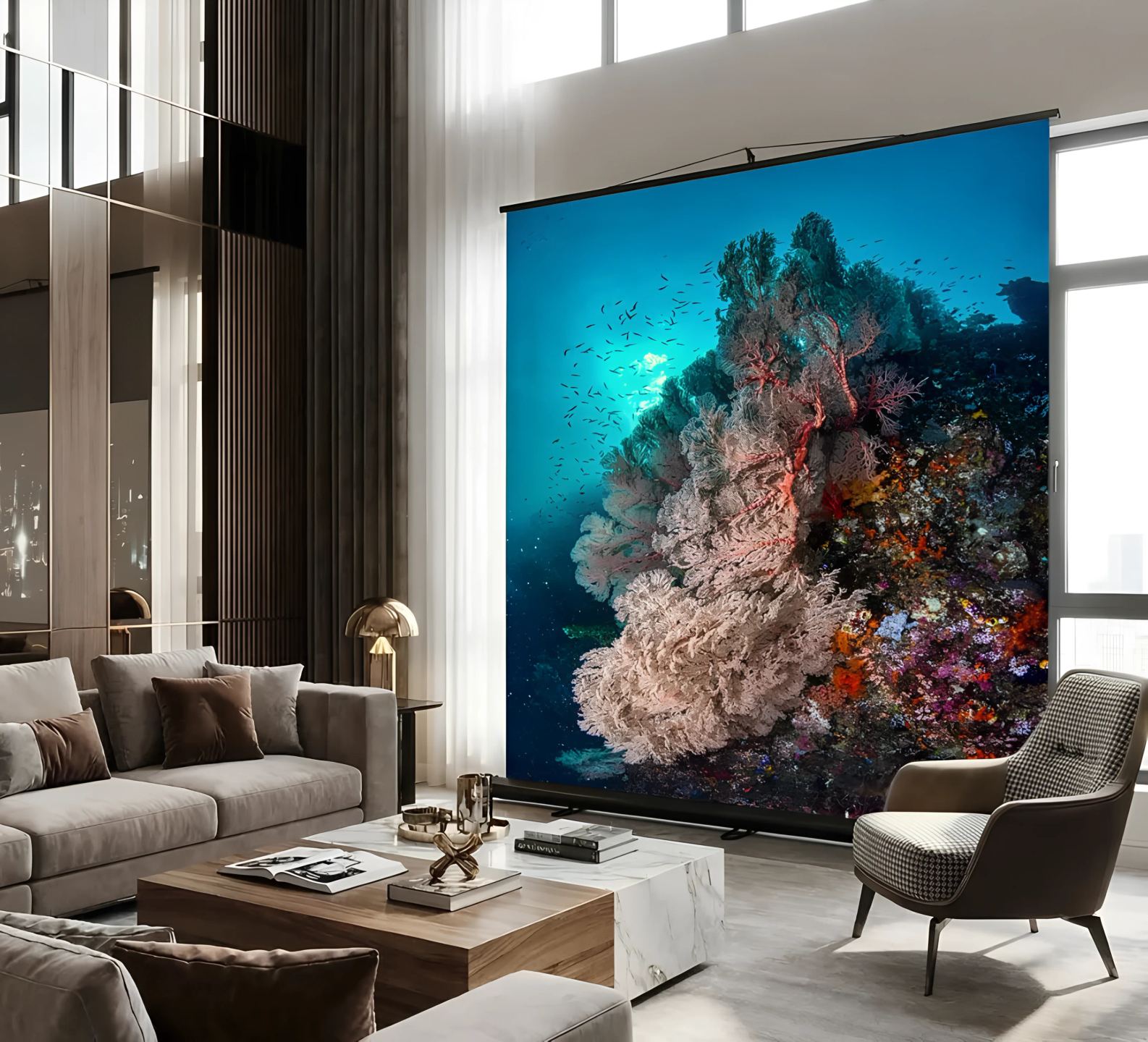
The appeal of the floor-standing format lies in its mobility. The screen stores in packaging measuring 200 cm long with a 20 by 12 cm cross-section, a volume that slips behind a piece of furniture or into a closet and can be carried from one room to another. The same screen can be used in the living room in the evening, then in an office or meeting room the following week.
This portability has a downside. Stability relies on the two feet and on a flat floor. On a terrace or uneven ground, alignment with the projector becomes more delicate, and a floor-standing screen remains sensitive to wind. Indoor use, on a hard, level floor, remains the natural environment for this type of screen.
The PullUP ALR LT range is also available in an 89-inch version, with a screen measuring 196 cm by 110 cm and a longer housing. The choice between the two depends on the available viewing distance and the distance between the projector and the screen, two parameters to check before purchase. Projeo includes a two-year warranty with the screen.
Documentation
Technical specifications
Screen type
- Manual floor-standing screen, portable (mini compact format)
Projection screen fabric
- Projection surface: ALR (Ambient Light Rejection) PVC LT
- Gain: 1.4
- Viewing angle: 160°
- Compatible projector type: long throw
- Compatibility: not compatible with RGB triple laser projectors
Structure and mechanism
- Housing: black lacquered aluminum alloy
- Control system: manual
Pull-Up ALR LT 80 model
- Format: 16 / 9
- Screen fabric: ALR Long Throw
- Usable image size (W × H): 176 × 99 cm
- Diagonal: 80”
- Housing size (L1 × L2 × L3): 190.5 × 12.6 × 5.1 cm
- Top bar size (L4): 186.8 × 2.65 × 1.55 cm
- Base size (S): 28.36 × 5 × 0.2 cm
- Total product height (F): 190 cm
- Packaging dimensions: 200 × 20 × 12 cm
Frequently Asked Questions
What distance should be planned between the projector and the 80-inch screen?
The screen is 1.76 m wide. The projection distance depends on the projector’s throw ratio, a value specific to each model. For a typical long-throw projector, generally allow between 2 and 3.5 meters between the lens and the screen. The best approach is to consult the projector’s technical sheet, which indicates the distance corresponding to an 80-inch image, and to check that the room provides that throw distance.
What projector brightness should be paired with this screen?
The ALR screen improves contrast in ambient light, but it does not replace a sufficiently bright projector. In a dark room, a modest device is enough. For daytime use or in a bright living room, a projector of at least 2,000 lumens delivers a more solid image. The screen’s 1.4 gain boosts perceived brightness, which helps, without removing the need to choose a light source suited to the room’s brightness.
Is the 16:9 format suitable for films in cinema format?
The 16:9 format corresponds to television, streaming content, and the majority of programs. Films shot in a wide format, close to 2.39:1, are displayed with two black bars at the top and bottom of the screen. The image remains correct, but its usable height is reduced. For use mainly dedicated to scope-format cinema, a 2.35:1 screen would be more relevant. 16:9 remains the versatile choice for mixed use.
Can the screen remain permanently deployed?
Nothing prevents leaving the screen set up between two viewing sessions. The manual mechanism is suited to repeated raising and lowering cycles. That said, folding the screen back into the housing after use offers two advantages: the surface stays protected from dust and light, and the room regains its space. For an installation that remains in place permanently, a fixed or motorized screen is better suited to the need than this portable format.
- Eco-contribution included in the sale price.
- Manufacturer reference: PROPUL80LT
- GTIN / EAN: 3700795165133