Projeo PullUP ALR LT 90



Overview
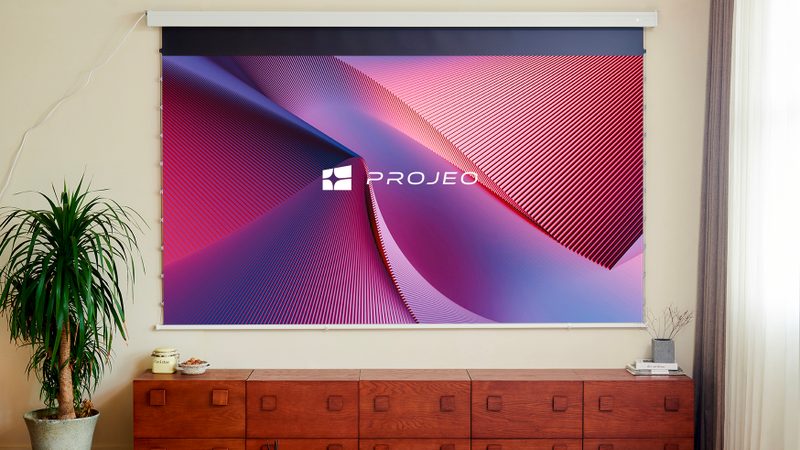
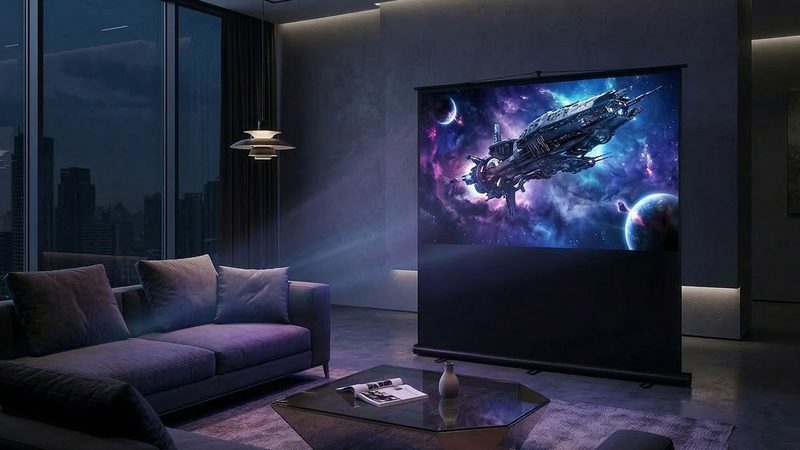
Projecting a readable image in a bright living room usually requires a screen fixed to the wall, treated against stray light. Portable models most often make do with a white fabric that fades as soon as daylight enters through a window. The PullUP ALR LT 90 combines both approaches: an ambient light rejecting surface mounted on a self-supporting casing, which can be set up in a few seconds without any fixing.
Set up in a few seconds, with no wall or drilling
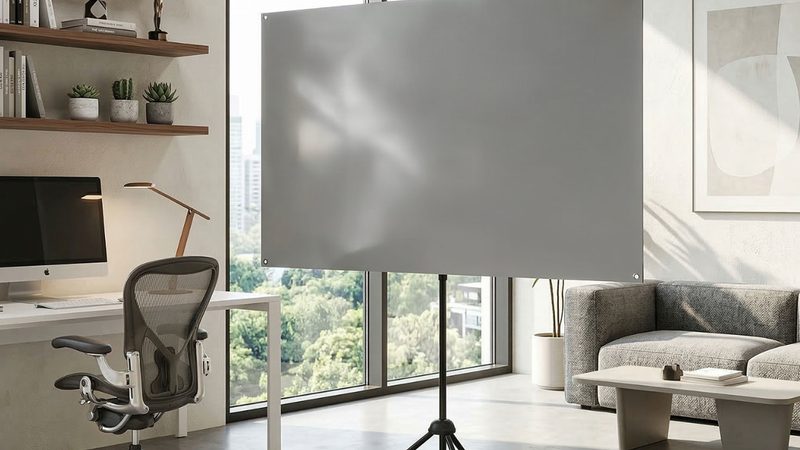
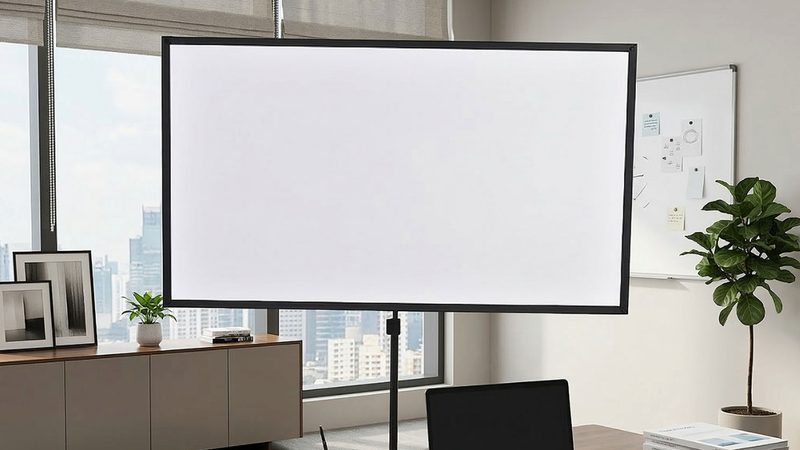
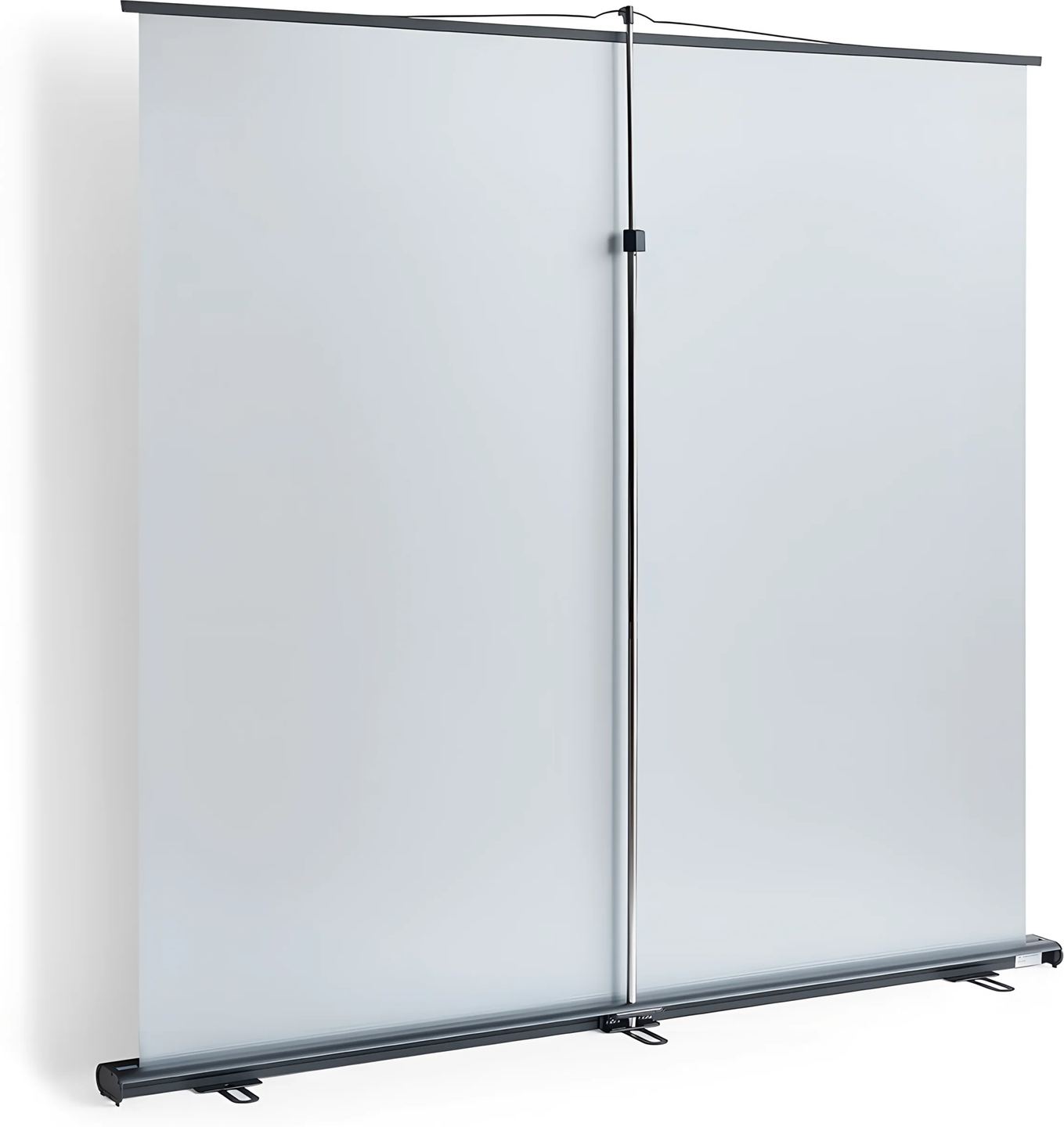
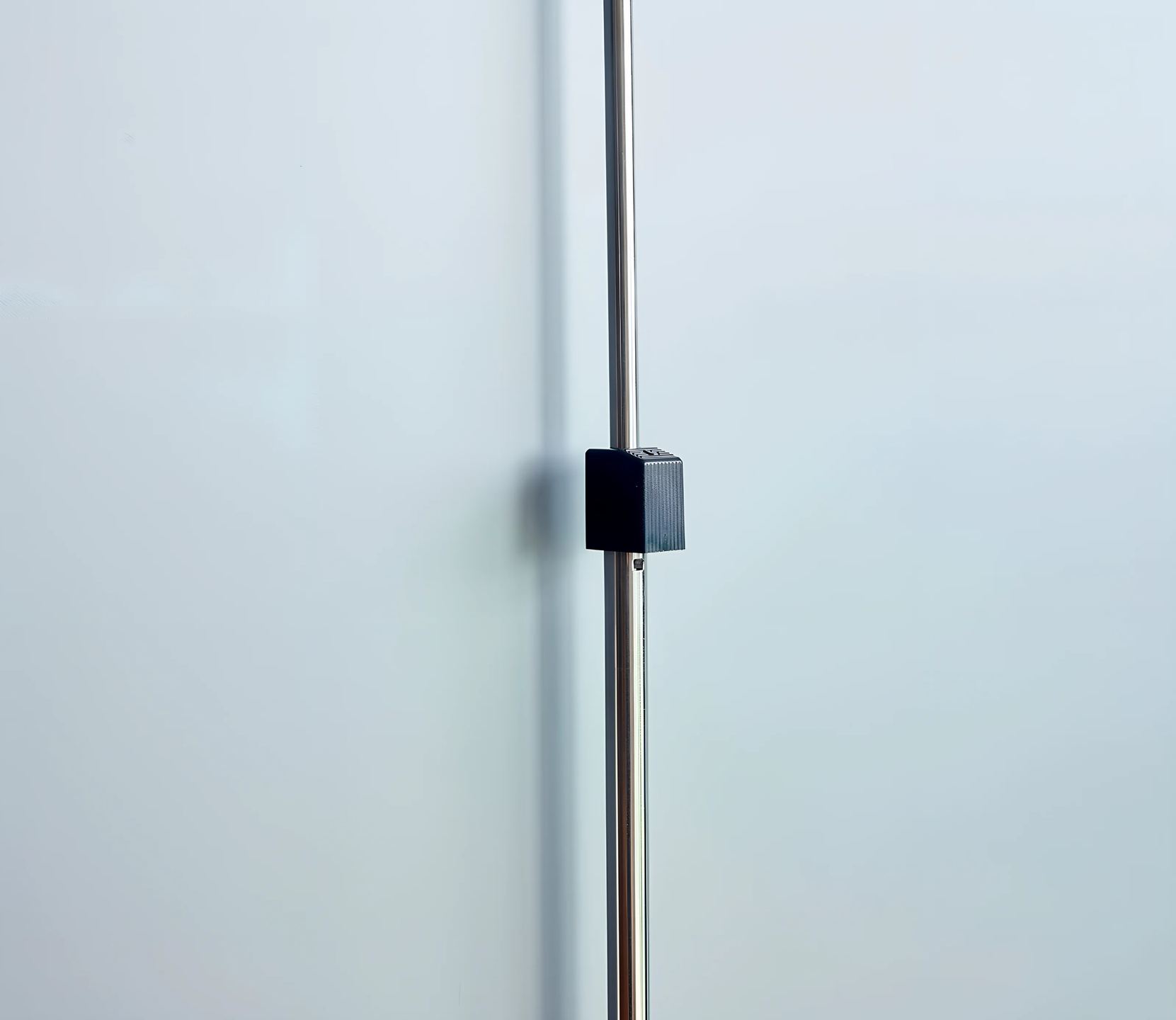
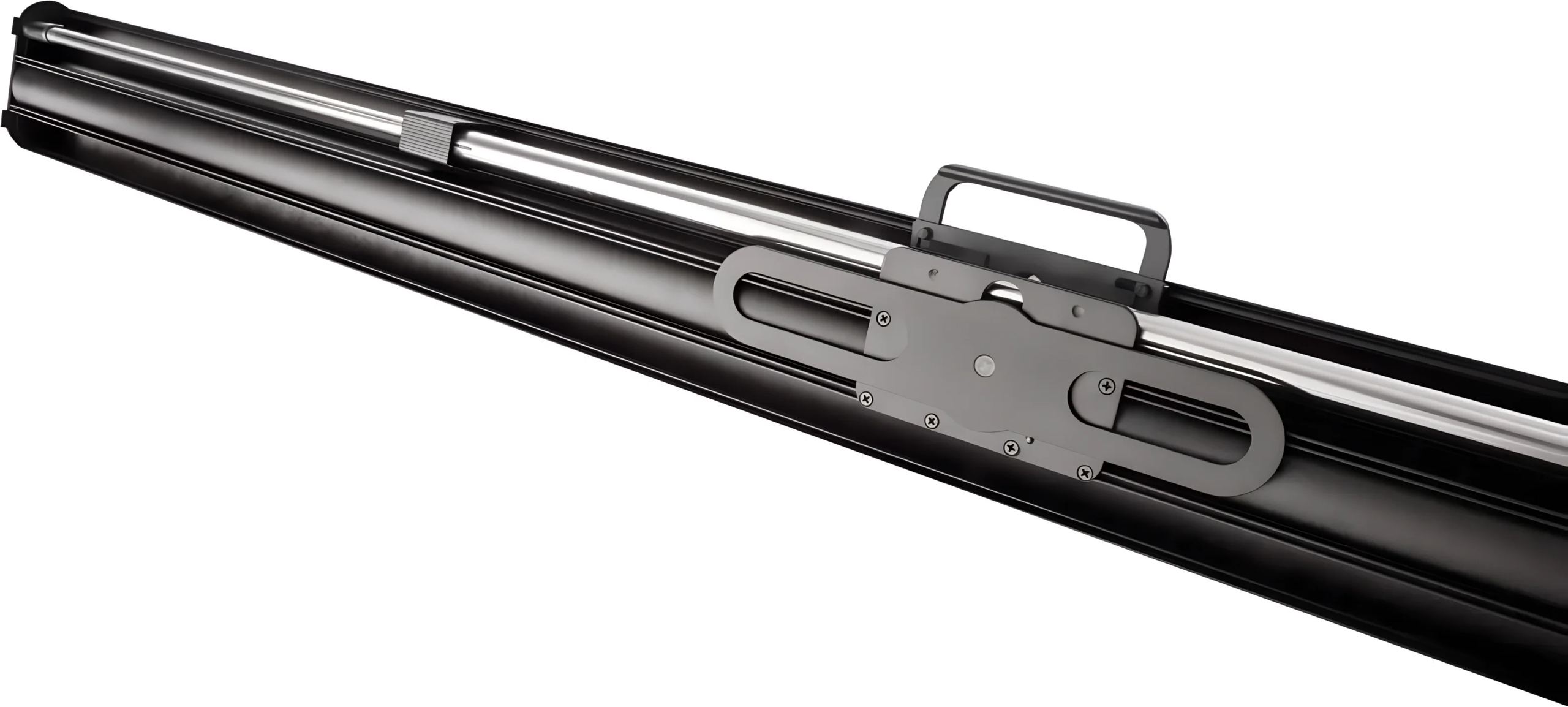
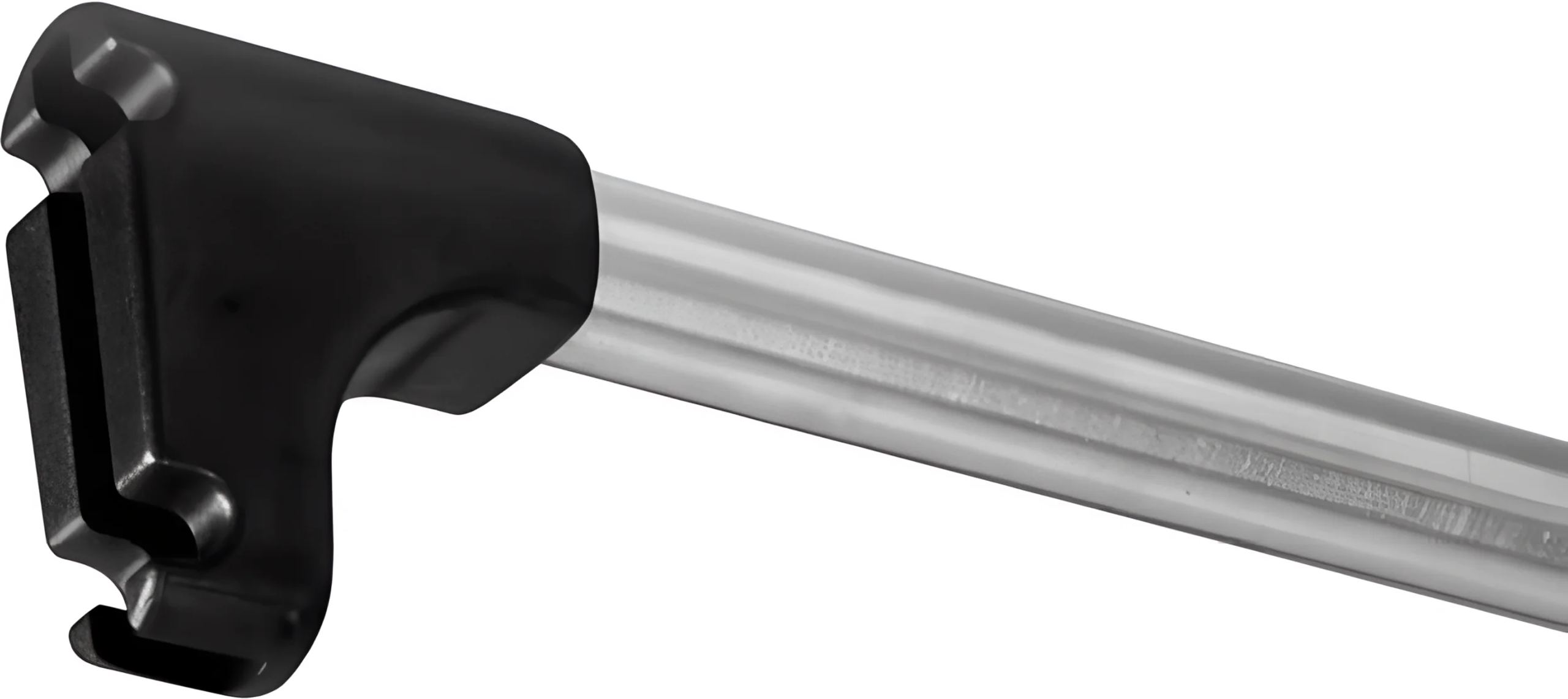
The principle of a pull-up screen comes down to a simple gesture: the casing, placed on the floor, releases a screen that is pulled upward to the desired height. A rigid bar at the top keeps the screen taut, while a rear support holds the whole assembly in place. The casing rests on small feet that widen the base and reduce the risk of tipping over. Installation requires neither electrical power nor wall mounting.
Made from a black lacquered aluminum alloy, this casing measures about 2.10 m wide, 12.6 cm deep, and 5.1 cm thick. Its slim profile makes it easy to store along a piece of furniture or against a partition wall between sessions. Once deployed, the screen rises to 202 cm and displays an image measuring 196 by 110.3 cm, which corresponds to an 89-inch diagonal in 16:9 format.
The fully manual operation has its trade-off. The screen must be opened and folded away by hand each time it is used, without the convenience of a remote control or automatic triggering synchronized with the projector. This choice lightens the mechanism and removes any dependence on mains power, directly serving the model’s portable purpose: it can be moved from one room to another, or from one home to another, without reinstalling anything.
The ALR LT screen against ambient light
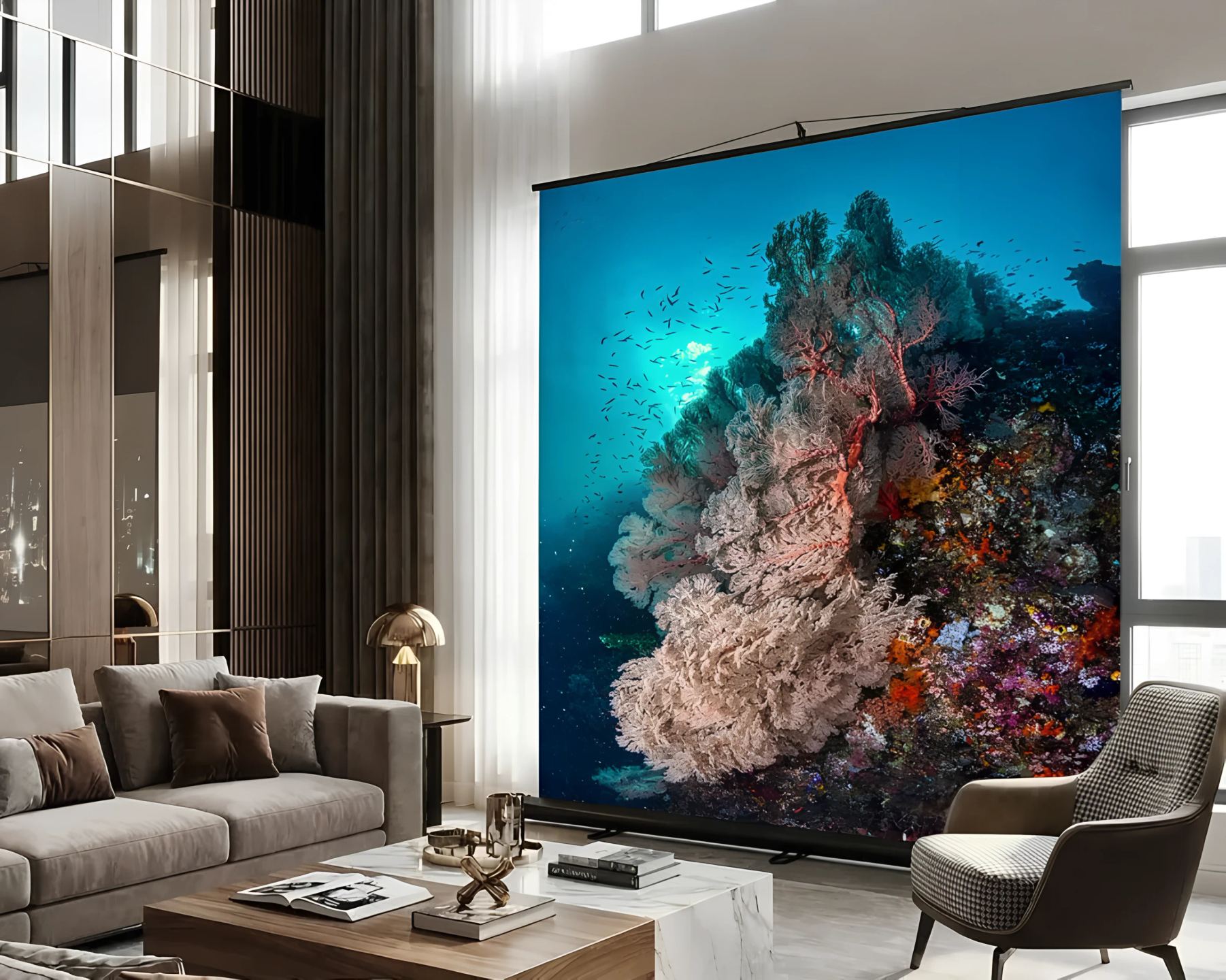
ALR stands for Ambient Light Rejection. Where a conventional white screen reflects all the light it receives indiscriminately, an ALR surface treats the projector’s useful light differently from stray light coming from windows or ceiling fixtures. The PullUP ALR LT 90 screen is a technical PVC surface that filters part of this unwanted lighting and preserves image density even when the room is not plunged into darkness.
Two figures sum up its behavior. The gain of 1.4 indicates that the screen reflects more light toward viewers than a neutral reference, which supports perceived brightness and contrast depth. This value, higher than that of many living-room screens, has a known consequence: high-gain surfaces concentrate light within a cone, with a risk of hotspotting and reduced illumination at the sides. The specified 160° viewing angle mitigates this drawback. It widens the angle over which the image maintains its uniformity and allows several viewers to sit side by side without noticeably degrading the side seats.
The LT suffix, for Long Throw, is not a cosmetic detail. The screen’s microstructure is designed for the light of a long-throw projector, placed in front of the screen or above it, and not for that of an ultra-short-throw device positioned just below the screen. With UHD 4K content, this treatment results in denser blacks and better saturated colors than a white screen would allow under the same lighting conditions.
Long throw required, triple RGB laser excluded
The choice of projector determines the result. This screen requires a long-throw projector, meaning a device installed at a good distance from the screen, in front of it or overhead, as found in the majority of living rooms and dedicated rooms. Ultra-short-throw models, placed on furniture just below the image, should be avoided: their very steep beam does not match the structure of the LT screen and the image would lose uniformity.
A second restriction deserves attention. Projeo indicates that the ALR LT screen is not compatible with triple RGB laser projectors, whose light compromises color fidelity on this type of surface. A lamp, LED, laser-phosphor, or single-laser projector remains, however, a suitable match. Checking the light source technology before purchase helps avoid disappointment in color rendering.
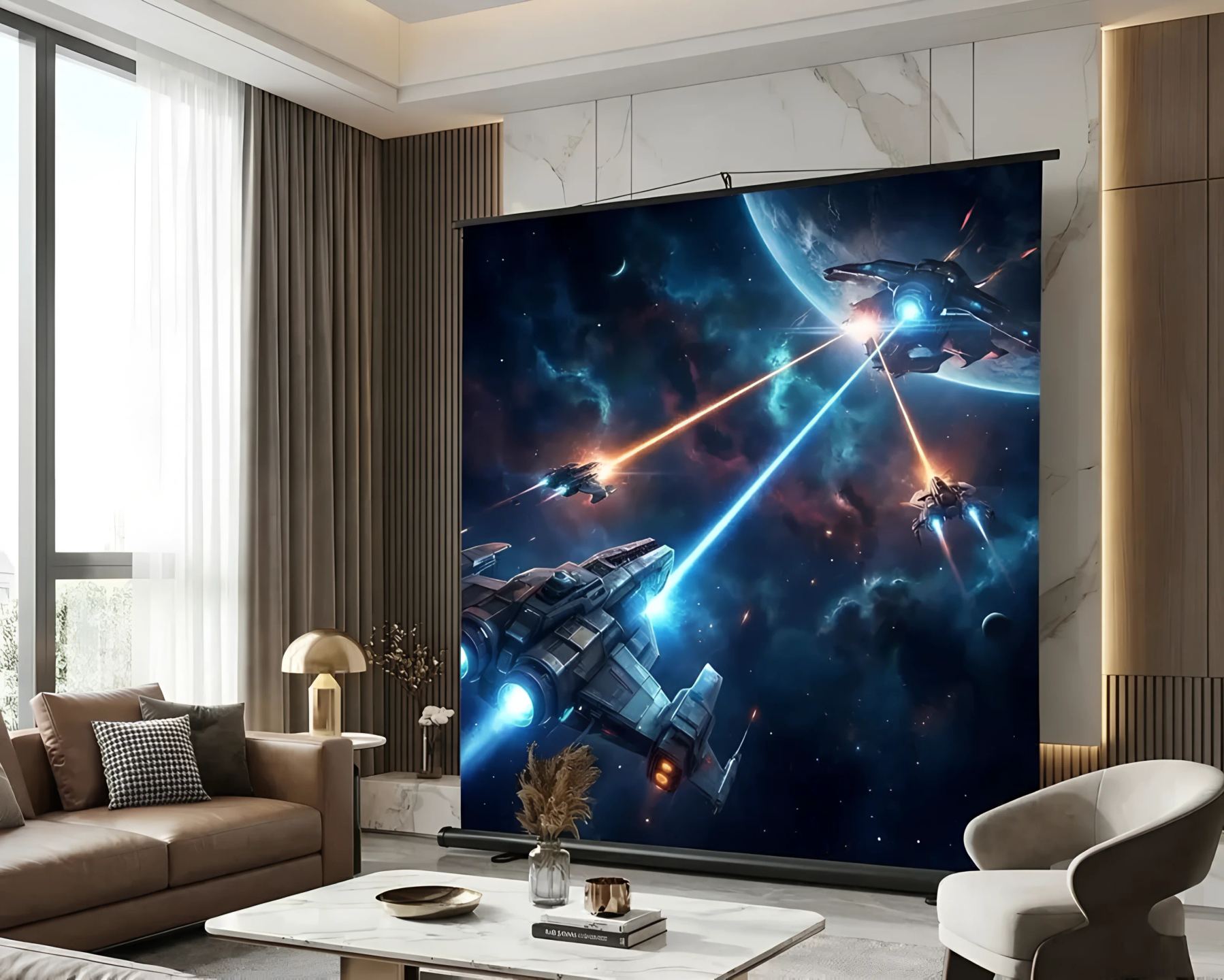
Living with a portable 89-inch screen
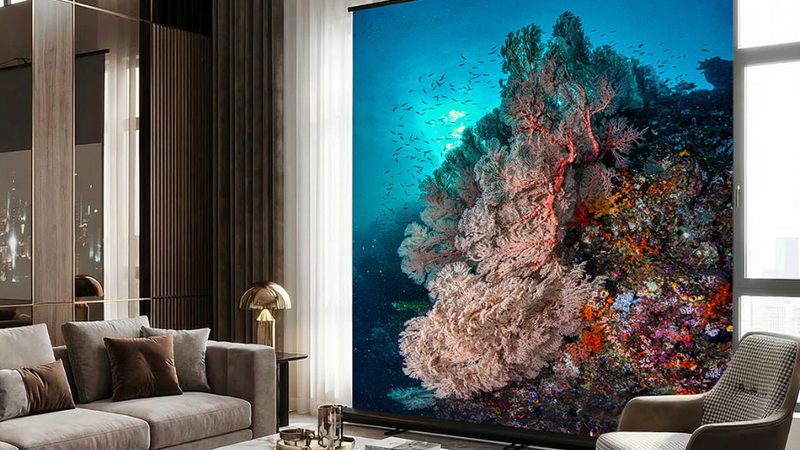
The compact format of the casing enables uses that a fixed screen does not. It can be set up in the living room for a viewing session, then put away to return the room to its primary function, or carried into a bedroom, an office, or another home. Its 89-inch diagonal suits a medium-sized living space, provided there is enough throw distance for the long-throw projector and enough floor clearance for the support feet.
One maintenance point to remember: the casing must be stored horizontally. If stored upright on its edge, the tensioning mechanism and rolled screen may deform over time. This requirement affects storage, because a sufficiently long flat surface must be planned for, under a bed or on top of a wardrobe for example, rather than just a simple closet corner.
The image format remains fixed at 16:9, with no adjustable masking for wider-ratio content such as CinemaScope. The PullUP ALR LT is available in two sizes: the 90 version described here, with its 89-inch diagonal, and a shorter 80 version, whose image measures 176 by 99 cm. At purchase, the packaging of the 90 model is a 220 cm long parcel, to be handled accordingly.
Documentation
Technical Specifications
Screen Type
- Manual floor-standing, portable screen (compact mini format)
Projection Screen Material
- Projection surface: ALR (Ambient Light Rejecting) PVC LT
- Gain: 1.4
- Viewing angle: 160°
- Compatible projector type: long throw
- Compatibility: not compatible with RGB triple laser projectors
Structure and Mechanism
- Housing: black lacquered aluminum alloy
- Control system: manual
Pull-Up ALR LT 90 Model
- Format: 16 / 9
- Screen material: ALR Long Throw
- Viewable image size (W × H): 196 × 110.3 cm
- Diagonal: 89”
- Housing size (L1 × L2 × L3): 210.5 × 12.6 × 5.1 cm
- Top bar size (L4): 206.8 × 2.65 × 1.55 cm
- Base size (S): 28.36 × 5 × 0.2 cm
- Total product height (F): 202 cm
- Packaging dimensions: 220 × 20 × 12 cm
Frequently Asked Questions
Does the PullUP ALR LT 90 work with an ultra-short-throw projector?
No. The LT screen works with long-throw projectors, installed at a distance from the screen. An ultra-short-throw device, placed just below the image, projects its light at a very narrow angle that the surface microstructure cannot exploit properly. The rendering would be uneven, with some areas brighter than others. An ultra-short-throw projector requires a different type of ALR screen, adapted to this very steep beam.
Why must the casing be stored flat?
The casing houses the rolled screen and the mechanism that keeps it under tension. Laid horizontally, this assembly retains its geometry. Stored upright on one edge for weeks, it is subjected to asymmetrical stresses that can mark the screen or distort the mechanism, resulting in visible creases or uneven tension the next time it is deployed. The horizontal storage instruction preserves image flatness over time.
Can movies in 2.35:1 format be projected on this 16:9 screen?
Yes, but with black bars. The screen surface is fixed in 16:9 format (1.78:1). A CinemaScope-format movie, being wider, is displayed by reducing the image height: two black bars appear at the top and bottom of the screen, and the actually used height drops to around 83 cm instead of 110. The screen does not include any movable masking to hide these bars. For use focused overwhelmingly on widescreen cinema, a 2.35 format screen would be more consistent.
Can speakers be placed behind the screen?
No. The ALR LT screen is a solid PVC surface with no microperforation. It is not acoustically transparent: sound from a speaker installed behind it would be muffled and distorted. Speakers, a soundbar, or front speakers must remain on either side of the screen, or below it. This solid screen has one advantage: it lets no light through, which helps isolate the image when the screen is set up in front of a window.
What is the difference between the PullUP ALR LT 90 and the 80 version?
The two screens share the same ALR Long Throw screen material, the same 16:9 format, and the same black lacquered aluminum casing. Only the size sets them apart. The 90 model displays an image measuring 196 by 110.3 cm, or an 89-inch diagonal, for a deployed height of 202 cm. The 80 model goes down to 176 by 99 cm, or 80 inches, and 190 cm in height. The choice depends on the available space and the throw distance you have for the projector.
- Eco-contribution included in the sale price.
- Manufacturer reference: PROPUL90LT
- GTIN / EAN: 3700795165140