Projeo Rise HD 100
Overview
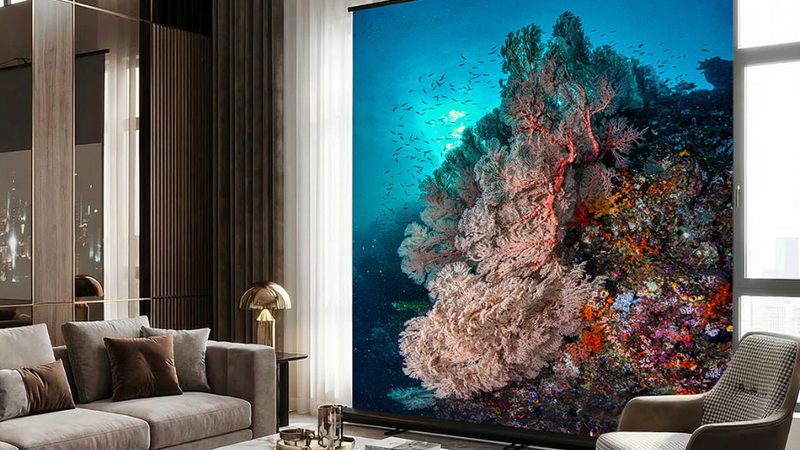
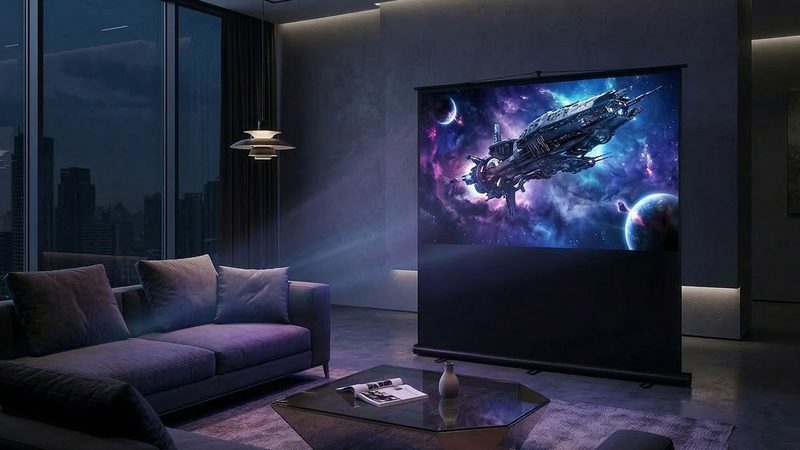
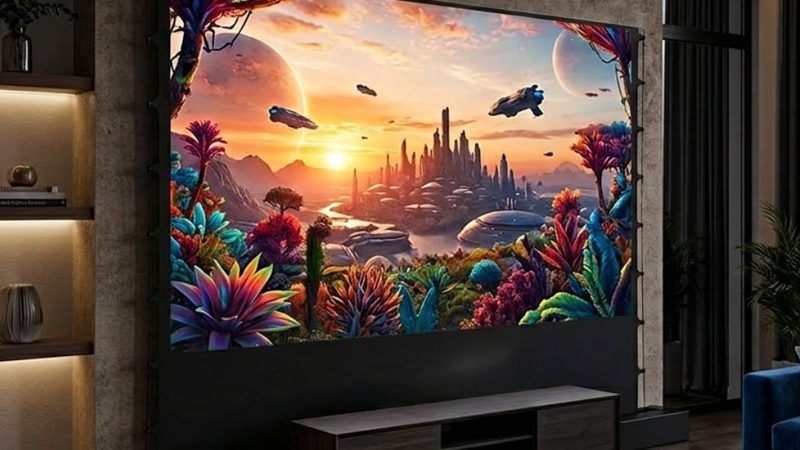
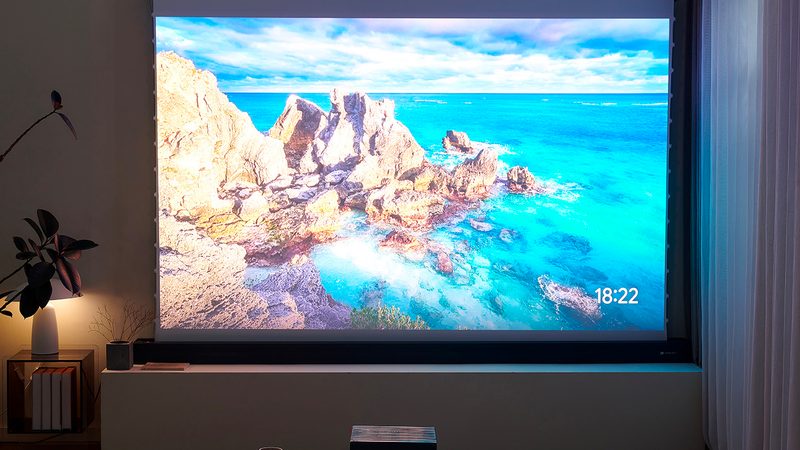
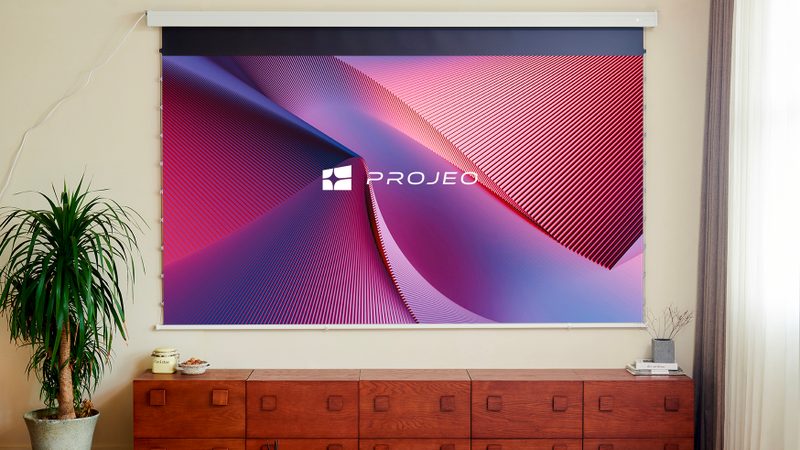
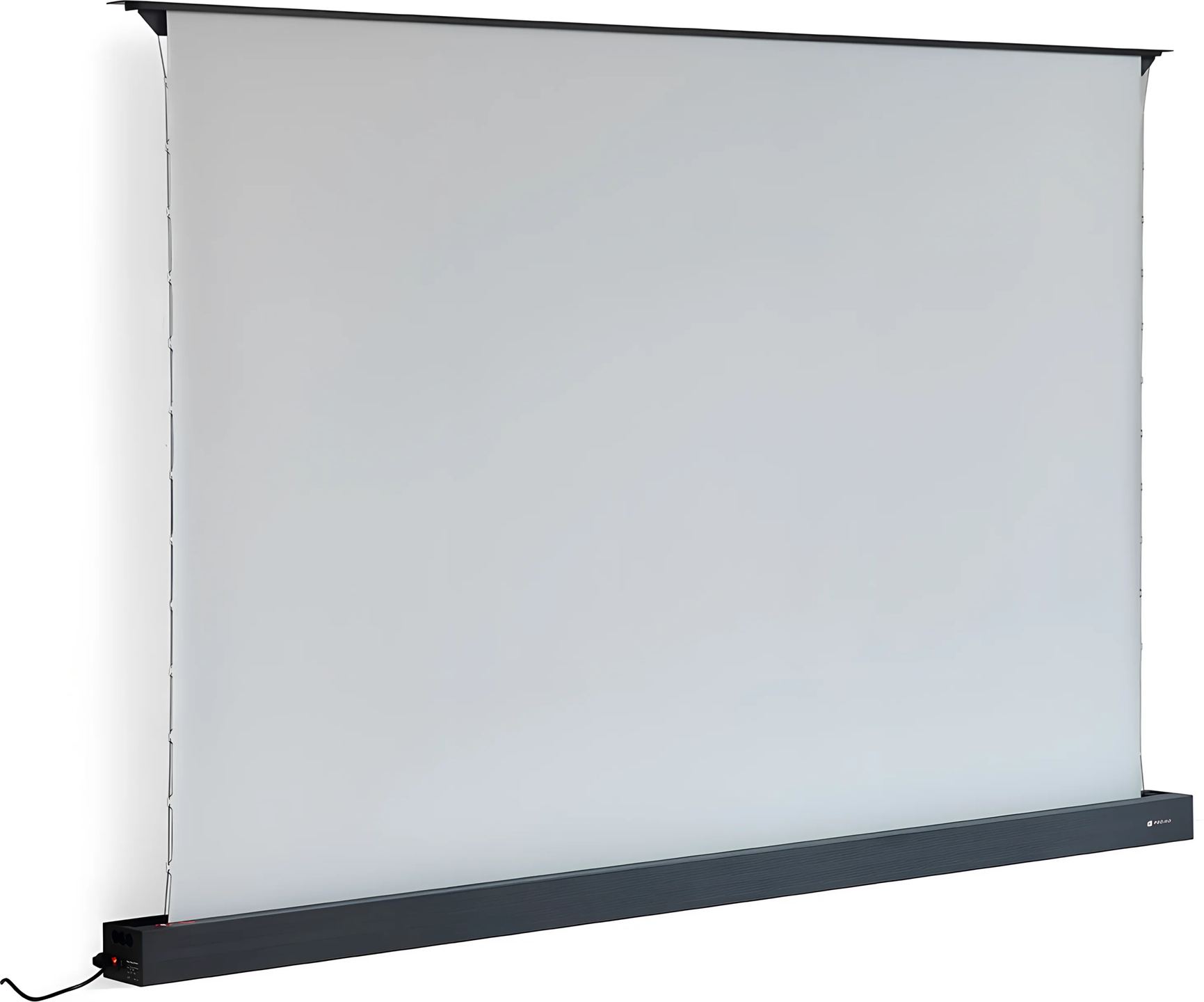
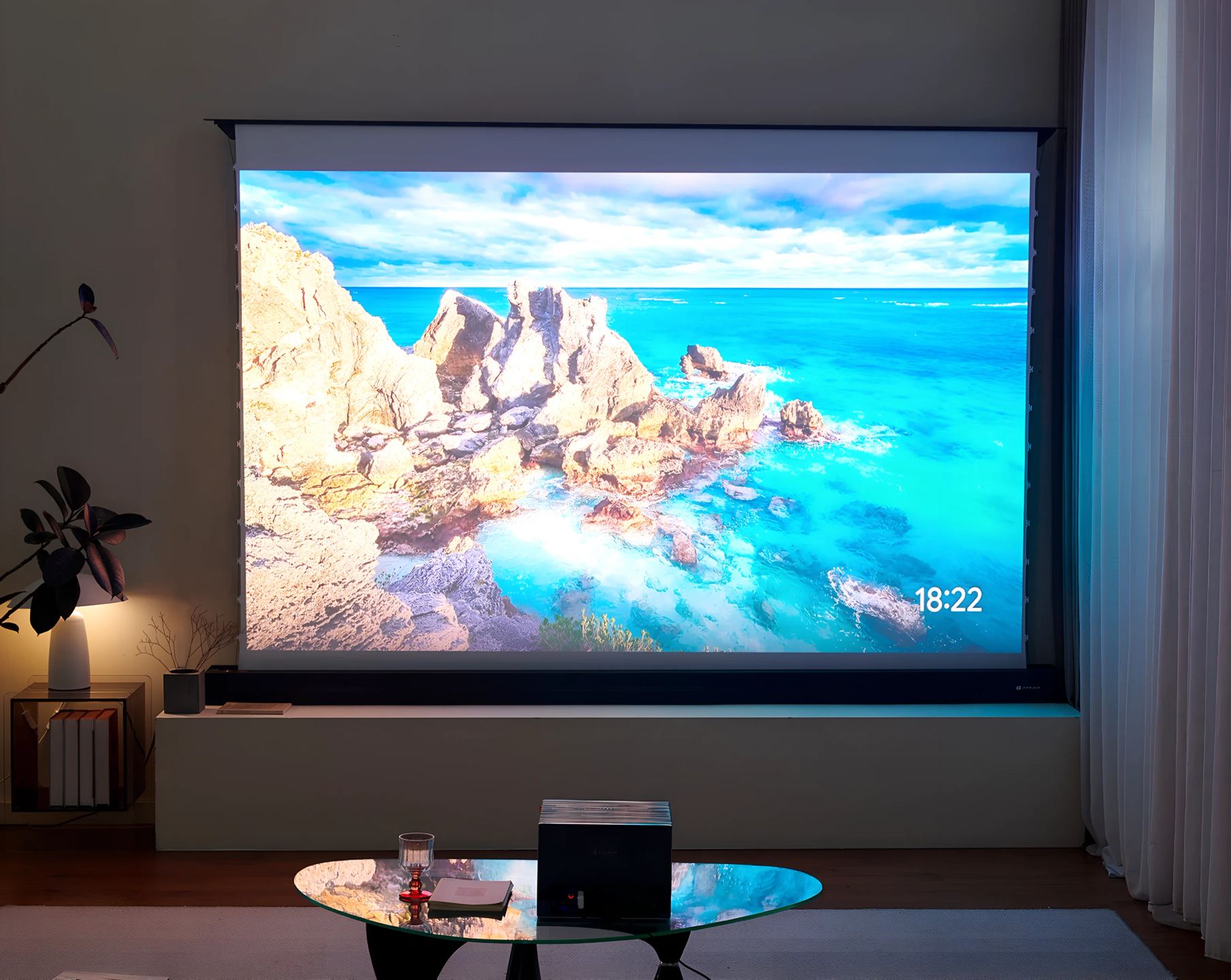
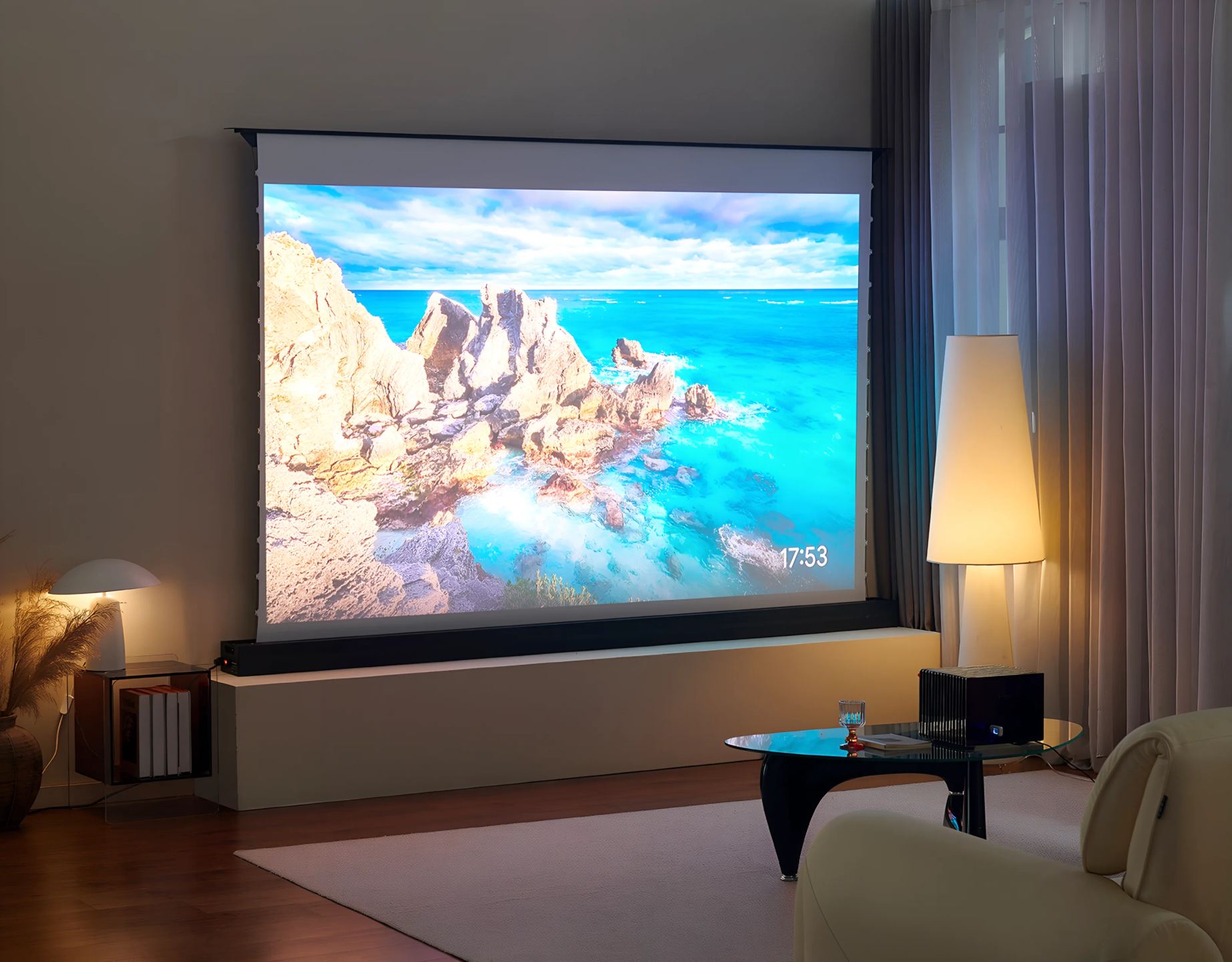
Installing a 100-inch screen without drilling into the wall or ceiling is exactly what this motorized format offers, storing its screen material in a housing placed on the floor. When a viewing session begins, the image rises in just a few seconds. The rest of the time, the housing stays discreet behind a piece of furniture or against a baseboard, and the room keeps its bare walls.
A screen that rises from the floor
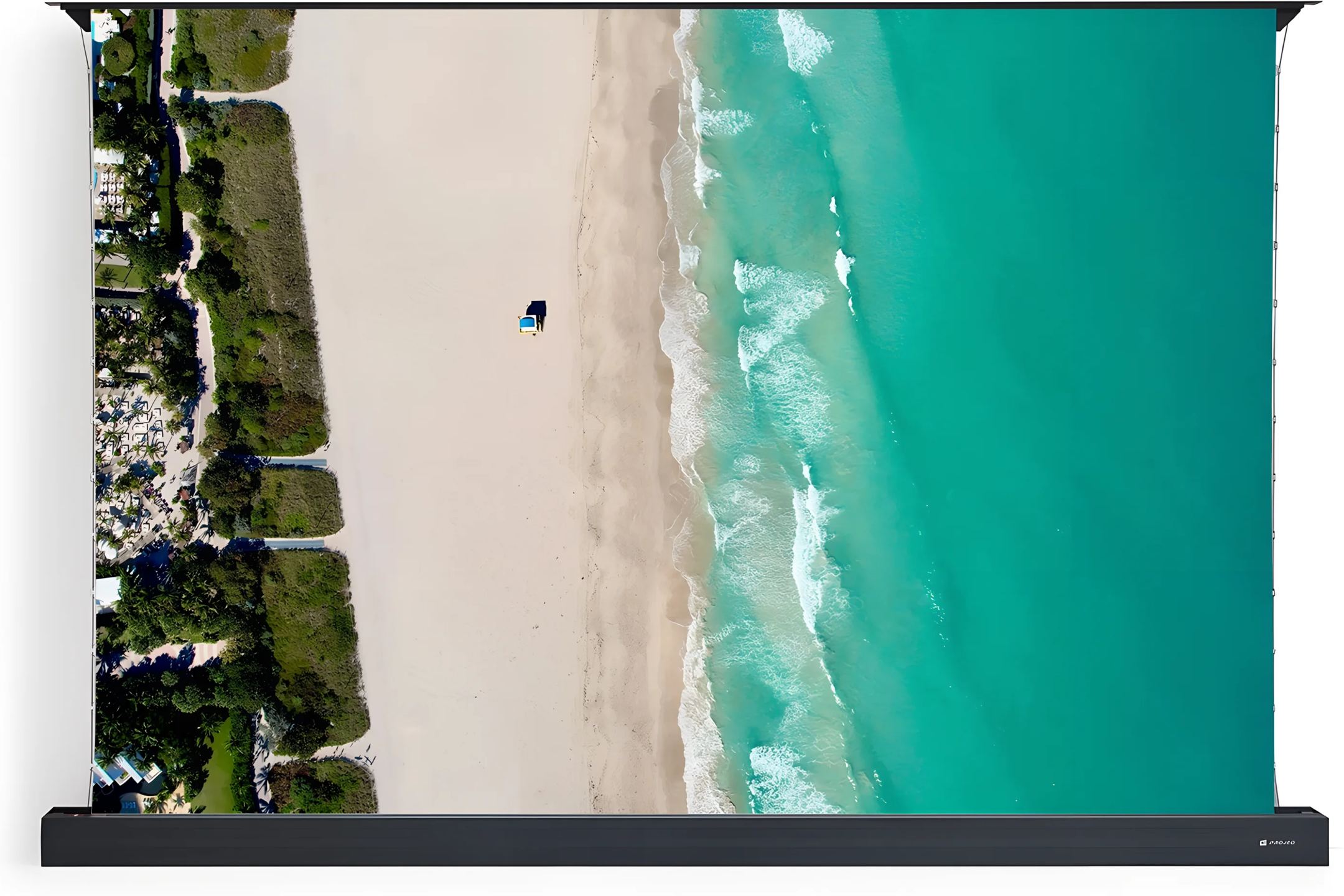
The mechanism is the reverse of ceiling screens. Instead of coming down, the screen goes up. When not in use, it remains rolled up inside the black lacquered aluminum alloy housing placed on the floor. An integrated tubular motor drives the deployment from bottom to top and operates silently once started. Housed inside the screen’s roller tube, this type of motor takes up little space inside the housing.
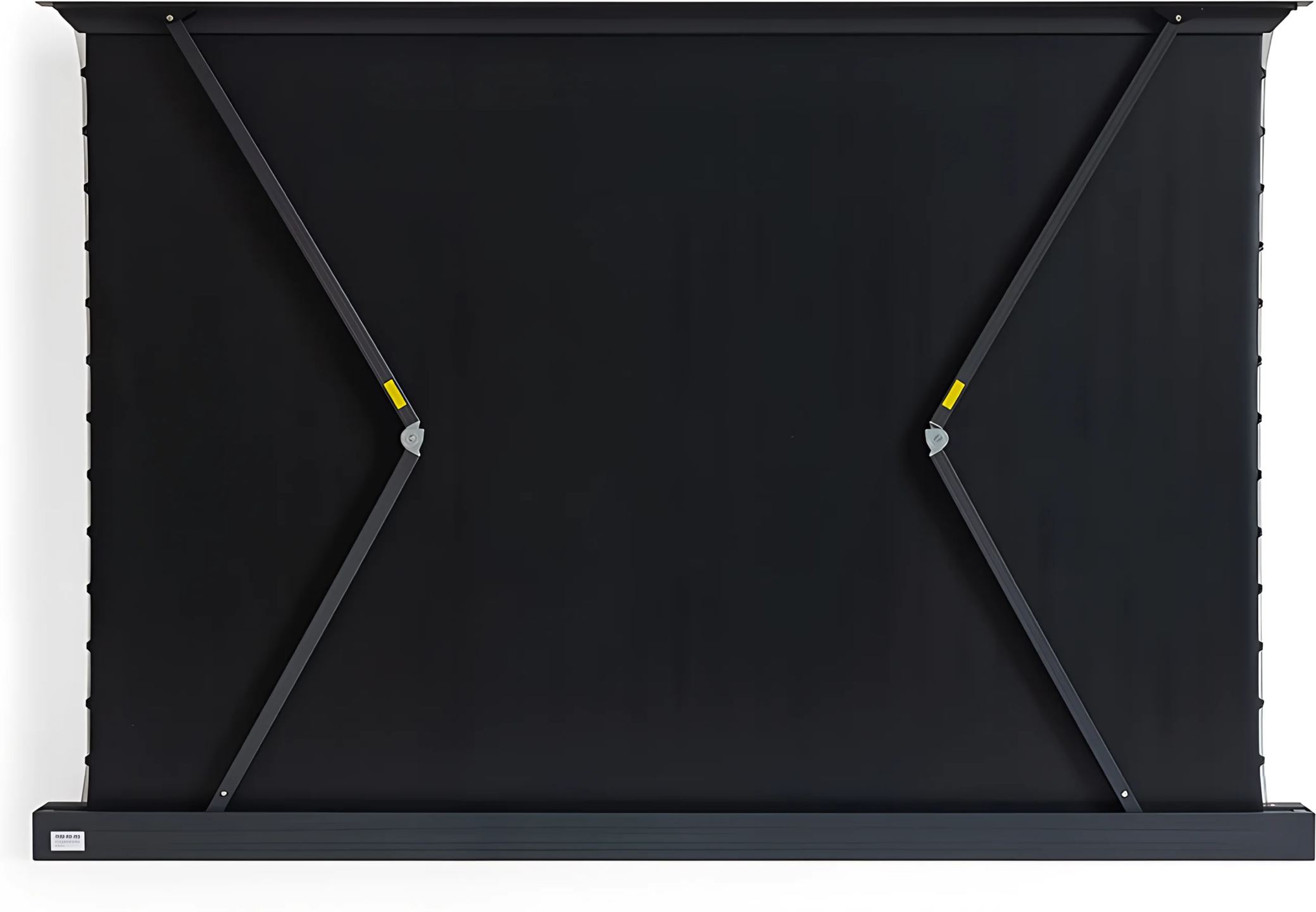
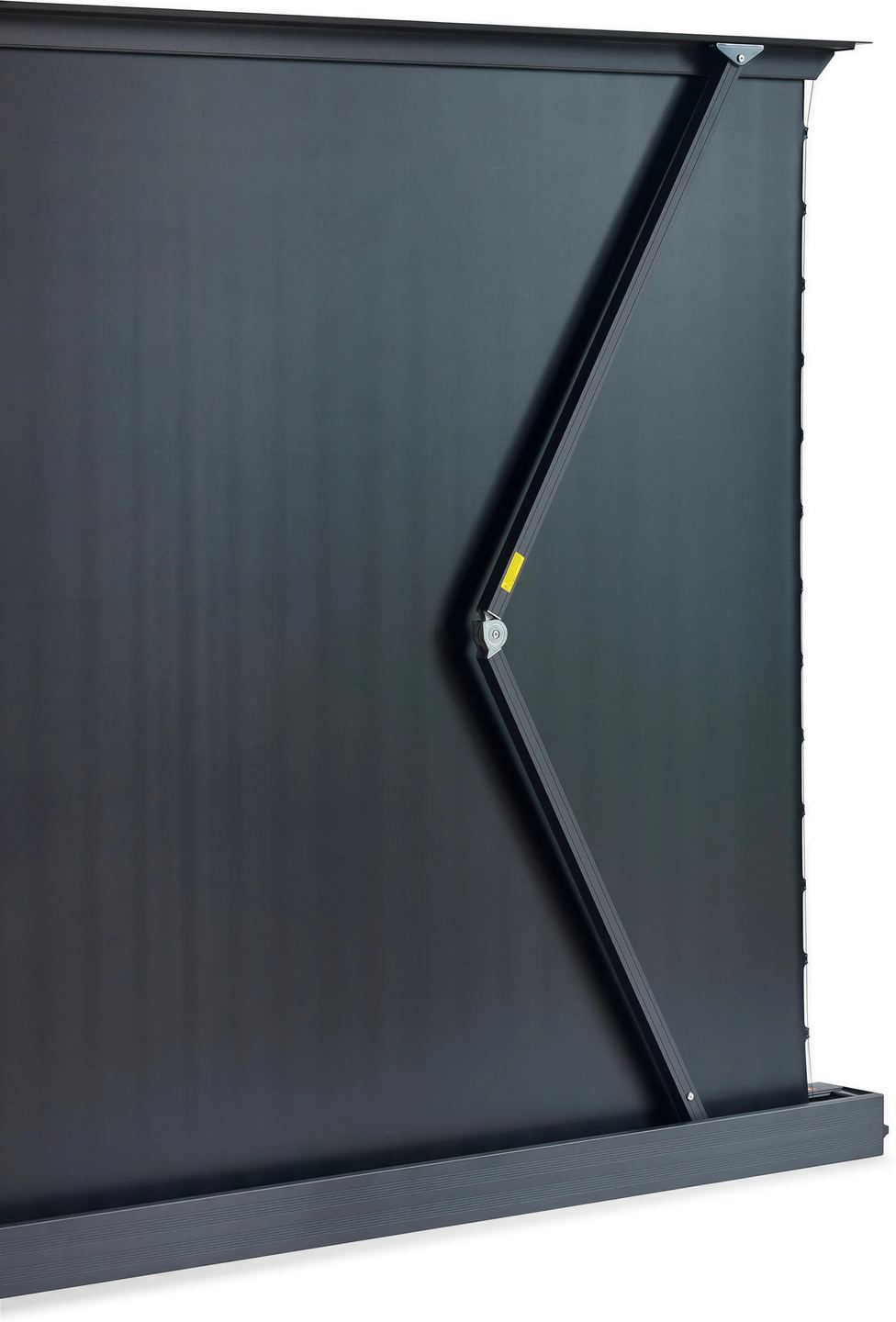
On a surface this wide, the flatness of the screen matters just as much as the lift itself. Tension cables distributed along both sides keep the screen stretched laterally throughout deployment. It stays flat, with no waves or ripples, and the geometry of the projected image does not distort at the edges. The top bar marks the upper limit of the frame once the screen has reached its position.
A white screen calibrated for long-throw projection
The screen is made of white PVC, calibrated for long-throw projectors. This choice deserves an explanation. Many motorized floor-rising screens come with an ambient light rejecting surface designed for ultra-short-throw projectors placed just in front of the screen. The Rise HD 100 goes in the opposite direction, with a classic white screen for a projector installed at a distance, on the ceiling or on a shelf at the back of the room.
Its 1.1 gain remains close to the reference value of a neutral white surface. The screen reflects a little more light than a perfect matte white, without concentrating the beam. The viewing angle reaches 170°, distributing brightness evenly across seating positions and limiting the risk of hotspotting, that brighter halo in the center seen on high-gain screens. Color reproduction remains faithful, without any color shift.
A white screen does not filter ambient light. To take full advantage of the contrast and black depth of UHD 4K content, the screen requires a room where lighting remains controlled, with shutters or curtains closed during the day. In a dedicated room or a living room that can be darkened, this is the setup that delivers the best image.
Set up without drilling walls or ceiling
Placing the housing on the floor eliminates any wall or ceiling mounting. No holes to drill, no load to anchor in a partition. The housing can be positioned along a wall, against a baseboard, or hidden behind low furniture taller than the casing itself. Once the screen is retracted, the room shows no visible trace of the installation.
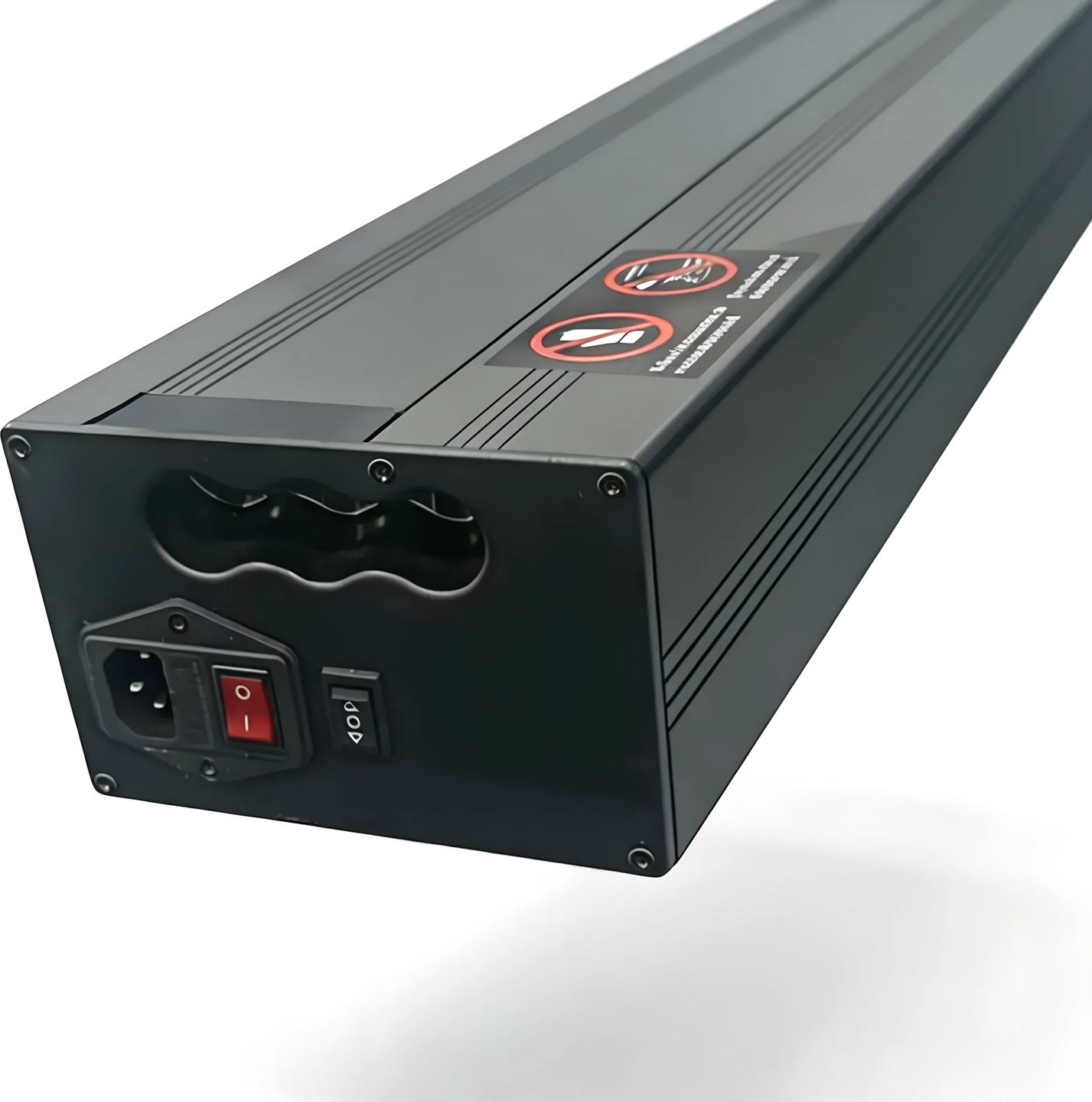
Power is supplied through a standard mains outlet. The included cord is European type, 220 V, with 2.5 m of cable, which means an outlet must be within reach of the housing. For the 100-inch version, the housing measures 2.46 m long: you need to allow for that much unobstructed floor space where the screen will deploy. On delivery, the whole unit arrives in an elongated package that can be stored and transported flat, horizontally.
Infrared remote control and wired switch
Three control methods come with the screen. The infrared remote-control system is built in: the remote operates the upward and downward movement from a distance. An external infrared sensor is included, to be connected to the housing and placed where the signal can pass through, useful when the casing itself is hidden behind a piece of furniture. Then there is the manual wired switch, with its three positions Up, Stop, and Down, which serves as a backup control or for everyday use for those who prefer a physical button.
The stop function works at any point during travel. The screen can therefore be stopped halfway up, for example to display an image smaller than the maximum diagonal, with full deployment delivering the 100-inch format.
Documentation
Technical specifications
General overview
- Motorized floor-rising screen designed to free up walls and ceilings
- Housing placed directly on the floor or integrated behind a piece of furniture
- Bottom-up deployment via a silent and robust tubular motor
- Screen material calibrated for long-throw projectors
- Compatible with UHD 4K content
Projection screen material
- Material: white PVC
- Gain: 1.1
- Viewing angle: 170°
- Compatible projector type: long throw
Housing
- Material: black lacquered aluminum alloy
Motorization and control
- Integrated tubular motor
- Integrated infrared remote control system
- Included external infrared sensor
- Manual switch: Up / Stop / Down
- Power supply: European-type cord, 220 V, length 2.5 m
Dimensions and reference
- Image format: 16 / 9
- Model: Rise HD 100
- Diagonal: 100” (254 cm)
- Viewable image area: 221.4 × 124.5 cm
- Housing dimensions (L1): 246 × 15 × 10 cm
- Top bar dimensions (L2): 244.3 × 7 × 4 cm
- Packaging dimensions: 252 × 24 × 19 cm
Frequently asked questions
Does the Rise HD 100 work with an ultra-short-throw projector?
The screen is calibrated for long-throw projectors installed at a distance from the screen. An ultra-short-throw model placed just below the screen and projecting at a very wide angle will not deliver a good result on a standard white surface. These devices require a screen with a specific structure, known as ambient light rejecting, capable of handling a very steep beam angle. For this type of projector, a dedicated screen is better.
Does the room need to be completely darkened?
Not necessarily, but the lighting must remain under control. A white screen reflects both the projector image and any stray light present in the room. In the evening, with lights off or dimmed, the result reaches its best level. During the day, curtains or closed shutters are usually enough. Light falling directly on the screen washes out blacks and reduces perceived contrast.
Is the motor noisy during the lift?
The tubular motor remains discreet. You can hear the screen moving during the few seconds of deployment, then silence once the screen is in position. The noise level is similar to that of an electric blind, brief and not intrusive. Over the length of a film, the motor is only heard at the start and end of the session.
Can the screen be left deployed permanently?
Nothing prevents it: the lateral tension keeps the screen flat, whether it is extended for a few hours or continuously. Retracting it is mainly a matter of user convenience. Rolled back into the housing, the screen stays protected from dust and direct light, and the room gets its wall back. In a room dedicated to cinema, keeping the screen in place makes sense; in a multipurpose living room, retraction becomes fully relevant again.
What viewing distance should be planned for a 100-inch image?
For a 100-inch diagonal in 16:9 format, a viewing distance between 2.5 and 4 meters suits most setups. Closer than that, the structure of the image and the limits of resolution become noticeable. Farther away, the benefit of a large screen becomes less pronounced. The exact placement depends on each person’s visual acuity and the actual resolution of the projected content.
How do you maintain the white PVC screen?
Occasional dusting is enough in most cases. The screen can be cleaned with a soft, dry cloth, or one just barely damp for an isolated mark, without abrasive products or solvents that could damage the surface. Avoid touching the screen with bare hands during handling. Between viewing sessions, rolling it back into the housing protects it from dust and light.
- Eco-contribution included in the sale price.
- Manufacturer reference: PRORIS100HD
- GTIN / EAN: 3700795165157