Projeo Rise HD 110
Overview
Installing a 110-inch screen without touching the ceiling or sacrificing an entire wall remains complicated in many living rooms. Floor-rising motorized screens address this constraint: all the mechanics are housed in a casing placed directly on the floor, and the screen rises vertically when it’s time to project. Projeo applies this principle in its Rise HD range, whose 110 model targets installations with long-throw projectors.
Bringing the image up from the floor
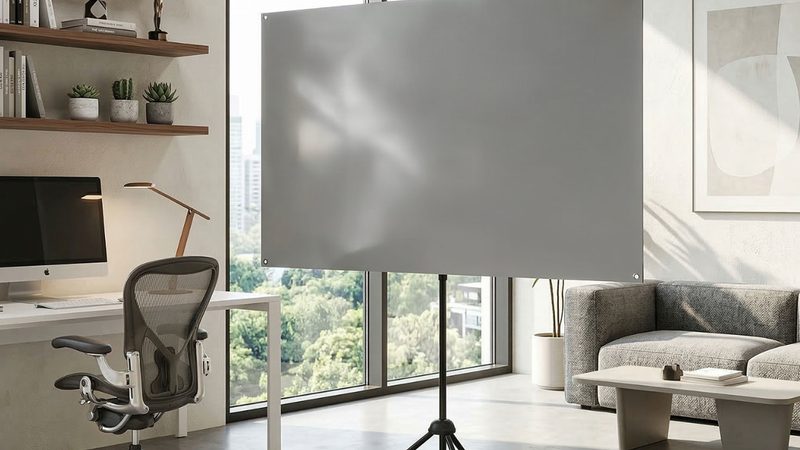
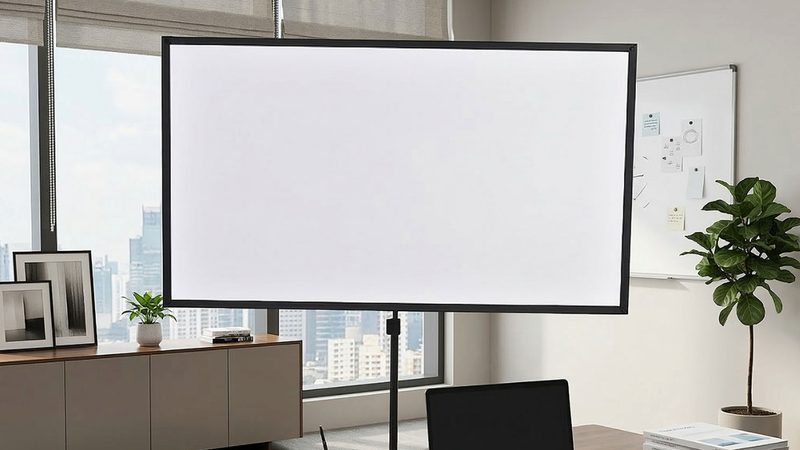
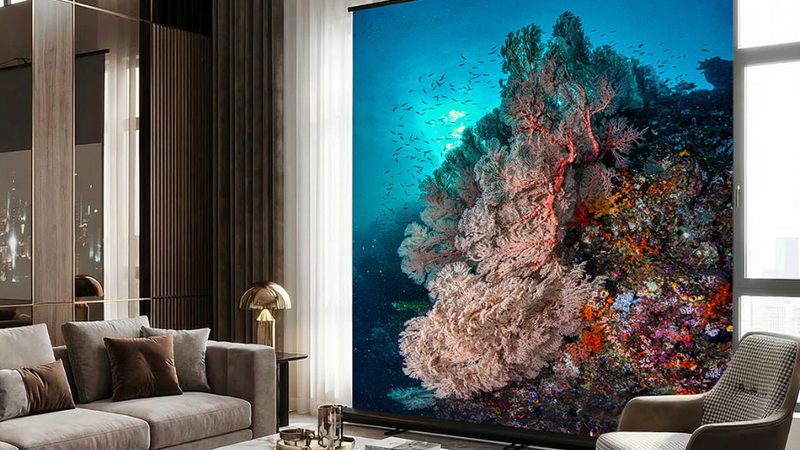
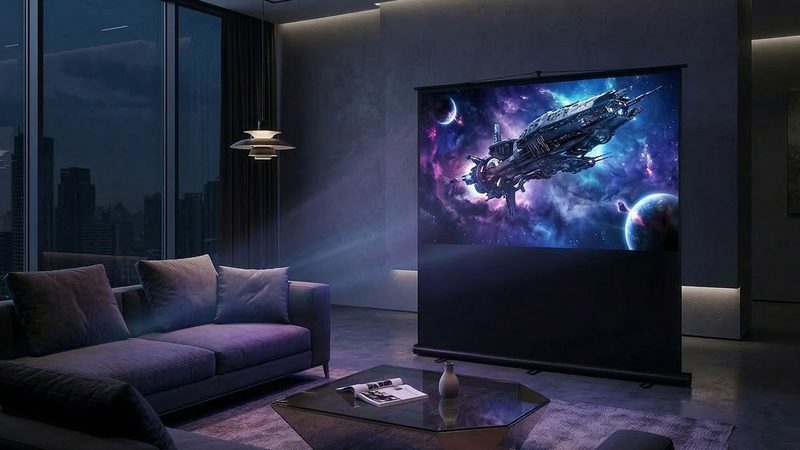
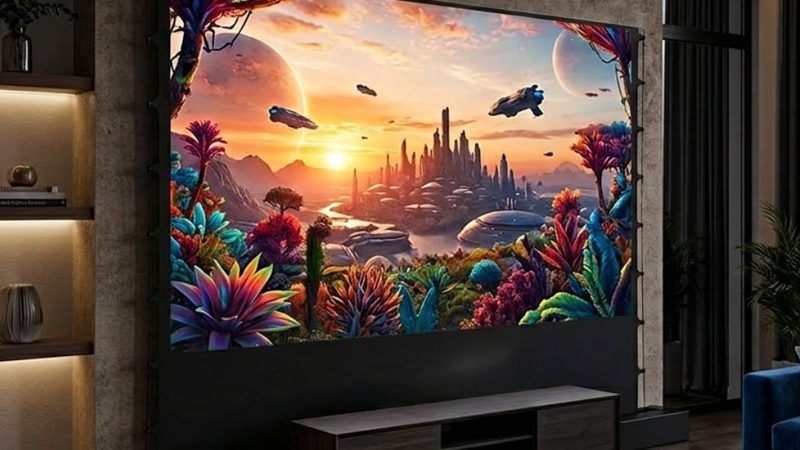
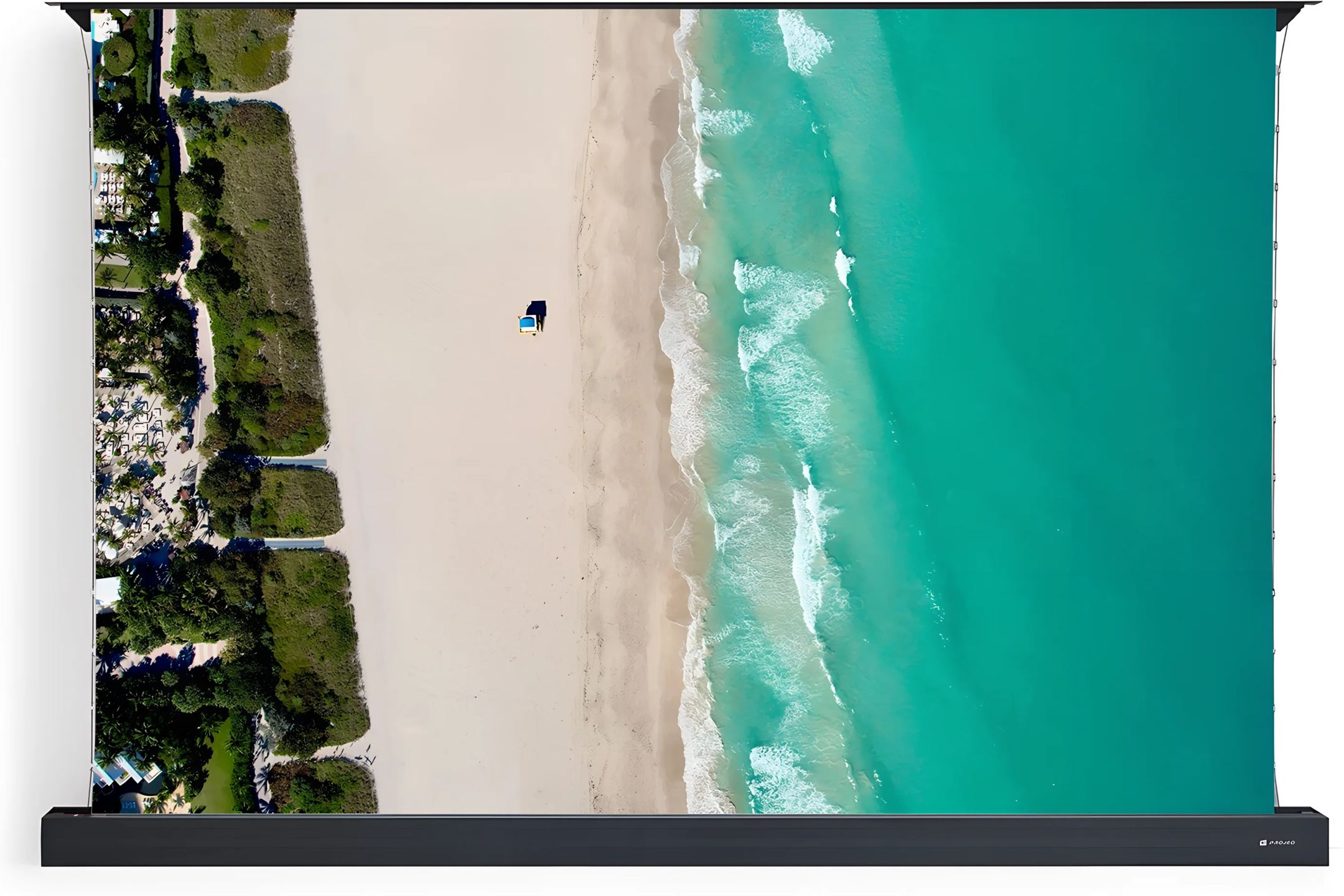
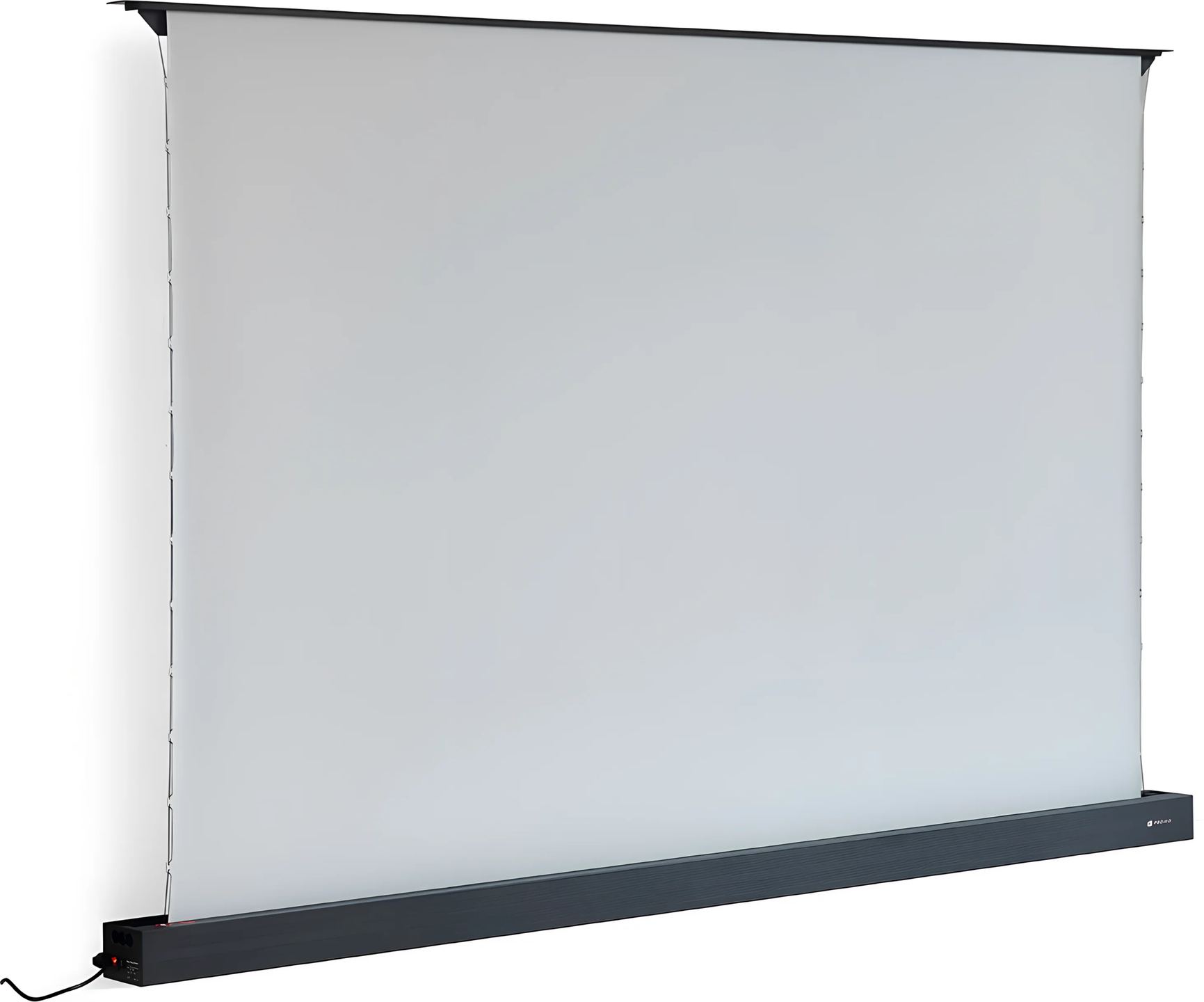
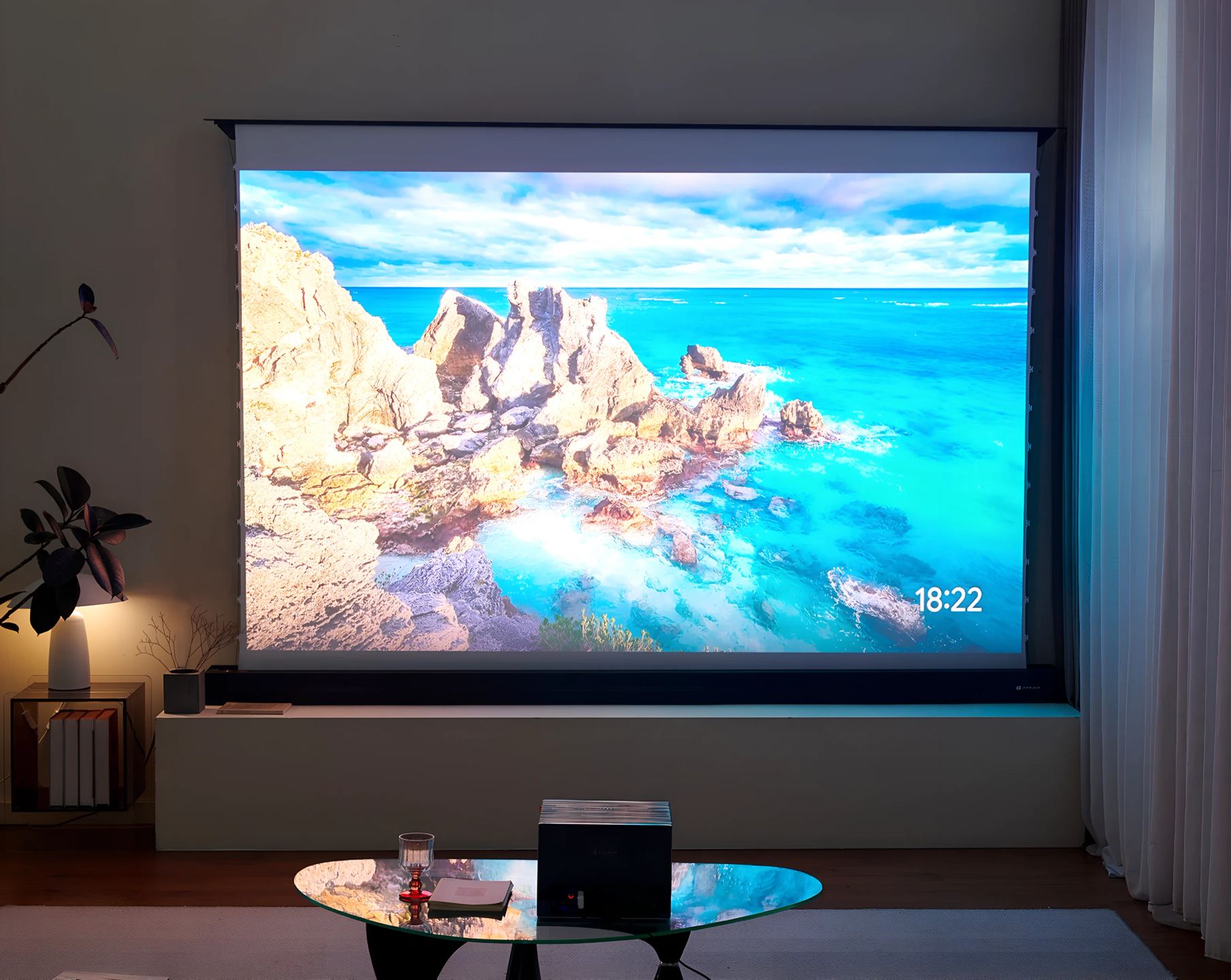
The concept can be summed up in a single image: at rest, all you see is a long black casing sitting on the floor, about 2.68 meters wide and around fifteen centimeters high. Press the control, and the screen rolls upward until it reaches its 110-inch diagonal. The movement comes from a tubular motor housed in the casing, the same type of motor used in roller shutters, chosen for its smoothness and quiet operation.
This upward deployment, from bottom to top, sets the Rise HD 110 apart from screens that descend from the ceiling. No upper support is required, no drilling at height. The casing is placed directly on the floor or slips behind a low piece of furniture, leaving walls and ceiling untouched. For a rental property or a room where you do not want to alter the structure, the difference is concrete.
A screen for long-throw projectors
Not all floor-rising motorized screens are equal, and the dividing line often lies in the screen material itself. The Rise HD 110 uses a white PVC surface with a gain of 1.1, calibrated for long-throw projectors, the kind installed several meters from the screen, on the ceiling or on a shelf at the back of the room.
Gain measures the amount of light a screen reflects toward the viewer compared with a reference surface. A value of 1.1 remains close to neutral: the screen delivers slightly more brightness than standard matte white, without drifting into the artifacts produced by high gains (hotspot in the center, reduced viewing angles). The 170° viewing angle follows the same logic. The image retains its brightness and contrast across a wide arc, which matters as soon as several people are seated across the width of a sofa.
The surface is calibrated for UHD 4K content. In practical terms, its texture is fine enough not to introduce unwanted grain into a 4K image, where each pixel is small. One useful clarification: a white screen of this kind does not reject ambient light. The Rise HD 110 performs at its best in a room where lighting is controlled, with shutters closed or curtains drawn. Installations with strong daylight are better suited to ambient light rejecting screens, paired with ultra-short-throw projectors.
Aluminum casing and tensioned screen
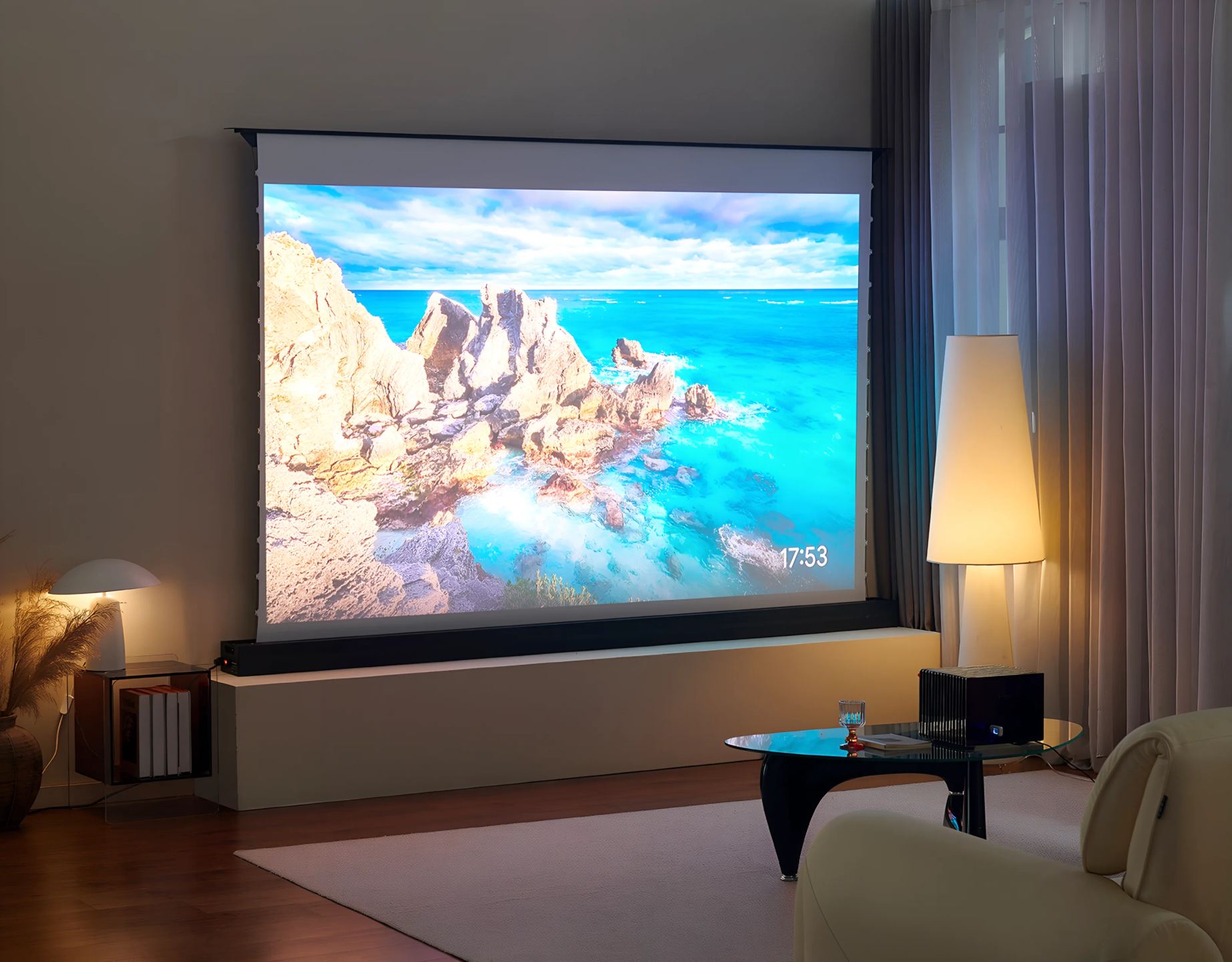
The casing is made of black lacquered aluminum alloy. The metal provides the rigidity needed so that a 2.68-meter-long housing does not bend, and the lacquered finish blends well with the dark furniture of a home theater living room. Its dimensions, 268.1 cm long by 15 cm deep and 10 cm high, need to be anticipated: it is a long object that must be able to fit against a wall or be integrated into furniture designed for it.
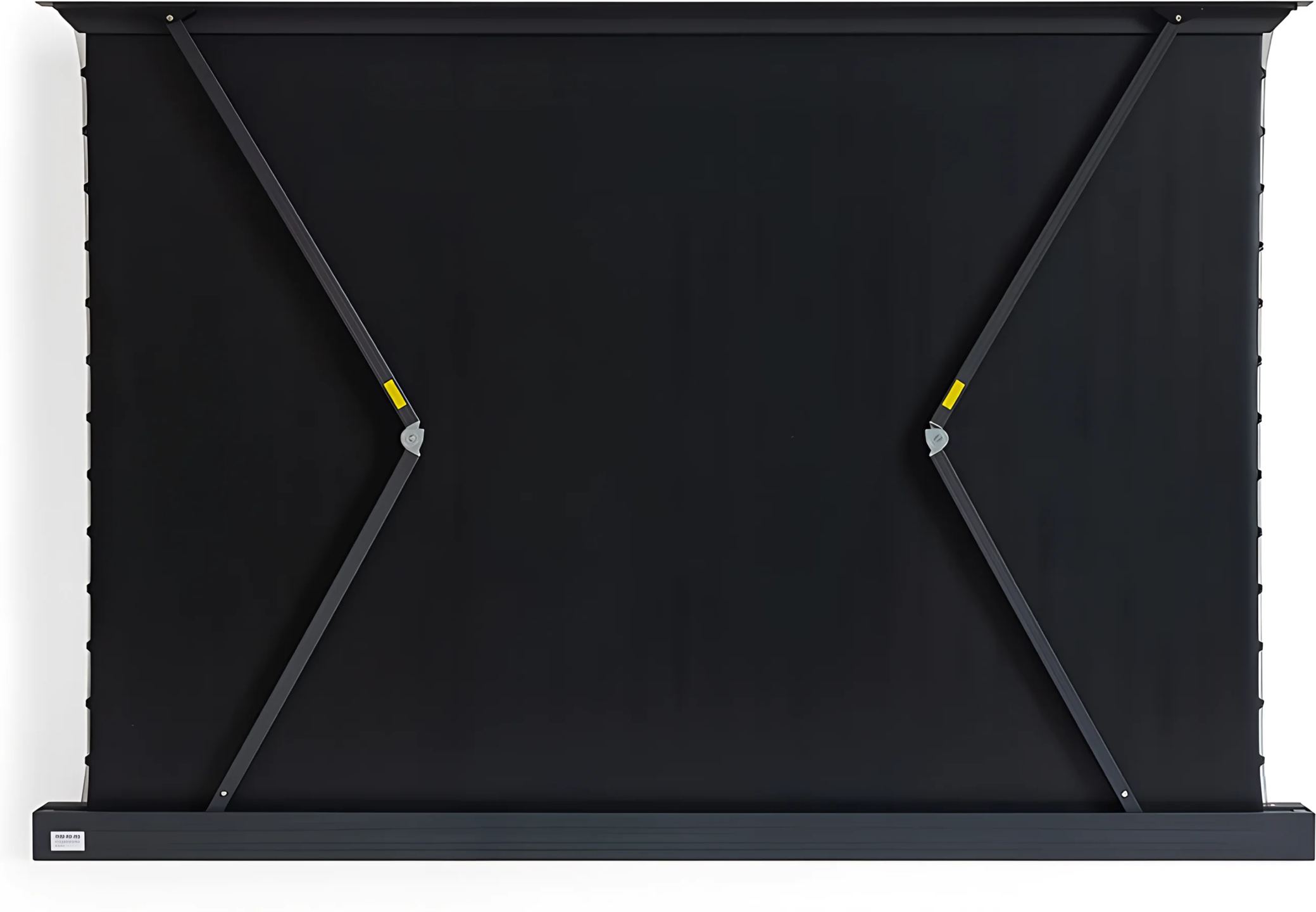
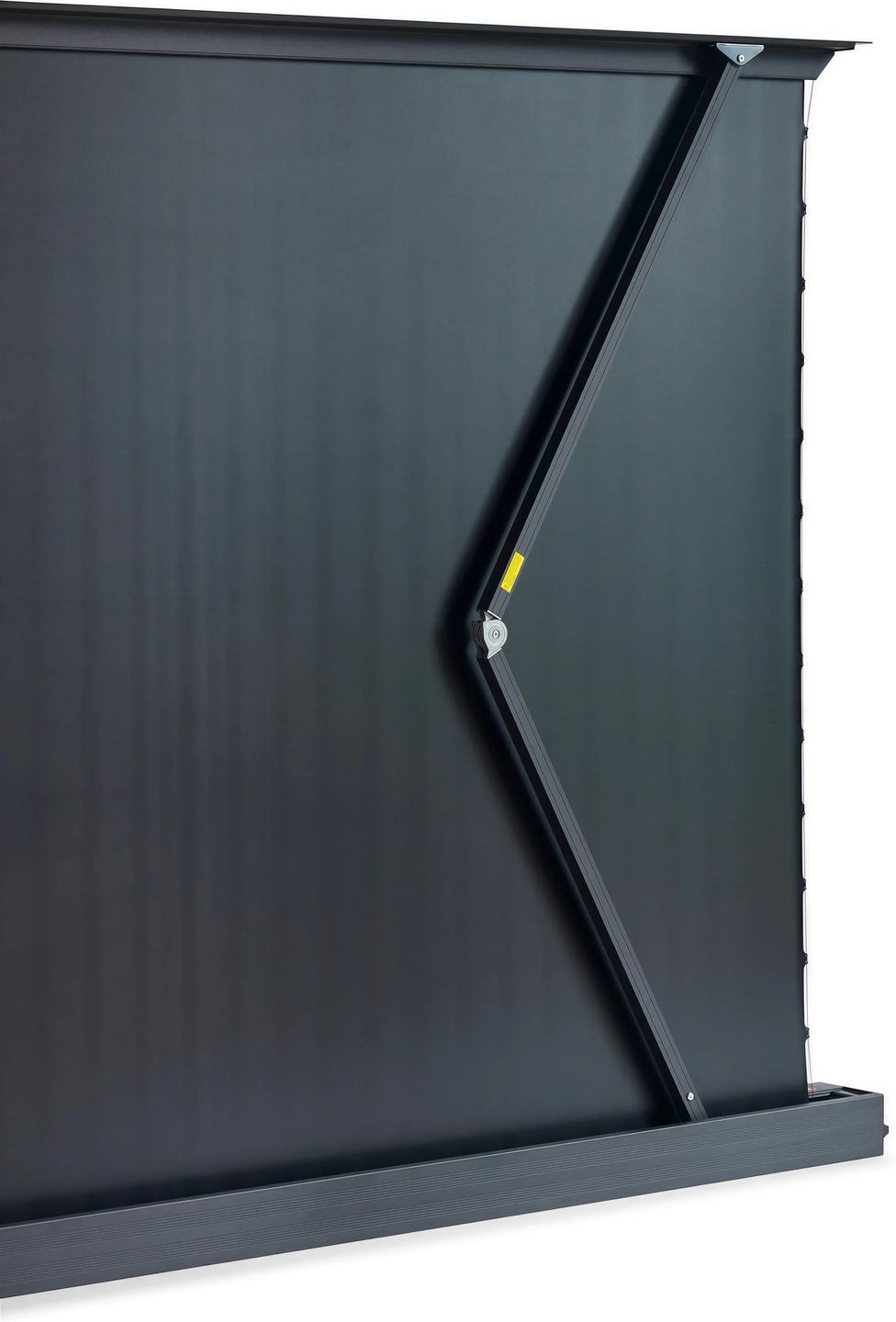
In addition to deployment, the screen is tensioned. A lateral tensioning system connects the edges of the screen to cords fixed along the upper bar and the casing. This tension keeps the surface perfectly flat, with no waves or ripples that would distort the image, especially at the corners. On a screen 243.5 cm wide, the flatness of the material directly determines the perceived sharpness of the projection.
Tubular motor and infrared control
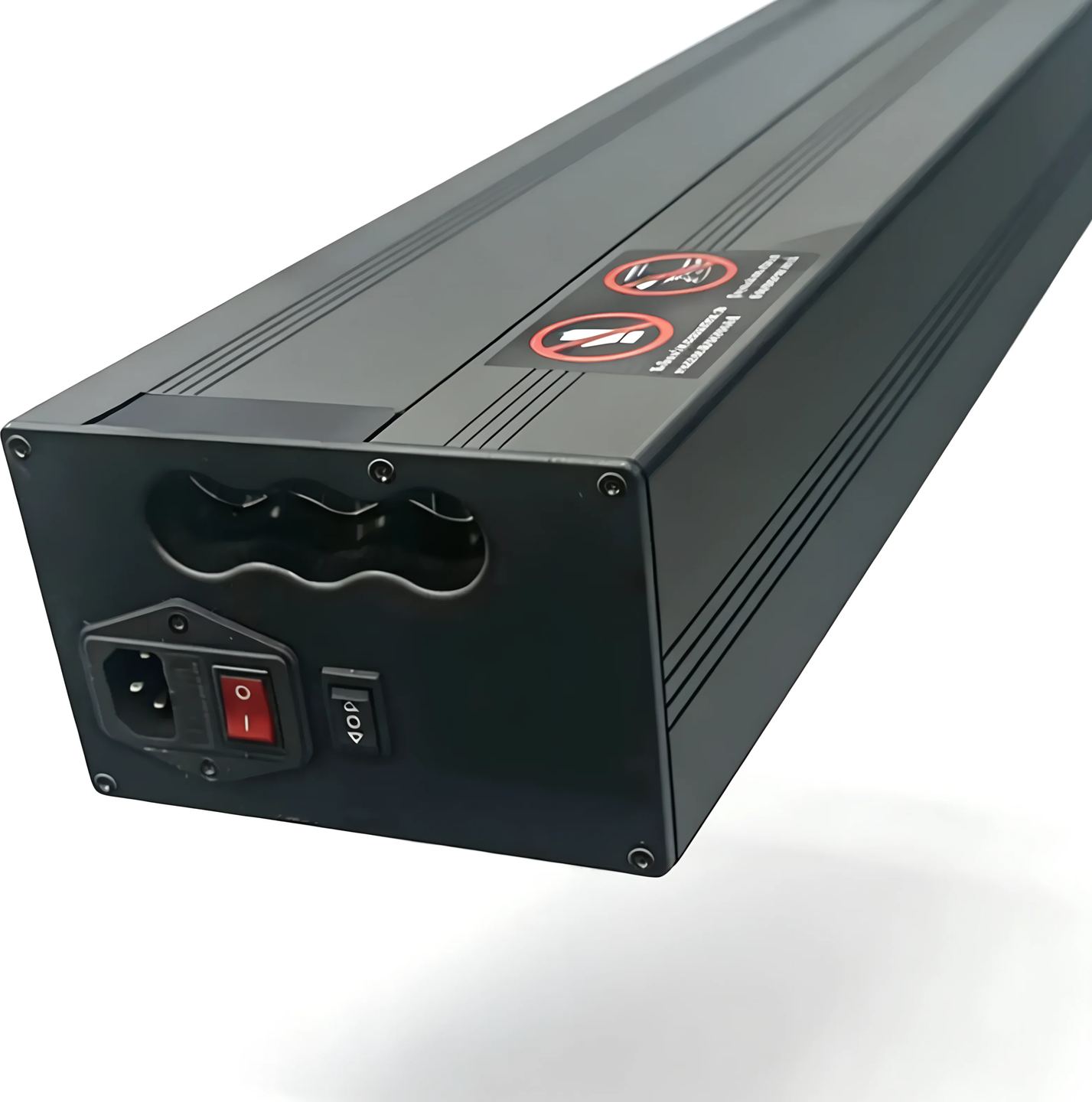
Three ways to control raising and lowering coexist on the Rise HD 110. An infrared remote control operates the screen from a distance, with its receiver integrated into the casing. A separate infrared sensor is supplied: connected to the screen, it can be placed where the remote signal passes most effectively, useful when the casing disappears behind furniture and the original receiver is blocked from view. A manual switch, with Up, Stop, and Down positions, completes the setup for direct wired control.
Power is supplied via a European-type 220 V cord, 2.5 meters long, to be planned in the wiring layout depending on the outlet location. The tubular motor, integrated into the casing, handles the rolling and unrolling of the screen. Projeo describes it as quiet and robust, two qualities expected from a mechanism that may be used several times a day.
Installing the Rise HD 110 at home
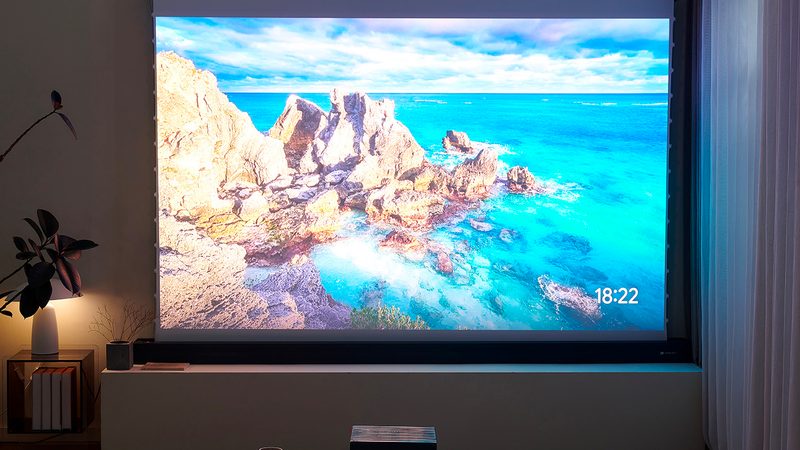
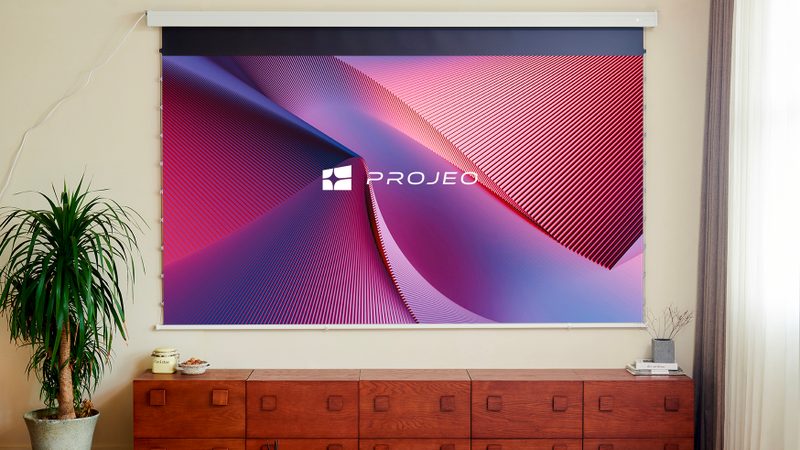
The typical use case is the multipurpose living room: a living space where you do not want a fixed screen permanently visible, but do want a large image available on demand. With the casing retracted, it fades into the background, and the 110-inch diagonal appears for the duration of a movie or a game. Integration behind a low cabinet, a sideboard, or custom joinery pushes this logic further: once the screen is retracted, nothing remains to indicate that a screen is present.
The Rise HD range includes two diagonals. The 110 model and the Rise HD 100, with its smaller diagonal, share the same mechanism, the same screen material, the same motorization, and the 16/9 format; only the image size changes, 243.5 × 137 cm for the 110 versus 221.4 × 124.5 cm for the 100. The choice depends on the available viewing distance and the amount of floor space the casing can occupy.
One logistical point deserves attention before delivery: the package measures 274 cm long and must be transported and stored horizontally. You need to plan access and an unpacking area suitable for a box of that length.
Documentation
Technical specifications
General overview
- Motorized floor screen designed to free up walls and ceilings
- Housing placed directly on the floor or integrated behind a piece of furniture
- Bottom-up deployment by a silent and robust tubular motor
- Screen calibrated for long-throw video projectors
- Compatible with UHD 4K content
Projection screen
- Material: white PVC
- Gain: 1.1
- Viewing angle: 170°
- Compatible projector type: long throw
Housing
- Material: black lacquered aluminum alloy
Motorization and control
- Integrated tubular motor
- Integrated infrared remote control system
- External infrared sensor included
- Manual switch: Up / Stop / Down
- Power supply: European-type cord, 220 V, length 2.5 m
Dimensions and reference
- Image format: 16 / 9
- Rise HD 110 model
- Usable image size: 243.5 × 137 cm
- Diagonal: 110”
- Housing dimensions (L1): 268.1 × 15 × 10 cm
- Top bar dimensions (L2): 266.4 × 7 × 4 cm
- Packaging dimensions: 274 × 24 × 19 cm
Frequently asked questions
Is the Rise HD 110 suitable for an ultra-short-throw projector?
The screen is calibrated for long-throw projectors, installed at a distance from the screen. An ultra-short-throw projector, placed just in front of the screen base and projecting at a very wide angle, does not match this profile. These installations generally rely on ambient light rejecting screens, whose microstructure is designed for this specific projection angle. With the Rise HD 110, it is better to use a long-throw projector placed on the ceiling or at the back of the room.
What throw distance should be planned for the projector?
There is no single value: the distance depends on the throw ratio of the projector used. For an image 243.5 cm wide, you apply this width to the throw ratio range specified by the projector manufacturer to obtain the minimum and maximum throw distance. Long-throw models require several meters of distance, which assumes a room with sufficient depth and a mounting point on the ceiling or at the back of the room.
Can the casing be hidden inside furniture?
Yes. The casing can be placed on the floor or housed behind a low cabinet, a sideboard, or a built-in surround. You need to reserve a space at least 268 cm long, plus some margin, and keep the upper part clear so the screen can emerge without rubbing. The supplied separate infrared sensor is particularly useful here: moved outside the furniture, it receives the remote signal even when the receiver integrated into the casing is hidden.
Is the motor noisy while the screen is rising?
The Rise HD 110 uses a tubular motor, the technology used for motorized roller shutters. Projeo presents it as quiet. This type of motor remains discreet in operation, with slight mechanical noise during the few seconds of deployment, then silence once the screen is in place. Raising and lowering are not accompanied by any noticeable vibration transmitted to the surrounding furniture.
Can the screen be used in a lit room?
The white 1.1-gain screen does not filter ambient light. Performance is at its best in a dark room or one with controlled lighting, with shutters or curtains closed. If direct light falls on the screen, blacks lift and contrast drops. For a very bright living room during the day, an ambient light rejecting screen would be more suitable, but it would involve a different type of projector.
How should the screen be transported and stored before installation?
The packaging measures 274 cm long by 24 cm wide and 19 cm high. The box must remain horizontal during transport as well as storage, in order to preserve the straightness of the casing and the upper bar. Before delivery, check that there is access allowing a package nearly three meters long to be brought into the room, including stairs and corridor corners.
- Eco-contribution included in the sale price.
- Manufacturer reference: PRORIS110HD
- GTIN / EAN: 3700795165164