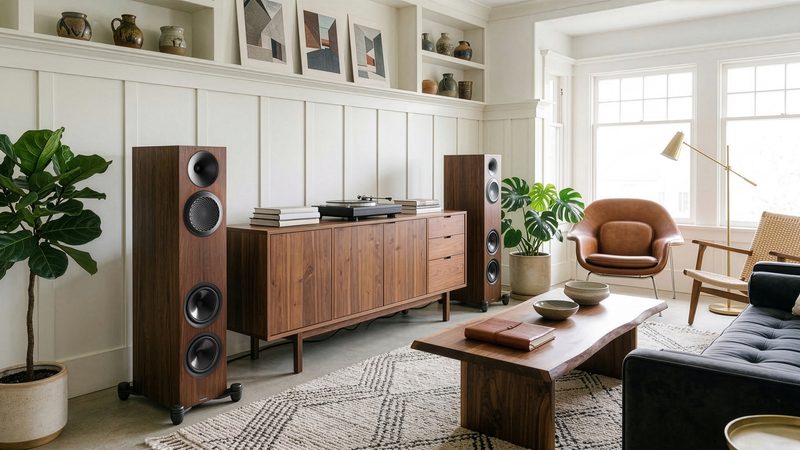
Paradigm Premier 220B v2 lacquered black (pack of 2)


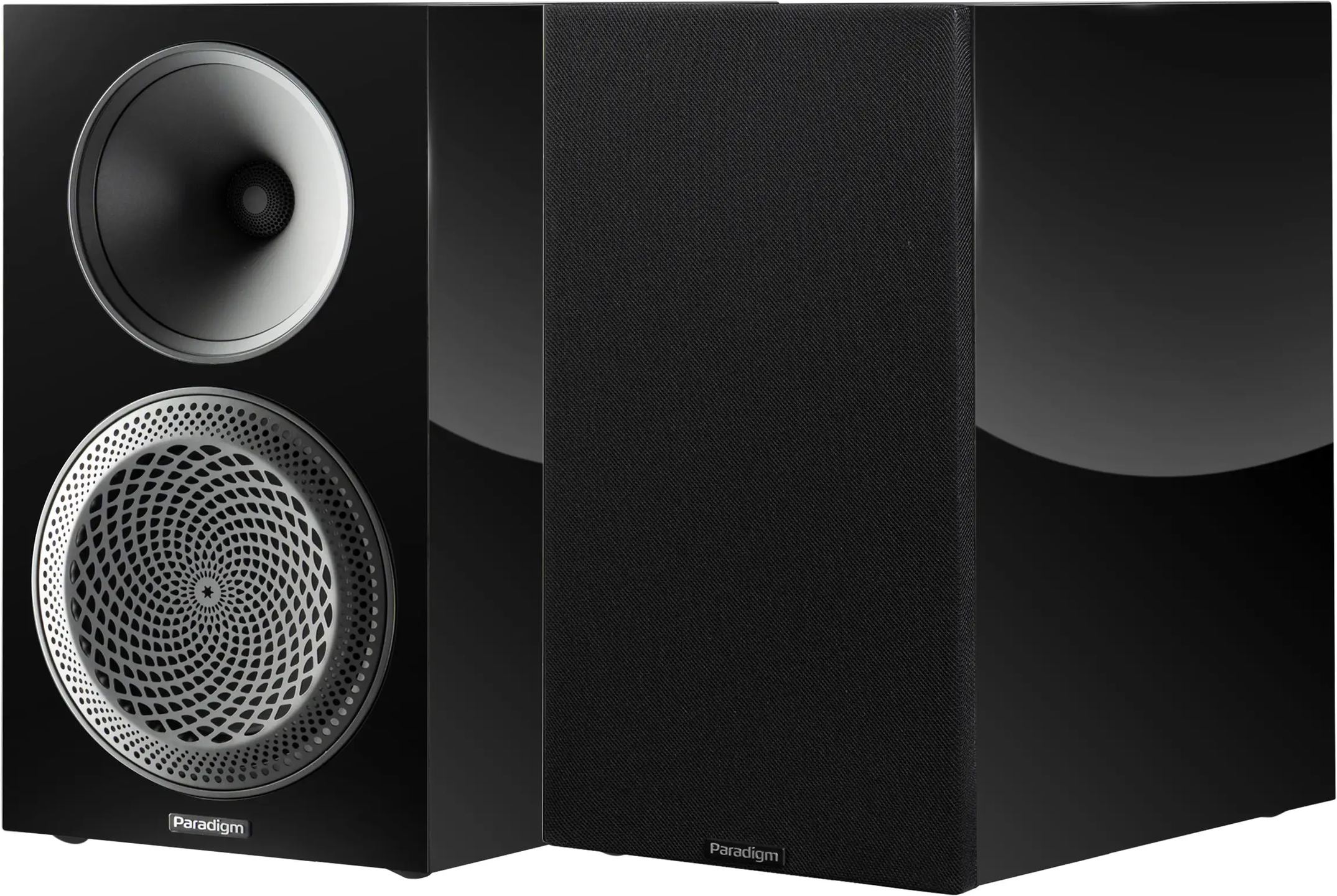
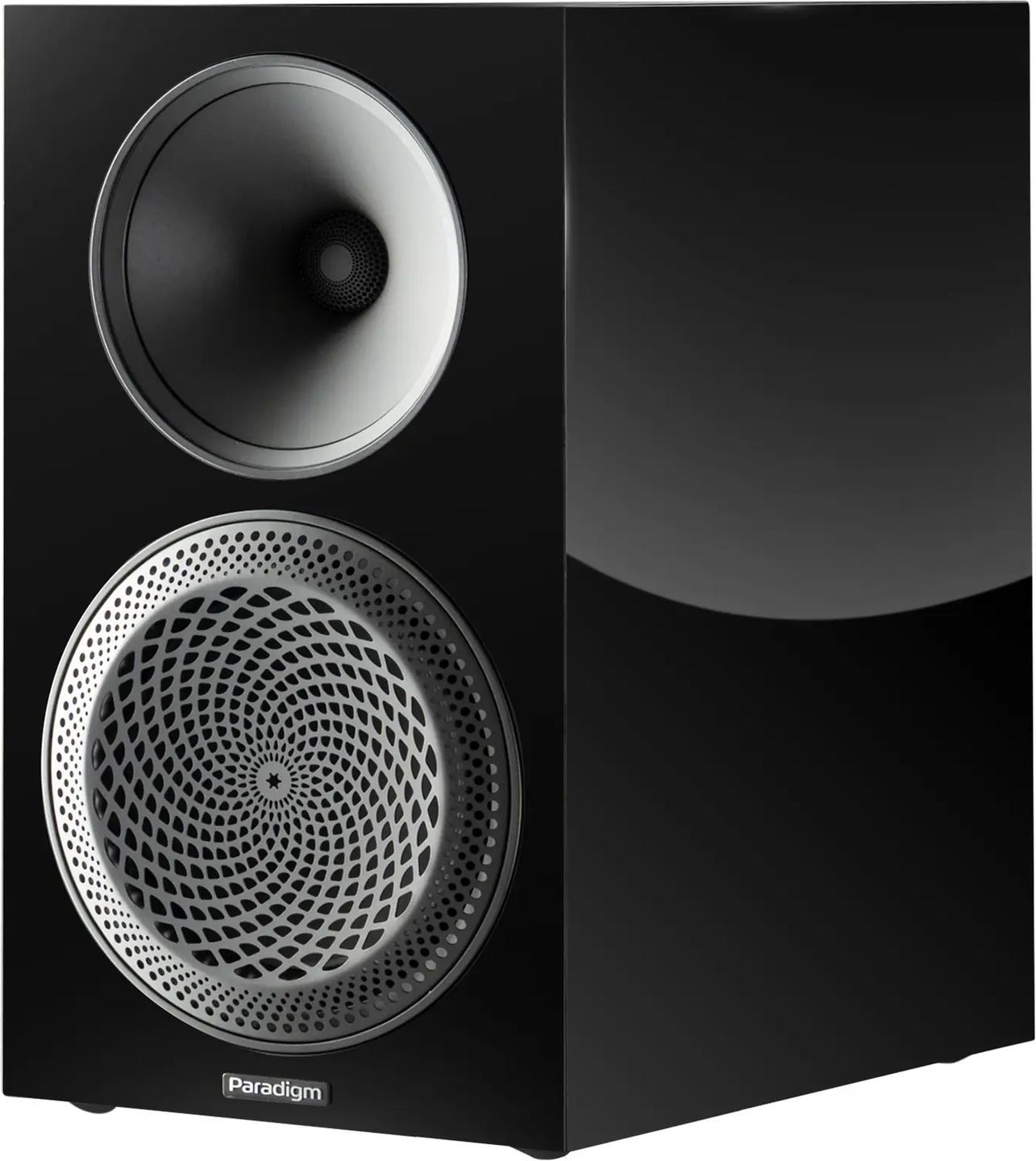
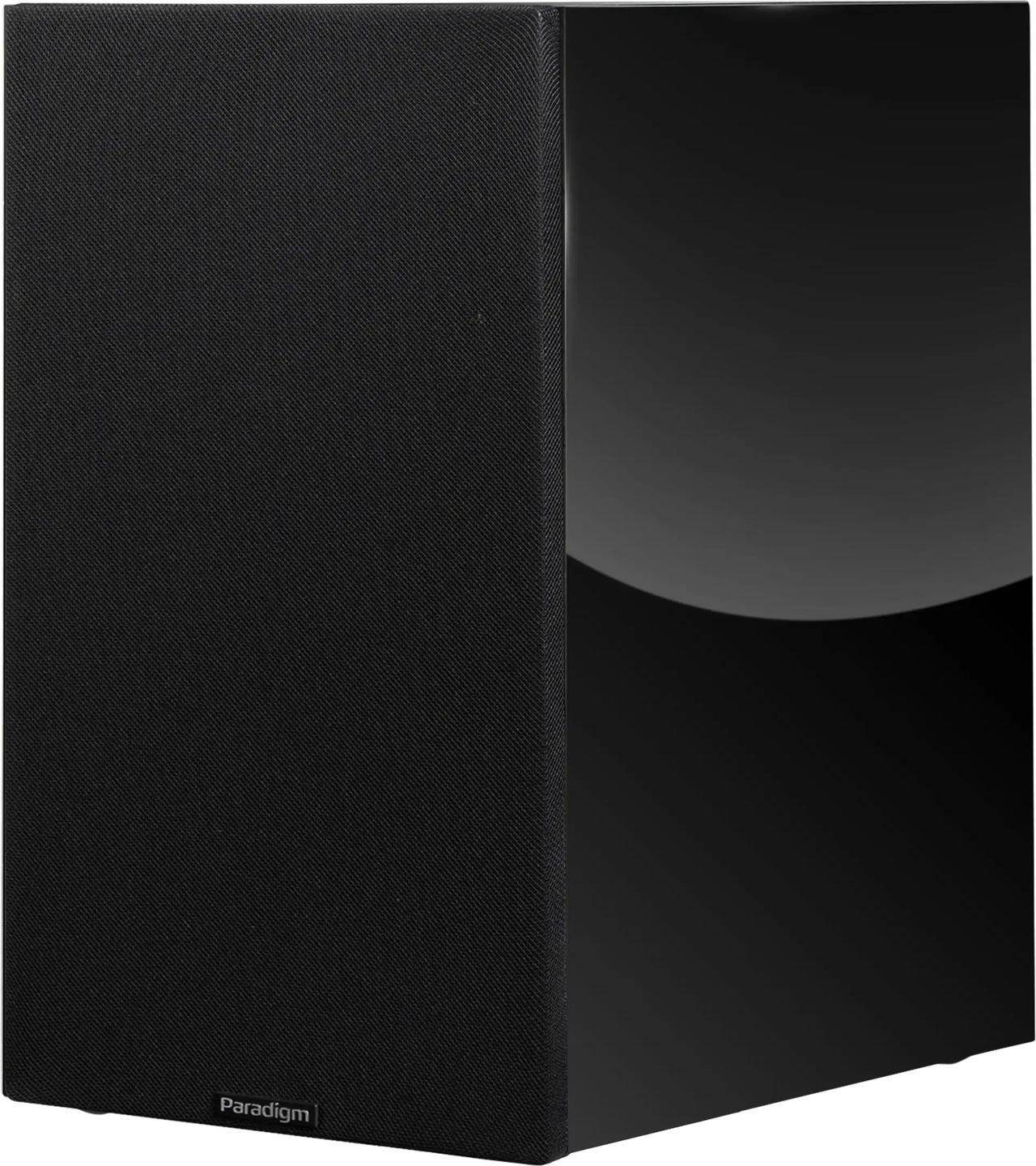
Paradigm Premier 220B v2: two-way bass-reflex bookshelf speaker
The second generation of Paradigm’s Premier series incorporates driver technologies developed for the Canadian manufacturer’s higher-end ranges. The Premier 220B v2 is the larger of the two bookshelf speakers in this refreshed line, equipped with a 152 mm aluminum-magnesium alloy woofer-midrange driver and a 25 mm AL-MAC ceramic dome tweeter. The bass-reflex cabinet extends down to 36 Hz according to the DIN 45 500 standard.
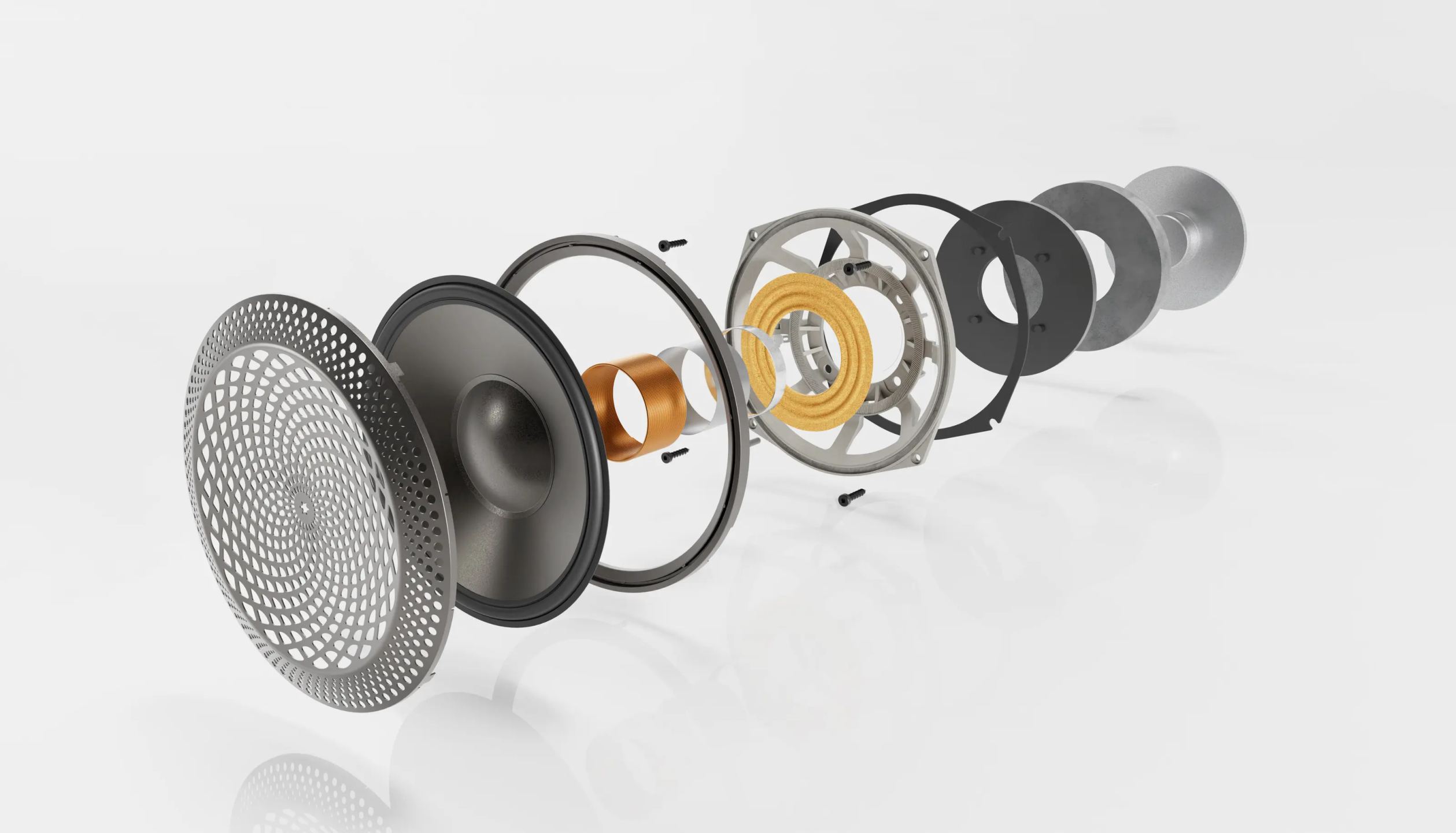
The woofer-midrange driver and its motor
The 152 mm woofer-midrange driver uses a very high-excursion aluminum-magnesium alloy (AL-MAG) cone. Its surround uses the third generation of Paradigm’s Active Ridge technology (ART Gen3), allowing the cone to achieve significant excursion while maintaining linear behavior. The speaker’s vertical mounting system in the cabinet contributes to the rigidity of the motor-diaphragm assembly. The 25 mm diameter voice coil is multi-layered and resistant to high temperatures, wound on a ventilated Apical former to dissipate heat during demanding passages. In front of the cone, a perforated phase lens (PPA, for Perforated Phase-Aligning) time-aligns the wavefronts emitted by the different areas of the diaphragm.
The tweeter and controlled directivity
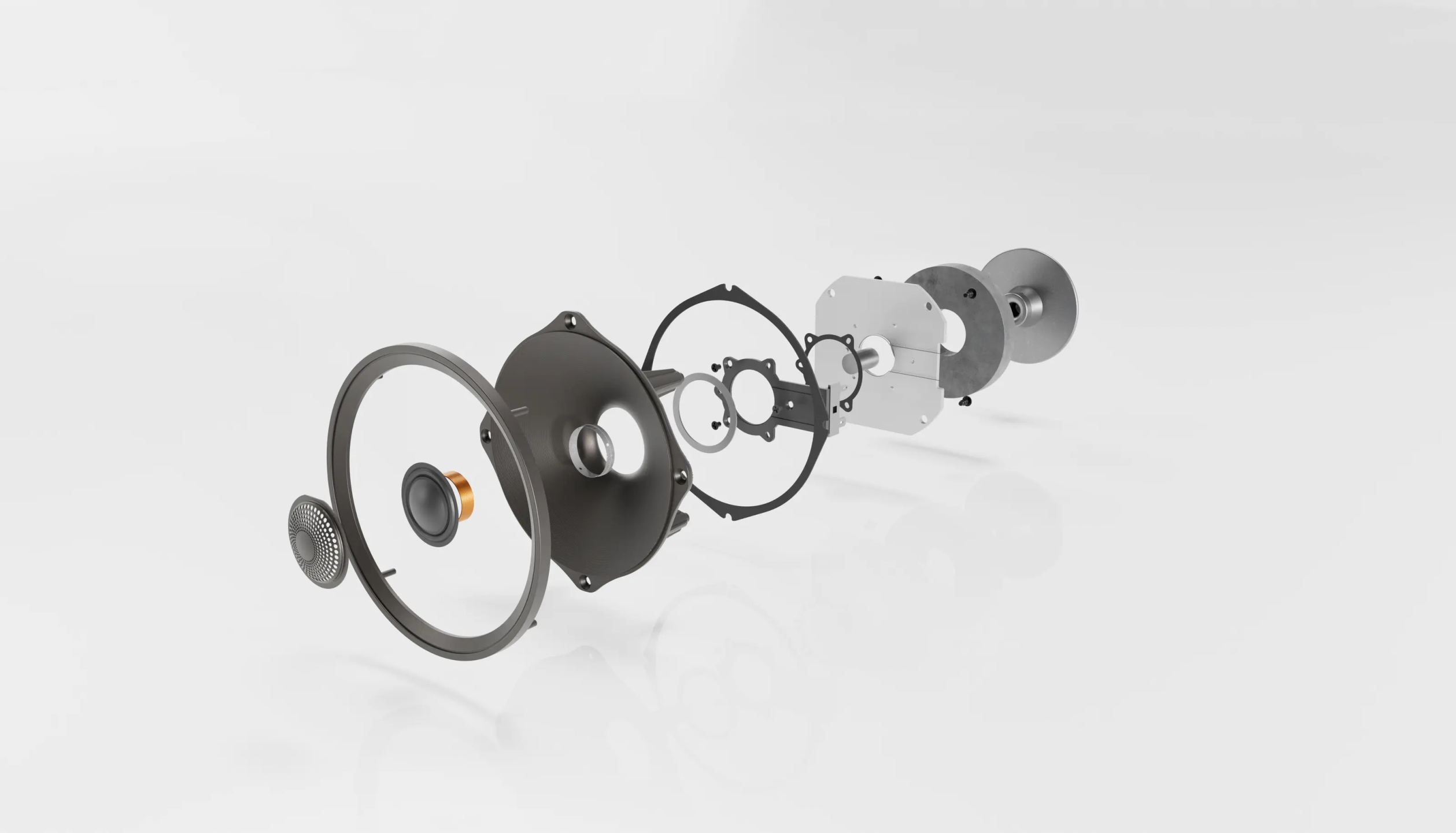
The 25 mm tweeter is an AL-MAC composite dome, a blend of aluminum, magnesium, and ceramic developed by Paradigm. This composition aims for high rigidity with low weight, two useful qualities in the treble range where diaphragm deformation generates audible distortion. The motor is damped and cooled by ferrofluid, which stabilizes its thermal behavior and limits parameter drift at sustained power levels.
In front of the dome, a flattened spheroid waveguide (OSW, Oblate Spheroid Waveguide) shapes directivity in the horizontal and vertical planes, concentrating high-frequency energy toward the listening area and reducing early reflections from nearby walls. A second PPA lens completes the assembly.
Crossover and frequency response
The separation between the tweeter and the woofer-midrange driver occurs at 1.1 kHz via a second-order electroacoustic crossover. This designation means that the effective 12 dB per octave slope results from the combination of the passive electrical filter and the natural response of the drivers, rather than from an electrical filter alone. The chosen crossover frequency, low for a two-way speaker, therefore places considerable demand on the tweeter, which justifies its robust design and ferrofluid cooling.
The frequency response is specified as ±3 dB from 58 Hz to 23 kHz on axis, and ±3 dB from 58 Hz to 20 kHz at 30 degrees off axis. The stability of the off-axis response in the upper midrange and treble is useful in rooms where several listeners are not all seated on the central axis. The low-end extension is measured at 36 Hz according to the DIN standard, meaning the -3 dB point in a typical listening room. For a bookshelf speaker of this size, this extension makes it possible to do without a subwoofer in a moderately sized room, accepting that output below 40 Hz remains limited in level.
Sensitivity and amplification requirements
Sensitivity is specified as 91 dB in-room and 88 dB anechoic, for 2.83 V at 1 m. These figures place the 220B v2 in a comfortable zone: a modest-power amplifier is enough to reach realistic listening levels. The recommended power range extends from 15 to 130 W, with a maximum input power of 80 W. Impedance is listed as 8-ohm compatible, the manufacturer’s cautious wording indicating that the load remains within a comfortable range for most integrated amplifiers and power amps on the market.
Cabinet, finishes, and accessories
The cabinet is made from medium-density fiberboard (MDF) panels with internal bracing designed to neutralize enclosure resonances. Dimensions are 37.1 cm high, 21.1 cm wide, and 32.8 cm deep, for a weight of 9.1 kg each. Three finishes are offered: Piano Black, Black Walnut, and Walnut, paired with aluminum and stainless steel trim elements. The 220B v2 comes with isolation pads to place between the speaker and its stand to limit the transmission of vibrations.

Installation and usage configurations
In stereo, the Premier 220B v2 requires dedicated ear-height stands, placed away from rear walls to avoid excessive bass reinforcement through coupling with the boundaries. Its cabinet volume and 36 Hz extension cover a listening room of 20 to 25 m² without the systematic need for a subwoofer.
In a home theater system, the 220B v2 can serve as the front left and right channels in a multichannel configuration complemented by a Premier 620C v2 center speaker and surrounds from the same series. The Premier 120B v2, a more compact model in the range equipped with a 140 mm woofer-midrange driver, extends down to 39 Hz according to the same standard and offers a coherent complement for surround channels or for smaller rooms where the 220B v2 would be oversized.
Technical Specifications
General Design
- Type: 2-way bookshelf speaker with 2 drivers
- Enclosure: bass-reflex
- Integrated technologies: AL-MAC, AL-MAG, OSW, PPA
Drivers
- Tweeter
- 25 mm AL-MAC ceramic dome
- Oblate Spherical Waveguide (OSW)
- Perforated Phase-Aligning lens (PPA)
- Ferrofluid damping and cooling
- Woofer / midrange driver
- 152 mm AL-MAG cone with very high excursion
- Perforated Phase-Aligning lens (PPA)
- Active Ridge Technology Gen3 (ART) with vertical mounting system
- 25 mm high-temperature multilayer voice coil on ventilated Apical former
Crossover
- 2nd-order electro-acoustic crossover
- Tweeter / woofer-midrange crossover frequency: 1.1 kHz
Acoustic Performance
- On-axis frequency response: ± 3 dB from 58 Hz to 23 kHz
- 30° off-axis frequency response: ± 3 dB from 58 Hz to 20 kHz
- Low-frequency extension: 36 Hz (DIN)
- In-room sensitivity: 91 dB
- Anechoic sensitivity: 88 dB
Electrical Specifications
- Recommended amplifier power: 15 to 130 W
- Maximum input power: 80 W
- Impedance: 8-ohm compatible
Physical Characteristics
- Weight per unit: 9.1 kg
- Dimensions (H × W × D): 37.1 × 21.1 × 32.8 cm
- Available finishes: gloss black, black walnut, walnut
Frequently Asked Questions
Do you need a subwoofer with the Premier 220B v2?
The 36 Hz extension is enough to reproduce almost all musical content without reinforcement. For stereo use in a medium-sized room, a subwoofer is not necessary. In home theater, it remains useful for handling the LFE channel (low-frequency effects below 80 Hz), which carries the explosions, impacts, and infrasonic rumbles of soundtracks. The choice therefore depends less on the 220B v2 than on the content being listened to and the target volume level.
What stands should the 220B v2 be installed on?
Dedicated bookshelf speaker stands, around 60 to 70 cm high, place the tweeter at ear level in a seated position. Column stands fillable with sand or shot improve stability and decoupling from the floor compared with lightweight stands. The top plate must cover at least the speaker’s 21.1 × 32.8 cm base. The isolation pads supplied with the Premier 220B v2 are placed between the speaker and the stand’s top plate.
What amplifier is suitable for this speaker?
The range recommended by Paradigm extends from 15 to 130 W per channel, covering a wide variety of integrated amplifiers and power amps. With in-room sensitivity of 91 dB, a well-designed 50 W amplifier can reach high listening levels without difficulty. The 8-ohm compatibility does not impose any particular constraint. The quality of the upstream preamplifier and converter matters more than raw power when it comes to making the most of the AL-MAC tweeter’s precision.
Can the 220B v2 be placed on a shelf?
Its bookshelf format makes this placement possible, with acoustic compromises. The bass-reflex loading uses a port that must retain sufficient breathing space at the rear. A rigid, dense shelf free of resonance is preferable to lightweight furniture. Keeping ten to twenty centimeters behind the speaker limits excessive bass reinforcement from the wall. For precise stereo reproduction with a three-dimensional soundstage, placement on open stands remains more favorable.
What is the difference between the 220B v2 and the 120B v2?
The 220B v2 features a 152 mm woofer-midrange driver versus 140 mm on the 120B v2, along with a larger cabinet volume. The result is deeper bass extension (36 Hz versus 39 Hz according to the DIN standard), one decibel higher sensitivity, and a maximum input power of 80 W versus 70 W. Both models share the same 25 mm AL-MAC tweeter with OSW waveguide and PPA lens. The second-order electroacoustic crossover is very similar (1.1 kHz versus 1.2 kHz).
What do the abbreviations AL-MAC, AL-MAG, OSW, and PPA mean?
AL-MAC refers to an aluminum, magnesium, and ceramic composite used for the tweeter dome. AL-MAG is an aluminum and magnesium alloy used for the woofer-midrange cone. OSW (Oblate Spheroid Waveguide) is a flattened spheroid waveguide placed in front of the tweeter dome, which controls the directivity of high-frequency output. PPA (Perforated Phase-Aligning) refers to the perforated phase lenses placed in front of the diaphragms to time-align the wavefronts coming from the different areas of the driver.
- Eco-contribution included in the sale price.