

TCL 85RM9L


Specifications and features



Overview
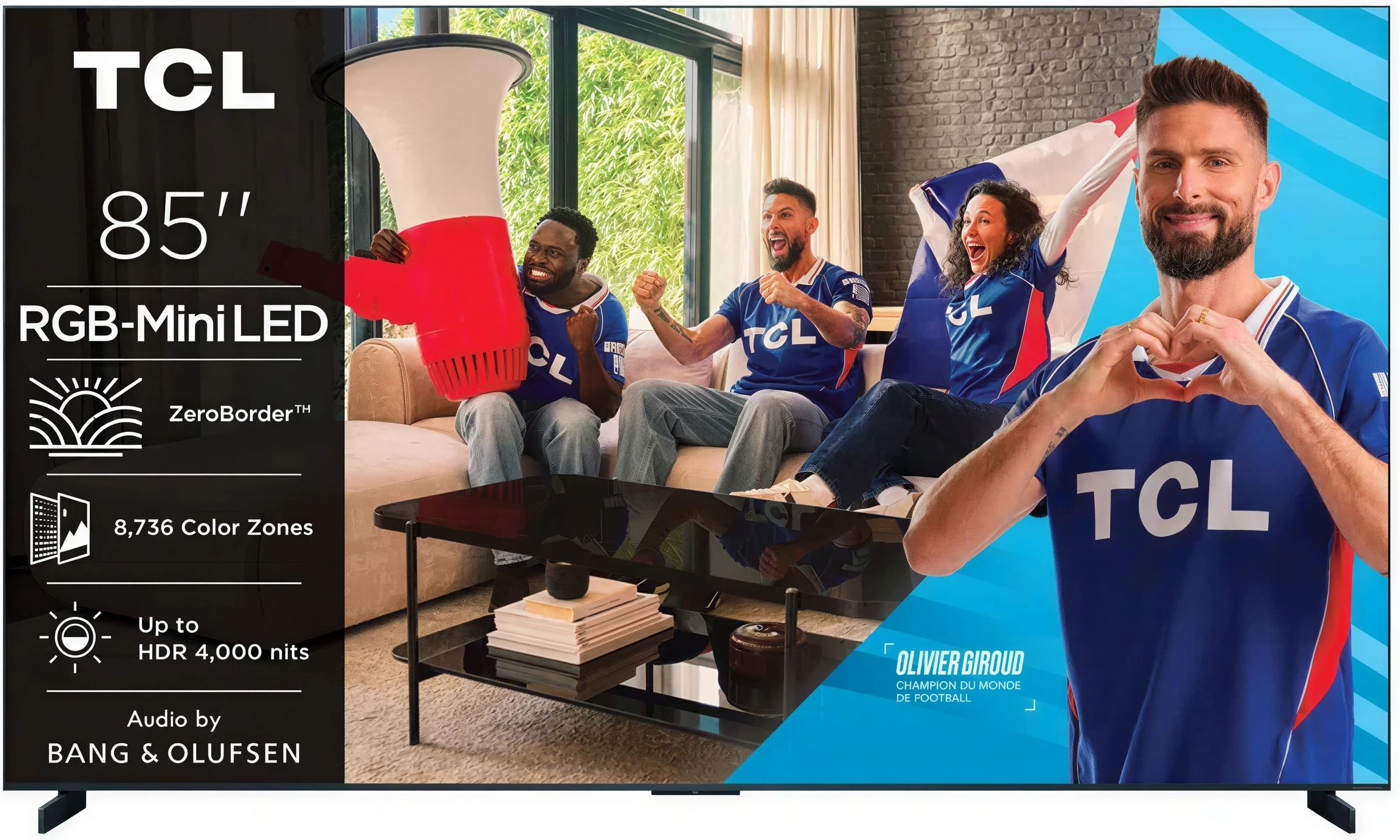
Three red, green, and blue diodes per light point rather than a single filtered blue source: this technical choice sets TCL’s RM9L series apart from typical Mini LED models. On the 85-inch version, this backlighting is paired with a very high-contrast WHVA panel, a 4,000 cd/m² peak, and extended color coverage. The TV targets the high end, in both picture and sound.
Color generated directly by the LEDs
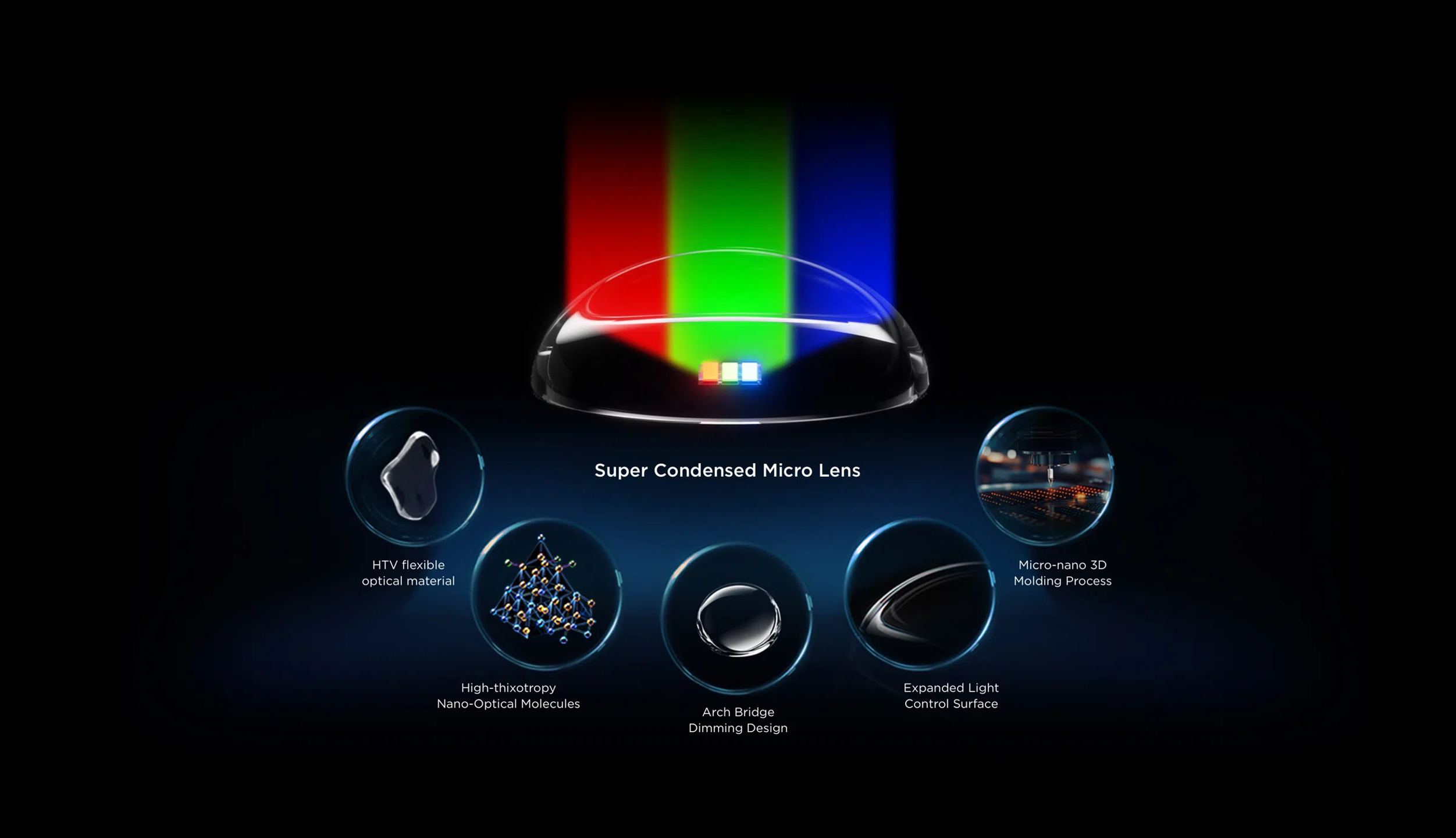
Conventional Mini LEDs start from blue light that a filter turns into white before it passes through the panel. The RM9L works differently: each backlight point combines narrow-band red, green, and blue diodes, which produce the color at the source. TCL claims coverage reaching up to 100% of the BT.2020 space, the widest standard used in HDR video. The diodes use tighter optics, the Super Condensed Micro Lens, designed to limit the mixing of shades between neighboring subpixels, what is known as color crosstalk. The signal rises to 10 bits (8 native bits supplemented by FRC technology), or more than one billion displayable shades. On an 85-inch screen, this precision is most noticeable in gradients and very saturated areas, where a more modest panel would reveal banding.
Contrast and brightness of the WHVA panel
The panel is a WHVA 2.0 Ultra type, a VA technology known for its high native contrast, deeper than that of IPS panels. Peak brightness reaches 4,000 cd/m² in HDR on this 85-inch version, a level that clearly brings out specular reflections and highlights, even in a bright room. The backlighting works with independent local dimming zones: each one turns off or intensifies depending on the content, deepening blacks without darkening nearby details. The stated 178° viewing angle both horizontally and vertically limits contrast loss when moving off-axis, an important point on such a diagonal, rarely viewed head-on by all viewers. The native 144 Hz refresh rate smooths fast motion on screen.
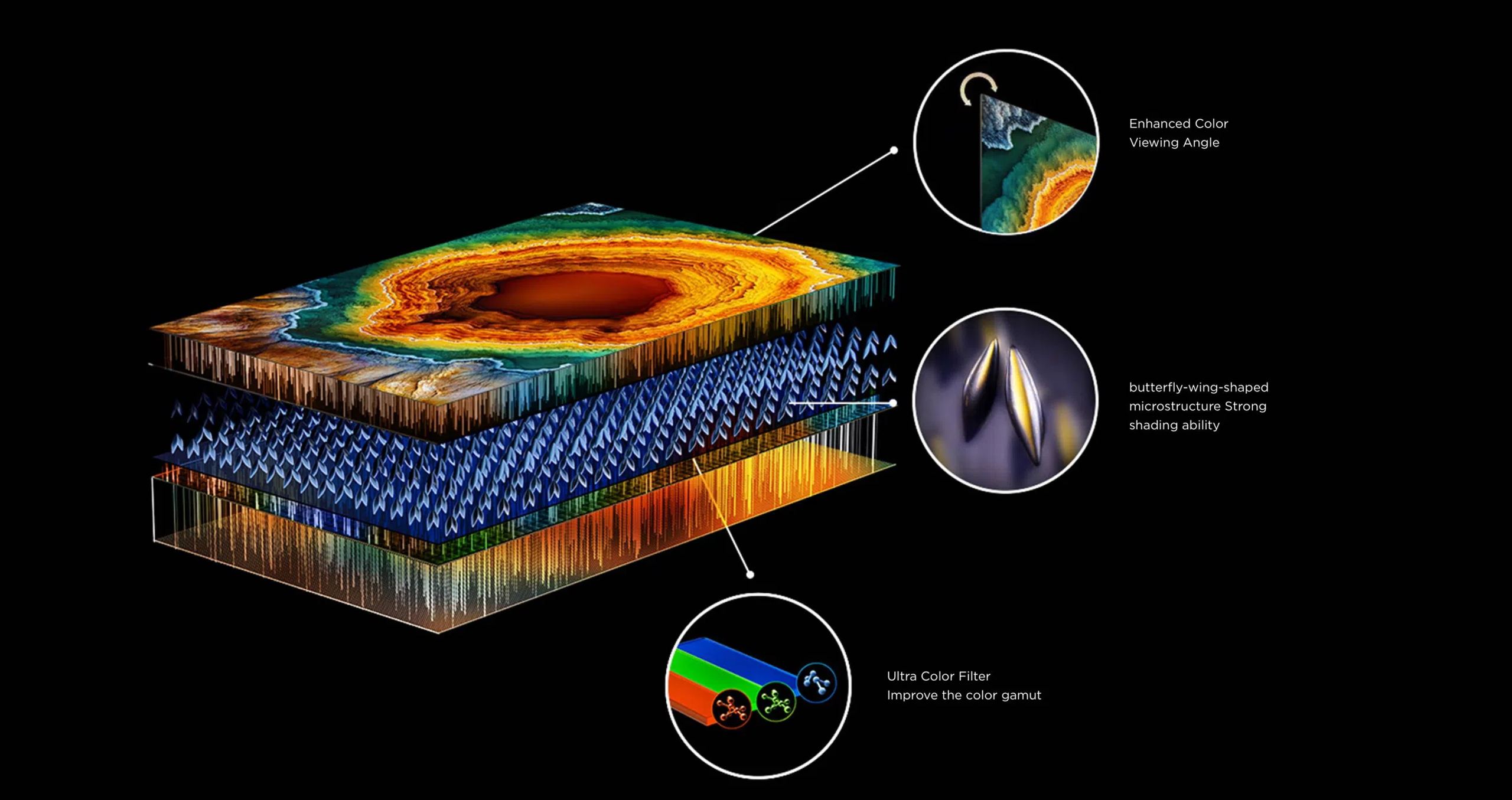
Image processing driven by artificial intelligence
Behind the panel, the AiPQ Pro processor and its TSR engine continuously analyze the image. Processing adjusts brightness, contrast, and colors scene by scene, and upscales lower-resolution content to 4K. It is this optimization work that visually separates a compressed streaming source from a Blu-ray disc. On the HDR side, the TV supports the main formats: HDR10, HDR10+, and Dolby Vision IQ, which adapt the image to the content and the room’s ambient light, plus HLG used by TV broadcasters. IMAX Enhanced certification adds calibration and settings that comply with the label’s specifications for supported content.
Sound tuned by Bang & Olufsen
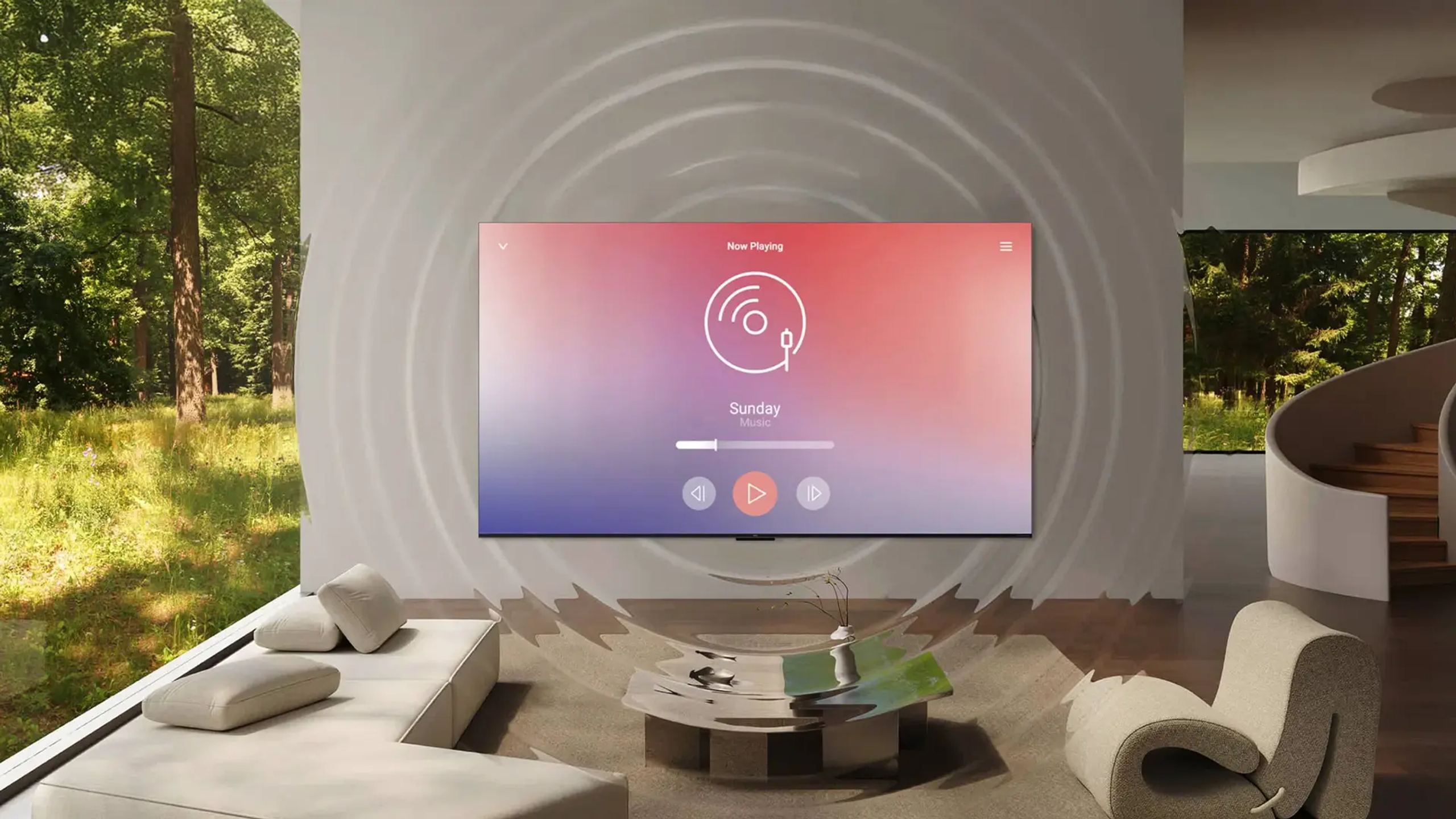
Acoustic tuning was entrusted to Bang & Olufsen, which handles the TV’s equalization and sound signature. The system decodes Dolby Atmos and DTS:X, two vertically dimensioned formats that place effects above the listener when the soundtrack calls for it. Seven modes cover common uses: Movie, Music, Sport, Game, a Dialogue mode that brings voices forward, and a Night mode that narrows the gap between loud and quiet passages, plus a Custom setting. On a slim chassis, built-in acoustics remain constrained by the available volume; for dense soundtracks, a soundbar or Dolby Atmos FlexConnect-compatible wireless speakers usefully extend what the internal speakers already provide.
Google TV and voice control
The interface is based on Google TV, which brings together streaming apps and offers profile-based recommendations. Google Assistant is built in with hands-free voice control: you can launch a search or control playback without touching the remote. Chromecast is built in for sending video from an Android smartphone, and AirPlay 2 does the same from an Apple device. The electronic program guide, subtitles, and parental controls complete the standard TV features. Connectivity relies on Wi-Fi 6, more stable on a busy network, while Bluetooth 5.4 connects headphones or a wireless speaker.
The TV’s behavior in video games
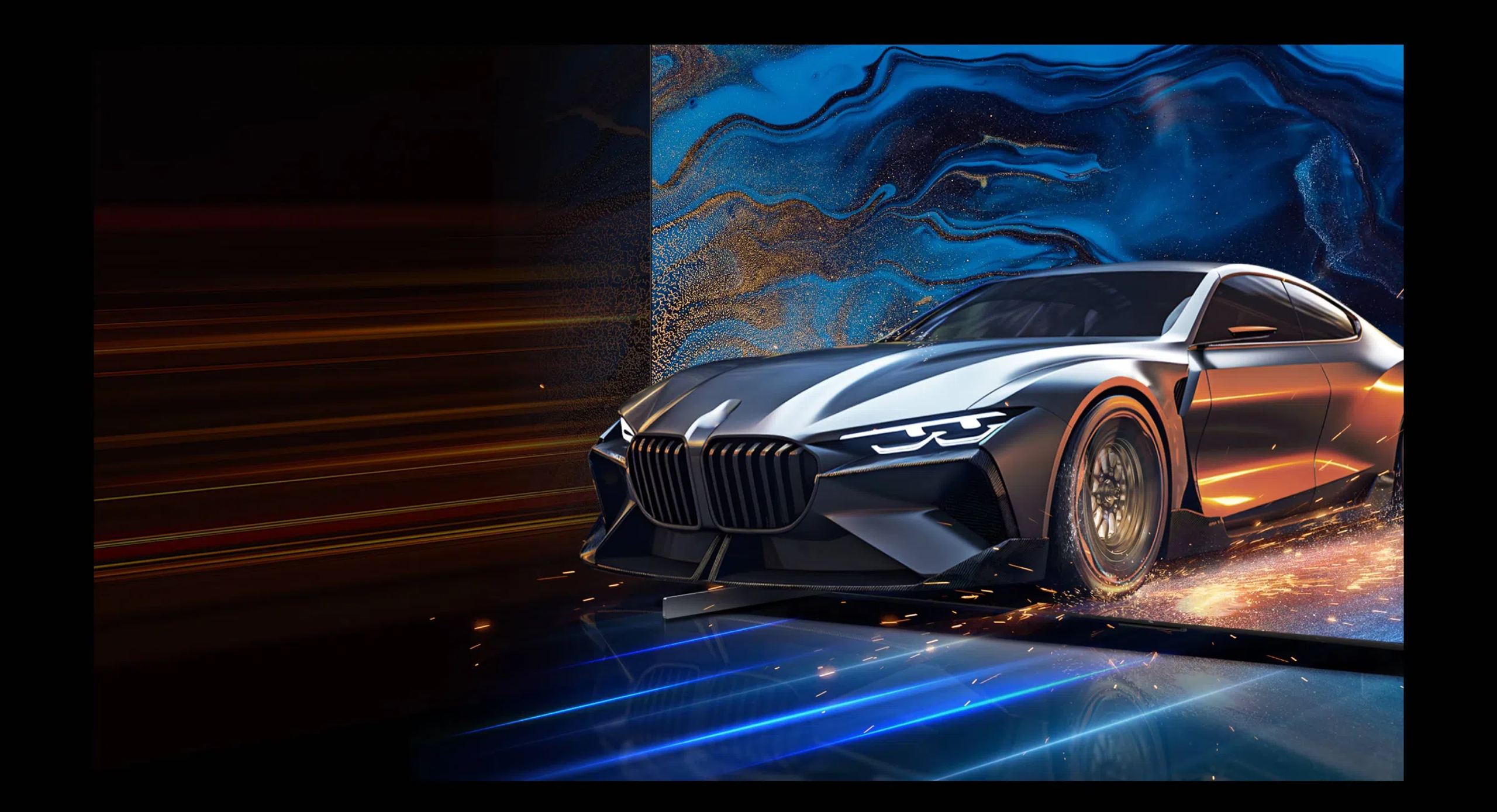
For gaming, the native 144 Hz panel handles the high-frame-rate output of recent consoles and PCs. The four HDMI 2.1 ports accept a 4K signal at 120 frames per second, enough to drive a PlayStation 5 or an Xbox Series X at full speed. Variable refresh rate (VRR) goes up to 288 Hz at Full HD resolution, and AMD FreeSync Premium Pro certification synchronizes the display with the graphics card to eliminate screen tearing. Game mode reduces processing latency, meaning the delay between the action on the controller and its appearance on screen. On an 85-inch diagonal, this responsiveness changes the feel of shooting or racing games, where every fraction of a second counts.
Format, connectivity, and installation
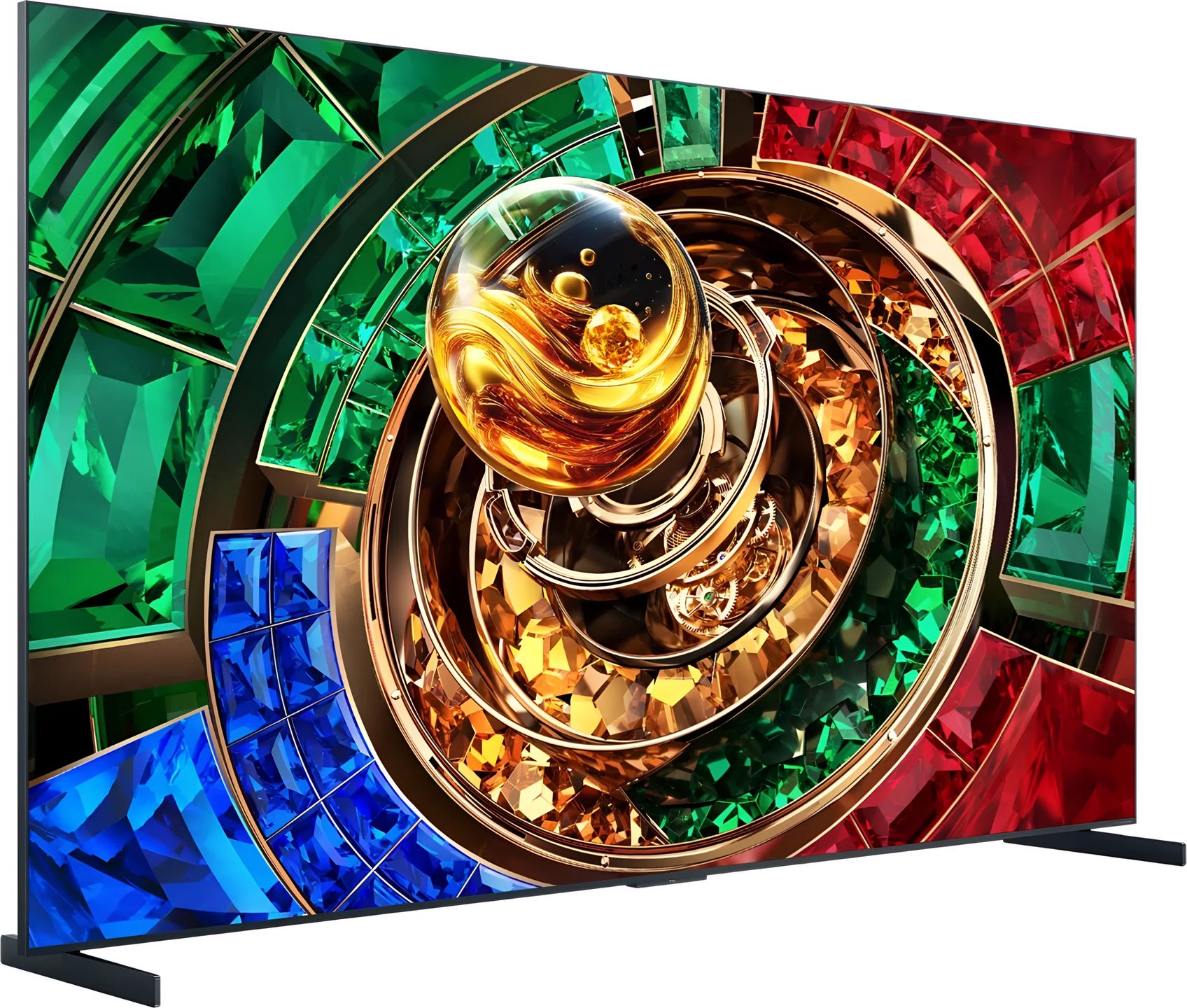
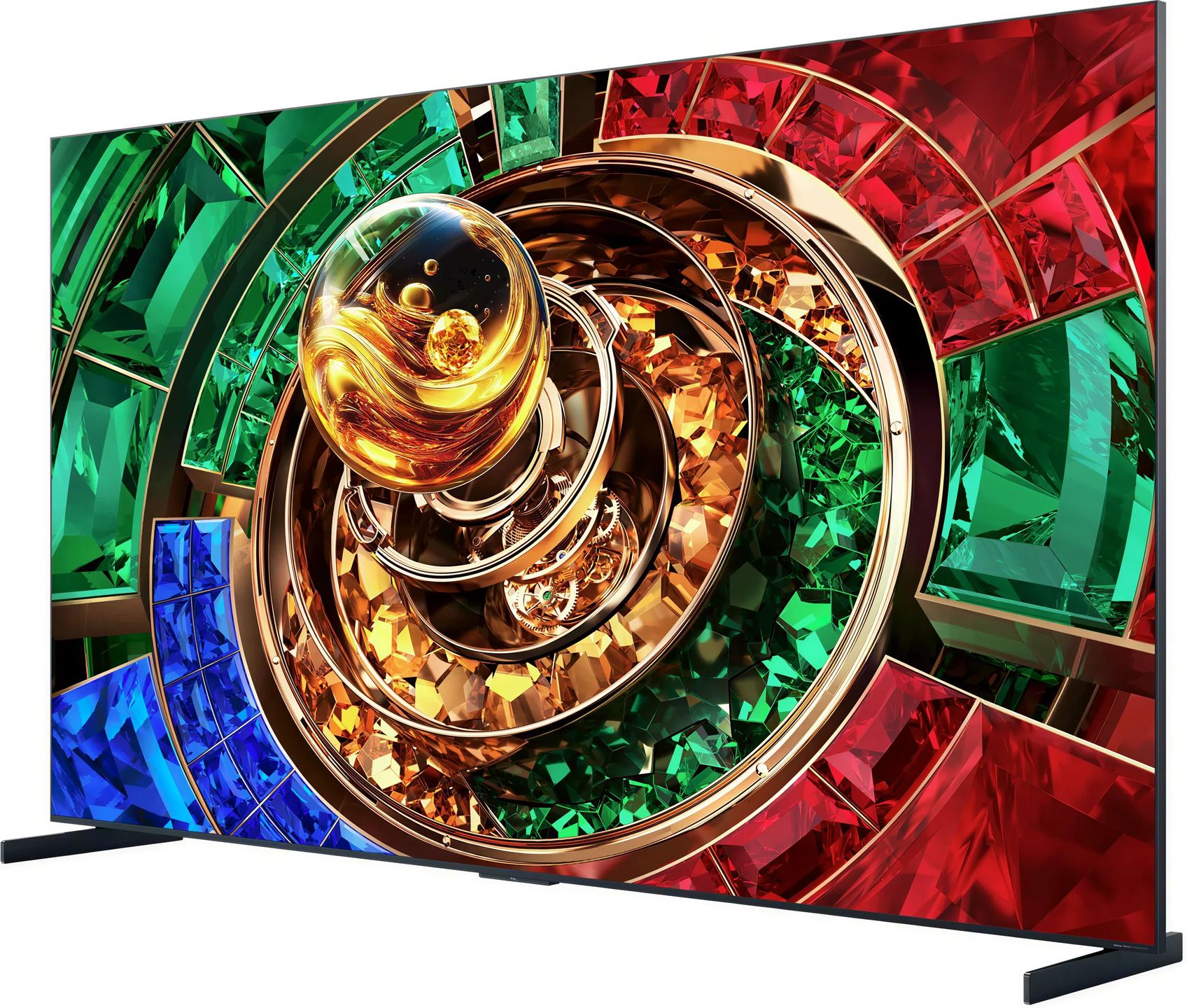
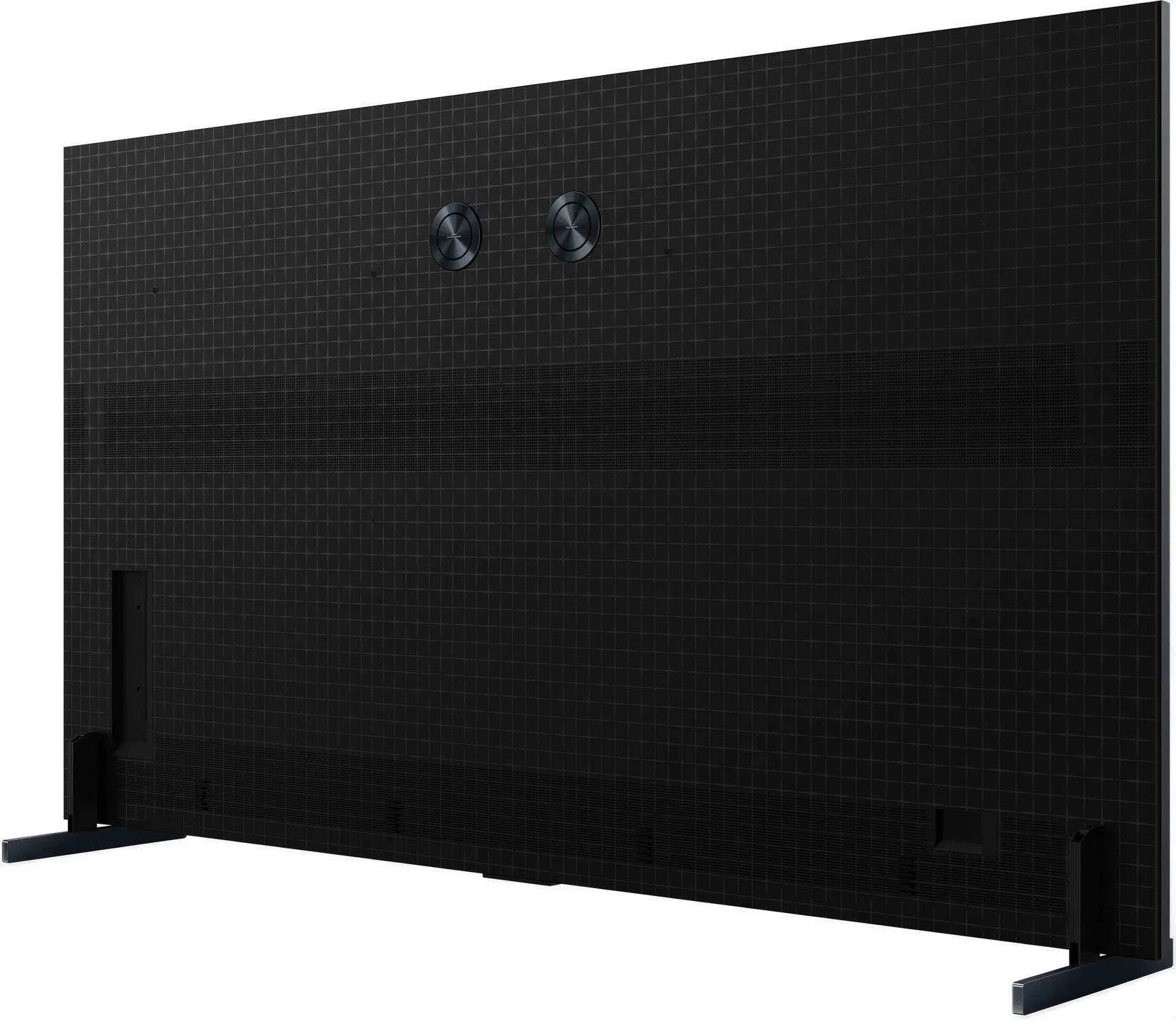
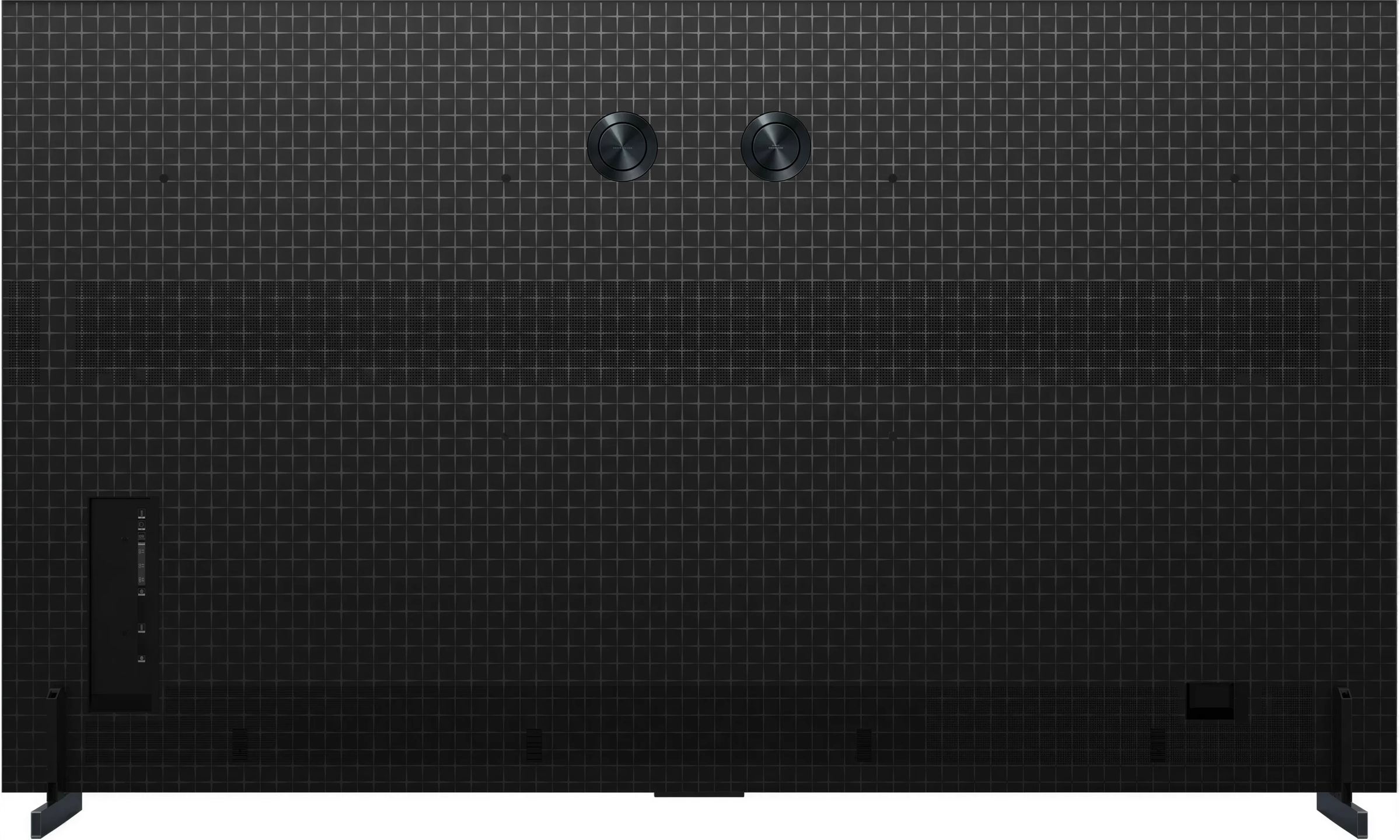
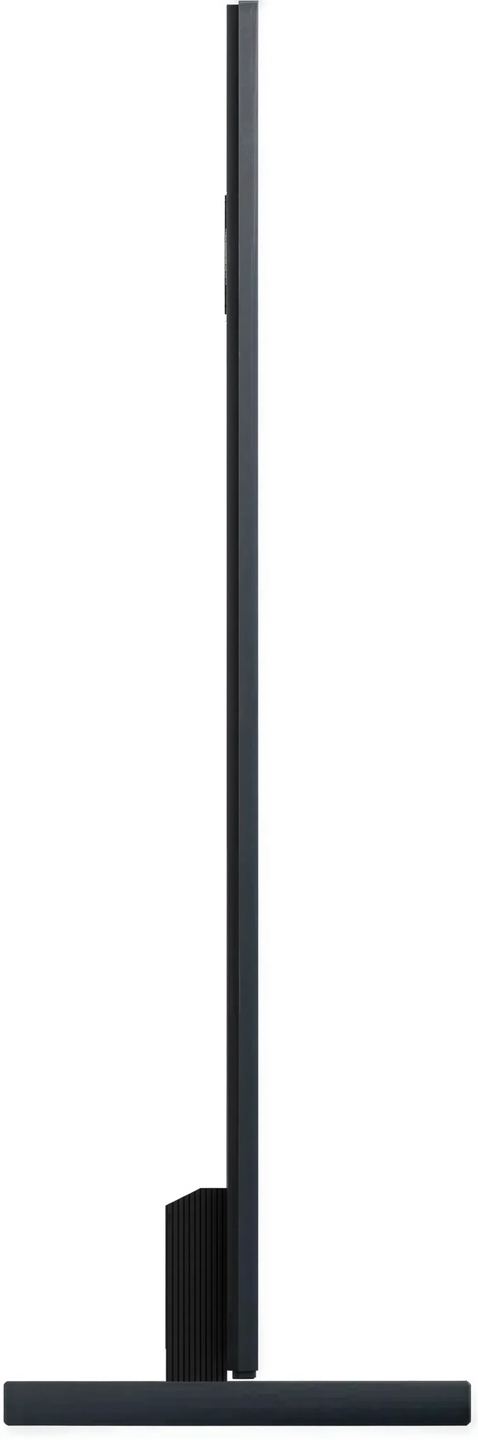
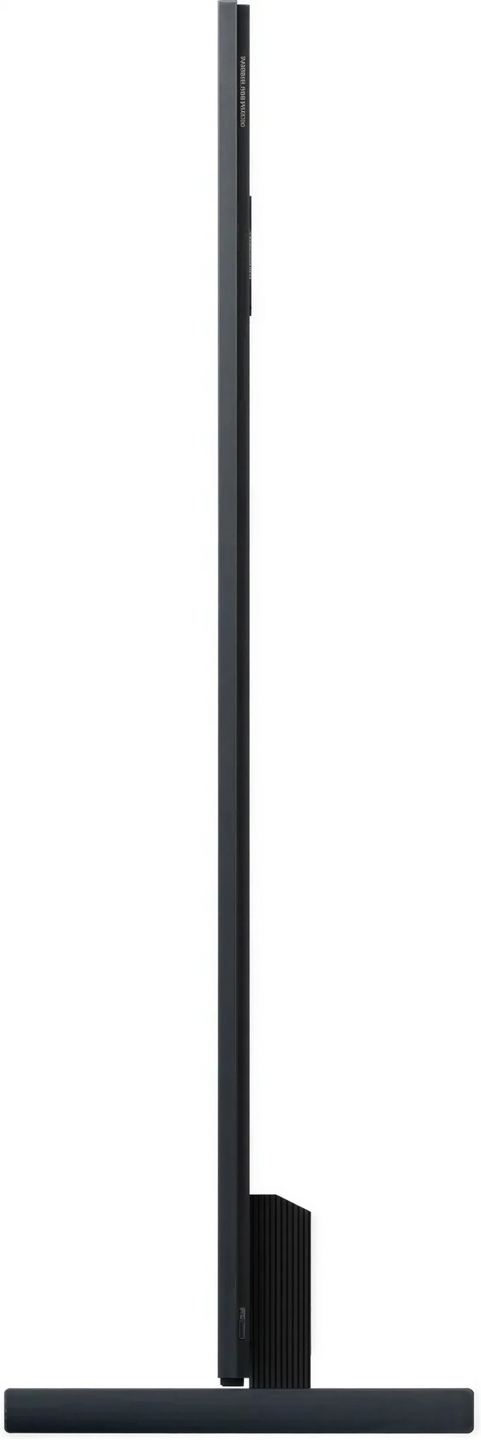
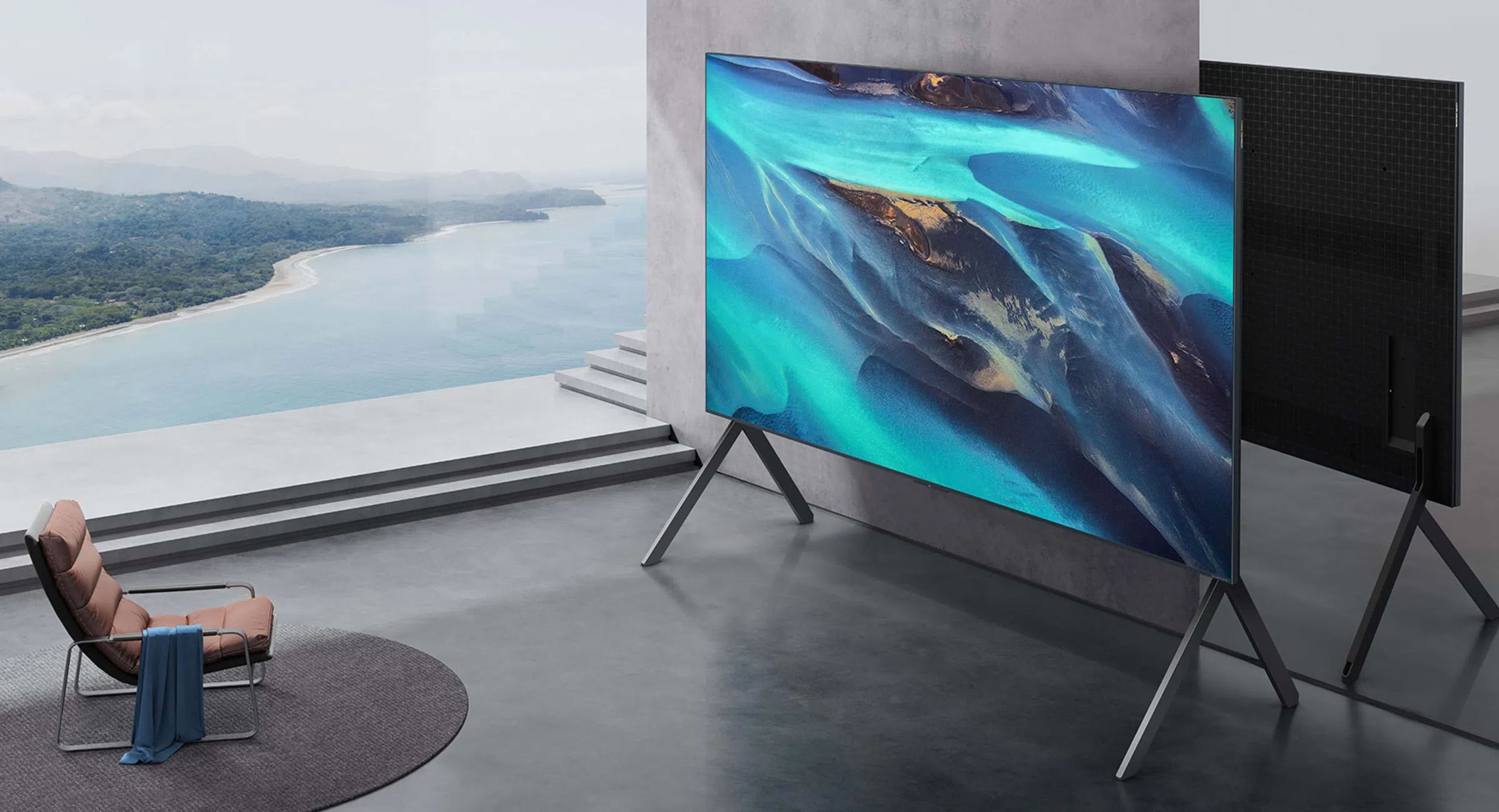
With its 85 inches (216 cm diagonal), the TV requires viewing distance and a sturdy piece of furniture: it weighs 50.4 kg without the stand, 51.8 kg on its support. The chassis remains slim, barely 35 mm thick, with reduced bezels that focus attention on the image. The stand is height-adjustable in two positions (1120 or 1150 mm overall), leaving enough space to slide a soundbar under the screen. Wall mounting follows the VESA 600 × 400 mm standard. Without the stand, the unit measures 1880 mm wide, 1075 mm high, and 35 mm deep; with the stand, depth reaches 380 mm and height rises to 1120 mm. Connectivity includes four HDMI 2.1 inputs and the HDMI CEC standard, which lets you control several connected devices with a single remote. A USB media player reads the main video formats up to 4K at 60 frames per second, including recent AV1. In operation, power consumption can reach 750 W depending on the content and brightness; in standby, it drops to 0.5 W. The MT9655 platform is based on four A73 cores, 3 GB of RAM, and 64 GB of internal storage.
Documentation
FrenchEuropean product sheet
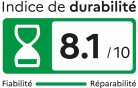
FrenchDurability index
FrenchEnergy label
Technical specifications
Picture
- Screen size: 85 inches (216 cm)
- Resolution: 4K Ultra HD (3840 × 2160 pixels)
- Display technology: Next-generation RGB Mini-LED
- Panel type: High-contrast Ultra WHVA 2.0
- Backlight: RGB Mini-LED with Local Dimming
- Peak brightness: 4000 cd/m² (HDR brightness up to 4000 nits)
- Native refresh rate: 144 Hz
- Color gamut coverage: up to 100% BT.2020
- Color depth: 10-bit (8-bit + FRC)
- Viewing angle: 178° (horizontal / vertical)
- Video processor: AiPQ Pro with TSR processor, AI-based picture and sound optimization
- HDR compatibility: HDR10, HDR10+, HLG, Dolby Vision IQ
- Certification: IMAX Enhanced
Audio
- Audio system by Bang & Olufsen
- Audio technologies: Dolby Atmos, DTS:X
- Sound modes: Movie, Music, Dialogue, Game, Sports, Night, Custom
Smart TV
- Operating system: Google TV
- Voice assistant: Built-in Google Assistant with hands-free voice control
- Smart connectivity: Built-in Chromecast, AirPlay 2
- TV functions: electronic program guide (EPG), subtitles, parental control
Gaming
- Native refresh rate: 144 Hz
- VRR up to 288 Hz in Full HD
- AMD FreeSync Premium Pro
- Optimized Game Mode
- Low latency
Connectivity
- Wi-Fi 6
- Bluetooth 5.4
- HDMI CEC
Multimedia
- USB media player
- Video playback: up to 4K at 60 frames / s
- Supported video formats: H.264, H.265 (HEVC), MPEG-1 / 2 / 4, WMV, VC-1, VP8, VP9, AV1
- Supported audio formats: MP3, WMA, AAC, WAV, FLAC
- Supported photo formats: JPEG, PNG, BMP, HEIF
General features
- Platform: MT9655
- Processor: A73 × 4
- RAM: 3 GB
- Internal storage: 64 GB
- Premium ultra-slim design with reduced bezels
- Standby power consumption: 0.5 W
Mounting and dimensions
- VESA compatibility: 600 × 400 mm
- Dimensions without stand (W × H × D): 1880 × 1075 × 30 mm
- Dimensions with stand (W × H × D): 1880 × 1120 × 380 mm
- Weight without stand: 50.4 kg
- Weight with stand: 51.8 kg
Frequently Asked Questions
Is the RM9L series available in other sizes?
The RGB Mini LED in this range is also available in 98-inch and 115-inch sizes. The 85RM9L is the entry-level screen size, already significantly larger than most living room televisions.
Does the television maintain good contrast in a bright room?
The 4,000 cd/m² peak brightness helps highlights remain legible in broad daylight, and the VA panel preserves deep blacks. In a very bright room, direct reflections on the surface still need to be watched by positioning the screen away from a front-facing window.
Do you necessarily need a 4K source to take advantage of the panel?
No. The AiPQ Pro processor reconstructs the definition of Full HD or SD content to 4K. The result is still better with a native 4K source, but channels and videos in lower definition gain apparent sharpness thanks to this processing.
What viewing distance should you allow for an 85-inch screen?
With 4K, you can sit closer than with a lower resolution without noticing the pixel structure. For an 85-inch screen, a viewing distance of around 2.5 to 3.5 meters offers a good compromise between visual comfort and an immersive feel, to be adjusted according to the space available and each person’s sensitivity.
Which devices can be controlled using only the TV remote control?
Thanks to HDMI CEC, the remote control operates devices connected via HDMI that support this protocol: Blu-ray player, game console, home theater amplifier, or soundbar. A single press can power on the right device and switch to the correct input.
Does the USB player read the latest video files?
Yes. The media player supports H.264, H.265 (HEVC), AV1, VP9, MPEG, and other common containers, up to 4K at 60 frames per second. For photos, it reads JPEG, PNG, BMP, and HEIF; for music, the TCL spec sheet mentions MP3 and WMA.
Do PS5 and Xbox Series X consoles take advantage of the 144 Hz panel?
The four HDMI 2.1 ports receive a 4K signal at 120 frames per second, which these consoles can deliver in compatible games. The 144 Hz panel and FreeSync Premium Pro VRR smooth the display and eliminate stuttering when the frame rate varies.
- Eco-contribution of €12.66 included in the sale price.
- Spare parts available for 7 years
- GTIN / EAN: 5901292529864