

TCL 98RM9L


Specifications and features



Overview
Installing a 2.49 m diagonal panel in a living room is less like having a conventional television and more like having a small cinema screen. The 98RM9L explores a still uncommon Mini-LED approach: a backlight made up of triplets of red, green, and blue diodes, whereas most screens rely on filtered blue diodes. The goal is twofold: broaden the color palette and push brightness to a level few screens reach.
RGB backlighting rather than blue
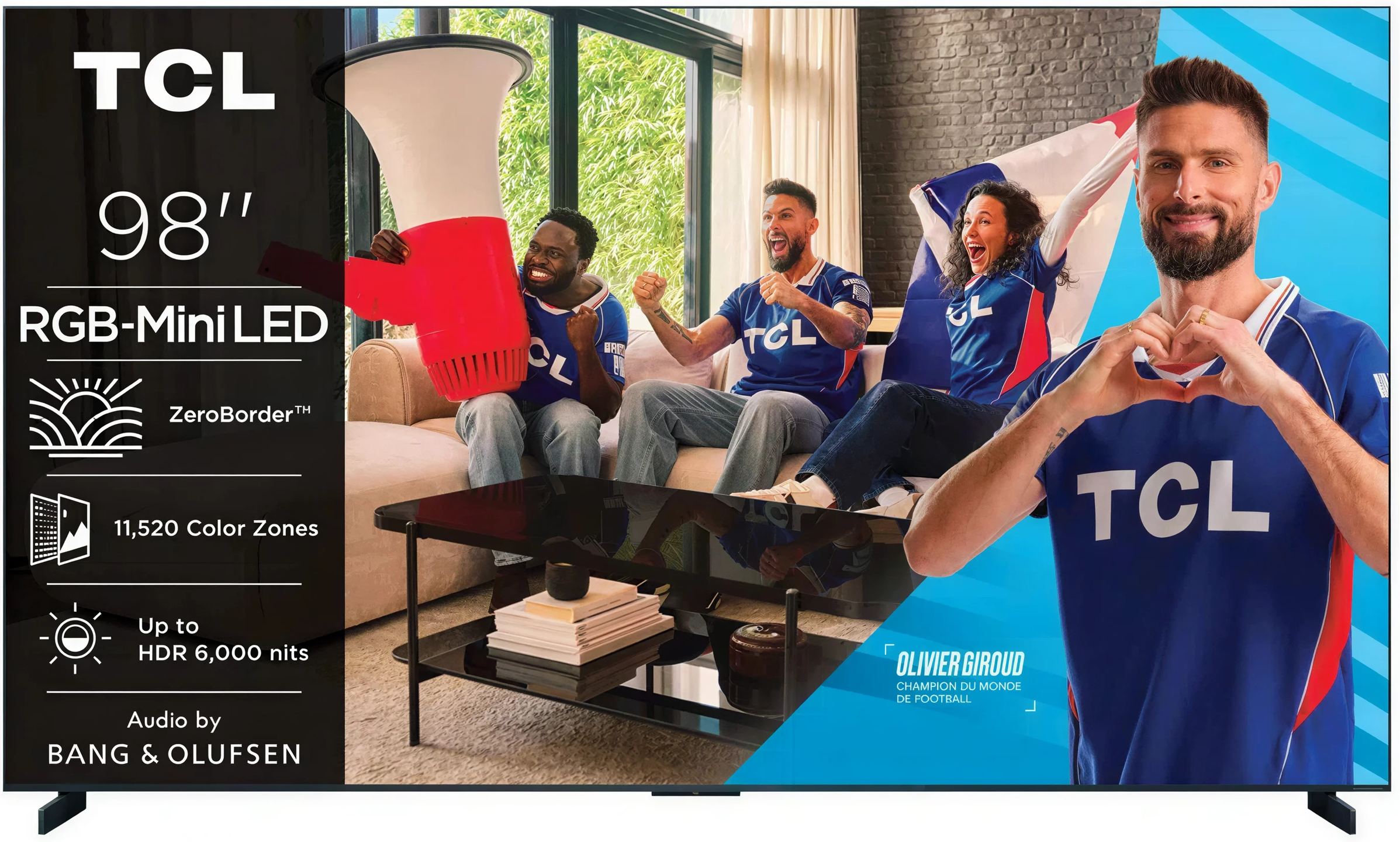
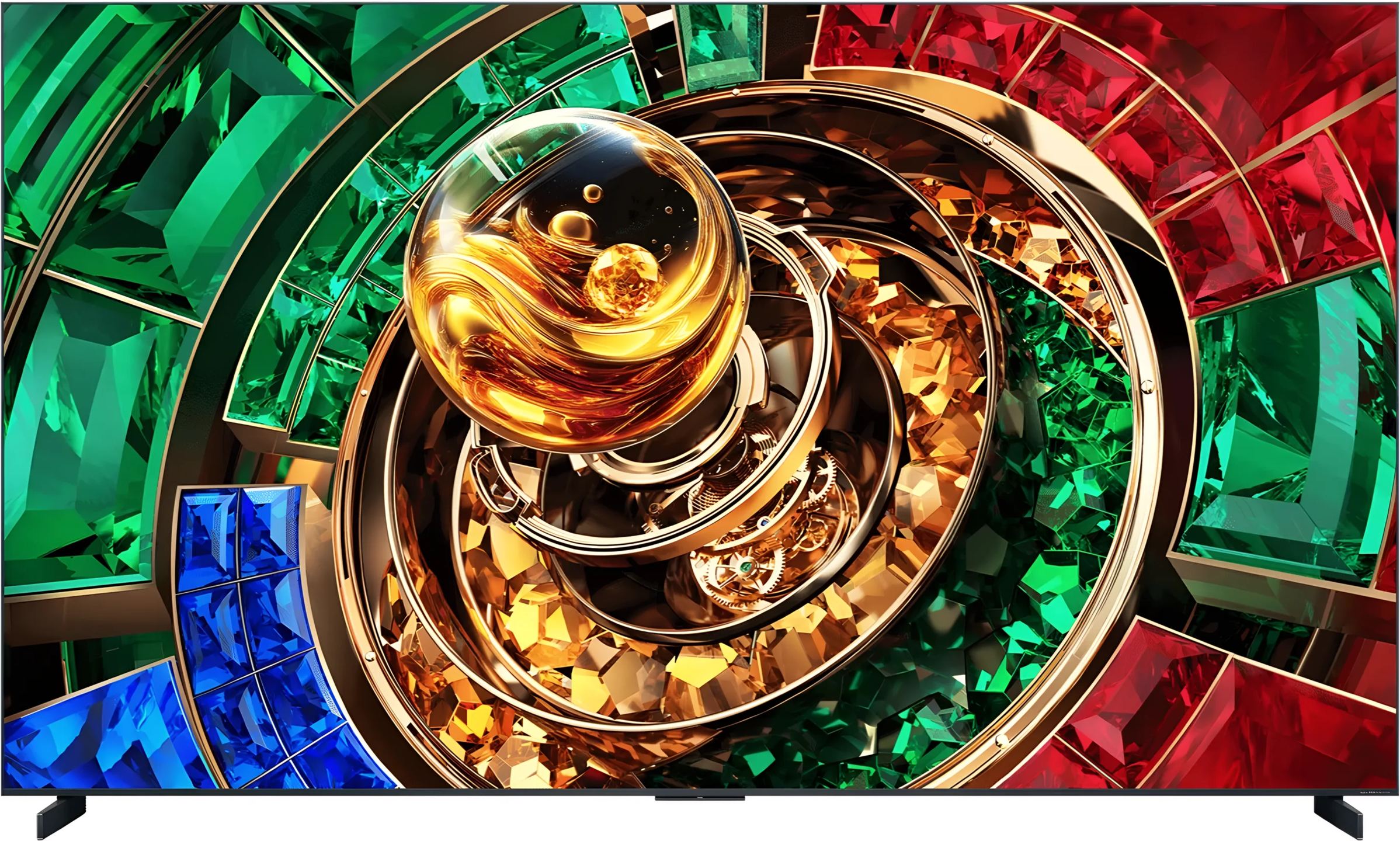
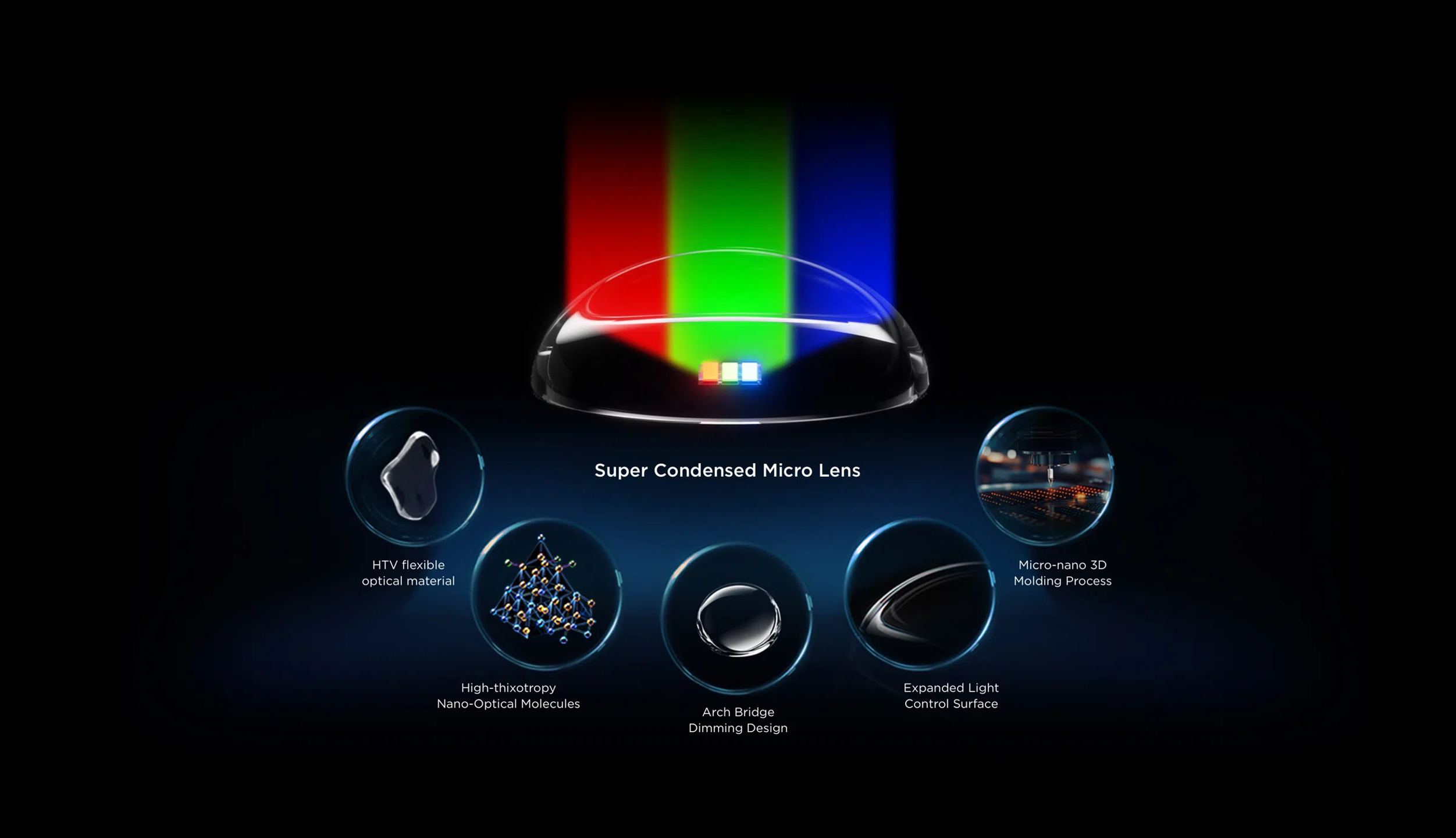
Most Mini-LED televisions light their panel with blue diodes covered by a filter that recreates red and green. The 98RM9L does things differently: each point of its backlight combines three distinct diodes, one red, one green, and one blue. Colored light is produced at the source, which reduces unwanted color mixing. A layer of quantum dots further refines color purity, and the whole system aims for full coverage of the BT.2020 color space, the broadest reference for current video content.
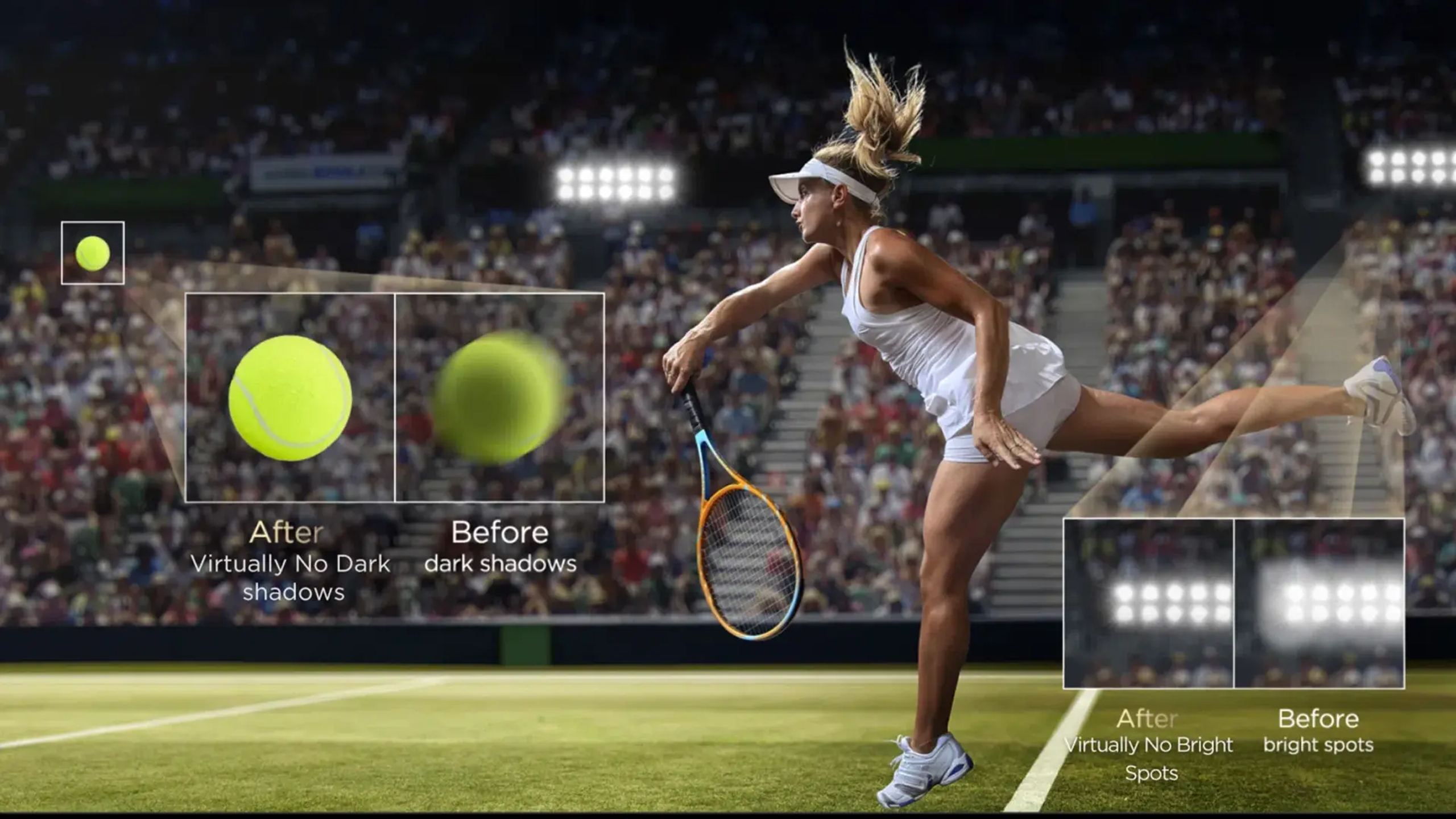
This backlight is also divided into more than 11,500 independently controlled zones. Each adjusts its brightness according to the image, deepening blacks without dimming nearby details. Peak brightness rises to as much as 6,000 cd/m² in HDR, a light reserve used mainly for specular highlights and very high-contrast scenes rather than for a film’s average brightness. The WHVA 2.0 Ultra panel maintains a good level of contrast and keeps colors stable up to 178° from the sides, useful on a screen that several viewers rarely watch head-on.
One nuance deserves mention: the panel encodes colors in 10 bits using an 8-bit method combined with FRC, a rapid alternation of shades that simulates the extra depth. The result remains refined on gradients, without quite matching a natively 10-bit panel.
AI-powered image processing
Behind the panel, the AiPQ Pro processor, assisted by the TSR module, analyzes each image to adjust sharpness, colors, and motion. Its most visible role concerns upscaling: a high-definition signal or a compressed source is reconstructed to the screen’s 4K definition, a point that matters on a diagonal of this size where the slightest flaw is visible. The same processing also applies to sound.
As for high dynamic range formats, the television supports HDR10, HDR10+, HLG, and Dolby Vision IQ. This latter variant adapts Dolby Vision rendering to the room’s ambient light, a welcome correction in a living room that is not plunged into darkness. IMAX Enhanced certification gives access to versions of films calibrated to these specifications, with a specific image format and sound mix.

Gaming smoothness up to 288 Hz
The panel refreshes the image natively 144 times per second, enough to keep up with recent games in 4K without stutter. For competitive titles where frame rate matters more than definition, a mode lowers the resolution to Full HD and pushes variable refresh rate up to 288 Hz. It is a deliberate compromise: the very high frequency is not achieved in 4K, but at reduced definition, where it brings the most responsiveness.
FreeSync Premium Pro compatibility synchronizes the display with the graphics card or console to eliminate screen tearing, and Game mode reduces display latency. The whole package remains coherent for large-screen use, provided you keep in mind that a 98-inch screen is better suited to relaxed couch gaming than to intense short-distance play.

Sound tuned by Bang & Olufsen
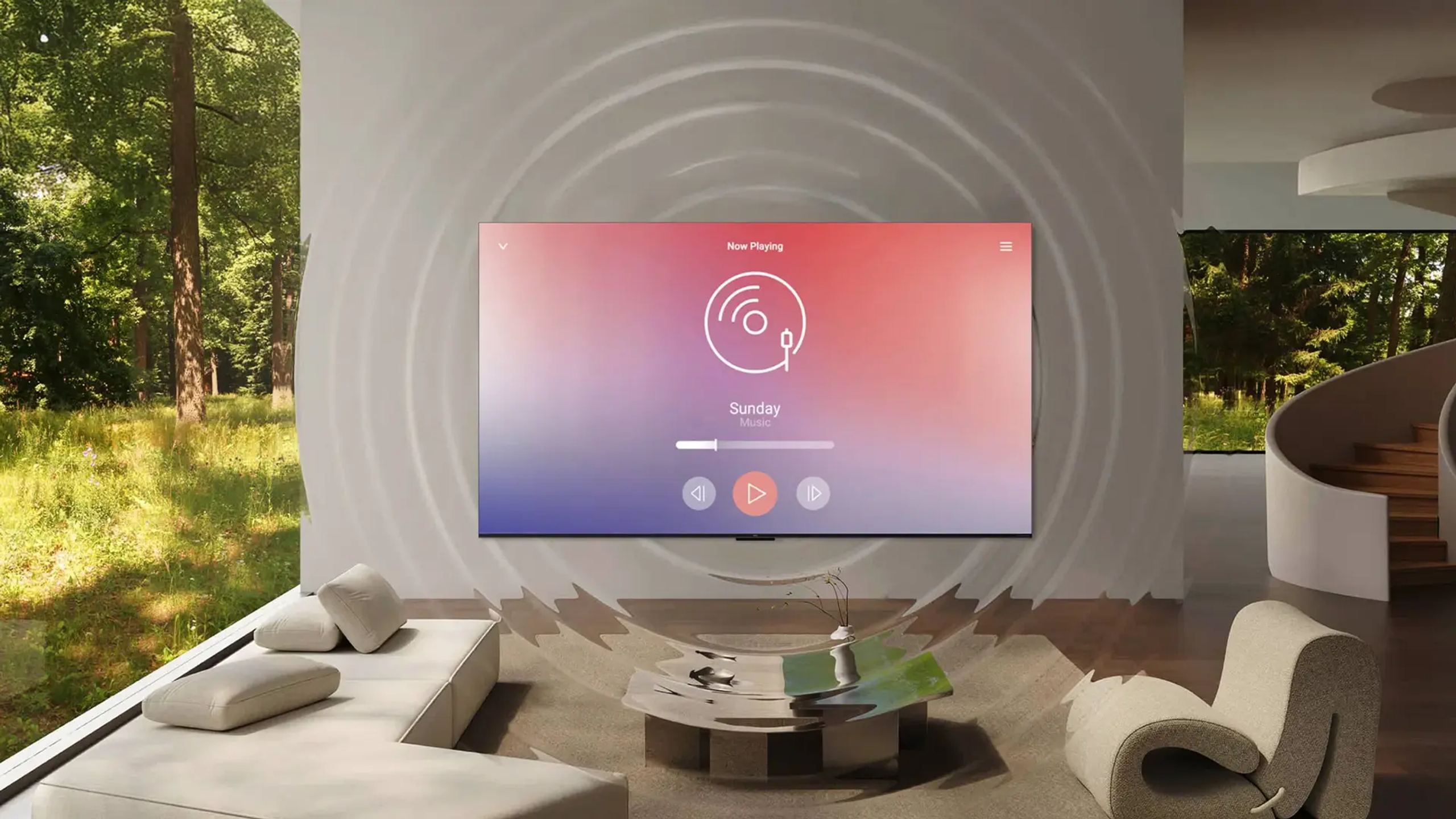
The audio system bears the Bang & Olufsen signature, which tuned the speakers and their sound reproduction. It supports Dolby Atmos and DTS:X, two formats that place sound effects overhead to broaden the soundstage above the screen. Several modes (Movie, Music, Dialogue, Game, Sport, Night, and a custom setting) adapt equalization to the content; Night mode compresses volume differences so as not to wake the household during a late movie.
One physical limitation remains: a 35 mm-thick television does not house a large subwoofer. The rendering gains in clarity and dialogue reproduction, but a setup worthy of a 2.49 m diagonal screen almost always involves a soundbar or dedicated system, which the built-in audio formats can readily support.
Google TV and wireless connectivity
The interface is based on Google TV, which brings together streaming apps and recommendations in a single feed. Google Assistant responds to hands-free voice commands to launch content or adjust a setting without touching the remote. Wireless casting is handled by Chromecast and AirPlay 2, covering both Android devices and the Apple ecosystem.
Wireless connectivity relies on Wi-Fi 6 and Bluetooth 5.4 to connect headphones, a controller, or a speaker. A USB media player reads video, audio, and photo files in most common formats, including AV1 and HEVC for video, FLAC for lossless audio, and HEIF for photos. The program guide, subtitles, and parental controls complete the conventional television side. The MT9655 platform and its 3 GB of RAM are enough to keep the interface responsive day to day, without turning it into an app console.
Living with a 98-inch screen
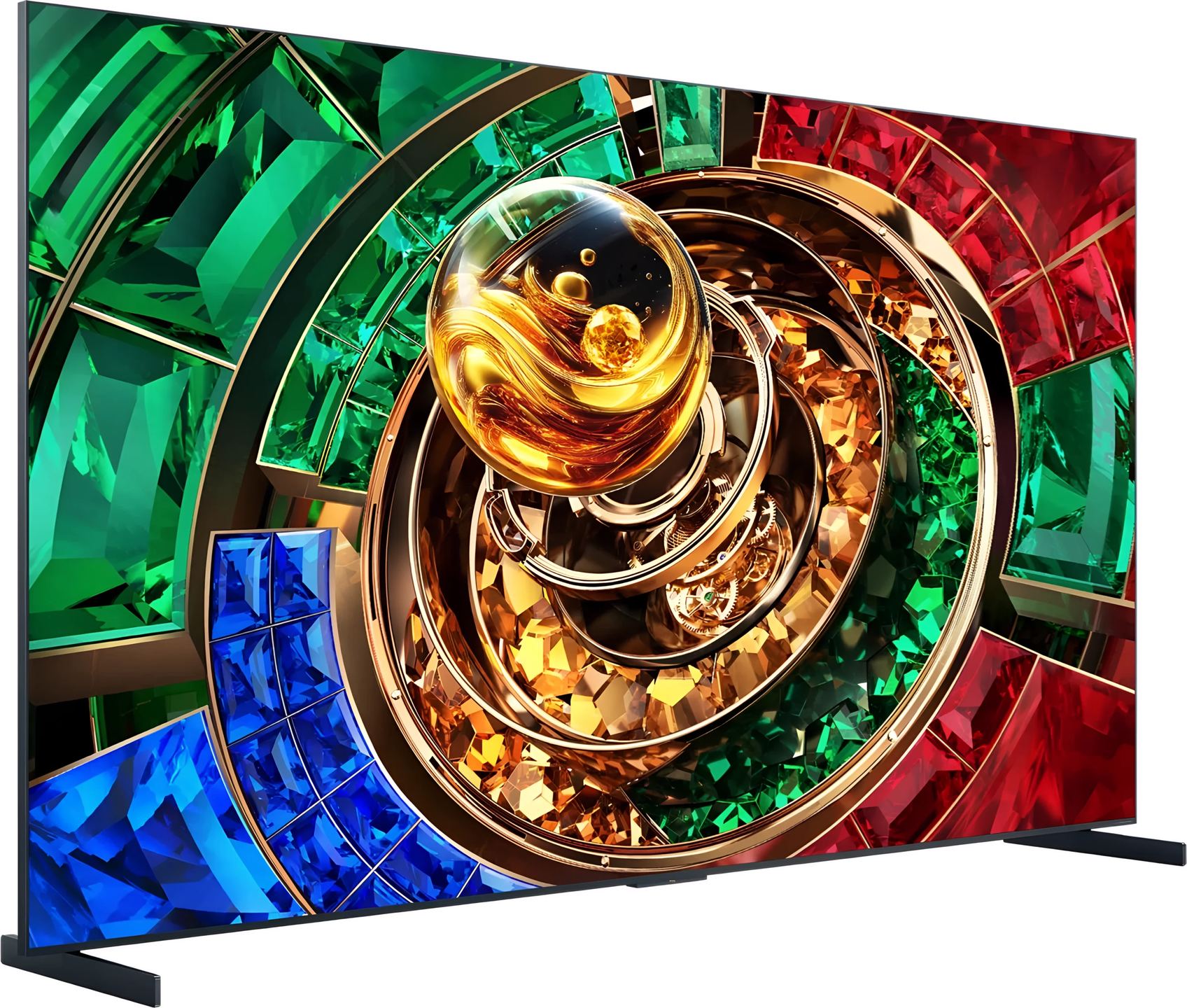
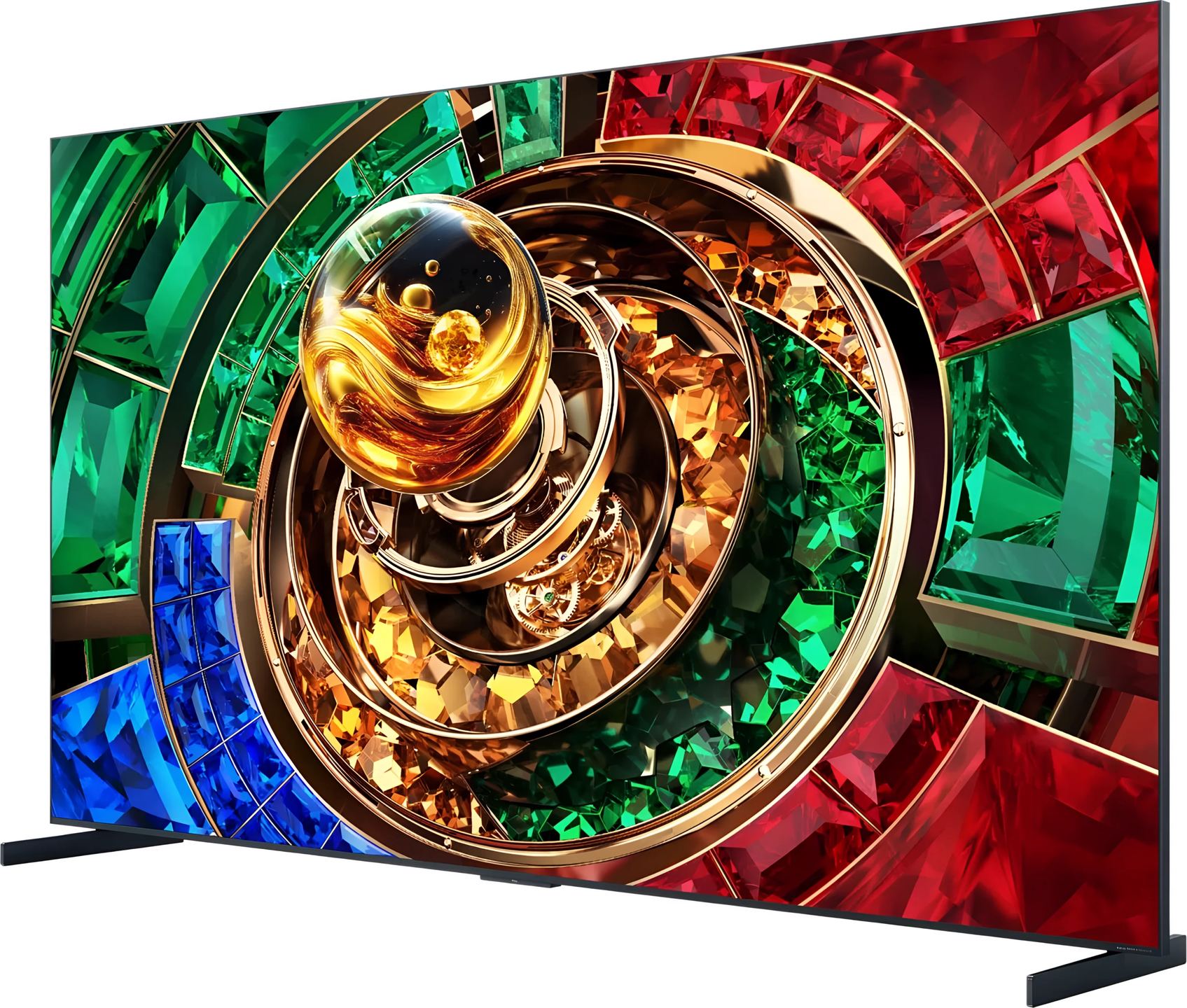
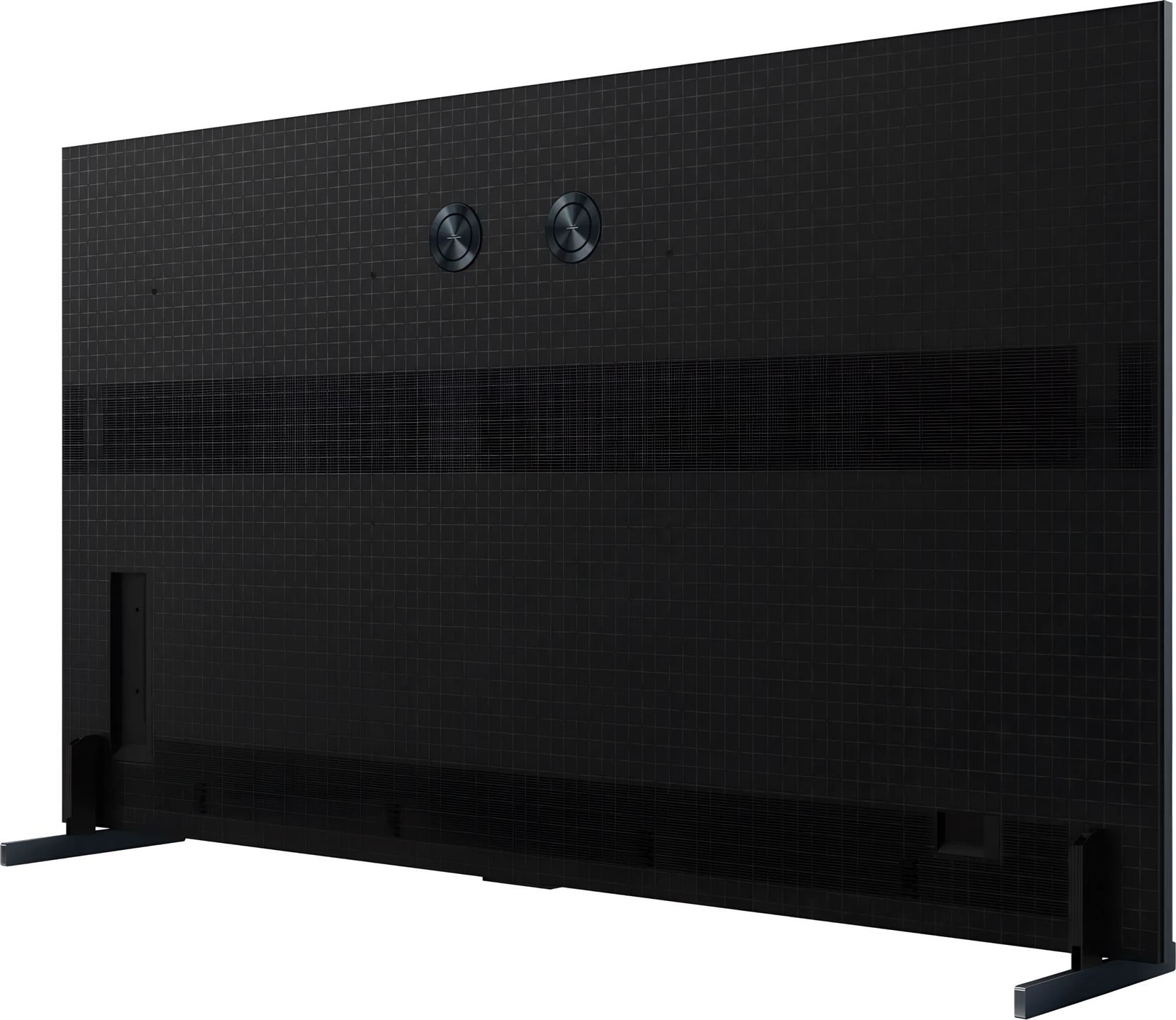
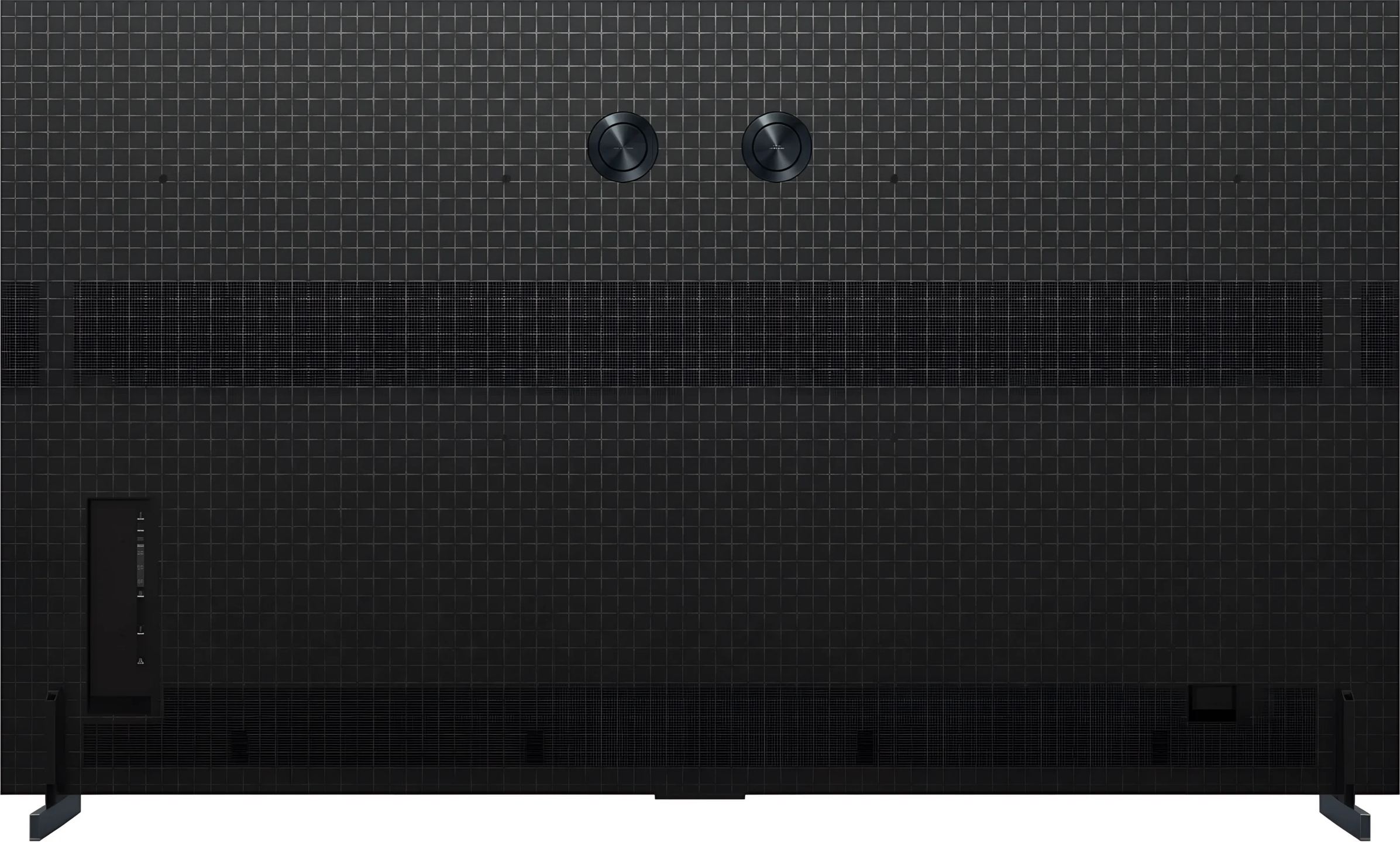
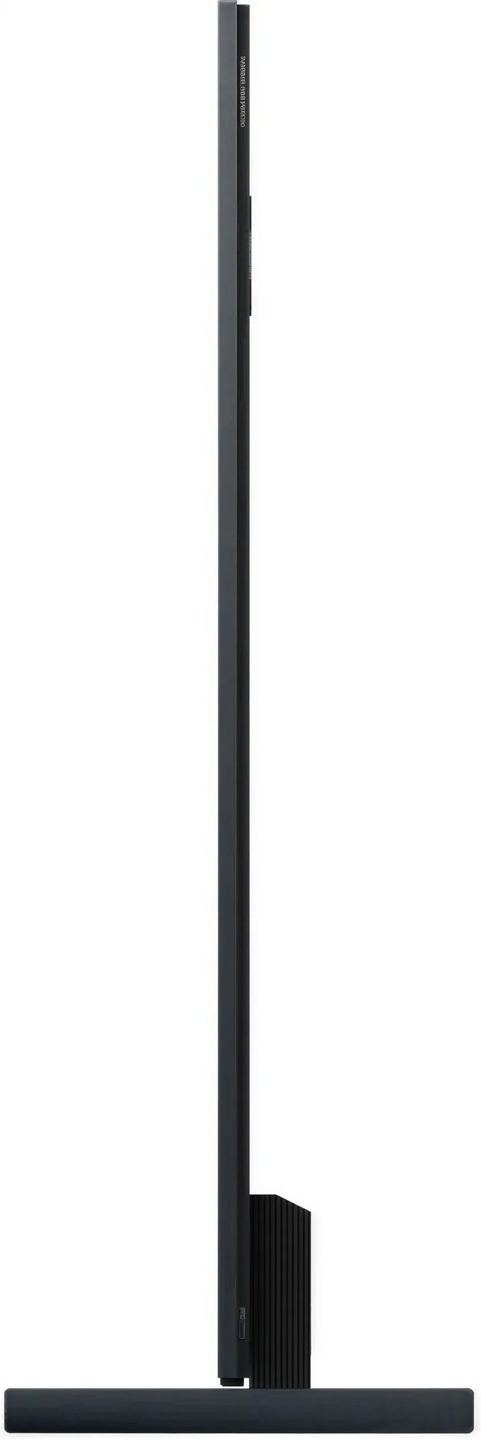
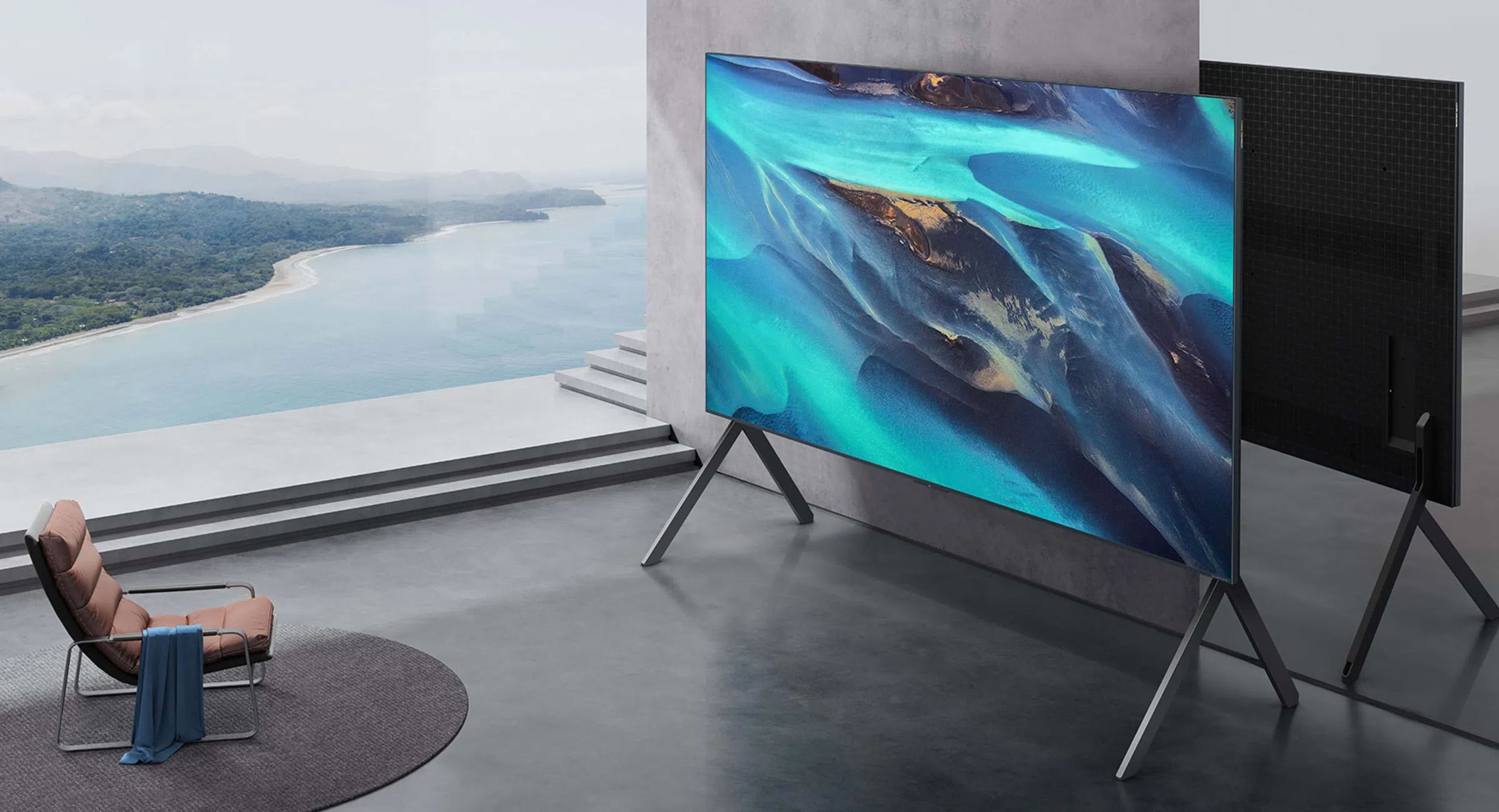
At 2.17 m wide and 35 mm thick, the chassis remains slim despite the display surface. The reduced bezels focus attention on the image, and power consumption drops to 0.5 W in standby. The weight, close to 64 kg, does however require a few precautions during installation.
A wall mount or stand must be planned for this load, with a 600 by 400 mm VESA mount, and several people are needed to handle the panel safely. Viewing distance matters just as much: a 2.49 m diagonal requires space and enough distance for the eye to take in the whole image without scanning the screen. In a room that is too short, comfort deteriorates before image quality even comes into the discussion.
Documentation
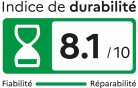
FrenchDurability index
FrenchEuropean product sheet
FrenchEnergy label
Technical specifications
Picture
- Screen size: 98” (249 cm)
- Resolution: 4K Ultra HD (3840 × 2160 pixels)
- Display technology: Next-generation RGB Mini-LED
- Panel type: High-contrast WHVA 2.0 Ultra
- Backlight: RGB Mini-LED with Local Dimming
- More than 11,500 local dimming zones
- Peak brightness: 6000 cd/m² (up to 6000 nits in HDR)
- Native refresh rate: 144 Hz
- Color gamut coverage: up to 100% BT.2020
- Color depth: 10-bit (8-bit + FRC)
- Viewing angle: 178° (horizontal / vertical)
- Video processor: AiPQ Pro with TSR processor, AI image and sound optimization
- HDR compatibility: HDR10, HDR10+, HLG, Dolby Vision IQ
- Certifications: IMAX Enhanced, FreeSync Premium Pro
Audio
- Premium audio system by Bang & Olufsen
- Audio technologies: Dolby Atmos, DTS:X
- Sound modes: Movie, Music, Dialogue, Game, Sport, Night, Custom
Smart TV
- Operating system: Google TV
- Voice assistant: Built-in Google Assistant (hands-free voice control)
- Smart connectivity: Built-in Chromecast, AirPlay 2
- TV functions: electronic program guide (EPG), subtitles, parental control
Gaming
- Native 144 Hz refresh rate
- VRR up to 288 Hz (in Full HD)
- AMD FreeSync Premium Pro
- Optimized Game Mode
- Low latency
Connectivity
- Wi-Fi 6
- Bluetooth 5.4
- HDMI CEC
Multimedia
- USB media player
- Supported video formats: H.264, H.265 (HEVC), MPEG-1 / 2 / 4, WMV, VC-1, VP8, VP9, AV1
- Supported audio formats: MP3, WMA, AAC, WAV, FLAC
- Supported photo formats: JPEG, PNG, BMP, HEIF
- Video playback: up to 4K at 60 fps
General features
- Platform: MT9655
- Processor: A73 ×4
- RAM: 3 GB
- Internal storage: 64 GB
- Premium ultra-slim design with reduced bezels
- Standby power consumption: 0.5 W
Mounting and dimensions
- VESA compatible: 600 × 400 mm
- Dimensions without stand (W × H × D): 2168 × 1320 × 35 mm
- Dimensions with stand (W × H × D): 2168 × 1283 × 420 mm
- Weight without stand: 63.3 kg
- Weight with stand: 63.7 kg
Frequently Asked Questions
How much viewing distance should you allow in front of a 98-inch screen?
For 4K, a distance of between 3 and 4 meters offers a good balance: close enough to appreciate the fine detail of the resolution, far enough to take in the entire screen without turning your head. Below 2.5 m, the image occupies a very large part of the field of view, which is appealing for movies but becomes tiring more quickly during prolonged use.
Does the Bang & Olufsen audio system make a soundbar unnecessary?
For everyday use, the built-in sound remains clean and well balanced, especially for dialogue. But on a screen of this size, the lack of a subwoofer is inherent by design. A Dolby Atmos-compatible soundbar or a speaker system adds the bass and spatialization missing from the internal speakers.
What does Dolby Vision IQ change compared to standard Dolby Vision?
Dolby Vision IQ adds ambient light awareness. A sensor measures the room’s lighting and adjusts brightness as well as details in dark areas accordingly. In a bright living room, nighttime scenes remain legible instead of sinking into black, without betraying the film’s original intent.
Does a 10-bit panel really display more than one billion colors?
The TV reproduces a 10-bit depth, or more than one billion shades, but via an 8-bit process combined with FRC rather than a native 10-bit panel. In practical terms, gradients in skies or low-light scenes remain smooth and banding is rare; a highly trained eye may notice a slight difference compared with a native 10-bit panel on certain content.
Can you stream content from a smartphone or a tablet?
Yes, in two ways. Chromecast is built in for casting a video or an app from an Android device or a browser, and AirPlay 2 does the same from an iPhone, iPad, or Mac. Both work on the same Wi-Fi network as the TV.
Do you need a fast internet connection to enjoy 4K?
For 4K HDR streaming, a stable connection of around 25 Mbit/s per stream is recommended by most platforms. The built-in Wi‑Fi 6 helps maintain this wireless throughput, but an Ethernet cable remains the safest bet if the router is far away or the network is busy. Files played from a USB drive do not depend on the connection.
- Eco-contribution of €12.66 included in the sale price.
- Spare parts available for 7 years
- GTIN / EAN: 5901292529857