Thierry
Very satisfied, improves the output quality of my turntable.
Comment from April 20, 2026 — Experience from January 18, 2026
Automatically translated — Show original (French)
Très satisfait , améliore la qualité de destitution de ma platine.
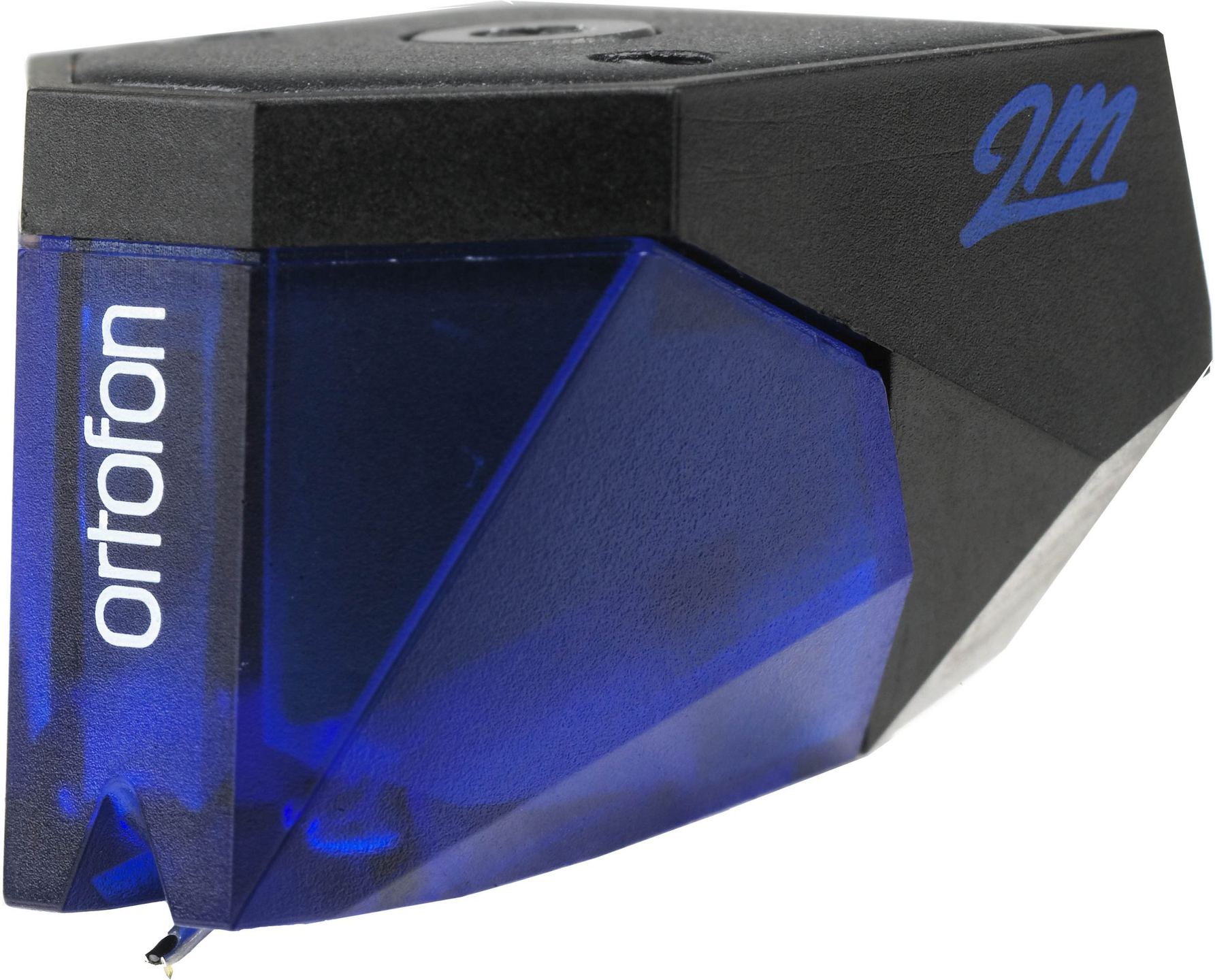
The Ortofon 2M Blue is a moving magnet (MM) phono cartridge equipped with a nude elliptical diamond. It uses Ortofon’s split pole pins technology to improve channel separation and tracking accuracy. Designed for users seeking a significant upgrade over entry-level cartridges, the 2M Blue offers a middle ground between sonic performance and ease of integration into a standard system without requiring specific MC preamplification.
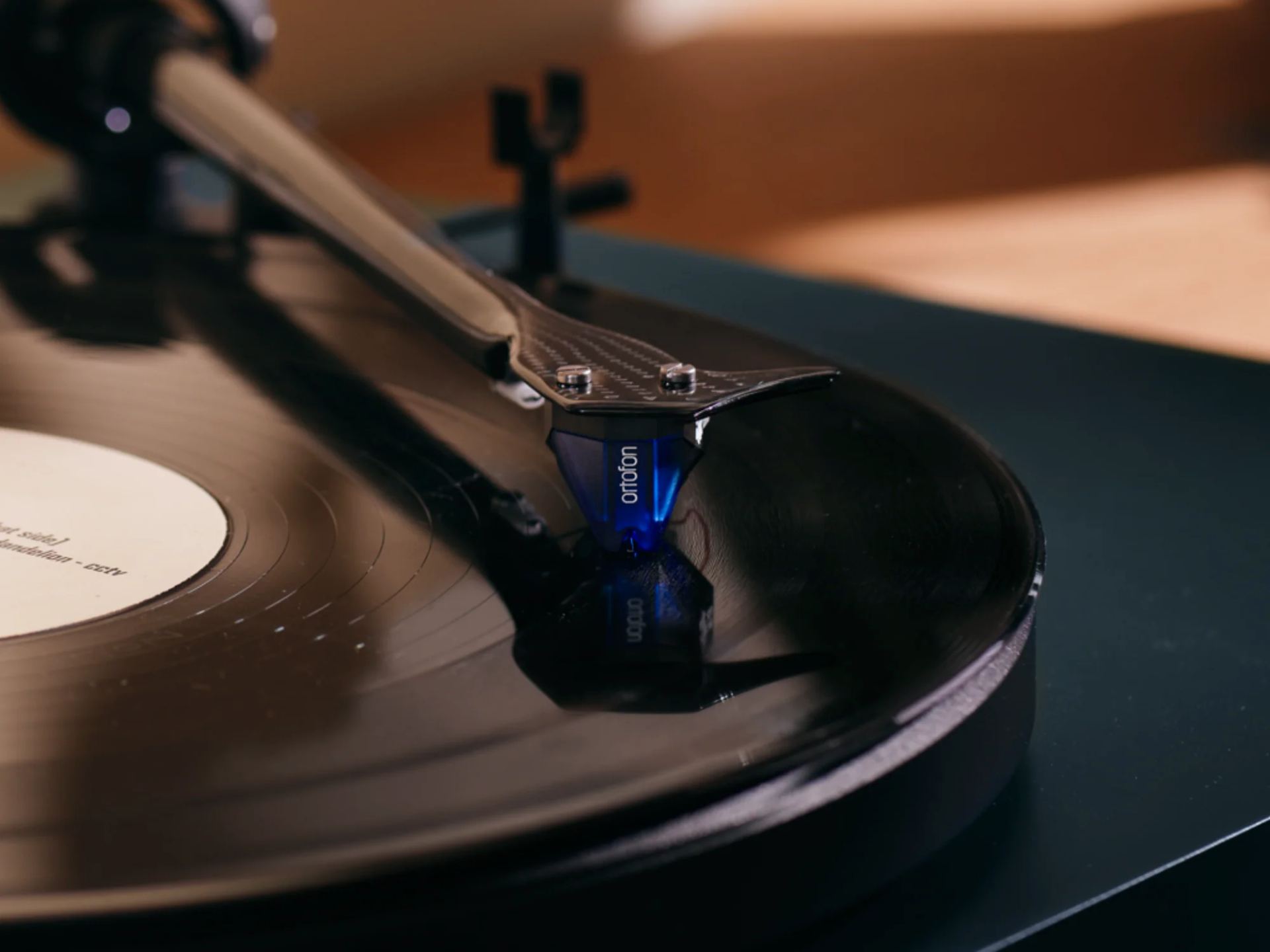
The 2M Blue is built on a sophisticated architecture where every component contributes to sonic excellence. At the heart of the cartridge lies the patented split pole pins system, an Ortofon invention that represents a true technological breakthrough. This innovation consists in creating a fine longitudinal slit in the cylindrical pole pieces of the magnetic circuit. This seemingly minor modification has considerable effects: it drastically reduces eddy currents and magnetic losses, particularly at high frequencies.
The result is a remarkably linear frequency response curve, comparable to that of far more expensive moving coil cartridges. Initially developed for Ortofon’s 500 and Super OM series, this technology here reaches an optimal level of refinement. Pure copper wire coils generate a comfortable 5.5 mV output, ensuring universal compatibility with the vast majority of phono preamplifiers on the market.
The cartridge body, made of Hopelex, deserves special attention. This high-performance polycarbonate, developed specifically for demanding applications, combines exceptional rigidity with outstanding anti-resonant properties. Its particular molecular structure virtually eliminates any parasitic vibration likely to color the audio signal. This acoustic neutrality allows the reading system to focus exclusively on extracting the information engraved in the groove.
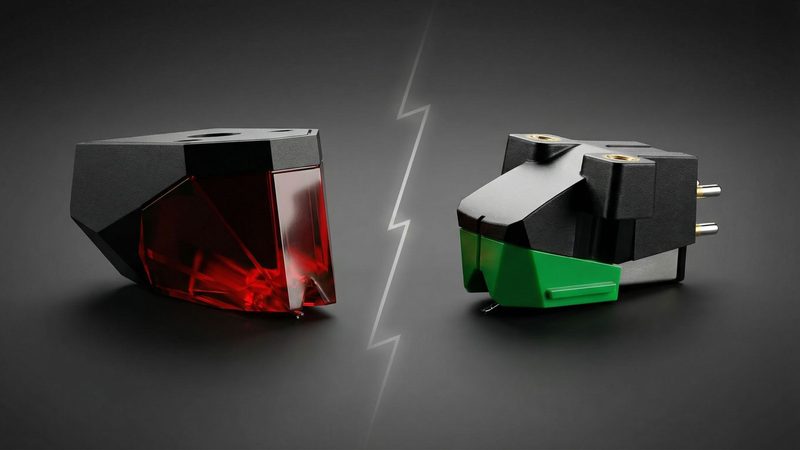
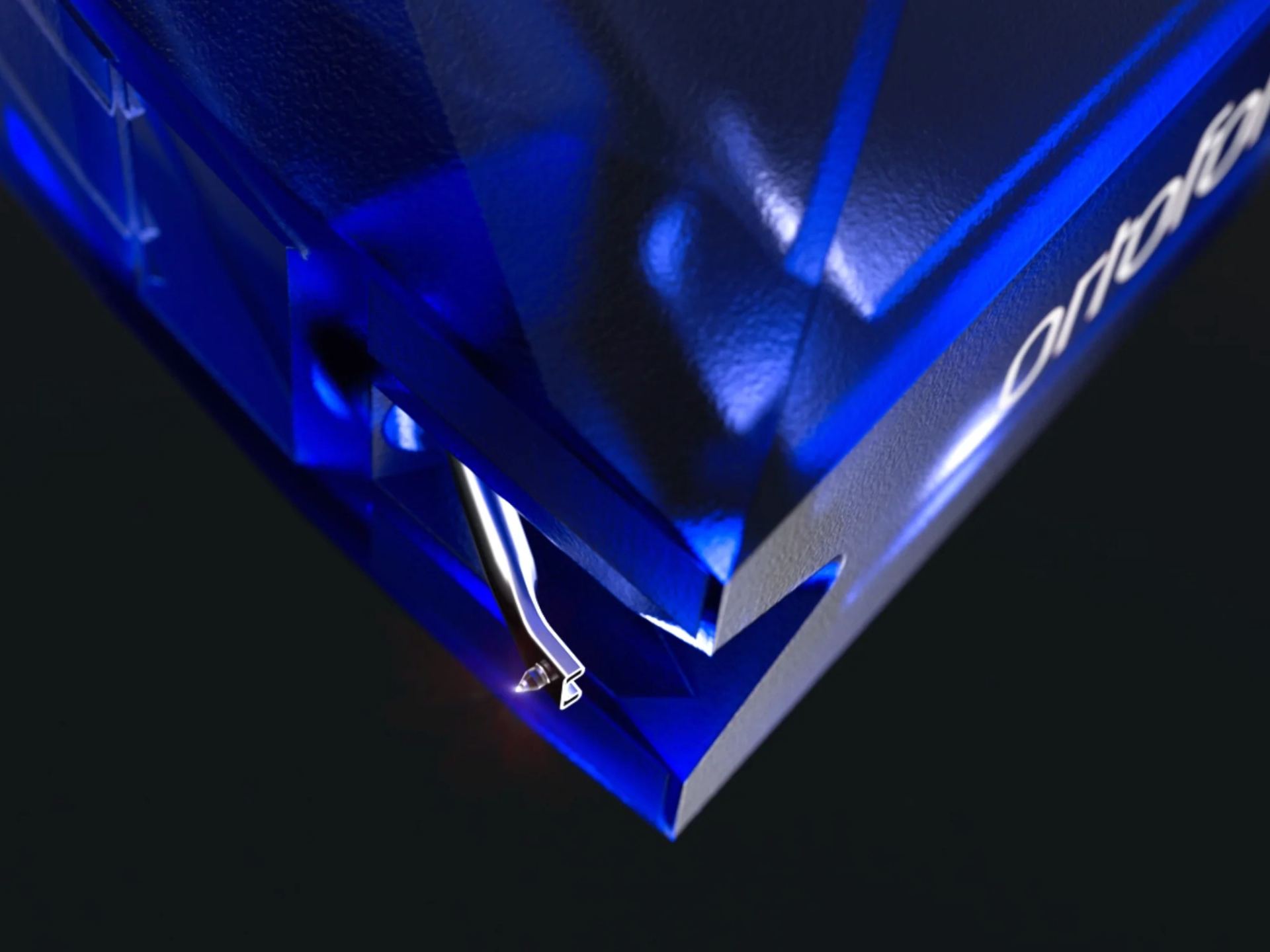
The fundamental difference between the 2M Blue and its little sister, the 2M Red, lies in the stylus tip. While the Red uses a bonded diamond on a titanium shank, the Blue adopts a nude elliptical diamond, cut directly from a monoblock synthetic stone. This approach eliminates any interface between the diamond and the cantilever, significantly reducing the effective mass of the moving assembly.
This reduction in mass offers multiple advantages. The diamond follows the groove’s microscopic modulations with increased precision, particularly in complex passages where several instruments play simultaneously. The tracking ability, reaching 80 μm at 315 Hz, surpasses that of the Red by 10 μm—an improvement that translates concretely into a notable reduction of end-of-side distortion, that frustrating phenomenon where the last tracks of a record seem to lose clarity.
The diamond’s elliptical profile, with radii of 8 and 18 μm, establishes optimal contact with the groove walls. This geometry allows exploration of areas of the vinyl that spherical or bonded elliptical tips cannot reach, revealing sonic details hitherto masked. The upper harmonics of cymbals, the texture of bowed strings, the natural reverberation of recording venues—all emerge with striking clarity.
The 2M Blue’s sonic signature is characterized by a transparency that may surprise on first listen. The bandwidth, extending from 20 Hz to 25 kHz with a tolerance of +2/-1 dB between 20 Hz and 20 kHz, attests to exemplary linearity. This precision is not achieved at the expense of musicality: the cartridge manages to combine analytical resolution with harmonic coherence.
Channel separation, measured at 25 dB at 1 kHz and maintained at 15 dB at 15 kHz, creates a remarkably stable soundstage. Instruments occupy precise positions in the stereophonic space, without drift or confusion, even in the densest orchestrations. This ability to untangle the various sonic layers without distorting them is one of this cartridge’s major strengths.
The suspension, using a rubber compound formulated specifically by Ortofon in its own laboratories, plays a crucial role in this performance. Its lateral compliance of 20 μm/mN ensures an optimal balance between suppleness and control, allowing the diamond to negotiate dynamic passages with ease while maintaining constant contact with the groove walls.
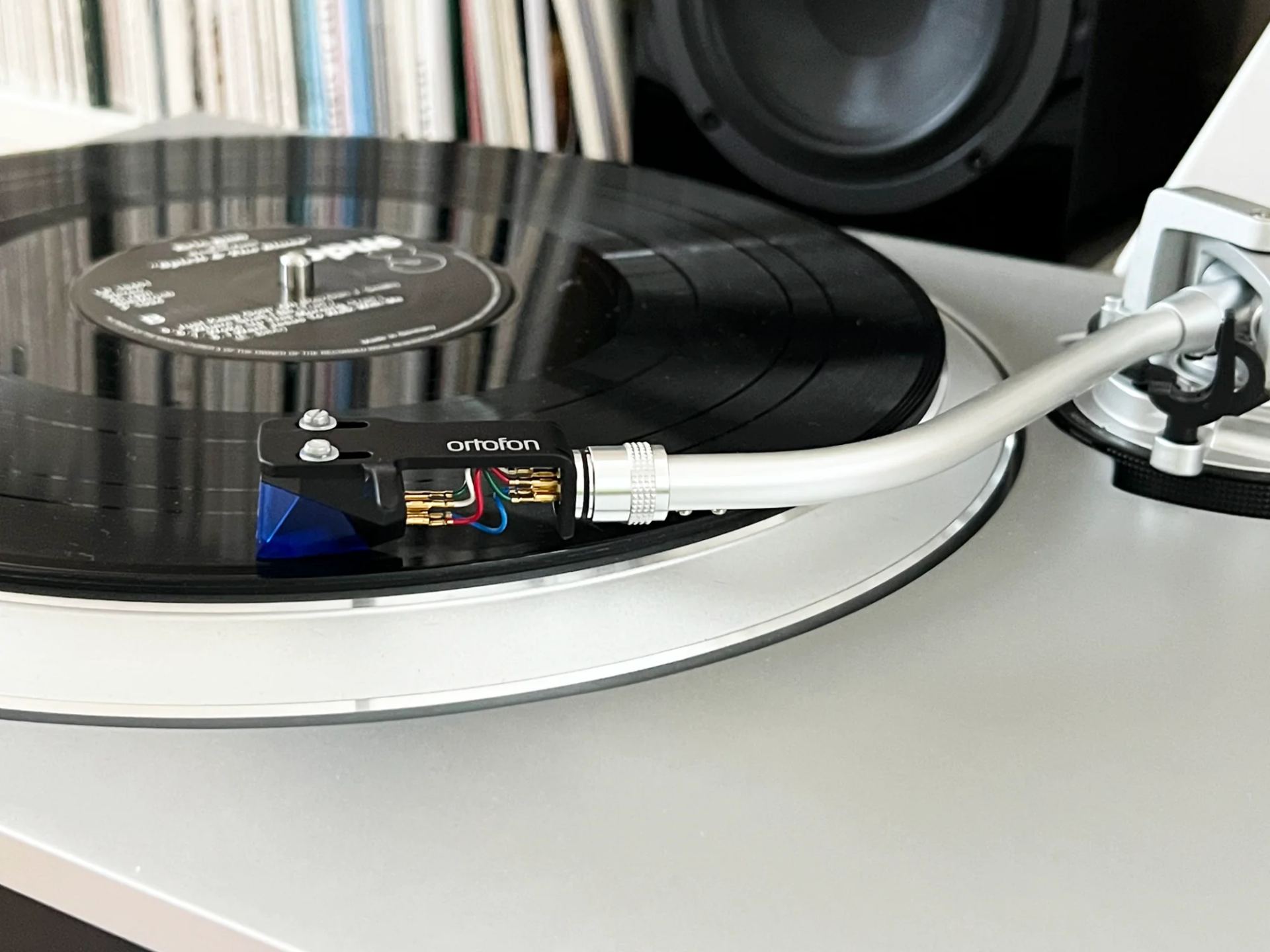
One of the 2M Blue’s major assets is its ease of installation. Weighing 7.2 grams and featuring the standard half-inch mount, it fits the vast majority of headshells on the market. The pre-threaded mounting holes considerably simplify assembly, eliminating the risk of stripped threads during installation.
The recommended tracking force of 1.8 grams (with an operating range of 1.6 to 2.0 grams) makes it compatible with virtually all modern tonearms. The 20-degree tracking angle matches the current standard, ensuring optimal operation without complex adjustments. The electrical characteristics—internal impedance of 1.3 kΩ and inductance of 700 mH—ensure perfect matching with phono preamps configured for MM cartridges, with the classic recommended load of 47 kΩ and 150–300 pF.
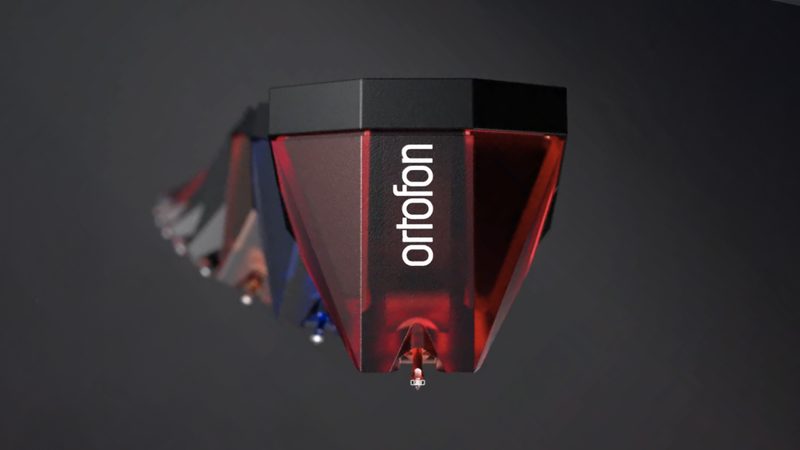
A particularly interesting aspect of the 2M series’ modular design deserves highlighting: the upgrade path. Since the cartridge bodies of the Red and Blue are identical, a user can start with a 2M Red and later transform it into a 2M Blue by simply replacing the stylus assembly. This evolutionary approach allows you to spread the investment over time while keeping the same cartridge body already perfectly aligned on the turntable.
No. Its 5.5 mV output and electrical characteristics make it compatible with all standard MM phono preamps. It works perfectly with integrated phono stages in hi-fi amplifiers as well as with separate preamps. No step-up transformer or special adaptation is required.
Technically possible, but this configuration will not fully exploit the high-end styli’s potential. The Bronze and Black bodies feature silver-plated copper wire coils and a different inductance (630 mH versus 700 mH), optimized for their respective styli. The improvement is real but remains partial compared with using the appropriate body.
A break-in period of about 20 hours allows the suspension to loosen up and optimizes performance. During this time, the sound may seem slightly tight or bright, particularly in the midrange. After break-in, the cartridge reveals its full potential with optimal tonal balance and increased smoothness.
Its neutrality and precision make it a versatile cartridge that excels across all repertoires. It particularly shows its superiority on complex recordings: modern jazz, symphonic music, progressive rock. Acoustic recordings greatly benefit from its ability to reproduce natural timbres and the ambience of venues.
Thierry
Very satisfied, improves the output quality of my turntable.
Comment from April 20, 2026 — Experience from January 18, 2026
Stefano
Excellent product with detailed sound, good low-end response and outstanding detail in the mids and highs.
Comment from February 15, 2026 — Experience from December 13, 2025
Julien
Replacing the original OM-10E on a THORENS TD 190-2, this 2M Blue delivers greater precision. The highs are more detailed without being aggressive, the mids are clearer, and the lows are more powerful yet very clean!
Comment from January 07, 2026 — Experience from December 26, 2025