

What are the differences between HDR10+ and Dolby Vision?
March 04, 2025
Contents
The world of televisions and modern screens is filled with technical acronyms that can quickly overwhelm consumers. Among these technologies, HDR (High Dynamic Range) has become an essential standard for improving image quality. But within this technology, two premium formats compete for supremacy: HDR10+ and Dolby Vision. What are their fundamental differences, and which one should you choose? Let’s dive into the technical and practical details of these two technologies.
The Basics of HDR
Before discussing the differences between HDR10+ and Dolby Vision, let’s briefly review what HDR is. This technology allows for a wider range of brightness and colors than traditional formats. In practice, HDR delivers brighter images, deeper blacks, and a richer color palette, resulting in a more realistic and detailed visual experience.
HDR10 is the first standardized version of HDR. It is an open format, royalty-free, that uses static metadata to define brightness and color parameters across the entire content. These metadata are applied uniformly from the beginning to the end of a video, which is its main limitation.

Static vs. Dynamic Metadata: The Fundamental Difference
The most significant distinction between HDR10+ and Dolby Vision lies in their approach to metadata:
-
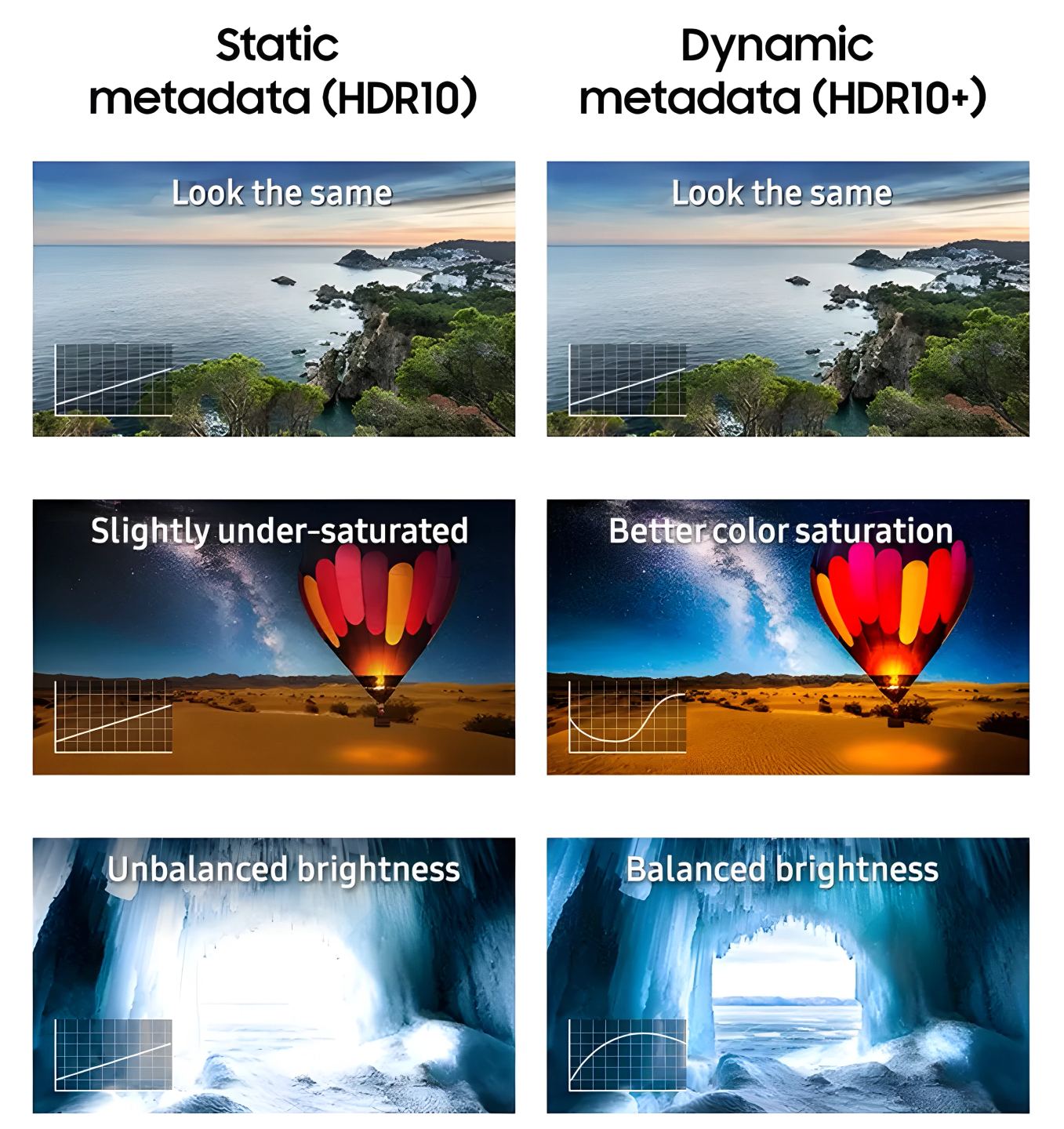
HDR10 uses static metadata that define brightness and color parameters only once for the entire content. This means a very bright scene will be treated the same way as a nighttime scene.
-
HDR10+ and Dolby Vision both use dynamic metadata, allowing brightness and color parameters to be adjusted scene by scene or even frame by frame. This approach offers greater precision and a richer, more detailed visual quality.
The use of dynamic metadata optimizes each scene individually, which is particularly beneficial for content with significant brightness variations or visually complex scenes.
Color Depth: A Theoretical Advantage for Dolby Vision
Another notable difference concerns the supported color depth:
-
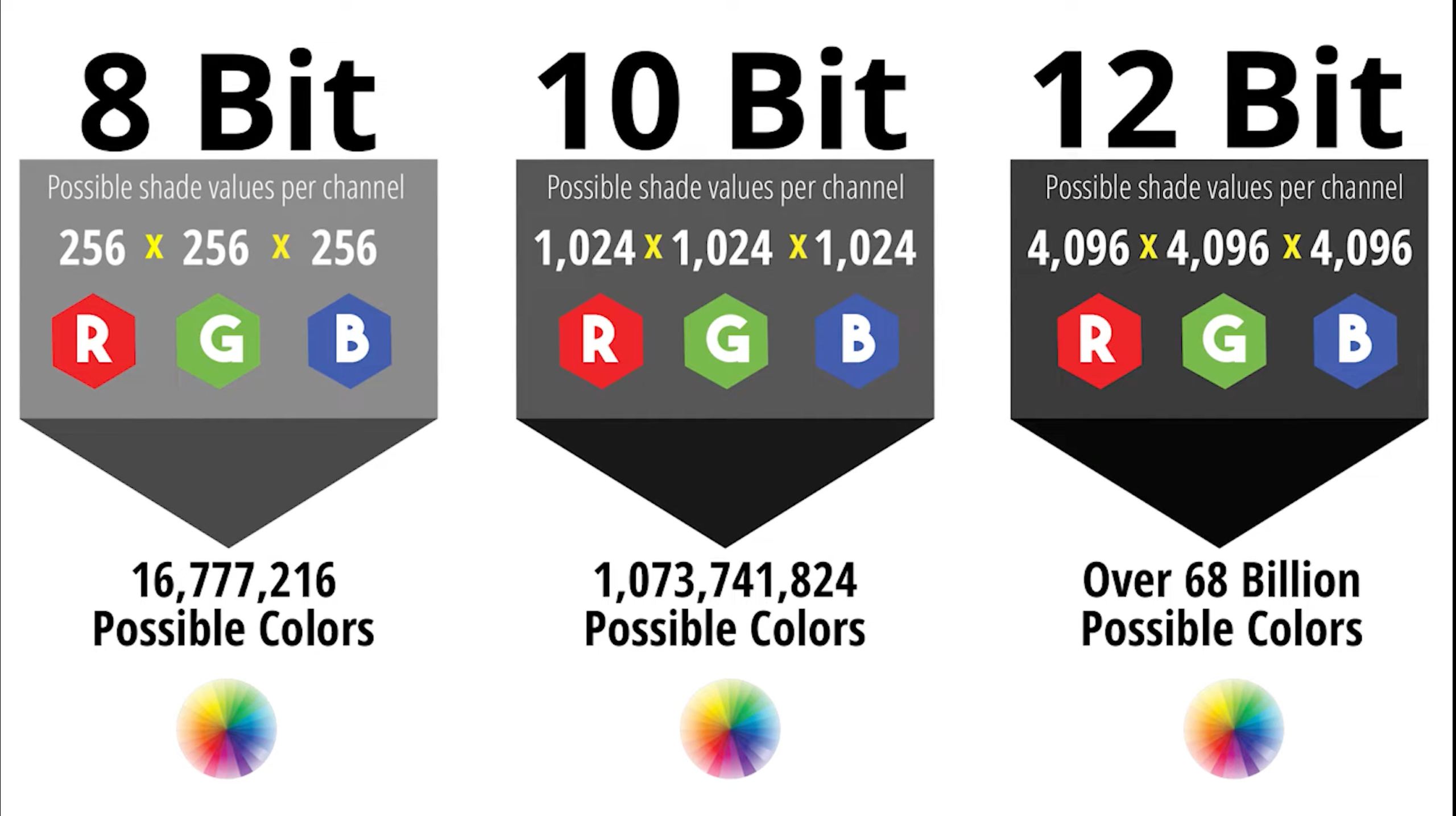
HDR10+ is limited to a color depth of 10 bits, which can display approximately 1.07 billion colors.
-
Dolby Vision supports a color depth of up to 12 bits, theoretically offering up to 68.7 billion possible colors.
It’s important to note that this difference may not be noticeable in all real-world scenarios, especially since most current content and screens are limited to 10 bits. However, as technology advances, this superior color depth could become more relevant.
Maximum Brightness: Different Ambitions
Both formats support high brightness levels but with different theoretical ceilings:
-
HDR10+ can reach a maximum brightness of 4,000 nits.
-
Dolby Vision can theoretically reach up to 10,000 nits.
These figures represent theoretical capabilities, as few consumer TVs today can achieve 10,000 nits. However, during CES 2025, Hisense announced two new models with a specified maximum brightness of 10,000 nits, which could begin to fully exploit Dolby Vision’s potential.
Technical Comparison of the Two Formats
To better understand the differences between these two formats, here’s a comparative table:
| Feature | HDR10+ | Dolby Vision |
|---|---|---|
| Metadata | Dynamic (scene by scene) | Dynamic (scene by scene) |
| Color Depth | 10 bits (1.07 billion colors) | Up to 12 bits (68.7 billion colors) |
| Theoretical Maximum Brightness | 4,000 nits | 10,000 nits |
| License | Open format, royalty-free | Proprietary, requires a paid license |
Adoption by TV Manufacturers
An important aspect that differentiates these two formats is their economic model:
-
HDR10+ is an open, royalty-free format initially developed by Samsung, Panasonic, 20th Century Fox, and Amazon Video. This lack of licensing fees makes it attractive for manufacturers looking to offer premium HDR experiences without additional costs.
-
Dolby Vision is a proprietary format created by Dolby Laboratories. Manufacturers wishing to use it must pay licensing fees, which can contribute to higher costs for compatible devices.
This difference in approach has led to a division in the industry: Samsung, Panasonic, Hisense, TCL, and Philips (in the UK) have adopted HDR10+, while LG and Sony have opted for Dolby Vision. Some manufacturers, like Hisense, TCL, Panasonic, and Philips, offer devices compatible with both formats.
Content Availability in 2025: The Gap Narrows
Content availability is a crucial factor in choosing between these two formats, and the year 2025 marks an important turning point in this battle:
-
HDR10 remains the most widely used format, and all modern devices support it.
-
Dolby Vision is available on many streaming services like Netflix, Disney+, and Apple TV+, as well as on 4K Blu-rays.
-
HDR10+ is gaining ground in 2025 with a major announcement at CES 2025: Disney+ will join the platforms supporting this format. This news is particularly significant for Samsung TV owners who cannot enjoy Dolby Vision.
In 2025, here is the list of streaming platforms supporting HDR10+:
- Amazon Prime Video (the first service to adopt it)
- Apple TV+ (since 2023 for its original content)
- Disney+ (announced at CES 2025, deployment date unspecified)
- Hulu
- Paramount+
- YouTube
- Google Play
Netflix remains notable for its absence, limiting itself to standard HDR10 and Dolby Vision.
It’s important to note that Dolby Vision-compatible devices can also play HDR10 content, but the reverse is not true. HDR10+ devices cannot play Dolby Vision content.
Real Impact on the Viewing Experience
Despite the technical differences, the real impact on the viewing experience depends on several factors:
- The quality of the HDR content
- The screen’s capabilities
- The viewing environment
Under ideal conditions, Dolby Vision can offer certain advantages thanks to its dynamic metadata and theoretically superior color depth. However, the difference is not always dramatic, especially on mid-range screens or with content not mastered to fully exploit Dolby Vision’s capabilities.
Many viewers find that well-mastered HDR10 content can be almost as good as Dolby Vision content, particularly without side-by-side comparison.
Specific Applications: Cinema vs. Video Games
Both formats have specific applications that can influence consumer choice:
-
Dolby Vision is making significant progress in the field of video gaming, with support on Xbox Series X and Series S, enhancing visuals for compatible games.
-
HDR10+ is also advancing in gaming, with the announcement at CES 2025 that Dragon Age: The Veilguard by Electronic Arts will be the first EA title to support HDR10+ Gaming. Additionally, around thirty GPUs from Intel’s ARC range will be added to the list of HDR10+ compatible devices.
For movie enthusiasts, Dolby Vision can offer an experience more faithful to the content creator’s vision thanks to its additional tools for colorists and content creators.
Popular products






You may also like to read
 Can a projector really replace a TV for everyday use?Comparisons and buying guides
 What are the best OLED TVs in 2026?Comparisons and buying guides
 Sony BRAVIA Theatre: up to €500 off wireless home cinema systemsOffers & promotions
 Tandem OLED: what is it and which TVs use it?Concepts and technologies
 Yamaha, Onkyo, Marantz, Denon: which home theater amplifier under €2,000 in 2026?Comparisons and buying guides
 Panasonic unveils its 2026 TVs: what are the differences between the W80C, W90C, W92C and W95C?Hi-fi and home cinema news








