

Powered Speakers & Studio Monitors
Powered studio monitors integrate their own amplification, unlike passive speakers that require an external amplifier. Designed to deliver a neutral, accurate sound, they are the reference tool in recording studios, home studios, and mixing setups. Their active amplification ensures optimal coherence between the drivers and the electronics. Learn more
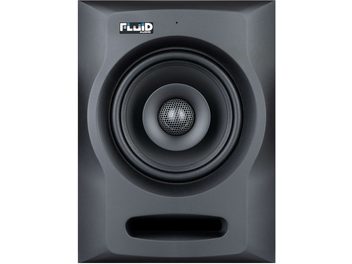
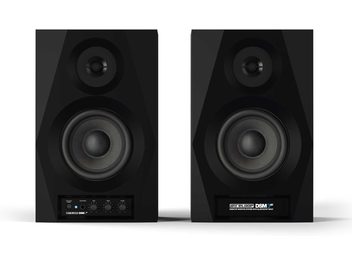
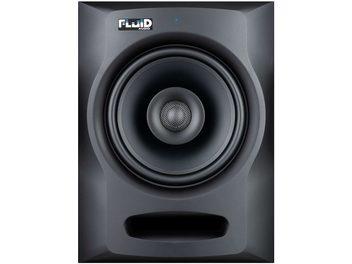
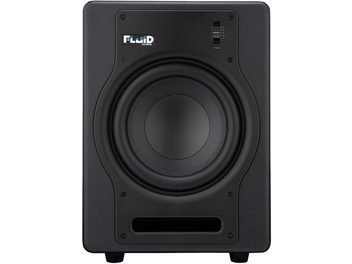
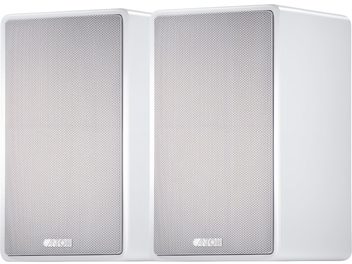
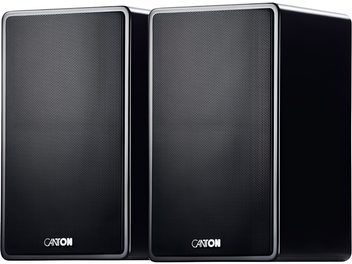
What is a powered studio monitor?
A powered studio monitor is distinguished by the integration of one or more amplification modules directly into the cabinet. This architecture eliminates the need for an external amp and ensures a perfect match between the transducers and the amplification circuits. Most modern models are bi-amped, featuring a dedicated amplifier for the woofer handling bass and mids, and a second for the tweeter managing the highs.
The advantages of active amplification
Active amplification offers several decisive advantages. First, the absence of a passive crossover preserves the integrity of the audio signal for a more transparent, dynamic listening experience. Next, bi-amping or tri-amping improves the reproduction of mid and high frequencies, as the amplifiers aren’t affected by the impedance variations of the bass driver. Finally, many models include DSP correction, allowing you to adjust the frequency response to suit the room’s acoustics.
Neutrality and sonic precision
These speakers aim for exemplary linearity across the entire frequency spectrum. No range is artificially emphasized, allowing sound engineers, musicians, and producers to work from a neutral reference point. This neutrality is essential for making sound decisions regarding EQ, compression, and spatialization during mixing and mastering.
Choosing the right size
Woofer size largely determines low-frequency extension: 4–5-inch models are suitable for small spaces, 6–7 inches for medium-sized rooms, while 8 inches and larger provide a broader listening experience for bigger volumes. Connectivity varies by model, typically offering XLR, jack, or RCA inputs to match different audio interfaces and mixing consoles.
Use cases and versatility
Beyond music production, powered studio monitors find their place in audio-video editing, podcast creation, sound design, or even domestic hi-fi listening for music lovers seeking faithful reproduction without coloration. Their compact format and easy setup make them ready-to-use solutions, particularly well-suited to home studio configurations.
Setup and optimization
To optimize performance, position them correctly in the listening area—ideally at ear height and forming an equilateral triangle with the listening position. Acoustic treatment of the room also helps you get the most from their precision by reducing unwanted reflections and resonances.