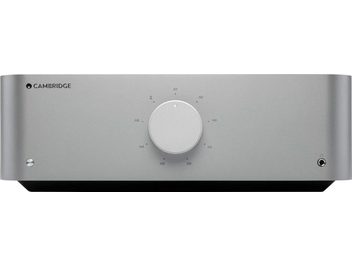
In 2018, to mark half a century of existence, Cambridge Audio gave its engineers an unusual mission: design without any budget constraints or technical compromises. The result bears the name of Professor Gordon Edge, father of the brand’s very first product in 1968. The EDGE NQ is its beating heart: both an analog preamplifier, a high‑resolution converter and a network player, it brings together in a single chassis the British vision of a modern, fully featured hi-fi system.
A monolithic block of aluminum with clean lines
The EDGE NQ makes its presence felt with its 46 cm width, 40.5 cm depth and 10.2 kg on the scale. This generous size is not just an aesthetic choice: it allows the different circuit sections to be isolated and accommodates an oversized toroidal transformer for flawless power delivery.
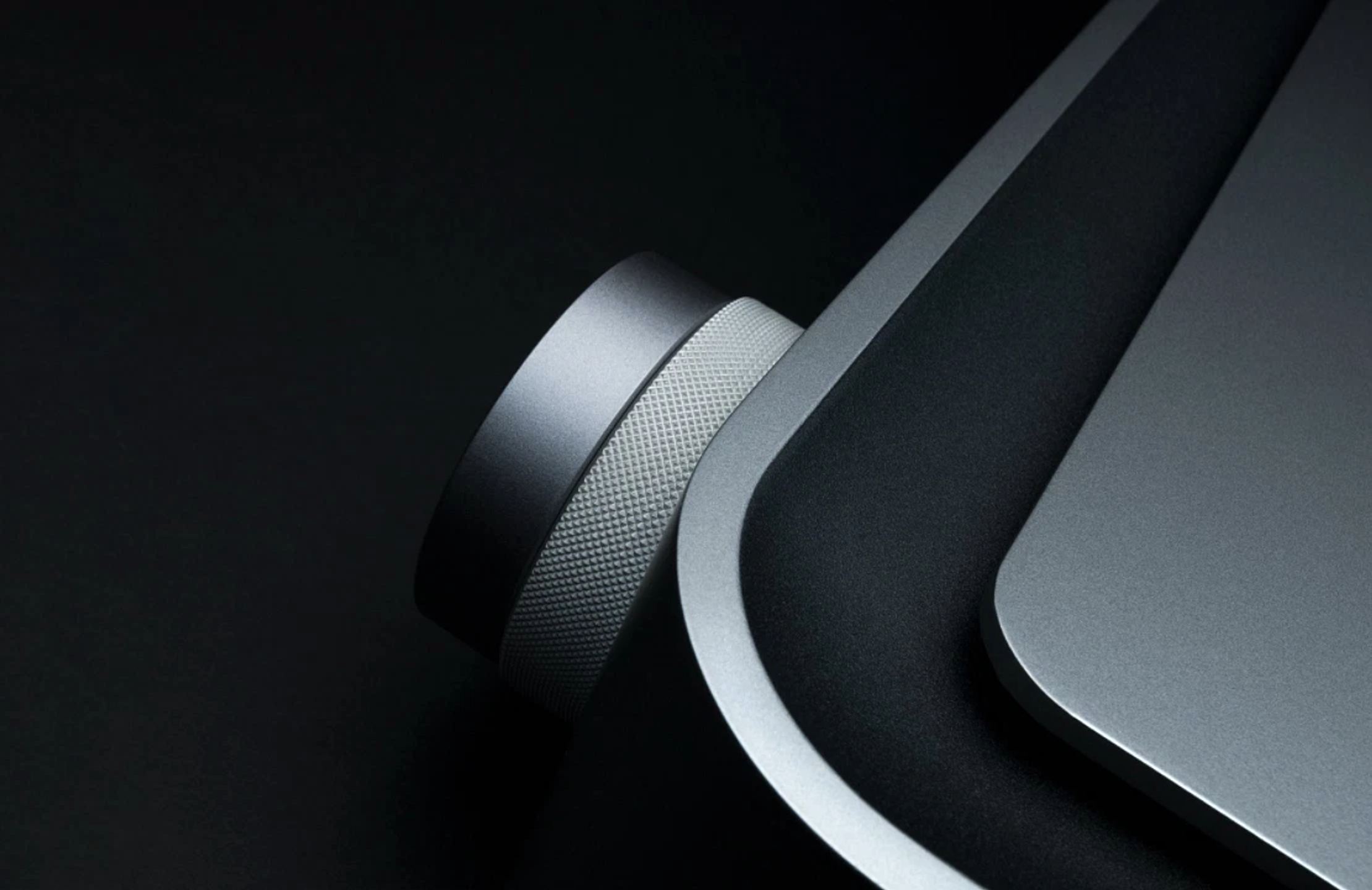
The chassis features 8 mm thick bead‑blasted aluminum panels, bent into a “U” with rounded edges that give the whole unit a look that is both massive and soft. The top plate, slightly raised and damped by a layer of bituminous material, helps absorb vibrations while providing discreet vents for cooling. On the sides, a subtle detail reveals the GPS coordinates of Cambridge Audio’s London headquarters.
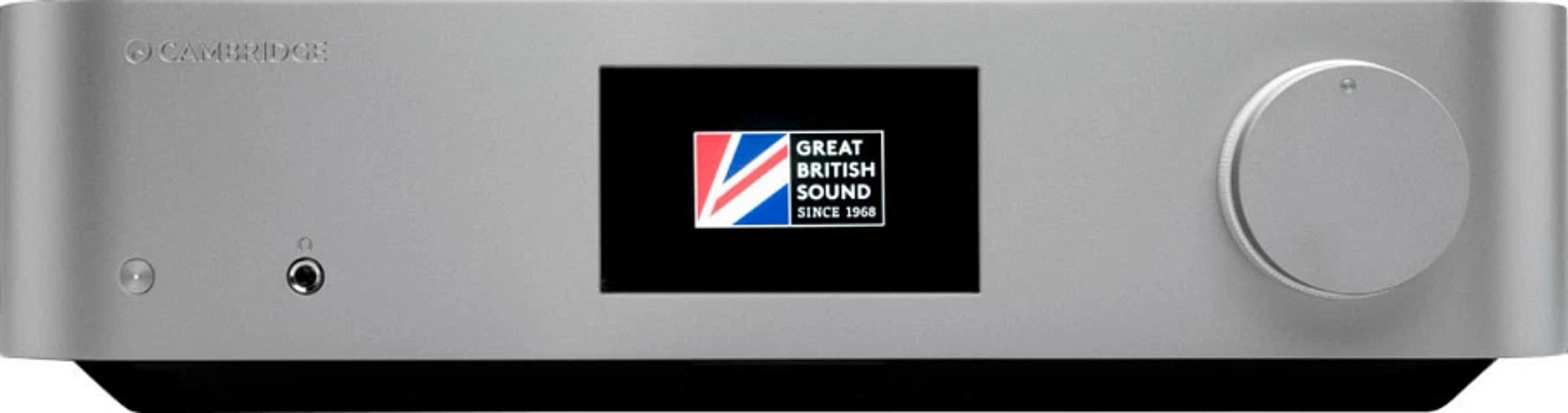
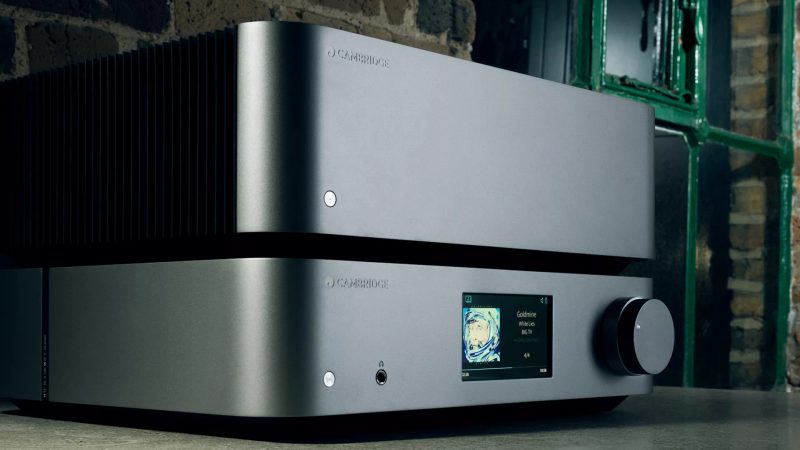
The front panel is pared down to the essentials: a well‑sized color display for album artwork and playback information, a power button, a 6.35 mm headphone jack, and the famous dual‑ring control knob. The latter, assembled from 31 machined parts in the UK, combines an outer ring for volume and an inner ring for source selection. Operation is fluid and precise, with a sense of quality that immediately sets the unit apart from more commonplace products.
A direct‑coupled, capacitor‑free topology
Cambridge Audio has chosen to eliminate capacitors from the signal path. This DC‑coupled topology, laid out on a single circuit board, is designed to preserve tonal integrity at every stage of the audio chain. Volume control relies on discrete solid‑state components rather than a traditional potentiometer, ensuring perfect channel balance at any listening level.
Measurements confirm the effectiveness of this approach: total harmonic distortion remains below 0.0008% across the entire audible bandwidth, from 20 Hz to 20 kHz. Frequency response does not deviate by more than 0.1 dB over this same range, while channel crosstalk drops below -100 dB at 1 kHz. These figures reflect a design in which every component has been individually selected through listening sessions, in keeping with the company’s tradition.
Analog sources connected to the RCA or balanced XLR inputs retain their nature throughout the path to the preamplified outputs. The EDGE NQ can thus serve as a pure preamplifier for sources such as a CD player or a turntable equipped with its own phono stage.
StreamMagic and high resolution up to DSD256
The network playback module, developed in‑house under the code name “Black Marlin”, is the latest evolution of the StreamMagic platform that Cambridge Audio has refined over several generations. Its fast chipset supports PCM files up to 32‑bit/384 kHz and DSD up to DSD256 via the USB Type‑B input—resolution that far exceeds even the most demanding studio recordings.
The unit integrates natively with major streaming services: Spotify Connect, Tidal, Qobuz and thousands of Internet radio stations are directly accessible via the StreamMagic app for iOS and Android. Chromecast is built in to stream audio from hundreds of compatible apps, while AirPlay lets Apple users stream without any particular configuration. Bluetooth 4.1 with aptX HD support provides a wireless option for mobile sources with higher quality than standard Bluetooth. Roon Ready certification also allows the EDGE NQ to be used as a playback endpoint within a multiroom system managed by this software.
Connectivity designed to centralize all sources
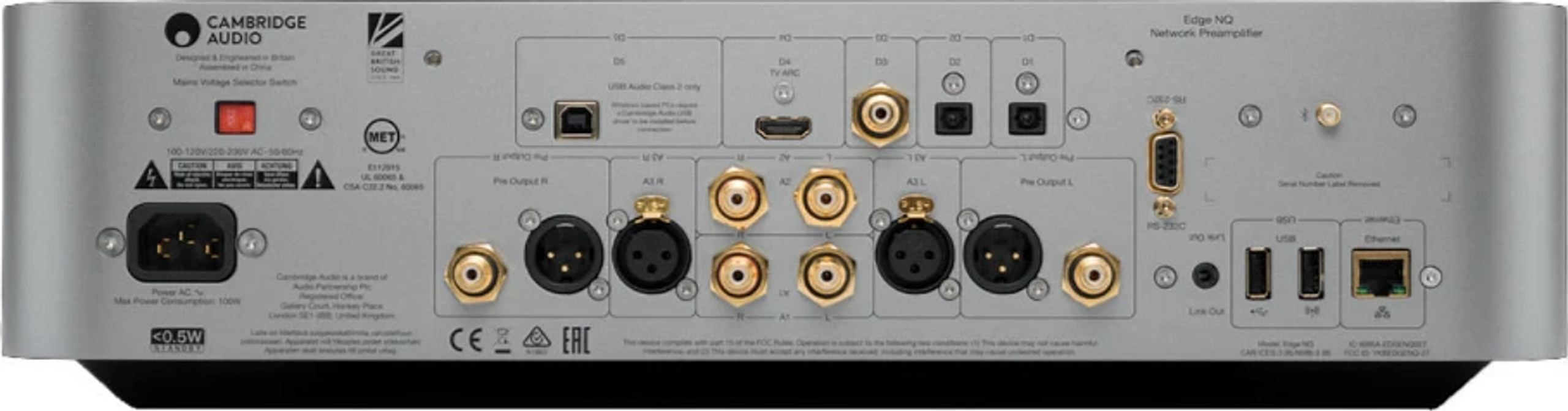
The rear panel offers a wide variety of connections, making the EDGE NQ the nerve center of a complete audio system. On the digital side, there is one optical input, two coaxial inputs and a USB Type‑B input for connection to a computer. The HDMI ARC input deserves special attention: it allows you to retrieve stereo PCM audio from a TV and use the EDGE NQ as the main audio interface in a system that combines music and home cinema. A 5 V powered USB Type‑A port can host a USB stick or external hard drive for playback of locally stored files.
Analog sources are served by three inputs: two pairs of unbalanced RCA connectors and one pair of balanced XLRs. For outputs, the unit provides both RCA and XLR connectors for connection to a power amplifier. The dedicated app allows you to disable the preamplifier section and use the EDGE NQ solely as a fixed‑level source, a useful option if you want to connect it to an integrated amplifier rather than a power amp.
Network connection can be made via wired Ethernet RJ45 or 2.4 GHz Wi‑Fi using the supplied dongle. The included Bluetooth antenna attaches to the rear of the unit.
Integration with EDGE series amplifiers
The EDGE NQ is designed to work in tandem with amplifiers from the same series. The supplied Edge Link Cable allows power on/off to be synchronized with the EDGE W power amplifier or the EDGE M monoblocks. This link simplifies everyday use: a single remote control or the mobile app is all you need to manage the entire system.
The supplied remote, made of metal and quite substantial in weight, includes four preset buttons to store source/volume combinations. However, the step‑based volume control from the remote lacks the finesse offered by the app or the front‑panel control knob—a point to consider if you plan to control the system mostly from a distance.
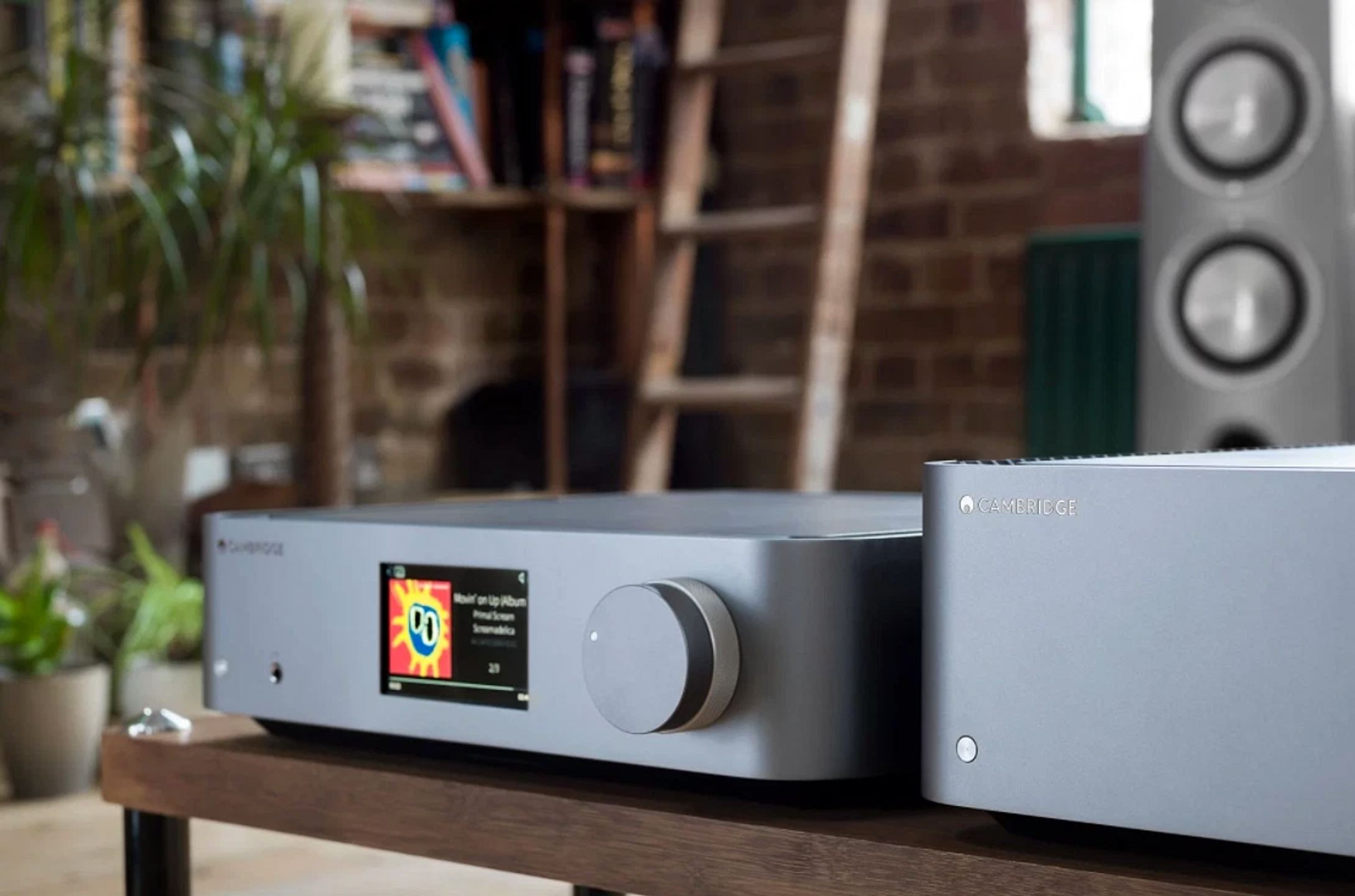
The EDGE NQ can also be physically stacked with the EDGE W: the slightly recessed underside of the amplifier slots onto the top plate of the preamplifier to form a visually coherent unit.
A headphone output for personal listening
The front‑panel headphone jack, in 6.35 mm format, provides an alternative for solitary listening sessions. It benefits from the same care given to the rest of the circuit, with enough power to drive most hi-fi headphones on the market.