
Frederic
Perfect, the sound is really excellent.
Comment from January 29, 2026 — Experience from January 16, 2026
Automatically translated — Show original (French)
Parfait, le son est vraiment excellent.

The number 1 in classical music and hi-fi. It is a benchmark in the field of classical music and hi-fi, as well as the distinction it awards to the best devices each year
The Yamaha A-S1200 embodies a unique marriage of vintage aesthetics and modern technology, delivering a 90-watt stereo amplification that is both powerful and refined. Its backlit LED VU meters, 625 VA toroidal transformer, and Mechanical Ground Concept architecture all testify to meticulous attention to build quality and sound reproduction. True to Yamaha’s cherished Natural Sound philosophy, the A-S1200 offers a sound signature that is both warm and precise, asserting its character in the €2,000–€3,000 range, where it stands out for its charm and performance.
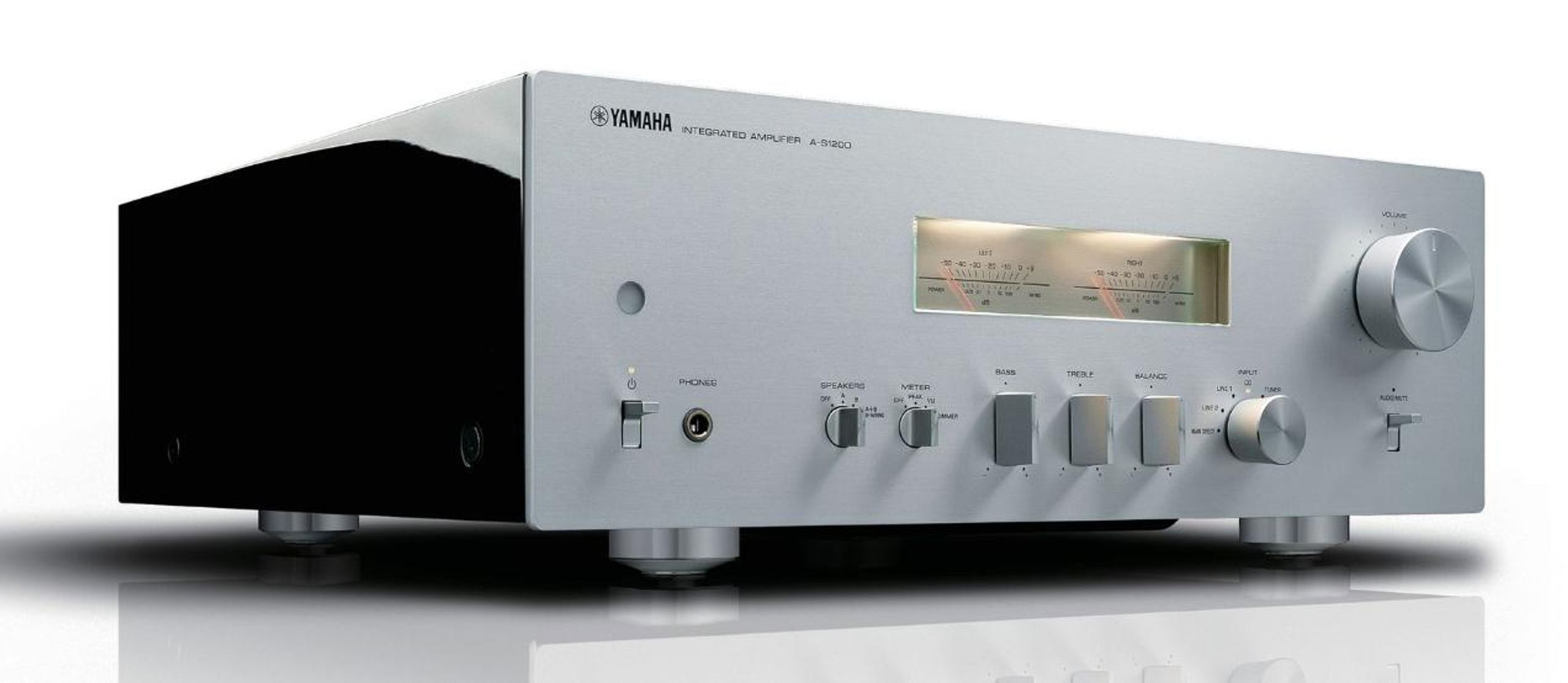
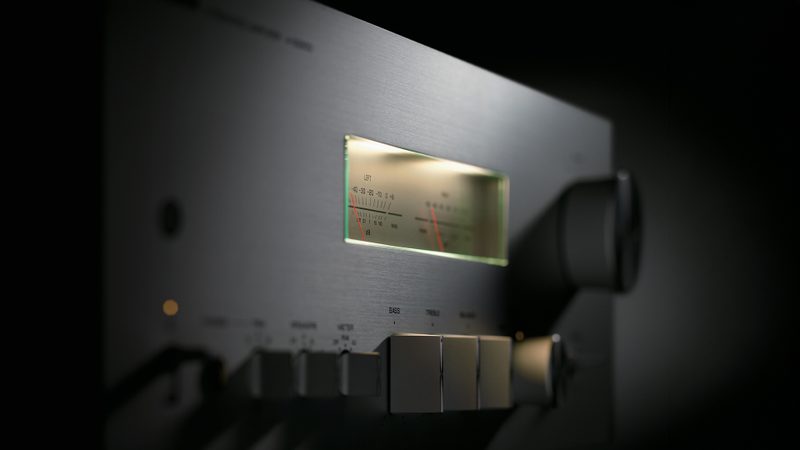
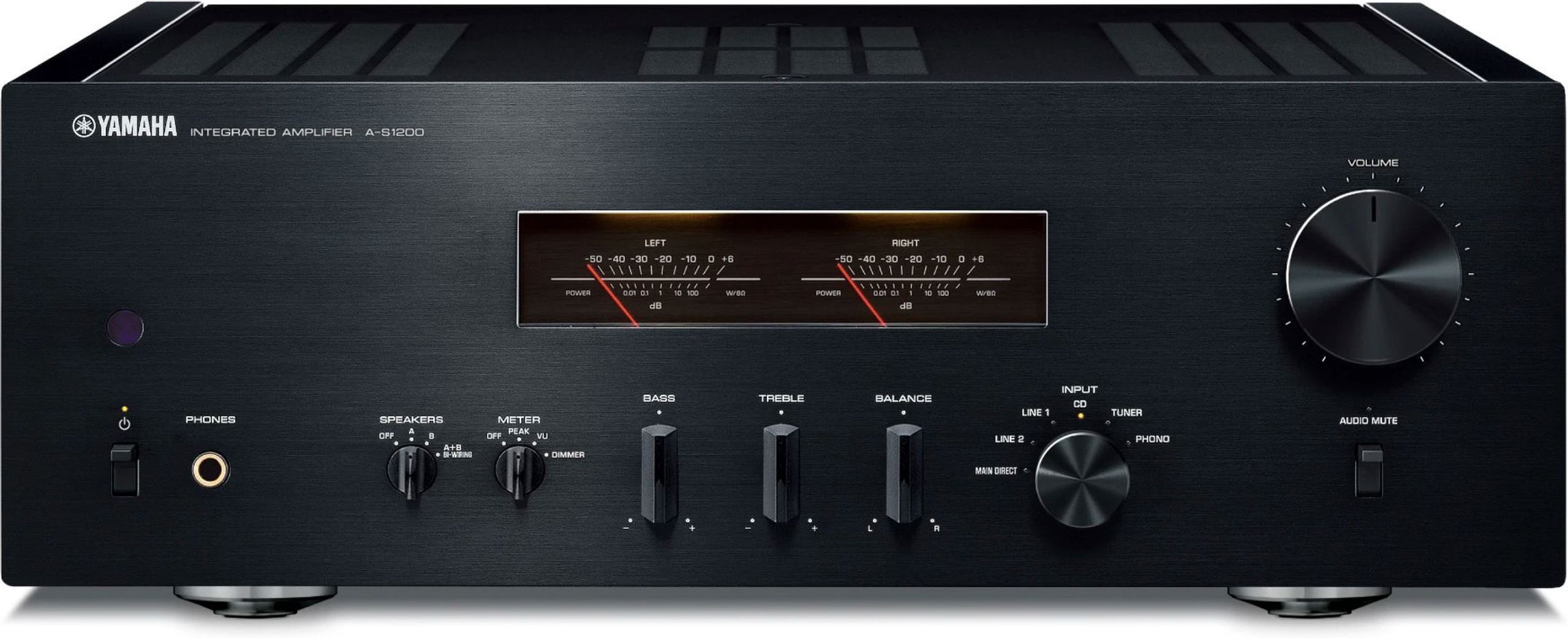
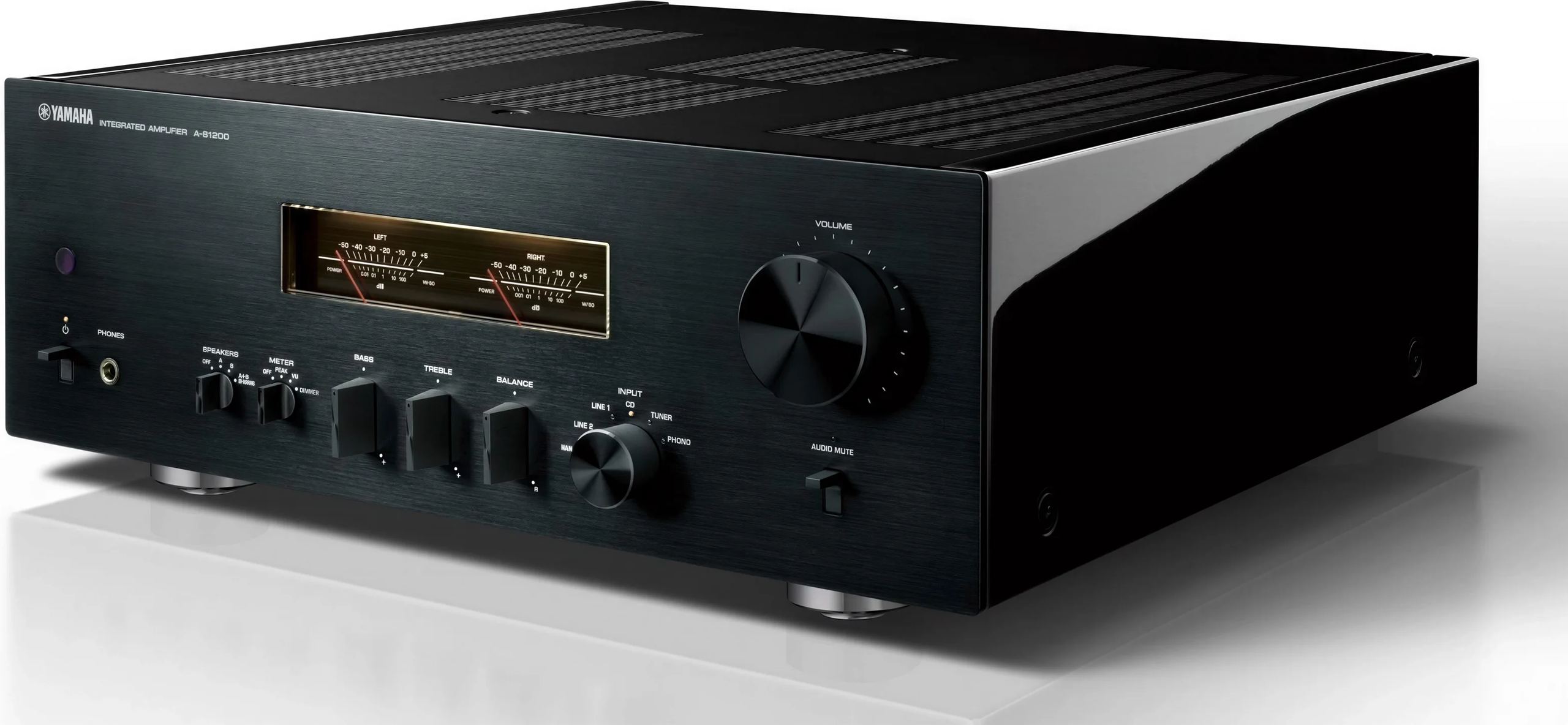
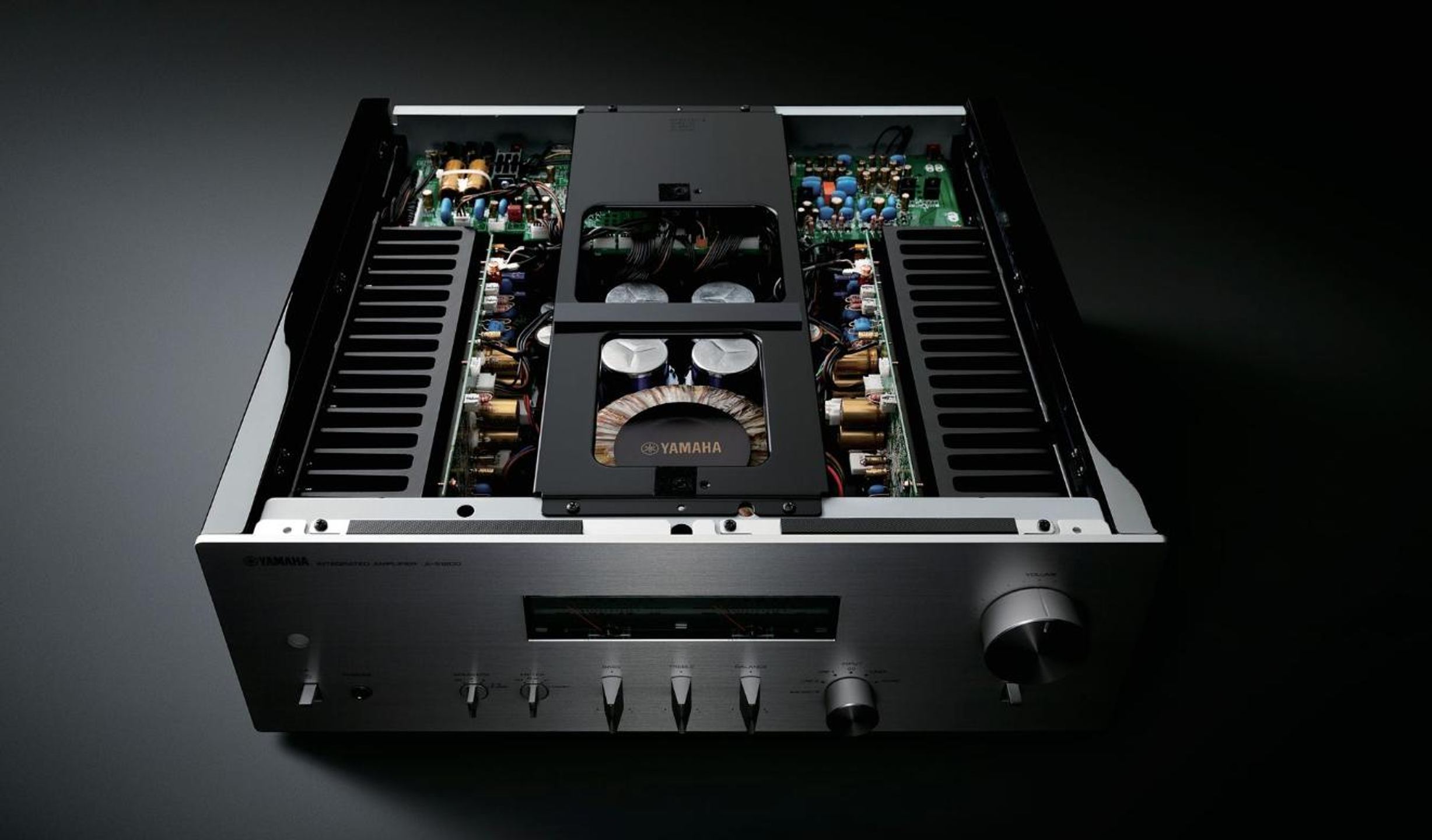
The A-S1200 first impresses with its generous dimensions (435 x 157 x 463 mm) and substantial weight of 22 kg, which reflect an uncompromising build. The thick brushed aluminum front panel proudly features two central VU meters, backlit by LEDs and switchable between VU mode and power display, with adjustable brightness. These meters are not merely decorative: they visually translate the dynamics and impulses of the music, creating a visual connection to the sound flow.
The black, piano-lacquered wooden side panels directly evoke Yamaha’s heritage in instrument making, particularly that of concert grand pianos. This association is no coincidence: it recalls that Yamaha has been building instruments since 1887, when Torakusu Yamaha first repaired and then built his first harmonium. This century-old expertise in understanding timbre and musical acoustics infuses the design of the A-S1200.
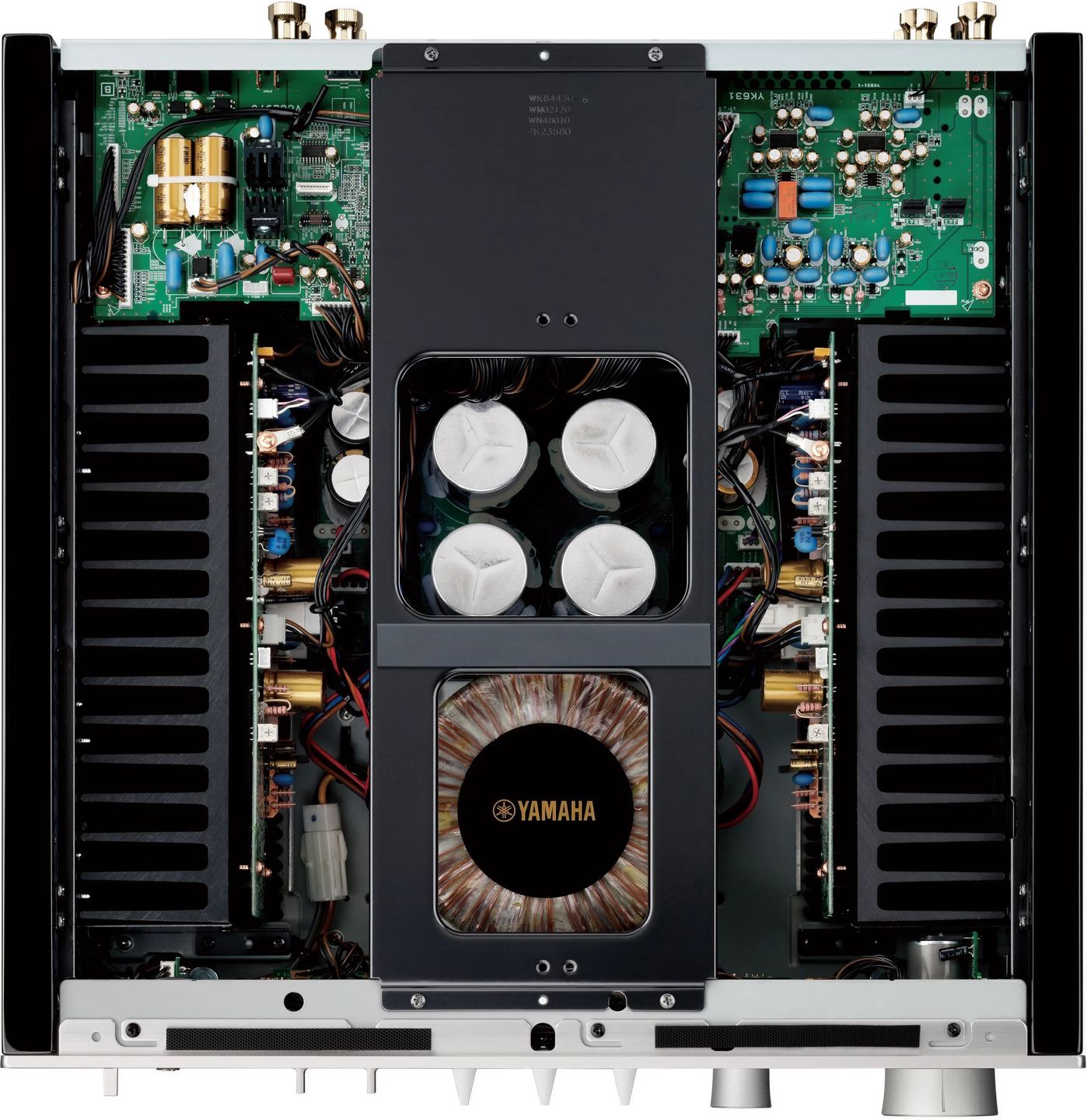
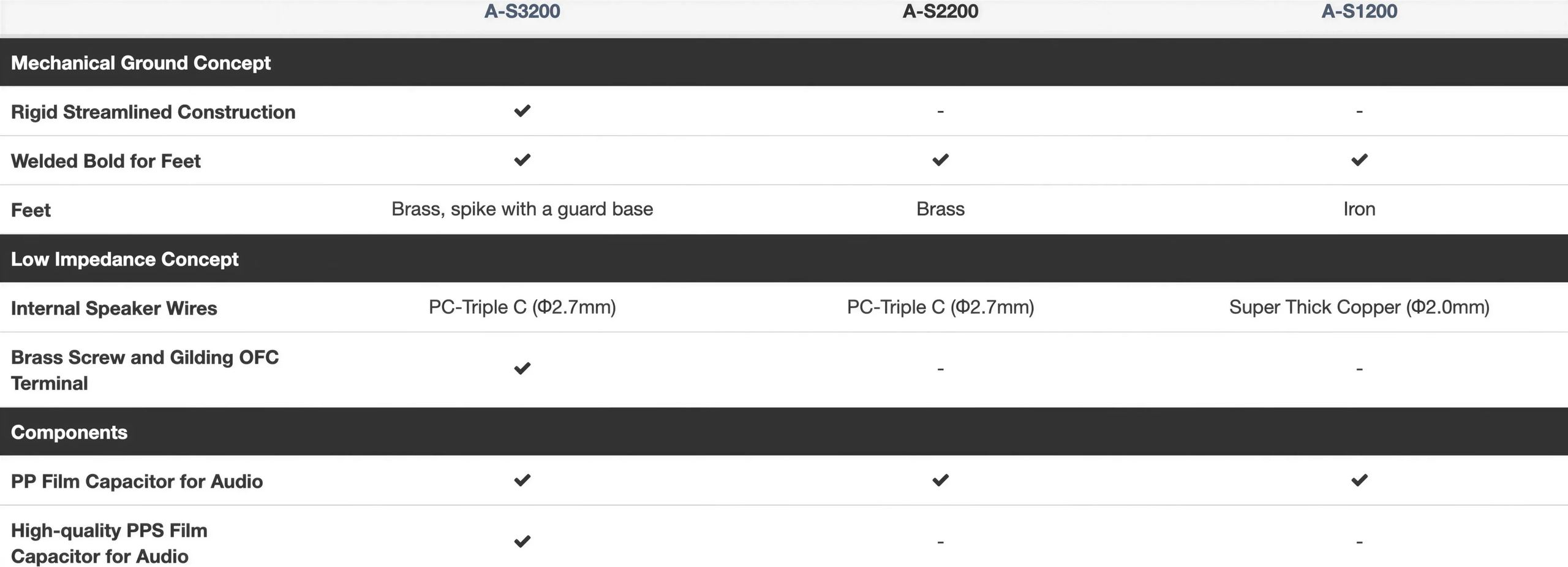
The chassis rigorously follows the Mechanical Ground Concept principle, inherited from the higher-end A-S2200 and A-S3200 models. The chrome-plated feet are directly welded to the main chassis, while the massive heat sinks, power transformer, and filter capacitors are bolted directly onto this structure. This integrated mechanical architecture is designed to eliminate parasitic vibrations, promising more articulated and rhythmic bass reproduction. The thick chromed iron feet complete this anti-vibration setup.
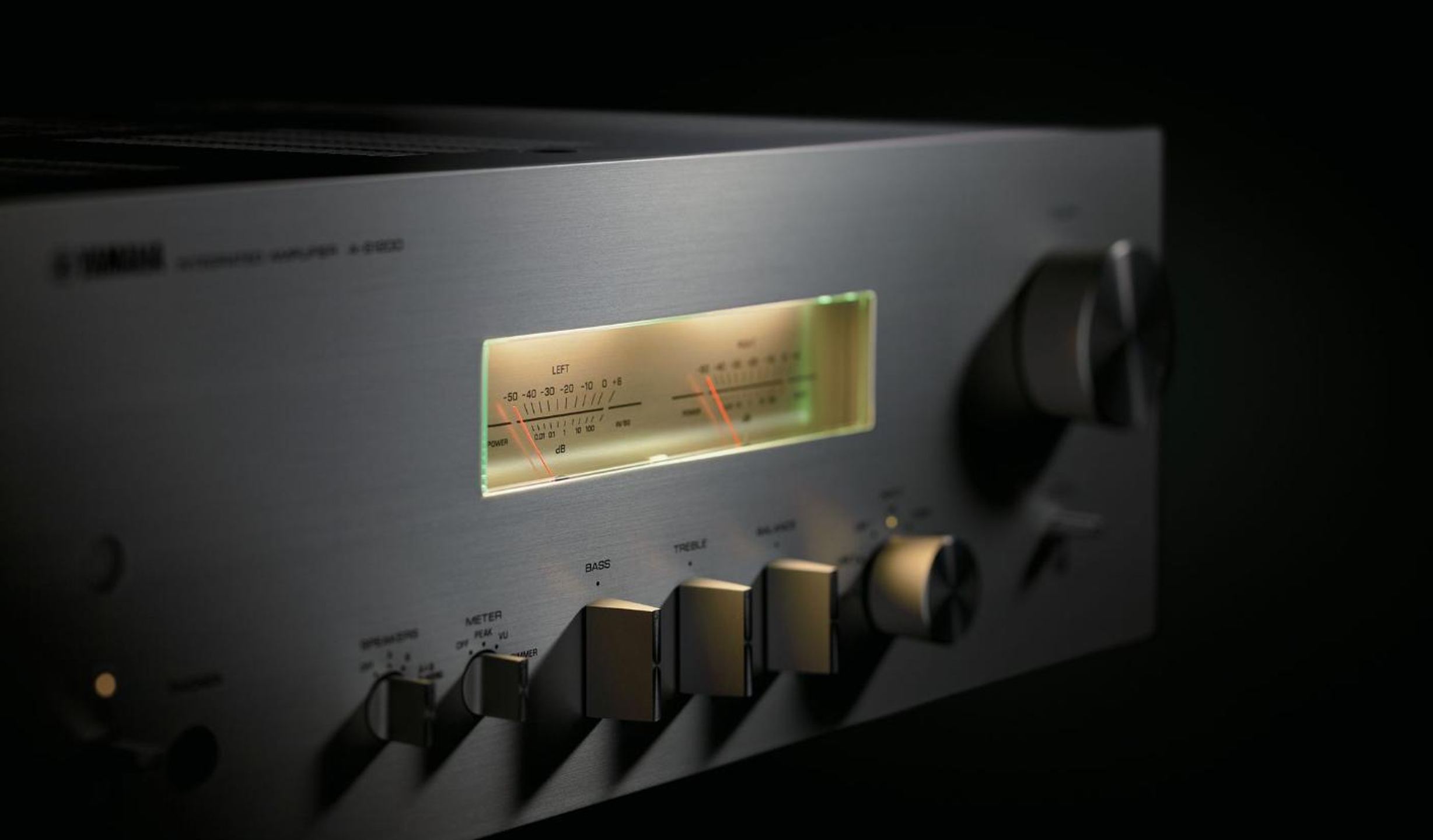
At the heart of the unit sits a 625 VA toroidal transformer, a component usually reserved for flagship models. This technical choice is significant: unlike conventional EI transformers, the toroidal topology minimizes magnetic leakage and optimizes energy efficiency. Paired with a bank of Nichicon capacitors totaling 18,000 μF and high-quality PP film capacitors, this transformer ensures a stable power supply capable of responding instantly to the most demanding current peaks.
The power stage uses Yamaha’s patented Floating Balanced Power Amplifier technology. This particular architecture uses only N-channel MOSFET transistors on both the positive and negative sides of the amplification, whereas traditional designs employ complementary N and P devices. This perfect symmetry, combined with the electrical isolation of the power circuit from ground (hence the term “floating”), aims to reduce background noise and distortion.
The internal wiring uses large-diameter conductors (2.0 mm) in accordance with a low-impedance philosophy that runs throughout the design. This approach, combined with a symmetrical layout for the left and right channels, seeks to preserve soundstage openness and spatial precision. The class AB configuration ensures thermally stable operation while maintaining reasonable energy efficiency.
The built-in phono stage supports both moving magnet (MM) and moving coil (MC) cartridges, with fixed input impedances of 47 kΩ and 50 Ω respectively. While the latter value may seem limiting for some modern MC cartridges that prefer 100 Ω or more, it remains suitable for many classic models. The specified signal-to-noise ratio reaches 96 dB in MM and 90 dB in MC, respectable figures that allow for comfortable vinyl listening.
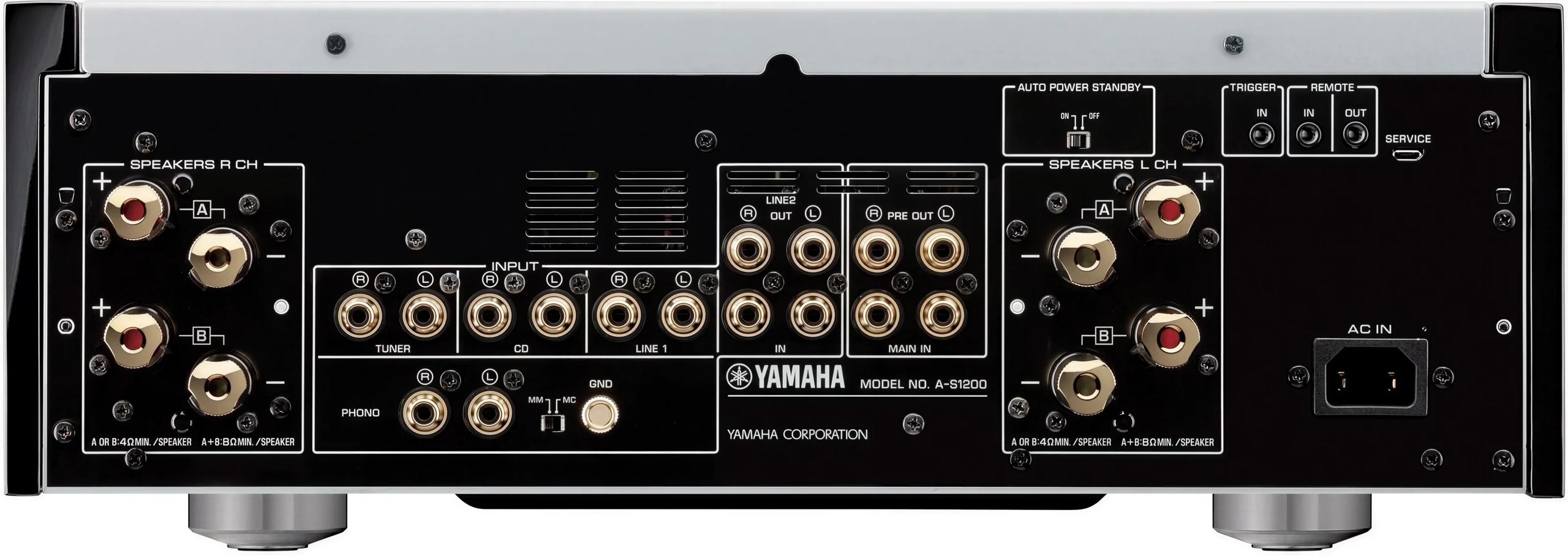
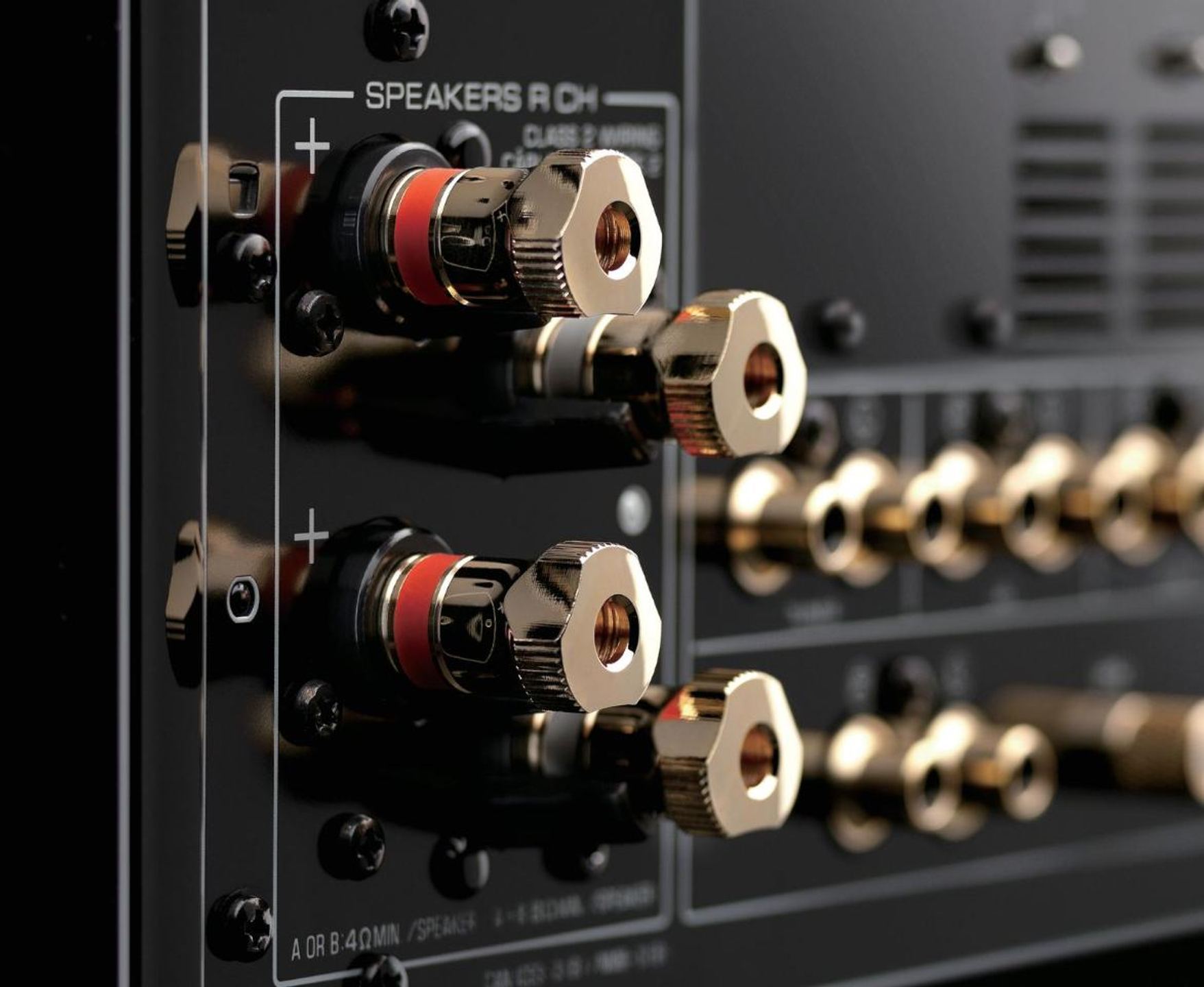
The A-S1200 fully embraces its role as a pure analog amplifier, with no digital inputs, signal processing, or streaming functions. This minimalist approach translates into a rear panel that is well-equipped yet coherent: five RCA line inputs, one of which can operate in Main In mode to use the unit as a power amplifier only, plus a switchable MM/MC phono input.
The loudspeaker terminals, machined from solid brass, provide two sets (A and B) for bi-wiring or powering two pairs of speakers. Their ergonomic shape makes hand-tightening easy for an optimal connection. Outputs also include a preamplifier output (Pre Out) for adding a subwoofer or external power amplifier, as well as a line output (Line 2 Out) for recording.
Modern convenience features have not been forgotten: 12 V trigger input and output for integration into a home automation system, a deactivatable Auto Power Standby function that puts the device into standby after 8 hours of inactivity, and an aluminum remote control with a metal front. The latter, with a range of 6 meters and a 60-degree angle, also controls other Yamaha devices in the range.
The tone controls adopt the rectangular design characteristic of Yamaha since the 1970s. The bass and treble potentiometers provide ±9 dB adjustment with well-chosen turnover frequencies (350 Hz and 3.5 kHz). In the center position, these controls are completely bypassed, ensuring a direct signal path. Balance control and a mute button (20 dB attenuation) round out the usual functions, while a discrete headphone amplifier powers the 6.35 mm front-panel jack.
Listening to the A-S1200 reveals a strong sonic personality that diverges from today’s standards of absolute transparency. The amplifier favors density and focus rather than maximum soundstage airiness. This approach creates a concentrated presentation, almost taut in the midrange, where each musical element benefits from precise outlines and palpable substance.
The bass is undeniably one of the unit’s strong points. Deep, articulate, and endowed with remarkable physical impact, it gives rhythmic passages a solid and engaging foundation. This authority in the lower spectrum can sometimes dominate the overall tonal balance, particularly with speakers that are already generous in this range. The tone controls then prove very useful for adjusting the balance according to taste and room acoustics.
The midrange, the domain of the beryllium diaphragm in the brand’s legendary NS-1000M, benefits from accurate and informative reproduction. Voices retain their natural texture, and acoustic instruments their characteristic timbre. The treble remains civilized, without excessive brightness, avoiding listening fatigue during long sessions.
This signature is particularly well-suited to music that requires authority and density: rock, electronic music, and jazz fusion find in the A-S1200 a partner capable of conveying their energy. Fans of large-scale classical music will appreciate its ability to maintain coherence during orchestral tuttis. Conversely, those seeking the airy delicacy of a string quartet or the lightness of a piano sonata may find the presentation a bit too massive.
The major change lies in the adoption of a 625 VA toroidal transformer replacing the EI transformer used in the previous model. This modification improves bass control and overall dynamics. The dimensions and weight are also greater, reflecting an even more robust construction. Sonic performance remains in the same vein, with a slight improvement in dynamic power.
Thanks to its oversized heat sinks and class AB design, the A-S1200 maintains a moderate operating temperature even after several hours of listening. The ventilation openings on the top must nonetheless remain unobstructed. A clearance of 10 cm above and on the sides is sufficient to ensure adequate ventilation under normal usage conditions.
The Main In input completely bypasses the preamplifier stage and the volume controls, turning the A-S1200 into a pure power amplifier. This function makes it possible to integrate the unit into a home-cinema system by connecting the pre-out outputs of an AV amplifier, or to use a high-end external preamplifier. Volume is then controlled by the source device.
Yes, both sets of terminals can be activated simultaneously to power two pairs of speakers or to bi-wire a single pair. However, note that using two pairs of speakers at the same time halves the impedance seen by the amplifier. Make sure that the resulting impedance remains above 4 ohms to avoid overloading.
The A-S1200’s phono stage offers very respectable performance that will suit the majority of vinyl setups. Its high signal-to-noise ratio and musicality make it an excellent starting point. Vinyl purists with high-end cartridges can nevertheless benefit from a specialized external phono preamp offering more impedance and capacitance settings, particularly for demanding MC cartridges.
Based on reviews from customers who purchased this product, summarised by AI
Frederic
Perfect, the sound is really excellent.
Comment from January 29, 2026 — Experience from January 16, 2026
Noel
Very beautiful amp with a vintage look.
After a short break-in period the sound becomes very good,
used with CM8 S2 speakers.
I recommend it for its neutrality.
Nothing but pure pleasure.
Comment from December 08, 2025 — Experience from November 27, 2025
Pascal
Excellent amp capable of driving any speakers.
Comment from June 16, 2025 — Experience from May 29, 2025