

Audio Technica AT-VMN95C
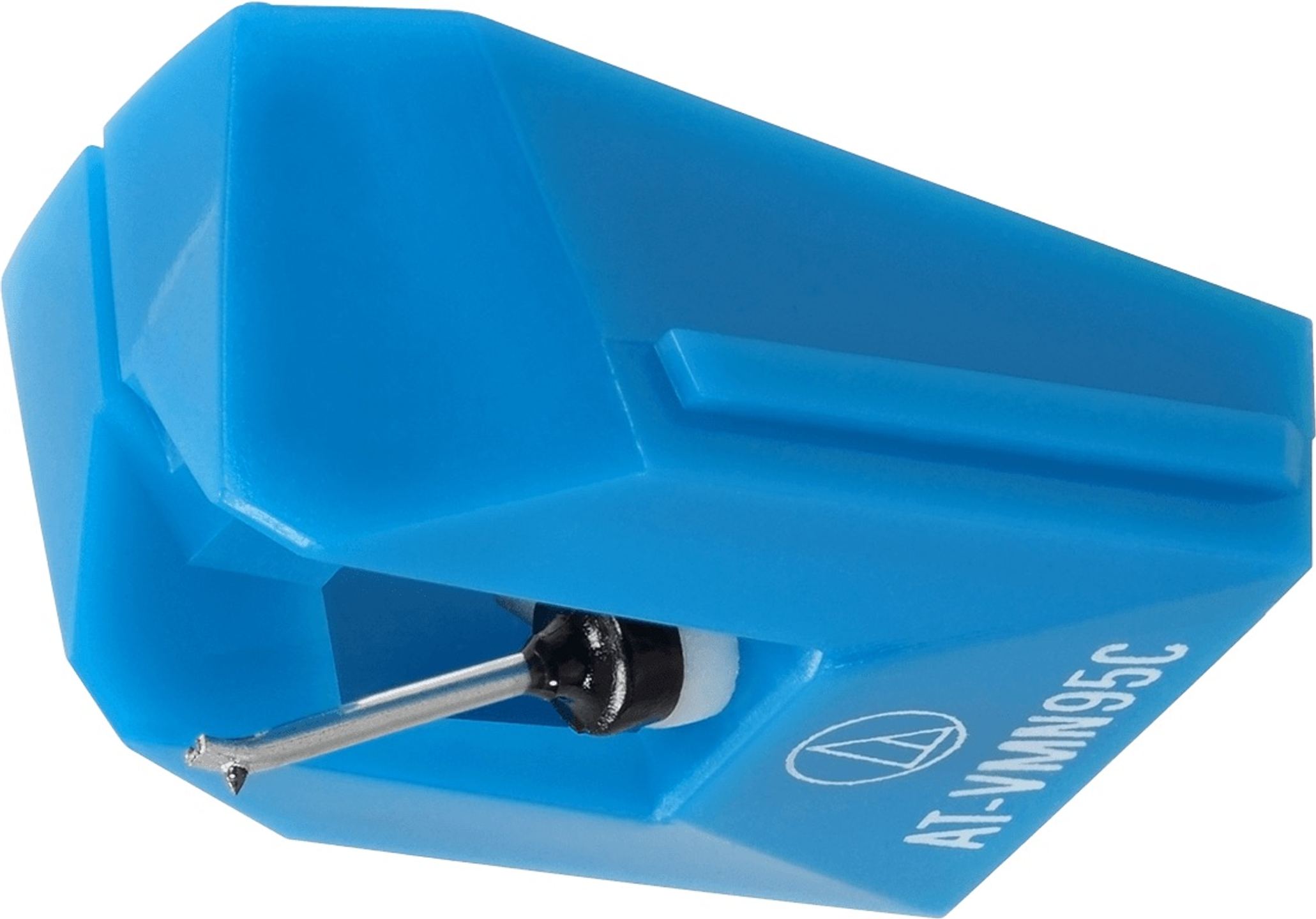
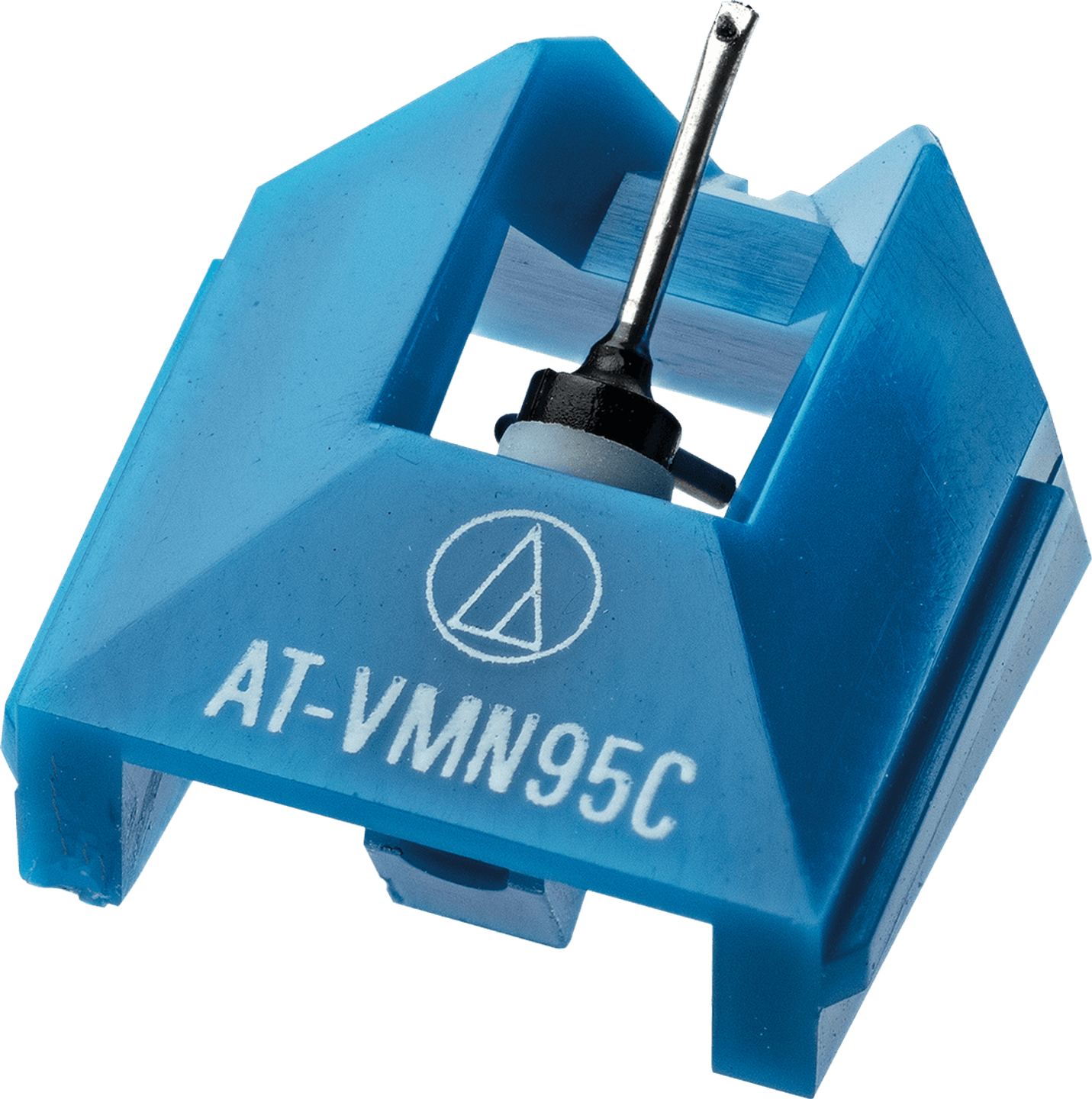
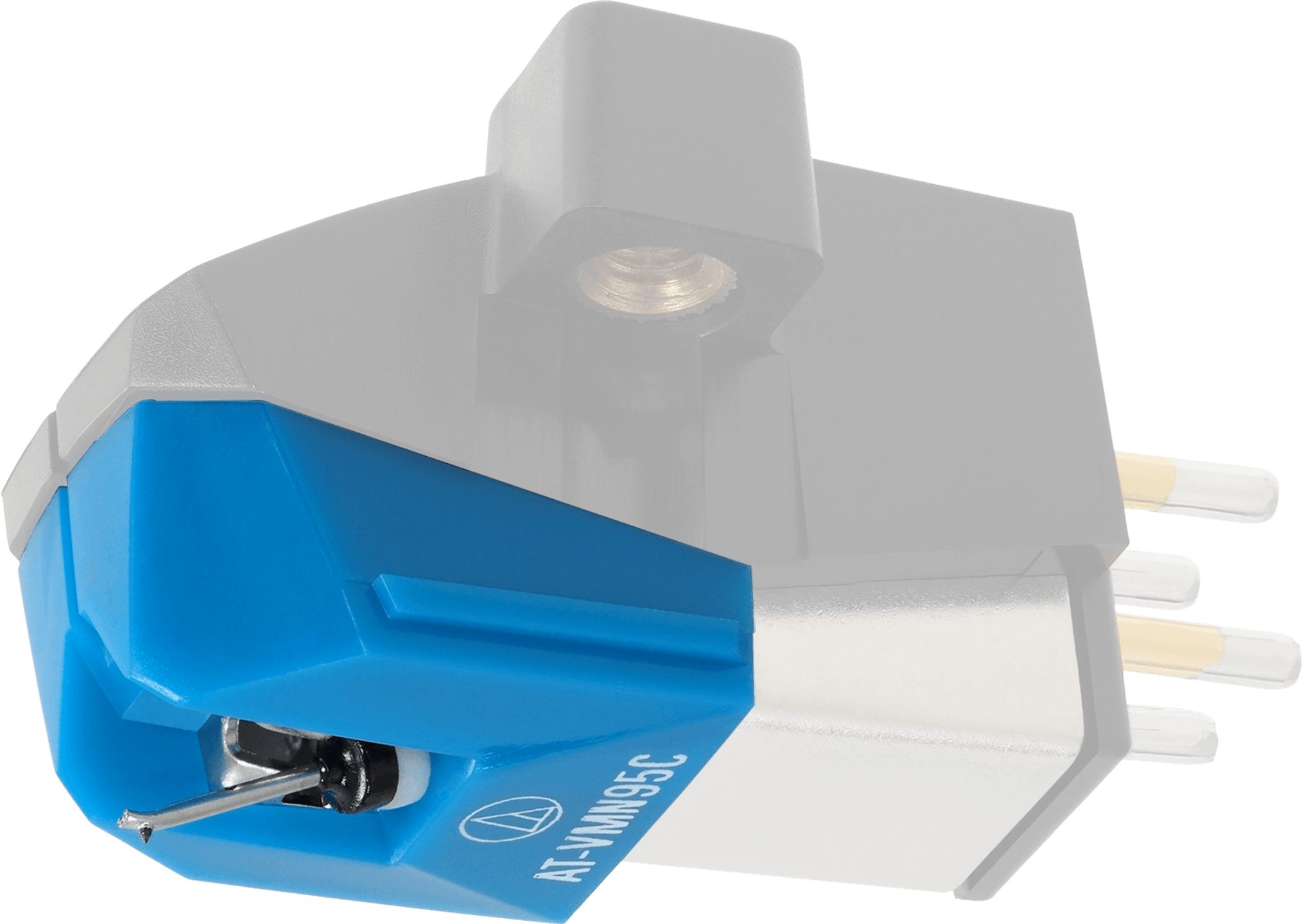
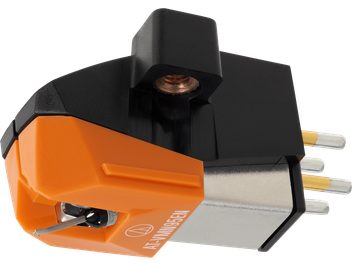
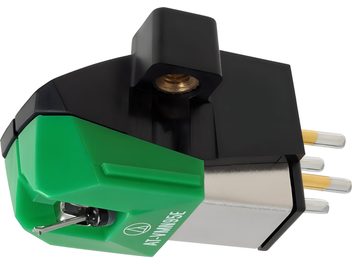
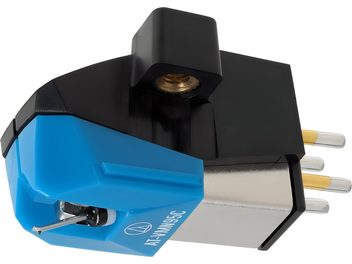
AT-VMN95C Audio-Technica: the conical stylus in the VM95 series
With the VM95 series, Audio-Technica made an uncommon choice: a single cartridge body shared across six styluses with distinct profiles. The AT-VMN95C is the simplest in this family. A 0.6 mil conical stylus, aluminum cantilever, diamond bonded to a round shank: this is the essentials, with no frills. And that is precisely what makes it interesting, whether as a first stylus, a replacement, or a starting point toward the rest of the range.
A spherical diamond, straightforward playback
The conical stylus (also called spherical) is the oldest and most widespread diamond profile. Its rounded shape makes contact with the center of the groove, where the musical information is least exposed to the damage left by previous plays. In practice, that means two things. First, the AT-VMN95C handles used or slightly damaged records well: it does not dig out the micro-scratches that finer profiles (elliptical, Shibata) reveal mercilessly. Surface noise remains controlled. Second, the spherical shape is less sensitive to alignment and azimuth errors of the tonearm. An approximate setup will not penalize playback as much as it would with a line-contact stylus.
The diamond is bonded to a round shank (a so-called “bonded round shank” construction), itself attached to an aluminum cantilever. This construction adds a bit of mass compared with a one-piece (“nude”) diamond, but it remains well suited to the conical profile, which does not require the extreme lightness of Microlinear or Shibata-type styluses.
What you hear, and what you do not hear
The AT-VMN95C’s sound is warm and direct. The bass is generous, with body and authority. Dynamics are bold: attacks have energy, contrasts are reproduced convincingly. On well-made pressings, the result can be surprising given the product’s position in the range.
Its limitations are those of the conical profile in general. The frequency response is specified at 20 Hz to 20 kHz, whereas the VMN95E (elliptical) reaches 22 kHz and the VMN95SH (Shibata) 25 kHz. Channel separation reaches 18 dB at 1 kHz, a respectable figure but below the 20 dB of the elliptical and the 23 dB of the Shibata. In concrete terms, the treble lacks finesse and detail, sibilants are slightly softened, and the soundstage appears less defined than with more advanced profiles. This is a deliberate trade-off, not a flaw: the conical prioritizes raw musical energy over analytical resolution.
Six styluses, one body
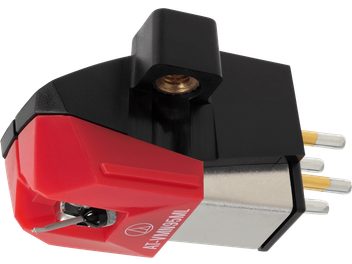
One of the AT-VMN95C’s strengths lies in the ecosystem it belongs to. All styluses in the VM95 series share the same cartridge body, which makes replacement and upgrading very simple: you just remove one stylus and clip in another. There is no need to remove the cartridge, redo the wiring, or realign anything.
The six available styluses cover a broad range: the VMN95C (conical), the VMN95E (bonded elliptical), the VMN95EN (nude elliptical), the VMN95ML (Microlinear), the VMN95SH (Shibata), and the VMN95SP (3.0 mil conical for 78 rpm records). Each one changes the cartridge’s sonic behavior in a noticeable way. Moving from the conical to the elliptical, for example, brings a clear gain in definition at the top end and in stereo separation, while retaining the same dual moving magnet VM generator.
This interchangeable system also has a practical advantage: you can reserve the conical stylus for damaged records or 45 rpm records made of styrene, and fit a finer diamond for pressings in good condition.
Lifespan and replacement
Audio-Technica estimates the lifespan of a conical stylus at around 500 hours of listening. That is noticeably more than the 300 hours stated for an elliptical stylus, even if Microlinear (1,000 hours) and Shibata (800 hours) styluses do better. Replacement takes just a few seconds: remove the worn stylus by pulling it downward, then clip in the new one.
For owners of turntables originally fitted with older AT91, AT91R, or CN5625AL cartridges, moving to a VM95 cartridge with the VMN95C stylus is a direct replacement, provided the tonearm accepts standard half-inch mounting.
Technical Specifications
Construction
- Aluminum cantilever
- Full round section
- Full square section
Compatibility and Interchangeability
- Compatible with all VM95 series cartridge bodies
- Interchangeable stylus system
- Unified cartridge body for the entire range
Compatible Models
- AT-VMN95C
- AT-VMN95E
- AT-VMN95EN
- AT-VMN95ML
- AT-VMN95SH
- AT-VMN95SP
Estimated Stylus Lifespan
- Conical stylus: 500 hours
- Elliptical stylus: 300 hours
- Microlinear stylus: 1,000 hours
- Shibata stylus: 800 hours
Sound Characteristics
- Distinctive Shibata sound signature in the mid-high frequencies
- Enhanced performance in low and low-mid frequencies
- Powerful bass frequency reproduction
Frequently Asked Questions
Is the AT-VMN95C compatible with Audio-Technica AT-LP120X, AT-LP5X, or AT-LPW50 turntables?
Yes. The VMN95C stylus fits any cartridge body in the VM95 series. These turntables come standard with a VM95 cartridge, which makes replacement direct. The AT-LP3XBT, AT-LPW30, AT-LPW40, and AT-LP8X models are also compatible.
Does a conical stylus damage records more than an elliptical stylus?
Not necessarily. The conical stylus applies its pressure to a different area of the groove, more toward the center. It is even preferable for worn or poor-condition records, because it does not dig into areas already damaged by earlier plays.
What is the practical difference between the VMN95C and the VMN95E when listening?
The VMN95E (elliptical) offers better treble definition, clearer stereo separation, and less distortion at the end of a side. The VMN95C sounds warmer, more direct, with more present bass. The choice depends on your priorities: precision or raw musicality.
Are styluses from the AT-XP series (DJ) compatible with the VM95 body?
Yes. The ATN-XP3, ATN-XP5, and ATN-XP7 styluses fit a VM95 body, and vice versa. The AT-XP body delivers a higher output voltage than the VM95 body, which can be useful with the phono inputs of some mixing consoles.
How can you tell if the stylus is worn?
By ear, a worn stylus causes an increase in background noise, more pronounced treble distortion, and sometimes groove skipping. Visually, examination under a microscope or a strong magnifier can detect flattening of the stylus tip. Audio-Technica recommends replacement at around 500 hours of listening.
- Eco-contribution included in the sale price.