

Cayin Soul 170P black

Complementary product
Overview
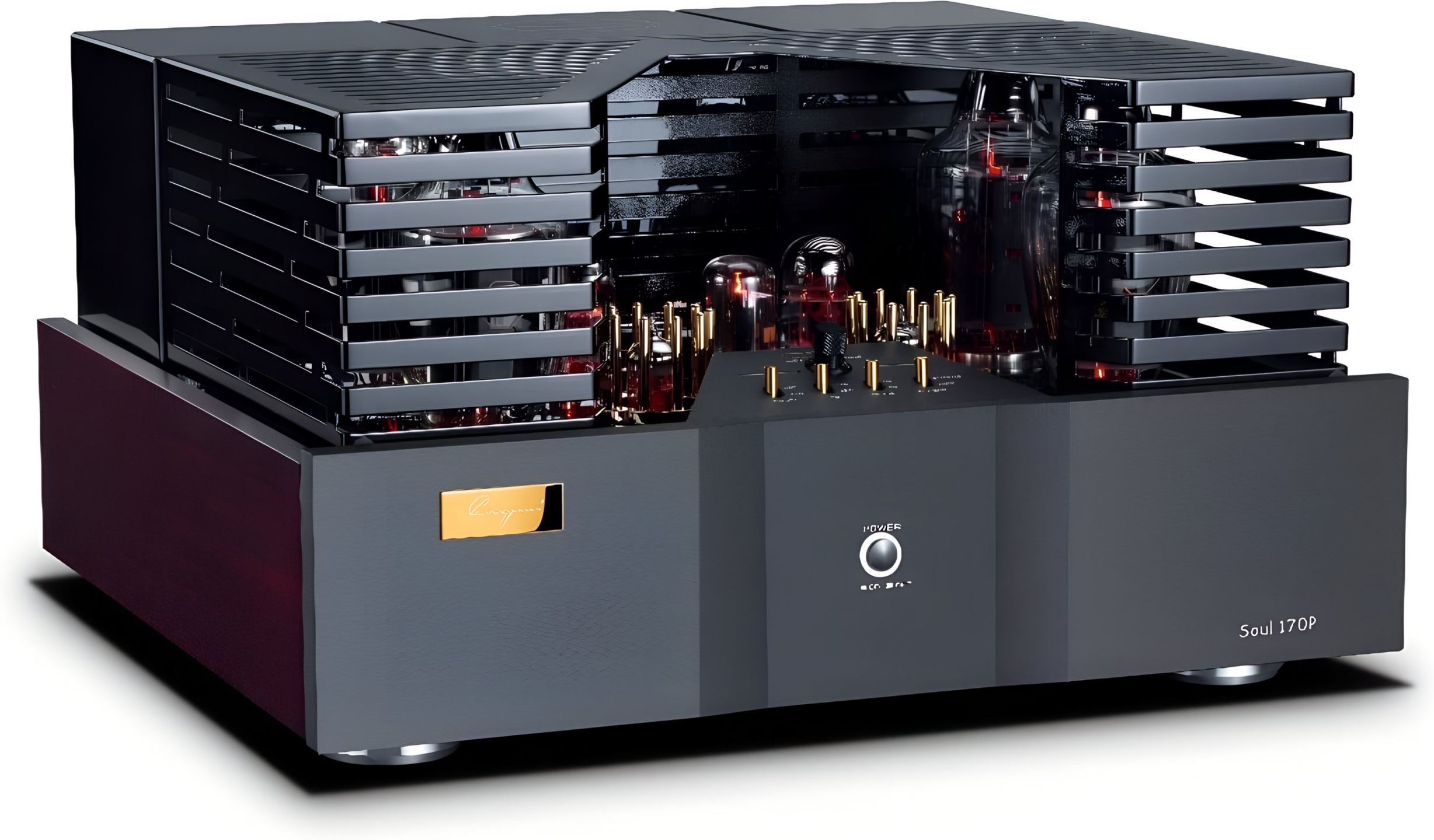
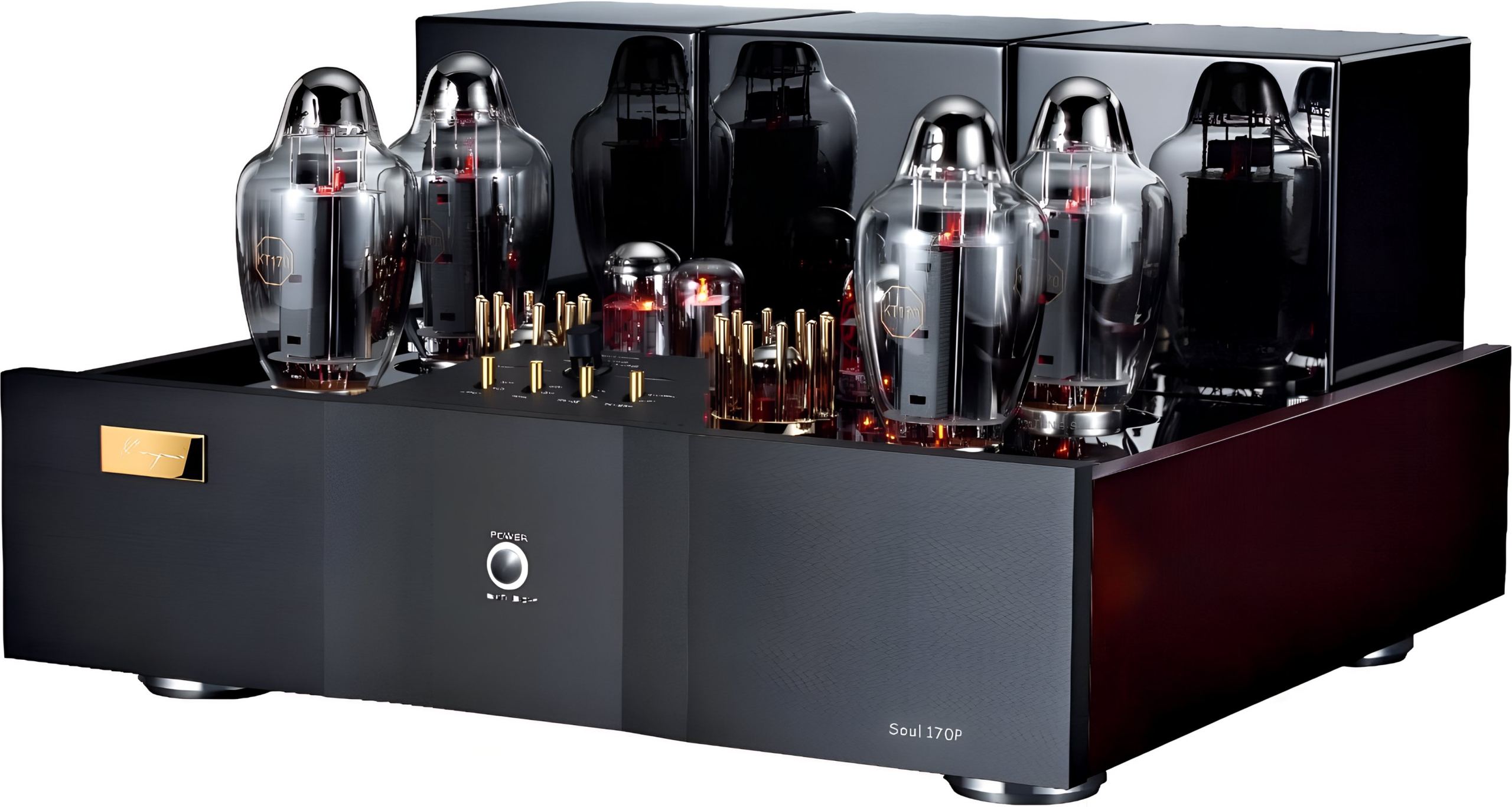
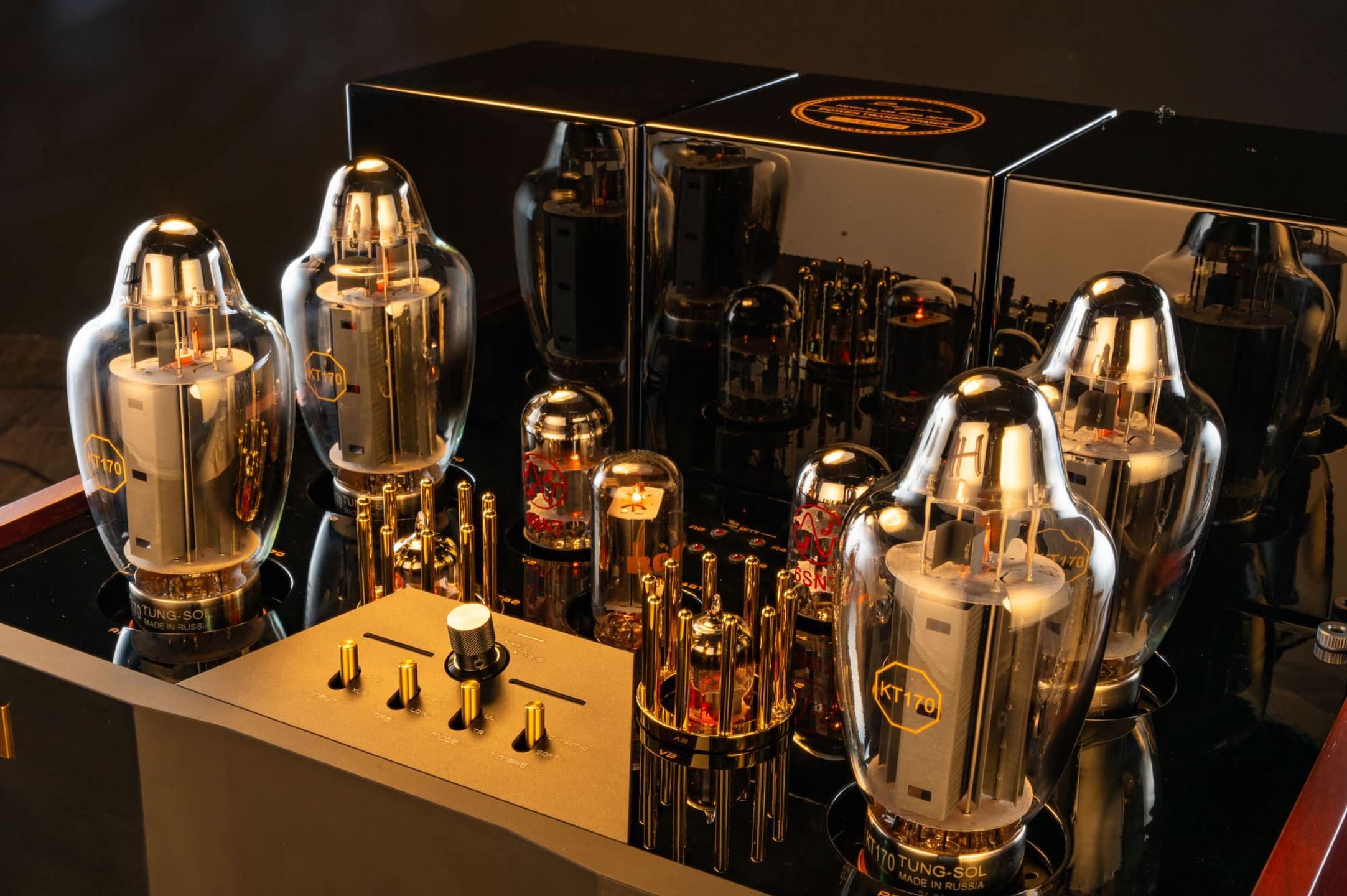
The Cayin Soul 170P is a tube power amplifier designed around four Tung-Sol KT170 tubes in a Class A push-pull configuration. Weighing 37.5 kg, this unit offers two operating modes (triode and ultralinear) and can be used in stereo or mono configuration, delivering 60 W or 120 W per channel respectively in ultralinear mode. The amplifier features a dynamic auto-bias system and offers two adjustable negative feedback levels to shape the sonic signature according to speakers and listening preferences.
The KT170: a tube designed for power
The Tung-Sol KT170 is the most imposing tube in the 6550/KT88/KT90/KT120/KT150 series. With a power dissipation of 85 watts, a pair of these tubes can achieve output levels exceeding 300 watts. Its specially designed glass envelope maintains high vacuum and efficiently dissipates heat during high-power operation. The KT170 uses an equipotential cathode to increase reliability and amplify audio frequencies in the output stages of high-fidelity equipment.
In the Soul 170P, four KT170s operate in a Class A push-pull configuration. This topology offers a balance between the harmonic richness of Class A and the power capability needed to drive a wide variety of speakers.
Tube configuration and amplification chain
The voltage amplification stage employs two JJ 12AU7 tubes, renowned for their low distortion and reduced noise. These tubes provide initial signal amplification before the driver stage. Two JJ 6SN7 tubes occupy the driver stage, bringing both musical sensitivity and driving capability. These tubes contribute to an emotionally engaging reproduction while preserving analytical clarity. A 17AX4GT rectifier tube, recognized as a classic component, provides stable DC voltage to the driver stage with the characteristic expressiveness of rectifier tubes.
This all-tube amplification cascade creates a coherent chain where each stage fulfills a specific function. The engineers selected these tubes for their complementary characteristics rather than their individual reputation.
Operating mode flexibility
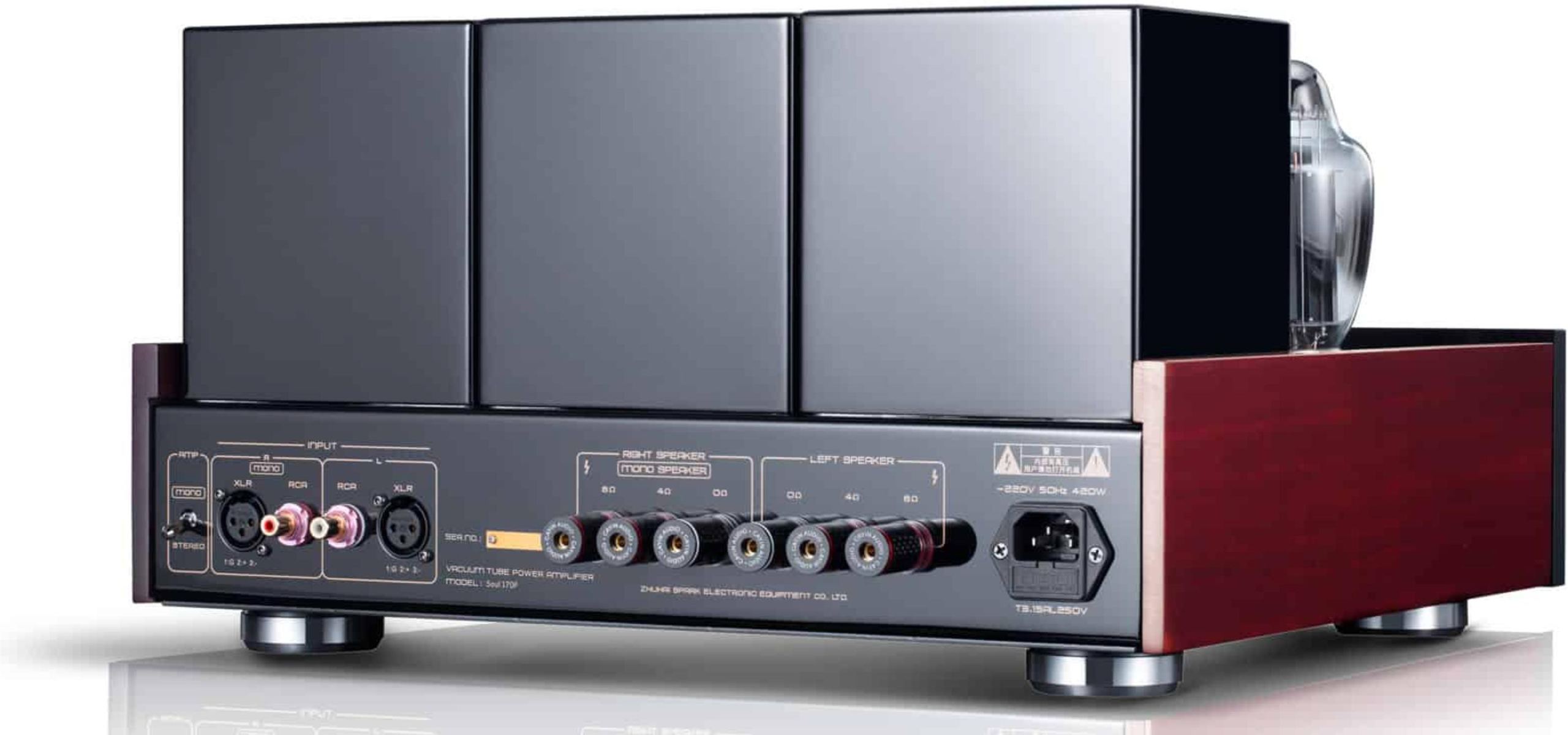
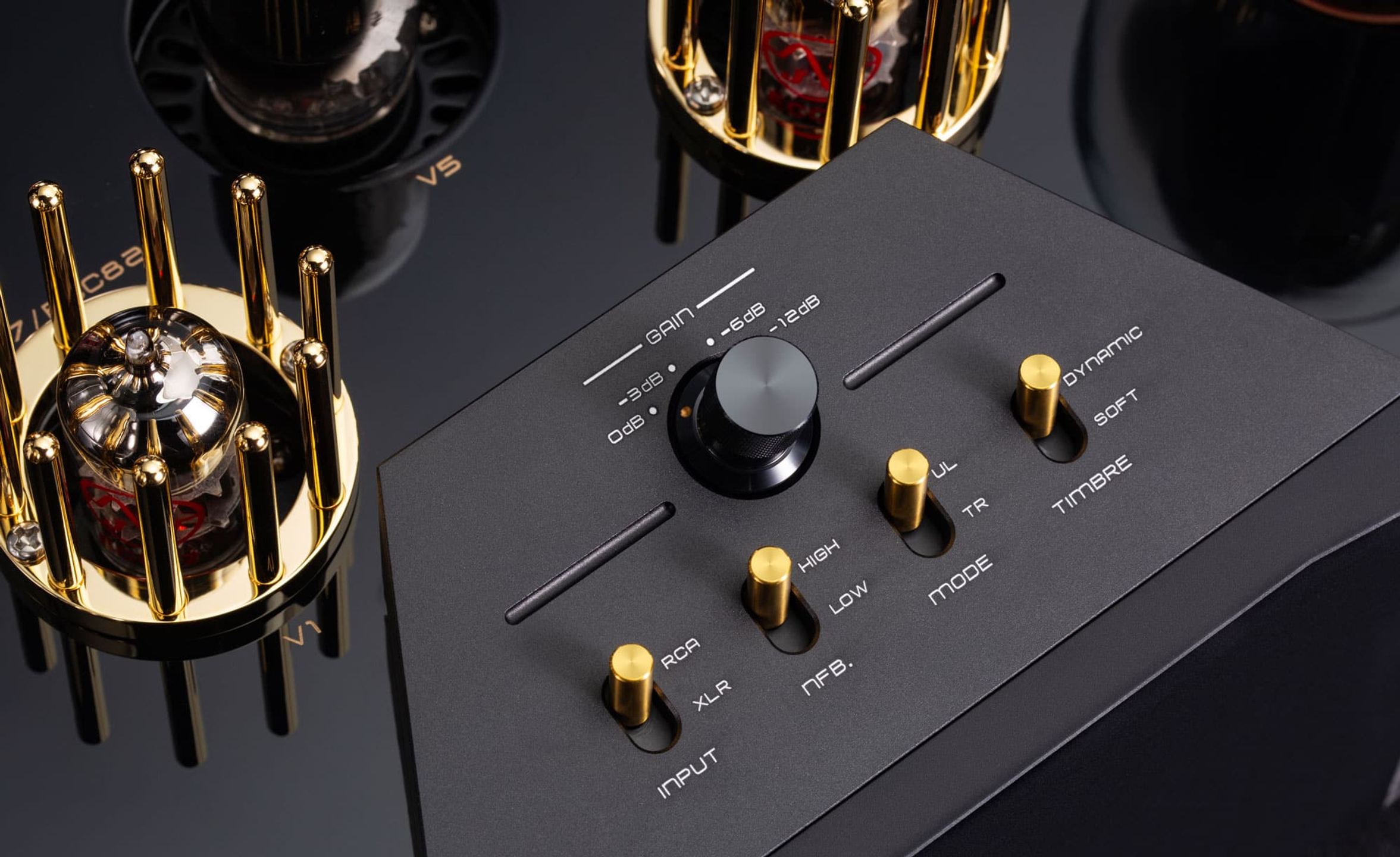
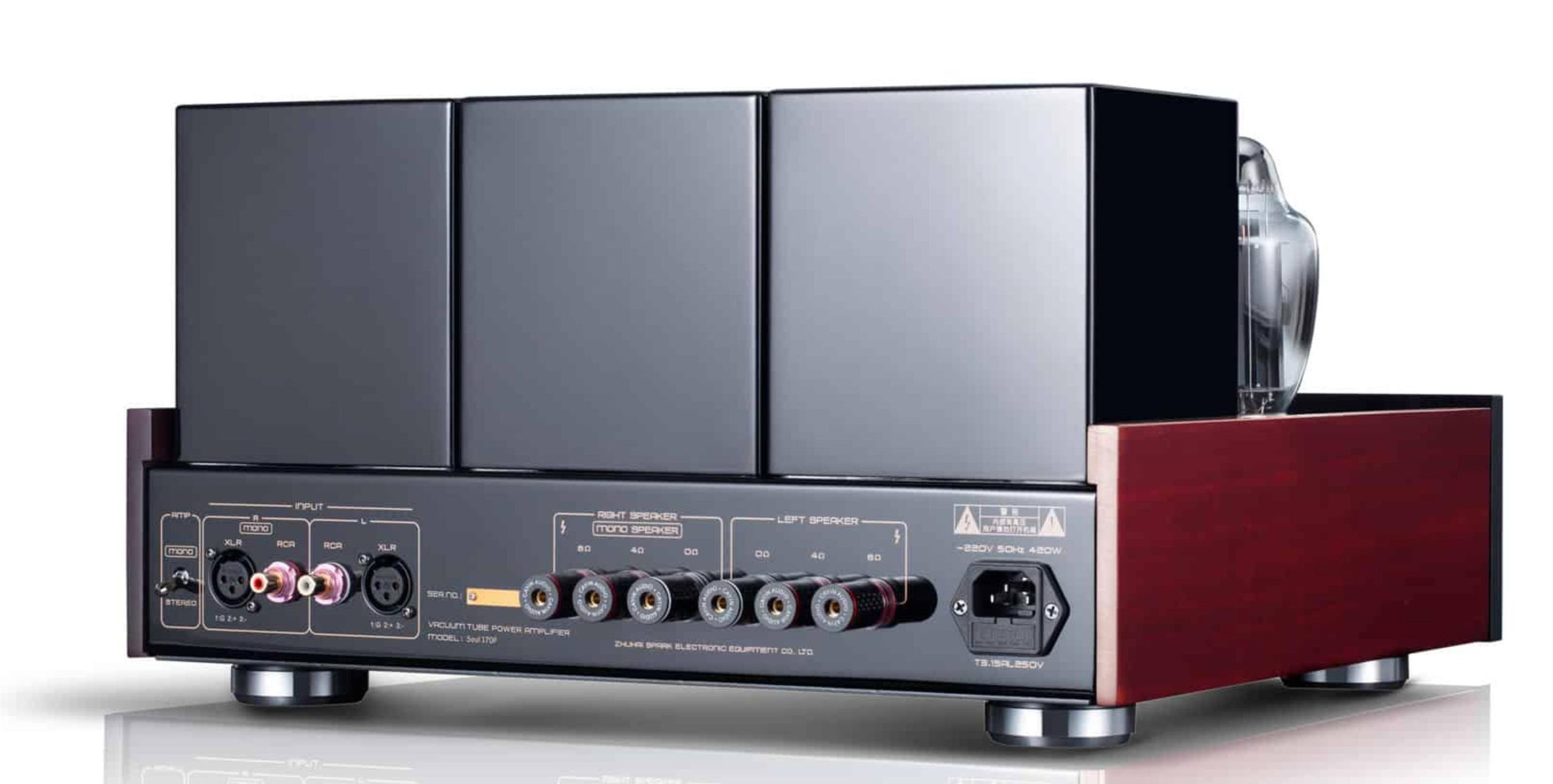
A safety switch located at the rear allows switching between stereo and mono modes. In stereo configuration, the amplifier delivers 32 W per channel in triode or 60 W in ultralinear. In mono mode, these values double to reach 64 W in triode or 120 W in ultralinear. Mono mode uses both channels to drive a single speaker, which proves relevant for systems where two mono blocks drive power-demanding speakers.
Switching between triode and ultralinear modifies the internal wiring of the output tubes, thus changing their operating mode. Triode mode connects the screen grid directly to the anode, while ultralinear mode applies a fraction of the output signal to the screen grid. These configurations influence the amplifier’s output impedance, harmonic distortion, and frequency response.
Adjustable negative feedback circuit
The Soul 170P features a carefully calibrated negative feedback circuit. The engineers applied a moderate global feedback loop to balance control and musical expression. The amplifier offers two selectable feedback levels: Low and High. The Low setting favors an open, expressive, and emotionally engaging presentation. The High setting enhances control, improves precision, and offers a more analytical presentation.
This function allows adapting the amplifier to the characteristics of connected speakers. High-efficiency speakers can benefit from Low NFB mode, while more difficult-to-drive models will take advantage of High NFB mode for better control.
Dynamic auto-bias
The Soul 170P features a dynamic auto-bias servo circuit. This system regulates the operation of each KT170 tube, allowing tube replacement without manual adjustment. It ensures optimal adaptation and extends tube life while maintaining operating safety.
Auto-bias represents a practical asset in an amplifier of this scale. Power tubes evolve over time and traditionally require periodic adjustments. The dynamic system continuously monitors and adjusts the operating point, keeping the tubes in their optimal zone.
Protection systems
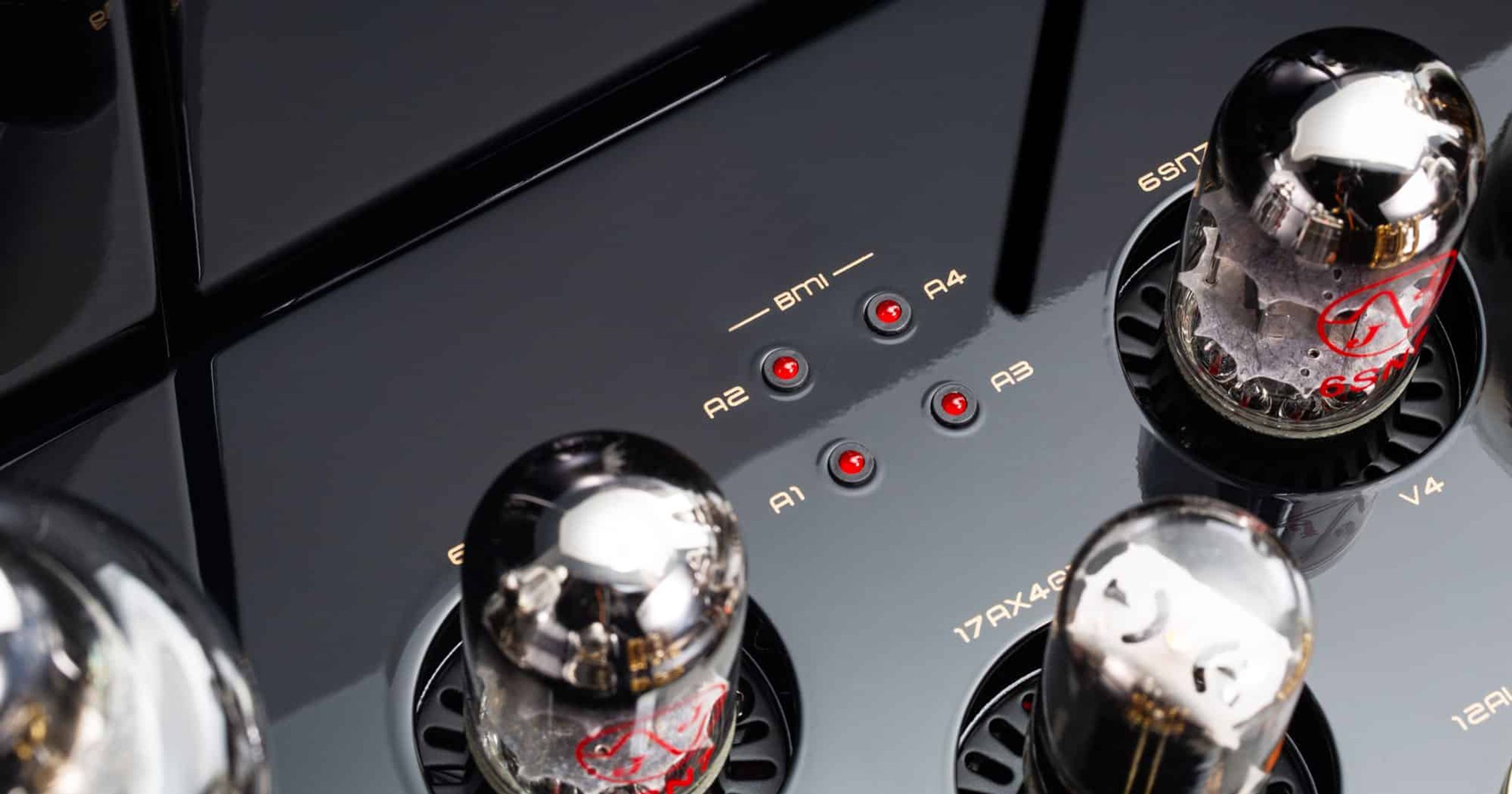
The amplifier features several protection mechanisms: a 60-second soft-start circuit, microcontroller-controlled protection logic, and BMI (Bad tube indicators) that detect tube failures and automatically activate a safety mode.
These protections preserve the amplifier and tubes during power-up. The soft-start gradually applies voltages to the tubes, avoiding abrupt thermal and electrical stress. The failure indicators visually signal a defective tube, facilitating diagnosis.
Construction and internal components
The Soul 170P is hand-assembled with point-to-point wiring, minimizing signal loss and crosstalk. Key components include silver-plated internal wiring, anti-resonance aluminum alloy feet, and custom transformers: a toroidal for power supply and wide-bandwidth EI for output.
Point-to-point wiring, a traditional assembly method, eliminates printed circuit boards in favor of direct connections between components. This approach requires skilled labor but reduces signal paths. The transformers, designed and wound in-house, constitute central elements of any tube amplifier. They determine the extent of frequency response, from the deepest bass to the most extended treble.
Connectivity and output impedances
The amplifier offers one RCA input (pair) and one XLR input (pair), allowing balanced and unbalanced connections. The speaker terminals accept 4Ω and 8Ω impedances. This dual impedance option facilitates adaptation to different speaker types.
The choice between 4Ω and 8Ω influences the amplifier’s operation and response. A 4Ω speaker demands more from the amplifier but can extract more power, while an 8Ω load generally proves easier to drive.
Technical specifications
Power and operating modes
- Stereo mode: 60 W per channel (ultralinear)
- Triode: 32 W + 32 W
- Ultralinear: 60 W + 60 W
- Mono mode: 120 W per channel (ultralinear)
- Triode: 64 W
- Ultralinear: 120 W
- Simple switching via a secure rear switch, allowing use in stereo or high-power mono configuration
Tubes and topology
- Power tubes: 4 × TUNG-SOL KT170
- Configuration: Class A push-pull
- Voltage amplification tubes: 2 × JJ 12AU7 / ECC82
- Characteristics: low distortion and noise
- Driver tubes: 2 × JJ 6SN7
- Characteristics: musicality and drive capability
- Rectifier tube: 1 × 17AX4GT
- Function: stable DC power supply
- Tubes are carefully selected to ensure precision, musicality, and longevity
Negative feedback
- Moderate global loop for a balance between control and musical expression
- Two levels of negative feedback:
- Low: more open, expressive, and emotional sound
- High: enhanced control, increased precision, analytical presentation
Dynamic auto-bias
- Integrated dynamic auto-bias circuit
- Allows replacement of KT170 tubes without manual adjustment
- Ensures optimal operation and extended tube lifespan
Audio performance
- Frequency response: 8 Hz – 70 kHz (–3 dB, RCA / XLR)
- Total harmonic distortion: 0.2% (1 W / 1 kHz), < 2% at rated power
- Signal-to-noise ratio: 105 dB (RCA, A-weighted), 102 dB (XLR, A-weighted)
- Input sensitivity: 820 mV (LOW feedback), 960 mV (HIGH feedback)
- Input impedance: 18 kΩ
- Output impedance: 4 Ω, 8 Ω
Connectivity
- Inputs: 1 × RCA (pair), 1 × XLR (pair)
- Speaker outputs: 4 Ω and 8 Ω
Construction and components
- Point-to-point wiring to minimize losses and interference
- Key components:
- Silver-plated internal wiring
- Anti-resonance aluminum alloy feet
- Custom transformers: toroidal for power supply, wide-band EI for output
Protection and safety
- Soft-start circuit (60 seconds)
- Microcontroller-controlled protection logic
- BMI indicators to detect tube faults and automatically activate safety mode
Dimensions and weight
- Dimensions (W × D × H): 430 mm × 420 mm × 238 mm
- Net weight: 37.5 kg
- Maximum power consumption: 420 W
General information
High-performance tube amplifier designed to deliver exceptional power and audiophile sound quality. The Class A push-pull configuration with KT170 tubes ensures precise, natural musical reproduction. The dynamic auto-bias system simplifies maintenance while guaranteeing optimal performance. Point-to-point construction with premium components and custom transformers ensures maximum fidelity and outstanding longevity.
Frequently Asked Questions
What is the difference between triode and ultralinear modes on the Soul 170P?
Triode mode connects the screen grid directly to the anode, producing less power but different harmonic distortion. Ultralinear mode applies a fraction of the output signal to the screen grid, increasing available power and modifying the amplifier’s behavior. Both modes operate in Class A.
Does the auto-bias system eliminate all tube maintenance?
The dynamic auto-bias system continuously adjusts the operating point of the KT170 tubes, eliminating manual adjustments during replacement. However, tubes age and will require replacement after several thousand hours of use. The other tubes (12AU7, 6SN7, 17AX4GT) also follow their own life cycle.
How do I choose between Low NFB and High NFB modes?
Low NFB mode reduces feedback, offering a more open presentation but less control over speakers. High NFB mode increases feedback, improving control and precision at the cost of some spontaneity. Easy-to-drive speakers work well with Low mode, while difficult loads benefit from High mode.
Can the Soul 170P be used exclusively in mono mode?
The Soul 170P can operate exclusively in mono configuration if the user wishes to create a system with two separate mono blocks. This configuration requires two Soul 170P units, each driving one speaker. Switching between stereo and mono is done via a switch at the rear.
- Eco-contribution included in the sale price.
- Manufacturer reference: CAYSOU170P
- GTIN / EAN: 695791491078