

Ferrum Audio Wandla HP
Overview
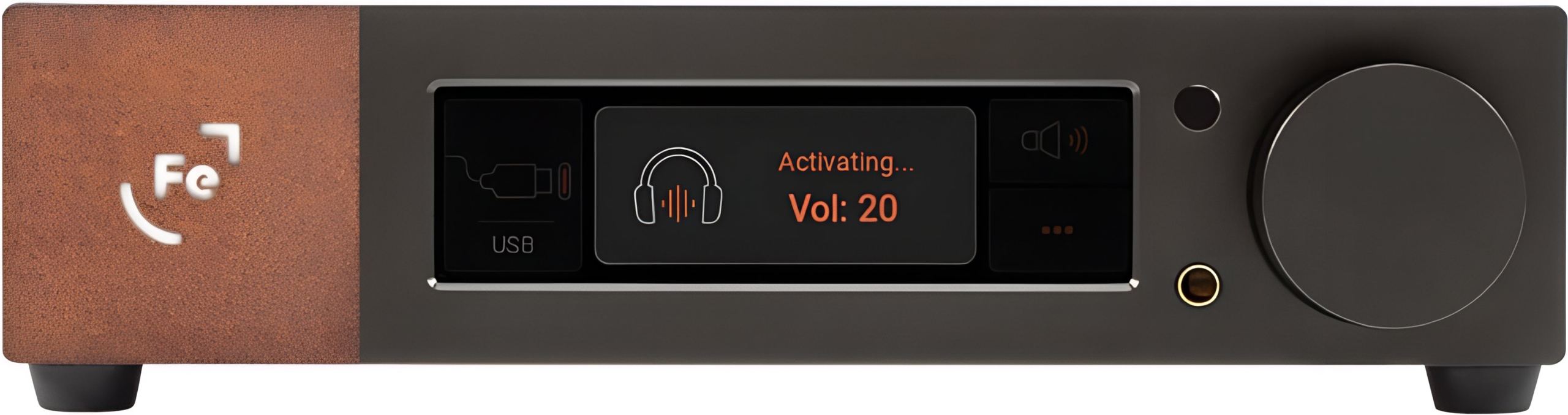
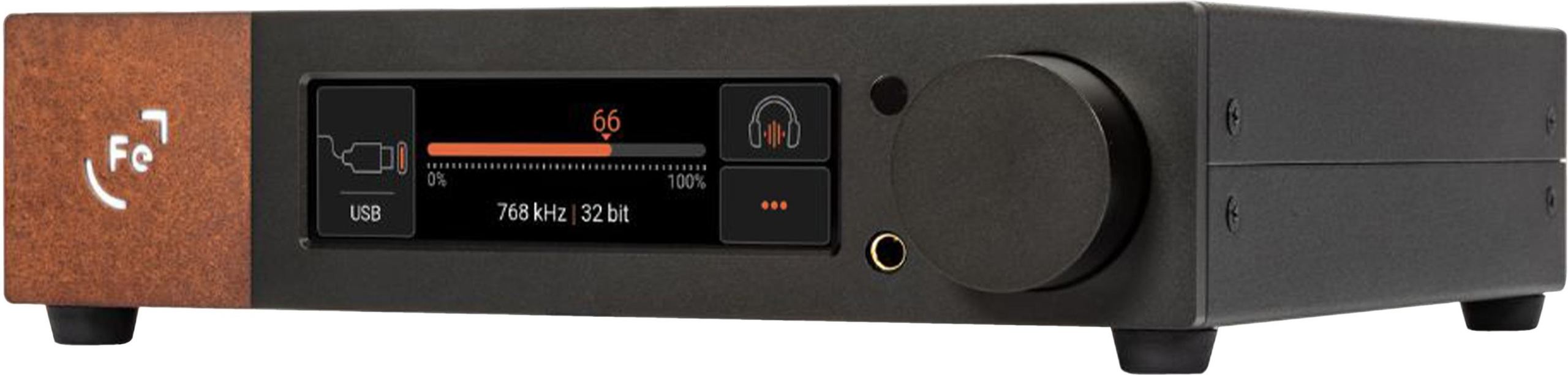
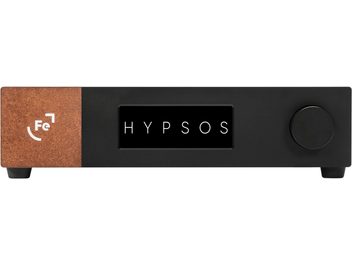
The WANDLA HP brings together in a single compact chassis the digital and analog technologies that Polish brand Ferrum has developed since its creation in 2020. This model integrates a flagship DAC equipped with the ESS Sabre ES9038PRO chip, a fully balanced preamplifier, and a headphone amplifier capable of delivering 3.5 watts into 50 ohms in balanced mode. Designed to slot in between the entry-level ERCO and the high-end WANDLA/OOR combo, it targets music lovers seeking reference-level performance without multiplying components.
A carefully considered position within the range
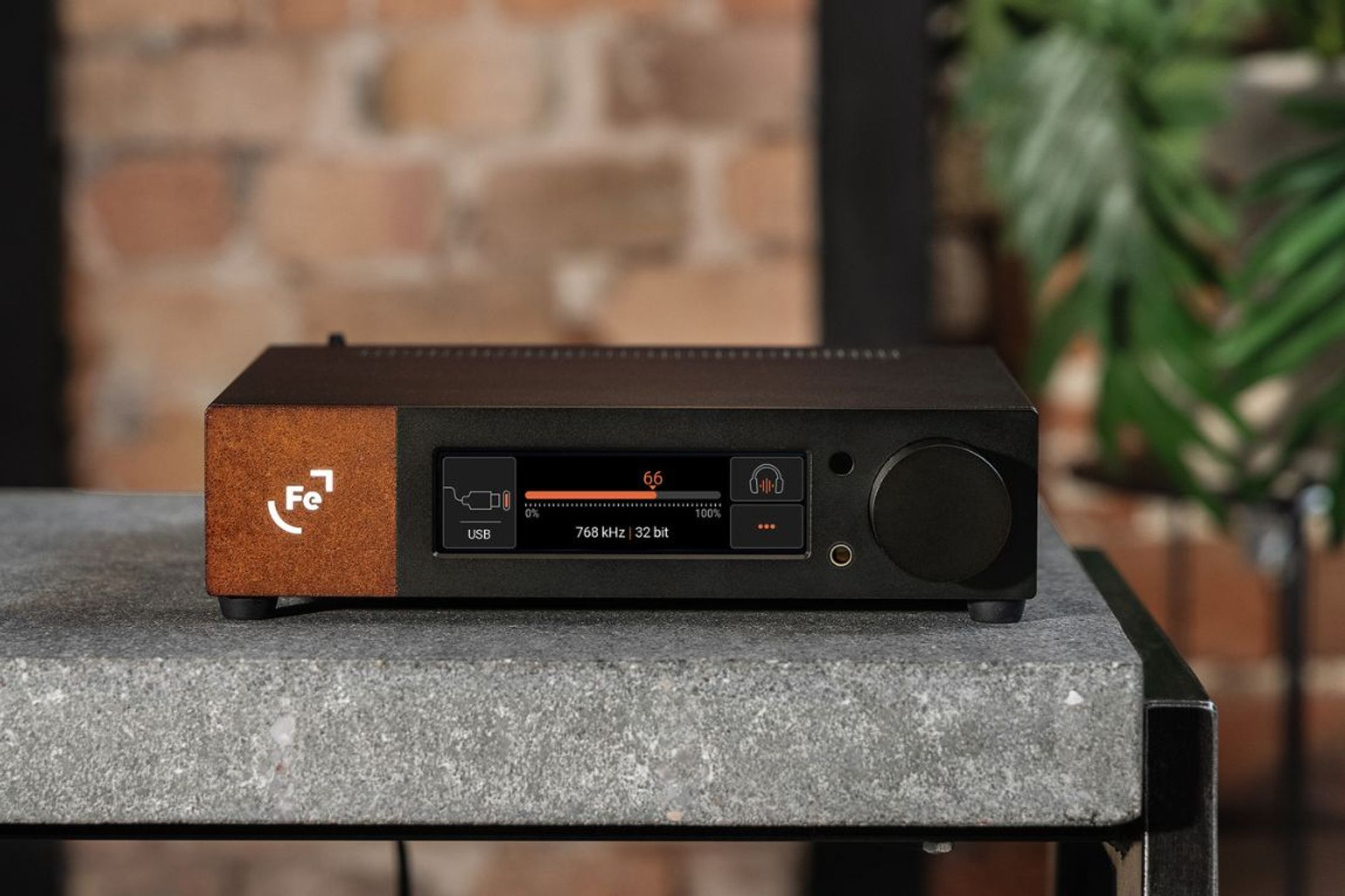
The WANDLA HP uses the exact same conversion and preamplification circuits as the standard WANDLA, with the addition of a headphone amplification stage. This approach makes it possible to have a single unit capable of driving both demanding headphones and active speakers or a power amplifier. The headphone amplification section uses a balanced topology with composite integrated-circuit amplifiers, similar in design to those developed for the OOR but adapted to the WANDLA’s space constraints.
Ferrum’s engineers designed this amplifier to deliver substantial power while maintaining total harmonic distortion below 0.0002% at 100 milliwatts into 50 ohms. The dynamic range reaches 122 decibels, ensuring reproduction of the subtlest nuances. In balanced mode via the front-panel 4.4 mm Pentaconn output, the unit supplies 3.5 watts into 50 ohms, 2.8 watts into 32 ohms, and 750 milliwatts into 300 ohms. These figures allow it to drive almost all headphones available on the market, from the most power-hungry planar models to high-impedance headphones.
The digital core: SERCE and ESS conversion
At the heart of the WANDLA HP is SERCE, a proprietary module developed by HEM, named after the Polish word for “heart”. This ARM-based platform brings together in a single chip functions usually distributed across five separate components: PCM and DSD stream reception, digital filter management, MQA decoding and rendering, touchscreen interface control, and input detection. This integration shortens the digital signal path and reduces potential sources of jitter and noise.
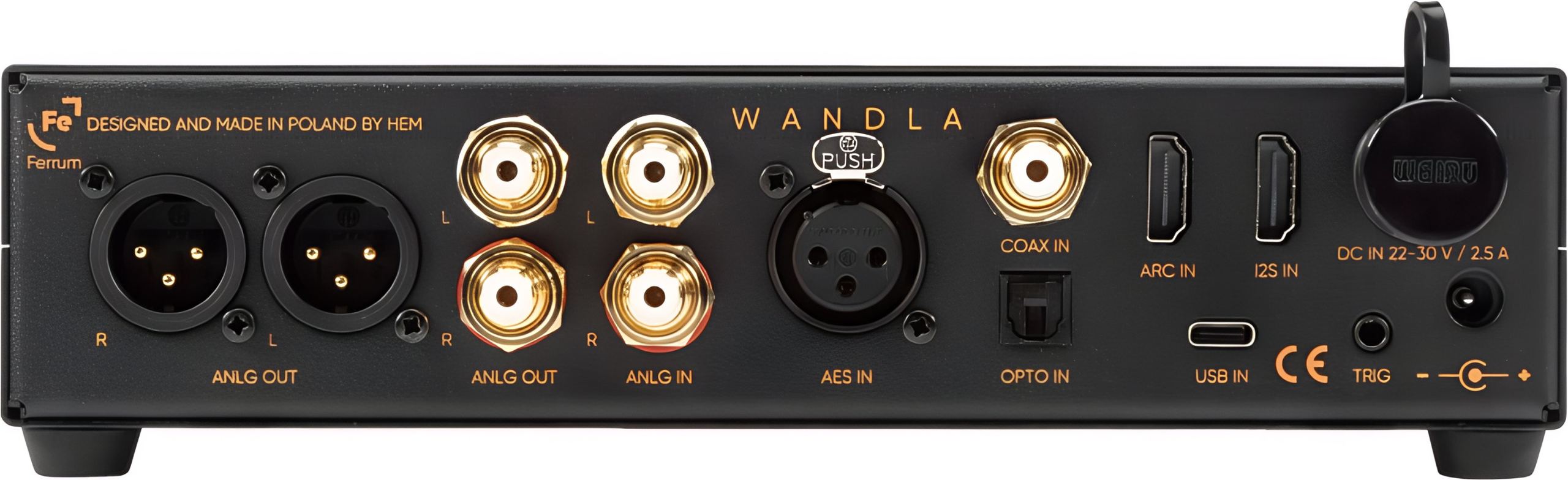
The SERCE module processes high-resolution audio streams up to 768 kHz in 32-bit PCM and native DSD512. Six digital inputs have been specially programmed and optimized: USB-C, AES/EBU, coaxial S/PDIF, optical S/PDIF, I²S, and ARC (for TV connection). Each input benefits from fine tuning aimed at minimizing jitter and maximizing signal integrity. The USB input, for example, accepts DoP256 formats, while the I²S input, compatible with PS Audio pinout, can receive DSD512 streams.
The digital-to-analog conversion is based on the ESS Sabre ES9038PRO chip, renowned for its technical performance but often criticized for a sonic signature considered clinical. Ferrum has developed a proprietary current-to-voltage converter that uses two operational amplifiers in cascade with a feedback loop encompassing both stages. The first amplifier, fast, handles the input, while the second, more powerful, drives the feedback resistor. This composite approach allows the ES9038PRO to deliver a less analytical sound than conventional single-op-amp implementations.
Dynamic digital filters: a partnership with Signalyst
The WANDLA HP incorporates the Dynamic Digital Filtering (DDF) system developed in collaboration with Jussi Laako of Signalyst, creator of the HQPlayer software. At launch, two exclusive filters complement the three standard ESS filters. The HQ Apodizing filter offers a short temporal response and a gradual roll-off, with partial apodization optimized for transient response. The HQ Apodizing Minimum Phase filter, in its minimum-phase version, favors the transient attack of studio multi-track recordings.
Ferrum has chosen a participatory approach by allowing users to vote for their favorite filters. The least popular filters will be replaced by new options via firmware updates, thereby creating an evolving library tailored to the community’s preferences. This initiative democratizes access to filters usually reserved for HQPlayer users, while integrating them directly into the DAC’s oversampling processor.
Fully balanced signal path
The WANDLA HP maintains a fully balanced signal path from end to end, even when unbalanced sources are connected. The single analog RCA input immediately converts the signal to differential mode from the very first active stage. This technical choice improves common-mode noise rejection and increases channel separation. The line outputs, available in balanced XLR and unbalanced RCA, can deliver up to 10 volts RMS on XLR and 5 volts on RCA, with either analog or digital volume control as needed.
A “RED” mode reduces the output level to 4 volts on XLR and 2 volts on RCA, useful for matching the unit to sensitive power amplifiers. The user can also choose between analog volume control, using Muses ladder-network chips in dual-mono configuration, and digital control performed in the digital domain before conversion. The analog mode fully preserves the resolution of the converted signal but requires attenuation in the analog domain, while the digital mode reduces bit depth at very low listening levels.
Upgradability with HYPSOS and Ferrum Power Link
The WANDLA HP operates perfectly with the included power adapter, a carefully selected switching power supply delivering 24 volts DC. However, the unit can benefit from a noticeable upgrade when paired with HYPSOS, Ferrum’s hybrid power supply. The connection is made via a specific Ferrum Power Link cable, sold separately, which uses a four-conductor approach: two wires carry power, while two others provide a direct voltage feedback path. This configuration eliminates the influence of cable resistance on the voltage delivered to the circuit, ensuring a stable voltage at all times.
This technique, called FPL (Ferrum Power Link), improves transient response speed and the precision of dynamic reproduction. The WANDLA HP’s internal power supplies, designed according to HYPSOS’s hybrid principle, feed the analog and digital sections separately to minimize interference and maximize channel separation. HYPSOS, thanks to its SST (Sweet Spot Tuning) function, allows fine adjustment of supply voltage in 0.1-volt increments between 5 and 30 volts. Some users report improved liveliness and musical engagement with HYPSOS, although this difference is subtler than with the OOR amplifier, whose dynamic power demands are higher.
Sound signature and versatility
The WANDLA HP aims for a neutral to slightly warm presentation, avoiding the analytical coldness often attributed to DACs based on ESS Sabre chips. The bass delivers remarkable density and extension without artificial bloat. The midrange maintains excellent clarity and separation even in dense passages, allowing vocals to remain distinct without being pushed unnaturally forward. The treble offers a good balance between sparkle and control, avoiding sibilance without sacrificing detail.
The soundstage presented by the unit has convincing depth and width, with precise placement of sound sources in space. The wide dynamic range enables it to reproduce both the finest nuances and the most violent peaks without audible compression or distortion. This balanced signature suits both long listening sessions and critical analysis, making the unit versatile for different music genres and usage scenarios.
The headphone amplifier preserves these qualities with headphones of varying impedances. Gain settings, accessible via the touchscreen interface, allow optimization of the signal-to-noise ratio and usable volume range according to the sensitivity of the connected headphones. Some very demanding planar headphones, such as the HiFiMan Susvara or Abyss models, benefit from the available power in balanced mode to reveal their full dynamic potential. High-impedance headphones like the Sennheiser HD 650 or the beyerdynamic DT 880 600-ohm also receive appropriate amplification without the need to push the volume to excessive levels.
Technical specifications
Headphone amplification
- Fully balanced architecture with specially optimized composite integrated-circuit amplification
- Maximum power: 3.5 W into 50 Ω in balanced mode
- Dynamic range: 122 dB
- Output impedance: 0.5 Ω in unbalanced mode, 1 Ω in balanced mode
Output power in unbalanced mode
- 0.2 W into 300 Ω
- 1 W into 50 Ω
- 1.4 W into 32 Ω
- 1.5 W into 16 Ω
Output power in balanced mode
- 0.75 W into 300 Ω
- 3.5 W into 50 Ω
- 2.8 W into 32 Ω
- 1.5 W into 16 Ω
Total harmonic distortion on balanced output
- 0.00016% (-116 dB) at 10 mW into 50 Ω
- 0.00020% (-114 dB) at 100 mW into 50 Ω
Total harmonic distortion on unbalanced output
- 0.00022% (-113 dB) at 10 mW into 50 Ω
- 0.00022% (-113 dB) at 100 mW into 50 Ω
Digital conversion and processing
- Conversion chip: ESS Sabre ES9038PRO
- Current-to-voltage (I/V) converter developed by Ferrum
- Maximum resolution: 768 kHz / 32-bit, DSD512
- SERCE digital module based on ARM architecture, replacing five separate chips and shortening the signal path
- MQA decoding and rendering on all inputs
- Advanced digital filter selection
- Dynamic Digital Filtering (DDF) developed with Signalyst / HQPlayer
- Two filters built in at launch, with future updates in interaction with the WANDLA community
Digital connectivity
- USB-C: 768 kHz / 32-bit, DSD512, DoP256
- AES/EBU: 192 kHz / 24-bit, DoP64
- Coaxial S/PDIF: 192 kHz / 24-bit, DoP64
- Optical S/PDIF: 96 kHz / 24-bit
- I2S: 768 kHz / 32-bit, DSD512, DoP256 (PS Audio compatible)
- ARC (TV): 192 kHz / 24-bit with CEC
Analog connectivity
Analog input
- Type: RCA
- Maximum level: 9.5 V RMS (recommended: 2 – 3.5 V)
- Impedance: 47 kΩ
Line outputs
- Types: balanced XLR, unbalanced RCA
- Volume control: analog in direct mode or digital in DAC mode
- Standard output level: 10 V RMS (XLR), 5 V RMS (RCA)
- Output level RED mode: 4 V RMS (XLR), 2 V RMS (RCA)
- Output impedance: 22 Ω (RCA), 44 Ω (XLR)
Audio performance
- Converter total harmonic distortion: 0.00009% (-121 dB)
- Converter THD + noise: -115 dB
- Frequency response (analog input): 10 Hz – 200 kHz (± 0.1 dB)
- Dynamic range (analog input): 127 dB (A-weighted)
- Dynamic range (digital): 122 dB
- Converter crosstalk: -120 dB at 1 kHz
Power supply
Power consumption
- 13 W in standby, amplifier disabled
- 18 W in standby, amplifier enabled
- 35 W at maximum use
Power
- 5.5 / 2.5 mm jack connector (center positive)
- 4-pin Ferrum Power Link connector (22 – 30 V DC)
- Supplied power adapter: 100 – 240 V → 24 V DC
Physical characteristics
- Dimensions: 217 × 206 × 50 mm
- Weight: 1.9 kg
Optimization and accessories
HYPSOS compatibility
- Works perfectly on its own, but delivers maximum performance with HYPSOS
- Exclusive Ferrum Power Link (FPL) technology: 4-wire cabling with voltage feedback
- Better stability, better transient response
- FPL cable available separately
Box contents
- 1 Ferrum Wandla HP digital-to-analog converter / preamplifier
- 1 mains power cable
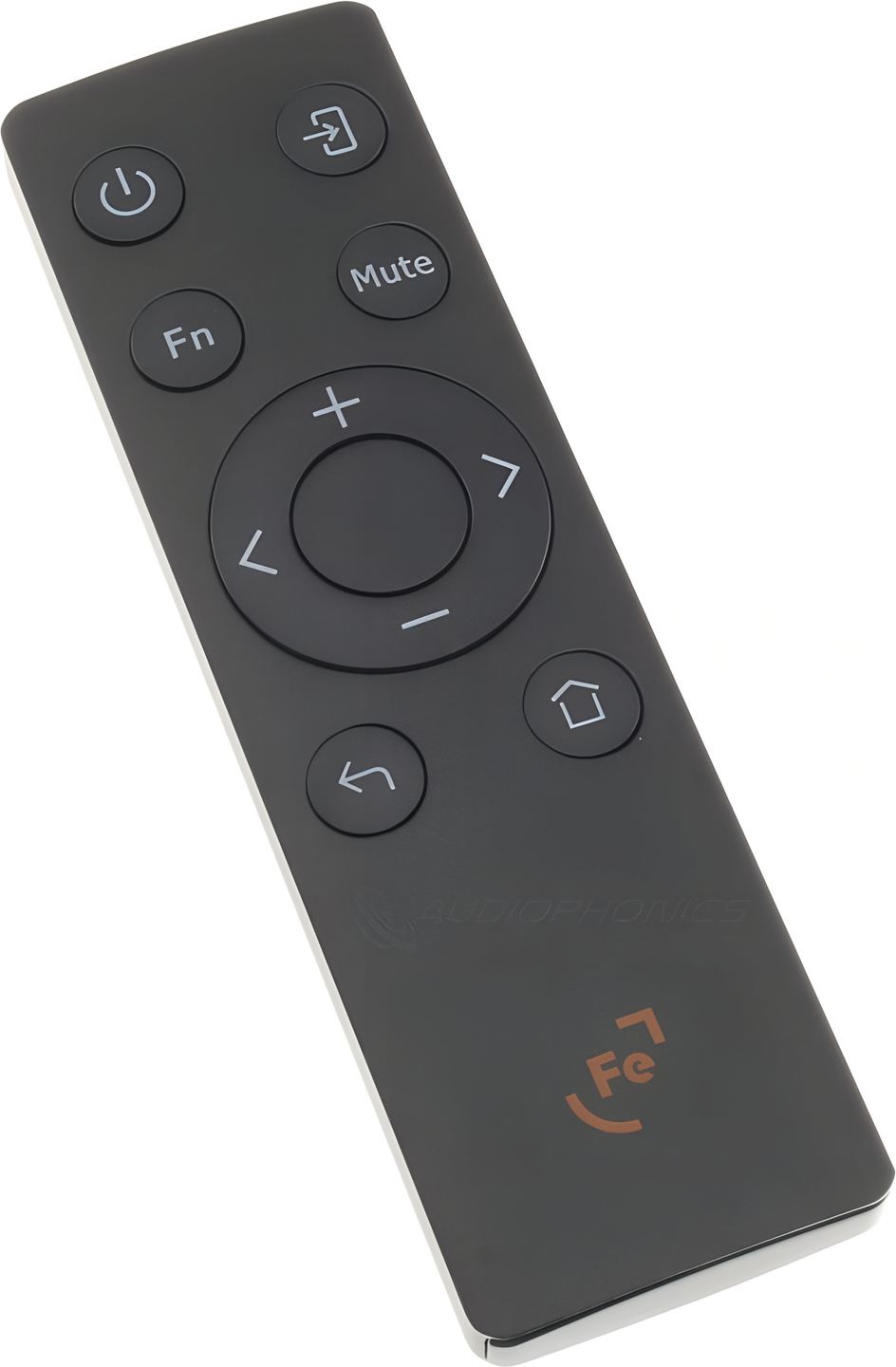
- 1 remote control
- 1 USB cable
- 1 power adapter
- 1 4.4 mm to 6.35 mm headphone adapter
General information
- Digital-to-analog converter, preamplifier, and headphone amplifier
- 100% balanced signal, including from RCA inputs
- Modern interface: high-resolution touchscreen + remote control
- Balanced, natural, transparent sound with no listening fatigue
- Performance level comparable to much more expensive components
Frequently Asked Questions
What is the difference between the WANDLA HP and the standard WANDLA?
The WANDLA HP includes a balanced headphone amplifier capable of delivering 3.5 watts into 50 ohms, with a front-panel 4.4 mm Pentaconn output and a supplied 6.35 mm jack adapter. The standard WANDLA does not have a headphone amplifier and requires the addition of an external amplifier such as the OOR to drive headphones. The digital-to-analog conversion and preamplification circuits remain identical between the two models.
Can the WANDLA HP replace a WANDLA + OOR combo?
The WANDLA HP offers performance that approaches that of the OOR, but the dedicated headphone amplifier remains superior in terms of power, transparency, and control. The WANDLA HP is a compact and cost-effective solution for those who want a single device handling both digital-to-analog conversion and headphone amplification. Users seeking ultimate performance will favor the WANDLA + OOR pairing, at the cost of greater footprint and investment.
Is HYPSOS essential to achieve good performance?
No. The WANDLA HP operates optimally with the supplied power supply, a quality switching power supply delivering 24 volts. HYPSOS brings an improvement in liveliness and musical engagement, but this difference remains subtler than with the OOR. Users who already own a HYPSOS and an OOR can use a splitter to power both devices simultaneously from a single supply. For a standalone WANDLA HP purchase, investment in a HYPSOS can be postponed or allocated to other priorities such as headphones or cables.
How do the dynamic digital filters work?
The dynamic digital filters, developed by Signalyst, modify the behavior of the DAC’s oversampling filter. Each filter prioritizes certain aspects of reproduction: transient response, progressive roll-off, apodization, minimum phase. At launch, two HQ filters complement the three standard ESS filters. Ferrum plans to replace the least popular filters with new options via firmware updates, based on community feedback. This participatory approach creates an evolving filter library tailored to users’ preferences.
Which headphones benefit the most from the WANDLA HP?
Demanding planar headphones such as the HiFiMan Susvara, Arya, or Audeze LCD-5 fully benefit from the available power in balanced mode. High-impedance headphones such as the Sennheiser HD 600/650/800 or the beyerdynamic DT 880 600-ohm also receive appropriate amplification. More sensitive or low-impedance headphones, such as the Final Audio D8000 Pro or the Meze Empyrean, work perfectly but may require gain adjustment to optimize the usable volume range.
- Eco-contribution included in the sale price.
- GTIN / EAN: 5903900676151




