

DAC Audio Converters
The DAC converter (Digital to Analog Converter) transforms the digital signal from your audio sources into an analog signal your amplifier and speakers can use. Found in all digital devices, an external DAC significantly improves sound quality thanks to dedicated audiophile components. Current models decode high-resolution files up to 32-bit / 768 kHz and the DSD format. Learn more
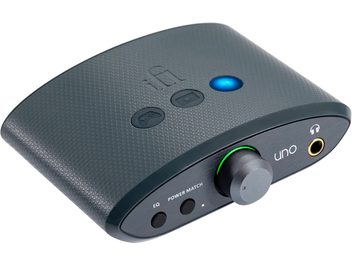
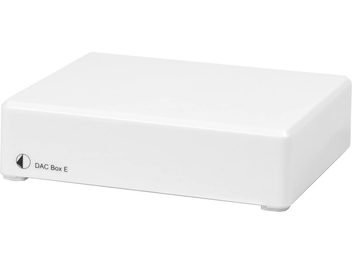
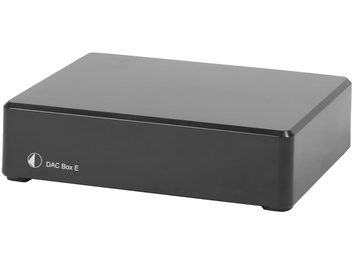
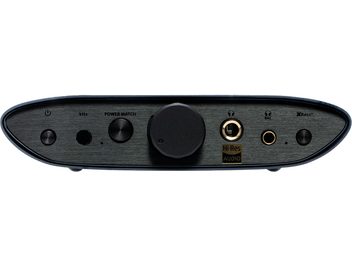
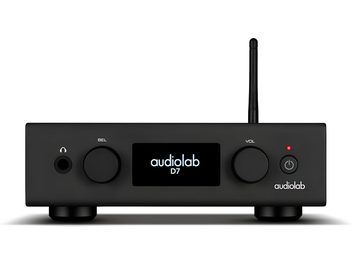
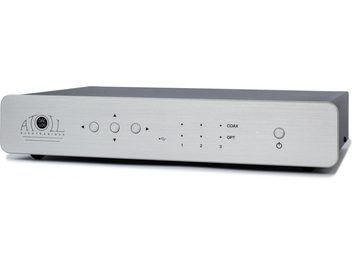
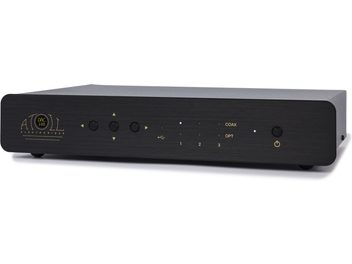
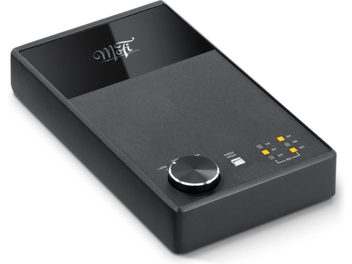
The role and operation of the DAC
The digital-to-analog converter is the indispensable link between your digital sources and your amplification system. Computers, smartphones, CD players, audio streamers, TVs: all these devices store or stream music as binary data (a succession of 0s and 1s). Your speakers and your headphones require an analog signal to produce sound. The DAC performs this essential conversion.
All digital devices include a basic converter. Smartphones use inexpensive DAC chips costing a few euros, adequate for earbud listening but limited in quality. Computers have built-in sound cards with varying performance. Manufacturers generally favor basic components to cut production costs, at the expense of sound reproduction.
An external DAC bypasses these mediocre built-in converters by sitting between the digital source and the amplifier. It uses high-end audio components: stabilized power supply, high-performance conversion circuits, precise clock, refined output stage. This dedicated approach greatly improves fidelity, revealing nuances and details inaudible with a standard converter.
Resolution and sampling rate
Resolution, expressed in bits, determines how precisely the converter encodes the amplitude of the audio signal. An audio CD uses 16-bit resolution. High-resolution files step up to 24-bit, offering higher dynamic range and a lower noise floor. The most capable DACs handle 32-bit, ensuring exceptionally pure reproduction.
Sampling rate, measured in kHz, indicates the number of samples captured per second. The CD format is limited to 44.1 kHz. Hi-Res files reach 88.2 kHz, 96 kHz, then 176.4 kHz and 192 kHz for the most refined formats. Some high-end DACs decode up to 384 kHz or 768 kHz, although files in these formats remain rare.
The higher the sampling rate, the more information is available to reconstruct the analog signal. This richness translates into greater treble precision, a wider soundstage, and improved spatialization. However, the benefit depends on the quality of the source files: a compressed MP3 won’t become miraculous with a reference-grade DAC.
DSD format and native decoding
DSD (Direct Stream Digital) represents a different approach to digital audio encoding. Unlike PCM, which encodes amplitude over multiple bits, DSD uses a 1-bit stream at a very high sampling rate. DSD64 operates at 2.8 MHz, DSD128 at 5.6 MHz, and the most advanced formats (DSD256, DSD512) reach dizzying frequencies.
Initially developed for Super Audio CDs, DSD has seen renewed interest with dematerialized music. Many labels offer their masters in DSD, particularly appreciated by audiophiles for their musicality and naturalness. Native DSD decoding requires specific circuits in the converter. Budget models settle for down-conversion to PCM, losing some of the original format’s advantages.
Connectivity and digital inputs
Audio DACs offer several types of digital inputs to accommodate different sources. The USB input is the most common connection for computers, smartphones, and portable audio players. Asynchronous USB DACs deliver the best performance by controlling the conversion clock themselves, eliminating timing and jitter issues related to the computer.
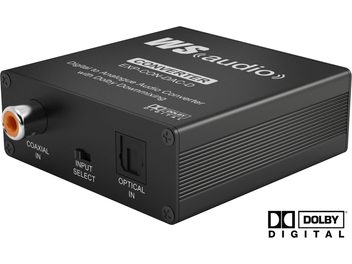
S/PDIF inputs (coaxial or Toslink optical) allow connection of CD players, digital transports, TVs, and set-top boxes. Coaxial inputs generally offer better quality than optical, with wider bandwidth and less susceptibility to interference. Some high-end DACs also provide AES/EBU (professional standard) or I2S inputs for optimal digital signal transmission.
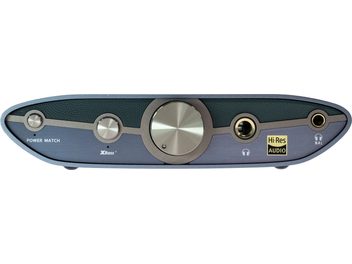
Output connectivity systematically includes unbalanced RCA sockets. Mid- and high-end models add balanced XLR outputs, offering better noise rejection over long runs and increased dynamic range. Many DACs also include a headphone output with dedicated amplification, turning the device into a complete audio hub.
DACs with preamp and extended functions
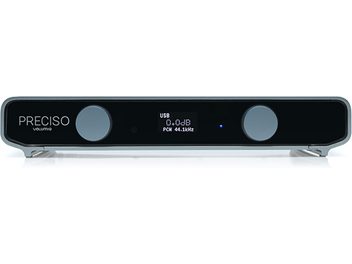
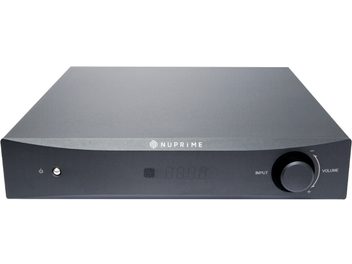
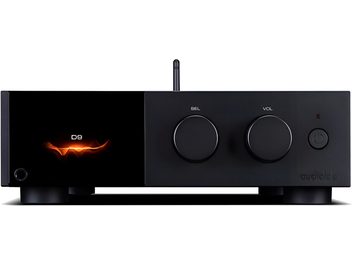
Some converters feature digital or analog volume control, allowing them to connect directly to a power amplifier or active speakers without an intermediate preamplifier. These DACs with preamp functionality simplify the audio chain and reduce the number of required devices. Volume control quality varies by model: the best use an analog stage with relays or precision resistors.
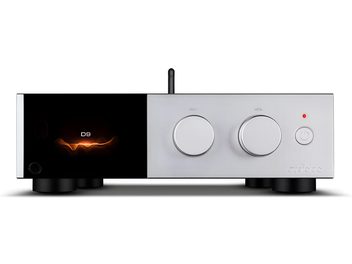
Modern DACs may include Bluetooth or Wi‑Fi connectivity for wireless streaming from smartphones and tablets. The Bluetooth codec affects quality: aptX HD and LDAC offer higher bitrates that better preserve audio detail than standard SBC. Some models also offer MQA (Master Quality Authenticated) decoding, a compression format used notably by the Tidal streaming service.
Portable versus desktop DACs
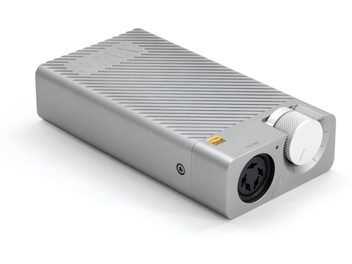
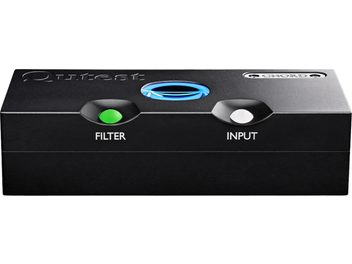
Portable DACs are designed for on-the-go listening with smartphones, tablets, and laptops. Compact and lightweight, they’re powered via USB and always include a headphone amplifier. These devices bypass the poor converters in mobile devices and fully exploit high-resolution files while traveling. A built-in battery on some models avoids drawing power from the smartphone.
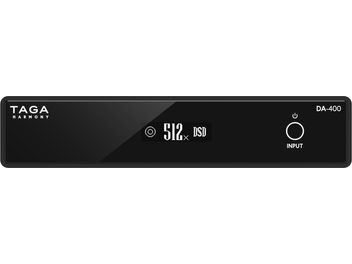
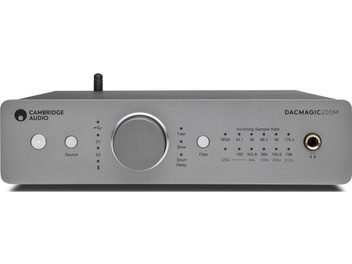
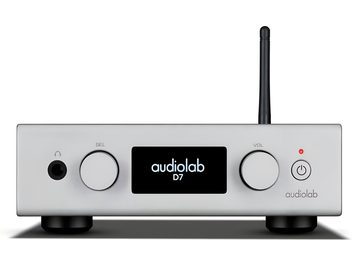
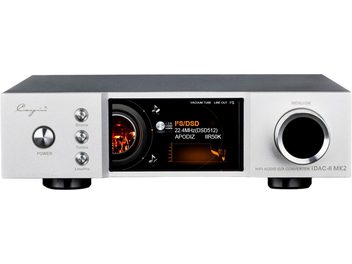
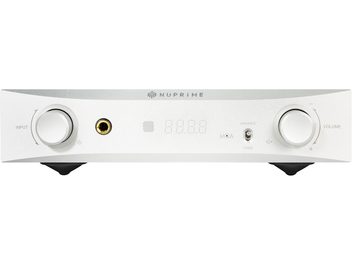
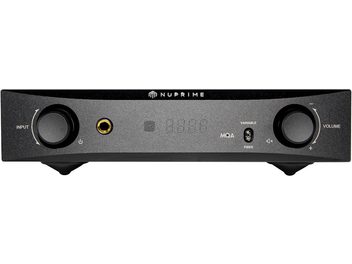
Desktop DACs are intended for fixed installation in a home audio system. Their larger form factor allows for robust stabilized power supplies, higher-quality components, and extensive connectivity. These models generally offer multiple digital inputs, letting you centralize all audio sources (computer, streamer, CD player, TV) through a single converter.
Components and build quality
The conversion chip is the central element of the DAC, but it doesn’t alone determine final sound quality. ESS Sabre, AKM, Burr‑Brown, and Cirrus Logic circuits equip most converters, each with its own sonic signature. A quality DAC stands out above all through overall design: refined power supply, precise clock, analog filtering, and a sophisticated output stage.
Power supply plays a crucial role in a DAC’s performance. Serious models use toroidal transformers, multilayer regulation, and strict separation between digital and analog sections. This isolation prevents interference and improves the signal-to-noise ratio. High-end converters may even feature two separate transformers to power digital and analog circuits independently.
The digital clock synchronizes conversion. Its precision determines jitter, the timing instability that degrades clarity and stereo separation. The best DACs incorporate ultra-stable clocks, sometimes quartz-controlled via TCXO or OCXO, ensuring optimally stable conversion. Some manufacturers even offer external clock generators to push the limits further.
Choosing based on use and system
Your choice of DAC depends on your audio sources and setup. If you mainly listen to streaming services at standard quality (MP3, AAC), an entry-level 24-bit / 96 kHz DAC is more than sufficient. For high-resolution files and DSD, choose a model compatible with the formats you use.
Required connectivity also guides your selection. Computer-centric use simply calls for a capable USB input. If you’re connecting multiple sources (CD player, streamer, TV), opt for a multi-input DAC with source selection. Owners of amps with balanced inputs will benefit from XLR outputs to get the most from their system.
Budget is obviously a key factor. Excellent-quality DACs start at 100–200 euros, offering a noticeable upgrade over built-in converters. Mid-range models (300–1000 euros) provide more features and finer sound. Above 1000 euros, high-end and audiophile DACs aim for absolute excellence with reference components and uncompromising construction.