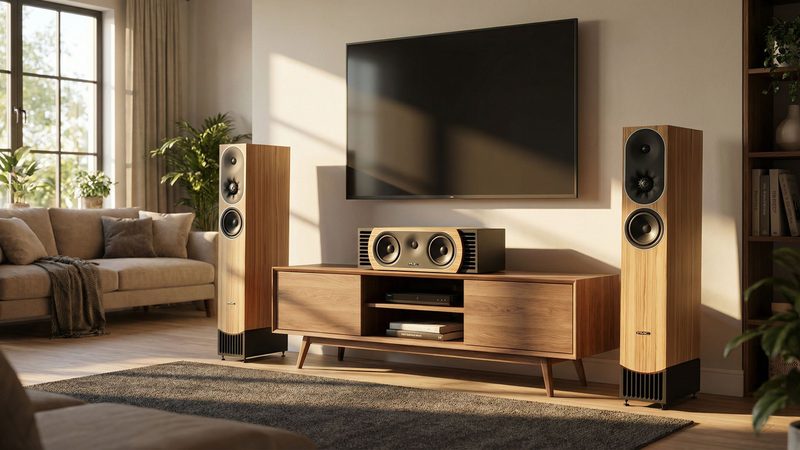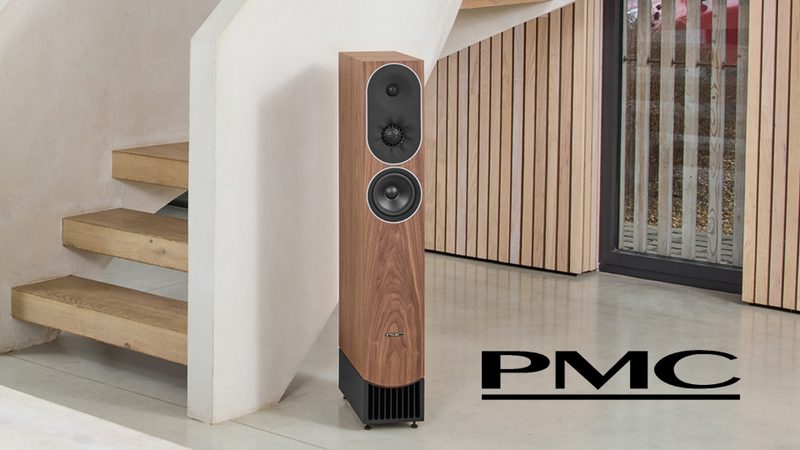

PMC Prophecy7 Mediterranean oak (pack of 2)


Awards

Diapason d'Or
The number 1 in classical music and hi-fi. It is a benchmark in the field of classical music and hi-fi, as well as the distinction it awards to the best devices each year
Overview
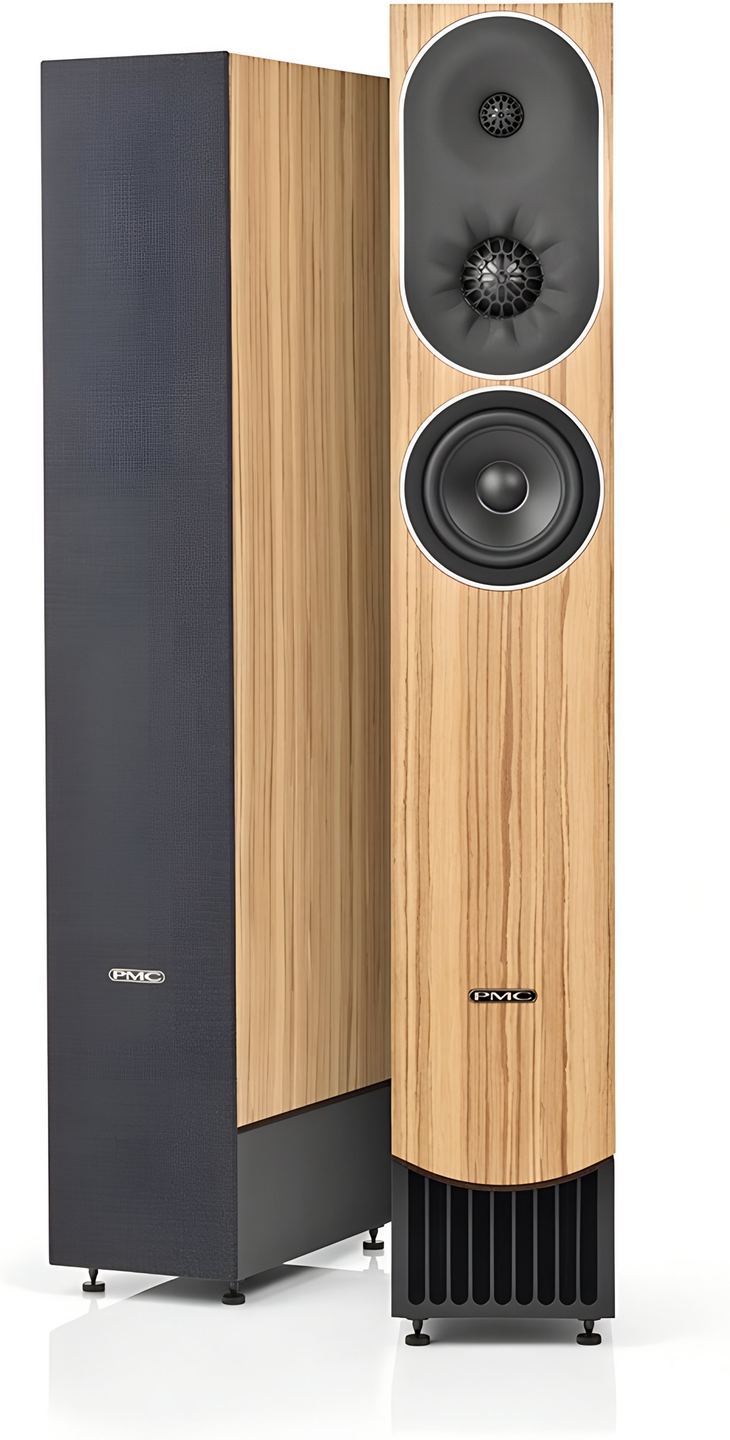
Less than one meter tall, barely wider than a CD case, yet capable of a sonic presence that belies its dimensions: the Prophecy7 embodies PMC’s philosophy taken to a new level. Succeeding the Twenty5i series, which long formed the core of the British manufacturer’s range, this three-way floorstander inherits technologies developed for professional studio monitors. It notably benefits from the LaminairX system, an evolution of PMC’s patented aerodynamic device, and from a soft-dome midrange driver housed in a distinctive waveguide.
A compact format with strong ambitions
The Prophecy7 has a slender silhouette that allows it to blend into spaces where larger floorstanders would be unwelcome. Its 965 mm height and 165 mm width make it particularly well suited to medium-sized listening rooms. This compactness is not a compromise but a deliberate choice: PMC chose to maintain controlled proportions rather than increase the cabinet volume, even if that meant using a relatively modest 125 mm woofer.
The cabinet, handcrafted in the UK, is available in three genuine wood finishes: Natural Walnut, Mediterranean Oak, and Black Walnut. The surface treatment favors minimally invasive techniques that highlight the natural feel and grain of the wood. The grilles, held in place by concealed magnets, are covered in a textured open-weave fabric that contributes to the speaker’s contemporary aesthetic.

ATL and LaminairX serving the low end
The base of the Prophecy7 catches the eye with its solid extruded aluminum profile. It is not merely decorative: it integrates the LaminairX system, the latest evolution of the aerodynamic port technology developed by PMC. Inspired by principles used in Formula 1 and endurance racing, this metal component features elongated channels that stabilize the airflow at the exit of the transmission line.
The Advanced Transmission Line (ATL) has been PMC’s acoustic signature since the brand was founded in 1991. In the Prophecy7, it extends over an acoustic length of 1.91 meters, folded inside the cabinet. The principle consists in placing the bass driver at the end of a tunnel lined with absorbent materials calibrated to eliminate the mid and high frequencies radiated from the rear of the driver, while allowing low frequencies to pass through and emerge in phase with the front radiation. This architecture delivers low-frequency extension (40 Hz at -3 dB) that is difficult to achieve with a conventional bass-reflex in an equivalent volume.
LaminairX reduces turbulence and drag at the line’s exit, lowering harmonic distortion by up to 3 dB according to the manufacturer’s measurements. The whole assembly is decoupled from the main cabinet by a layer of pure cork, a sustainable material that helps stabilize and anchor the speaker while limiting the transmission of unwanted vibrations.
Three-way design with soft-dome midrange
The three-way configuration sets the Prophecy7 apart from the Prophecy1 and Prophecy5 models, which are two-way designs. The addition of a dedicated midrange driver relieves the woofer and tweeter so they can each focus on their optimal frequency band.
The midrange transducer is a 55 mm soft dome mounted in a petal-shaped waveguide that PMC describes as the “n-compass.” This sculptural configuration is not new for the manufacturer: it can be found on the PMC6-2 and PMC8-2 midfield studio monitors, benchmarks in many mastering studios. Its role is to control midrange dispersion to achieve a stable stereo image over a wide listening area and a smooth transition to the tweeter.
The 27 mm soft-dome tweeter features a dedicated dispersion grille that adds a secondary loading chamber. This device compensates for the usual roll-off in the extreme high frequencies and maintains controlled directivity up to 180 degrees.
The 125 mm woofer uses a mica-loaded polypropylene cone, a light and rigid material that responds quickly to transients. Its cast-alloy chassis provides the mechanical rigidity needed for the large excursions required by transmission-line operation. This LTXL (Long Throw XL) transducer was developed specifically for the Prophecy range, with parameters optimized for coupling with the ATL.

A hand-assembled crossover
The crossover network operates at 600 Hz between the bass and midrange, then at 3.1 kHz between the midrange and treble. PMC uses steep slopes that keep each transducer within its linear operating range and contribute to consistent off-axis response.
The printed circuit board meets military-grade specifications: thick copper tracks, gold-plated through-holes, carefully selected and matched components. Each crossover is assembled and fine-tuned by hand in the brand’s UK workshops. This artisanal approach makes it possible to optimize integration between the three drivers, an aspect that listening tests regularly highlight as one of this speaker’s strengths.
Setup and system matching
With a sensitivity of 88 dB and a nominal impedance of 6 ohms, the Prophecy7 is compatible with a wide range of amplifiers, from modestly powered integrated models (25 W is sufficient) to more robust power amps (250 W maximum recommended). The three-way design and improved efficiency compared with previous generations make it easier to pair with a variety of electronics.
This flexibility does not rule out a certain level of demand: the speaker’s transparency reveals the sonic characteristics of the amplifier driving it. Comparative listening when choosing electronics will help you find the desired tonal balance.
The binding posts accept 4 mm banana plugs or spades, with a satin nickel finish. The position of the rear terminals adds around 23 mm to the total depth. Supplied decoupling spikes increase the height to 985 mm once installed.
Home cinema integration
The Prophecy range includes a dedicated center channel, the ProphecyC, which shares the same technologies and the same sonic signature. This coherence allows you to build a homogeneous multichannel system by using Prophecy7 speakers as main and surround channels, with the ProphecyC at the center. The ProphecyC’s front-firing LaminairX port system allows placement close to a wall without degrading performance.
Documentation
Technical specifications
Acoustic performance
- Frequency response: 40 Hz - 20 kHz (-3 dB)
- Sensitivity: 88 dB SPL at 1 W / 1 m
- Impedance: 6 Ω
- Effective ATL™ length: 1.91 m
Amplification
- Recommended amplifier power: 25 - 250 W
Drivers
- Bass: PMC 12.5 cm / 125 mm LTXL mineral cone driver with cast-alloy chassis
- Midrange: PMC 5 cm / 55 mm precision soft dome driver
- Treble: PMC 2.7 cm / 27 mm soft dome driver
Crossover
- Crossover frequencies: 0.6 kHz and 3.1 kHz
Connectivity
- Input connectors: one pair of 4 mm binding posts with satin nickel finish
Dimensions and weight
- Height: 965 mm (with spikes: 985 mm)
- Width: 165 mm
- Depth: 310 mm (with binding posts: 333 mm, with grille: 343 mm)
- Weight: 23.7 kg per speaker
Frequently Asked Questions
What room size is suitable for the Prophecy7?
The Prophecy7 performs at its best in rooms of approximately 15 to 35 m². In larger spaces, the Prophecy9 with its two woofers will offer greater dynamic ease. Conversely, in a smaller room, the two-way Prophecy5 or the compact standmount Prophecy1 may be more appropriate alternatives.
Can the Prophecy7 be used with a tube amplifier?
Yes, provided the amplifier delivers sufficient power (at least 25 W) and has an output impedance compatible with the speaker’s 6 ohms. The 88 dB sensitivity remains moderate, which rules out small single-ended amplifiers with only a few watts.
Does the Prophecy7 replace the Twenty5.24i?
The Prophecy range does indeed succeed the Twenty5i series for domestic passive speakers. The Prophecy7 occupies the three-way segment previously held by the Twenty5.26i, with updated technologies (LaminairX, new midrange waveguide) and a redesigned aesthetic.
- Eco-contribution of €0.75 included in the sale price.