

Audiolab 6000A MKII black
This product is no longer available for sale!


Similar products from Audiolab
Specifications and features

Overview
Seven years after its launch, the integrated amplifier that helped revive the market for affordable hi-fi components is getting a facelift. The 6000A MKII keeps the proven formula of its predecessor, but now incorporates technologies borrowed from Audiolab’s higher-end 7000 and 9000 ranges. The digital section has been completely redesigned, the power supply has gained additional reserves, and the addition of an HDMI ARC input significantly expands its everyday use cases.
A discreet chassis, meticulous build quality
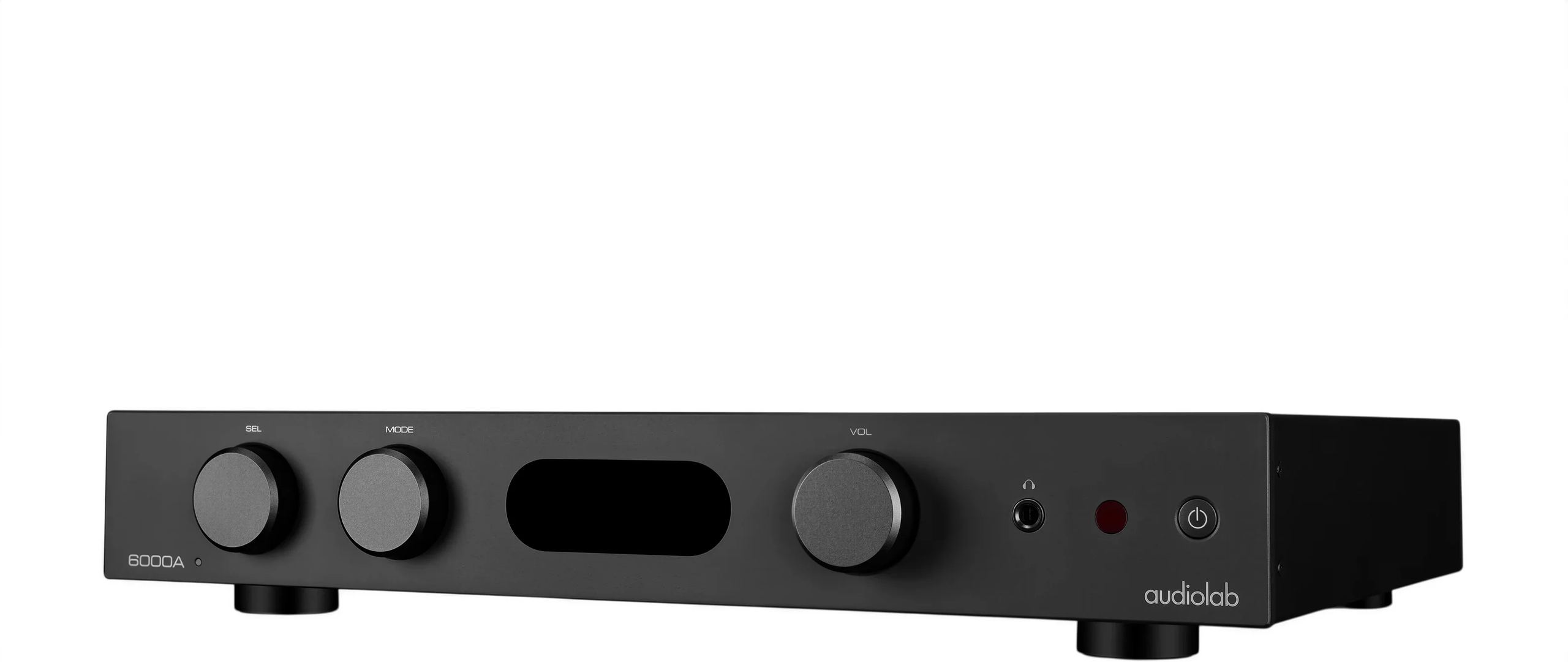
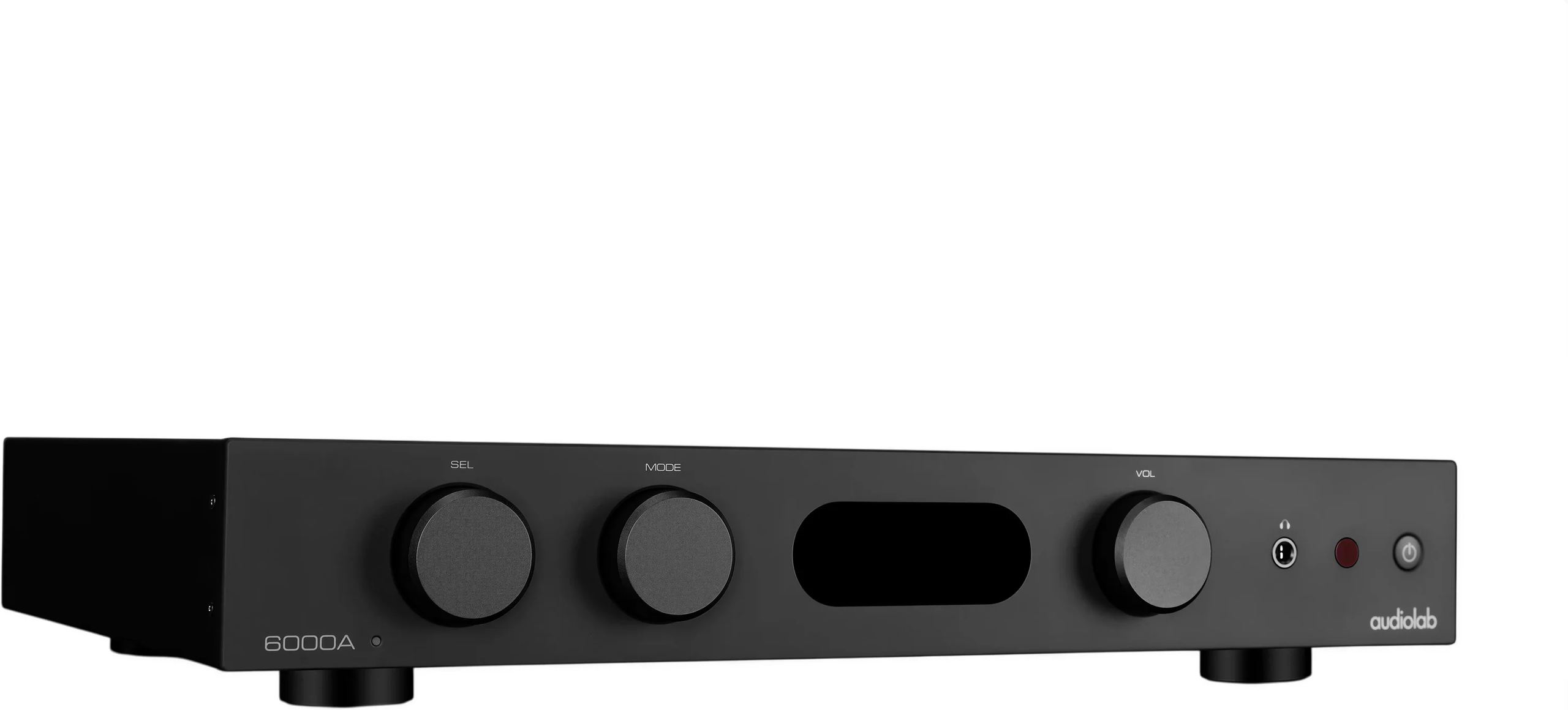
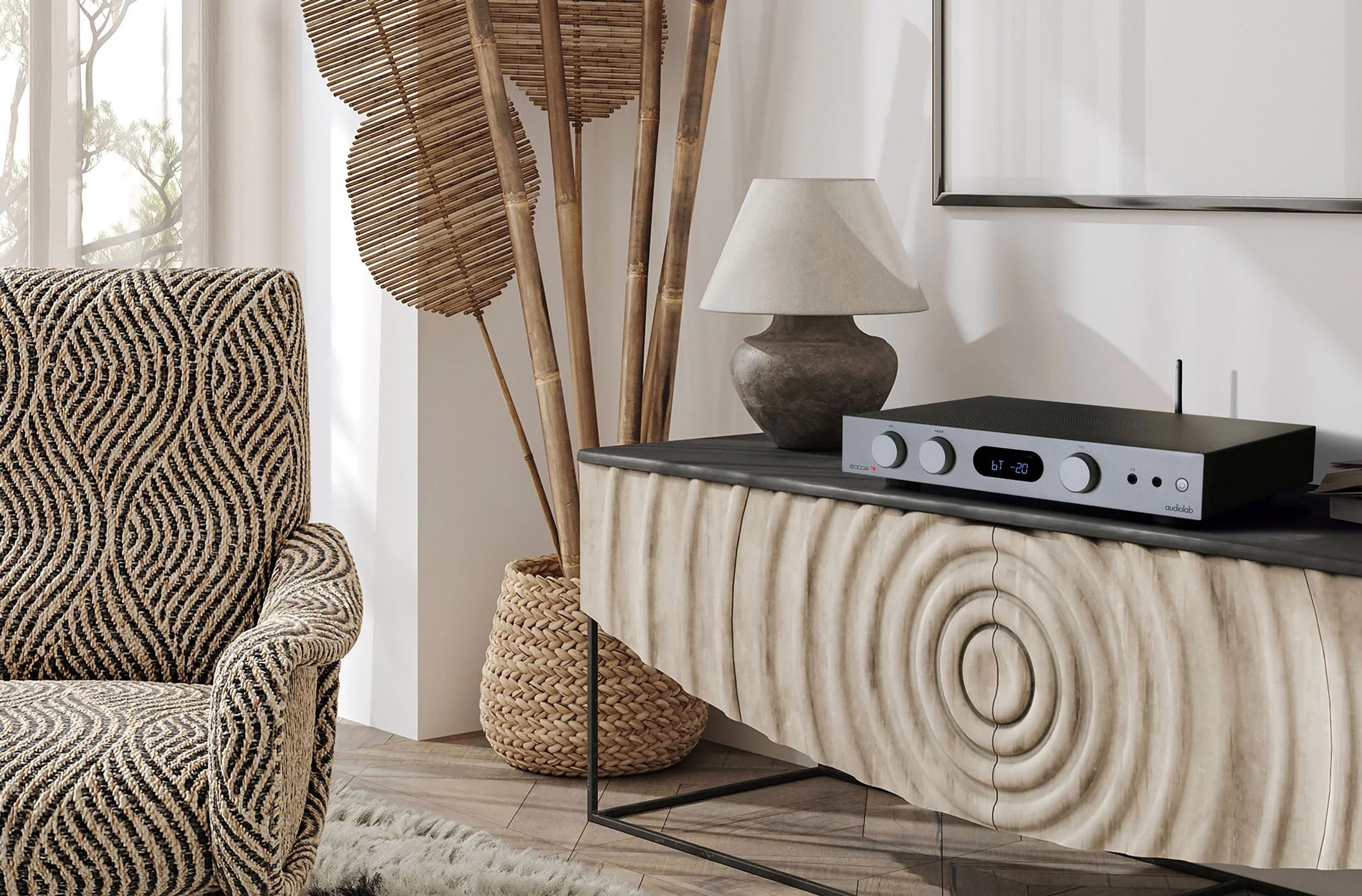
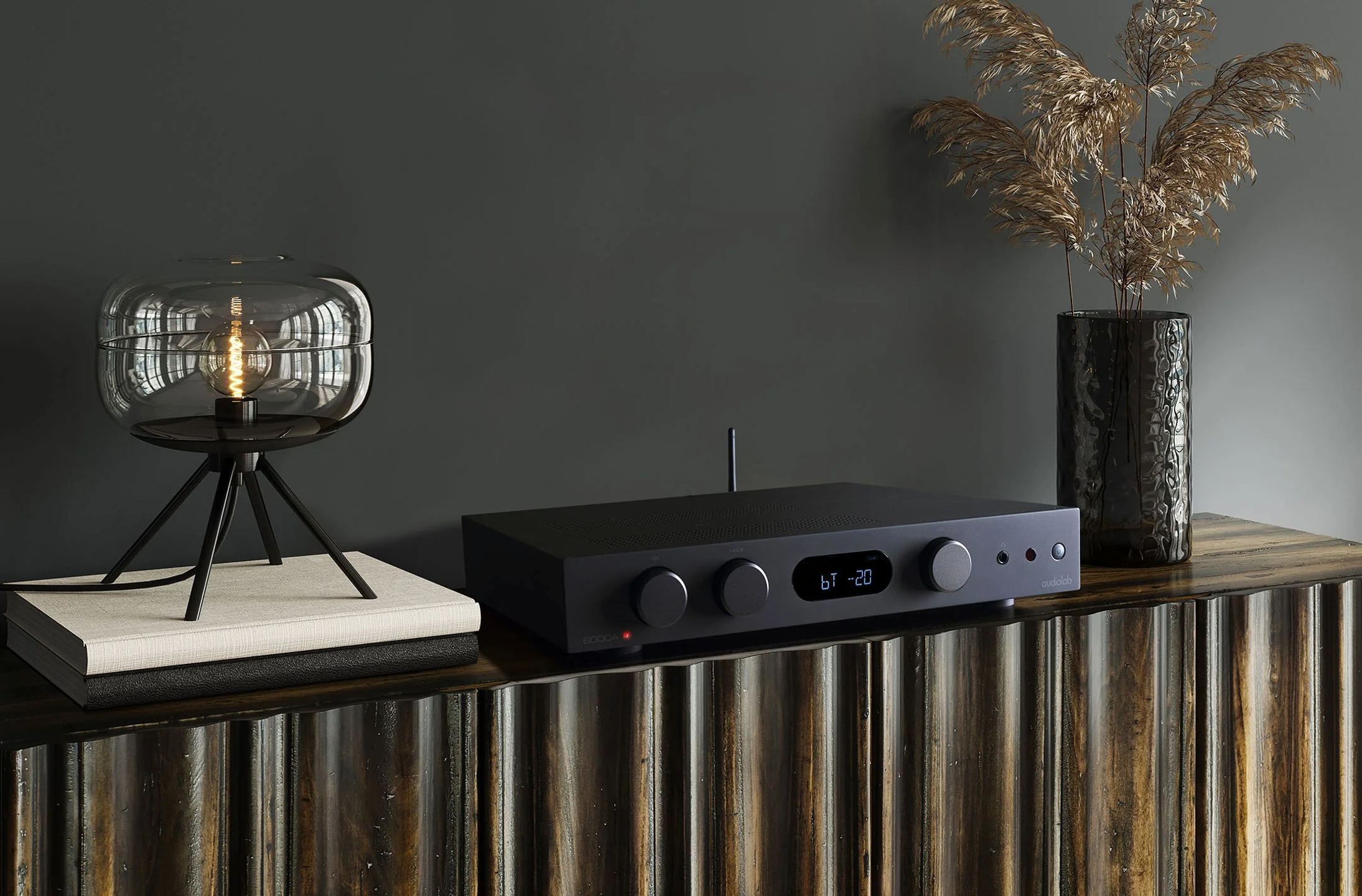
The styling remains faithful to the previous model: a low-profile aluminium case (65 mm), a clean front panel featuring three rotary knobs, and a central OLED screen that displays the selected source and volume level. The left-hand knob controls volume via an analogue potentiometer, the centre knob lets you navigate through the inputs, while the third provides access to settings and operating modes.
The build quality deserves praise in this price range. The brushed aluminium front panel gives the unit a more upmarket look than its price point suggests. The overall dimensions are 444 mm wide by 299 mm deep, with a weight of 7.8 kg, allowing seamless integration with other components from the British manufacturer’s 6000, 7000 and 9000 series.
A digital section inherited from higher models
The most significant change concerns the digital-to-analogue converter. The ES9018K2M chip has been replaced by ESS Technology’s ES9038Q2M, the same component used in the 7000A amplifier. This 32-bit Sabre chip accepts PCM streams up to 192 kHz and relies on the HyperStream II architecture as well as a Time Domain Jitter Eliminator to minimise background noise.
The engineering team led by Jan Ertner has developed a post-DAC active filter operating in Class A, optimised to take full advantage of the characteristics of this new chip. This approach, initially devised for the 9000 and 7000 series amplifiers, helps refine the sonic performance. The 6000A MKII also offers several selectable digital filter profiles: Linear Phase (Fast Roll-Off and Slow Roll-Off), Minimum Phase (Fast Roll-Off and Slow Roll-Off), as well as a Hybrid mode.
A beefed-up power supply for greater authority
Under the hood, the 200 VA toroidal transformer feeds a bank of four 15,000 µF smoothing capacitors, i.e. 30,000 µF per supply rail. This current reserve allows the amplifier to maintain tighter control during dynamic passages and fast transients. The maximum peak current has been increased from 9 A on the original model to 11 A on this MKII version, improving its ability to drive speakers with complex loads.
The power stage retains a Class AB topology combined with a CFB (Complementary Feedback) circuit that ensures thermal stability and consistent linearity regardless of the output transistors’ temperature. The rated output power remains identical to the previous model: 2 × 50 W into 8 ohms and 2 × 75 W into 4 ohms.
Generous analogue and digital connectivity
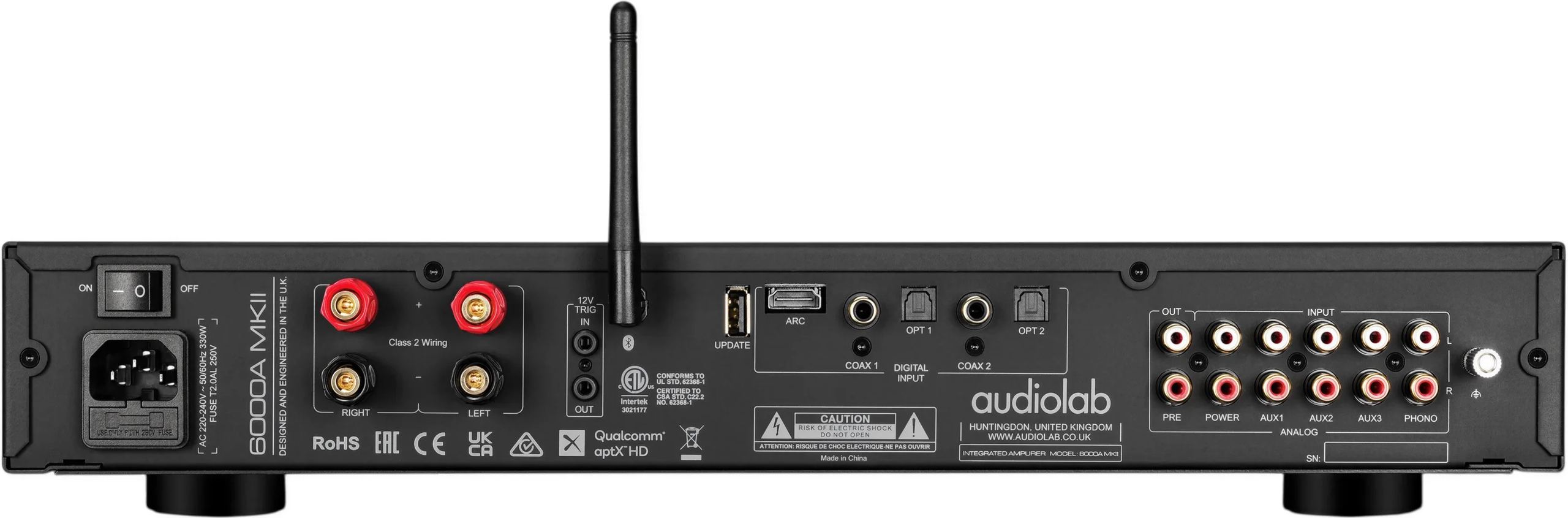
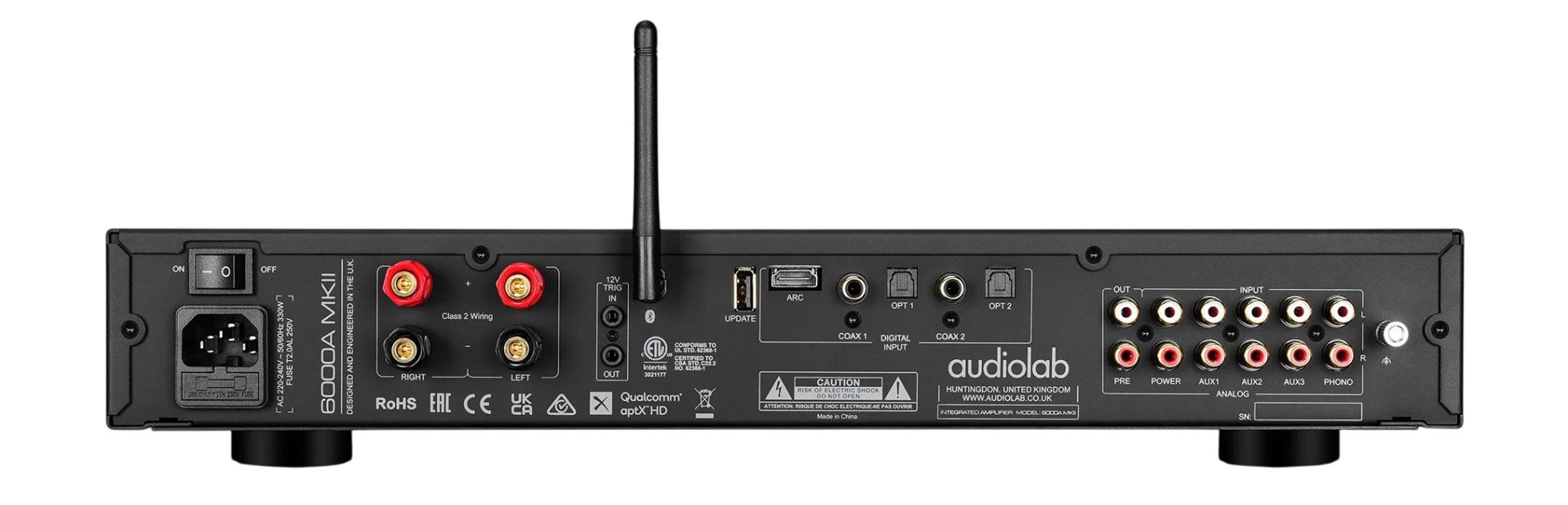
The rear panel offers a total of ten audio inputs. On the analogue side, there are three RCA line inputs plus a phono input dedicated to moving magnet (MM) cartridges. The latter uses low-noise JFET transistors and precise RIAA equalisation for an accurate reproduction of vinyl records.
The digital section includes two coaxial and two optical S/PDIF inputs, now joined by an HDMI ARC input compatible with eARC. This allows you to send sound from your TV via a single HDMI cable, with the option to control the amplifier’s volume and power directly from the TV’s remote control. The built-in Bluetooth receiver has been upgraded to version 5.1 and supports the aptX HD codec for high-resolution wireless transmission.
A preamplifier output (Pre-Out) lets you add an external power amplifier or an active subwoofer. A Power Amp In input allows the 6000A MKII to be used as a pure power amplifier, bypassing the preamp section.
Three operating modes
The unit offers welcome flexibility via three operating modes accessible from the menu. Integrated mode corresponds to the conventional use of a full integrated amplifier. Preamplifier mode disables the power stage and allows you to use only the preamp section with an external power amp. Power amplifier mode, finally, bypasses the preamp to receive a signal from an external source, such as a home cinema processor.
This modularity makes it possible to upgrade your system progressively or integrate it into a multichannel setup where the 6000A MKII would handle the front left and right channels.
A dedicated headphone output
The 6.3 mm front-panel headphone jack is driven by a dedicated amplifier using a current-feedback topology. This architecture offers wide bandwidth and a high slew rate, resulting in dynamic reproduction with headphones of various impedances, from 20 to 600 ohms. Headphone listening does not use the main power amplifier and has its own circuit.
Documentation
Technical specifications
Preamplifier
- Gain: +8 dB (line), +54 dB (phono MM)
- Input sensitivity: 720 mV (line), 3.1 mV (phono MM)
- Input impedance: 10 kΩ (line), 47 kΩ (phono MM)
- Frequency response: 20 Hz - 20 kHz
- Output voltage: 2.3 V max.
- Output impedance: 120 ohms
- Signal-to-noise ratio: >110 dB (line), >79 dB (phono MM)
Digital-to-analog converter
- Conversion chip: ES9038Q2M
- Output level: 2.05 V
- Maximum sampling rate: 192 kHz
- Signal-to-noise ratio: >116 dB
Power amplifier
- Gain: +29 dB
- Rated power: 2 x 50 W (8 ohms), 2 x 75 W (4 ohms)
- Frequency response: 20 Hz - 20 kHz
- Input sensitivity: 720 mV
- Signal-to-noise ratio: >109 dB
- Maximum output current: 11 A
Headphone amplifier
- Output impedance: 2.35 ohms
- Load impedance: 20 - 600 ohms
Connectivity
- Inputs: 3 x analog, 1 x phono, 1 x power input, 2 x coaxial, 2 x optical, 1 x Bluetooth, 1 x HDMI ARC
- Outputs: 1 x RCA PRE out
General information
- Dimensions (depth x width x height): 299 mm x 444 mm x 65 mm
- Weight: 7.8 kg
Frequently Asked Questions
Which digital filters are available and what are they for?
The 6000A MKII offers five digital filters: Linear Phase Fast Roll-Off, Linear Phase Slow Roll-Off, Minimum Phase Fast Roll-Off, Minimum Phase Slow Roll-Off, and Hybrid Fast Roll-Off. These filters subtly modify the DAC’s frequency response and impulse response. Linear-phase filters preserve time coherence but introduce a slight pre-ringing, while minimum-phase filters eliminate this pre-ringing at the cost of a slight phase alteration. The choice depends on listening preferences and the type of music.
Is the HDMI ARC input compatible with eARC?
Yes, the HDMI input complies with the HDMI 2.1 standard and supports the eARC (Enhanced Audio Return Channel) protocol. This allows higher-quality audio signals to be sent from the TV, including lossless formats. The CEC function also allows volume and power control via the TV’s remote.
Can the amplifier be used with floorstanding speakers with low sensitivity?
With 50 W per channel into 8 ohms and a peak current of 11 A, the amplifier can drive floorstanding speakers of average sensitivity (around 86–88 dB) in a reasonably sized room. For very low-sensitivity speakers or very high listening levels in large spaces, a more powerful amplifier would be preferable.
Does the phono stage support moving coil (MC) cartridges?
No, the phono input is exclusively compatible with moving magnet (MM) cartridges. The 47 kΩ input impedance corresponds to the MM standard. Using an MC cartridge would require a suitable external phono preamplifier.
- Eco-contribution of €2.58 included in the sale price.
- GTIN / EAN: 6976522469004




