Cabasse The Pearl Sub white
This product is no longer available for sale!
Similar products from Cabasse
Specifications and features


Overview
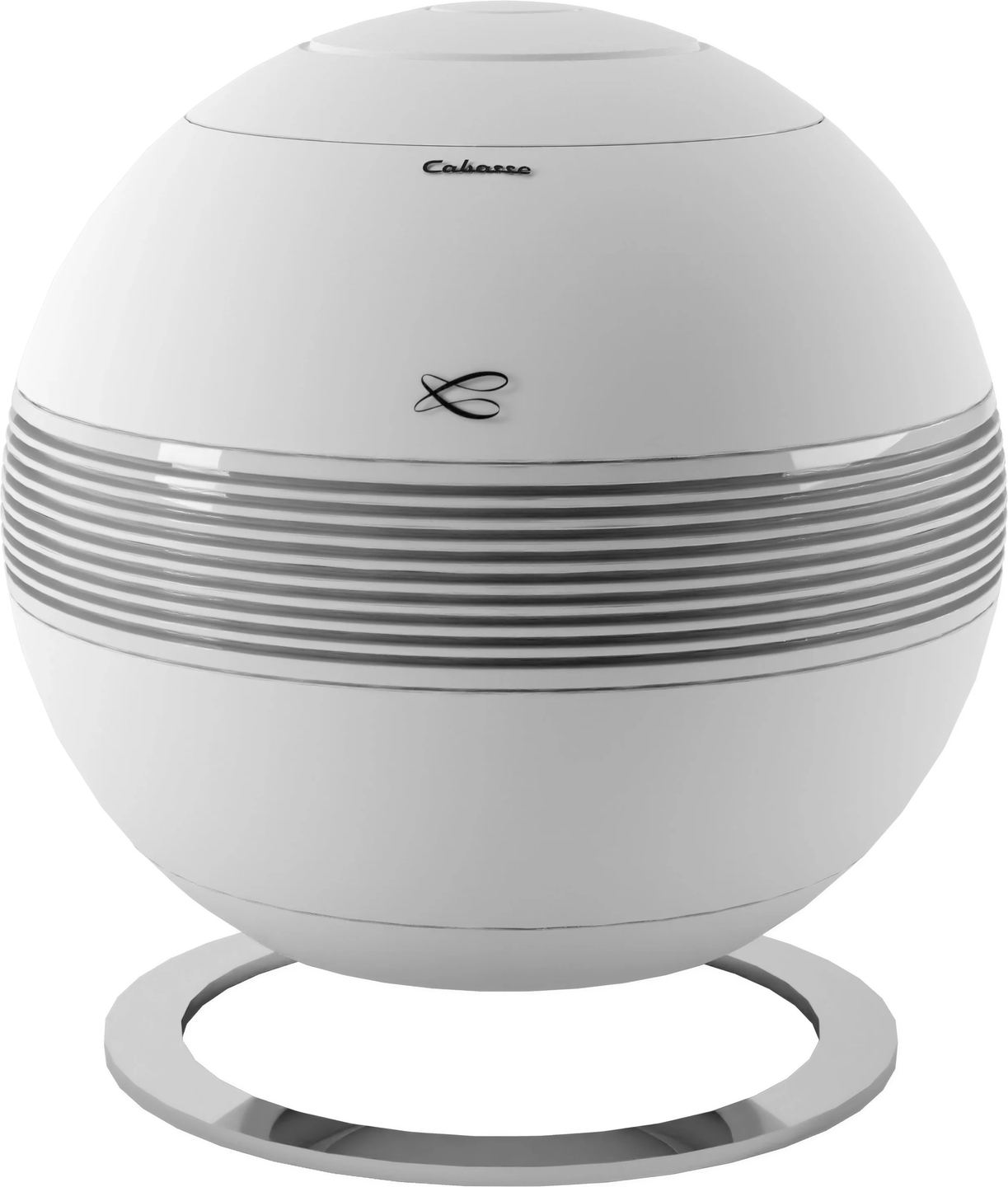
Cabasse designed the Pearl Sub as the brain of a complete 2.1 hi-fi system. This spherical subwoofer not only integrates amplification for its own bass, but also the power needed to drive a pair of passive satellite speakers, all controlled by a DSP processor and a high-resolution streaming section. The idea: eliminate the separate amplifier and centralize the electronics in a single enclosure.
A woofer built for deep bass
The 25 cm driver uses Cabasse’s HELD (High Excursion Low Distortion) technology. Its carbon fiber cone and rare-earth magnet allow for linear excursion of ±15 mm, or 30 mm total. This substantial excursion, combined with a symmetrical suspension motor, keeps the voice coil in the magnetic field even at high volume, which limits distortion on dynamic passages.
The amplification dedicated to bass delivers 1000 W RMS (2000 W peak). Cabasse announces a frequency response extending down to 14 Hz, a low value for a subwoofer of this size. Sound pressure level reaches 100 dB, with peaks at 112 dB.
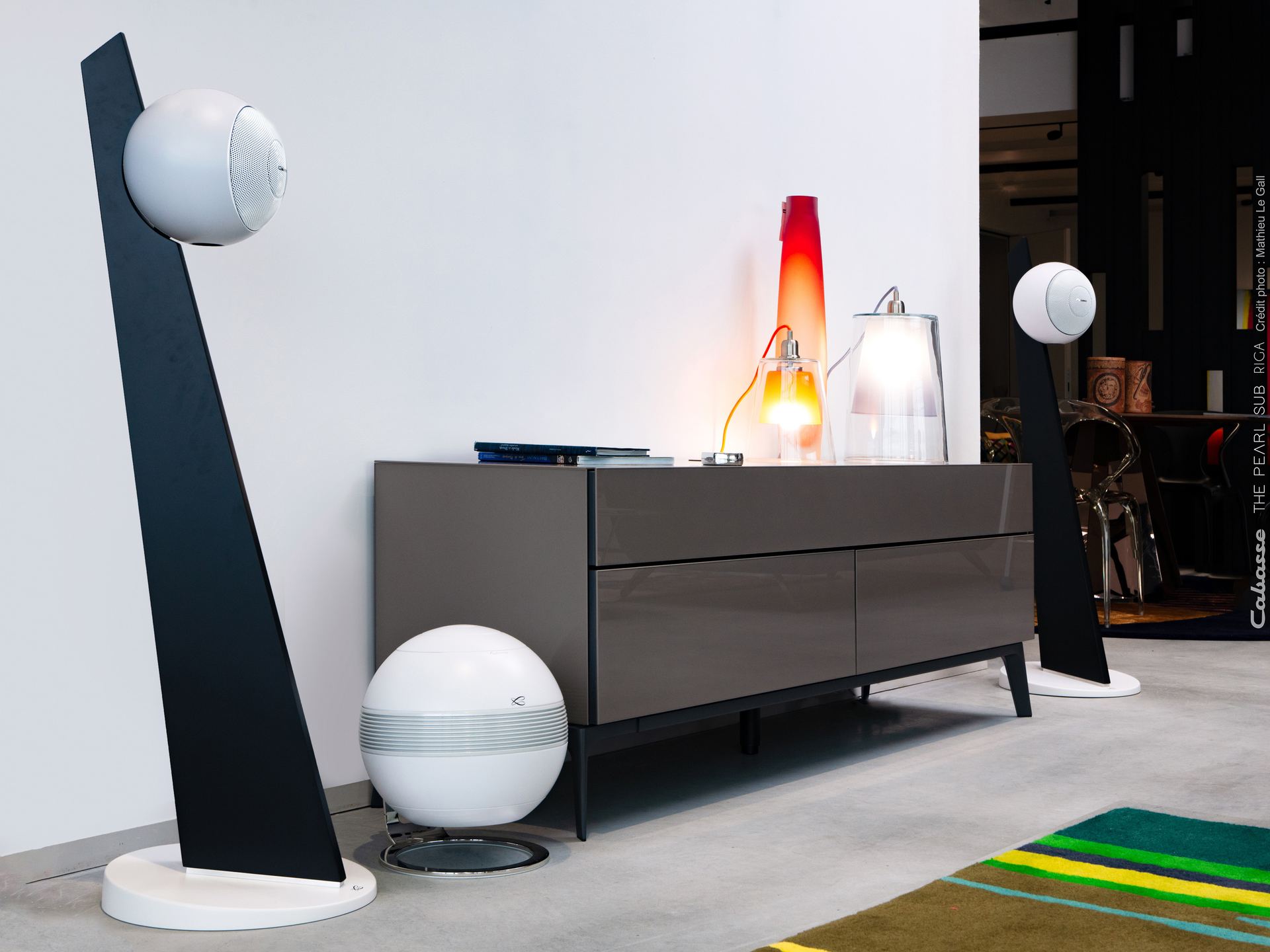
An integrated 2.1 system designed for Cabasse satellites
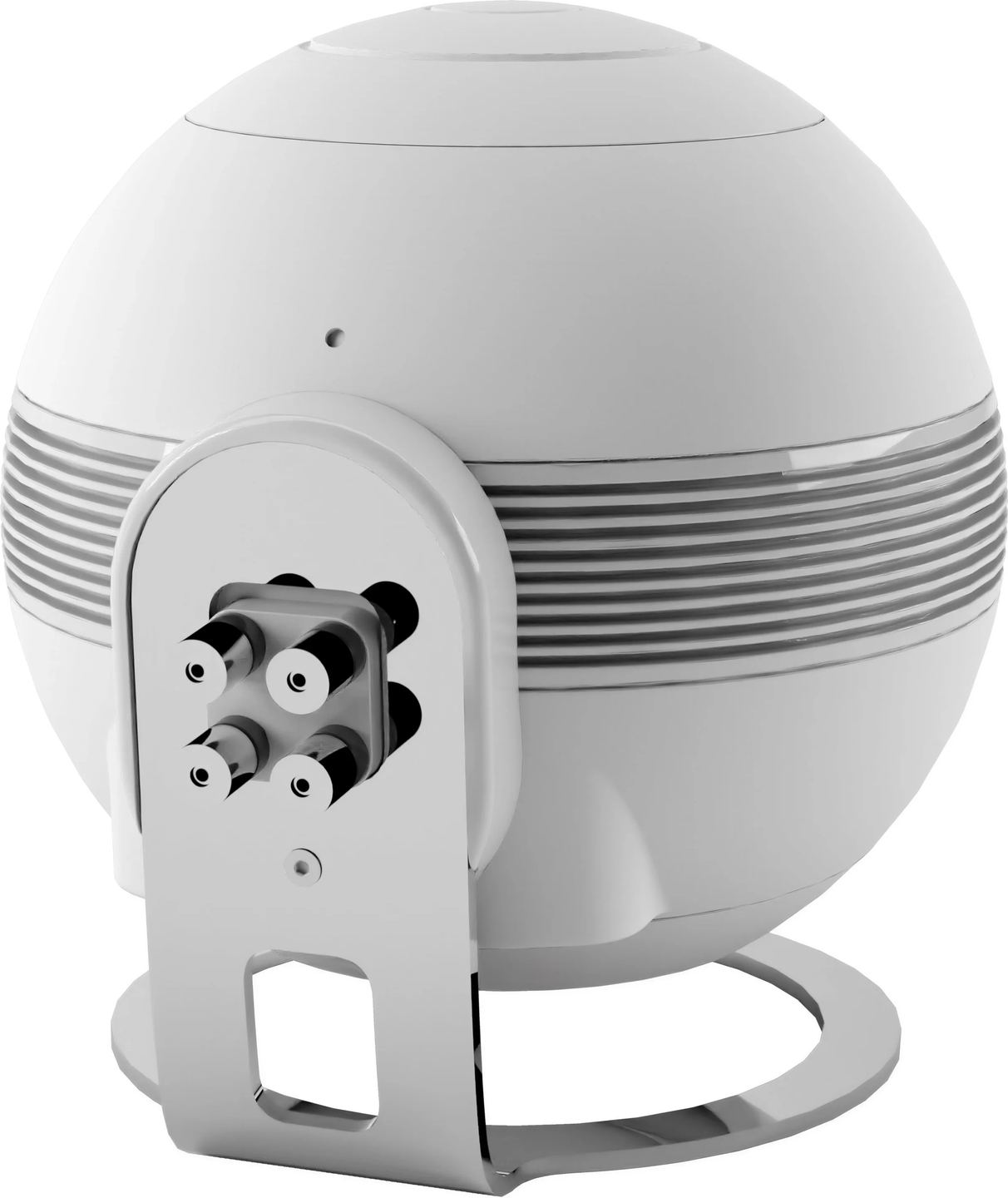
Four carbon binding posts, placed on the rear, connect a pair of passive speakers. Two amplification channels rated at 300 W RMS each power the satellites. The Pearl Sub is therefore self-sufficient for building a complete stereo system, without an external amplifier.
DEAP (Digital Enhancement of Acoustical Performances) technology adapts signal processing according to the connected speaker model. Specific DSP profiles exist for the iO3, Riga 2, and Baltic 5. The StreamCONTROL app lets you select the right profile in just a few taps, and the 4-core DSP adjusts compression and equalization parameters for each frequency band in real time.
Cabasse has also extended compatibility to other models from the brand, such as the Minorca MC40 and the Murano, although DEAP optimization profiles remain limited to the three main Lifestyle ranges.
Acoustic correction and automatic calibration
The Pearl Sub features a built-in microphone for the CRCS (Cabasse Room Correction System) function. The calibration procedure, launched from the app, emits a series of test signals that the microphone captures. The algorithm analyzes the room response and corrects anomalies related to reflections, room modes, and speaker placement.
This type of automatic acoustic correction, common on high-end home theater amplifiers, is rare on a subwoofer. It avoids the need for third-party software or an external microphone.
Streaming and network connectivity
The Asahi Kasei AKM4490 digital-to-analog converter processes audio streams up to 24-bit / 192 kHz. The Pearl Sub accesses Qobuz, Deezer, Tidal, Spotify Connect, and Napster streaming services via Wi-Fi or Ethernet. Internet radio stations are available via vTuner, and DLNA/NAS network playback lets you make use of a local music library.
AirPlay 2 compatibility adds the Apple ecosystem, while Bluetooth ensures a quick connection from a smartphone. Google Assistant and Amazon Alexa voice assistants can control the system. The Pearl Sub integrates into the Cabasse multiroom network via the StreamCONTROL app, with source synchronization across multiple speakers from the brand.

Physical inputs and automatic standby
For analog or digital sources, the rear panel offers an RCA input, an optical SPDIF input, and a USB port (file playback from a USB drive or external disk). MP3, AAC, WMA, AIFF, FLAC, ALAC, OGG Vorbis, and WMA Lossless formats are supported.
An automatic detection circuit monitors the RCA and optical inputs. The subwoofer wakes from standby as soon as a signal is detected and switches off after a period of inactivity. This operation simplifies everyday use, especially when paired with a television.
Bluetooth remote control and control app
The Pearl Sub comes with a circular Bluetooth remote control. Its rotating ring controls volume, and the buttons allow you to change source, pause playback, or navigate favorites. The StreamCONTROL app (iOS and Android) offers more complete control: DEAP profile management, CRCS calibration, access to streaming services, creation of multiroom groups.
Construction and finish
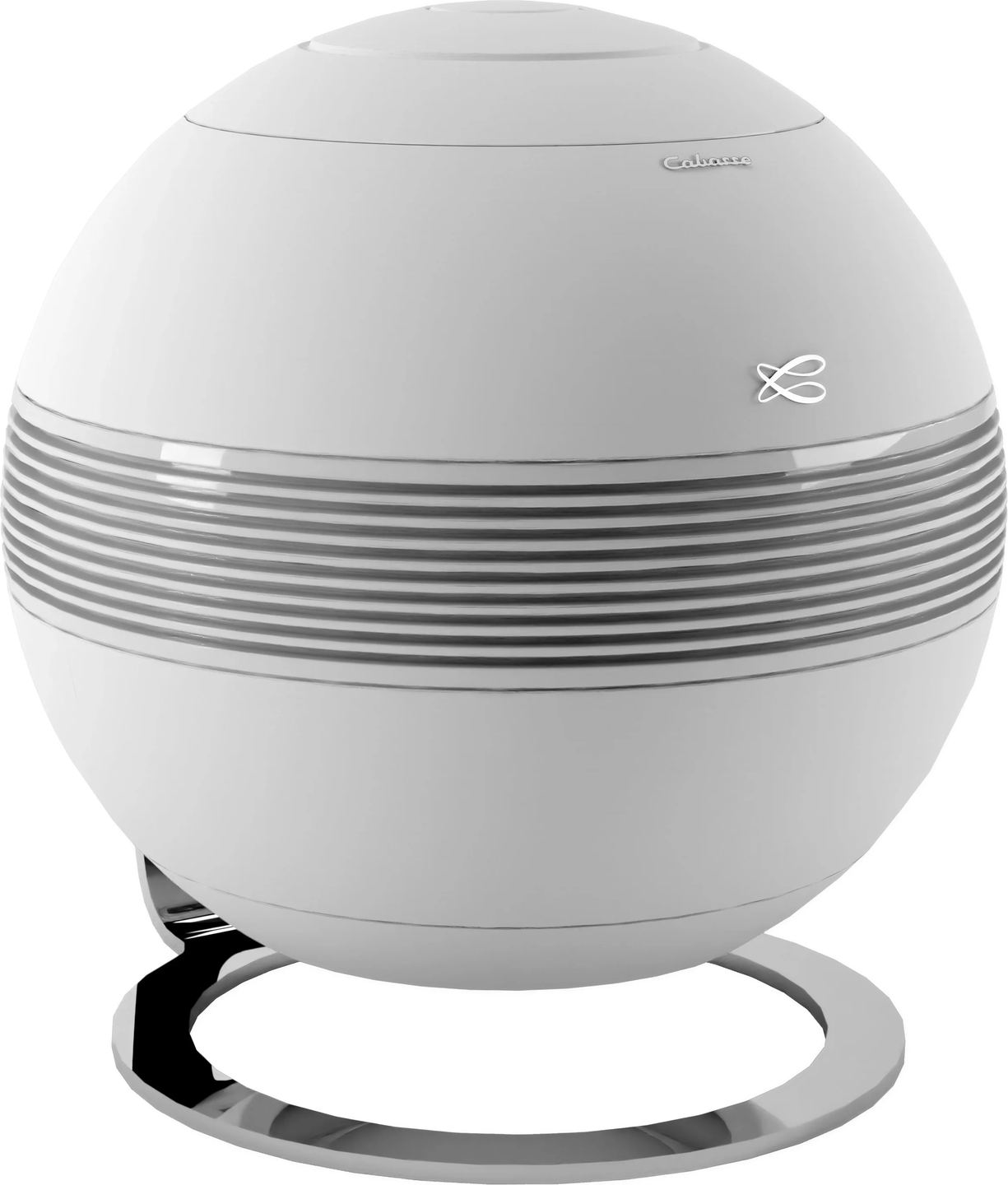
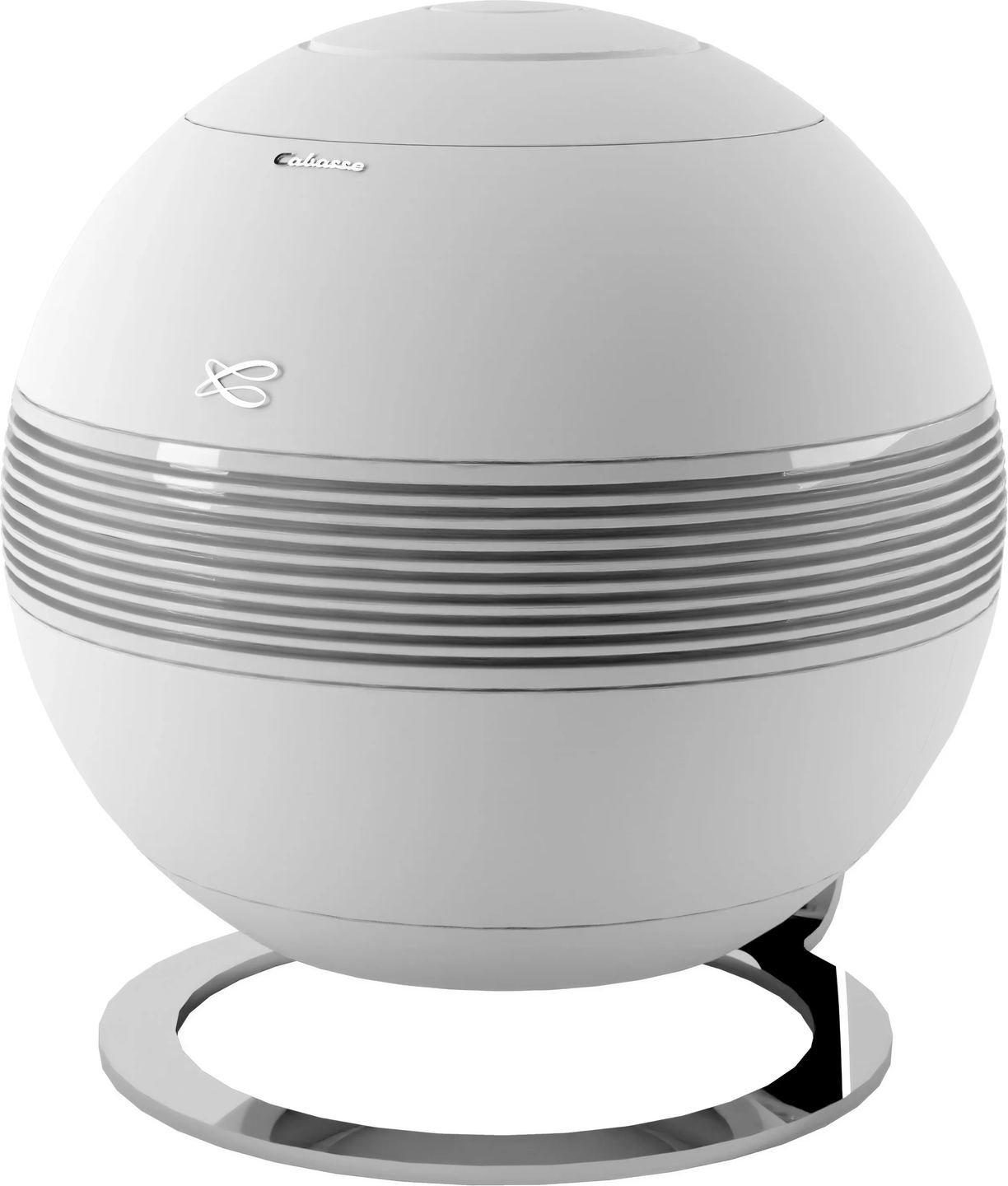
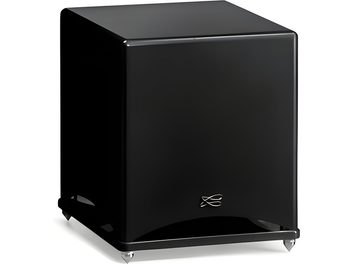
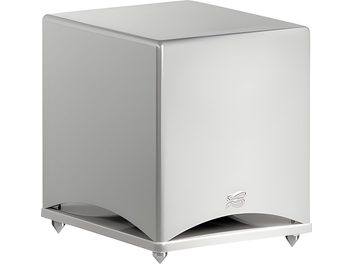
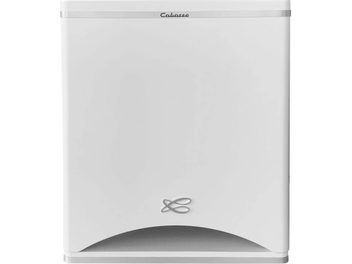
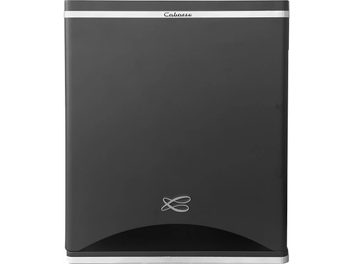
The sphere rests on a raw steel stand, cut, bent, then chrome-plated. This raised support partially decouples the subwoofer from the floor and gives the impression that the whole unit is floating. The enclosure receives four coats of matte paint, black or white depending on the version, for a smooth and uniform finish. Weight reaches 20 kg for dimensions of 320 × 368 × 338 mm. The design follows in the line of The Pearl and The Pearl Akoya speakers, with which the subwoofer can visually coexist.
Technical specifications
Architecture and speaker
- Type: active subwoofer with built-in stereo amplification (2.1 configuration)
- Speaker: 1 x 25 cm HELD (High Excursion Low Distortion)
- Carbon fiber cone
- Rare-earth magnet
- Excursion: ±15 mm (30 mm total)
Amplification
- Bass channel: 1000 W RMS / 2000 W peak
- Left channel: 300 W RMS / 600 W peak
- Right channel: 300 W RMS / 600 W peak
- Total power: up to 1600 W RMS
Audio performance
- Frequency response: 14 Hz – 180 Hz
- SPL level: 100 dB (112 dB peak)
- Processing: 4-core DSP with real-time optimization
- DSP profiles: dedicated presets (Cabasse iO3, Riga, Baltic)
- Calibration: acoustic self-calibration via app
Connected features
- Built-in streaming
- Deezer (including HiFi), Qobuz, Spotify Connect, Tidal, Napster
- Internet radio: vTuner
- Network playback: DLNA / NAS
- Multiroom: compatible with the Cabasse ecosystem
- AirPlay 2: yes
- Voice control: Google Assistant, Amazon Alexa
Connectivity
- Network: Wi-Fi / Ethernet (RJ45)
- Wireless: Bluetooth
- Audio inputs
- 1 x analog RCA
- 1 x optical (SPDIF)
- 1 x USB
- Outputs: speaker terminals (satellites)
- Automatic signal detection (auto standby / auto wake)
Conversion and audio formats
- Digital-to-analog converter: Asahi Kasei AKM4490
- Maximum resolution: up to 24-bit / 192 kHz
- Compatible formats: MP3, AAC, WMA, AIFF, FLAC, ALAC, OGG, Vorbis, WMA Lossless
Advanced features
- Standalone 2.1 system (built-in amplification for passive speakers)
- Multiroom source synchronization
- Automatic optimization according to the listening room
- Smart equalization profiles (DEAP)
General information
- Dimensions (W x H x D): 320 x 368 x 338 mm
- Weight: 20 kg
Frequently Asked Questions
Does the Pearl Sub work with speakers from other brands?
The binding posts accept any passive speaker with compatible impedance (8 ohms nominal, 3.8 ohms minimum) and capable of handling up to 300 W. The subwoofer will amplify the signal, but DEAP DSP optimization profiles will not be available. Without these profiles, the result will depend solely on manual equalization settings.
Can the Pearl Sub be used without a Wi-Fi connection?
Yes. The RCA, optical, and USB inputs work without a network. Bluetooth remains accessible. A Wi-Fi or Ethernet connection is required only for streaming, multiroom, and software updates.
Does the subwoofer support the DSD format?
No. The Pearl Sub supports PCM files up to 24-bit / 192 kHz, but not DSD. DSD files will have to be converted to PCM by the source before transmission.
Can the Pearl Sub serve as a subwoofer for a multichannel home theater system?
The Pearl Sub is designed for 2.1 stereo operation. It does not have a dedicated LFE input or surround channel management. For home theater use, it can receive the signal from a preamplifier via the RCA input, but integration remains limited to a stereo configuration with bass reinforcement.
- Eco-contribution included in the sale price.
- Manufacturer reference: ENC1630