TCL 75X11L 2026



Specifications and features



Overview
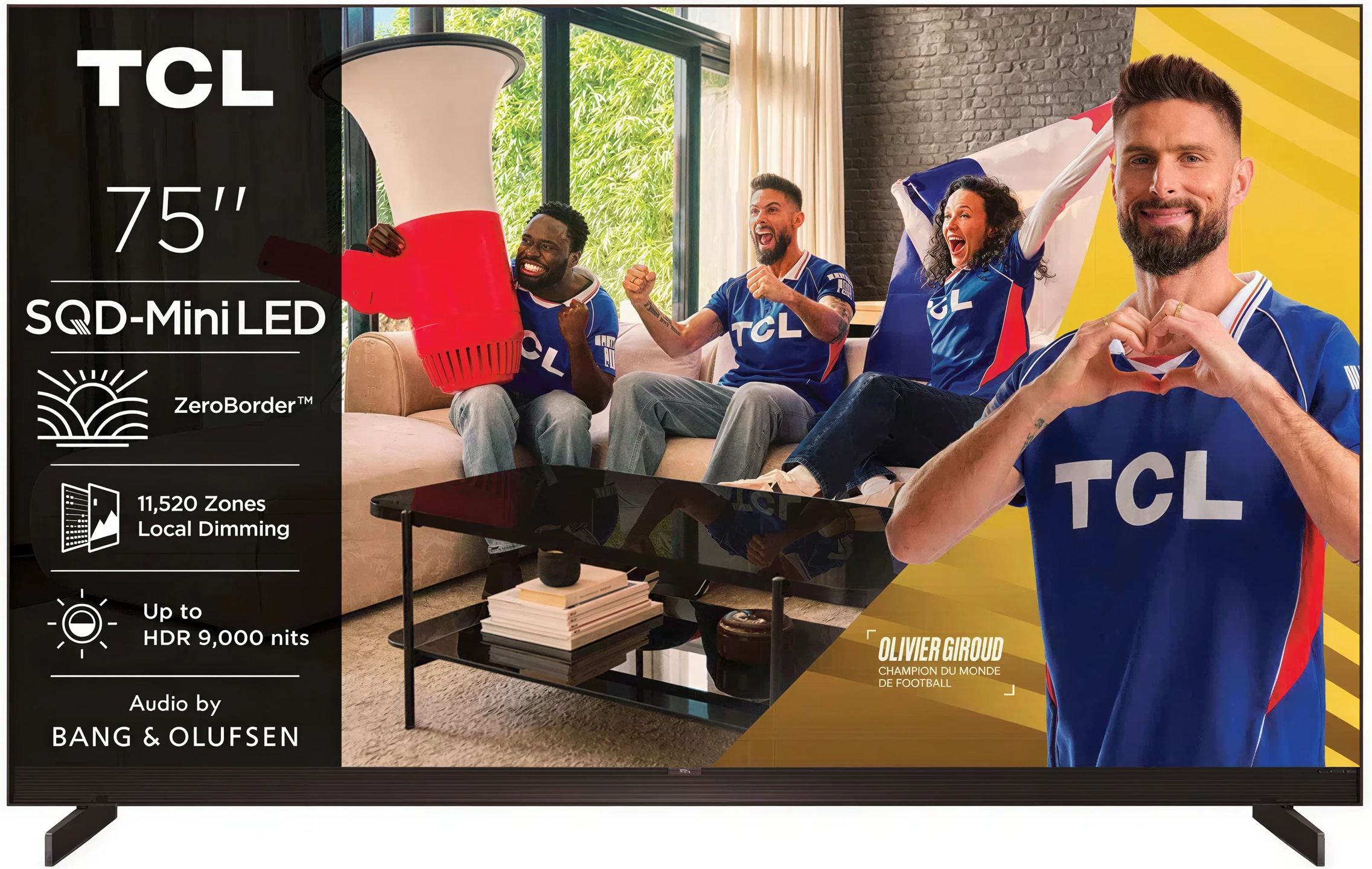
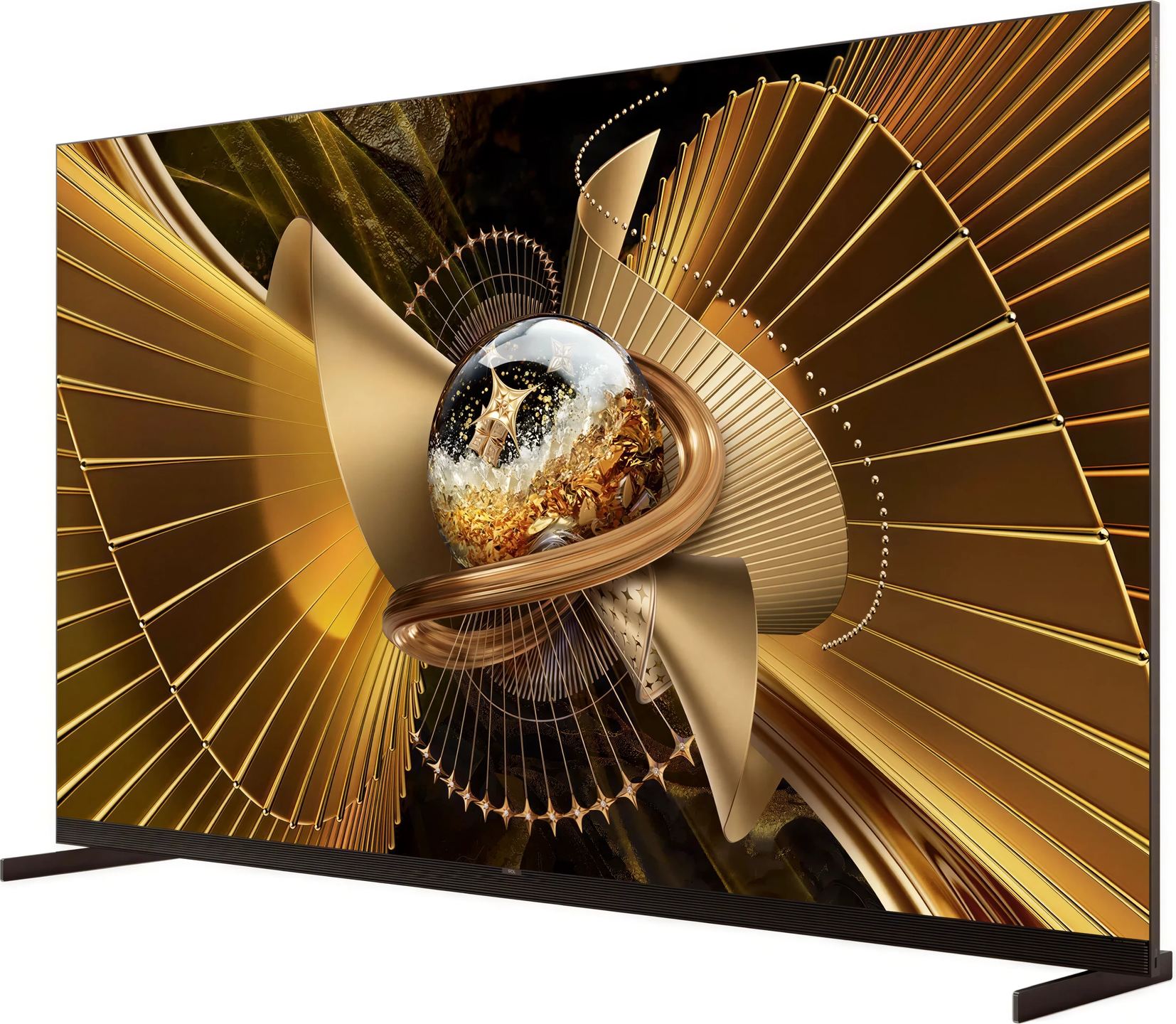
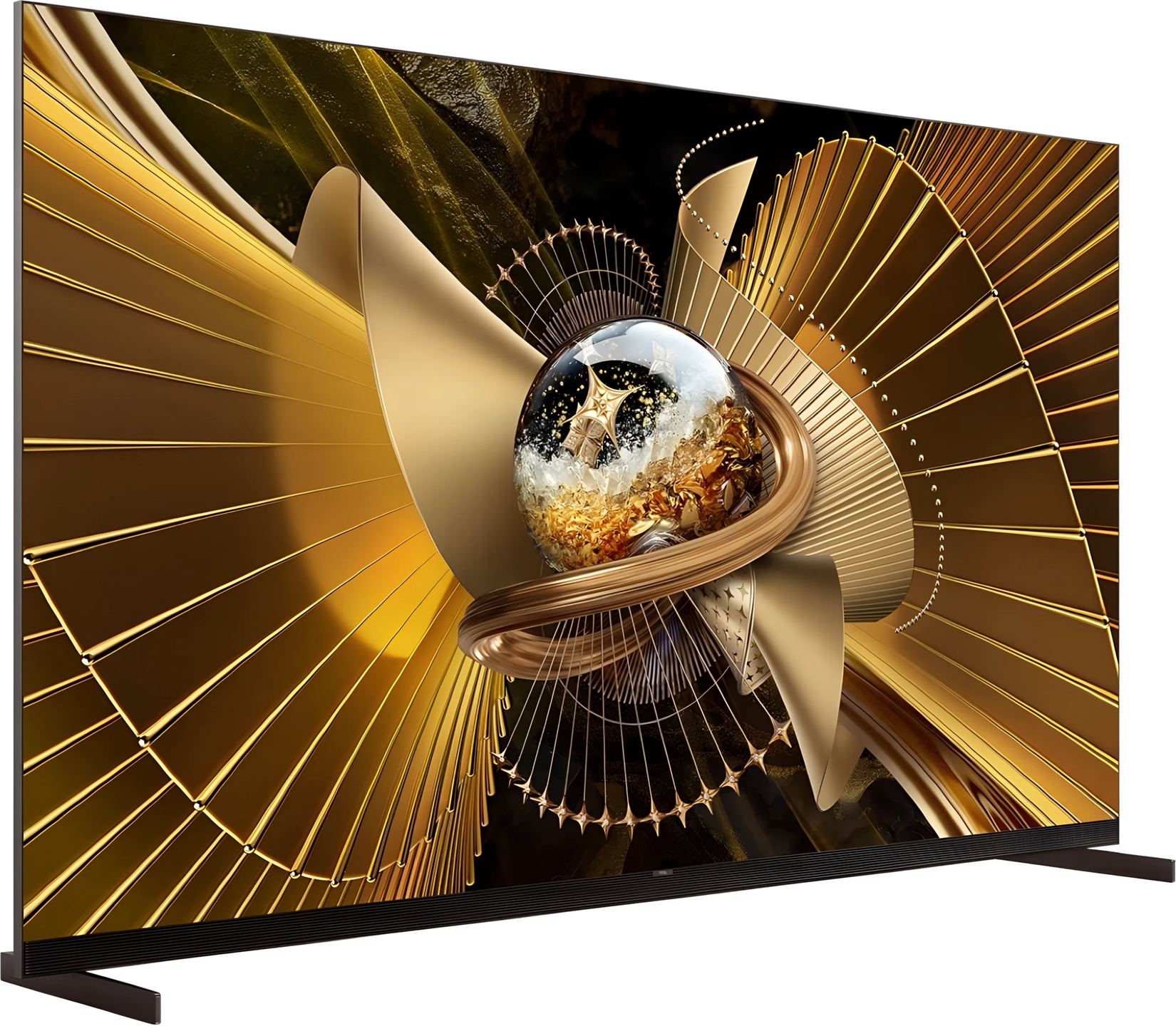
At the top of TCL’s 2026 TV lineup, this 75-inch model introduces SQD-Mini LED, an evolution of Mini LED backlighting that combines reworked quantum dots with a refined color filter. The manufacturer is targeting full BT.2020 spectrum coverage and 9000 nits peak brightness, two figures rarely combined on a consumer LCD panel. Here is an overview of its features.
Eighth-generation SQD-Mini LED backlighting
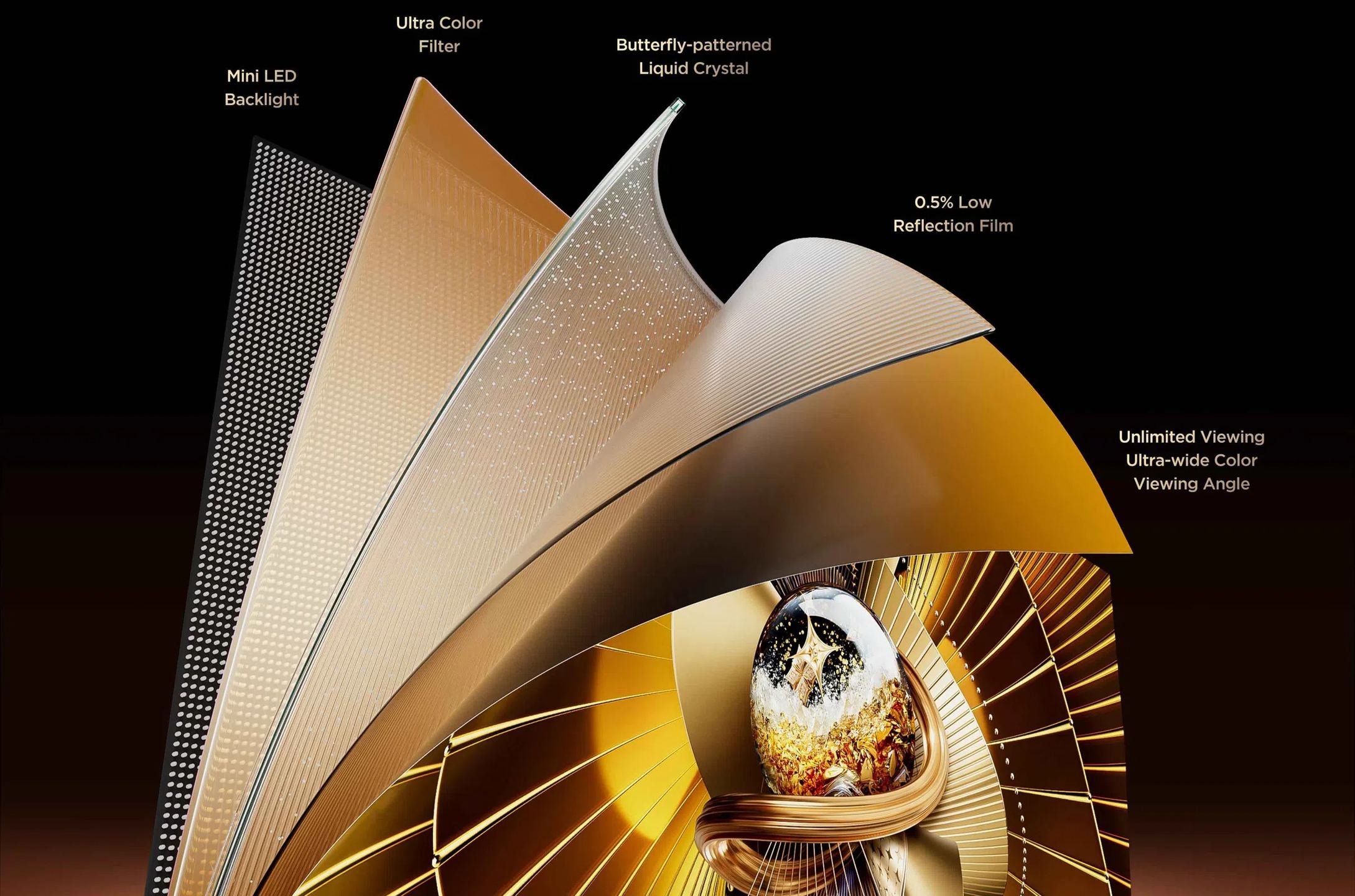
TCL calls SQD-Mini LED (for Super Quantum Dots Mini LED) the eighth generation of its backlighting. The principle remains that of classic Mini LED, an LCD panel lit by thousands of miniature diodes, but the quantum dot layer has been reformulated to emit purer, more intense light. Where RGB Mini LED panels multiply red, green, and blue diodes behind the screen, the 75X11L keeps blue backlighting converted into color by the quantum dots. This approach avoids color crosstalk, the colored interference that appears when neighboring diodes mix. The Super Condensed Micro Lens microlenses tighten the beam of each diode, and the Halo Control system manages everything using a 26-bit backlight controller.
More than eleven thousand local dimming zones
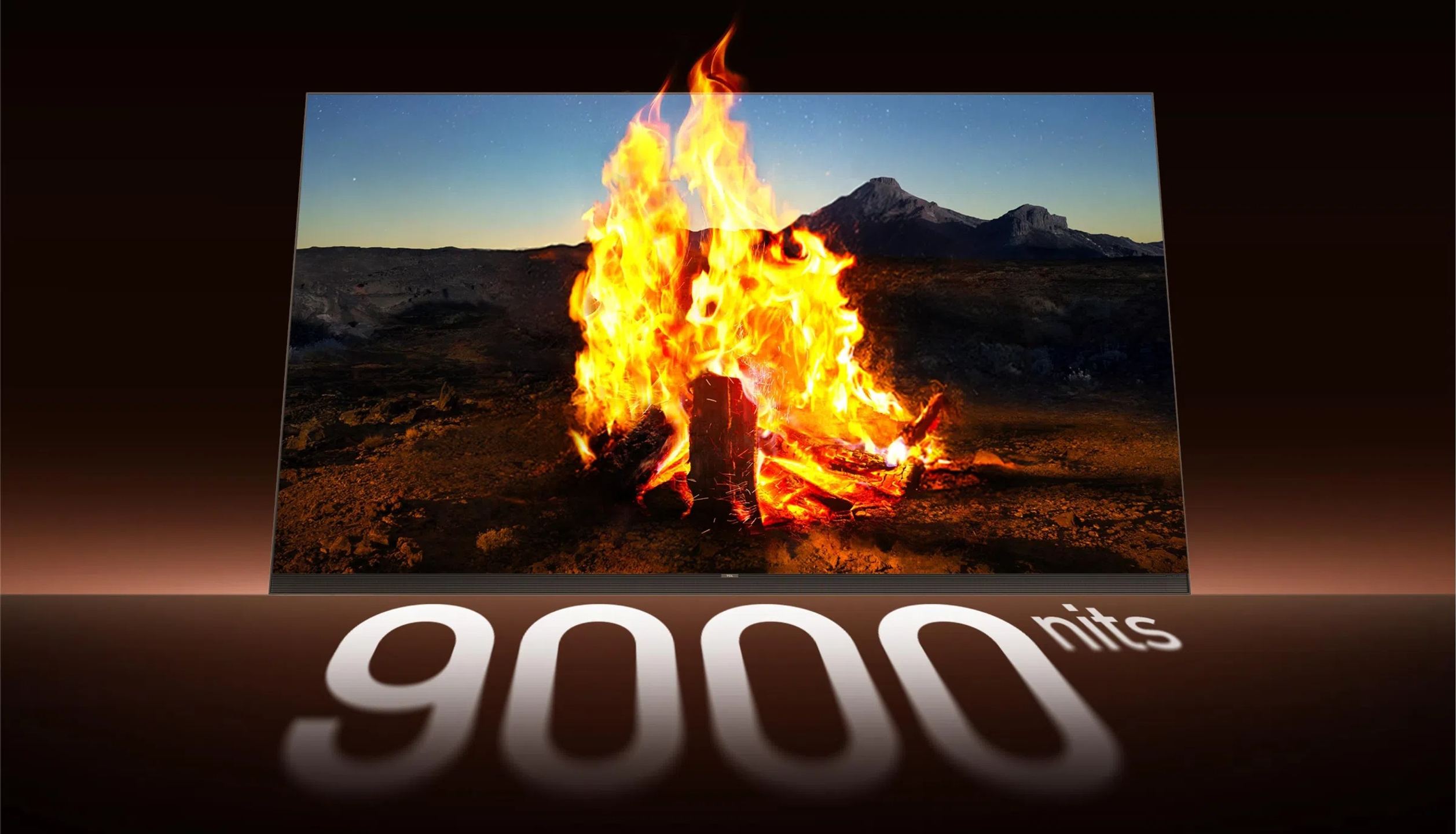
The 75-inch version has 11,520 independent dimming zones. Each adjusts its brightness according to the displayed content, deepening blacks and limiting blooming, that halo of light surrounding a bright object on a dark background. The 98-inch model rises to more than twenty thousand zones, but the density used here already far exceeds that of the X11K, the brand’s previous flagship. The announced peak brightness reaches 9000 nits. This figure corresponds to peaks measured on small bright windows; on a full-screen image, the value remains lower, as with any LCD TV. There is still a comfortable light reserve for HDR in a bright room.
Targeting the full BT.2020 spectrum
The X11L’s color argument comes down to one figure: a claimed 100% coverage of the BT.2020 gamut, the widest standard for HDR video, until now reserved for professional reference displays. TCL pairs this with its UltraColor Filter, a filter whose particles measure 5 nanometers instead of the usual 60, to sort primary colors more precisely, pixel by pixel. A color fidelity algorithm corrects drift in real time. The panel works in 10-bit (8-bit plus FRC) and supports HDR10, HLG, Dolby Vision IQ, and IMAX Enhanced formats. An UltraColor anti-reflective filter reduces reflections in bright rooms. The promise of 100% BT.2020 still needs to be confirmed by measurements in real-world conditions, where coverage depends on settings and content.
4K gaming at 144 Hz, with 288 Hz as backup
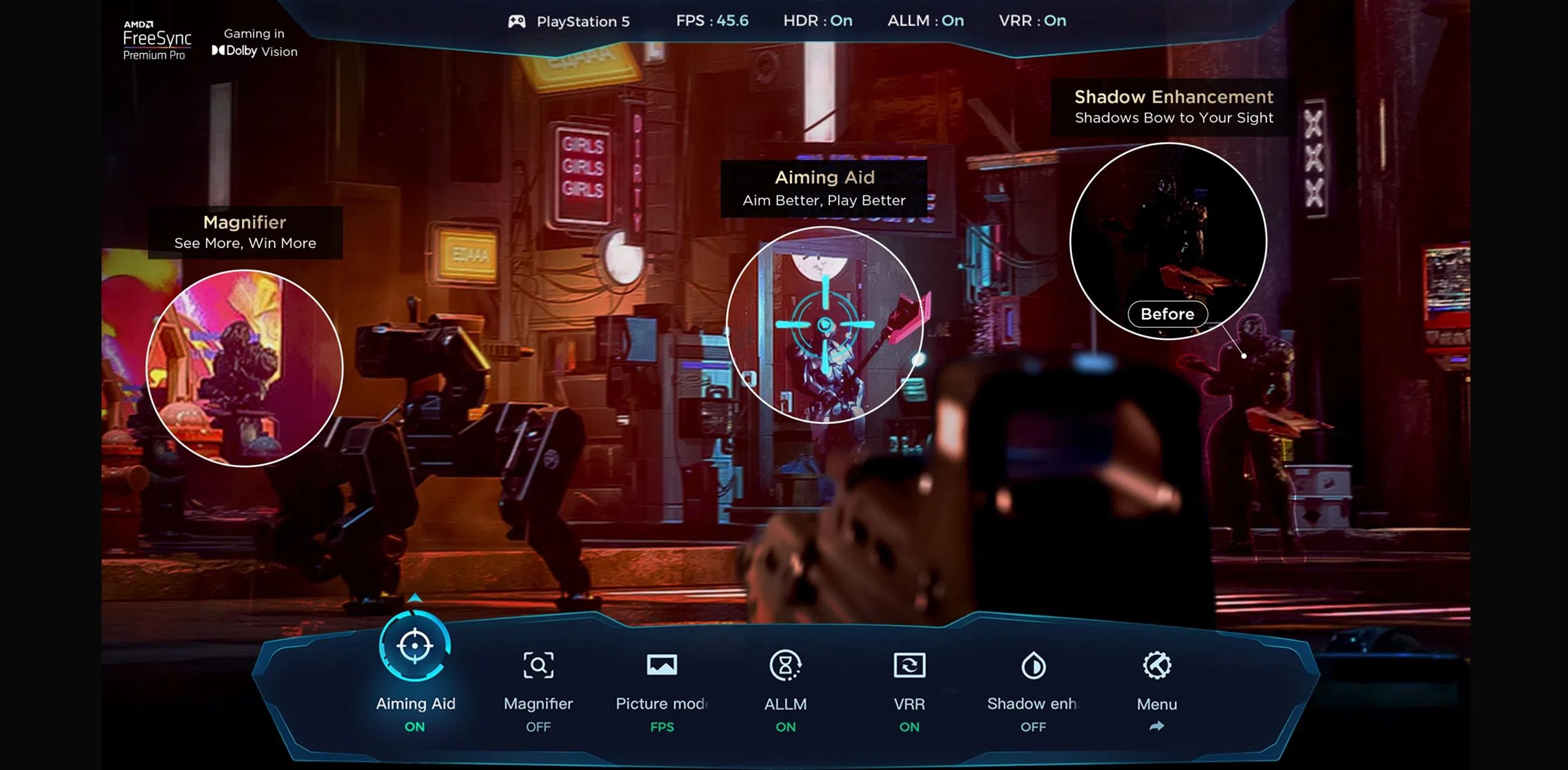
For gaming, the panel displays natively at 144 Hz in 4K. All four HDMI 2.1 inputs support this bandwidth, accompanied by VRR (variable refresh rate), FreeSync Premium Pro certification, and automatic low latency mode (ALLM). A dedicated toolbar, the Game Bar, brings together useful settings during gameplay. The 288 Hz mode relies on DLG (Dual Line Gate) technology: the panel doubles its frequency by dividing its vertical resolution, a compromise mainly relevant for PC gaming in 1080p. The AiPQ Pro processor, built around four A73 cores, handles upscaling and motion optimization.
Bang & Olufsen sound on two channels
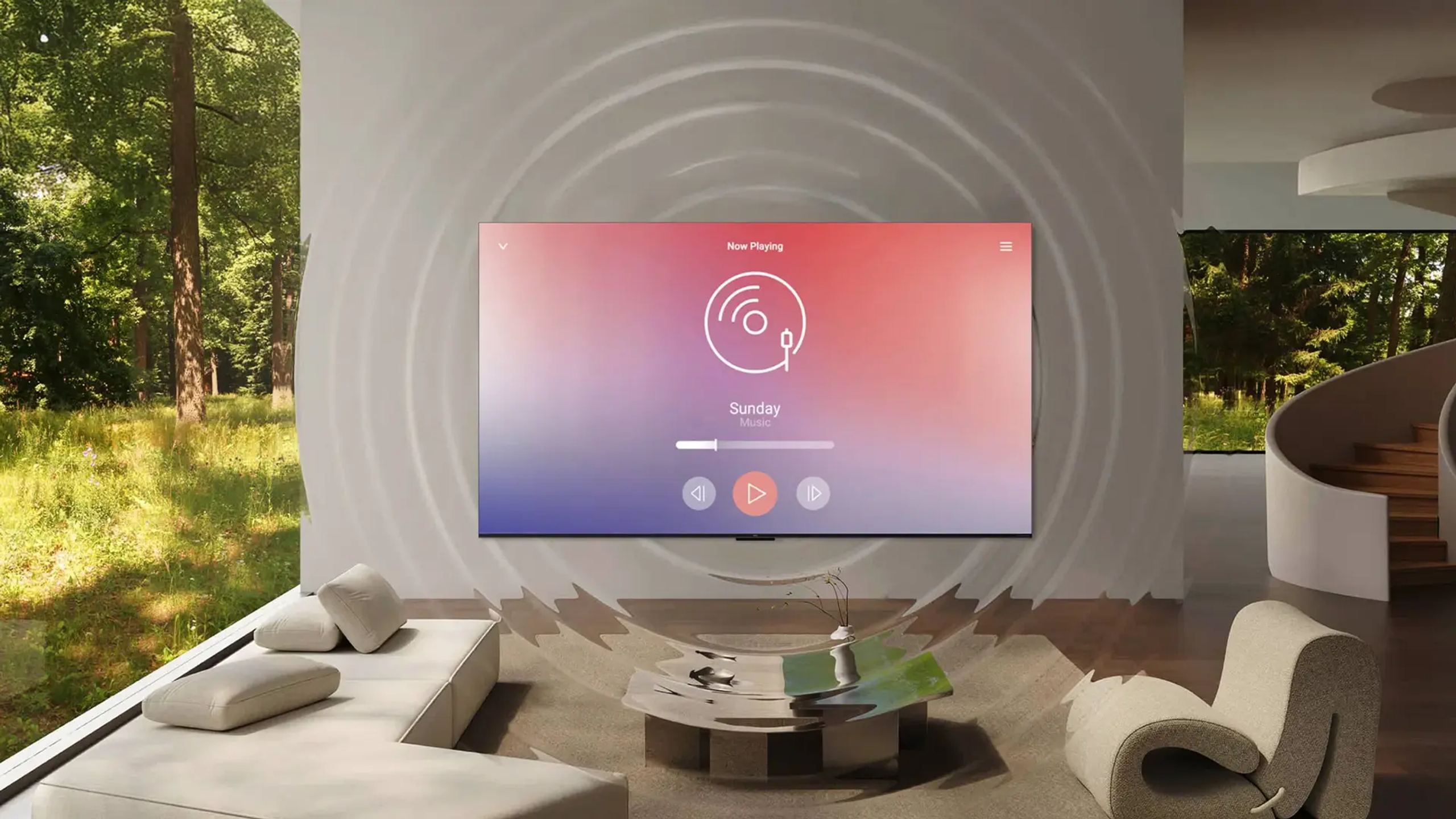
The audio section is signed by Bang & Olufsen, in a 2.0 configuration of 2 × 10 W compatible with Dolby Atmos and DTS:X. Seven modes (Movie, Music, Speech, Game, Sport, Night, and a custom profile) adapt the sound rendering to the content. Twenty watts spread across two channels remains a modest provision for a panel of this size: the result is sufficient for everyday use and dialogue, but a soundbar or dedicated system adds the bass and depth missing from such a slim panel.
Google TV, Gemini, and voice control
The interface is based on Google TV, with the Gemini assistant integrated for voice control and voice adjustment of picture settings. A hands-free microphone is built into the TV, complemented by Chromecast, AirPlay 2, and the Gboard keyboard. The electronic program guide, parental controls, and a virtual remote complete the package. Wireless connectivity moves to Wi-Fi 6 and Bluetooth 5.4. Three tuners (terrestrial, cable, and satellite) cover the main broadcast sources.
A two-centimeter panel and a minimal frame
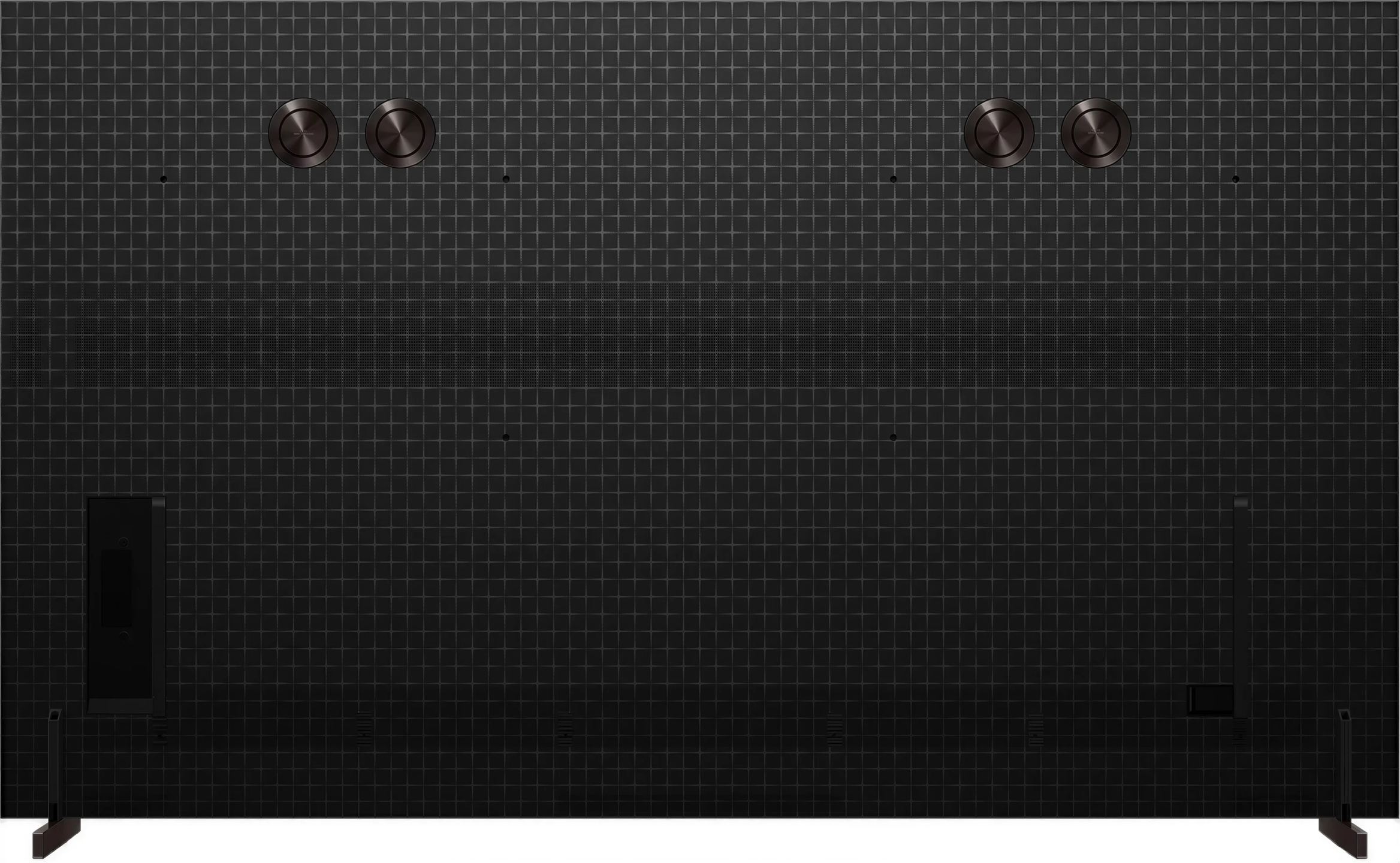
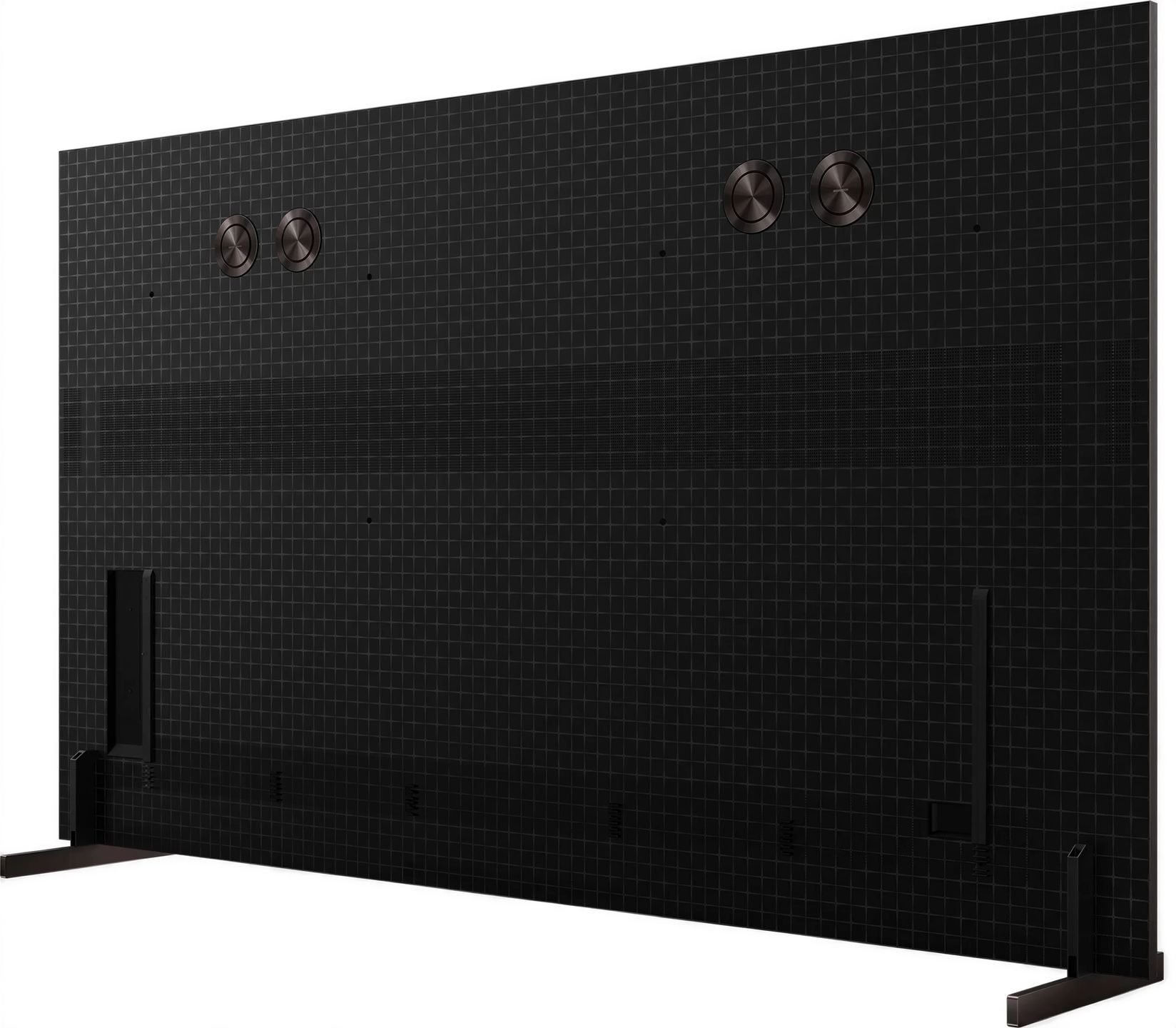
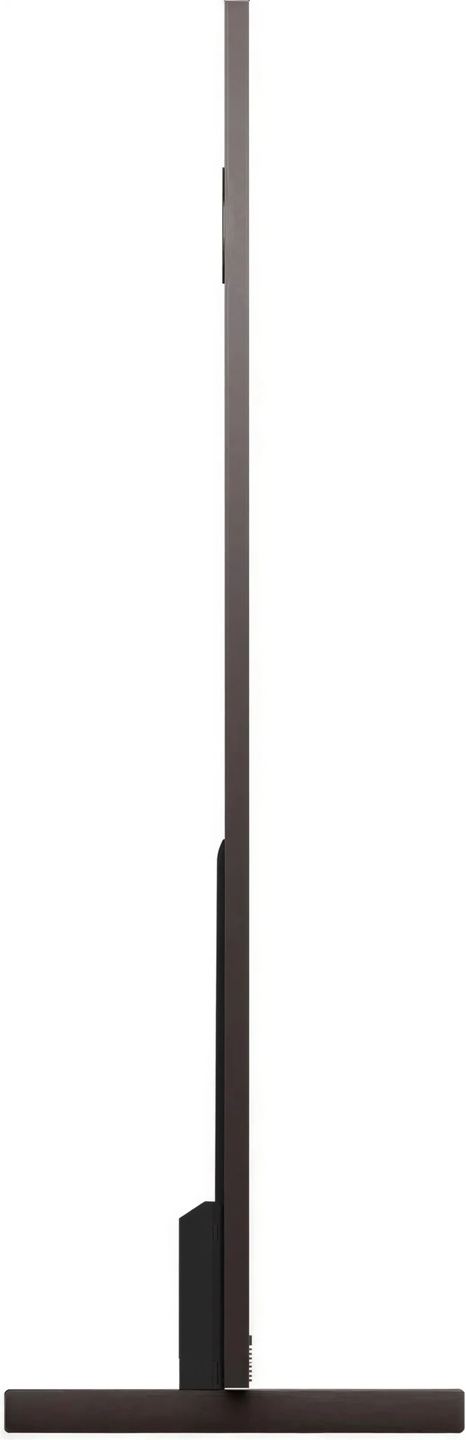
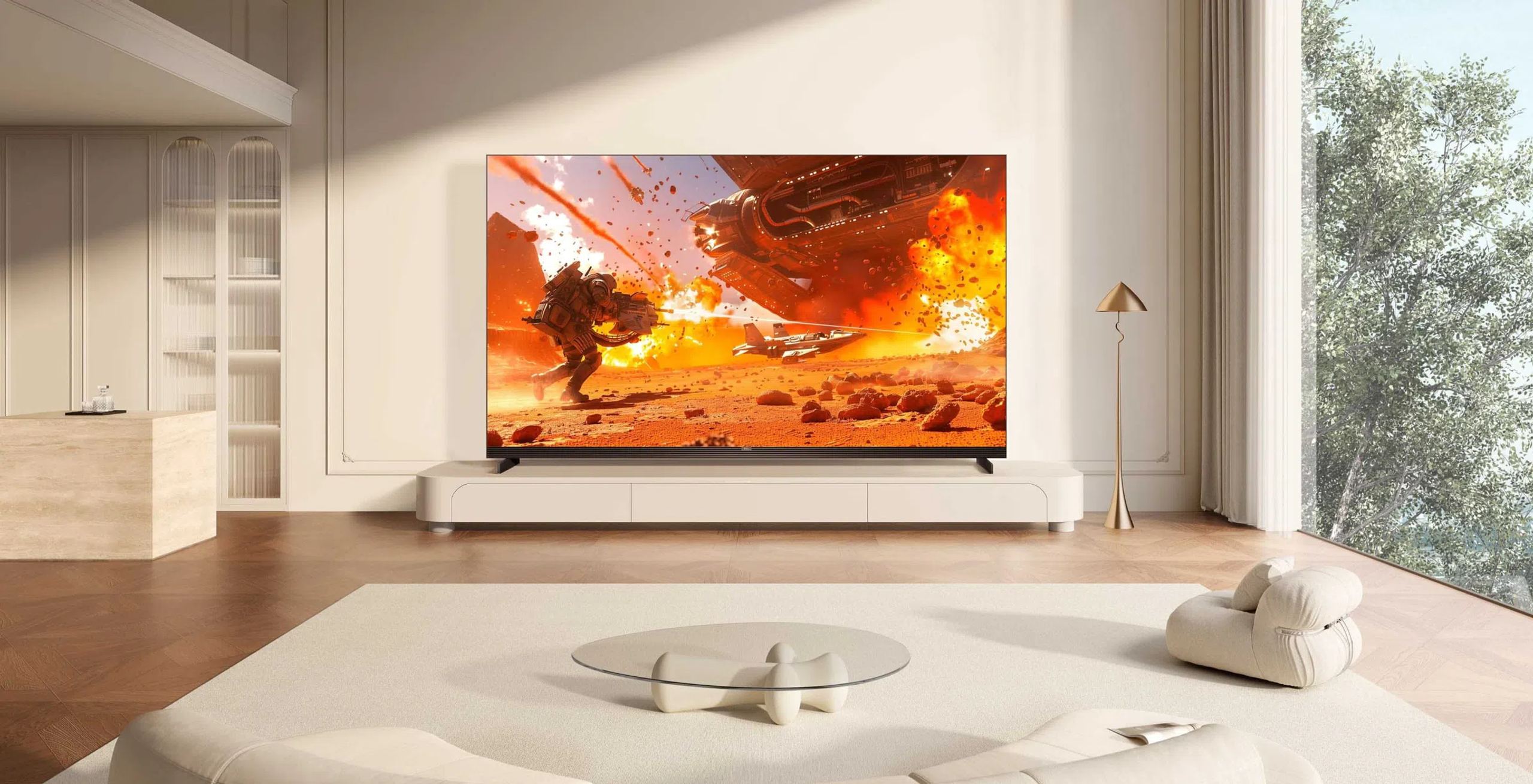
The X11L focuses on slimness: 2 cm thick, a flat back, and a metal frame reduced to its simplest expression, for an almost borderless screen. Placed on its central stand, the TV measures 1658 × 380 × 1024 mm and weighs 40.5 kg. Without the stand, depth drops to 24 mm and weight to 39 kg. Wall mounting follows the VESA 600 × 400 mm standard. Integrated cable management keeps the rear tidy once the screen is mounted.
Media playback and supported formats
The USB port reads files up to 4K at 60 Hz and allows program recording and the TimeShift function, which pauses live TV. Video decoding covers recent codecs, including H.265 and AV1, alongside H.264, MPEG, VP9, and VP8. On the audio and photo side, common formats (MP3, WAV, AAC, JPEG, PNG, HEIF) are recognized.
Documentation
FrenchEnergy label
European product sheet
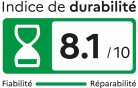
FrenchDurability index
French
Technical specifications
General features
- Screen type: SQD-Mini LED
- Diagonal: 75 inches (190 cm)
- Resolution: Ultra HD 4K (3840 × 2160 pixels)
- Aspect ratio: 16:9
- Chassis: MT9655
- Operating system: Google TV
- Processor: AiPQ Pro (A73 ×4)
- Memory (RAM): 3 GB
- Internal storage: 64 GB
- Tuner: DTT, cable, satellite
- Energy certification
Picture quality
- Display technology: SQD-Mini LED
- Number of dimming zones: 11,520
- Peak brightness: 9000 cd / m² (nits)
- Color gamut coverage: 100% BT.2020
- Color depth: 10-bit (8-bit + FRC)
- Native panel refresh rate: 144 Hz
- MEMC: 120 Hz
- Viewing angle: 178° (horizontal / vertical)
- UltraColor anti-glare filter
- HDR compatibility:
- HDR10
- HLG
- Dolby Vision IQ
- IMAX Enhanced
- FreeSync Premium Pro
Gaming performance
- Frequency up to 288 Hz (VRR / DLG)
- Native refresh rate: 144 Hz
- Variable Refresh Rate (VRR)
- FreeSync Premium Pro
- AI optimizations via AiPQ Pro processor
Audio
- Audio system: Bang & Olufsen
- Configuration: 2.0 channels
- Audio power: 2 × 10 W
- Compatibility: Dolby Atmos, DTS:X
- Sound modes: Movie, Music, Speech, Game, Sport, Night, Custom
Smart TV
- Google TV
- Hands-free Google Assistant (built-in microphone)
- Built-in Chromecast
- AirPlay 2
- Gboard
- Virtual remote control
- Electronic program guide (EPG)
- Parental control
Connectivity
- Wi-Fi 6
- Bluetooth 5.4
- HDMI CEC
- USB multimedia playback
- Supported audio formats: MP3, WMA, WAV, AAC
- Supported photo formats: JPEG, PNG, BMP, HEIF
- Supported video formats: H.264, H.265, MPEG-1 / 2 / 4, WMV, VC1, VP8, VP9, AV1
USB connectivity
- File playback up to 4K at 60 Hz
- USB recording
- TimeShift function
Design
- Ultra-slim design
- Thickness: 2 cm
- Nearly bezel-less screen
- Discreet central stand
Dimensions and weight
- With stand:
- Dimensions: 1658 × 380 × 1024 mm
- Weight: 40.5 kg
- Without stand:
- Dimensions: 1658 × 24 × 979 mm
- Weight: 39 kg
- Wall mount: VESA 600 × 400 mm compatible
Power consumption and supply
- Maximum power consumption: 480 W
- Standby power consumption: 0.5 W
- Power supply: 220-240 V / 50 Hz
Included accessories
- RC933 remote control (2 AAA batteries included)
- Power cord
- Documentation
Frequently Asked Questions
Is the X11L TCL’s flagship Mini LED in 2026?
Yes. The X11L is the highest series in the brand’s 2026 Mini LED catalog, above the QM8L and QM7L series. It stands out for its higher number of dimming zones and peak brightness, its WHVA 2.0 panel, and its Bang & Olufsen audio.
Is the 75X11L suitable for a very bright room?
Its high peak brightness and anti-reflective filter work in its favor in a brightly lit room. The Mini LED backlight maintains decent blacks even with the shutters open, where a less bright panel would lose contrast.
What viewing distance should you allow for 75 inches?
For a 4K screen of this size (190 cm), a viewing distance of around 2.5 to 3.5 meters allows you to enjoy the sharpness of the image without perceiving the pixel structure. The 4K resolution allows for a shorter viewing distance than a Full HD panel of the same size.
Can you take advantage of 288 Hz with a game console?
No. Current consoles max out at 4K 120 Hz or 144 Hz. The 288 Hz mode is for PC gaming, as it reduces the vertical resolution (DLG technique) to double the refresh rate; it mainly makes sense in 1080p.
What content benefits from the advertised 9000 nits?
Films and series mastered in HDR (Dolby Vision, HDR10) make use of bright highlights: reflections, explosions, dazzling skies. With standard SDR content, the TV does not reach these levels and does not need to; the benefit is mainly visible with recent HDR sources.
- Eco-contribution of €12.66 included in the sale price.
- Spare parts available for 7 years
- GTIN / EAN: 5901292529833