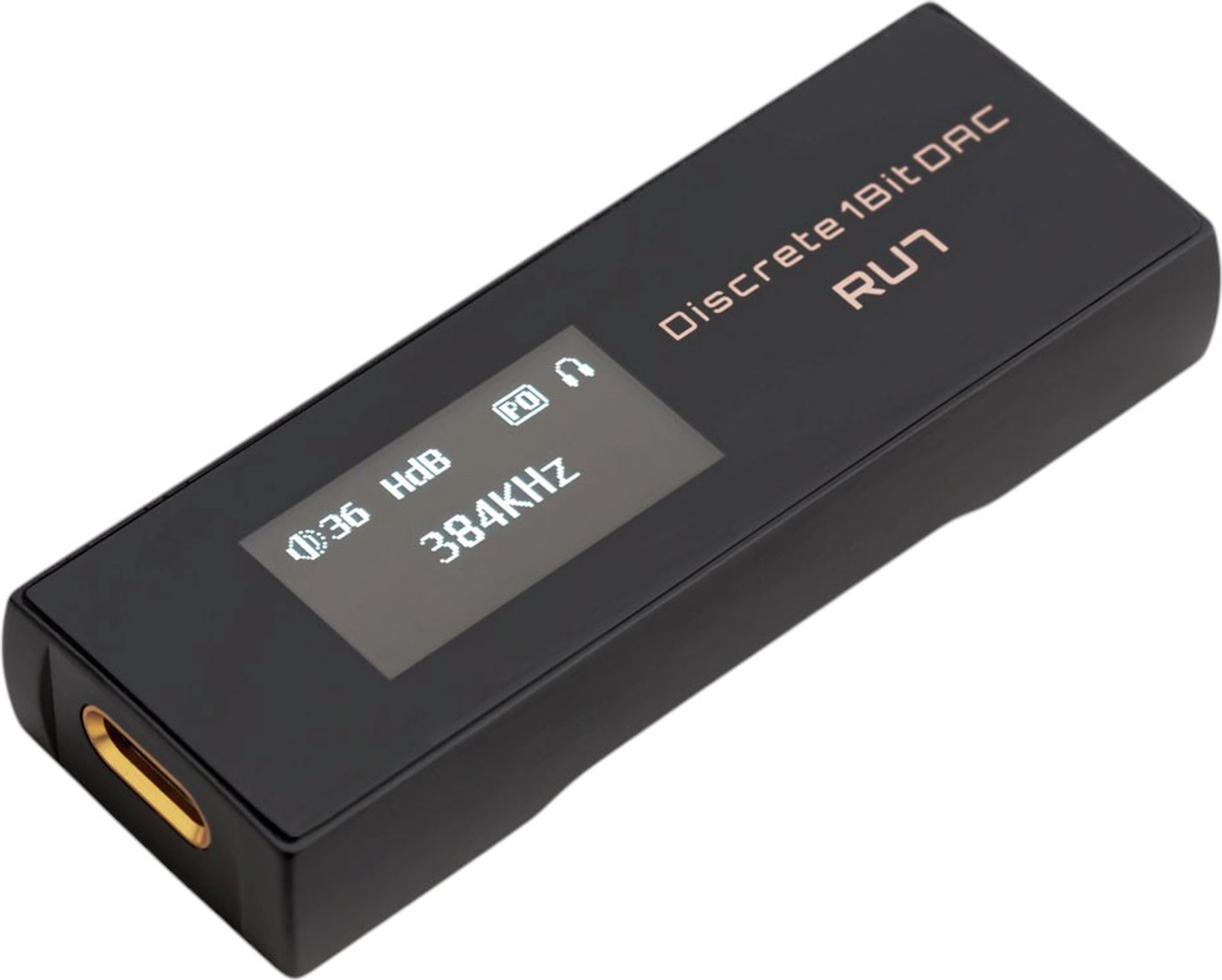
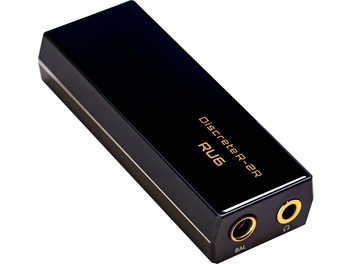
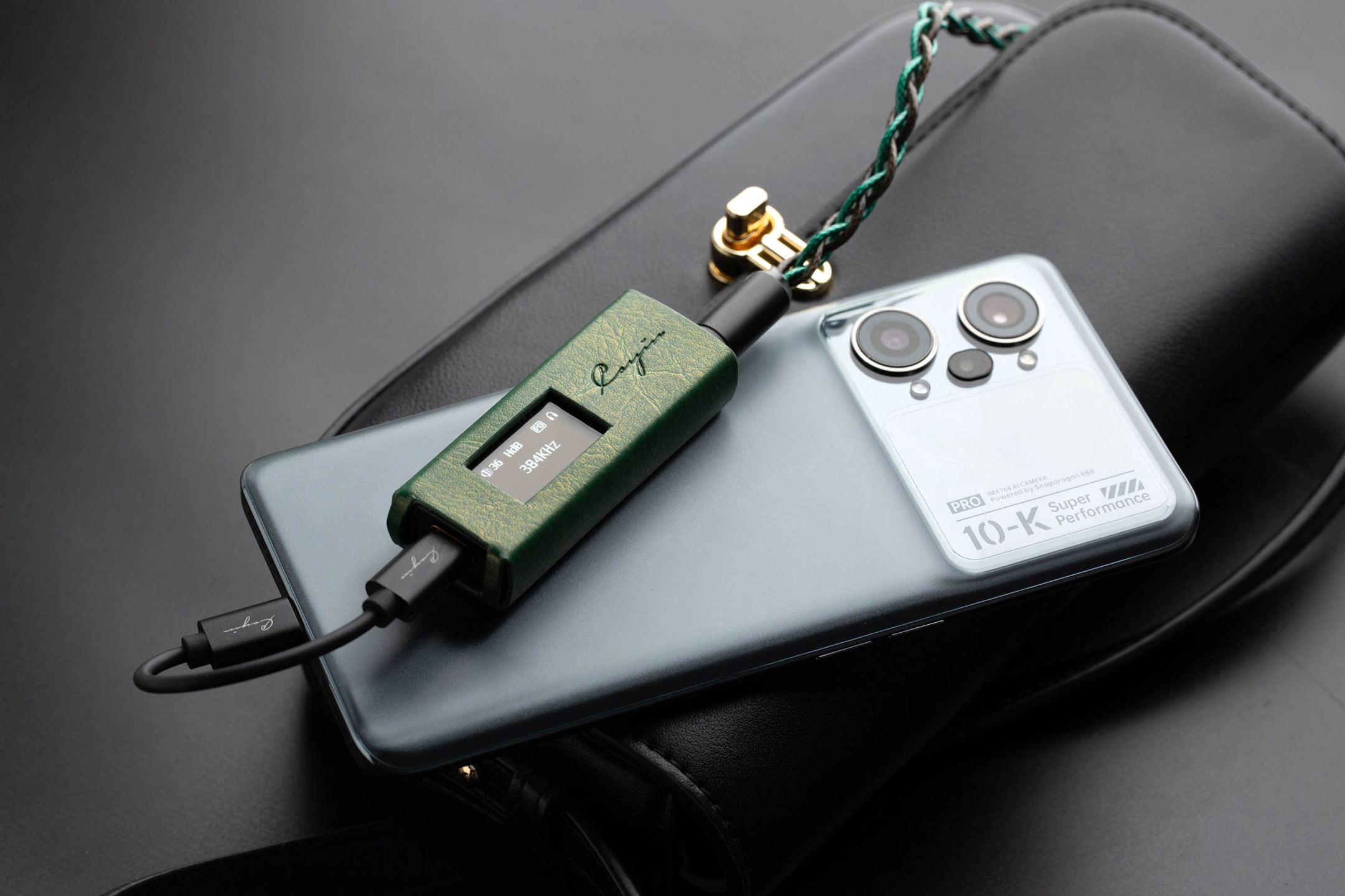
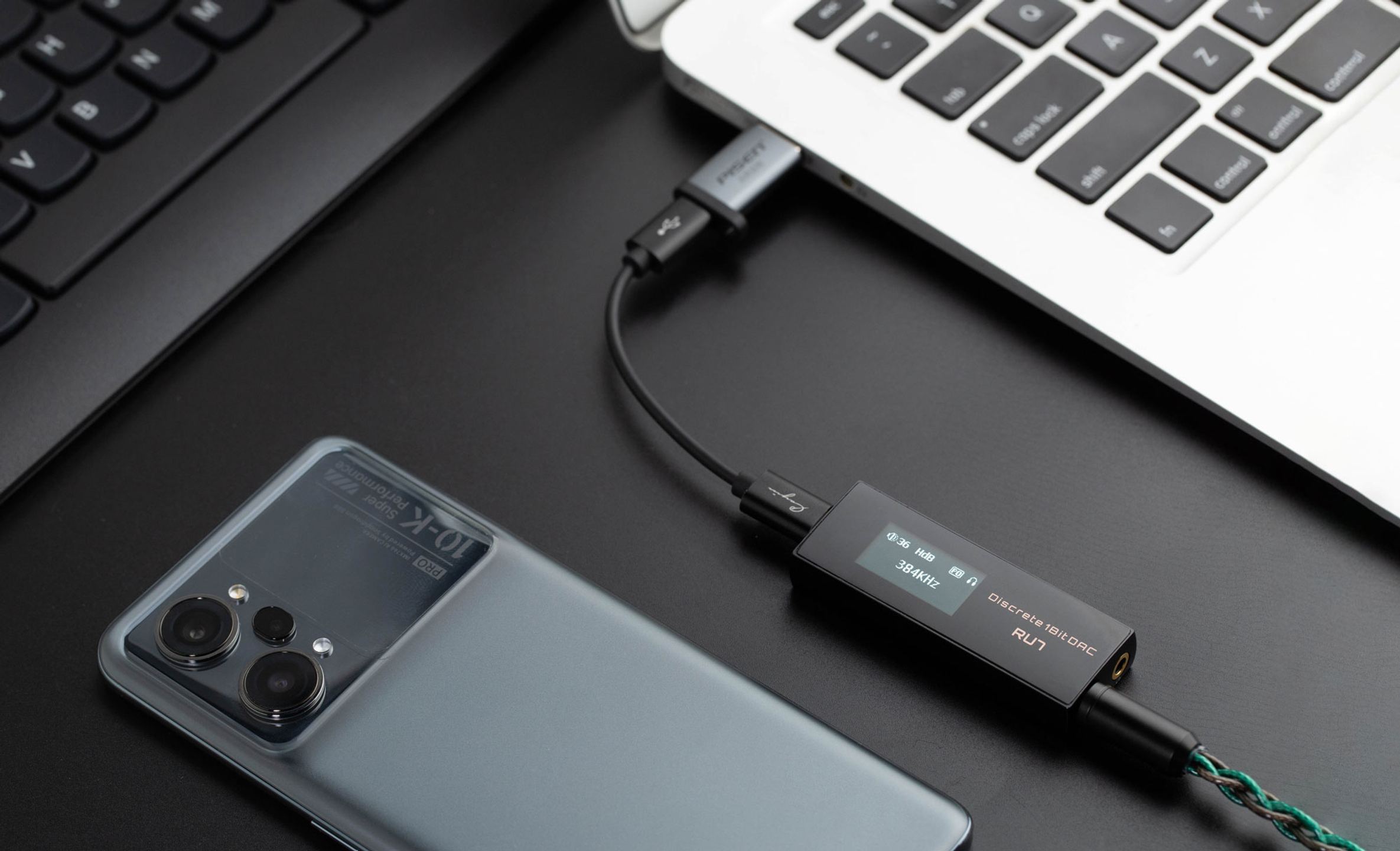
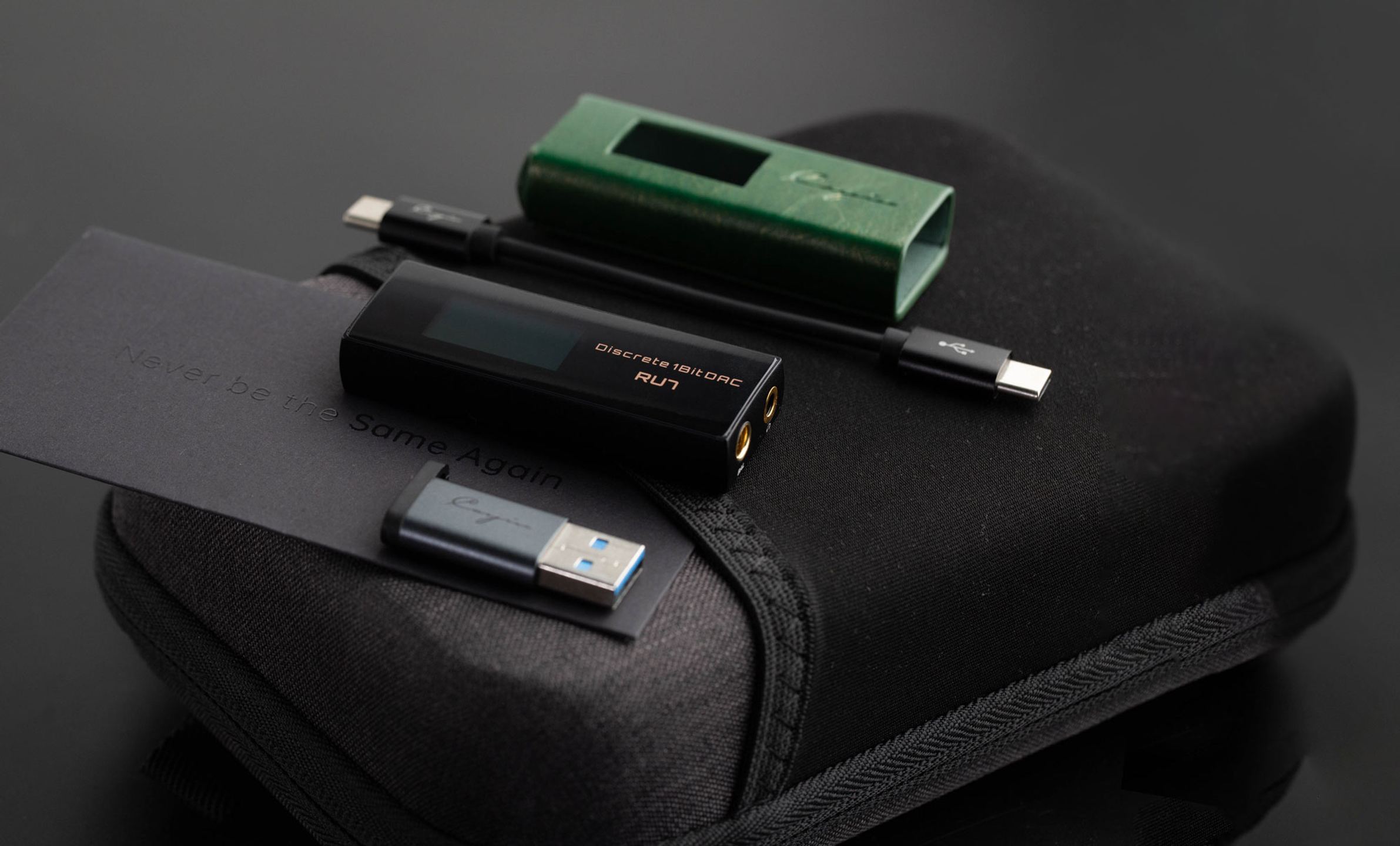
The Cayin RU7 represents a significant advancement in the field of portable audio converters. This compact USB DAC combines a discrete R-2R conversion architecture with 128 resistors and a high-performance headphone amplifier. Designed to substantially enhance the audio quality of smartphones, tablets, and computers, it offers a powerful alternative to the typically limited headphone outputs of these devices. Its sophisticated analog-to-digital conversion technology can handle high-resolution audio formats up to 32-bit/384 kHz PCM and DSD256.
Sophisticated Technical Architecture in a Compact Case
The RU7 stands out for its unique DAC architecture in this product category. It uses a 1-bit discrete resistor network converter in an R-2R configuration, made up of 128 high-precision thin-film resistors, organized into four groups of 32 resistors each. This fully differential 4-channel design represents an audiophile approach rarely seen in such a compact device.
What makes this DAC particularly remarkable is its ability to convert all digital signals to DSD before processing, offering an “all-to-DSD” function that allows any audio signal to be upsampled up to DSD256. To minimize potential interference, Cayin has cleverly separated the digital and analog circuits onto two distinct PCBs.
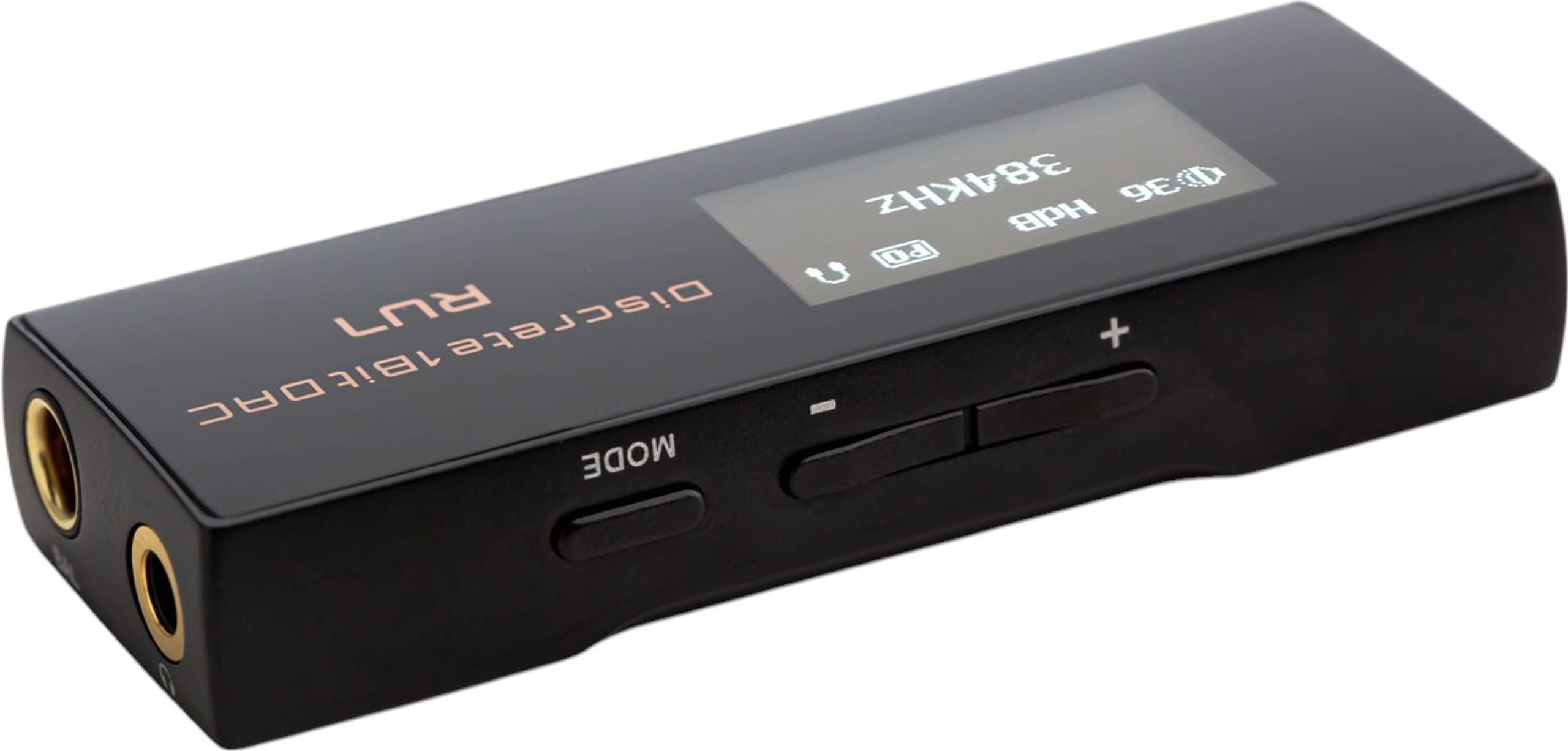
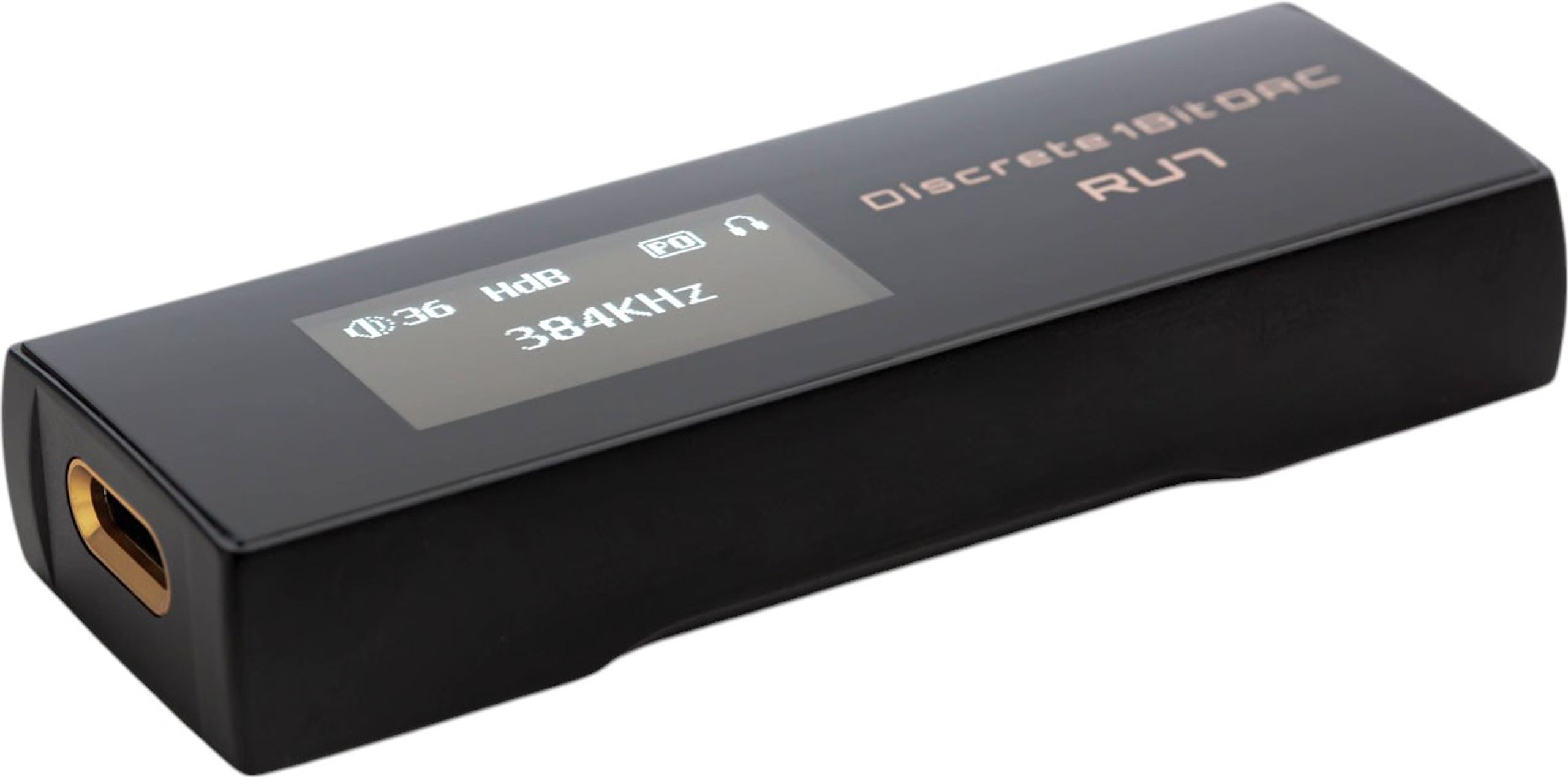
The integrated OLED display on the front panel allows you to view essential information in real time, such as the processed signal format, sampling rate, and volume level, making it much easier to control settings without having to check the source device.
Sound Performance and Connection Versatility
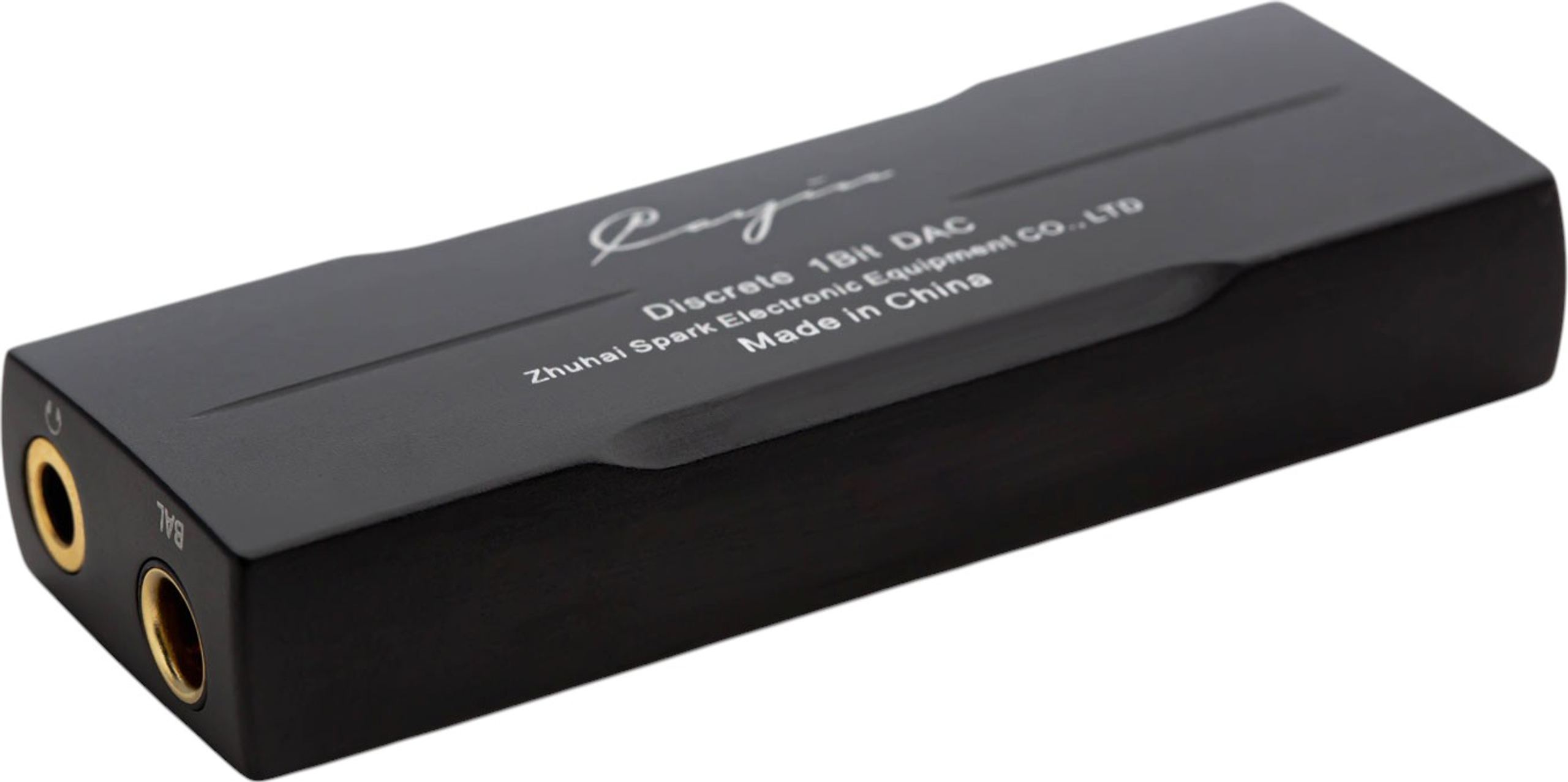
The RU7 delivers substantial amplification power for a device of its size: 160 mW at 32 ohms via its 3.5 mm single-ended output and up to 400 mW at 32 ohms through its 4.4 mm balanced output. This power reserve allows it to efficiently drive a wide range of headphones and earphones, from the most sensitive models to those with demanding impedance requirements.
In terms of sound, the Cayin RU7 is characterized by a neutral tonal signature with natural analog nuances. Listeners will particularly appreciate its wide soundstage, precise instrument separation, and well-defined spatial placement. The bass is rendered with depth and control, while the mids are smooth and natural. Using the 4.4 mm balanced output is especially recommended when compatible with your equipment, as it not only offers more power but also a higher output voltage (2.4V versus 1.2V single-ended), resulting in a noticeable improvement in sound quality.
Volume control is managed via a sophisticated discrete resistor network system offering 100 adjustment levels across three segments, ensuring optimal precision regardless of your listening equipment’s sensitivity.
Universal Compatibility and Ease of Use
The RU7 fits perfectly into your digital ecosystem. Its USB-C connection makes it compatible with most modern smartphones, tablets, and computers. It supports a wide range of audio formats, from basic MP3 to the most demanding high-resolution formats like 32-bit/384 kHz PCM and DSD256.
Functionally, the RU7 is particularly flexible with its fixed-voltage line-out mode, allowing it to be used as a simple converter upstream of an external amplifier. This versatility makes it a central component for various audio setups, from the simplest to the most complex.
The RU7 is powered directly via the USB-C port of the connected device, requiring no internal battery or additional charging. This plug-and-play design makes daily use easy, though it does draw power from the source device.
Technical Evolution Compared to the RU6
The Cayin RU7 represents a significant evolution compared to its predecessor, the RU6. While retaining the concept of a portable resistor network DAC, the RU7 adopts a different technical approach with its 1-bit architecture. This new design noticeably improves sound performance, especially in terms of instrument separation and spatial rendering.
Stereo imaging quality is one of the most notable improvements: users coming from other portable DACs like the DC04 Pro will immediately notice a wider sound presentation, with more precise layering between different sound planes and better instrument separation.
Technical Specifications
General Features
Portable headphone digital-to-analog converter and amplifier
32-bit R-2R converter with 128 resistors
PCM compatible up to 32-bit / 384 kHz
DSD256 compatible
OLED control display
100-level adjustable volume
Audio Performance
Unbalanced Output (3.5 mm jack)
Power: 160 mW at 32 ohms
Frequency response: 20 Hz – 42 kHz (±0.5 dB)
Total harmonic distortion + noise: 0.006%
Dynamic range: 115 dB
Signal-to-noise ratio: 114 dB
Output impedance: 0.5 ohm
Balanced Output (4.4 mm jack)
Power: 400 mW at 32 ohms
Frequency response: 20 Hz – 42 kHz (±0.5 dB)
Total harmonic distortion + noise: 0.006%
Dynamic range: 115 dB
Signal-to-noise ratio: 112 dB
Output impedance: 1 ohm
Connectivity
1x USB-C
1x 3.5 mm mini-jack headphone output
1x 4.4 mm jack headphone output (balanced)
Included Accessories
USB-C to USB-A cable
USB-C to USB-C cable
User manual
Dimensions and Weight
Size: 24 x 66 x 12 mm
Weight: 25 g
Frequently Asked Questions
How does the "all-to-DSD" function improve sound quality?
+
This function converts all incoming digital audio signals (PCM or DSD) to DSD format before the final analog conversion. DSD processing, based on very high-frequency 1-bit modulation, offers a smoother and more natural reproduction of musical waveforms, with fewer digital artifacts. The user can select different DSD upsampling levels (up to DSD256), allowing the sound presentation to be tailored to personal preferences. This technique contributes to the RU7’s analog and warm sound signature.
Why choose the 4.4 mm balanced output over the 3.5 mm single-ended output?
+
The RU7’s 4.4 mm balanced output offers several advantages: two and a half times more power (400 mW vs. 160 mW at 32 ohms), double the output voltage (2.4V vs. 1.2V), and increased immunity to electromagnetic interference. Balanced transmission uses two signal conductors per channel (positive and negative) plus ground, thus neutralizing noise and improving stereo separation and dynamics. If your headphones or earphones have a compatible balanced cable, this connection will fully exploit the RU7’s capabilities.
Can the RU7 improve the audio quality of streaming services like Spotify, Tidal, or Qobuz?
+
Yes, the RU7 significantly enhances the audio quality of all streaming services. For services offering high resolution like Tidal Masters or Qobuz Hi-Res, the RU7 fully decodes these advanced formats. But even with services using compressed formats like Spotify, the RU7 brings notable improvements thanks to its quality amplification stage and superior digital-to-analog conversion. The “all-to-DSD” function also helps smooth out some of the harshness found in compressed audio streams.
How does the RU7 perform with very sensitive or low-impedance earphones?
+
The RU7 works remarkably well with sensitive earphones thanks to its low output impedance (0.5 ohm single-ended, 1 ohm balanced) and precise 100-level volume control. This ensures optimal control of modern in-ear monitors, which are often multi-driver and sensitive to impedance variations. The first segment of the volume control (levels 1-49) is specially calibrated for high-sensitivity earphones, allowing fine adjustment without hiss or perceptible background noise.
User reviews
Eric
This mini DAC fully meets my expectations: good sound quality, without consuming too much electricity. A perfect compromise between audio / size / power consumption, I recommend it!
Comment from March 26, 2026 — Experience from November 29, 2025
Automatically translated — Show original (French)
Ce mini DAC répond tout à fait à mes attentes: bonne qualité sonore, sans trop consommer d'électricité. Parfait compromis audio / encombrement / consommation, je recommende!
To better understand our visitors, measure marketing effectiveness and personalise ads, we and our partners use cookies and mobile advertising identifiers on your device. This data makes it possible to display personalised and non-personalised ads and measure their performance. Some cookies, which are technically necessary, are exempt from consent. You can accept those that require your consent, refuse them by clicking "Refuse", or customise your choices via the settings screen.
To find out how Google uses the data collected once you have given your consent, see Google’s Business Data Responsibility site.
You can change or withdraw your consent at any time via the "Consent and cookies" link. Your choices will apply on our site for 12 months.