




Dan
Fantastic product, plays really well and doesn’t take up much space
Comment from May 21, 2026 — Experience from May 07, 2026
Automatically translated — Show original (Danish)
Fantastisk produkt, spiller rigtig godt og fylder ikke det store


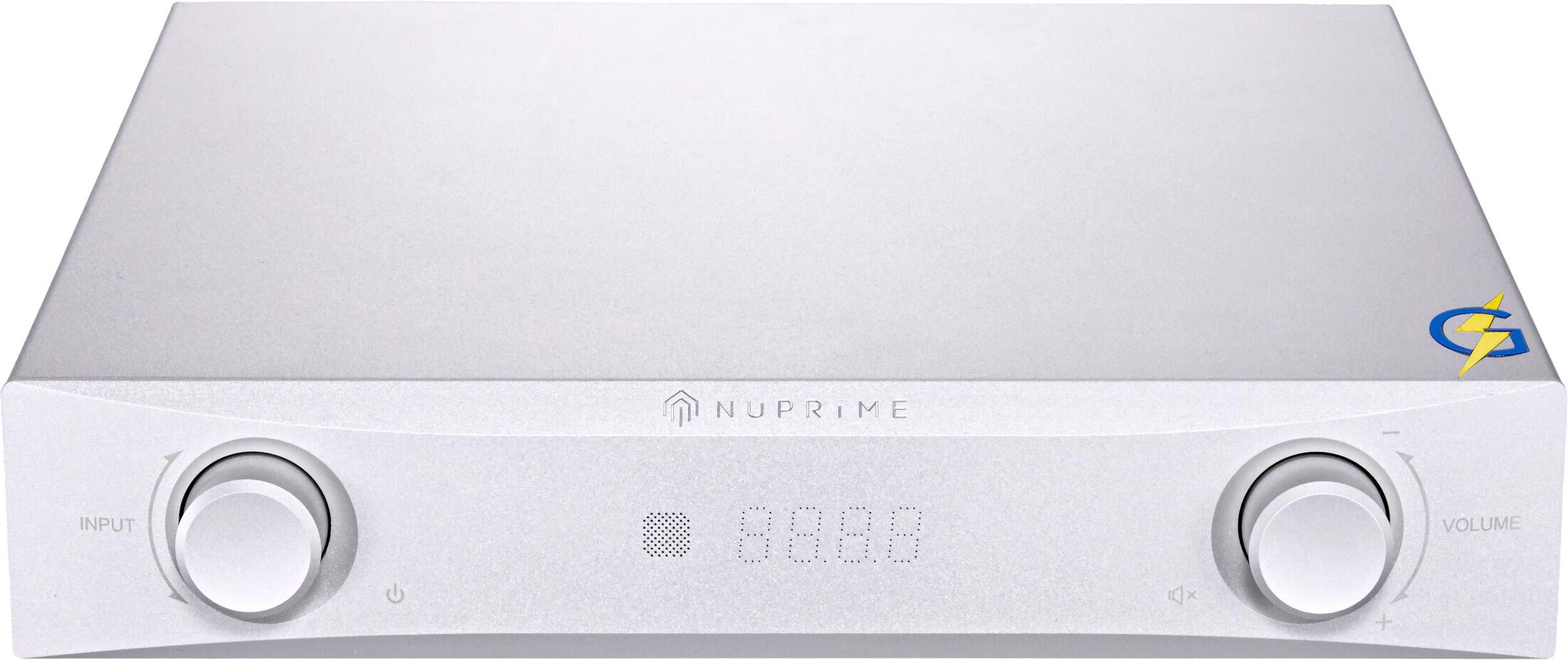
The NuPrime IDA-9 is a compact integrated amplifier. It uses a gallium nitride (GaN) power supply and delivers 200 watts per channel into 8 ohms. The 4 kg unit also features a high-resolution DAC and follows the IDA-8’s form factor. Compared to that previous model, it offers double the output power and around a 30% reduction in operating temperature.
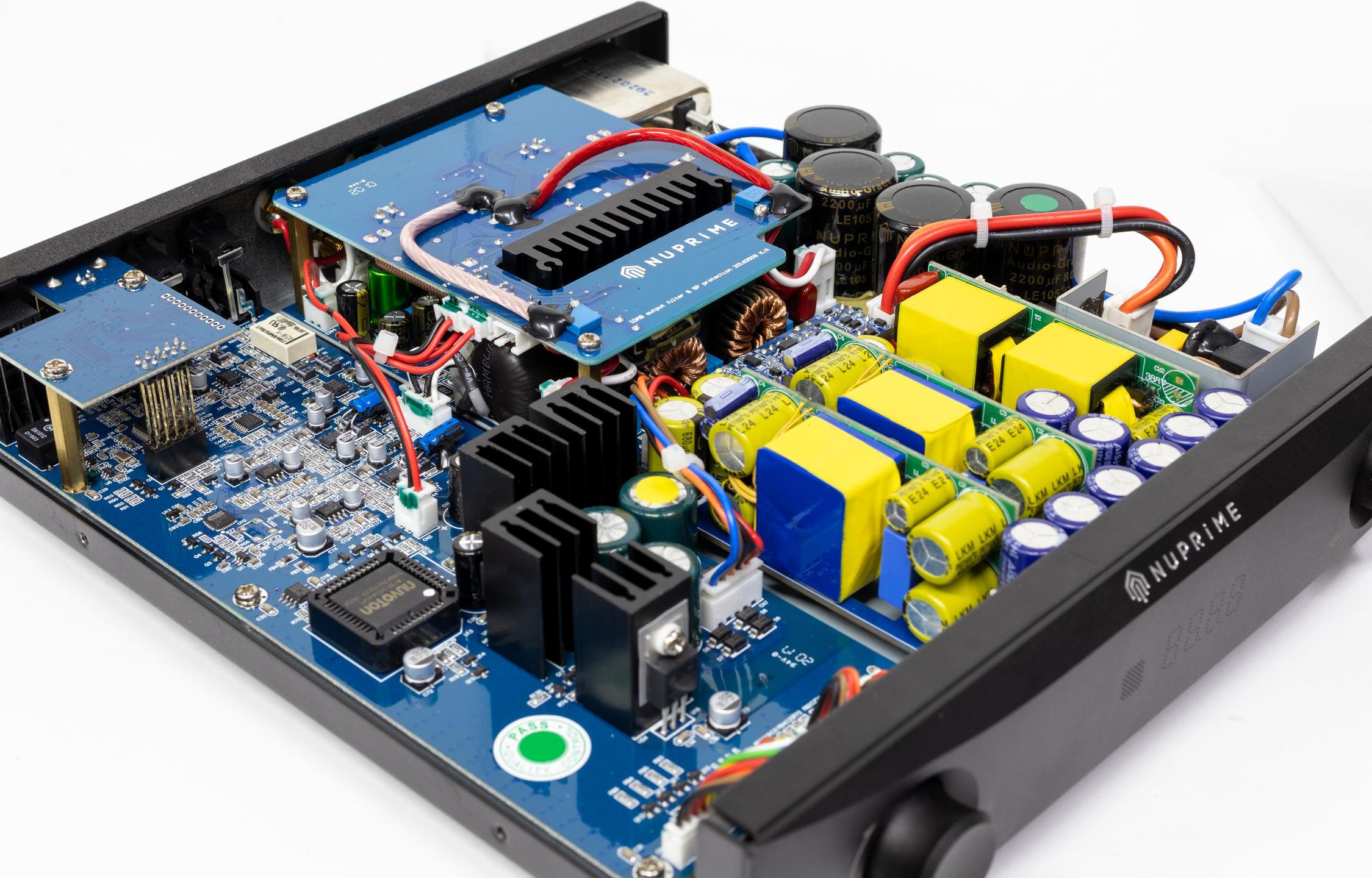
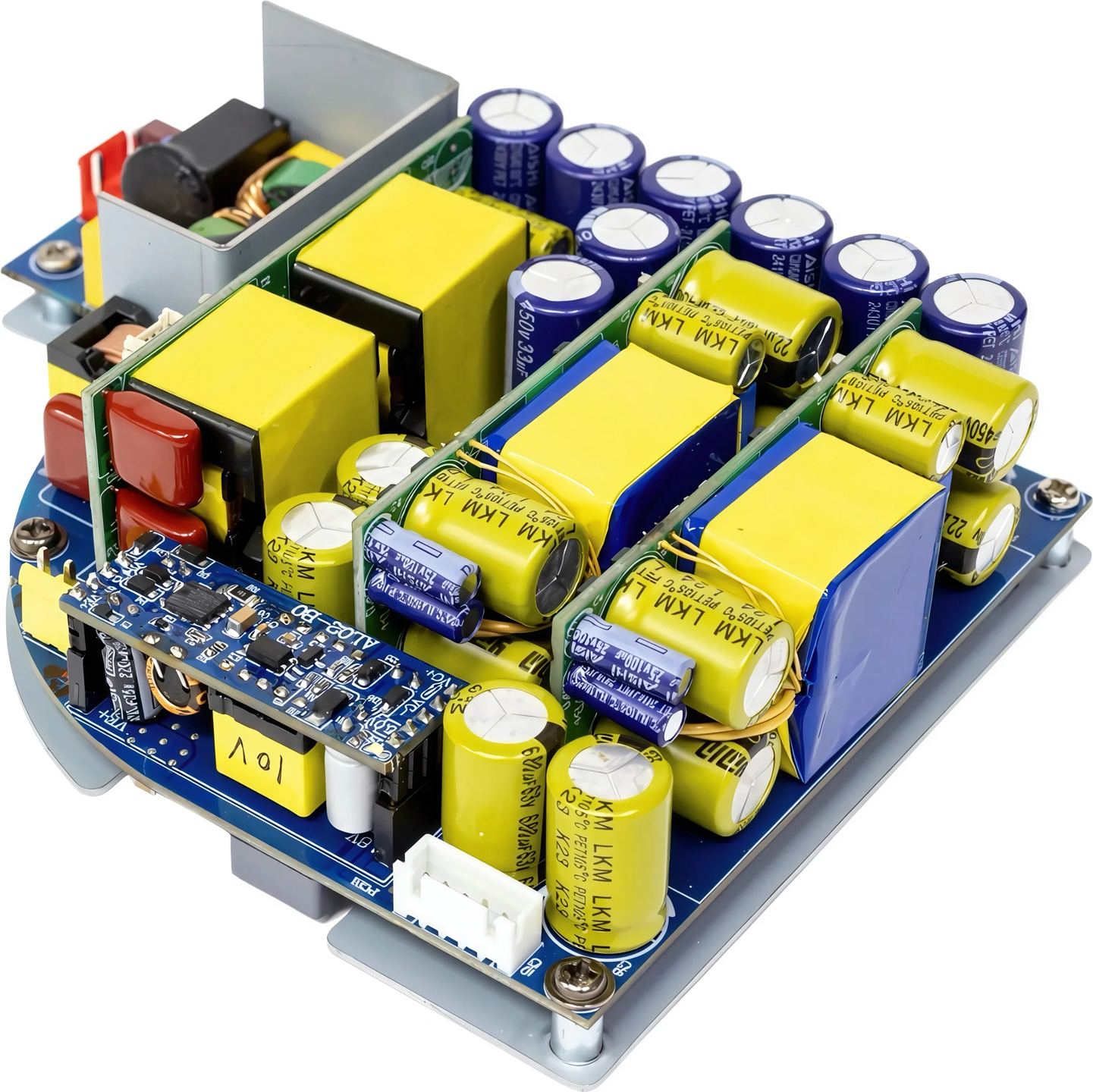
The IDA-9 stands out with a power supply based on three distinct GaN modules. The first module handles power factor correction (PFC) with a dual-phase interleaved topology, a configuration that smooths power delivery and reduces current ripple compared to traditional single-phase designs. Despite its compact dimensions of 75 × 30 × 25 mm, this PFC module can deliver 600 watts of power.
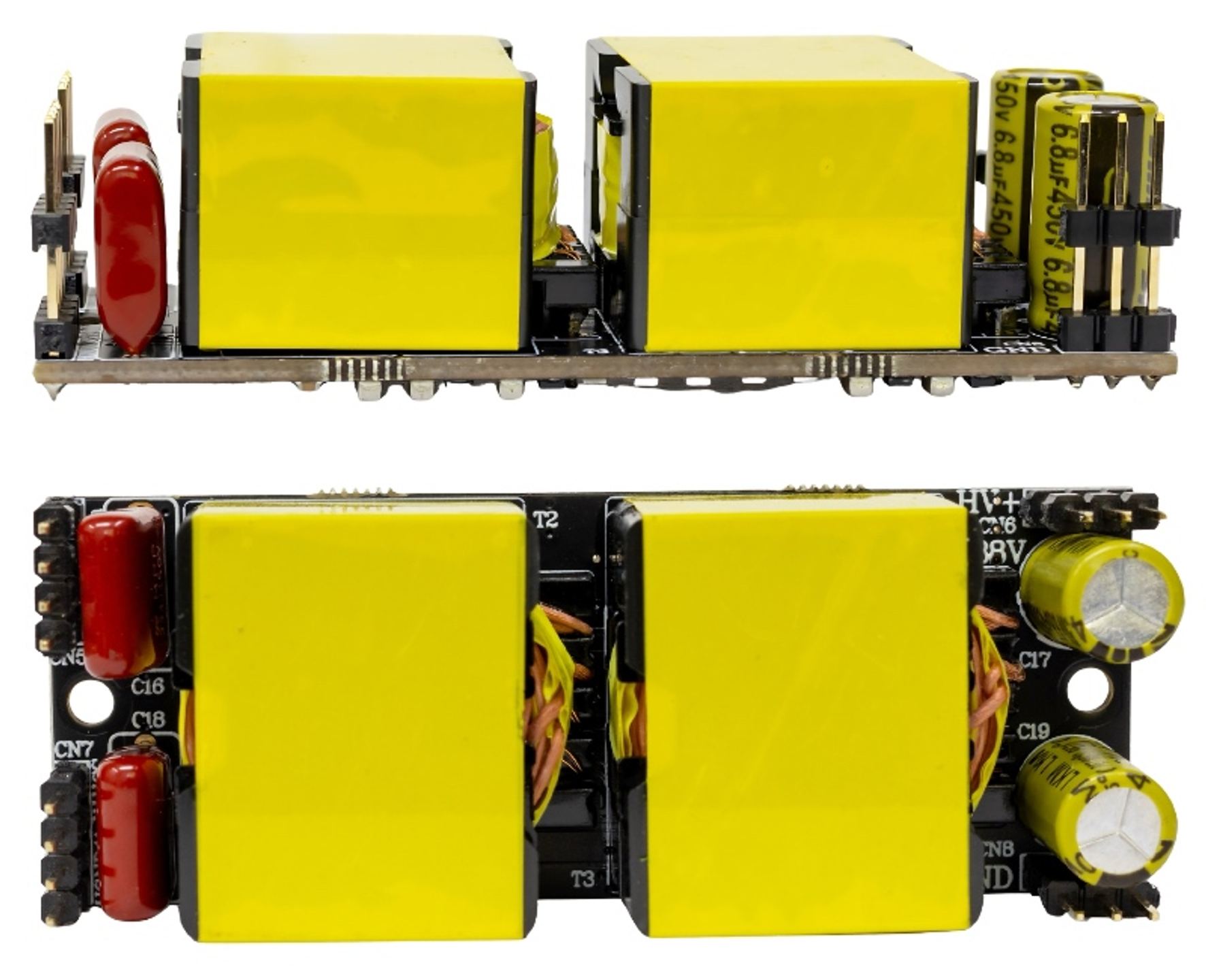
Two additional GaN modules create a symmetrical dual-rail power system, supplying the positive and negative voltages required by the amplifier’s differential circuit. Together, these paired power blocks deliver 500 watts with a peak current capacity of 20 amperes. This design advantageously replaces traditional transformer-based power supplies, occupying only a quarter of the space and weighing 20% of an equivalent conventional solution.
Gallium nitride enables significantly higher switching speeds than traditional silicon; the IDA-9’s GaN transistors can switch at frequencies approaching 700 kHz, versus around 400 kHz for the best silicon MOSFETs. This faster switching translates into a cleaner waveform, less transient distortion, and improved energy efficiency.
The IDA-9’s amplification circuit uses NuPrime’s ULCAM (Ultra-Linear Class A Module) technology. This approach combines a pure Class A input stage with a high-frequency Class D output stage. The input stage employs ultra-low-noise JFET transistors to minimize the noise floor right from the first gain stage.
The Class D MOSFET switching circuit has been optimized to operate at 600 kHz, a particularly high frequency that enables an extended frequency response up to 50 kHz while reducing operating temperature. This thermal efficiency improves long-term reliability and allows the amplifier to maintain optimal performance even during extended listening sessions.
The architecture also uses a carefully calibrated feedback circuit with extended bandwidth, maintaining a high damping factor and low output impedance. This ensures precise control of the speakers, particularly in the bass region.
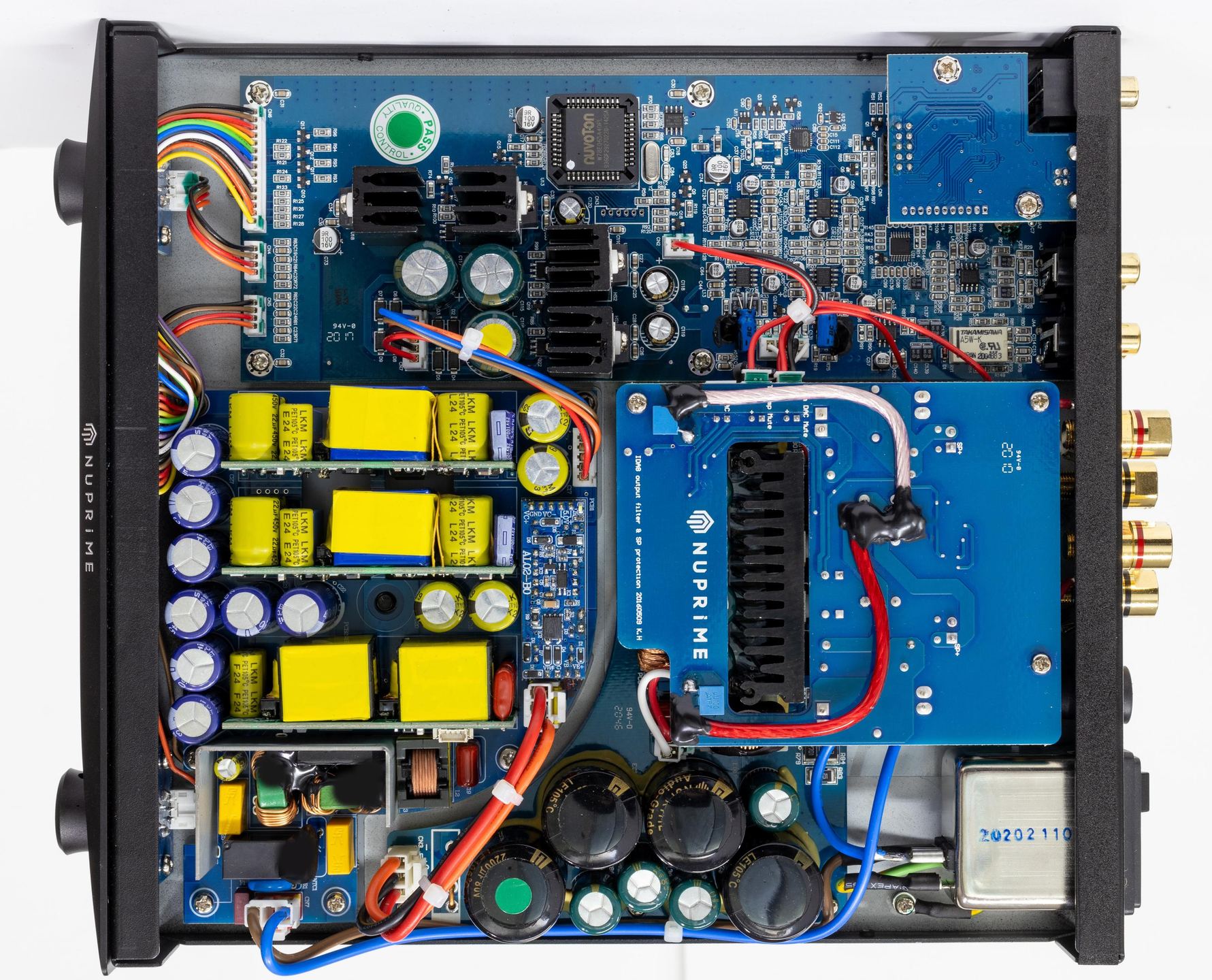
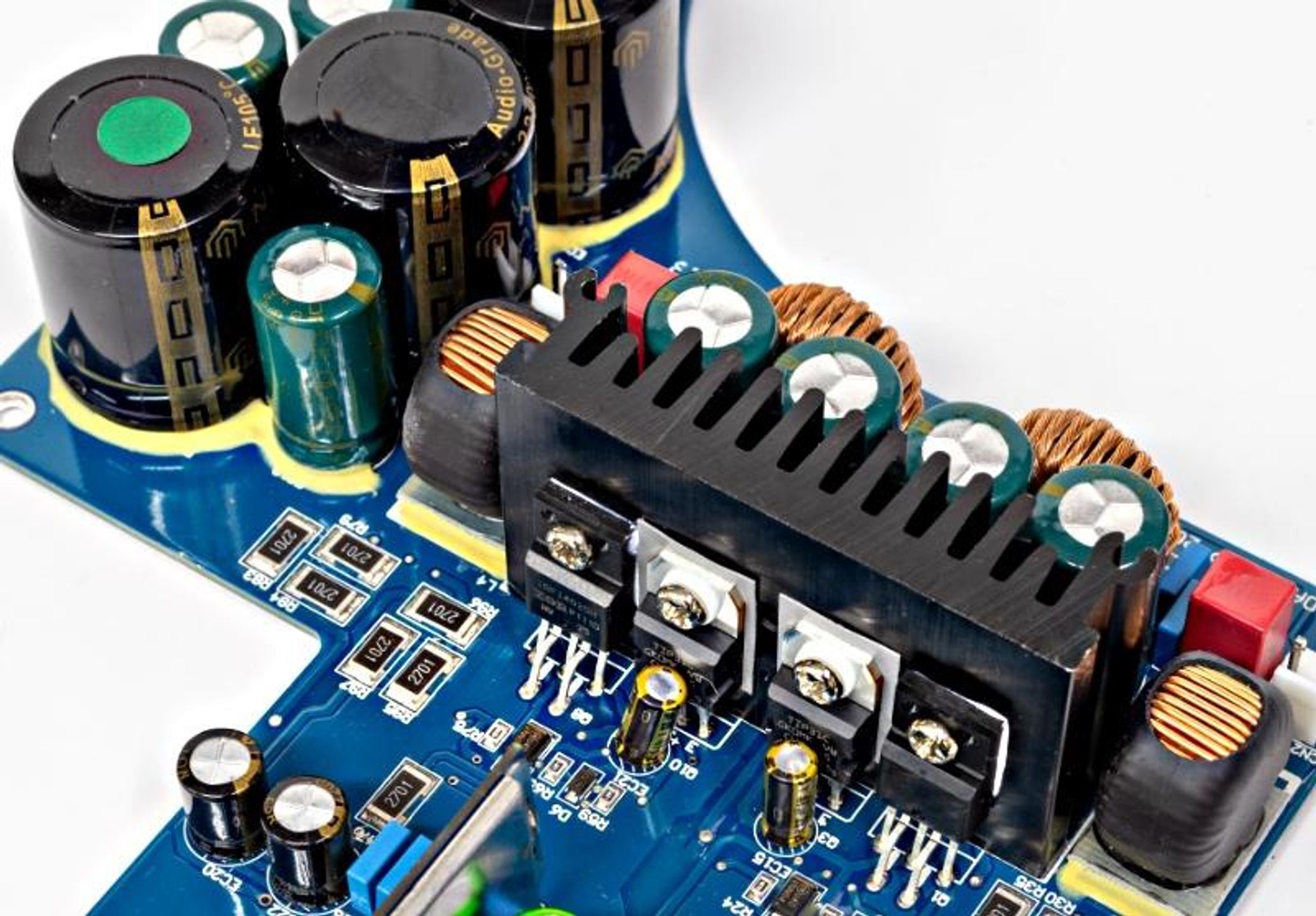
NuPrime has selected high-quality components for the IDA-9. Nichicon KZ MUSE input coupling capacitors were chosen for their transparency and ability to preserve tonal neutrality. The single-ended Class A modules use OS-CON capacitors, renowned for their natural tonality and excellent high-frequency resolution.
The amplifier also incorporates 14 premium capacitors from the WIMA MKP and EPCOS MKP series for power rail decoupling. These components, typically reserved for high-end equipment, contribute to a balanced tonal character with fast response and minimal losses. Custom power capacitors, designed specifically for NuPrime, ensure instantaneous current delivery to meet the music’s dynamic demands.
The volume control uses a resistor ladder offering 99 steps of 0.5 dB, with only a single resistor in the signal path at any time. This design preserves signal integrity while enabling precise level adjustment. Each input features independently stored volume settings, making it easy to match sources with different output levels.
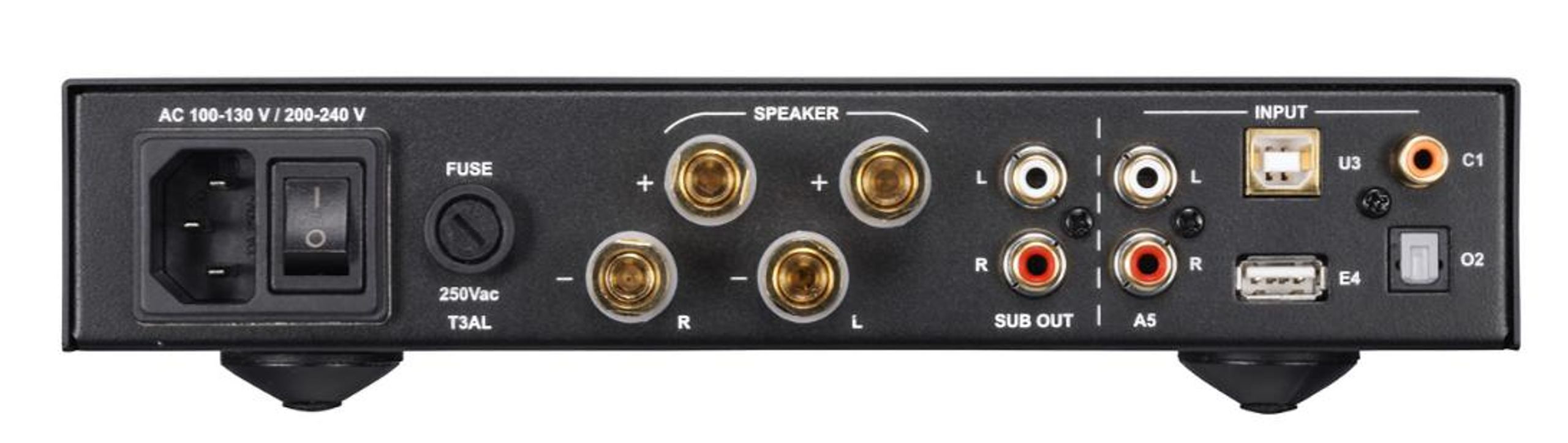
The IDA-9’s built-in DAC supports high-resolution formats up to 384 kHz PCM and DSD256 via USB. The coaxial and optical inputs support PCM up to 192 kHz as well as DoP (DSD over PCM) for DSD64 playback. Native DSD compatibility is provided via ASIO2.1 and DoP protocols.
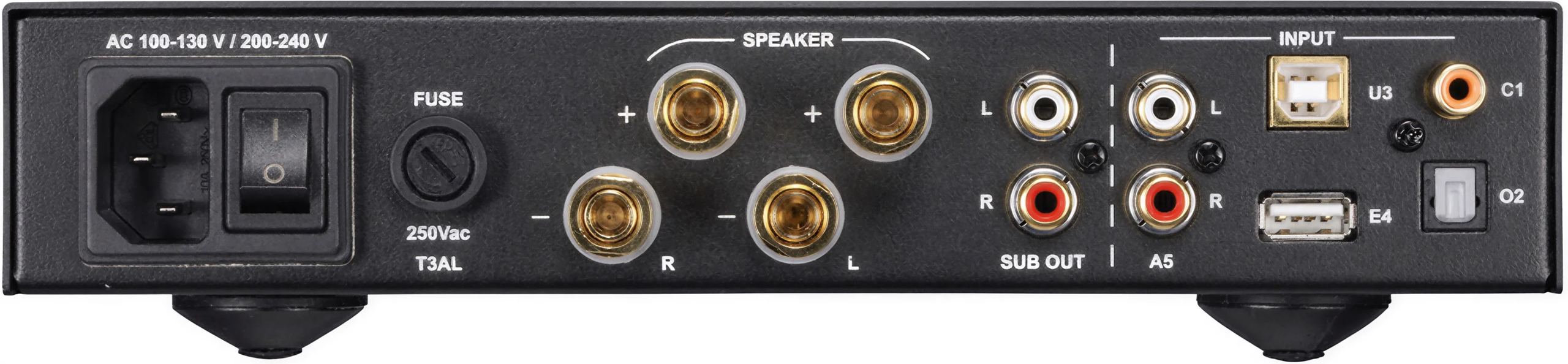
The amplifier offers four digital inputs (USB, coaxial, optical, and an expansion port for Bluetooth or Wi‑Fi modules) plus a stereo RCA analog input. The latter is digitized to benefit from the internal DSP processing. The USB Type-A port can power and receive the S/PDIF signal from compatible wireless receivers such as NuPrime’s Omnia WR-1, WR-2, or BTR-HD modules, simplifying audio streaming integration.
Outputs include a pair of speaker binding posts and a variable (2 V) RCA line out controlled by the volume. This output allows connection of an active subwoofer or a second amplifier for a bi-amped setup.
Launched in 2016, the IDA-8 made a strong impression, receiving two Product of the Year awards from The Absolute Sound and SoundStage! Network, as well as a Golden Ear Award. With 100 watts per channel, it set a new benchmark for high-quality compact amplifiers.
The IDA-9 retains the exact dimensions of its predecessor (235 × 281 × 55 mm) and the same lightweight 4 kg chassis, but doubles the RMS output power. This technical feat is made possible by GaN technology, which generates less heat for a given power level. The operating temperature, reduced by 30% compared to the IDA-8, not only allows for higher power but also improves component longevity.
The improvements aren’t limited to raw power. The new 600 kHz switching circuit (versus 550 kHz for the IDA-8) offers better detail resolution and faster transient response. The noise floor has been further lowered thanks to the new input JFETs and the ultra-clean GaN power supply.
GaN power supplies use gallium nitride transistors capable of switching much faster than traditional silicon transistors. In the IDA-9, this results in a power supply four times more compact and five times lighter than an equivalent toroidal transformer, with better regulation and less residual noise. Idle power consumption is also reduced by around 20%.
Thanks to the efficiency of GaN technology and the optimized Class D circuit, the IDA-9 remains warm to the touch even after several hours of use. Its operating temperature is 30% lower than the IDA-8, which was already known for low heat dissipation. No fan is required, and the unit can be installed in confined spaces with minimal ventilation.
The USB Type-A port on the rear of the IDA-9 is designed to power and receive the S/PDIF signal from compatible wireless modules. NuPrime’s Omnia WR-1, WR-2, BTR-HD, and Stream Mini receivers connect with a simple standard USB cable. Other brands offer dongles compatible with this specification. The module then appears as a fourth selectable digital input.
With 200 watts into 8 ohms and 250 watts into 4 ohms, plus a 20-amp current reserve, the IDA-9 can drive most speakers on the market. The high damping factor ensures precise control even with complex loads. However, for very demanding speakers or very high listening levels, NuPrime’s IDA-16 remains more appropriate.
The built-in DAC supports high-resolution formats up to 384 kHz/32-bit and DSD256, with a quality conversion chip and NuPrime’s proprietary SRC DSP processing. For most users, its performance is more than sufficient. A high-end external DAC will only yield noticeable improvements in highly resolving systems with particularly revealing speakers.
ULCAM technology combines the tonal strengths of Class A (smoothness, micro-detail resolution) with the dynamics and efficiency of Class D. Users typically describe the sound as neutral yet detailed, with excellent instrument separation, tight and controlled bass, and extended highs without harshness. The sonic signature avoids the coolness sometimes attributed to pure Class D.
Dan
Fantastic product, plays really well and doesn’t take up much space
Comment from May 21, 2026 — Experience from May 07, 2026
Pascal
An exceptional device that puts others costing ten times more to shame. I’ve owned many high‑end units; this one saves you a DAC while delivering amplification with phenomenal finesse and power. It has the warmth and transparency of a Class A, the lack of aggressiveness of a tube amp, and the power of certain legendary monsters. The power supply with active mains noise rejection brings unprecedented transparency to albums you thought you knew by heart. A phenomenon. Unbeatable value for money. A few days of burn‑in are necessary.
Comment from February 09, 2026 — Experience from January 29, 2026





