

Tangent POWERAMPSTER III
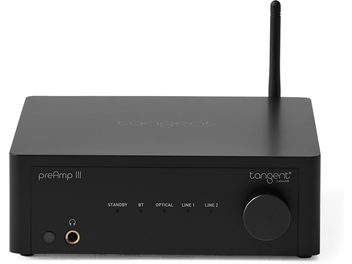
Overview
The Tangent PowerAmpster III is a compact power amplifier measuring 200 mm on each side. This third generation delivers up to 2 × 100 W into 4 Ω and features a 12 V trigger input for simplified integration into a home automation system. It maintains the brand’s minimalist design language since 1996.
Scandinavian design and meticulous construction
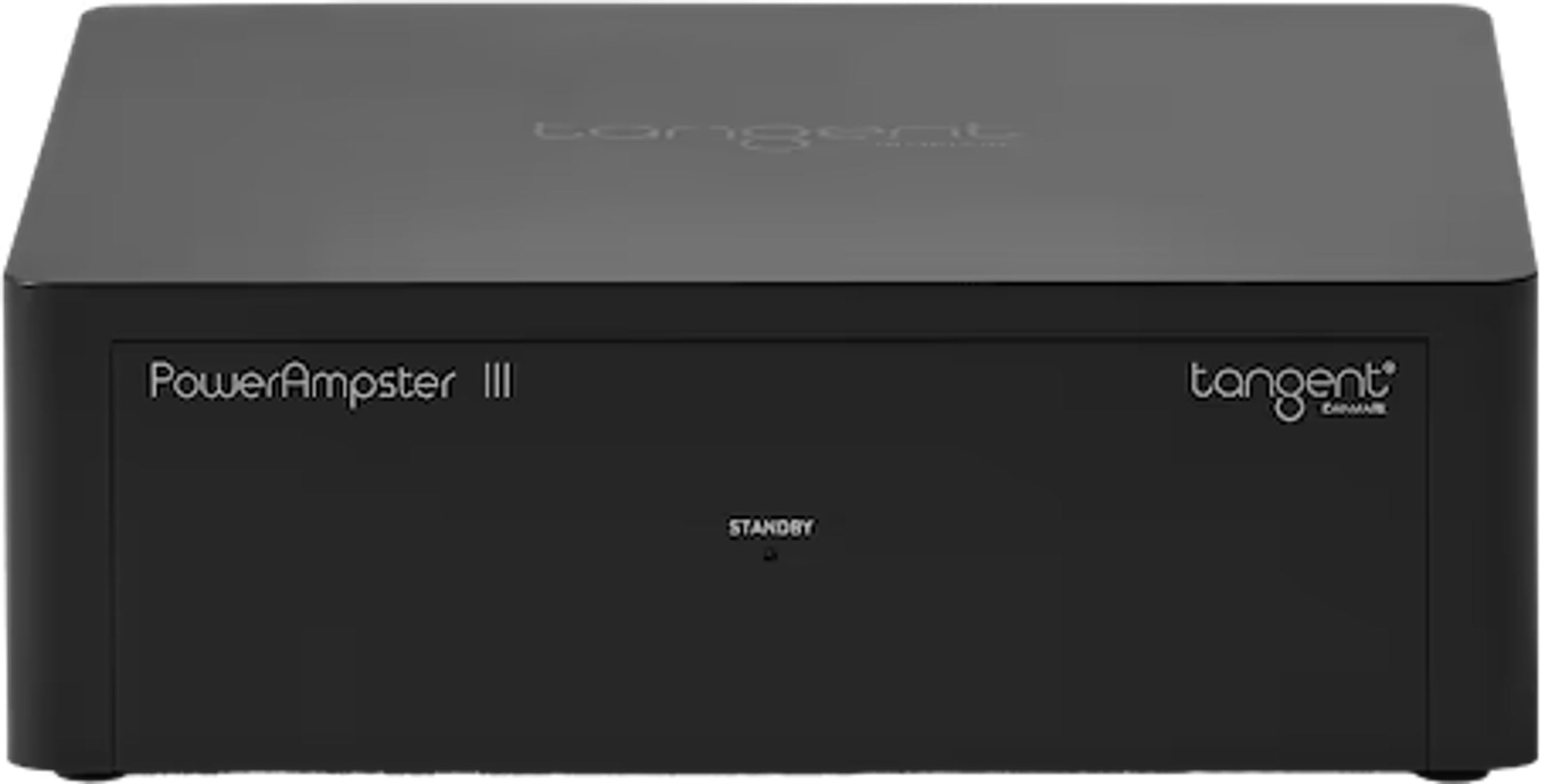
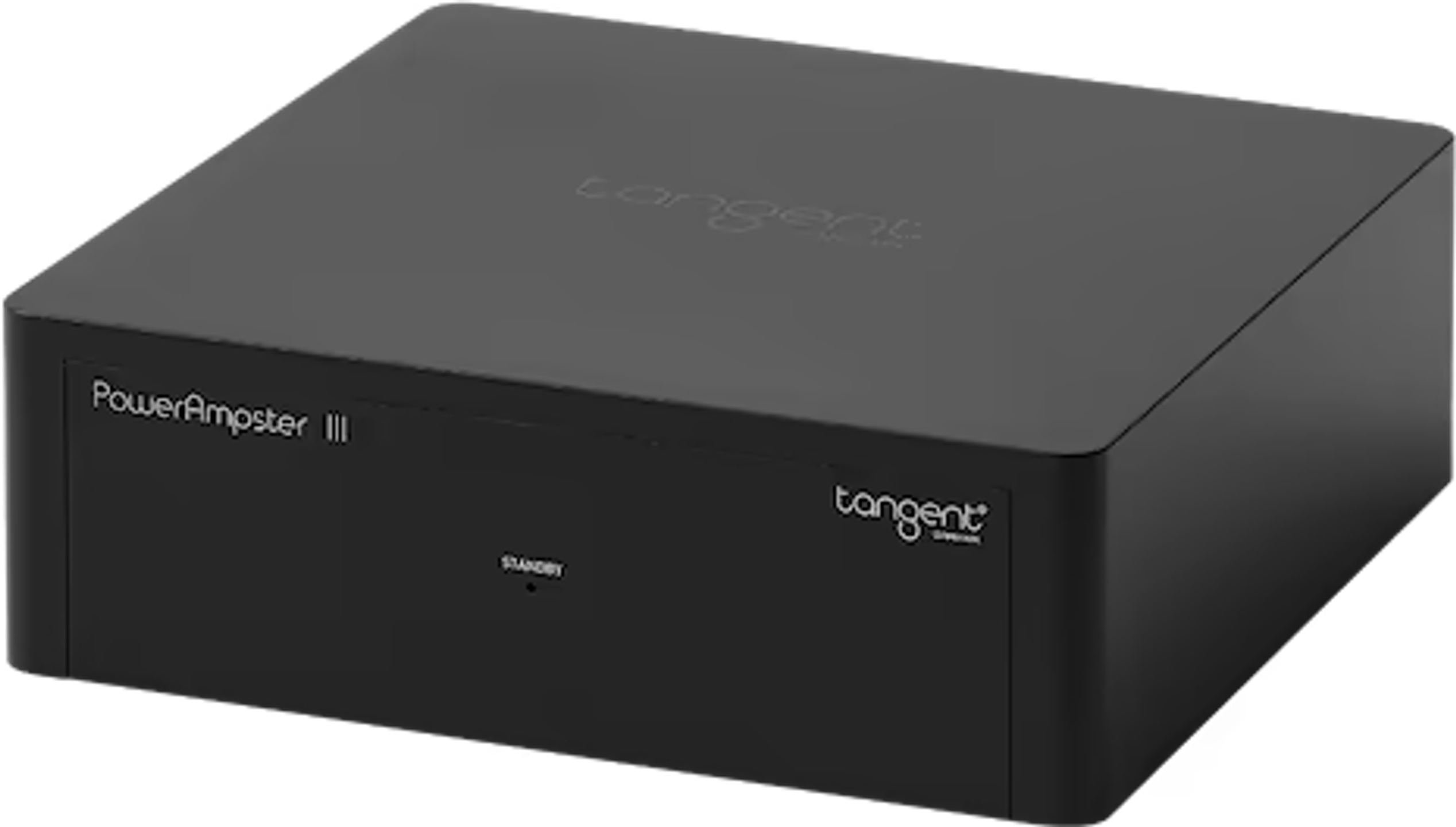
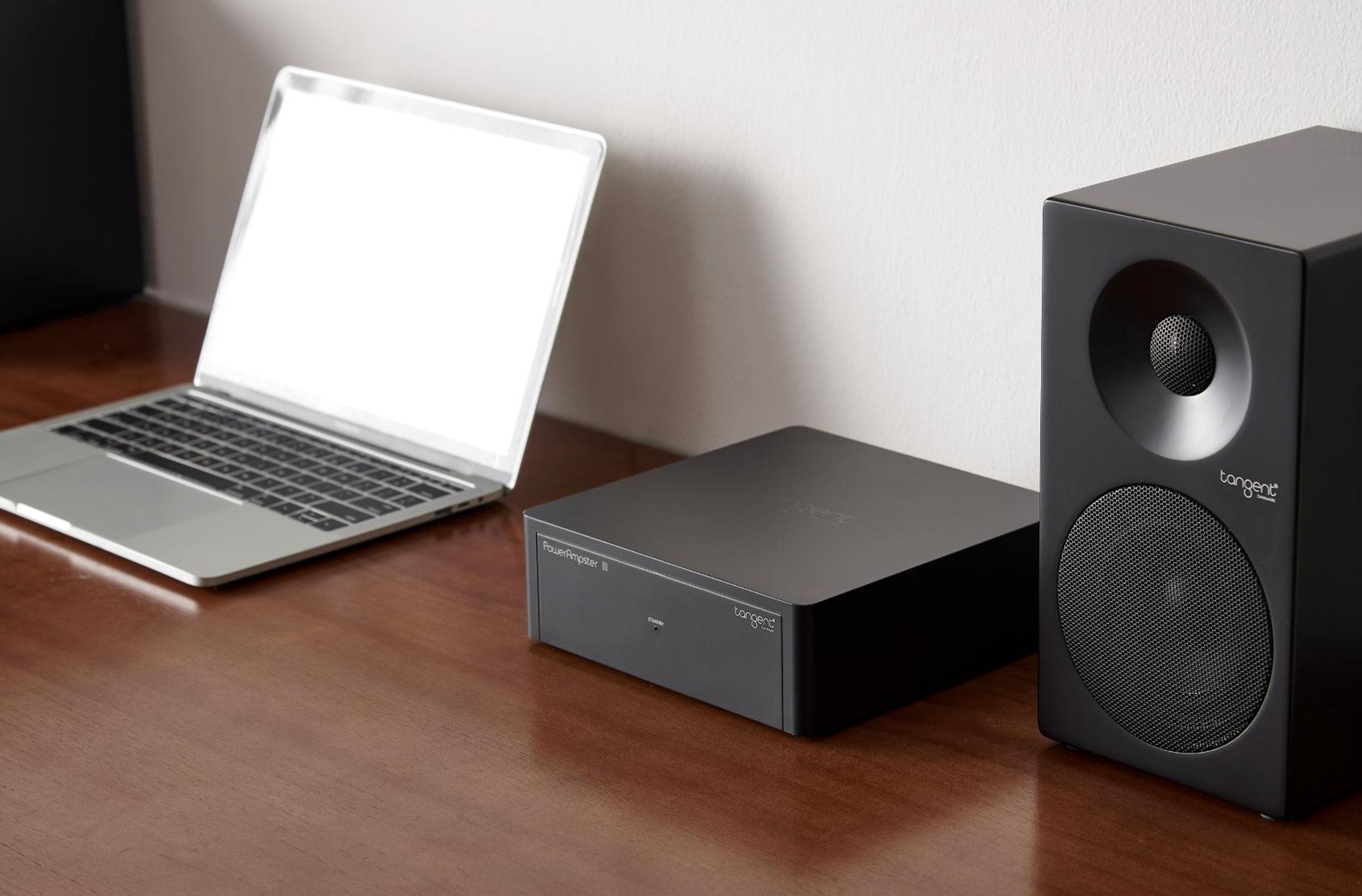
The PowerAmpster III continues the tradition of compactness that characterizes Tangent’s lineup. Its 200 × 65 × 200 mm metal chassis houses a power electronics stage in a volume equivalent to a large coffee table book. The matte black anodized aluminum front panel reflects the brand’s signature Scandinavian minimalism: a single status LED punctuates the face, underscoring the commitment to pure simplicity. The absence of front-panel controls speaks to the PowerAmpster III’s purpose: to amplify the signal without frills or complications.
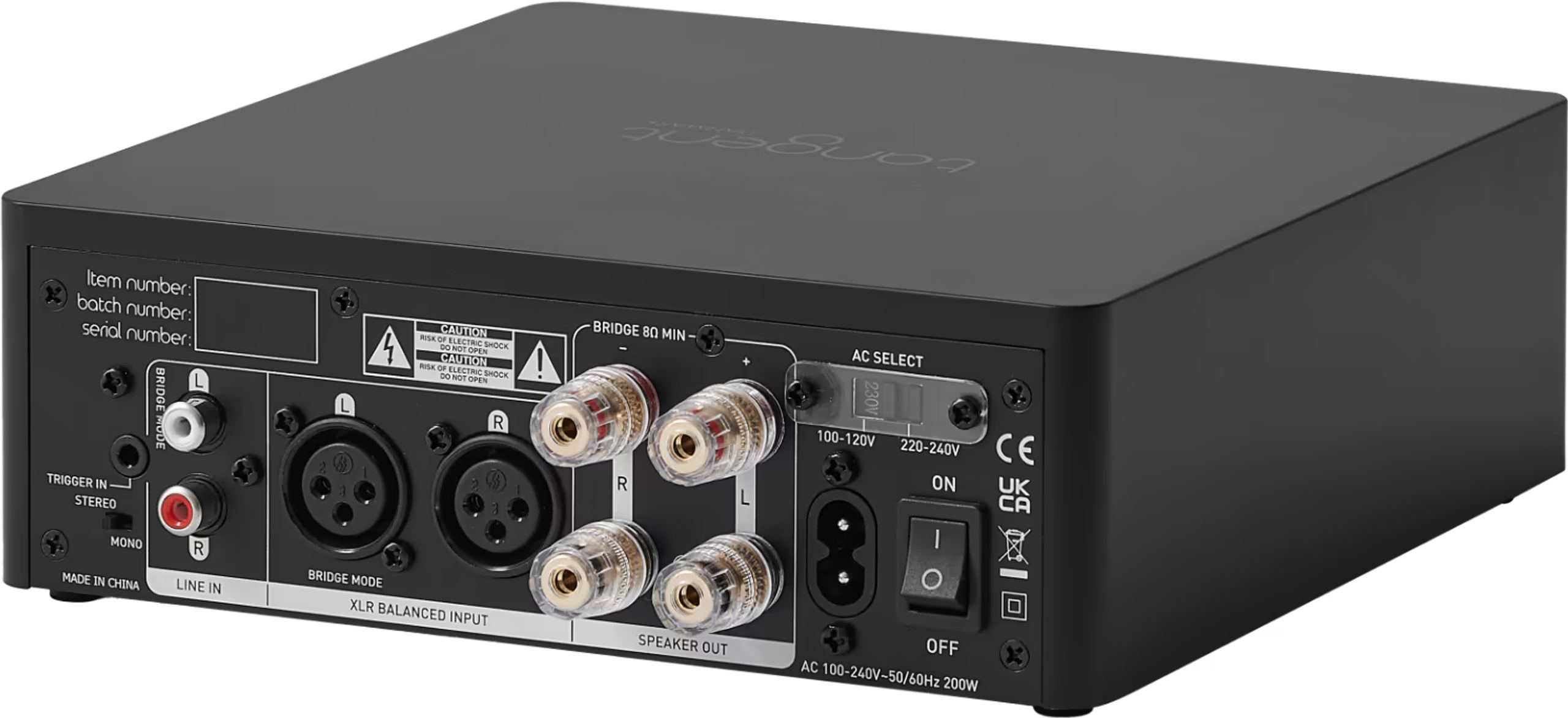
The construction prioritizes functionality with side vents that facilitate heat dissipation. The high-quality speaker binding posts demonstrate special attention to the connections, a critical link in the signal transmission chain. Weighing just 1.4 kg, the amplifier can fit into the most constrained setups, whether on a narrow shelf, in a closed cabinet, or stacked with other Tangent components.
Amplification technology and performance
The amplifier employs a Class D topology, a technical choice that achieves remarkable energy efficiency while maintaining compact dimensions. This switching technology, sometimes misunderstood, is not “digital” in its handling of the audio signal. It uses pulse-width modulation to drive the output stages with efficiency exceeding 90%, whereas traditional amplification typically tops out between 50% and 70%.
The rated power of 2 × 100 W into 4 Ω can drive a wide range of speakers, from compact bookshelf models to more demanding floorstanders. Bridged mode transforms the PowerAmpster III into a 200 W monoblock into 8 Ω, a configuration particularly suited to multichannel installations or bi-amped systems. This configuration flexibility sets the PowerAmpster III apart in its price category, where bridging options remain rare.
Frequency response extends from 20 Hz to 20 kHz, covering the full audible spectrum with sufficient linearity for faithful reproduction. The signal-to-noise ratio greater than 90 dBA ensures quiet operation that preserves the subtlest nuances of recordings.
Modern connectivity and system integration
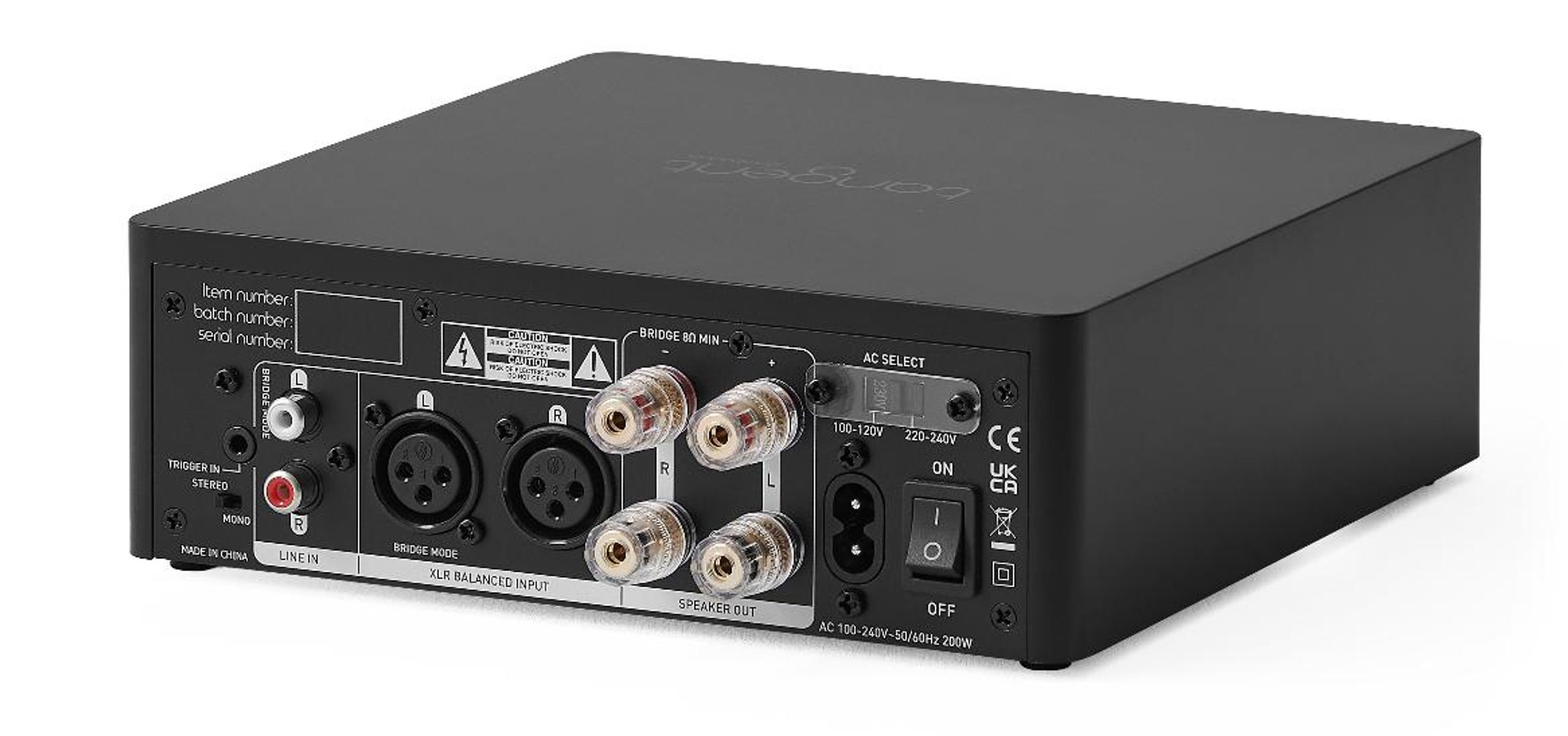
The rear of the PowerAmpster III reveals connectivity designed to adapt to different setups. Dual RCA and balanced XLR inputs allow direct connection to any preamplifier, whether consumer or professional. XLR connections offer the added advantage of enabling bridged mode without an additional phase-inversion circuit, leveraging the inherently differential nature of the balanced signal.
The addition of a 12 V trigger input is the main evolution in this third generation. This connection allows the amplifier to be switched on automatically by a preamplifier, a home theater processor, or a compatible home automation system. The PowerAmpster III still supports auto power-on via signal detection, a practical feature that eliminates the need for manual intervention in daily use.
Auto-standby after 5 minutes of inactivity and standby consumption below 0.5 W (compliant with EuP 2013) reflect a design aligned with current energy standards. The built-in universal 100-120 V / 220-240 V power supply simplifies international use without requiring an external adapter.
The Tangent ecosystem and compatibilities
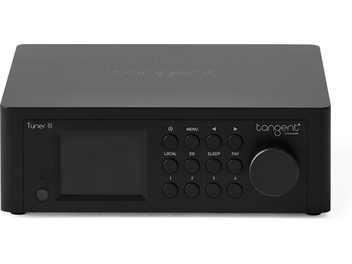
The PowerAmpster III fits into a coherent range that includes the PreAmp III preamplifier, the integrated amplifier Ampster BT III, the Tuner III, and the CD III player. Each component shares the same dimensions and aesthetics, allowing you to build a modular system according to your needs and budget. This modular approach offers welcome scalability: start with a PowerAmpster III paired with an existing preamplifier, then gradually expand the system.
The amplifier suits multiple use cases. In a classic stereo setup with the PreAmp III, it forms a compact pre/power combo that rivals bulkier integrated amps. In multiroom configurations, several PowerAmpster III units can be distributed across different rooms, controlled by a multichannel preamplifier. The amplifier can also upgrade the front channels of a home theater system, bringing extra power and dynamics to the main speakers.
Documentation
French
Technical Specifications
Performance
- Output power
- Stereo mode: 2 × 100 W at 4 Ω
- Bridged mode: 1 × 200 W at 8 Ω
- Frequency response: 20 Hz – 20 kHz
- Signal-to-noise ratio: > 90 dBA
- Auto power-on for all sources
Connectivity
- Analog inputs: stereo RCA and balanced XLR
- Speaker connectors: premium binding posts
- 12 V trigger: trigger input for easy integration
Power and operation
- Mains voltage: 100–120 V / 220–240 V built-in (switchable)
- Auto standby: yes, after 5 min of inactivity
- Standby consumption: < 0.50 W (EuP 2013 compliant)
- Auto wake signal
Dimensions and weight
- Dimensions (W × H × D): 200 × 65 × 200 mm
- Net weight: 1.4 kg
Matching range
- preAmp III
- Ampster BT III
- Tuner III
- CD III
Frequently Asked Questions
Can the PowerAmpster III operate on its own, or does it require a preamplifier?
A preamplifier is essential to control volume and select sources. The PowerAmpster III has no volume control or input selector. It can be paired with any preamplifier with RCA or XLR line outputs, not just Tangent’s PreAmp III.
What is the main difference between the PowerAmpster II and the PowerAmpster III?
The third generation introduces a 12 V trigger input for automatic power on/off via an external control signal. The design has also been modernized while retaining the same compact dimensions and output power as the previous generation.
How does bridged mode work and when should it be used?
Bridged mode combines the two channels to create a 200 W mono amplifier. It requires connection via the balanced XLR input and is activated by a rear-panel switch. This configuration is suitable for bi-amping demanding speakers or creating a multichannel system with multiple PowerAmpster III units.
Does Class D amplification affect sound quality?
Modern Class D offers sound quality equivalent to traditional amplification, with the benefits of higher energy efficiency and reduced heat. Preconceptions about this technology date from early implementations and no longer reflect the reality of current circuits.
Which speakers are recommended with the PowerAmpster III?
With 100 W per channel into 4 Ω, the amplifier can drive most speakers on the market, from bookshelf models to medium-sensitivity floorstanders. Speakers rated 4 to 8 Ω with sensitivity between 85 and 95 dB are ideal partners.
- Eco-contribution of €2.58 included in the sale price.
- Manufacturer reference: TANPOWAMPIII
- GTIN / EAN: 5703959232243