Differences between Onkyo and Integra: same family, two philosophies
February 12, 2026
Contents
Two brands, the same chassis, different prices. When comparing Onkyo and Integra home theater amplifiers, the confusion is understandable. The specifications look similar, the internal components are often identical, yet the price gap can reach several hundred euros. Understanding the differences between Onkyo and Integra requires looking beyond the spec sheet.
Where does Integra come from? An Onkyo sub-brand since 1969
Integra was not created by a competitor. Onkyo itself invented the name in 1969 to distinguish its high-end integrated amplifiers. For three decades, the “Integra” badge appeared on Onkyo’s most advanced products, without truly existing as an independent brand.
The shift came in 1998-1999, when Onkyo launched Integra as an independent brand with its own distribution network, aimed at professional installers. Today, both belong to Premium Audio Company (PAC), a subsidiary of VOXX International acquired in late 2024 by Gentex Corporation. Manufacturing is handled by Sharp in Malaysia, for both Onkyo and Integra.
Home theater amplifier: what is identical between Onkyo and Integra
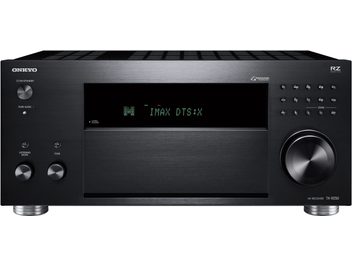
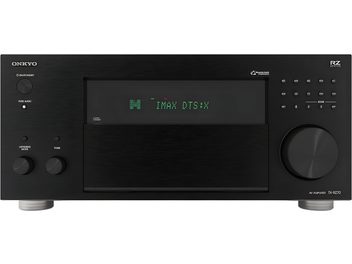
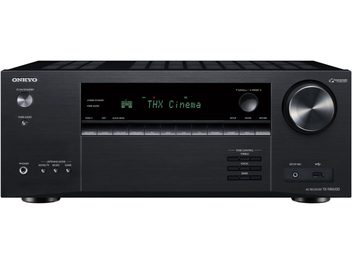
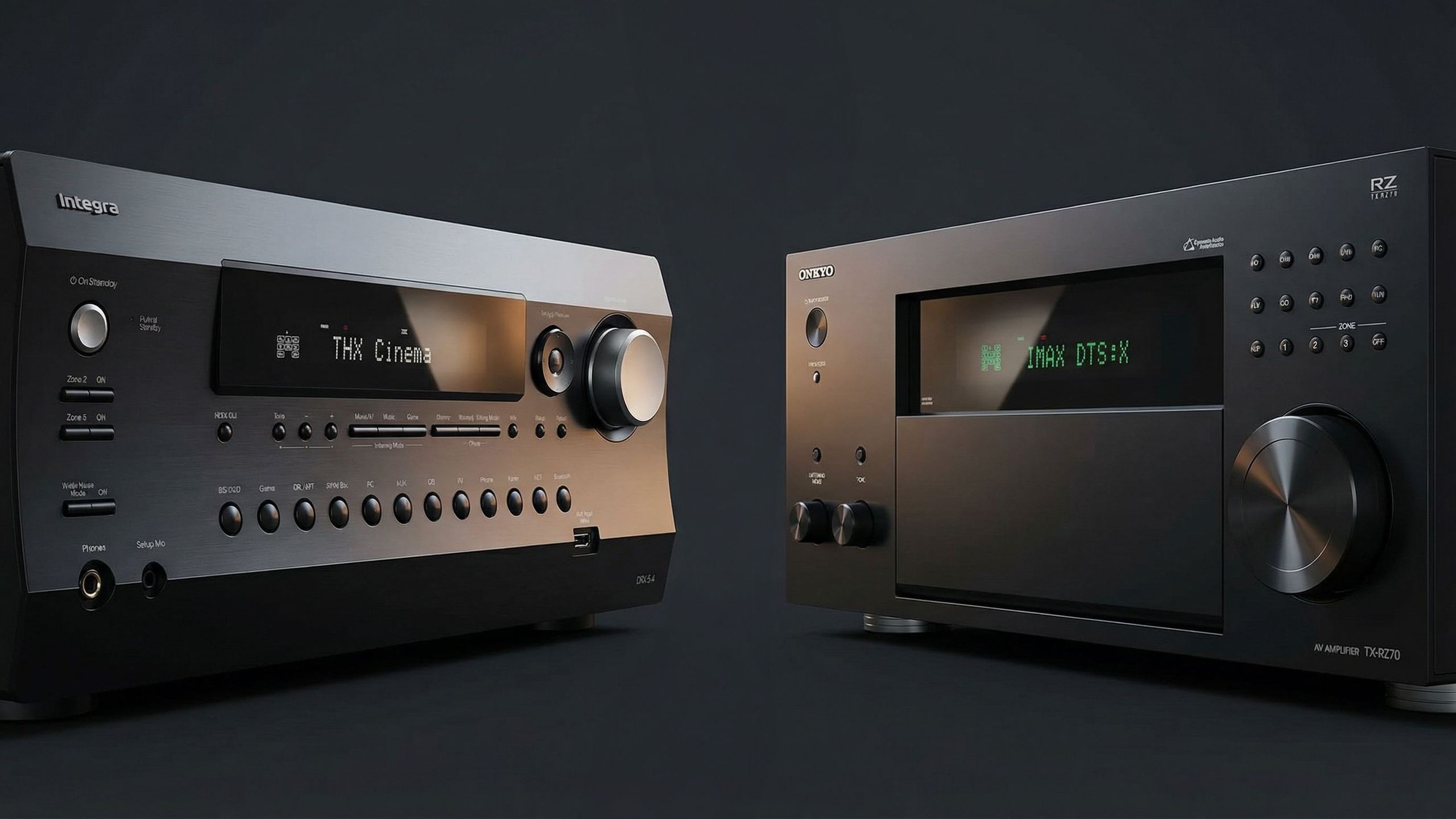
On the current flagship models, the technical relationship is documented. The Onkyo TX-RZ70 (€3,299) and the Integra DRX-8.4 (€3,989) share the same chassis, the same power supply, the same ESS Sabre ES9026Pro converters, and the same Class AB analog amplification. Both have the same maximum power consumption of 1,190 watts.
Audio processing is the same: Dolby Atmos, DTS:X, IMAX Enhanced, Auro-3D, and Dirac Live (full bandwidth license included on both). The HDMI 2.1 section with 8K/60 Hz and 4K/120 Hz is shared.
The real differences between Onkyo and Integra
The differences do exist, but they are not where most buyers look for them.
Connectivity and home automation integration
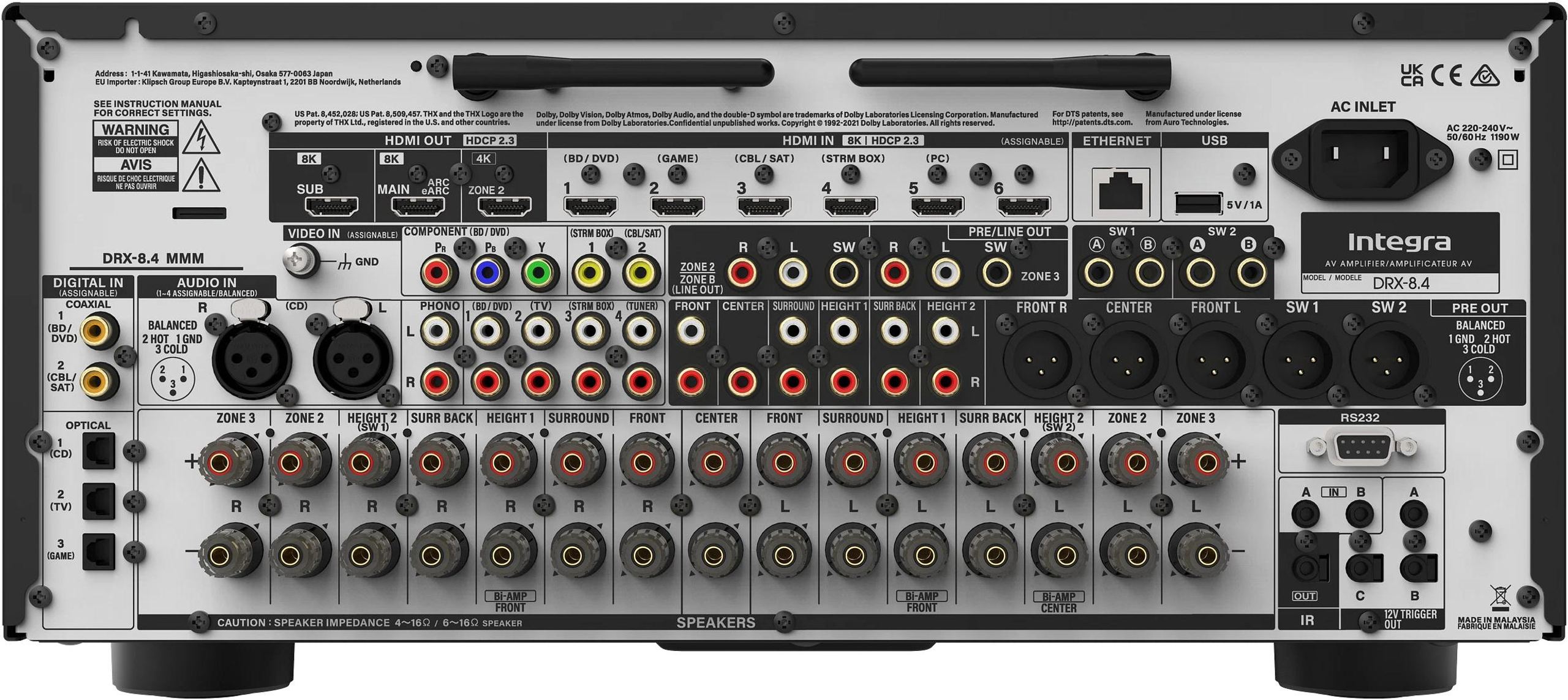
This is the most tangible point of divergence. The DRX-8.4 has five XLR outputs and two XLR inputs, which are absent on the TX-RZ70. It offers four RCA subwoofer outputs versus two on the Onkyo.
On mid-range models, the most notable distinction was long HDBaseT connectivity: a technology that transmits the HDMI signal over Cat 5e/6 network cable up to 100 meters. Very useful for connecting a home theater amplifier to a distant video projector, it was available on the Integra DRX-4 and DRX-5 but absent from equivalent Onkyo models.
All Integra models include RS-232 ports, infrared inputs/outputs, and 12 V triggers (connectors that send a signal to activate an external device, such as a motorized screen). These features ensure native compatibility with Crestron, Control4, Savant, and AMX. High-end Onkyo models offer some of these features, but entry-level models are more limited. The 12 V triggers, for example, are often restricted to zones 2 and 3 on Onkyo, whereas Integra makes them freely assignable.
Calibration, warranty, and distribution
Historically, Integra models offered more granular calibration options: speaker distance adjustment in 0.2-foot increments (versus 0.5 on Onkyo), 14 crossover frequencies versus 10, and a 15-band equalizer versus 7. The adoption of Dirac Live by both brands has reduced these differences.
Integra is covered by a 3-year warranty, Onkyo by 2 years. In terms of distribution, Onkyo is available online and through major retailers, often with negotiable prices. Integra is sold through a network of authorized dealers, with prices close to the list price. This difference in sales channel explains part of the price gap.
Onkyo and Integra model equivalency table
| Integra | Onkyo | Segment |
|---|---|---|
| DRX-2.4 | TX-NR6050 | Entry-level, 7.2 channels |
| DRX-3.4 | TX-NR7100 | Mid-range, 9.2 channels |
| DRX-5.4 | TX-RZ50 | Upper mid-range, 9.2 channels |
| DRX-8.4 | TX-RZ70 | High-end, 11.2 channels |
| DTM-7.4 | TX-8470 | Network stereo receiver, Class G |
Onkyo or Integra: how do you choose your home theater amplifier?
The sound difference between an Onkyo and its Integra equivalent is, at best, marginal. Integra makes sense when the video signal needs to be sent 30 meters to a video projector, when a Crestron system must control the entire setup, or when an installer needs XLR outputs to feed external amplifiers.
For a standard living room with five or seven speakers controlled by a remote, Onkyo does the same job for less. Sound performance and audio features are the same.
The real pitfall would be paying the Integra premium believing you are buying superior audio quality. What you are buying is an installation ecosystem and one additional year of warranty. For others, that money is better invested in better speakers.
Frequently asked questions
Is Integra made by Onkyo?
Integra is a brand created by Onkyo in 1969 that became independent in 1999. Both belong to Premium Audio Company and are manufactured in the same Sharp factory in Malaysia.
What is the difference in sound between Onkyo and Integra?
For equivalent models, the sonic difference is marginal. Both share the same converters, power supply, and amplification. The differences lie in connectivity, home automation integration, and warranty.
Is the Integra warranty longer than Onkyo's?
Yes. Integra offers a 3-year warranty compared with 2 years for Onkyo.
Which home theater amplifier should you choose between Onkyo and Integra?
Onkyo is suitable for a conventional living room installation, offering better value for money. Integra is justified for custom installations requiring XLR outputs, HDBaseT, or advanced home automation integration (Crestron, Control4).