

Home Theater Preamps, Audio-Video Processors
The home theater preamplifier, also called an audio-video processor, centralizes and processes signals from your sources before sending them to the power amplifiers. Unlike an integrated amp, it separates the processing section from amplification, delivering superior sound quality and maximum upgradeability. Compatible with immersive formats like Dolby Atmos and DTS:X, the home theater processor targets cinephiles seeking a modular setup and audiophile-grade performance. Learn more
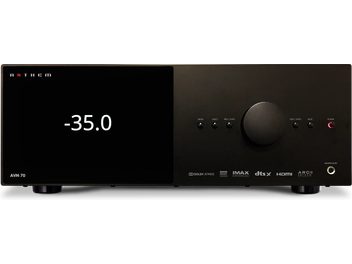
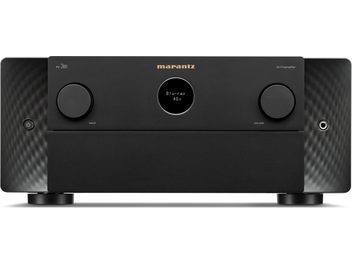
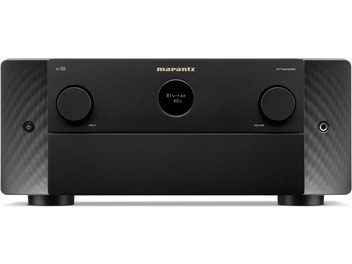
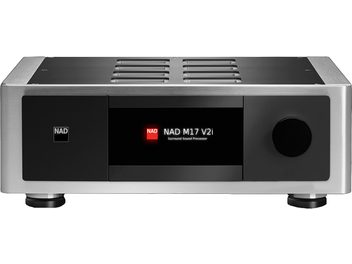

What is a home theater preamplifier?
An audio-video processor does not include its own power amplification. Its role is to receive the audio and video streams from your sources (Blu-ray player, console, streaming service), decode them, and pre-amplify them before sending them to one or more external power amplifiers. This separates-out architecture is the backbone of high-end home theater systems.
The AV preamp manages volume control, source selection, tone control, and multichannel format decoding. It also embeds a video processor capable of upscaling content to 4K or 8K depending on the model. HDMI 2.1 connectivity allows passthrough of 4K/120Hz and 8K/60Hz signals, with support for HDR10+, Dolby Vision, and gaming features (VRR, ALLM).
The advantages of a separates configuration
Choosing a home theater preamp rather than an integrated amp offers several concrete benefits. First, the physical separation of processing and amplification sections reduces interference and background noise, improving the signal-to-noise ratio. Electronic components are carefully selected: audiophile DACs, dedicated clock, quiet power supply isolated from audio circuits.
This modularity makes technological upgrades easier. When a new audio format appears or a new HDMI standard emerges, you only replace the processor without touching the power amplifiers or speakers. The investment in quality amps remains sustainable over the long term.
Home theater processors also handle more channels than integrated amps. Where a conventional amp tops out at 11 or 13 channels, some processors reach 16 or even 32 channels for the most ambitious Atmos configurations (such as 9.4.6 or 11.4.8 setups).
Audio formats and acoustic calibration
Modern preamplifiers decode immersive formats: Dolby Atmos, DTS:X, Auro-3D, and IMAX Enhanced. They support high-resolution streams up to 24-bit/192 kHz, and even DSD on certain hi-fi-oriented models.
A major asset lies in the built-in room correction systems. Dirac Live, Audyssey MultEQ XT32, ARC Genesis, or Room Perfect analyze your listening room using a calibration microphone. These technologies measure each speaker’s response, detect acoustic flaws (reverberation, resonances), and apply corrections to optimize sound reproduction. The result: clearer dialogue, a coherent soundstage, and enhanced immersion, even in rooms without acoustic treatment.
Network connectivity and streaming
Recent audio-video processors come with comprehensive network features. Wi-Fi and Ethernet, Bluetooth, AirPlay 2, Chromecast, and DLNA protocol provide access to streaming services (Spotify Connect, Tidal, Deezer, Qobuz) and files stored on a NAS or computer.
Multiroom platforms like HEOS (Denon/Marantz), MusicCast (Yamaha), or DTS Play-Fi offer the ability to stream music to multiple listening zones simultaneously. Some models integrate Roon Ready for demanding audiophiles.
Who is this configuration for?
Opting for separates involves a higher budget than an equivalent integrated home theater amp. Also factor in more space in your cabinet, more cabling, and substantial power requirements.
This configuration is therefore aimed at enthusiasts with a dedicated room or a budget that allows aiming for excellence. If you’re seeking the best possible sound quality, the flexibility to upgrade your setup over the years, or you want to drive an ambitious configuration with numerous speakers, the home theater preamp is the logical choice.
Brands and references
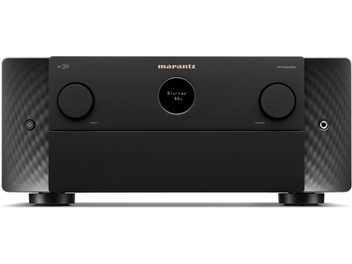
The market offers audio-video processors across different ranges. Brands like Marantz, Anthem, McIntosh, NAD, Arcam, Lyngdorf, Trinnov, or JBL Synthesis dominate the high-end segment. Some standouts such as the Marantz AV 10, the Anthem AVM 90, the Trinnov Altitude, or the McIntosh MX200 are regularly cited in audiophile setups.
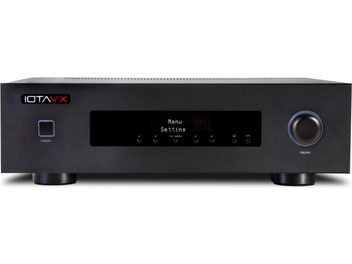
Manufacturers like IOTAVX or Tonewinner offer more accessible processors, democratizing separates with an attractive price-to-performance ratio.