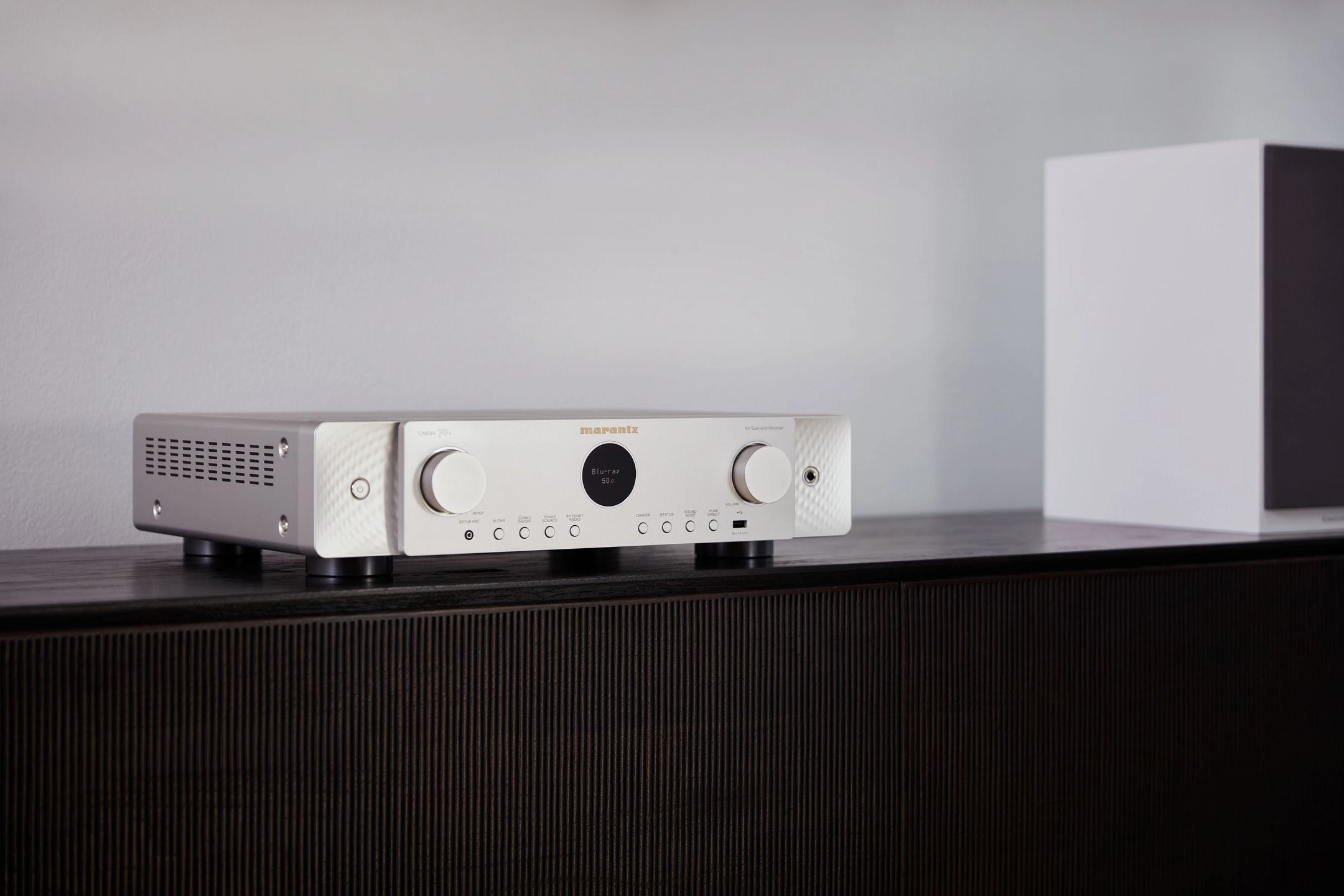
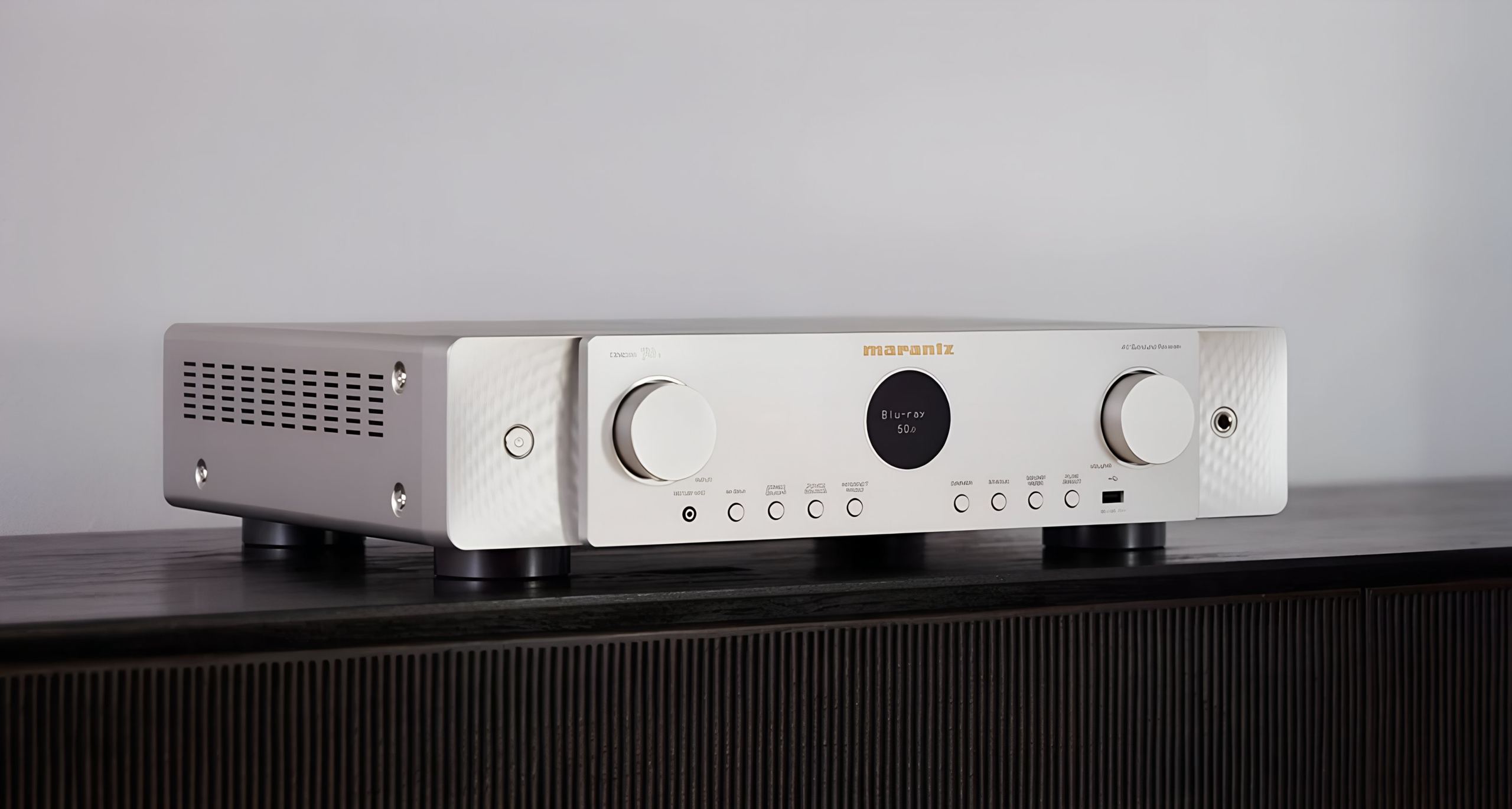
The Marantz Cinema 70s is a compact 7.2-channel home theater amplifier with a height of 10.9 centimeters. It supports 8K video, features three HDMI 2.1 inputs, and includes a 7.2-channel pre-out section. It succeeds the NR1711 and adopts a new visual identity under the Cinema name.
A design that breaks with established conventions
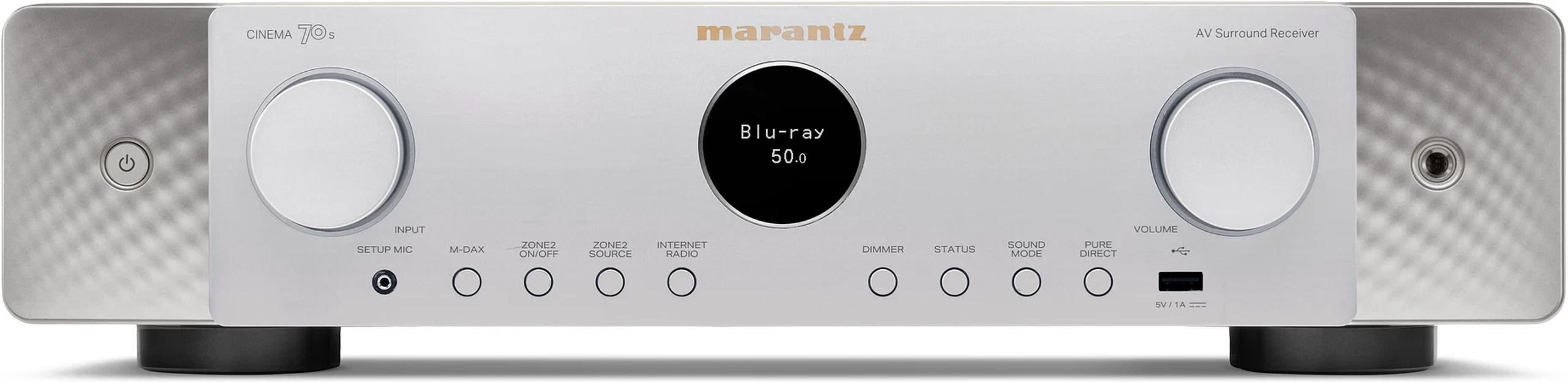
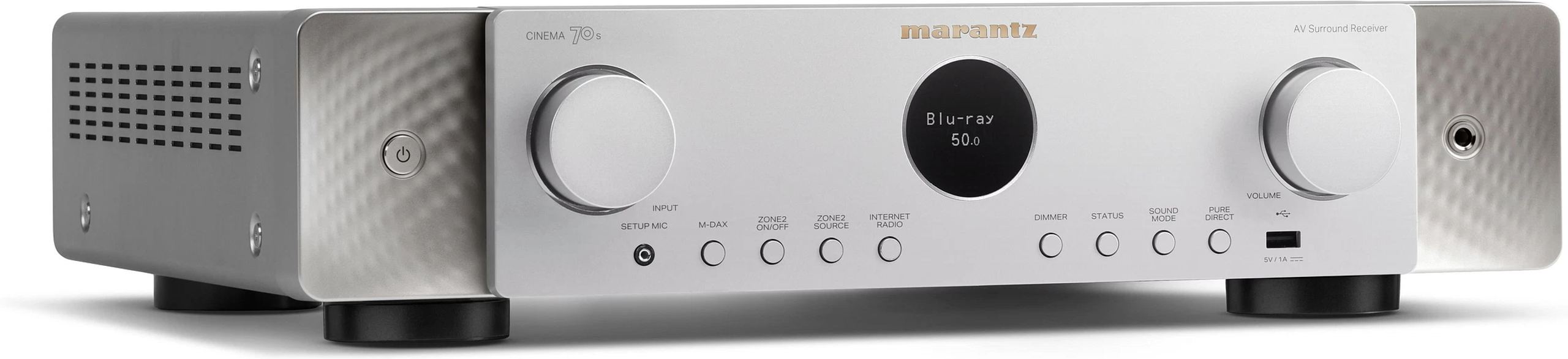
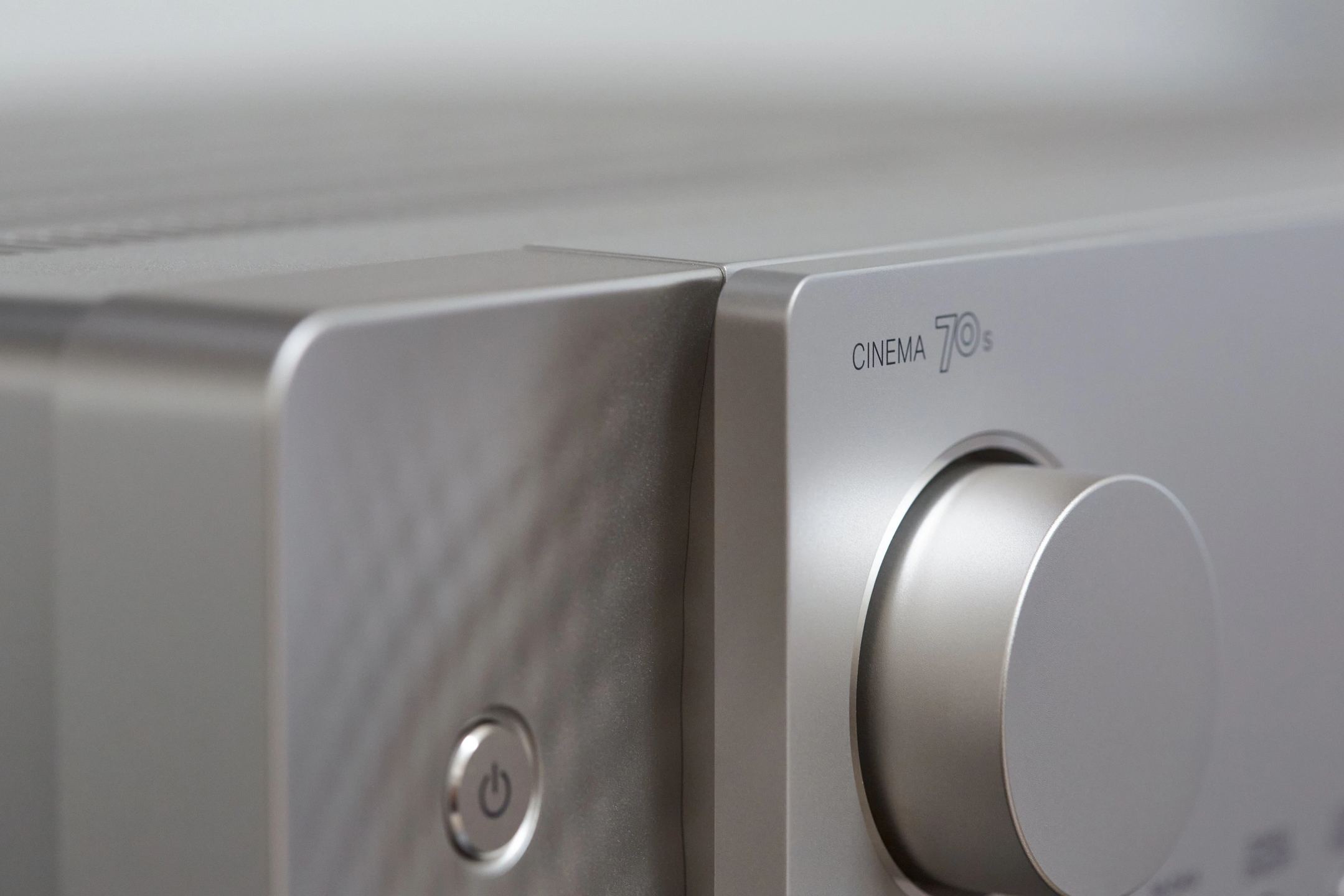
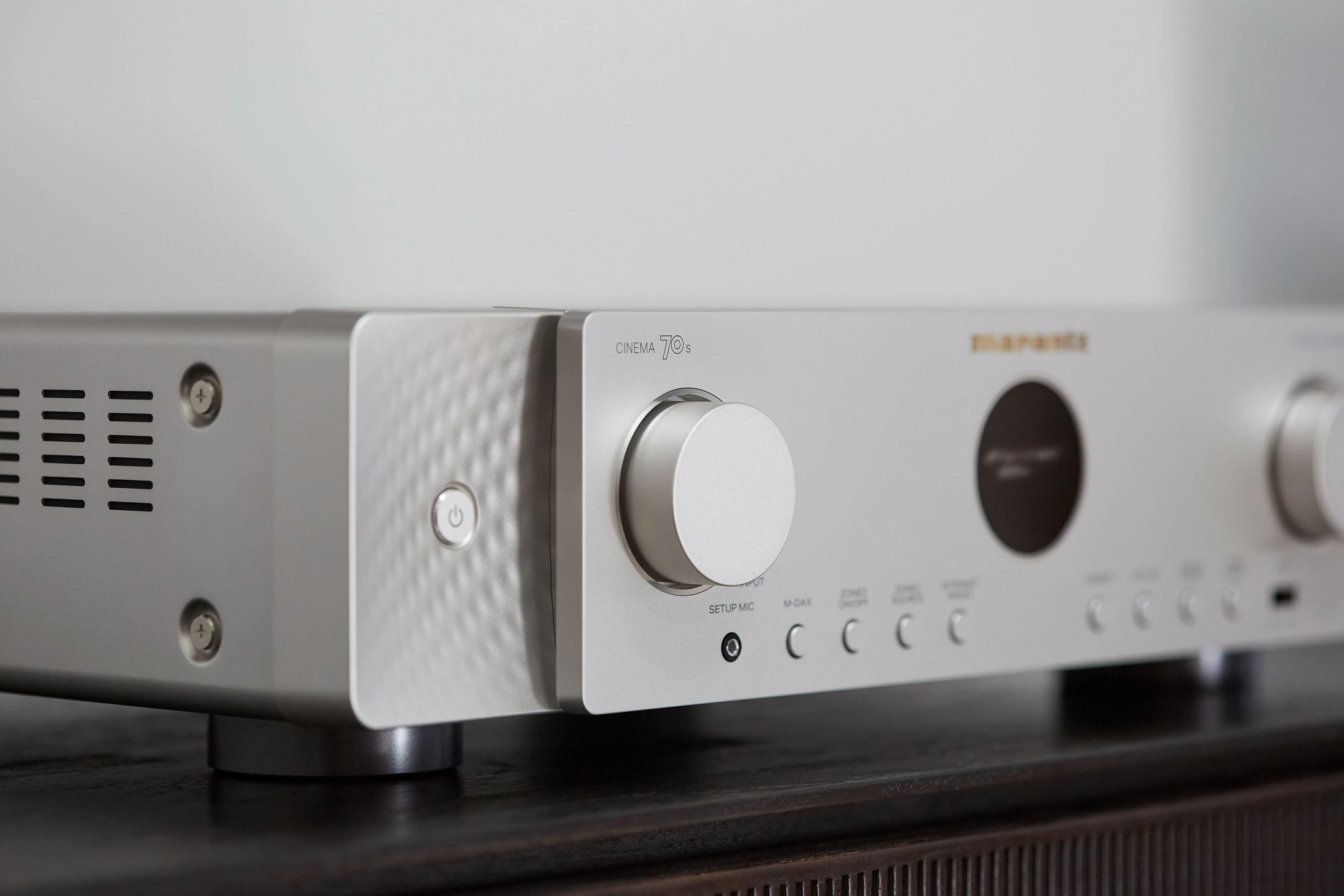
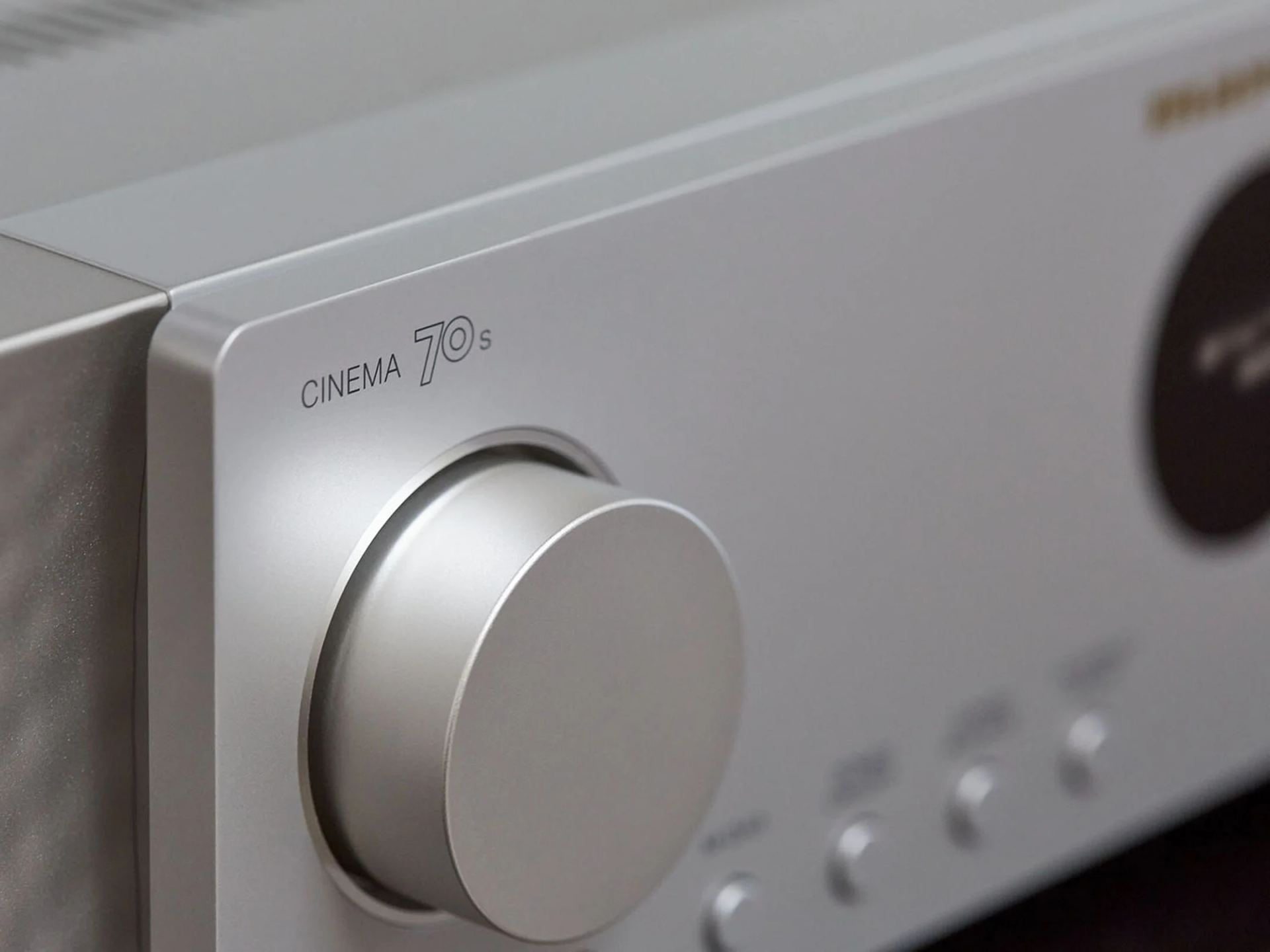
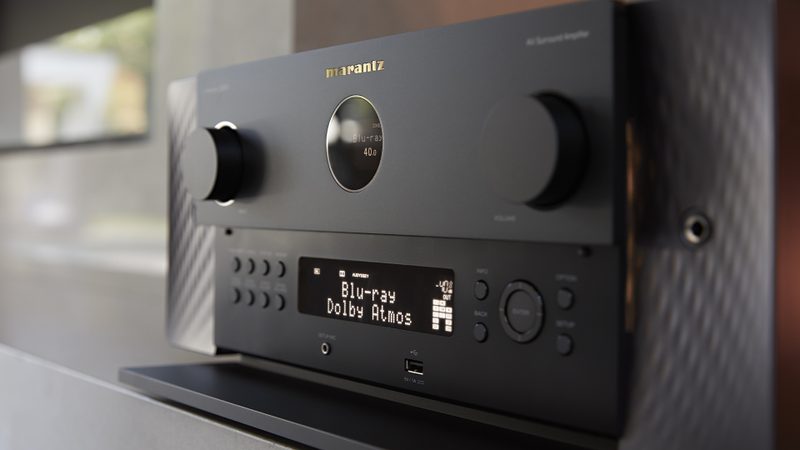
The Cinema 70s introduces a new design language for Marantz amplifiers, abandoning the aesthetic that had prevailed for more than a decade. The front panel now features the brand’s signature OLED porthole, framed by a luminous ring reminiscent of the stereo amplifiersModel 30 and Model 40n. The sides adopt a subtle diamond pattern evoking rippling water, a visual signature Marantz is rolling out across its new lineup. This aesthetic approach reflects a desire to create components that blend harmoniously into contemporary interiors rather than imposing themselves visually.
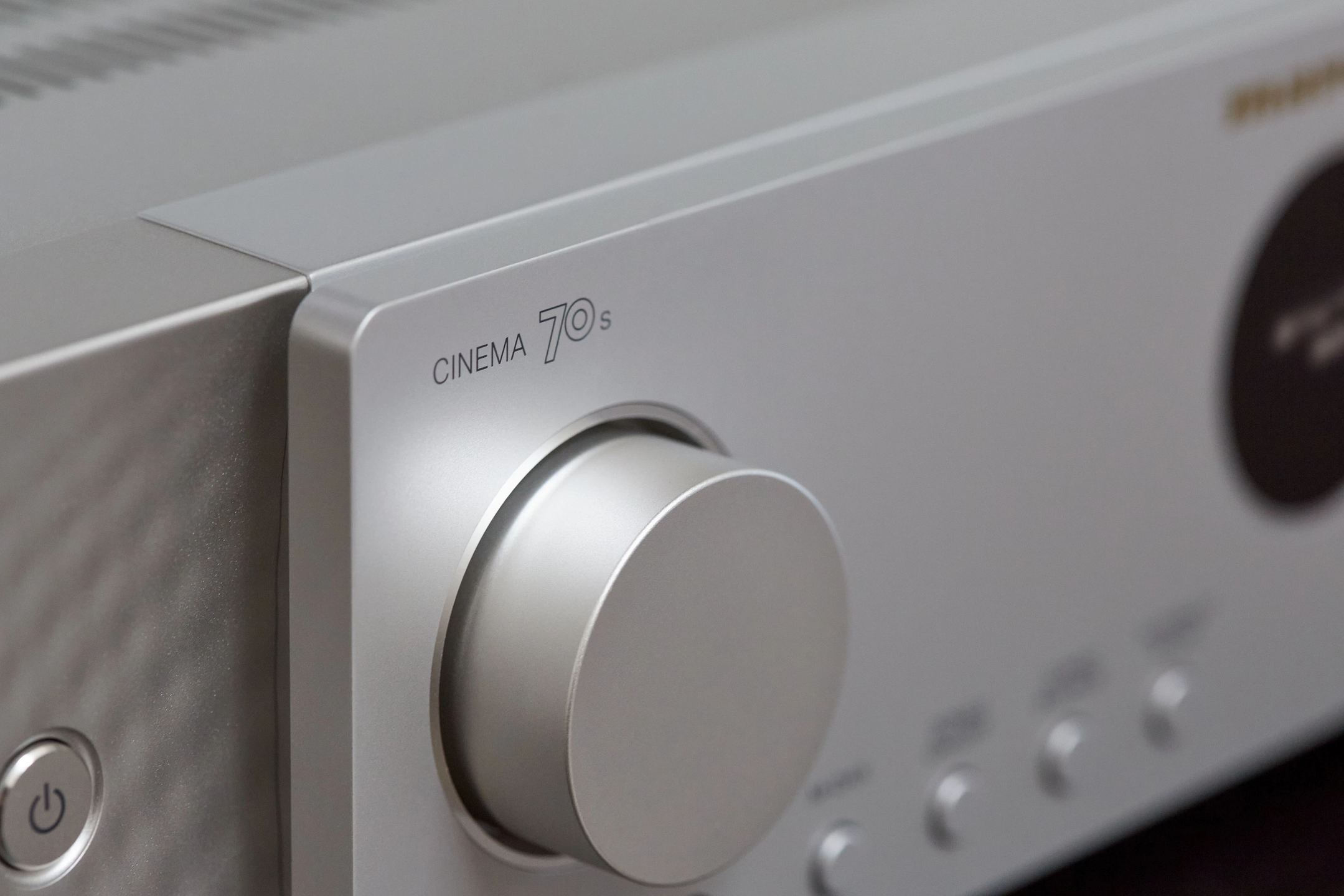
The construction favors brushed aluminum for the front, with discreet raised buttons and perfect symmetry in the control layout. Two rotary knobs frame a row of function buttons, creating visual balance that evokes modern luxury codes. The standard chassis, without a toroidal transformer, keeps dimensions to 442 x 372 x 109 mm (without antenna), with a contained weight of 8.7 kg. This remarkable compactness—about half the height of conventional amplifiers—does not compromise the overall robustness or perceived quality.
Ergonomics and a modernized user interface
The high-definition graphical interface is a notable step forward compared with previous generations. The on-screen display abandons the dated “teletext”-style menus in favor of a modern presentation with pleasing colors and an intuitively logical structure. Navigating settings is smoother, making it easier to access multiple configuration options. The step-by-step guided setup process even allows newcomers to configure their system correctly without consulting the manual.
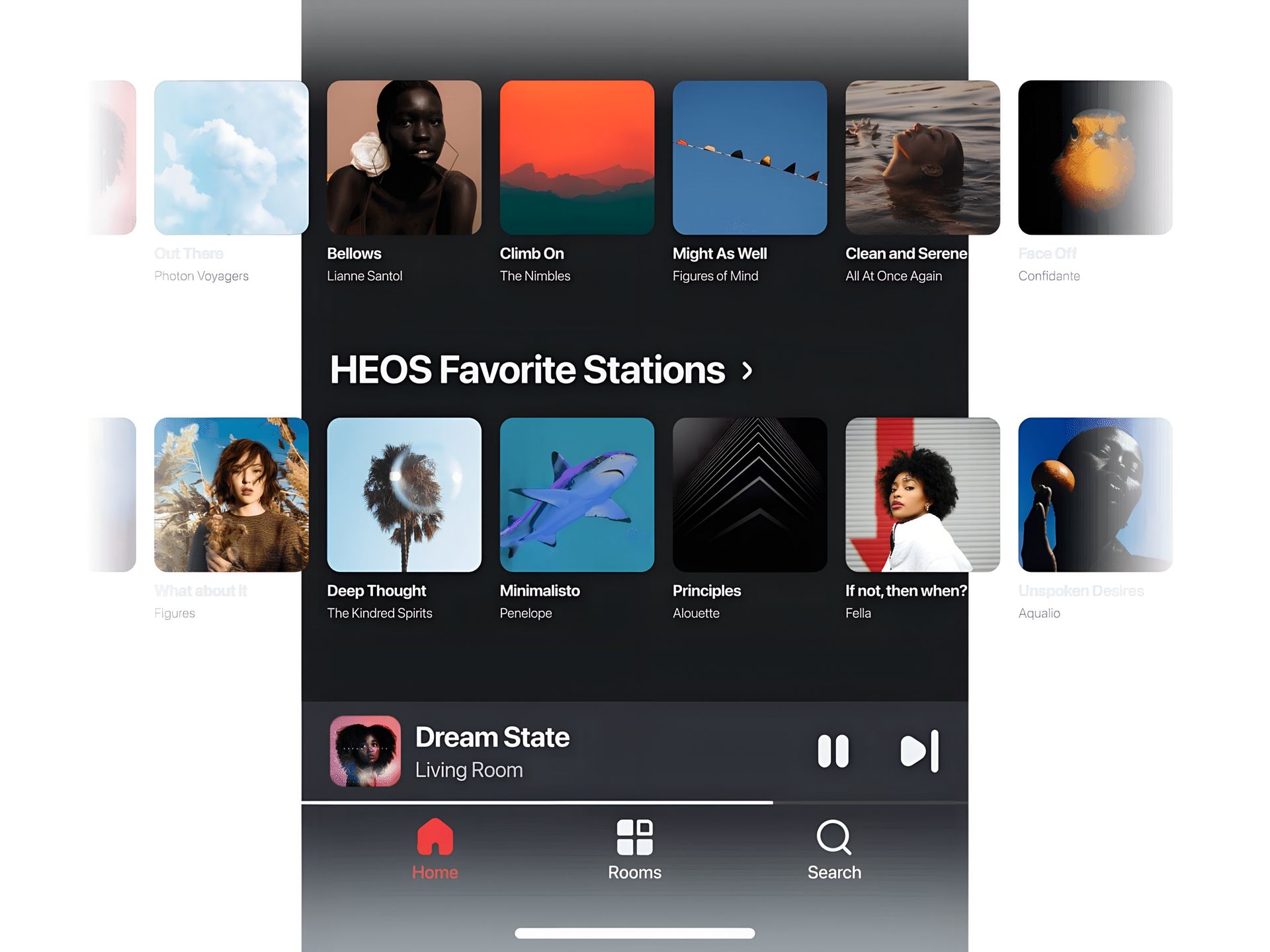
The supplied RC-050SR remote has also been completely redesigned. More ergonomic than previous models, it offers practical backlighting and a rethought button layout for more natural use. Nevertheless, the HEOS app is the preferred control interface, enabling management of all functions from a smartphone or tablet with exemplary responsiveness.
Technical capabilities and audio performance
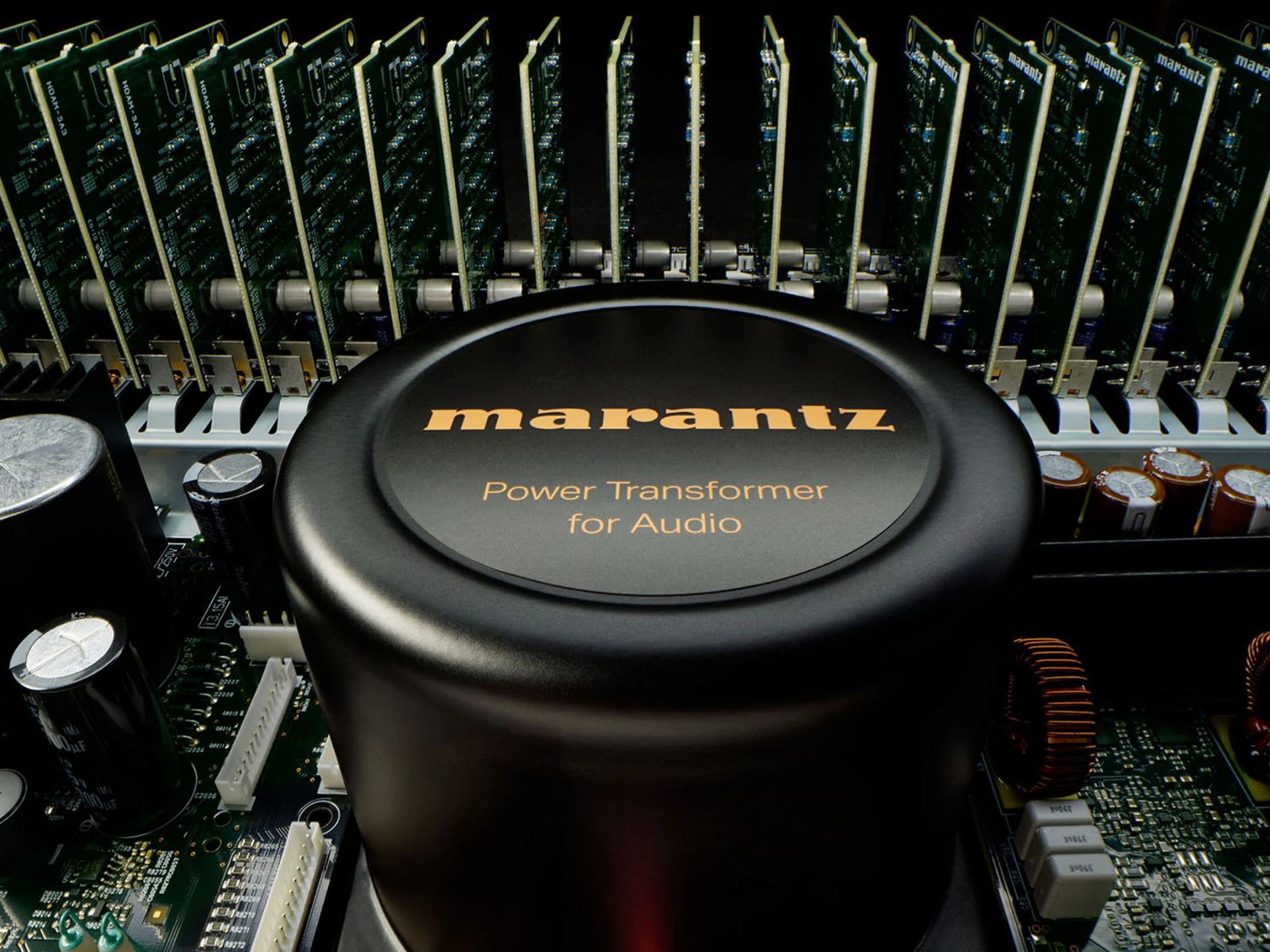
The Cinema 70s retains Class A/B amplification delivering 50 watts per channel into 8 ohms (20 Hz–20 kHz, 0.08% THD), with peaks up to 100 watts mono into 6 ohms. This power, identical to the NR1711, is perfectly suited to medium-sized spaces up to around 25 square meters. Marantz’s signature HDAM (Hyper Dynamic Amplifier Module) circuits ensure sound reproduction characterized by a warm, enveloping tonality, with a gentle emphasis on the low end and measured restraint in the highs.
The digital processing section relies on four PCM5102 converters paired with a Cirrus Logic DSP processor. This configuration enables sophisticated handling of immersive audio formats while preserving the natural musicality sought by Marantz engineers. Pure Direct mode, which bypasses superfluous digital processing, reveals the intrinsic quality of the analog circuits—particularly appreciable for high-resolution stereo listening.
Acoustic calibration and spatial optimization
The Audyssey MultEQ system (base version) analyzes the room’s acoustics using the supplied microphone and automatically applies necessary corrections. While it’s the most basic version of Audyssey—higher models benefit from MultEQ XT or XT32—it remains sufficient to correct major acoustic flaws in a standard room. The calibration process, taking about 15 minutes, measures each speaker from multiple listening positions and generates a tailored correction curve.
Complementary Audyssey features Dynamic EQ and Dynamic Volume enrich the experience. Dynamic EQ maintains tonal balance and dialogue clarity even at low volume—particularly useful for nighttime sessions. Dynamic Volume evens out level variations between sources and content, avoiding constant volume adjustments when switching between programs and commercials. The LFC (Low Frequency Containment) function limits the transmission of low frequencies to adjacent rooms—a welcome courtesy for neighbors.
Next-generation HDMI connectivity and video compatibility
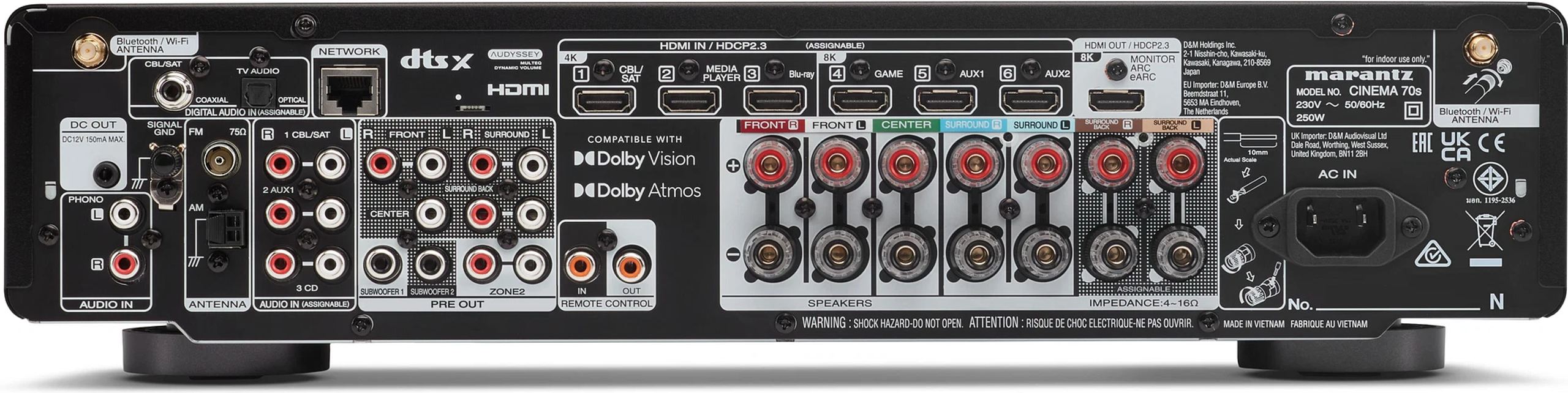
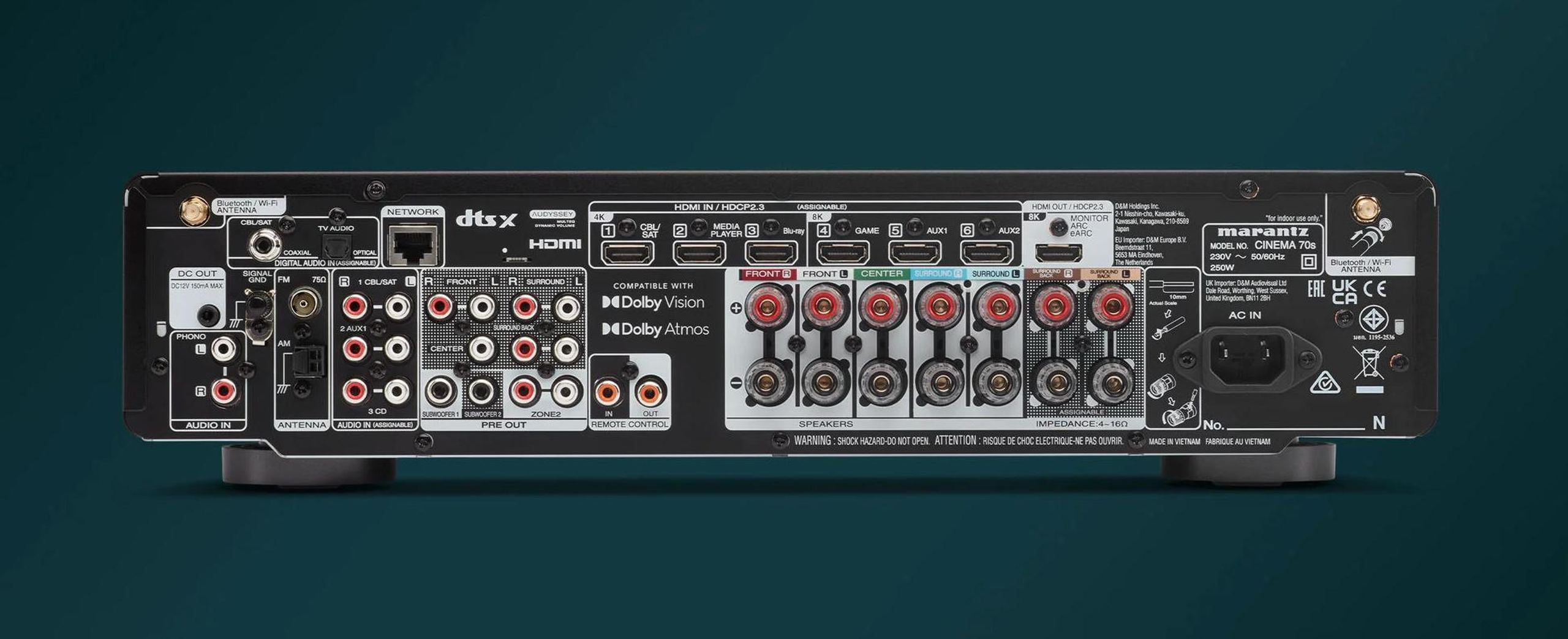
The major evolution compared with the NR1711 lies in the implementation of three full-bandwidth HDMI 2.1 inputs (40 Gbps), versus just one on the previous model. These three inputs natively handle 8K at 60 Hz and 4K at 120 Hz, offering unprecedented flexibility to connect multiple high-performance sources simultaneously. The three other HDMI inputs remain version 2.0b, sufficient for standard 4K/60 Hz sources. The single eARC-compatible output transmits uncompressed audio tracks from compatible TVs, including Dolby Atmos and DTS:X.
Analog Devices’ NatureVue video processor upscales 1080p and 4K content to 8K resolution. While the practical value of this feature is debatable in the absence of native 8K content, it demonstrates Marantz’s commitment to a future-proof product. HDR format support covers the full current spectrum: Dolby Vision, HDR10, HDR10+, HLG, and Dynamic HDR pass through unaltered, preserving the creators’ intent.
Gaming optimization and sync technologies
Gamers benefit from a comprehensive technological toolkit for an uncompromised experience. VRR (Variable Refresh Rate) dynamically syncs the refresh rate between console and display, eliminating screen tearing. ALLM (Auto Low Latency Mode) automatically switches the TV to game mode when a compatible console is detected, disabling image processing that could introduce latency. QFT (Quick Frame Transport) accelerates frame transmission to further reduce the delay between action and display.
Previously reserved for direct console-to-TV connections, these technologies now let you fully enjoy surround sound without sacrificing responsiveness. The ability to connect three 4K/120 Hz-compatible devices simultaneously—versus just one on the NR1711—anticipates the growth of consoles and gaming PCs. Quick Media Switching (QMS) eliminates black screens during resolution or refresh changes, smoothing navigation between content.
Immersive audio formats and spatial processing
The Cinema 70s natively decodes Dolby Atmos, DTS:X, and Auro-3D, allowing configurations up to 5.2.2 (or 7.2 in a traditional setup). Support for Dolby Atmos Music opens access to spatial mixes available on compatible streaming platforms. Dolby Atmos Height Virtualization and DTS Virtual:X algorithms simulate height channels without ceiling speakers, a pragmatic solution for installations with architectural constraints.
Implementing these virtualization technologies requires navigating the menus to enable “Speaker Virtualizer” and then selecting the appropriate Dolby Surround mode. This activation complexity, already present on the NR1711, would have benefited from simplification. Once configured, these functions create a convincing sound bubble, particularly effective with quality main speakers positioned correctly.
Processing stereo sources and musical optimization
MDAX2 (Marantz Dynamic Audio eXpander) restores harmonics lost during digital audio file compression. Particularly effective on MP3 files and compressed streaming, it enriches the sonic spectrum without introducing audible artifacts. The multichannel stereo mode intelligently distributes the signal across all available speakers, creating an enveloping atmosphere for music listening without distorting the original mix.
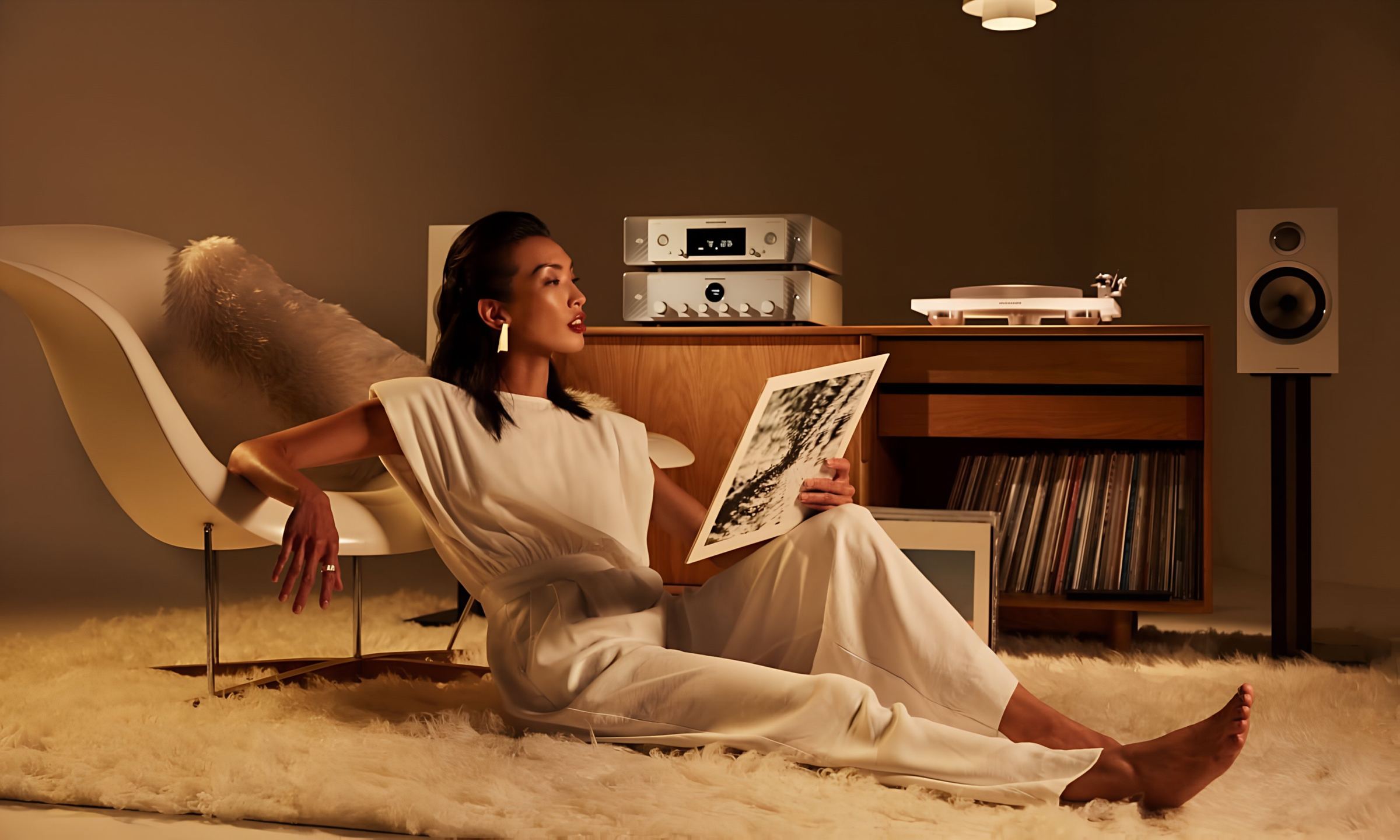
The integrated MM phono input, a feature preserved over several generations, underscores Marantz’s commitment to analog. The phono preamplifier offers respectable performance, with a decent signal-to-noise ratio and accurate RIAA curve. While a dedicated external preamp will always outperform this integrated section, it’s a practical solution for users wanting to add a turntable to their home theater system.
Streaming, multiroom, and connected ecosystem
Native HEOS integration turns the Cinema 70s into the nerve center of a distributed audio system. The platform directly supports Spotify Connect, Amazon Music HD, TIDAL, Deezer, Napster, SoundCloud, and Mood Mix. Pandora and SiriusXM round out the offering for the U.S. market. Roon Tested certification ensures seamless integration into sophisticated audiophile setups. The HEOS interface, accessible via mobile app, centralizes navigation between local sources and cloud services with remarkable fluidity.
High-resolution format support extends up to 192 kHz/24-bit PCM and native DSD 5.6 MHz. FLAC, ALAC, WAV, and AIFF files are decoded losslessly, preserving the integrity of the original signal. Gapless playback ensures uninterrupted transitions between tracks—essential for live albums and classical works. Automatic indexing of network libraries via DLNA makes it easy to access music collections stored on NAS devices or computers.
Notable evolutions compared with the NR1711
The addition of two extra HDMI 2.1 inputs is the most significant improvement, directly addressing the needs of demanding multi-source users. The full 7.2-channel pre-out section—versus 2.2 on the NR1711—opens up substantial upgrade potential. This extended connectivity allows the Cinema 70s to serve as a preamplifier-processor, delegating amplification to more powerful external power amps while maintaining minimal footprint.
Dropping component and composite inputs marks the end of an era. These analog connections, absent across the entire Cinema range, will only be missed by owners of vintage equipment. This decision, consistent with the product’s resolutely modern orientation, frees space on the already densely populated rear panel. The remaining three analog RCA audio inputs are more than sufficient for contemporary sources.
Chassis: standard, no copper or toroidal transformer
System remote: RC-050SR
Power consumption: 250 W (max), 30–40 W with no audio, standby 0.2 W, network standby < 2 W
Dimensions (W × D × H): 442 × 372 × 109 mm (without antenna), with antenna upright 442 × 384 × 178 mm
Weight: 8.7 kg
Box Contents
Main unit
Remote control and batteries
AM/FM antennas
Cable labels
Quick start guide
Audyssey microphone and stand
2 detachable external antennas
AC power cord
Frequently Asked Questions
Can the Cinema 70s really power a full 5.2.2 system properly?
+
With its 50 watts per channel, the Cinema 70s is ideal for rooms up to 25–30 m² equipped with speakers of medium to high sensitivity (87 dB and above). For hard-to-drive speakers or very high listening volumes, the pre-out outputs allow the addition of external power amplifiers. A 5.2.2 setup with in-ceiling Atmos speakers works remarkably well under these conditions, creating a coherent and dynamic sound bubble.
What’s the real difference between HDMI 2.1 and 2.0b inputs for everyday use?
+
The three HDMI 2.1 inputs handle 4K/120 Hz and 8K/60 Hz signals with 40 Gbps bandwidth, essential for PlayStation 5, Xbox Series X, and recent gaming PCs. The HDMI 2.0b inputs are sufficient for 4K/60 Hz Blu-ray players, TV set-top boxes, and streamers. The 3+3 split lets you connect multiple high-performance devices simultaneously without juggling cables.
How exactly does height-channel virtualization work without ceiling speakers?
+
Dolby Atmos Height Virtualization and DTS Virtual:X analyze the audio content and apply sophisticated psychoacoustic filters to simulate the presence of overhead sound sources. The processing modifies phase and timing of signals sent to the main and surround speakers, creating the illusion of vertical dimension. Effectiveness depends greatly on room acoustics and speaker placement, but results can be surprising under good conditions.
Is the basic Audyssey MultEQ system sufficient, or should you consider manual calibration?
+
Audyssey MultEQ effectively corrects major acoustic issues (resonances, nulls) but is less precise than the XT and XT32 versions on higher models. For standard use, automatic calibration is more than adequate. Enthusiasts can fine-tune settings manually or invest in the MultEQ-X license (USD 199) for full PC-based control, though improvements on the base version are limited.
Can the Cinema 70s be used solely as a preamplifier-processor?
+
Absolutely. Preamp mode disables the internal amplifiers and routes all signals to the 7.2 pre-out outputs. This setup lets you leverage the Cinema 70s’ processing and decoding qualities while benefiting from more powerful external amplifiers. It’s a logical upgrade path for those wishing to improve their system progressively without changing the processor.
Does Roon Tested compatibility bring real added value?
+
For Roon users, the certification guarantees automatic recognition of the Cinema 70s and seamless ecosystem integration. Volume control, input selection, and metadata display are handled directly from the Roon interface. This integration significantly elevates the music listening experience, particularly for high-resolution local libraries and Qobuz/TIDAL streaming.
Are the external Wi-Fi/Bluetooth antennas really necessary?
+
The two supplied detachable antennas greatly improve wireless range and stability. In a vertical position, they optimize reception—especially important for high-resolution streaming over Wi-Fi. Horizontal orientation, possible to reduce footprint, only marginally affects performance in most home setups. For intensive streaming use, keeping the antennas vertical is recommended.
User reviews
Valentin
Excellent audio-video amplifier. The guided setup on the TV screen is childishly simple. The sound is exceptional, even with only 40 W in a room of more than 30 m² equipped with Triangle Borea speakers. Five stars without hesitation for Marantz and the seller.
Comment from May 27, 2026 — Experience from May 14, 2026
Automatically translated — Show original (French)
Excellent amplificateur audio-vidéo. L'installation guidée sur l'écran du téléviseur est d'une simplicité enfantine. Le son est exceptionnel, même avec seulement 40 W dans une pièce de plus de 30 m² équipée d'enceintes Triangle Borea. Cinq étoiles sans hésitation pour Marantz et le vendeur.
Benjamin
Perfectly meets expectations
Comment from February 14, 2026 — Experience from January 29, 2026
Automatically translated — Show original (French)
Convient parfaitement aux attentes
Dominique
Very good amplifier, I’ve found the sound of my old Marantz AV 7005 again. Very surprised by the sound.
Comment from January 30, 2026 — Experience from January 19, 2026
Automatically translated — Show original (French)
Très bon amplificateur je retrouve le son de mon ancien marantz Av 7005 Très surpris du son
To better understand our visitors, measure marketing effectiveness and personalise ads, we and our partners use cookies and mobile advertising identifiers on your device. This data makes it possible to display personalised and non-personalised ads and measure their performance. Some cookies, which are technically necessary, are exempt from consent. You can accept those that require your consent, refuse them by clicking "Refuse", or customise your choices via the settings screen.
To find out how Google uses the data collected once you have given your consent, see Google’s Business Data Responsibility site.
You can change or withdraw your consent at any time via the "Consent and cookies" link. Your choices will apply on our site for 12 months.