Music Hall Turntables
February 11, 2021
Contents
In the vibrant world of turntables, where analog nostalgia coexists with cutting-edge technologies, Music Hall holds a unique position. This American brand, founded in 1985, has established itself as a key player in the audiophile market by offering record players that combine remarkable acoustic performance with carefully managed value for money. From accessible entry-level models to sophisticated flagship designs, Music Hall pursues a coherent technical philosophy centered on vibration isolation and the purity of the analog signal.
The origins of Music Hall
Music Hall LLC was founded in April 1985 under the impetus of Roy Hall, an audio enthusiast determined to democratize access to quality hi-fi equipment. Unlike many players in the sector who focus either on elitist high-end gear or standardized entry-level products, Hall took a different approach from the outset: design technically accomplished products while keeping prices reasonable.
The company began modestly with a limited catalog, but the arrival of the first turntables under the Music Hall brand in 1998 marked a decisive turning point. Roy Hall, who describes himself more as a music lover than a businessman, infused his creations with a minimalist philosophy: eliminate the superfluous to focus on the components essential to musical reproduction.
European manufacturing excellence
While design and development are carried out in the United States, Music Hall made the strategic choice to entrust production to the SEV Livotel factory in Litovel, Czech Republic. With more than 60 years of experience manufacturing gramophones and then turntables, this facility represents a European center of excellence for turntable production. Slovakia also participates in this production chain for certain models.
This transcontinental partnership allows Music Hall to benefit from proven manufacturing expertise while keeping production costs under control. The factory produces almost all components in-house—from screws to platters, including springs and plinths—thus ensuring consistent quality and complete control over the manufacturing chain.
Distinctive technical architecture of Music Hall turntables
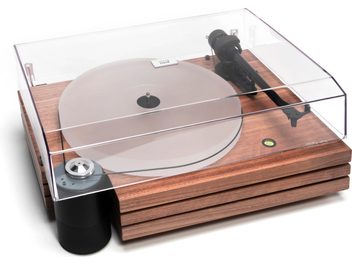
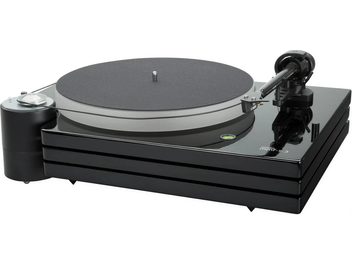
The major innovation that sets Music Hall apart from its competitors lies in its multi-plinth design. Whereas most manufacturers settle for a single chassis on damping feet, Music Hall developed a system of mechanically decoupled, stacked platforms.
This sandwich construction uses several layers of MDF (Medium Density Fiberboard), a composite material highly regarded for its acoustically neutral properties and homogeneous density. Between each plinth, decoupling elements made of Sorbothane—a patented viscoelastic polymer with exceptional damping properties—create an effective barrier against vibration transmission.
The technical principle is to isolate each critical sub-assembly on its own platform: the tonearm and the cartridge on the top plinth, the main bearing on the second level, the motor and electronics on the lower levels. This physical separation prevents parasitic motor vibrations from reaching the phono cartridge, thereby preserving the purity of the analog signal extracted from the groove.
Motorization and drive
Music Hall predominantly favors belt drive for its turntables, with the notable exception of the Stealth model, which adopts direct drive. Depending on the model, synchronous DC or AC motors are systematically decoupled from the main chassis. On higher-end models, the motor block even has its own isolated base, connected to the platter only via an elastic rubber or silicone belt.
This architecture combines several advantages: stable rotational speed thanks to platter inertia, mechanical filtering of motor micro-vibrations by the belt, and the ability to fine-tune belt tension to optimize performance. Upper models incorporate microprocessor-controlled electronic speed regulation, ensuring remarkable rotational accuracy with deviations under ±0.1%.
The Music Hall range: a turntable for every audiophile
Entry-level models: getting started with vinyl
The entry-level series includes several emblematic models. The MMF-1.3, offered at around 350 dollars, is the gateway into the Music Hall universe. Despite its accessible price positioning, this turntable already incorporates the brand’s fundamentals: carefully built MDF construction, aluminum tonearm, factory pre-mounted and aligned cartridge. The switchable built-in phono preamp allows direct connection to any amplifier, even without a dedicated phono input.
The USB-1 targets a different audience: music lovers wishing to digitize their vinyl collection. Equipped with a USB output in addition to traditional RCA outputs, it enables direct recording to a computer via the included Audacity software. Its DJ-inspired aesthetic with S-shaped tonearm and ±10% pitch control will appeal to mixing enthusiasts.
The Classic, semi-automatic with tonearm lift at end of record, is a unique proposition in this price range. Its dark walnut veneer finish and touch controls for speed selection lend it undeniable elegance, while the Music Hall Spirit MM (moving magnet) cartridge delivers balanced musical reproduction.
Midrange: technological affirmation
The range steps up progressively with the MMF-2 and MMF-3 series. The MMF-2.3 introduces a carbon tonearm at an affordable price point, bringing rigidity and lightness for optimal groove tracking. The machined aluminum alloy platter replaces the steel of entry-level models, improving inertia and rotational stability.
The MMF-3.3 brings Music Hall’s hallmark dual-plinth technology into an accessible price range. Two platforms separated by viscoelastic cones effectively isolate the motor block from the tonearm-cartridge system. The supplied Ortofon 2M Red, a recognized reference in its category, can be easily upgraded to a 2M Blue or Bronze to accompany system evolution.
The MMF-5.3 crowns this midrange with its 9-inch tonearm (versus 8.6 inches on the 3.3), offering optimized geometry and fine adjustments for VTA (Vertical Tracking Angle) and azimuth. The factory-mounted Ortofon 2M Blue, with its nude elliptical diamond, extracts more information from the groove while preserving musicality.
High-end: the pursuit of excellence
The MMF-7 and MMF-9 models address demanding audiophiles seeking high-level performance. The MMF-7.3 refines the dual-plinth concept with a motor completely isolated in its own damped compartment and a Teflon main bearing for ultra-quiet rotation. The one-piece carbon tonearm (integrated headshell) eliminates joints that could introduce parasitic resonances.
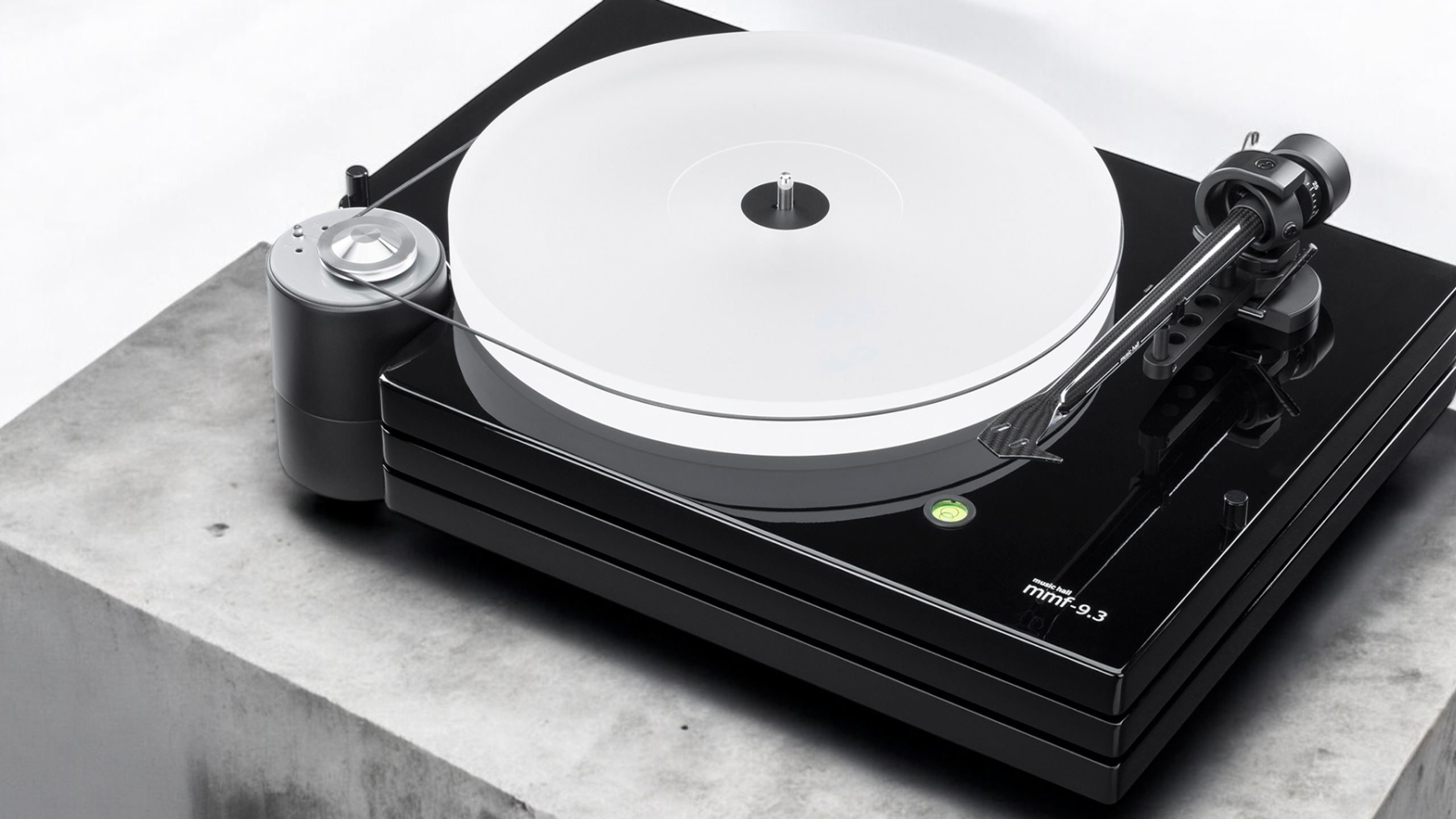
The MMF-9.3 takes it further with triple-plinth construction. Each platform serves a specific function: support for the tonearm, support for the bearing, and base for electronics and feet. This complex yet coherent architecture places each vital element on its own dedicated support plane, minimizing undesirable mechanical interactions. The thick acrylic platter adds mass and natural damping, dispensing with the need for a mat.
Flagship models: Music Hall’s state of the art
The MMF-11.1 and its evolution, the MMF-11.3, embody the culmination of Music Hall’s philosophy. The quadruple-plinth construction pushes isolation to its zenith, with each critical sub-assembly on its own dedicated level. The Pro-Ject 9CC Evolution continuous carbon-fiber tonearm, aerospace-grade ABEC7 bearings, and a dual-motor with flywheel for perfect regulation: every detail serves acoustic excellence.
The inverted ceramic bearing, mounted on the second plinth, allows the 38 mm thick acrylic platter to “float,” partially recessed into the structure. This configuration lowers the center of gravity while improving mechanical decoupling. Adjustable magnetic-suspension feet complete this sophisticated isolation scheme.
The Stealth model, unique in the range for its direct drive, targets a different audience. Using a low-torque electronically controlled brushless motor, it offers near-instant start-up and remarkable speed stability. Its minimalist all-black aesthetic and capacitive touch controls give it a distinctly modern character.
Isolation technologies and advanced materials
Sorbothane, a viscoelastic material initially developed for the aerospace industry, is the central element in Music Hall’s isolation strategy. This unique polymer can absorb up to 95% of the vibrational energy it receives, converting it into dissipated heat. Music Hall uses calibrated Sorbothane hemispheres or cones between plinths, creating a floating suspension that is particularly effective in the critical frequency band (20–200 Hz) where most parasitic vibrations occur.
The shape and placement of these elements are anything but random. Roy Hall refers to “an art” in designing these interfaces, the result of long comparative listening sessions. The Sorbothane hardness (shore) is matched to the supported mass and the system’s resonance frequencies, creating an optimal mechanical low-pass filter.
Precision bearings and bushings
Bearings are the mechanical heart of any turntable. Music Hall employs several technologies depending on the range: sintered bronze for entry-level, stainless steel and bronze for midrange, and ceramic for high-end. The inverted bearings of the upper models—where a ceramic ball at the top of the spindle supports the platter—minimize rumble and wear.
Machining tolerances on the order of hundredths of a millimeter ensure minimal play without excessive stress. The use of special synthetic oils, stable over time and little affected by temperature variations, guarantees long-term silent operation. Some models even incorporate an oil reservoir with a capillary recirculation system.
Platters: mass, material, and damping
Platter choice directly influences a turntable’s performance. Music Hall uses different materials depending on the model: steel for entry-level (controlled mass and cost), aluminum for midrange (better stiffness-to-weight ratio), and glass or acrylic for high-end (natural damping and acoustic neutrality).
Platter thickness and mass determine inertia, a key factor in speed stability. Heavy platters effectively filter out micro-variations in motor torque but require bearings sized accordingly. Music Hall optimizes this trade-off according to each model’s positioning, with masses ranging from 1.7 kg for the MMF-2.2 to over 5 kg for flagship models.
Cartridges and components: combining expertise
Strategic partnership with Ortofon
Collaboration with Danish manufacturer Ortofon, a world reference in phono cartridges since 1918, allows Music Hall to offer quality transducers across its entire range. The 2M series (Moving Magnet), developed jointly, provides a coherent progression: 2M Red for entry-level, 2M Blue for midrange, 2M Bronze for high-end.
The advantage of moving magnet cartridges lies in their high output level (typically 5 mV), compatible with most phono preamps, and the ability to replace only the stylus when worn. High-end models can accept moving coil cartridges like the Cadenza Blue, offering superior resolution but requiring an appropriate preamplifier.
Tonearms: from classic to high-tech
The evolution of tonearms across the Music Hall range illustrates a steady rise in technical sophistication. Entry-level models use extruded aluminum tubes—lightweight but prone to resonances. The switch to carbon fiber on intermediate models brings rigidity and natural vibration damping, both essential for precise groove tracking.
High-end tonearms, notably the Pro-Ject 9CC Evolution fitted to the MMF-11.1, represent the state of the art: a continuous, jointless carbon-fiber tube, ABEC7 precision bearings, a Sorbothane-decoupled counterweight, and internal wiring in OFC (Oxygen Free Copper). Fine adjustment options (VTA, azimuth, anti-skating) allow optimization according to the chosen cartridge.
Built-in phono preamplifiers
Including a phono preamp on many Music Hall models reflects the evolution of modern audio systems, which often lack a dedicated phono input. These switchable circuits, preserving the option to upgrade with an external preamp, apply the RIAA (Recording Industry Association of America) equalization curve necessary for faithful playback of the recorded signal.
The quality of these built-in phono stages often surpasses the basic circuits found in entry-level amplifiers. Music Hall uses audiophile-grade components (polypropylene capacitors, metal film resistors) and proven topologies (low-noise operational amplifiers) to preserve the musicality of the analog signal.
Featured products
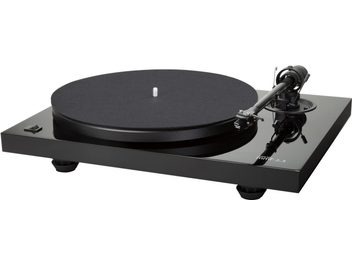
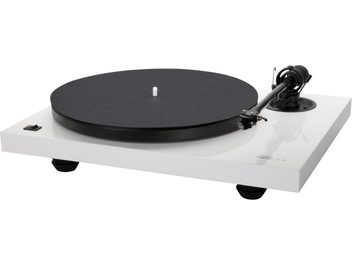
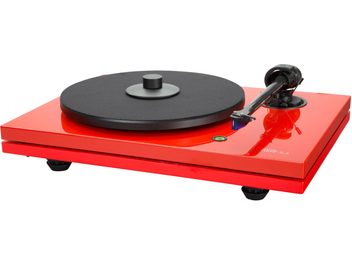
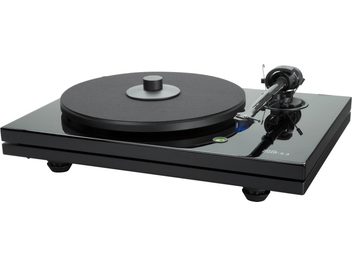
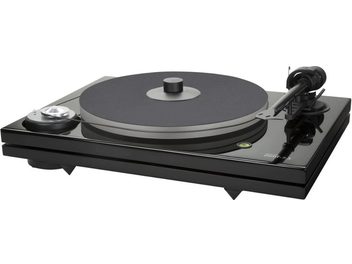
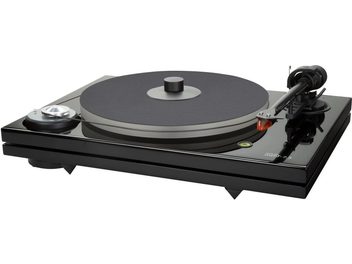
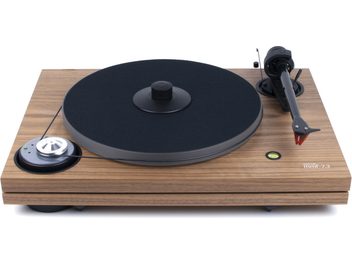
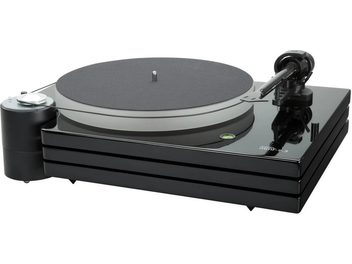

You may also like to read
 Beginner’s Vinyl Guide: How to Get Properly Equipped in 2026Tutorials and practical guides
 Transrotor Turntables: Complete Comparison of Models and PerformanceComparisons and buying guides
 Nagaoka MP Series: the Japanese phono cartridge that combines precision and musicalityHi-fi and home cinema news
 DUAL CS Series Turntables: Complete Guide to Manual and Automatic ModelsComparisons and buying guides
 Guide: how to connect a turntable to wireless, Bluetooth, or multiroom speakersTutorials and practical guides
 EAT Turntables: Prelude, B-Sharp, C-Major: the perfect balance of performance and priceHi-fi and home cinema news