Samsung TQ77S95H 2026



Specifications and features




Overview
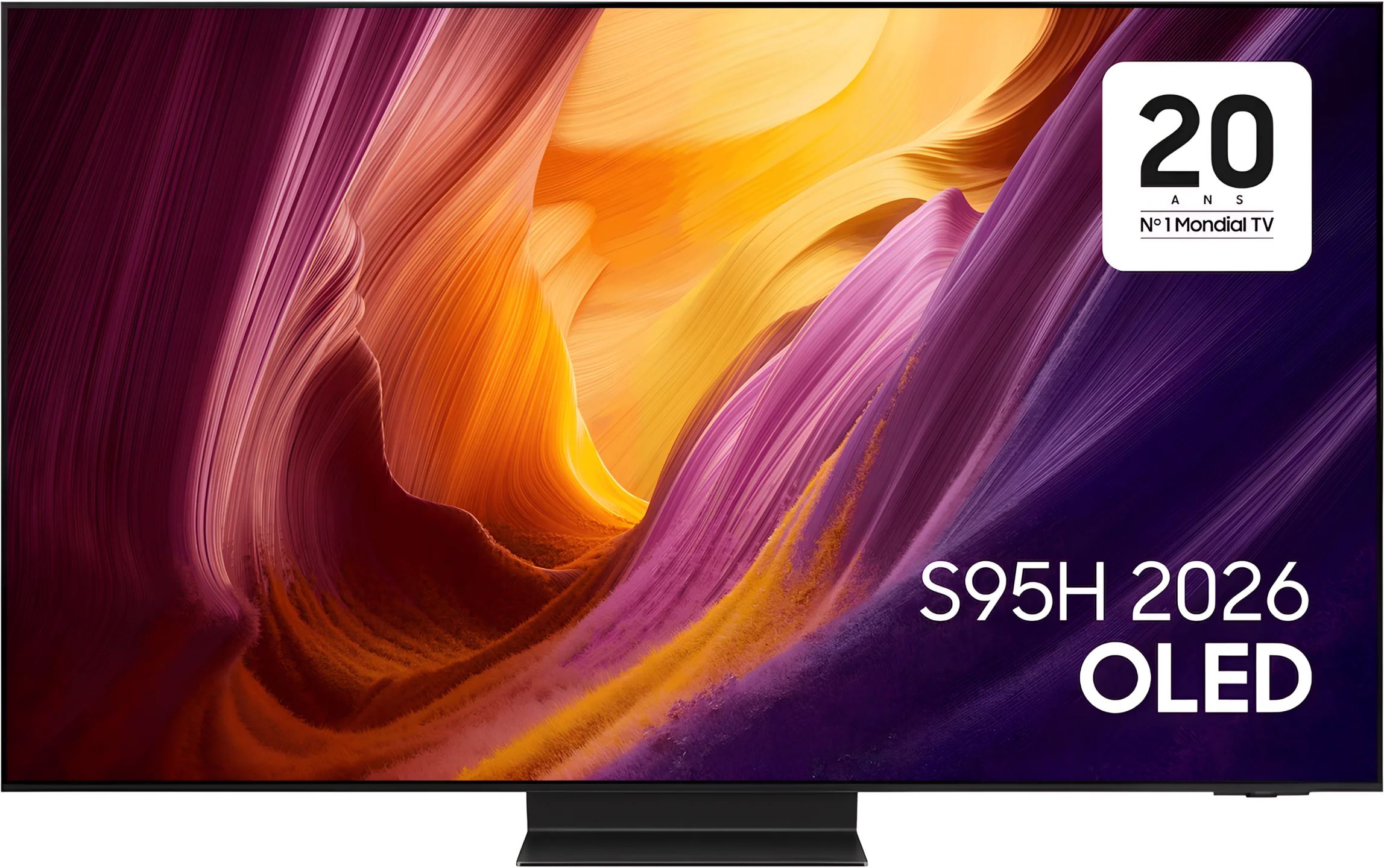
Three years after the arrival of the first QD-OLED panels in Samsung’s catalog, the S95H succeeds the S95F with a simple argument: more brightness, without sacrificing the anti-reflective treatment that made the range’s reputation. In 77 inches (196 cm), the TQ77S95H uses a latest-generation QD-OLED panel produced by Samsung Display, showing a claimed peak brightness of around 3,000 nits, or an increase of about 35% compared with the S95F. The rest of the offering, from the One Connect box to the 4.2.2-channel audio system, places this television in direct continuity with its predecessor while bringing notable software adjustments.
A brighter QD-OLED panel under a refined anti-reflective treatment
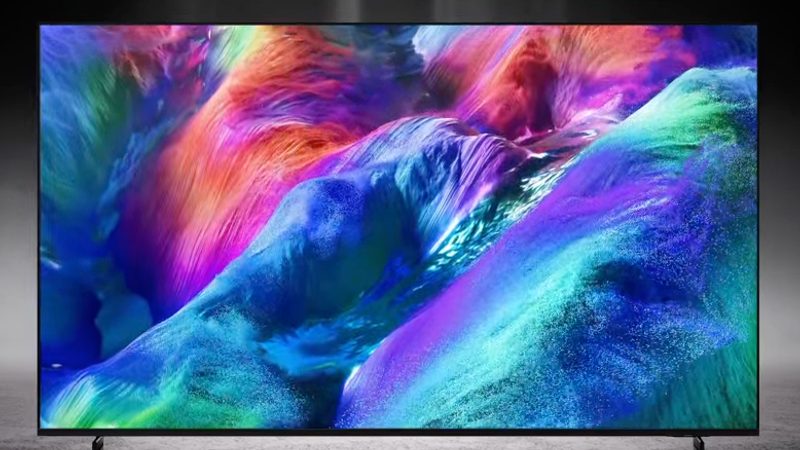
The TQ77S95H is based on a 4K QD-OLED panel (3840 x 2160 pixels) whose self-emissive subpixels combine a blue organic layer and quantum dot conversion to directly produce red and green colors. This approach eliminates traditional color filters and the white WOLED layer used by competing panels, resulting in an extended color volume and preserved saturation even at high brightness.
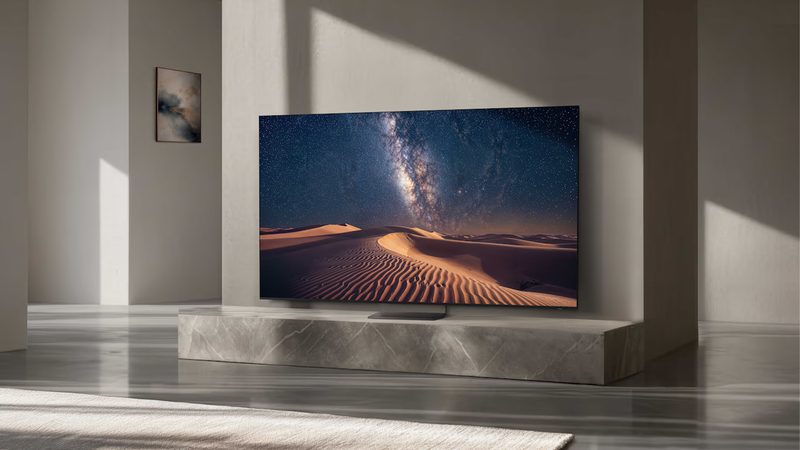
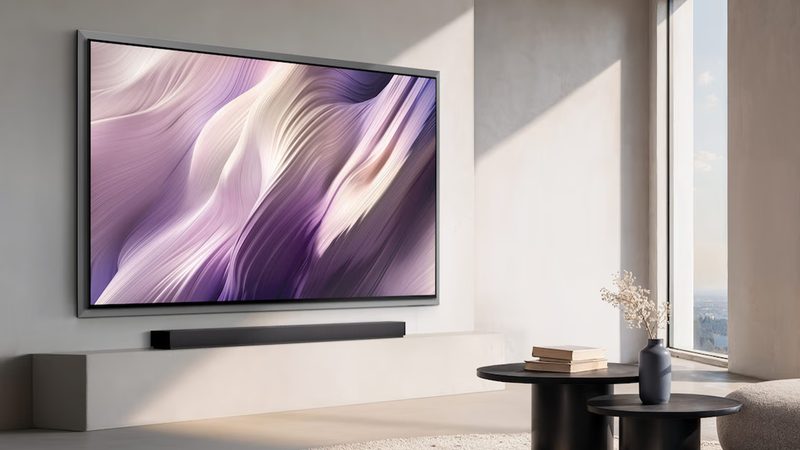
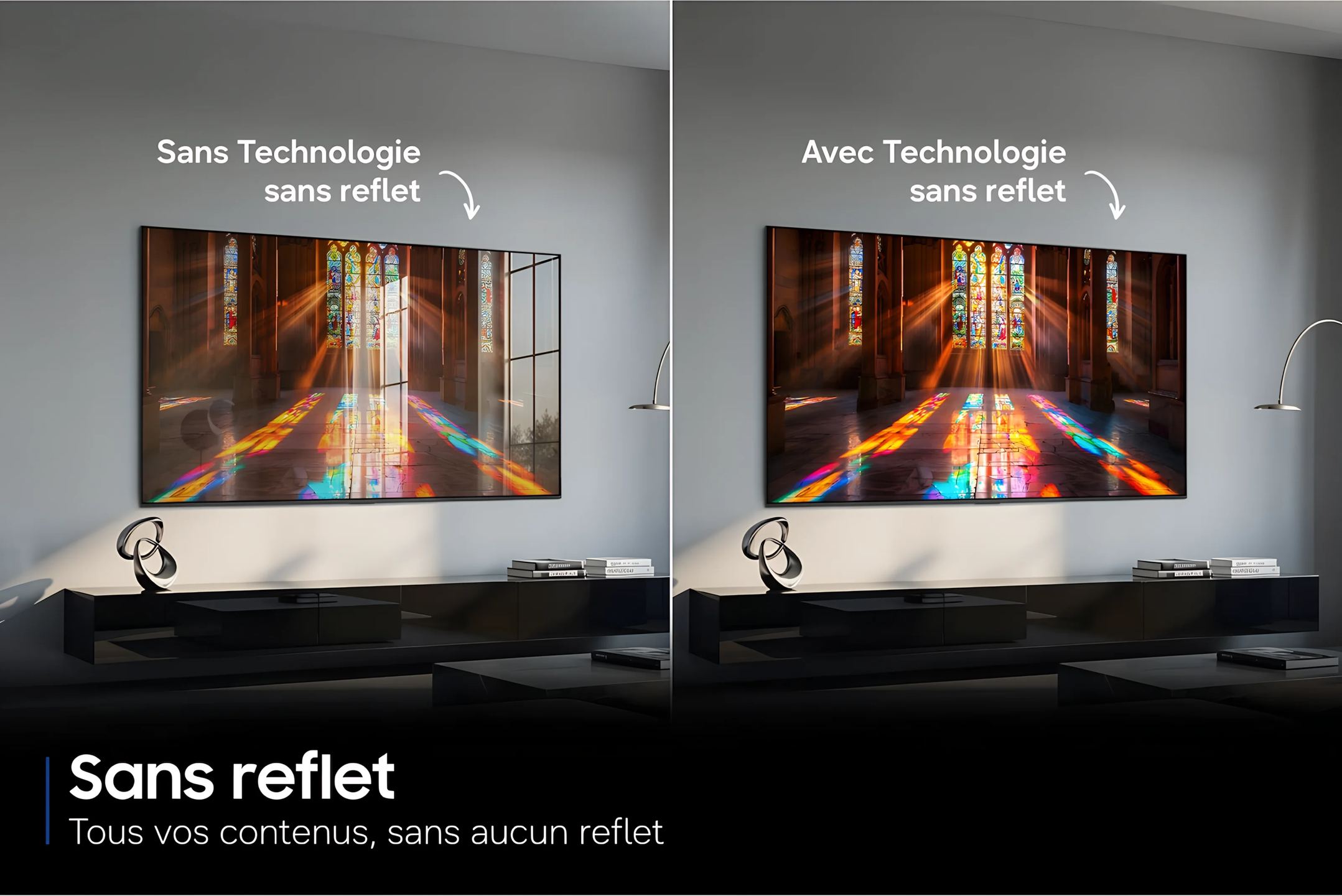
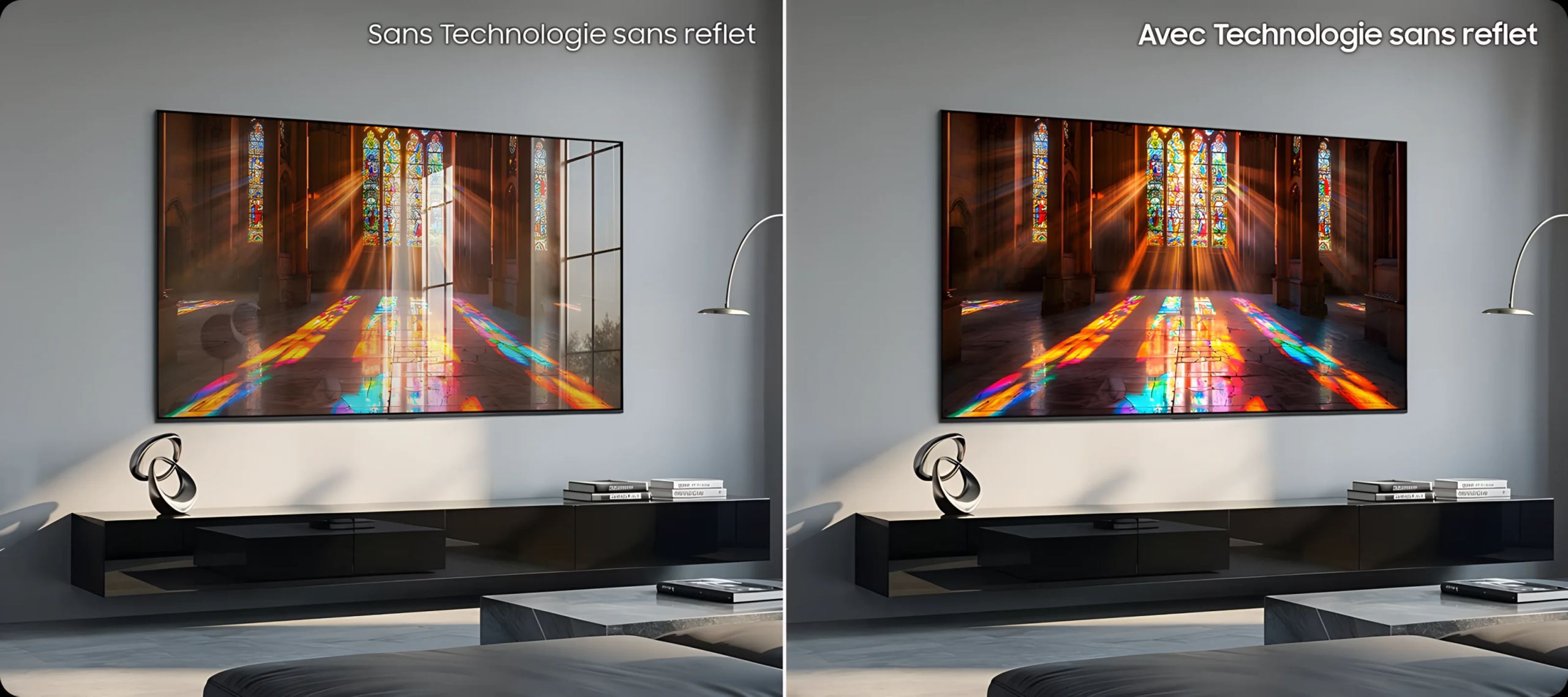
The Glare Free anti-reflective coating, certified by UL Solutions, remains one of the distinctive features of the S95 series. On the 2026 model, Samsung announces a revised version that reduces ambient reflections while limiting the light diffusion effect that some users criticized in previous generations. Blacks retain their depth even in a bright living room, a point validated by the VDE “Real Black” certification (black level below 0.005 nit in a dark room). The Color Booster Pro function dynamically adjusts saturation according to the nature of the content, and Auto HDR Remastering Pro applies HDR processing to SDR sources by analyzing the scene frame by frame.
The NQ4 AI Gen3 processor and neural network upscaling
The NQ4 AI Gen3 is the same processor as the one in the 2025 S95F. Samsung indicates that its 128 neural networks power 4K AI Upscaling Pro, which reworks lower-definition sources (SD, HD, Full HD) to display them in 4K with a better level of detail and reduced video noise. The processing also works on satellite or DTT television streams, where limited bitrates often generate compression artifacts visible on a screen of this size.
AI mode analyzes the type of content currently being played (movie, sports, video game, news) and automatically adapts the picture settings: color temperature, motion handling, sharpness level. AI personalization goes one step further by memorizing the user’s preferred settings over time.
A profile tailored for gaming on PC and consoles
All four HDMI 2.1 ports accept a 4K signal at 165 Hz, a feature Samsung reserves for its high-end models. The panel’s native refresh rate is 100 Hz, increased to 165 Hz by interpolation for compatible sources via Motion Xcelerator 165 Hz. VRR (variable refresh rate) support works with AMD FreeSync Premium Pro and NVIDIA G-Sync compatibility, covering both PC graphics card ecosystems without requiring an adapter or additional settings. ALLM (Auto Low Latency Mode) automatically switches the television to low-latency game mode when a console or PC is detected.
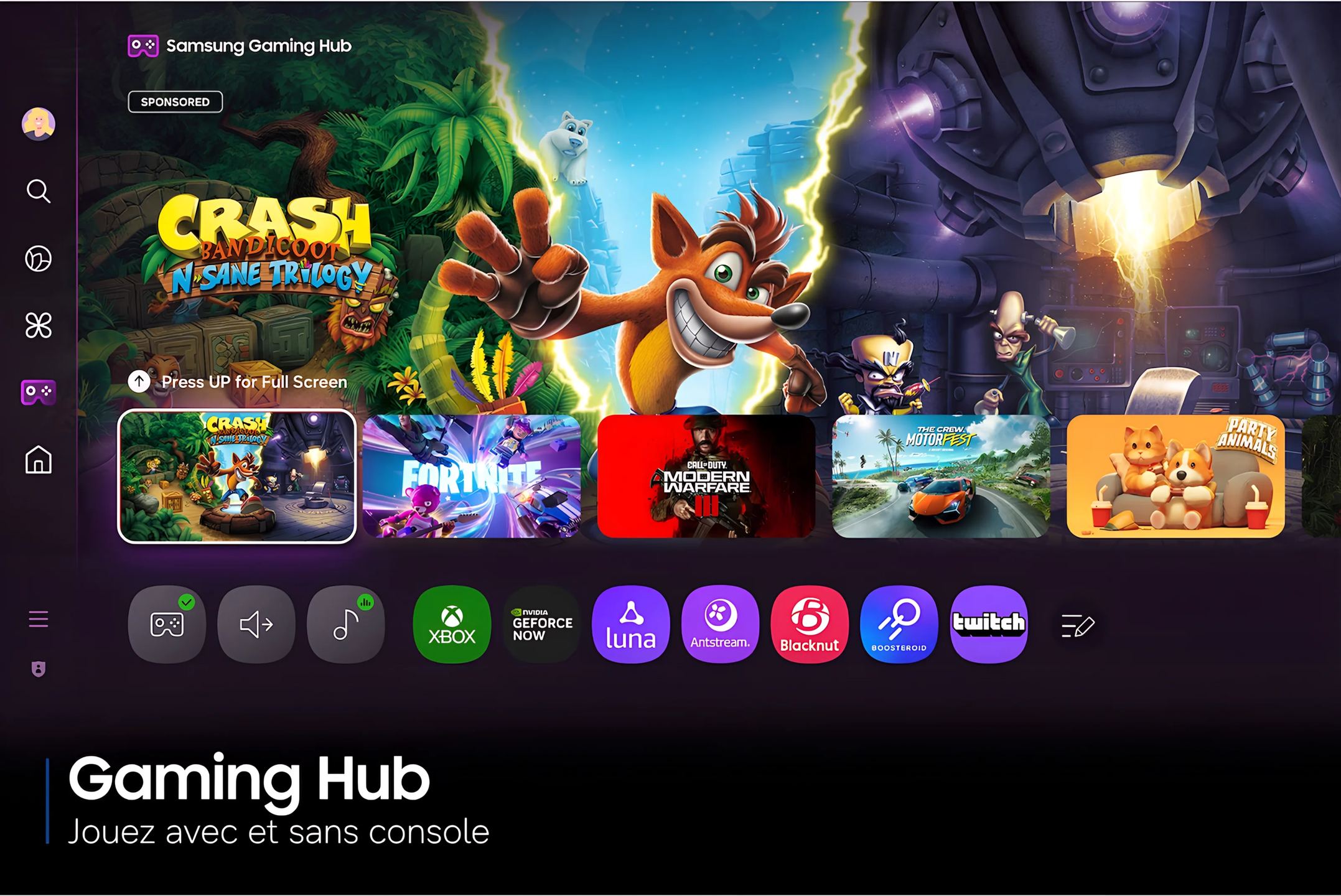
Gaming Hub includes direct access to cloud gaming services without a physical console. The game bar displays overlay information on frequency, input latency, and the current HDR format. Mini Map Zoom enlarges a portion of the screen for games that display a mini-map, a niche function but a useful one in strategy games or open-world titles. Hue Sync compatibility allows Philips Hue ambient lighting to be synchronized with the displayed content.
The absence of Dolby Vision remains a deliberate choice by Samsung. The television supports HDR10+ Adaptive (which adjusts HDR rendering according to ambient brightness), HDR10+ Gaming (optimized for latency), and HLG for television broadcasts. Dolby Vision content available on Netflix, Apple TV+, or UHD Blu-ray discs will be played in HDR10 or HDR10+ depending on the source, without the benefit of Dolby Vision dynamic metadata.

Audio section: 70 W, Dolby Atmos, and object sound tracking
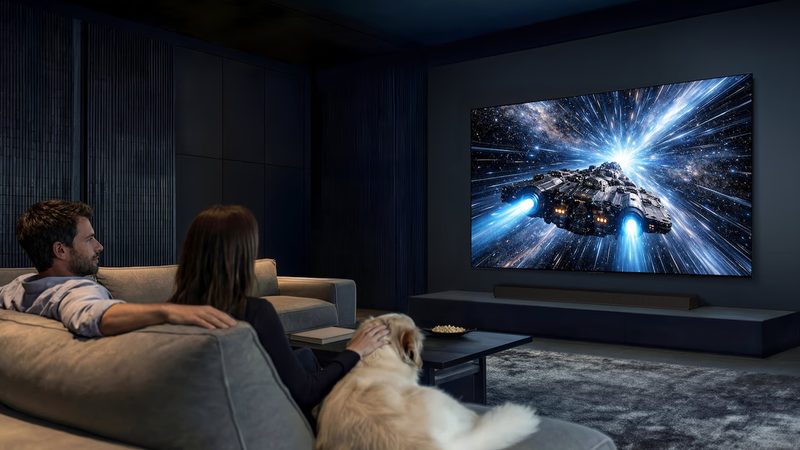
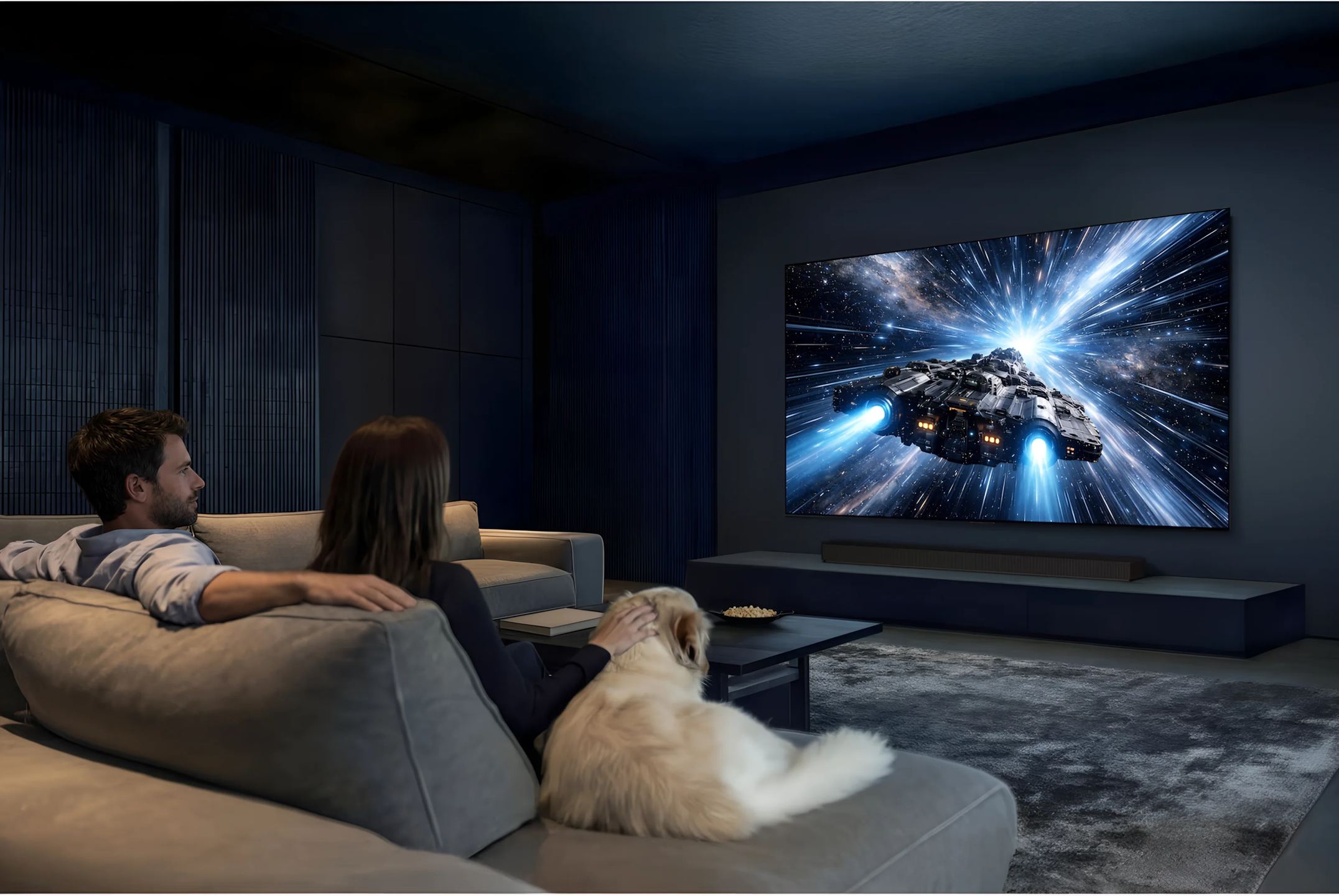
The built-in audio system totals 70 W RMS distributed across 4.2.2 channels. Two speakers are upward-firing to deliver elevated Atmos channels, while OTS+ object sound tracking (Object Tracking Sound+) moves the sound on screen according to the position of the sources in the image. On a 77-inch screen, this spatialization gains consistency compared with smaller diagonals, because the physical distance between the speakers is greater.
Wireless Dolby Atmos makes it possible to receive an Atmos stream from a compatible source without a dedicated HDMI cable, via the Wi-Fi protocol. Adaptive Sound Pro analyzes content in real time to adjust equalization, and Active Voice Amplifier Pro enhances dialogue when the built-in microphone detects high ambient noise in the room. Bluetooth 5.3 allows the simultaneous connection of two audio devices (two headphones, for example), a practical option for watching a program together without disturbing the rest of the household.
Q-Symphony remains the bridge between the television and compatible Samsung soundbars: the television speakers and the soundbar speakers work together instead of the television muting its own speakers. The result depends on the soundbar model paired with it, but the combination adds extra channels to the overall rendering. AI Sound Controller Pro manages all of these functions to adapt the sound profile to the detected content.
Infinity One design and One Connect box
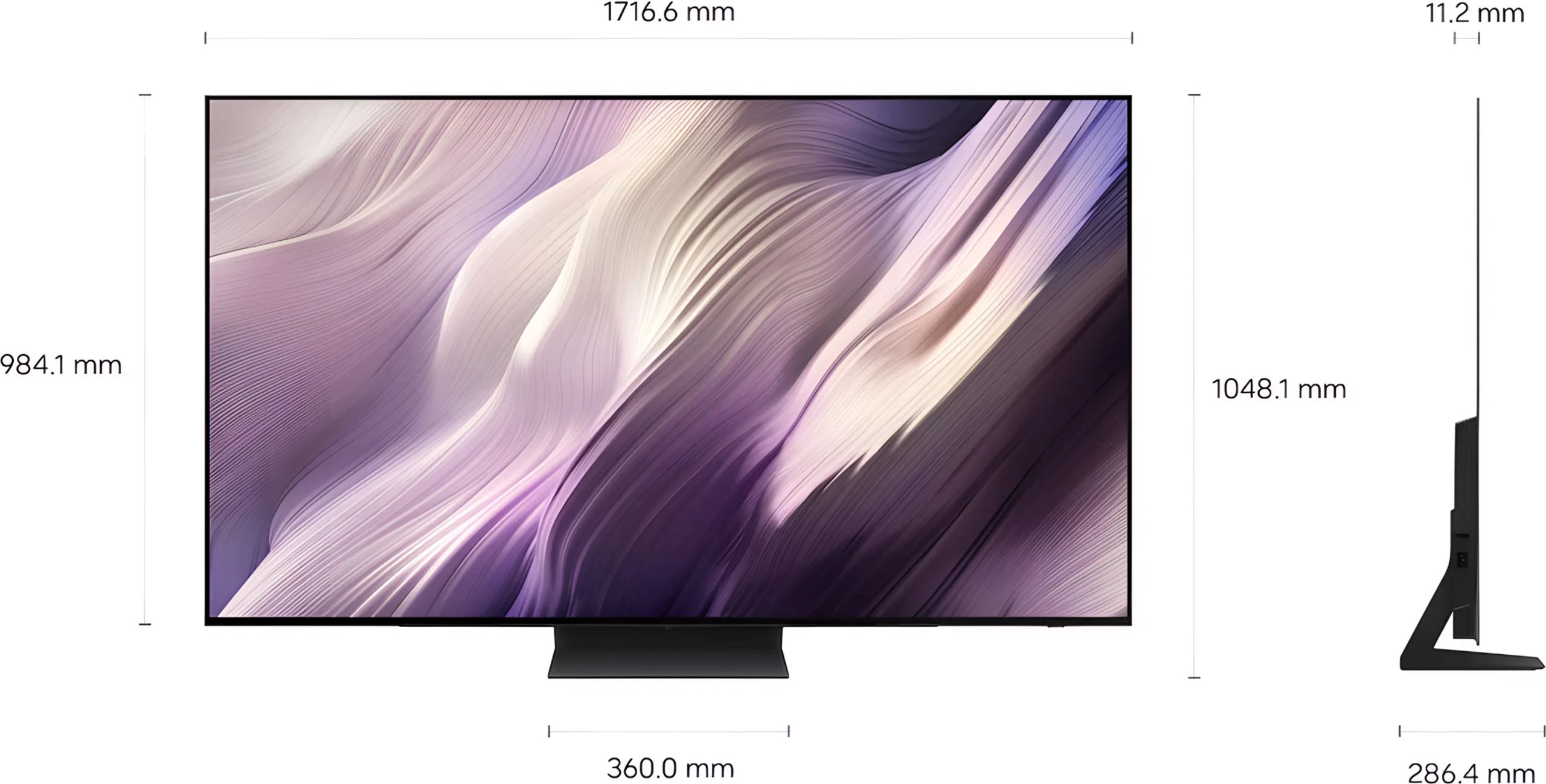
The TQ77S95H retains the Infinity One design introduced on previous generations of the S95 series. The panel measures 11.2 mm thick (without the stand), a slimness that makes it well suited to wall mounting in the VESA 400 x 400 mm format. The Graphite Black finish unifies the frame in a dark, matte tone. The Slim OC Stand attaches to the center of the television and integrates routing for the single cable connecting the screen to the One Connect box.
The One Connect box, included in the package, moves all connectivity outside the panel. It includes four HDMI 2.1 inputs, three USB-A ports, one USB-C port, an optical audio output, an Ethernet port, the eARC connector, and the dual DVB-T2/C/S2 tuner. This externalization offers a double benefit: the screen remains very thin and can be installed flush against the wall, and replacing the box theoretically makes it possible to update the connectivity without changing the panel. The proprietary cable connecting the box to the panel remains a point to watch: its length and fragility must be anticipated during installation, especially in wall mounting when the box is concealed in a distant piece of furniture.
With a weight of 28.2 kg for the panel alone (40 kg with the stand), wall installation requires a solid mount and, ideally, two people. The overall dimensions (1716.6 x 984.1 mm without the stand) require furniture or a wall capable of accommodating a screen nearly 1.72 m wide.

Tizen platform, Vision AI, and seven years of updates
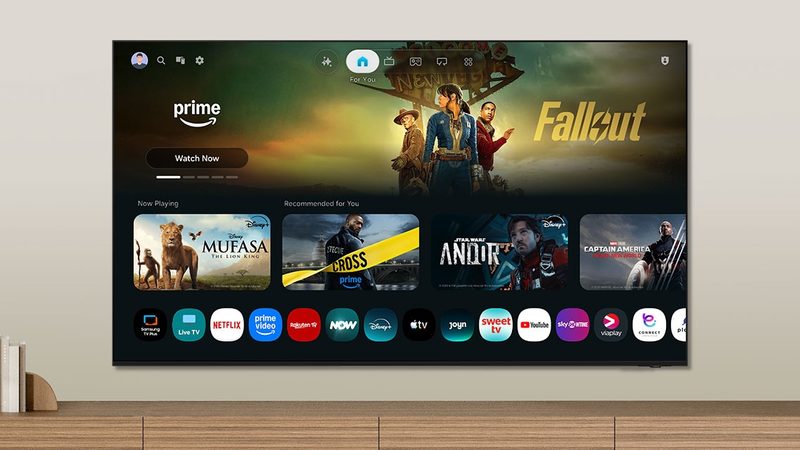
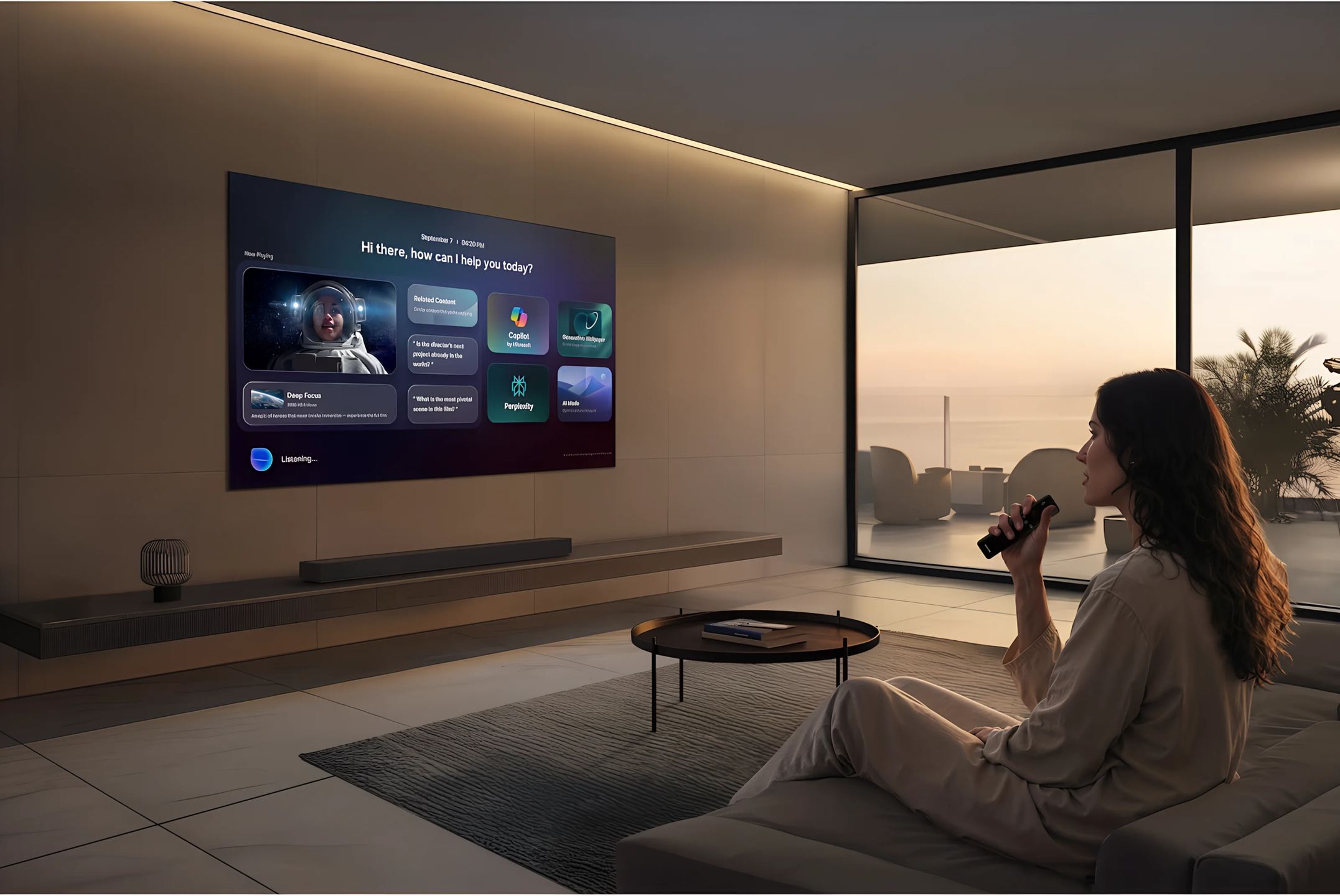
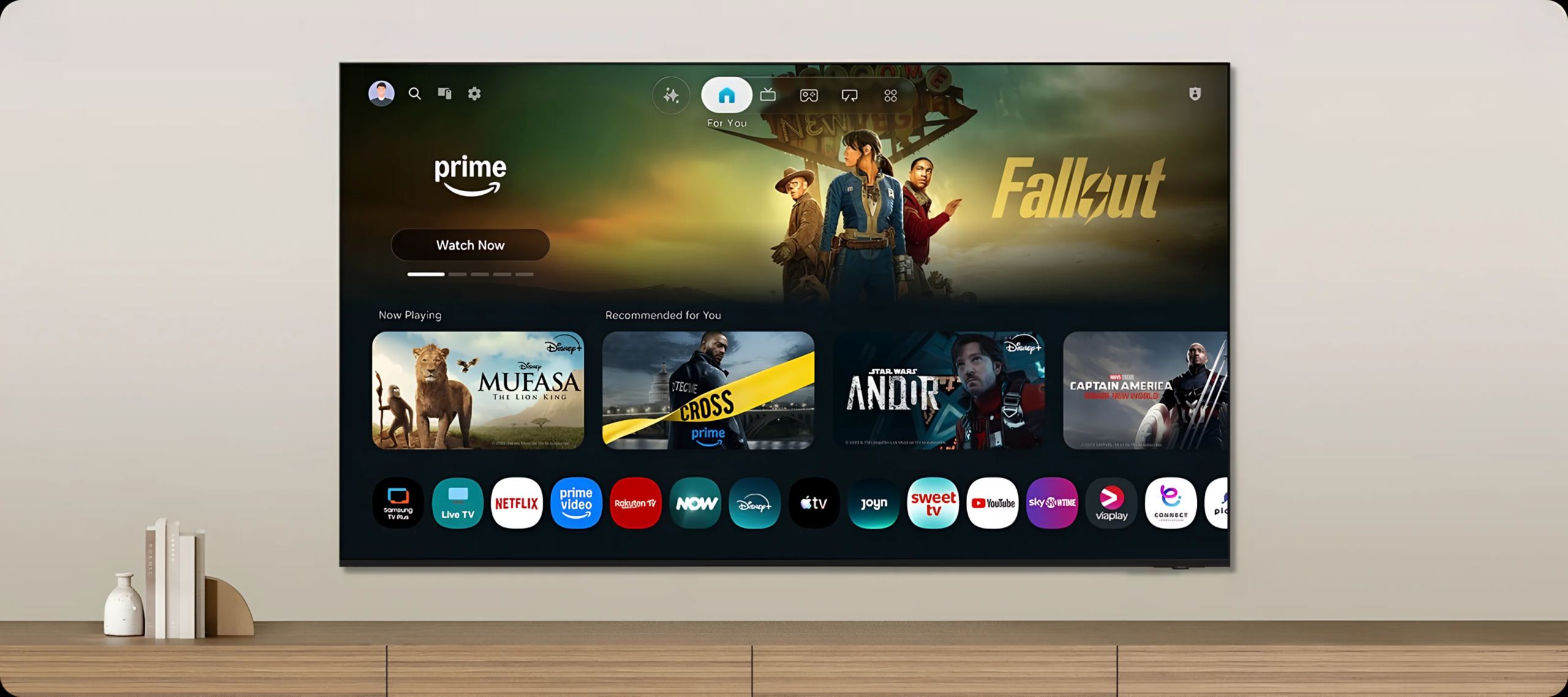
The TQ77S95H runs on Samsung Tizen, in its 2026 version. The interface has evolved compared with previous generations, with a navigation bar repositioned at the top of the screen. Bixby and Alexa voice assistants are integrated, and AirPlay compatibility allows streaming from an Apple device. Wi-Fi 6E ensures a fast wireless connection on the 6 GHz band, useful when the household’s 2.4 and 5 GHz network is saturated.
The SmartThings Hub turns the television into a home automation hub, capable of controlling compatible connected devices without an external gateway. Multi View displays two sources simultaneously on screen (for example, a television channel and a surveillance camera feed).
The Vision AI Companion function identifies elements displayed on the screen: actor recognition, live sports scores, object identification. Live Translate instant translation displays subtitles translated in real time on live programs, a function that depends on the source language and the quality of the audio stream.
Samsung commits to seven years of OS updates, a timeline that projects software support for the TQ77S95H until 2033. This commitment covers security updates and new software features, but does not guarantee compatibility with future streaming services or video formats that may appear by then.
Technical specifications
Image
- 77-inch / 196 cm OLED screen
- Ultra HD 4K resolution (3840 x 2160)
- OLED panel with self-emissive pixels
- Glare-Free anti-reflective OLED treatment
- NQ4 AI Gen3 processor
- 4K AI Upscaling Pro
- HDR compatibility: HDR10+ Adaptive, HDR10+ Gaming, HLG
- Auto HDR Remastering Pro
- Motion Xcelerator 165 Hz
- VRR compatible up to 4K 165 Hz
- Color Booster Pro
- Smart settings via AI Mode and AI customization
Gaming
- Native 100 Hz refresh rate (up to 165 Hz)
- 4K 165 Hz compatible on all 4 HDMI ports
- FreeSync Premium Pro
- NVIDIA G-Sync compatible
- ALLM (Auto Low Latency Mode)
- Built-in Gaming Hub
- Mini Map Zoom
- Dedicated game bar
- Hue Sync compatible
Audio
- 4.2.2-channel audio system
- 70 W RMS sound power
- Wireless Dolby Atmos
- OTS+ (Object Tracking Sound+)
- Q-Symphony
- AI Sound Controller Pro
- Adaptive Sound Pro
- Active Voice Amplifier Pro
- Simultaneous dual Bluetooth connection
Smart TV and Vision AI
- Samsung Tizen™ Smart TV system
- Built-in Bixby and Alexa voice assistants
- AirPlay compatible
- Wi-Fi 6E and Bluetooth 5.3
- Built-in SmartThings Hub
- Multi View up to 2 screens
- Vision AI Companion
- Instant Live Translate translation
- Smart content recommendations
- Smart picture and sound control
- 7 years of free OS updates
Design
- Graphite Black finish
- Slim OC Stand
- External One Connect box included
- VESA 400 x 400 mm mount compatible
- Ultra-slim design with 11.2 mm thickness without stand
Connectivity
- 4 HDMI 2.1 inputs compatible with 4K 165 Hz
- 3 USB-A ports and 1 USB-C port
- 1 Ethernet (LAN) port
- 1 optical audio output
- eARC
- Dual DVB-T2CS2 x2 tuner
- Dual satellite input
Dimensions and weight
- Dimensions without stand: 1716.6 x 984.1 x 11.2 mm
- Dimensions with stand: 1716.6 x 1048.1 x 286.4 mm
- Weight without stand: 28.2 kg
- Weight with stand: 40.0 kg
Frequently Asked Questions
Does the TQ77S95H use a QD-OLED or WOLED panel?
In 77 inches, the TQ77S95H uses a QD-OLED panel manufactured by Samsung Display. Only the 48-inch and 83-inch models in the S95H series use Tandem WOLED panels supplied by LG Display. QD-OLED technology offers a wider color volume thanks to direct quantum dot conversion, without an intermediate white filter.
Is Dolby Vision supported?
No. Samsung has chosen HDR10+ (Adaptive, Gaming) and HLG. Content encoded in Dolby Vision on platforms such as Netflix or Apple TV+ will be played in HDR10 or HDR10+ depending on source compatibility. The HDR10+ Advanced format, announced for Samsung’s 2026 range, brings dynamic metadata comparable in precision to Dolby Vision.
Is the One Connect box wireless on this model?
No. On the TQ77S95H (European S95H version), the One Connect box is connected to the panel by a proprietary cable. The wireless One Connect version (Wireless One Connect) is reserved for the S99H model, which corresponds to the American S95H with its FloatLayer design and metal frame.
Do all four HDMI ports handle 4K at 165 Hz?
Yes. All four HDMI 2.1 inputs support 4K at 165 Hz, VRR (FreeSync Premium Pro and G-Sync), and ALLM. The eARC port is available on one of these four connectors for audio return to a compatible soundbar or amplifier.
Does Q-Symphony work with all Samsung soundbars?
No. Q-Symphony requires a compatible Samsung soundbar (the list is updated every year by Samsung). When the function is active, the television speakers and the soundbar speakers play together instead of the television muting itself. The result depends on the number of channels and the configuration of the soundbar used.
- Eco-contribution of €14.59 included in the sale price.
- Spare parts available for 7 years
- Manufacturer reference: TQ77S95HFTXXC
- GTIN / EAN: 8806099143947