Hisense 65UR9S 2026

Specifications and features



Awards

EISA Awards: Award-Winning Product
Each year, dozens of European journalists gather to select the best electronic products of the year. Awarded by a diverse and impartial jury, the EISA (Expert Imaging and Sound Association) awards recognize exceptional products for their performance, design, or ergonomics.
Overview
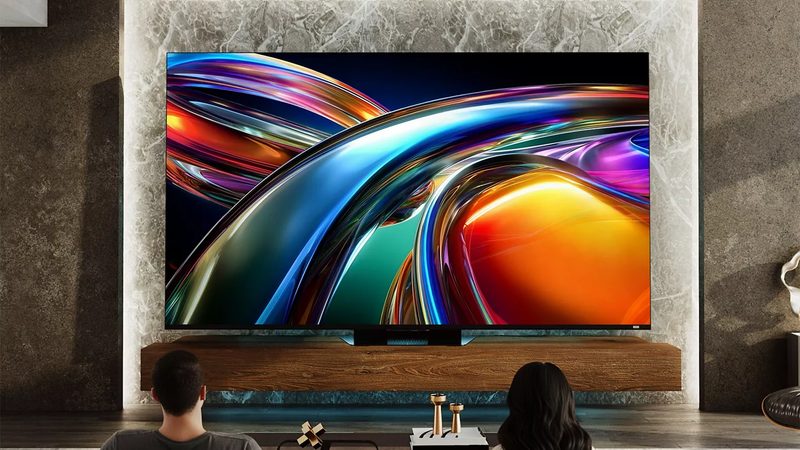
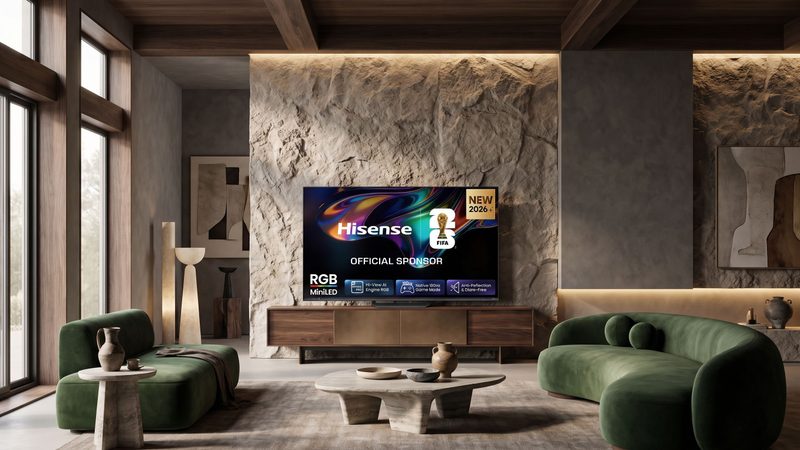
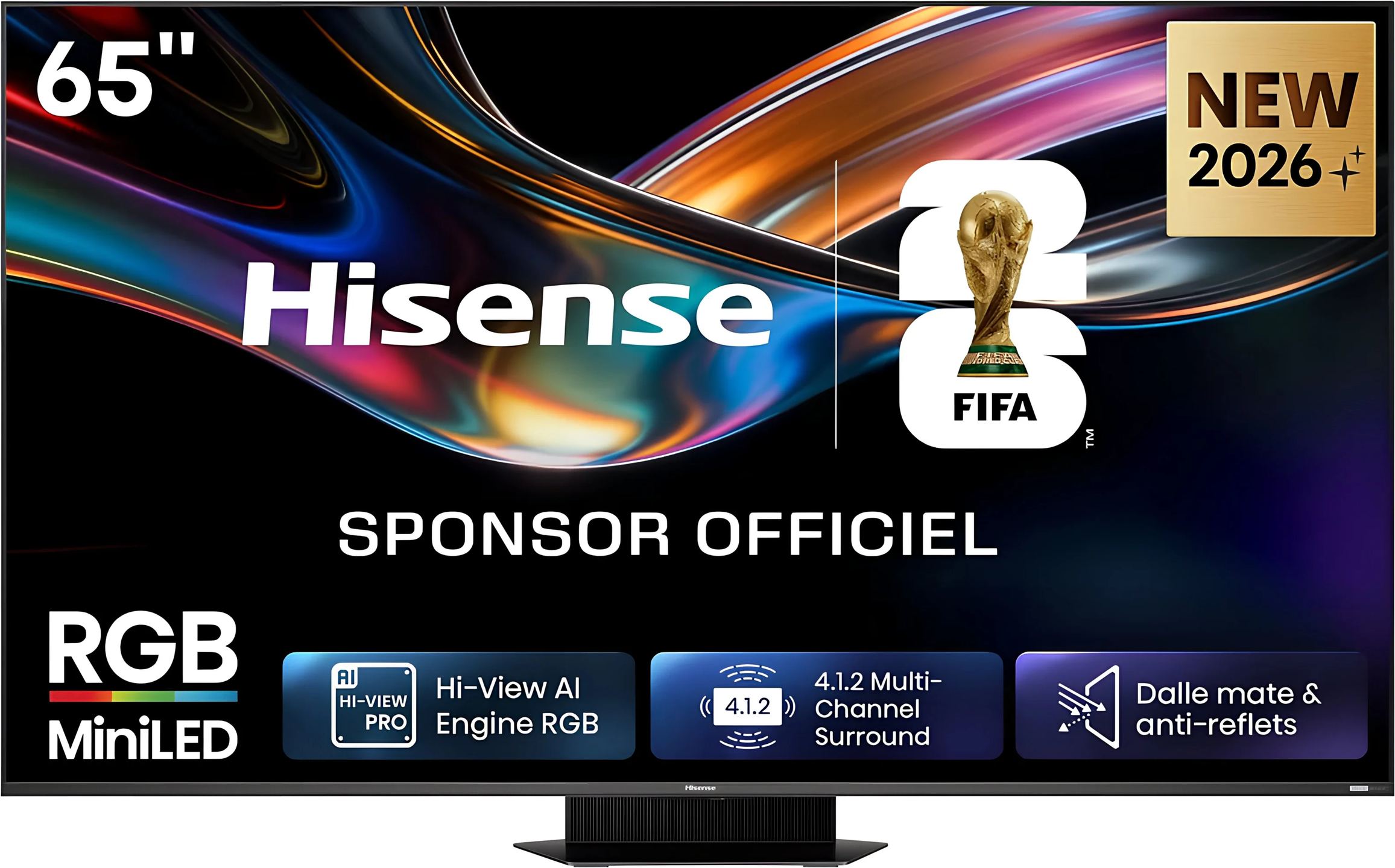
Producing red, green, and blue directly at the backlight level rather than filtering white light: until now, the RGB MiniLED principle belonged to the realm of demonstrators, reserved for giant screen sizes. Hisense brings it down to a 65-inch living-room model, with a matte anti-glare panel and a claimed peak of 3500 nits. The rest of the specifications follow suit: native 170 Hz, 4.1.2 sound tuned by Devialet.
The backlight produces color
On a conventional Mini LED television, white diodes illuminate an LCD panel whose red, green, and blue subpixels filter that light. Part of the luminous flux is lost in the process, and the purity of the primaries depends entirely on the quality of the color filters.
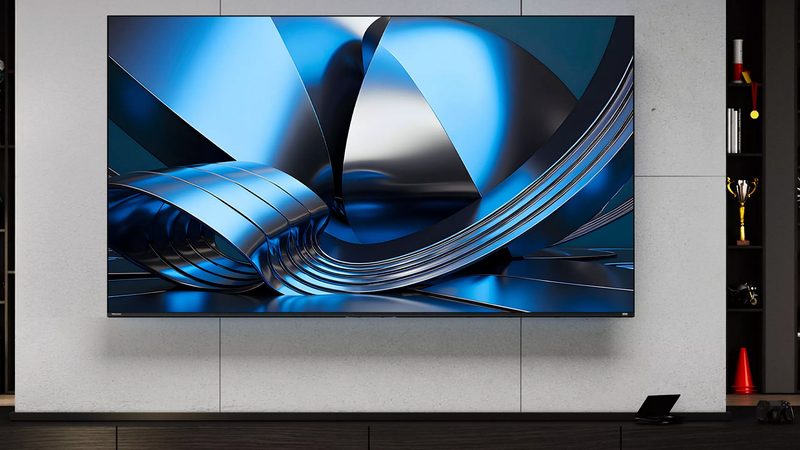
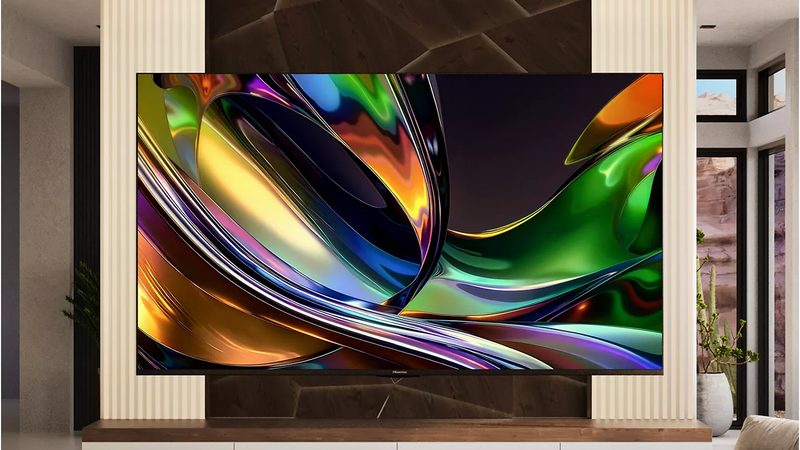
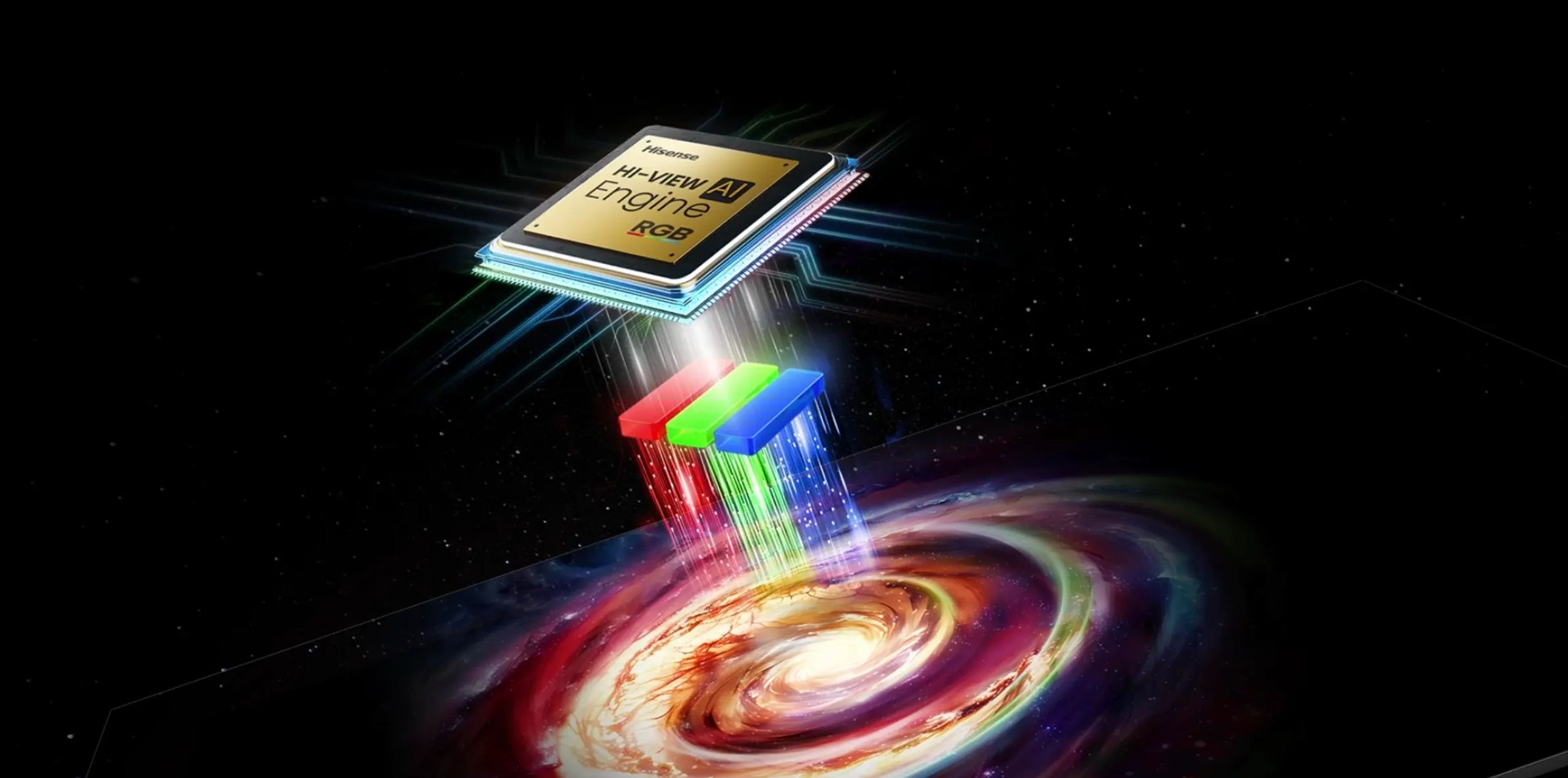
The 65UR9S works differently. Its Mini LEDs emit separately in red, green, and blue, and the panel modulates light that is already colored. Hisense claims coverage of up to 100% of the BT.2020 space, the widest color target defined for Ultra HD. The gain is especially visible in saturated shades that traditional LCD panels struggle to maintain without shifting: deep reds, vegetation greens, electric blues. Processing is handled by a quad-core MT9655 processor paired with the Hi-View AI Engine RGB, which analyzes content frame by frame.
One nuance should be noted: the panel remains 8-bit supplemented by FRC, a technique of rapid alternation between two neighboring shades to simulate 10 bits. In practice, HDR gradients come through well, but the native depth is not that of a true 10-bit panel.
Local dimming and peak brightness
The contrast of an LCD depends on how precisely the backlight turns off where the image is black. The 65UR9S backlight is controlled by independent zones, each dimming according to the displayed content. Halos around bright objects on a black background, white subtitles, or a starry title sequence remain contained without disappearing completely: this is the structural limit of Full Array Local Dimming, regardless of the number of zones.
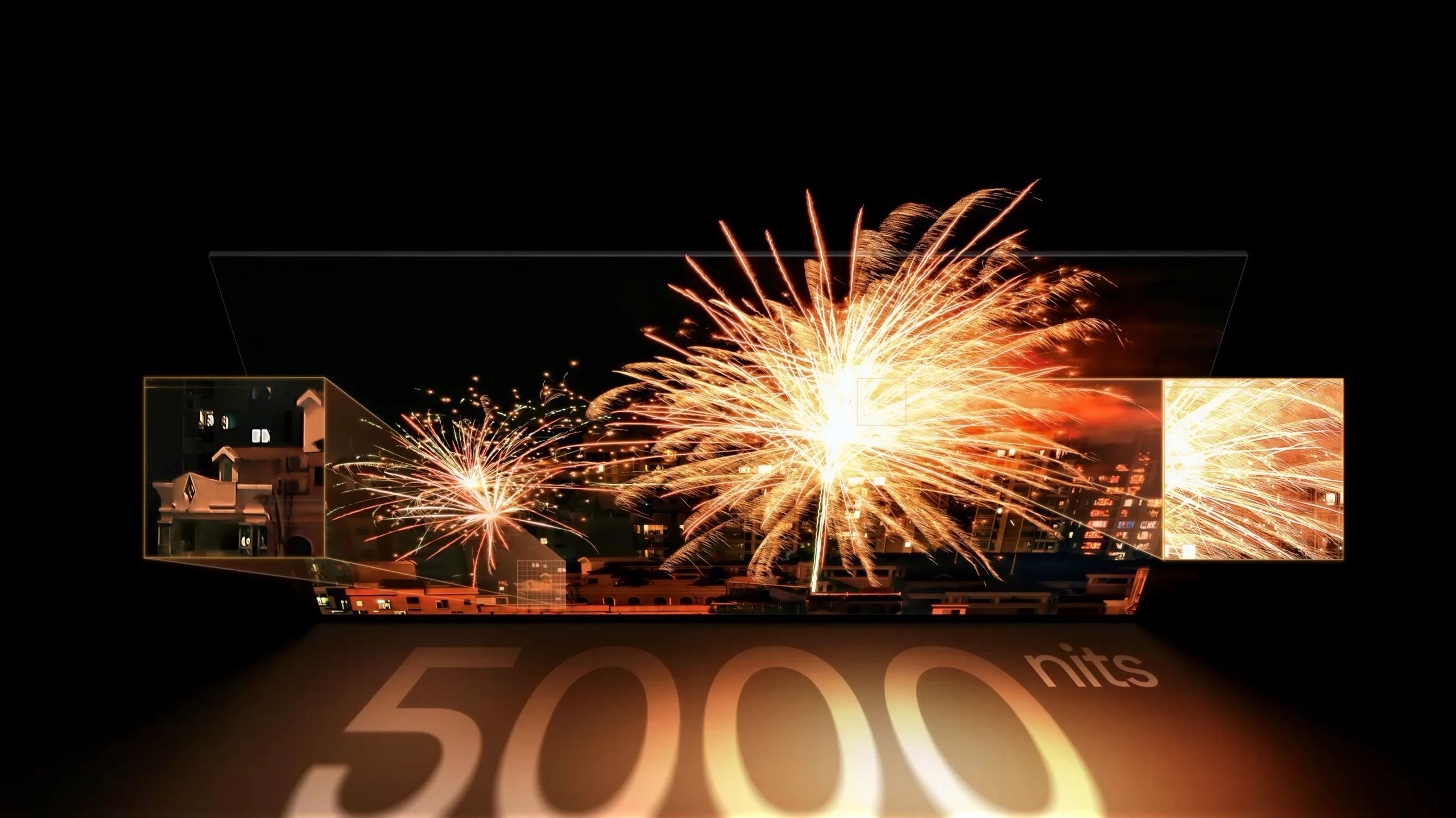
The claimed 3500-nit peak brightness applies to small windows, typically a sun reflection on bodywork. It is not sustained full-screen brightness. Combined with the panel’s matte anti-glare treatment, this level allows HDR viewing in broad daylight, in an exposed living room, without a collapse in perceived contrast. The matte treatment does have a downside: blacks become slightly washed out in bright light, where a glossy panel preserves them better in darkness.
In terms of formats, coverage is complete. Dolby Vision and Dolby Vision IQ, HDR10+ and HDR10+ Adaptive, HDR10, HLG, plus IMAX Enhanced and Calman Ready certifications. The two adaptive variants rely on the ambient light sensor to adjust rendering according to room lighting. Filmmaker mode remains available for those who prefer to disable all processing, alongside Cinema and Sport modes.
A thick chassis, a compact stand
At 4.5 cm thick, the 65UR9S does not play the slimness card. The RGB backlight and its dissipation system require volume. The back is flat, which simplifies wall mounting in VESA 400 × 400 mm format with 24.4 kg to support, panel only.
The central stand offsets that thickness in practical terms. It occupies 29 cm in depth and allows the television to be installed on a narrow piece of furniture, where side feet often require a width of 140 cm. Hisense specifies two overall heights with stand, 89.9 or 93.1 cm, leaving the choice of whether or not to free up the space needed for a soundbar. The assembled unit measures 144.8 cm wide and weighs 28.4 kg.
Native 170 Hz, three HDMI 2.1 ports
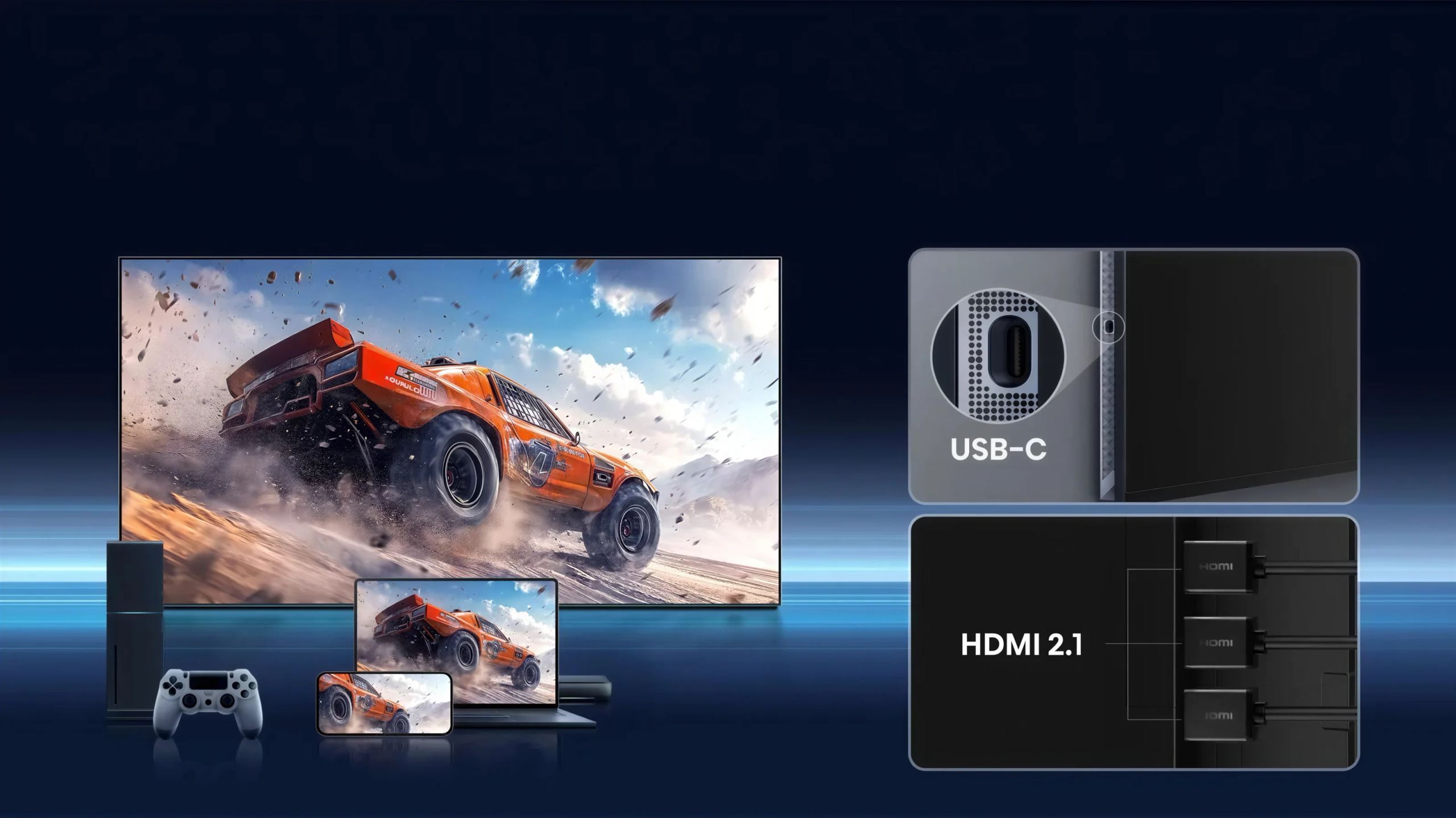
The panel runs natively at 170 Hz, with a claimed frequency of up to 330 Hz in HSR. All three HDMI inputs are 2.1, support VRR up to 4K 180 Hz and ALLM, and input lag drops to 8 ms in Game mode. AMD FreeSync Premium Pro certification covers synchronization with Radeon graphics cards and low-latency HDR.
Only three HDMI inputs, when most high-end televisions offer four: the calculation becomes quick as soon as a soundbar occupies the eARC port (HDMI 3) and two consoles share the rest. Hisense partly offsets this with a USB-C port compatible with DisplayPort 1.4, a rare connection on a television, useful for PC gamers. The rest of the connectivity includes one USB 3.0, one USB 2.0, an optical S/PDIF output, a mini-jack audio input, a headphone jack, a composite input, and an Ethernet port.
4.1.2 sound tuned by Devialet
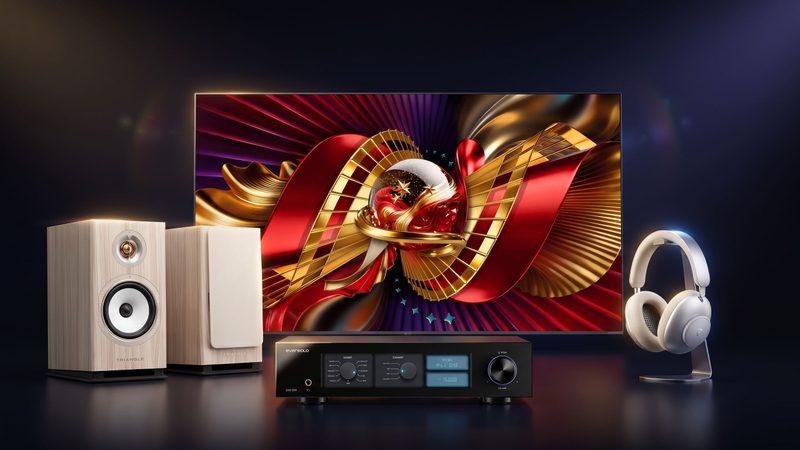
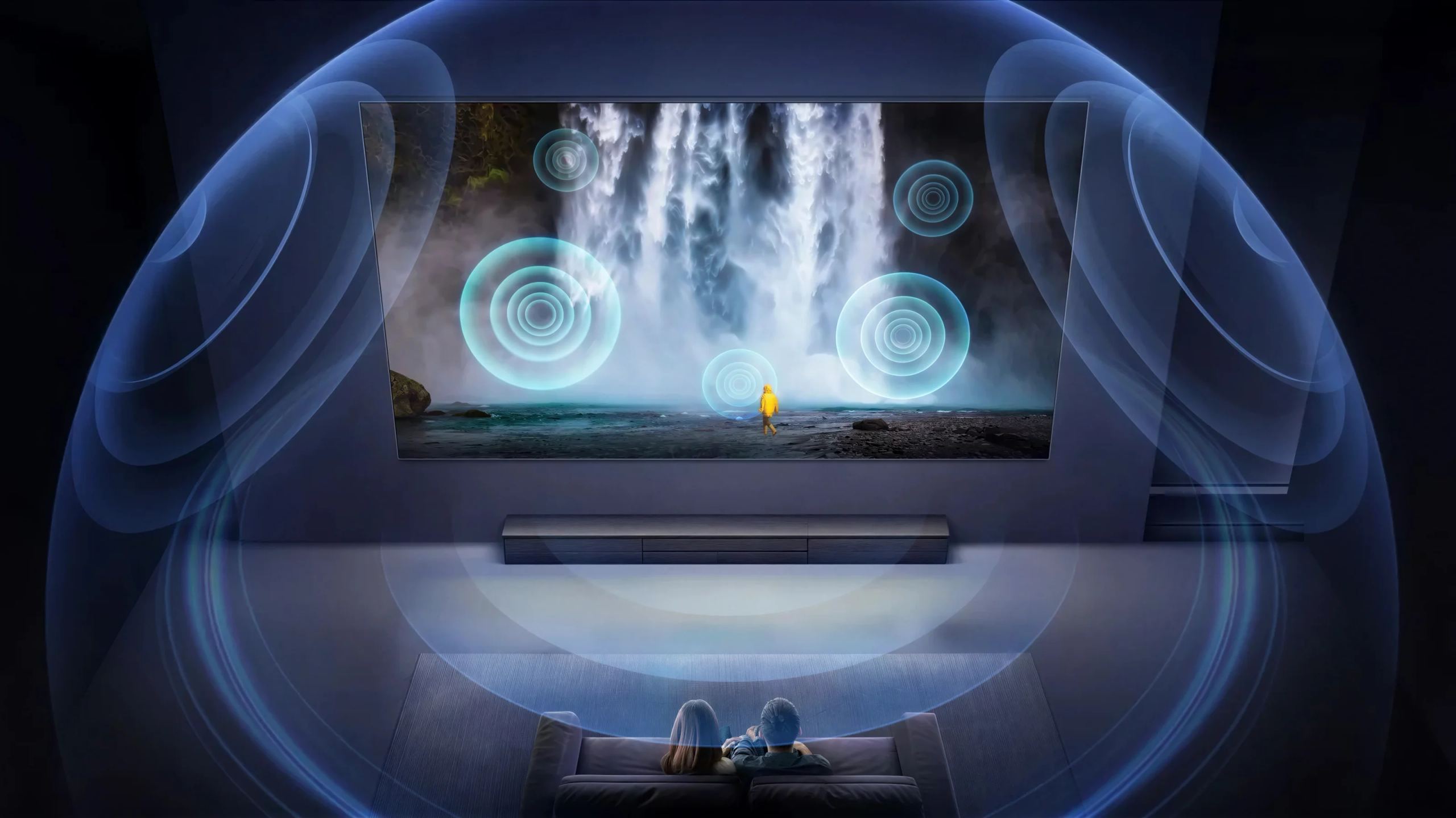
Ninety watts distributed across a 4.1.2 configuration: two 15 W channels, two 10 W channels, one 20 W channel for bass, and two 10 W speakers handling the Dolby Atmos height layer. Acoustic tuning is signed by the French manufacturer Devialet, and the Room Fitting Tuning function adapts playback to the room. The equalizer provides access to advanced settings.
The elevation channels of a flat television remain constrained by physics: the ceiling speakers work with only a few centimeters of depth and bass rarely goes low. The result widens the soundstage laterally and provides perceptible height on soundtracks mixed in Atmos, without replacing a dedicated system. To go further without cables, WiSA SoundSend compatibility allows connection to compatible wireless speakers, and HDMI eARC transmits uncompressed Dolby Atmos streams to a soundbar or amplifier.
VIDAA U9.5 and the rest of the living room
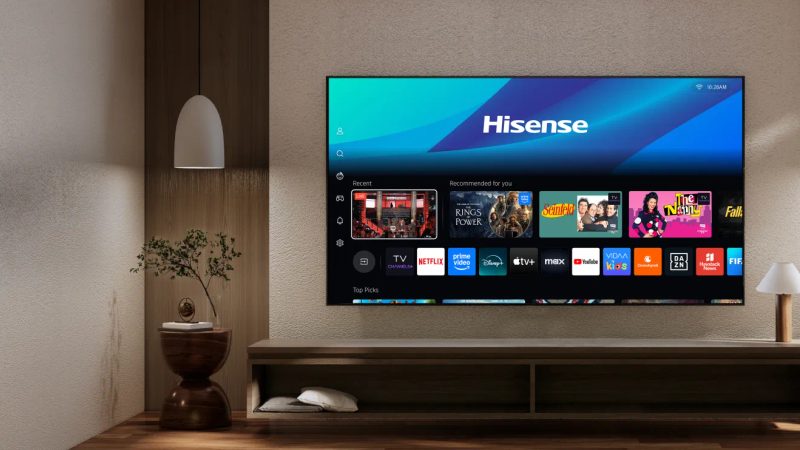
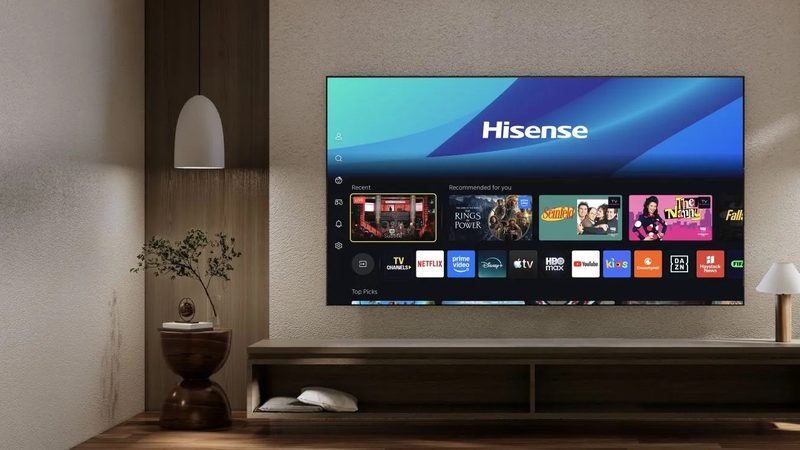
Hisense’s in-house system arrives in version U9.5, with its app store, a browser, a media player, and AV1, HEVC, VP9, and AVC decoding for local files. Alexa is built in, the Vidaa Voice assistant responds to voice commands via the remote control, and AirPlay 2 provides streaming from Apple devices. Screen sharing works from a PC, tablet, or smartphone. Vidaa ART mode turns the screen into a display surface when the television is not in use.
Network connection is via Wi-Fi 802.11ax, which opens up the 6 GHz band in addition to 2.4 and 5 GHz, or via the Ethernet port. Bluetooth 5.4 handles headphones and controllers. On the reception side, the DVB-T2/T/C/S2/S tuner covers terrestrial TV, cable, and satellite, with two antenna inputs, Fransat certification, HbbTV 2.0.4, a CI+ slot, and USB recording with timeshift.
Documentation
FrenchEnergy label
European product sheet
FrenchDurability index
French
Technical specifications
Display
- 65-inch LED display (164 cm)
- Ultra HD 4K resolution (3840 × 2160 pixels)
- RGB MiniLED technology
- Full Array Local Dimming backlight
- Matte anti-glare panel
- Peak brightness up to 3500 nits
- Native 170 Hz refresh rate (330 Hz HSR)
- Hi-View AI Engine RGB video processor
- Ultra HD 4K upscaling
- Brightness sensor
- MEMC motion compensation
- BT.2020 color gamut coverage up to 100%
- 8-bit + FRC color depth
HDR compatibility
- Dolby Vision IQ
- Dolby Vision
- HDR10+
- HDR10+ Adaptive
- HDR10
- HLG
- 4K HDR Immersive
- IMAX Enhanced
- Calman Ready
- Filmmaker Mode
Gaming
- 170 Hz Game Mode
- 8 ms input lag
- AMD FreeSync Premium Pro
- HDMI 2.1 with ALLM
- VRR up to 4K 180 Hz on all three HDMI inputs
Smart TV
- VIDAA U9.5 system
- Built-in Alexa
- Vidaa Voice
- AirPlay 2
- Screen sharing (PC, tablet, smartphone)
- Wi-Fi 6E (2.4 / 5 / 6 GHz)
- Bluetooth 5.4
- Internet browser
- Media player
- VIDAA App Store
- Automatic AI picture mode
- Vidaa ART
Audio
- 4.1.2-channel configuration
- Total power: 90 W
- 2 × 15 W
- 2 × 10 W
- 20 W
- 2 × 10 W
- Dolby Atmos
- Dolby Audio
- Advanced equalizer
- Tuned by Devialet acoustic tuning
- Room Fitting Tuning
- WiSA SoundSend
- Hi-Concerto
- TV Mode
- EzPlay
Connectivity
- 3 HDMI 2.1 inputs
- ALLM
- VRR
- eARC (HDMI 3)
- USB-C compatible with DisplayPort 1.4
- 1 USB 3.0 port
- 1 USB 2.0 port
- Optical audio output
- Mini-jack audio input
- Headphone jack
- Dual antenna tuner
- Composite AV input
- Ethernet RJ45 port
TV reception
- Triple tuner DVB-T2 / T / C / S2 / S
- Fransat certification
- HbbTV 2.0.4
- CI+
- USB recording (PVR)
- Timeshift
- Hotel Mode
- Parental control
Multimedia formats
- Video: MP4, MKV, MOV, AVI, TS, WMV, WebM…
- Audio: MP3, WAV, FLAC, WMA…
- Photos: JPEG, PNG, BMP, GIF, WebP, TIFF
- Decoding: AV1, HEVC (H.265), VP9, MPEG-H…
Power consumption
- SDR energy class: E
- HDR energy class: G
- SDR consumption: 80 kWh / 1000 h
- HDR consumption: 200 kWh / 1000 h
- Standby: 0.5 W
Dimensions and weight
- With stand: 144.8 × 29.0 × 93.1 cm
- Without stand: 144.8 × 4.5 × 83.8 cm
- Weight with stand: 28.4 kg
- Weight without stand: 24.4 kg
- VESA wall mount 400 × 400 mm
Frequently Asked Questions
Does the USB-C port replace an HDMI input for a PC?
It works in DisplayPort 1.4 via Alternate Mode, allowing you to connect a computer directly with a USB-C to USB-C or USB-C to DisplayPort cable, provided the graphics output supports DP Alt Mode. This is a rare connection on a TV, which avoids tying up one of the three HDMI inputs.
What is the TV's actual power consumption?
The energy label states 80 kWh per 1000 hours in SDR, i.e. class E, and 200 kWh per 1000 hours in HDR, i.e. class G. The difference between the two is due to the backlighting being driven much harder in HDR. Standby consumes 0.5 W, and the television offers a programmable shutdown as well as automatic standby. These values correspond to the default settings measured according to the European method, not the brightest modes.
Can the 65UR9S be professionally calibrated?
It is Calman Ready certified, which allows automatic calibration via Portrait Displays’ Calman software: the probe measures the displayed image and the software writes the corrections directly into the television’s tables, without going through the menus. A Filmmaker mode is also available for those who simply want to disable image processing and restore the original frame rate.
What’s in the box?
The television comes with its ERF6P66H voice remote control, which provides access to applications via direct-access buttons, and its power cable. The batteries for the remote control are not indicated as included on the manufacturer’s product sheet. The complete box weighs 36.2 kg and is 160.8 cm wide, useful information to check before planning transport in a vehicle.
Which file formats does the media player support?
The player supports MP4, MOV, MKV, TS, AVI, WMV, and WebM containers, WAV, MP3, WMA, and FLAC audio files, as well as JPEG, PNG, BMP, GIF, WebP, and TIFF images. Video decoding covers AV1, HEVC, AVC, VP8, VP9, VC1, WMV3, and MPEG-1/2/4. On the audio side, the list includes AAC, FLAC, Vorbis, Opus, LPCM, and MPEG-H, which is sufficient for virtually all 4K files encountered today.
Are Hotel mode and parental controls available to the general public?
Both functions appear in the menus. Parental control locks channels and apps with a code. Hotel mode, designed for professional installations, freezes the settings, limits the maximum volume, and blocks access to certain menus. Nothing prevents you from activating it at home, for example for a TV in a child’s bedroom.
What does the ambient light sensor change in everyday use?
It measures ambient light and powers Dolby Vision IQ and HDR10+ Adaptive modes, which adjust the tone curve and color temperature according to the room. An HDR film watched in broad daylight retains its shadow detail instead of sinking into darkness. On the other hand, the picture changes when the living room lighting changes, which some prefer to disable to keep a consistent rendering.
- Eco-contribution of €12.65 included in the sale price.
- Spare parts available for 7 years
- GTIN / EAN: 6942351436241