

Subwoofers
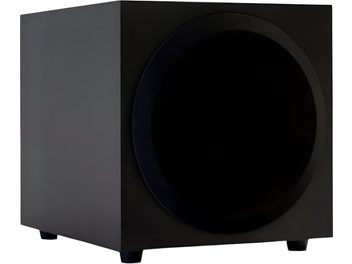
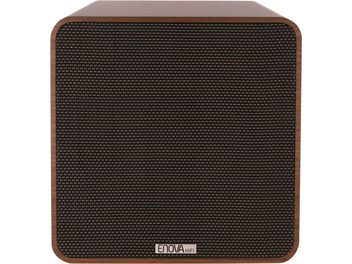
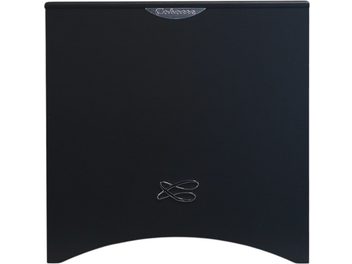
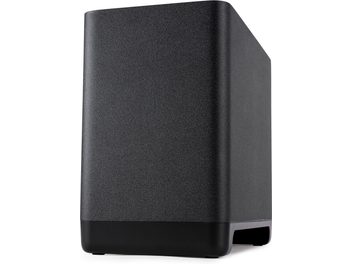
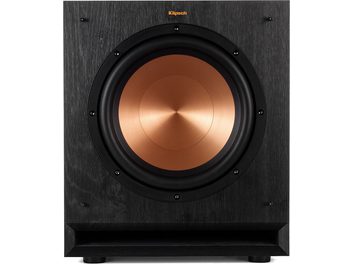
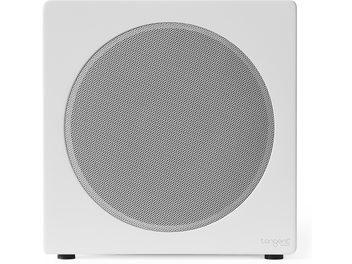
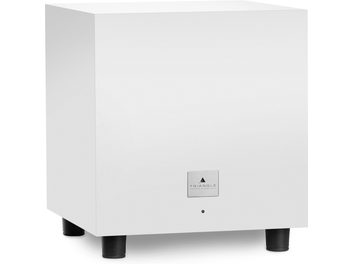
The subwoofer, also called bass cabinet or low-frequency enclosure, reproduces the lowest frequencies of the sound spectrum (20-200 Hz). Essential in home theater to reproduce the LFE channel of soundtracks, it also effectively complements a hi-fi installation by relieving the main speakers. Most models are active, incorporating their own amplifier and a large-diameter driver. Learn more
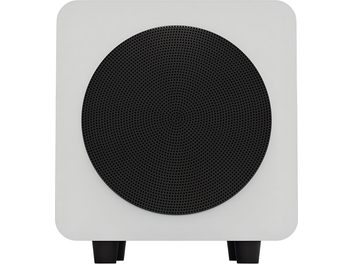
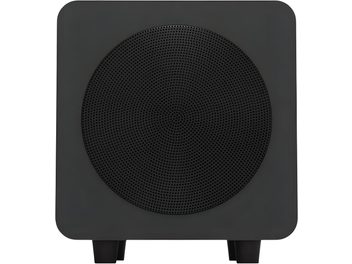
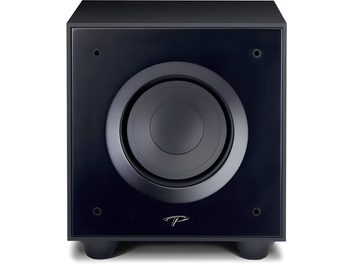
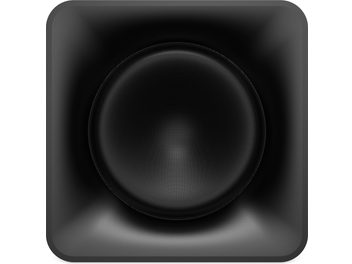
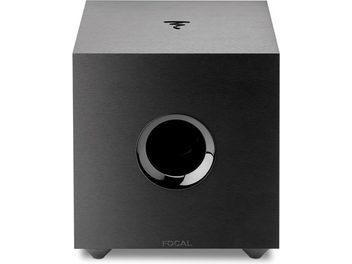
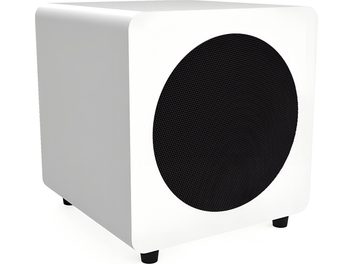
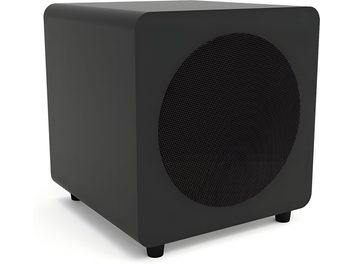
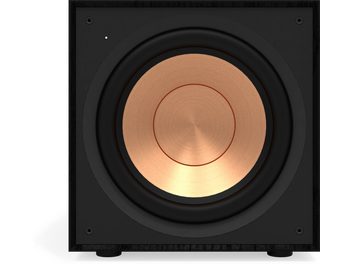
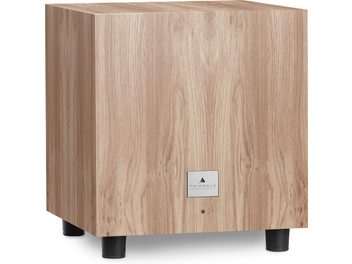
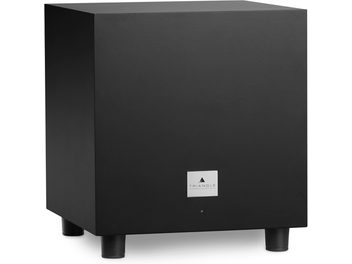
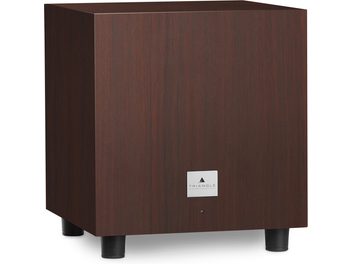
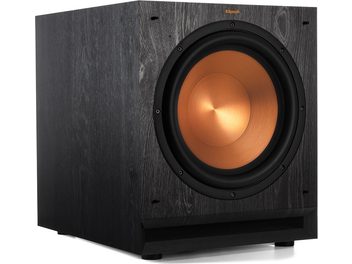

Understanding the role of the subwoofer
Conventional loudspeakers, even high-quality tower speakers, struggle to reach below 30-40 Hz. Yet faithful reproduction of a film soundtrack or musical recording requires exploring frequencies down to 20 Hz, the limit of human hearing perception. It’s in this extreme low-frequency range that the subwoofer comes into play, adding a physical dimension to sound.
In home theater, its role is clearly defined: it handles the LFE channel (Low Frequency Effects), that famous “.1” in 5.1 or 7.1 configurations. Without it, the infrasonic effects of explosions, rumbles and impacts remain inaudible or are awkwardly redistributed to the main speakers. In hi-fi, the subwoofer enables a 2.1 configuration that’s particularly effective in small spaces, where bookshelf speakers gain precision in the midrange and treble when freed from bass reproduction duties.
Active or passive: what’s the difference?
The vast majority of home subwoofers adopt an active design. They incorporate their own power amplifier, typically between 50 and 1000 Watts depending on the model, as well as a filtering and adjustment module. This autonomy greatly facilitates installation and ensures that the driver receives amplification suited to its characteristics.
Passive subwoofers, which are rarer, require dedicated external amplification. They’re mainly found in in-wall installations, professional configurations or very high-end systems where the user wants to choose their own amplification.
Sealed or bass-reflex enclosure?
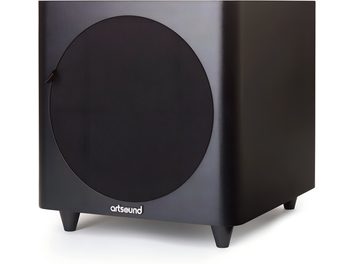
Two major design families coexist. Sealed subwoofers enclose the driver in an airtight cabinet. They deliver tight, precise and fast bass, particularly appreciated for music listening. However, their superior membrane control comes at the cost of requiring more amplification.
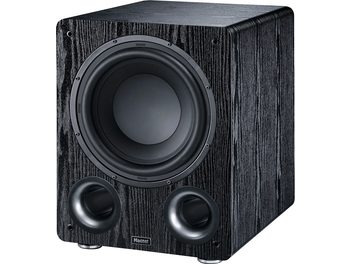
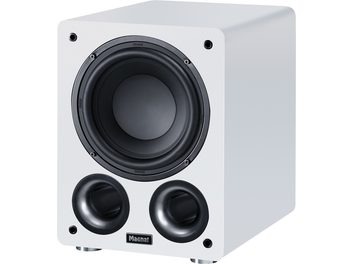
Bass-reflex models use a dimensioned port to extend frequency response and increase efficiency. They produce more spectacular bass, often preferred in home theater. Some manufacturers replace the port with a passive radiator (driverless speaker cone), allowing very low frequency extension in a compact volume.
Driver diameter and power
The transducer diameter typically ranges from 16 to 30 cm (6.5 to 12 inches) for home use, reaching 38 to 46 cm on audiophile or professional models. A large diameter facilitates reproduction of very low frequencies, but the quality of the driver design (membrane rigidity, suspension, magnetic motor) matters as much as its size.
The integrated amplifier power influences the subwoofer’s ability to produce sufficient bass level. While 50 to 100 Watts may suffice for hi-fi use in a medium-sized room, you should aim for a minimum of 150 Watts in home theater to fully enjoy LFE effects. Demanding systems or large rooms require power ratings of 300 Watts and above.
Frequency response and SPL
The low frequency indicates how deep the subwoofer reaches into the bass. A response of 25-30 Hz suits most uses, while models capable of reaching 16-20 Hz offer truly visceral reproduction. The upper cutoff frequency, often adjustable between 80 and 150 Hz, must blend harmoniously with the response of the main speakers.
The sound pressure level (SPL), expressed in decibels, measures the sound power produced. A subwoofer capable of delivering 110 dB suffices in stereo hi-fi configuration, but in home theater, you should ideally aim for 120 dB to balance the overall level of a multichannel system.
Installation and settings
Since low frequencies are non-directional, subwoofer placement offers some flexibility. The ideal position depends on room acoustics: between the front speakers, in a corner, or midway between two walls. Avoid placing it flush against a wall if the bass-reflex port faces backward, as this can create parasitic resonances.
Connection is made via stereo RCA or LFE input (line level) from the amplifier’s subwoofer output, or via speaker terminals (speaker level) for hi-fi amps without a dedicated output. Essential settings include volume, cutoff frequency and phase (0° or 180°). Many home theater amplifiers now incorporate automatic microphone calibration, greatly simplifying subwoofer integration.
A properly chosen and adjusted subwoofer transforms the listening experience by adding foundation, depth and a physical dimension to sound, without ever being localizable or dominating other frequencies.