

Stereo Preamplifiers
The stereo preamplifier is a central component of a high-fidelity system with separate units. Its role is to receive audio signals from sources (CD player, network player, turntable, DAC), manage input selection and volume control, before sending the properly adapted signal to the power amplifier. By optimizing the signal-to-noise ratio and minimizing distortion, the preamp ensures faithful sound reproduction from your sources to the speakers. Learn more
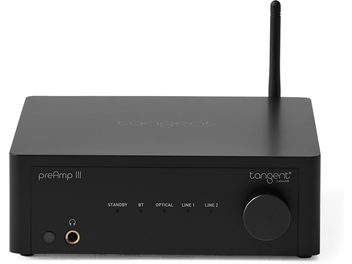
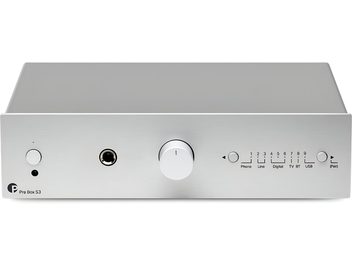
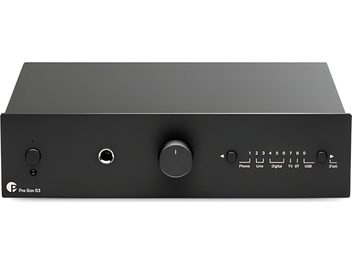
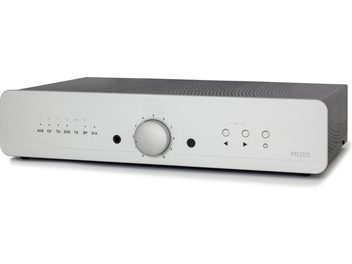
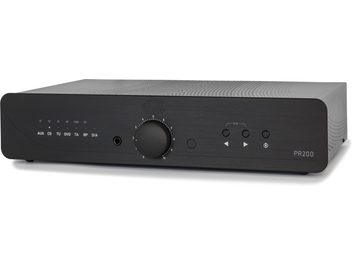
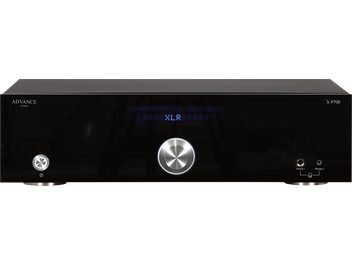
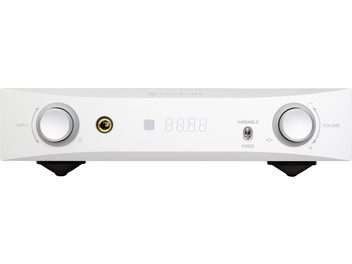
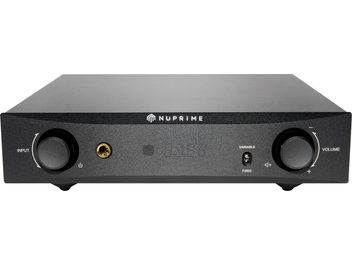
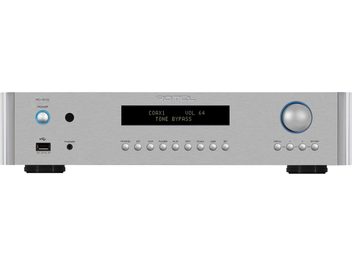
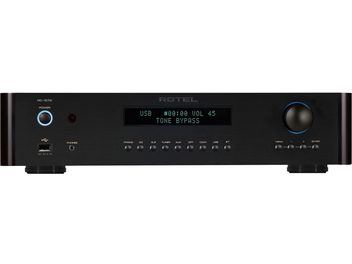
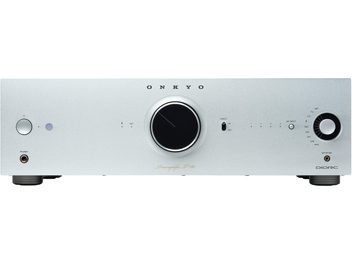
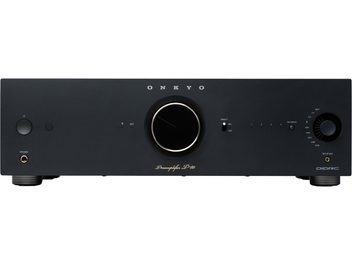
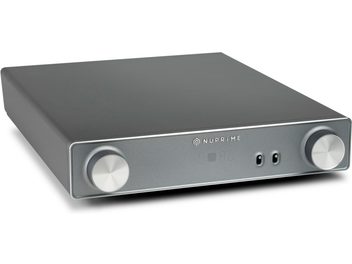
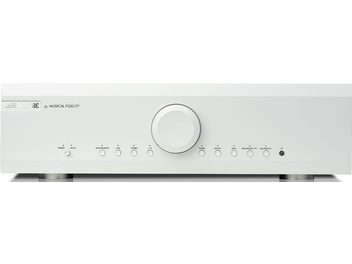
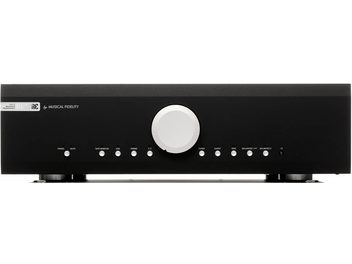
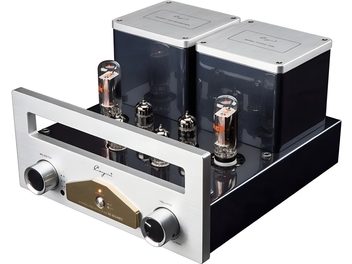
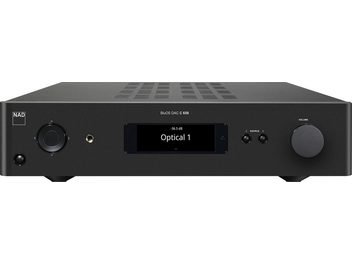
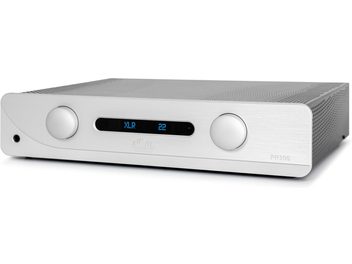
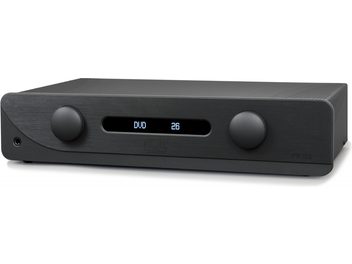
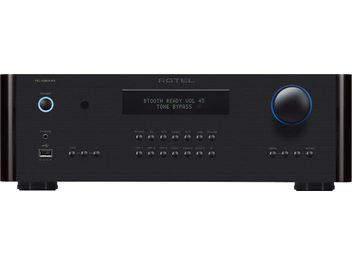
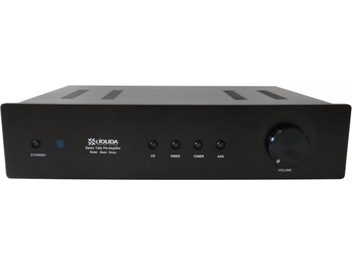
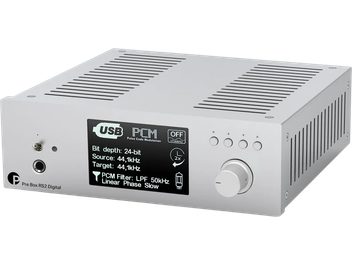
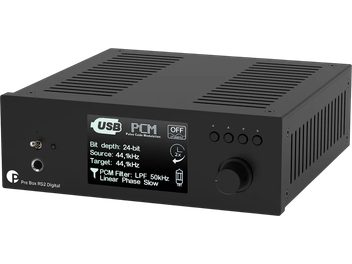
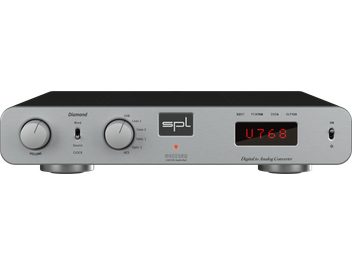
Function of a hi-fi preamplifier
The preamplifier performs several essential functions in transmitting the audio signal. It receives line-level signals (generally between 1 and 2 Volts) from the various connected sources and lets you select the source you want to listen to. Its primary function is to adjust the signal level by attenuating or slightly amplifying it as needed, while preserving its dynamic range and micro-details. Volume control is a delicate operation performed on a very low-voltage signal, requiring high-quality circuits to avoid any degradation.
The preamp also serves as a convergence point for all sources in the audio chain. Some models offer additional functions: tone control (bass and treble adjustment), left-right balance, multiple outputs to feed several amplifiers, headphone output, or even subwoofer output for systems including a subwoofer. The goal is to prepare the signal optimally before sending it to the power amplifier, which applies a fixed gain to drive the speakers.
Separate versus integrated configuration
Choosing a separate preamplifier rather than an integrated amplifier (combining preamplification and power amplification) is a deliberate move toward a modular high-fidelity setup. This approach offers several advantages: more rigorous design with dedicated and optimized circuits, better isolation of electronic stages to reduce background noise, and the ability to freely pair preamp and power amp according to sonic preferences or evolving needs.
Physically separating the functions also limits interference between the preamplification stage (which handles low voltages) and the power stage (which generates high currents and heat). This configuration also allows you to upgrade either component independently, offering scalability that an integrated amplifier cannot provide.
Types of preamplifiers
Hi-fi preamps come in several categories. Solid-state preamplifiers use semiconductor circuits to process the signal with precision and reliability. They generally offer low distortion, extended frequency response, and reduced power consumption. Their sound is often described as neutral and precise.
Tube preamplifiers (or valve preamps) use vacuum tubes in their circuitry. While they do not necessarily offer better measurable performance in terms of bandwidth or distortion, they provide a distinctive sonic signature, often described as warm and natural, with a harmonic richness appreciated by music lovers. Some models are fully tube-based, while others are hybrid, using only one or two tubes to color the sound, with the rest of the circuit remaining solid-state.
There are also passive preamplifiers, which have no internal amplification or power supply. They are limited to a source selector and a very high-precision volume control. This maximal simplicity aims to preserve signal integrity by avoiding any active stage, but it imposes certain constraints (limited cable lengths, compatible impedances).
Preamps with built-in DAC
Many modern preamplifiers integrate a digital-to-analog converter (DAC). This setup lets you connect digital sources directly (computer via USB, CD player via coaxial or optical, network streamer) without using an external DAC. Preamps equipped with a DAC generally offer several digital inputs (USB, optical, coaxial, sometimes AES/EBU) and handle various high-resolution file formats (24-bit / 192 kHz PCM or higher, DSD). Some models also include Bluetooth, or even network streaming functions.
This versatility simplifies installation by centralizing digital conversion, source management, and volume control in a single device. For an all-digital chain, this solution avoids multiplying boxes.
Component quality and design
The quality of a preamplifier largely depends on its internal components and architecture. Active components (operational amplifiers, discrete transistors, tubes) largely determine the sound and measurable performance. Between two seemingly similar circuits, differences in component quality can produce significant gaps in background noise, distortion, and dynamics.
High-end models use oversized components: high-power toroidal transformers, high-quality capacitors, precision resistors, stabilized power supply circuits. Isolating the different electronic stages limits interference. Careful internal wiring, component layout, and shielding also contribute to the final result. These technical choices explain the significant price differences between models.
Connectivity and technical features
Preamplifiers offer various connectivity options. Analog inputs and outputs are generally available in RCA (unbalanced) and sometimes in XLR (balanced), the latter offering better immunity to interference over long distances. The number of inputs varies by model, from 3–4 for compact versions to 6–8 for more fully featured models.
Some preamps include a phono input to connect a turntable directly without an external phono preamp. Outputs can be fixed (constant level) or variable (after volume control), with sometimes multiple outputs to feed different amplifiers or for recording. A headphone output is common on recent models. A remote control, often supplied, makes daily use easier.
Choosing your preamplifier
Choosing a preamp depends on several factors: the type and number of sources to connect, whether or not there is a DAC in the chain, sonic preferences (solid-state neutrality versus tube warmth), budget, and compatibility with the power amplifier. Check that the number of inputs is sufficient for all devices, that the connectors match (RCA, XLR, phono), and that the necessary functions are present (tone control, multiple outputs, headphone output).
Consistency with the rest of the system also matters: pairing a high-end preamp with an entry-level power amplifier, or vice versa, creates an imbalance. The goal is to build a harmonious setup where each link contributes without becoming a bottleneck. For demanding systems, comparative listening remains the best way to determine which preamplifier matches your sonic expectations.